Piran in 5 days
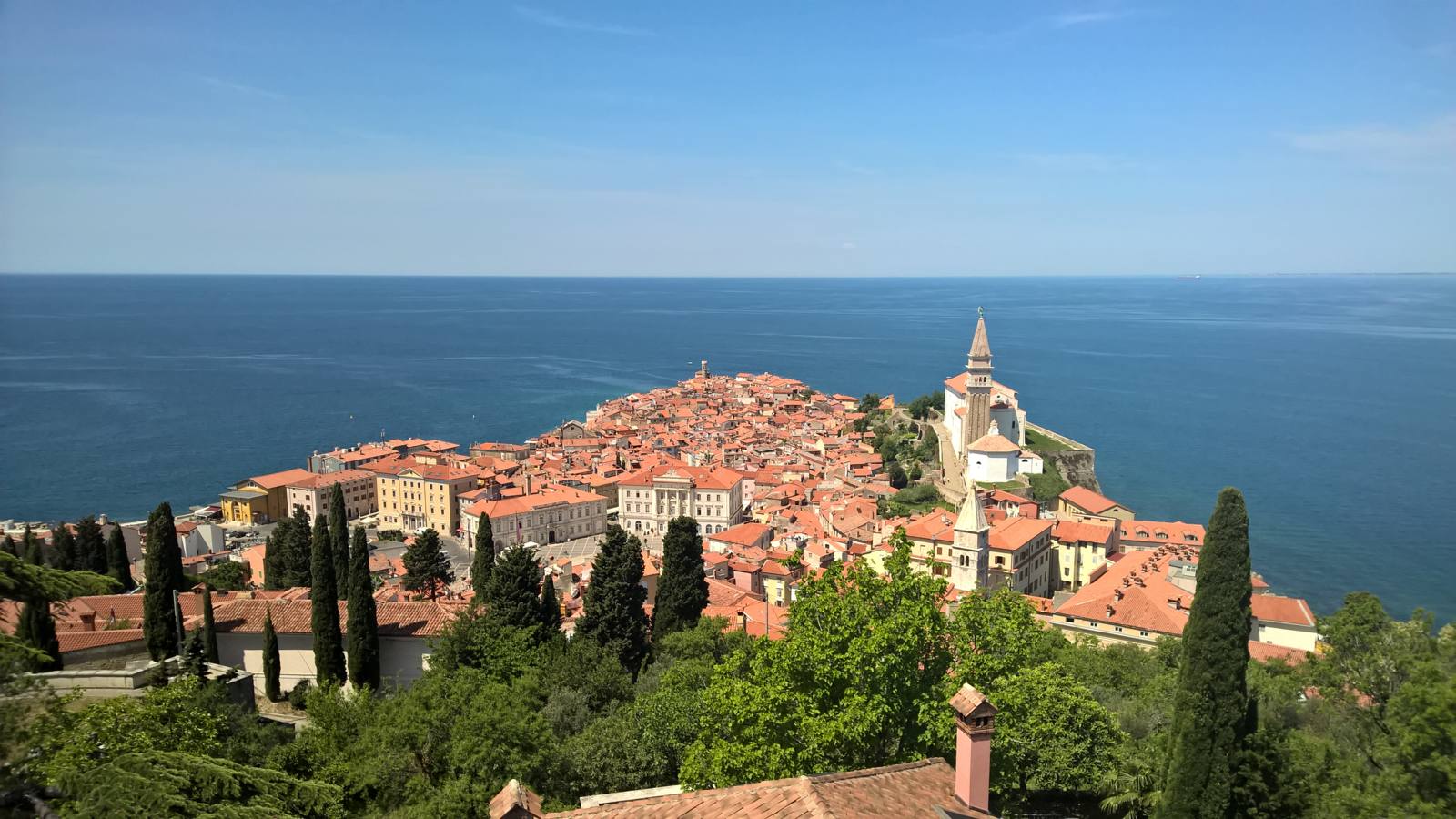
A small Venetian-built town on a narrow peninsula at the end of Slovenia's short coastline. You swim off the stone quays, climb the bell tower for views of three countries and eat fried fish as the sun goes down over the Gulf of Trieste. Best time to visit: May to June and September. Daily budget (budget traveller): $75 to $240 USD.
Arrive and find your feet
Morning: Take a morning bus from Ljubljana (about 2 to 2.5 hours). Drop your bag at your hostel or apartment and walk to Tartini Square for a coffee.
Afternoon: Wander the lanes up to Prvomajski trg and down to the inner harbour. Have a first swim off the quays near the Punta lighthouse.
Evening: Watch the sunset from the Punta, then grab a fried fish plate from Fritolin pri Cantini and eat it by the water.
Bell tower, walls and museums
Morning: Climb the bell tower of St George's (about €3) before the heat, and add the parish museum if you like church art. Walk on to the town walls (about €3) while it is still quiet.
Afternoon: Escape the midday heat in the Sergej Mašera Maritime Museum (about €5) and the small Piran Aquarium on the waterfront. Then swim again.
Evening: Look into the Minorite cloister to see if a concert is on. Dinner at a back-lane restaurant such as Pri Mari.
Coast path to Fiesa and Strunjan
Morning: Walk east along the shore path to Fiesa (20 to 30 minutes) while it is still cool, and have a swim from the pebbles.
Afternoon: Climb over the headland into Strunjan Landscape Park. Look down from the cliffs, then go down to Moon Bay for a swim. Pack a picnic and plenty of water.
Evening: Take a bus back from Strunjan or retrace your steps. A simple dinner and a glass of Malvazija on the seafront.
Sečovlje salt pans
Morning: Take a local bus via Portorož to Lucija, then walk to the Lera entrance of Sečovlje Salina Nature Park (€7 April to October). Go early for softer light and birds.
Afternoon: Follow the trails and dykes through the salt pans. In season, visit the Fontanigge area and the salt-making museum on the same ticket. Buy a tub of flower of salt.
Evening: Stop in Portorož on the way back for a swim off the long beach and a drink, then take the bus back to Piran.
Izola and Koper by bus
Morning: Take a bus to Izola, a working fishing town with a smaller old centre and a busy harbour. Walk its lanes and have coffee by the boats.
Afternoon: Continue to Koper, the coast's biggest town. See Tito Square and the Praetorian Palace, and walk the old streets. Lunch in the centre.
Evening: Bus back to Piran (about €3). Sunset from the walls if you missed it on day two.
Heading home: Buy salt or wine for home, then catch an afternoon bus to Ljubljana or a shuttle to the airport.
What to eat in Piran
- Fried small fish and calamari: a paper plate of girice (picarel) or squid from Fritolin pri Cantini, one of the cheapest seaside meals in town
- Grilled whole fish: sea bass or bream sold by weight at harbour restaurants such as Pavel or Pri Mari. Ask the price per kilo before you order
- Fuži with truffles or scampi: the hand-rolled Istrian pasta, served in most local restaurants
- Piran salt and flower of salt (solni cvet): sold in small tubs and good for taking home, and sometimes used on fish and even desserts
- Teran and Refošk: the local red wines from the Karst and Istria, plus crisp Malvazija white, at a few euros a glass
- Burek or a sandwich from a bakery for breakfast, then a scoop of ice cream on the seafront in the evening
Hidden gems
- The cloister of the Minorite Monastery of St Francis, a peaceful courtyard just above the square that hosts summer concerts in the Piran Musical Evenings series
- Prvomajski trg (First of May Square), a small square in the back lanes with an old stone rainwater cistern, away from the crowds on Tartini Square
- The far end of the town walls, where on a clear day you can see the Italian coast and, in winter, snow on the Alps beyond Trieste
- The shore path to Fiesa early in the morning, when it is almost empty and the cliffs catch the first light
- The Church of St Clement by the lighthouse at the Punta, a small, plain church that is easy to miss if you are heading straight for a swim
Getting around
Piran's old town is small and closed to most cars, so you will walk almost everywhere. It takes about 10 minutes from the bus station to the Punta. Expect steep lanes and steps up to the church and the walls. If you drive, leave the car in the Fornače car park at the town entrance. A summer day there costs roughly €20-30, and a free electric shuttle runs into the centre about every 15 minutes, or you can walk 10 minutes along the sea. Arriva runs regular local buses from Piran to Portorož, Lucija, Strunjan, Izola and Koper. Short hops cost a couple of euros, and Koper is around €3. You can pay on board or with a contactless card on many routes, so check the current options. Buses for Sečovlje and the salt pans go via Lucija. Taxis are few and fairly expensive, so book through your accommodation. The coast path to Fiesa and Strunjan is the nicest way to travel east. In summer, boats run to Trieste and other ports, but timetables are limited.
Safety
Piran is very safe, and violent crime against visitors is rare. Watch your bag on crowded summer evenings in Tartini Square and on busy buses. The real risks are slipping on polished marble and wet stone steps, the summer heat and swimming. Use the ladders rather than jumping from the quays, watch for boats near the harbour and look out for jellyfish and sea urchins on rocky entry points. Water shoes help. The town walls have narrow, steep steps with few handrails, so take care in sandals. In winter, the bora (burja) wind can blow very hard, making the seafront dangerous and sometimes bringing waves over the quays. Tap water is safe to drink. The EU emergency number is 112. EU travellers should carry an EHIC and UK travellers a GHIC, and everyone else needs travel insurance with medical cover.
Frequently asked questions
What does this 5-day Piran itinerary cover?
Day 1: Arrive and find your feet. Day 2: Bell tower, walls and museums. Day 3: Coast path to Fiesa and Strunjan. Day 4: Sečovlje salt pans. Day 5: Izola and Koper by bus.
Is 5 days enough for Piran?
Our recommended trip length for Piran is 3 to 5 days. This 5-day plan focuses on the highlights and groups sights by area so you spend less time travelling between them.
How much does 5 days in Piran cost?
A budget traveller spends about $75 to $240 USD a day in Piran, so roughly $375 to $1,200 USD for 5 days, not counting flights.
Where should I stay for 5 days in Piran?
Old town and Tartini Square: The heart of Piran, set around the oval marble square named after the violinist Giuseppe Tartini. Punta: The western tip of the peninsula, with the lighthouse, the little Church of St Clement and the quays where most people swim.
When is the best time to visit Piran?
The best time to visit Piran is May to June and September.
How do I get around Piran?
Piran's old town is small and closed to most cars, so you will walk almost everywhere. It takes about 10 minutes from the bus station to the Punta.
Is Piran safe for solo travellers?
Piran is very safe, and violent crime against visitors is rare. Watch your bag on crowded summer evenings in Tartini Square and on busy buses.
More 5-day guides
- Bohinj in 5 days
- Ljubljana in 5 days
- Bled in 5 days
- Quedlinburg in 5 days
- Ragusa in 5 days
- Ravello in 5 days
- Saint-Malo in 5 days
- Santillana del Mar in 5 days
Piran in 2 days | Piran in 3 days | Piran in 4 days | Piran in 7 days | Full Piran guide
Joy Plus home | Destinations | Itineraries | Activities | Flights | Budget planner | Calendar | Map | Blog | Lifetime access