Destinations / North America
Puebla, Mexico travel guide
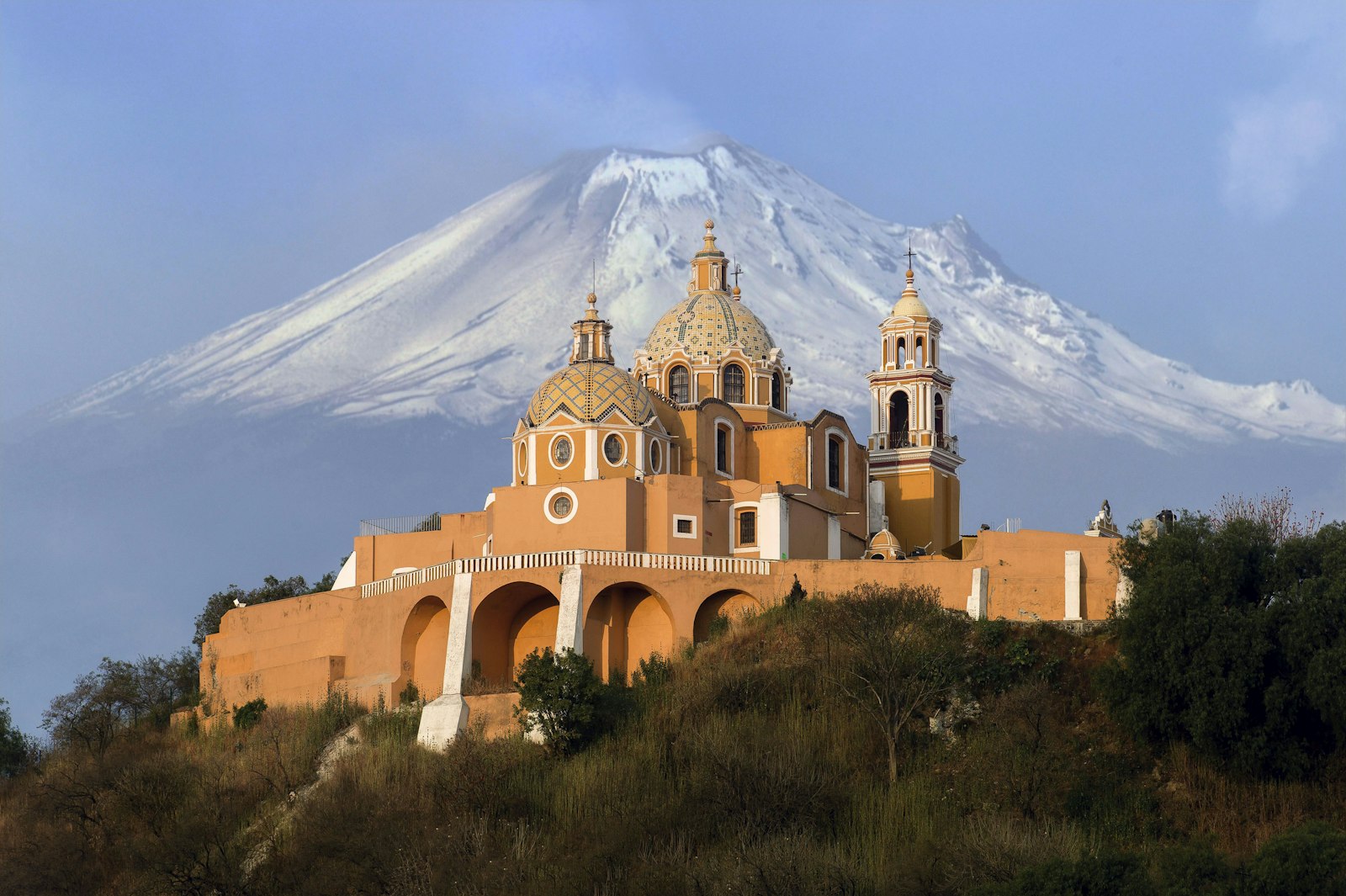
Talavera-tiled baroque, volcano views and the birthplace of mole poblano, two hours from Mexico City.
- Best time to visit: October-May
- Daily budget (budget traveller): $60 to $140 USD
- Ideal trip length: 2 to 3 days
Puebla is Mexico's great food city and an under-visited UNESCO centre of tiled facades, gilded chapels and 16th-century streets, all under the gaze of the Popocatépetl volcano. This is where mole poblano, chiles en nogada and cemitas were invented, and where you can eat better for $10 than you will for $40 in most capitals. Add Cholula's pyramid next door and it beats almost any Mexico City day trip.
Puebla sits at 2,135 metres on a grid the Spanish laid out in 1531, and the grid is the first thing that makes it easy. The centro is flat, walkable and wrapped in red brick and blue-and-yellow Talavera tile, which is why UNESCO listed it in 1987. On a clear morning Popocatépetl and Iztaccíhuatl float on the horizon, and the ash-white cone of Popo sometimes leaks a lazy plume. Most people from Mexico City do this as a Saturday day trip, eat one mole, and leave. Stay the night. The zócalo after dark, with families, balloon sellers and the cathedral lit gold, is the real reason to come.
The food is the argument. Mole poblano, chiles en nogada, cemitas, tacos árabes, chalupas and camote candy were all either born or perfected here, and you can eat all of them well for less than a single Roma Norte brunch. A mole comida at a good fonda is MXN 150 to 220. A market cemita the size of your face is MXN 90 to 110. A bed in a restored colonial casona can be under MXN 1,500. Then there is the art: the Capilla del Rosario is a gold-leaf fever dream, the Biblioteca Palafoxiana has held books since 1646, and Cholula's pyramid, the largest by volume on earth, is a 20-minute Uber away.
Do not overplan it. Puebla rewards a loop: church at opening, library, market lunch, workshop visit, then a slow evening around the Callejón de los Sapos with a glass of pasita. Everything of interest in the centro is inside about 15 blocks, so cars are pointless and Uber fills any gap for MXN 50 to 90. Keep a day for Cholula, one for Tlaxcala or Atlixco if you have a week, and accept that you will want a second cemita. Museums close on odd days (Amparo on Tuesdays, the Barroco and the Fuertes on Mondays), so check before you go.
How many days in Puebla?
For Puebla, we recommend 2 to 3 days. With more time, add a day trip to Cuetzalan.
| Trip length | What you'll see | Itinerary |
|---|---|---|
| 2 days · Recommended | The centro; Gold chapels, library, market lunch | Puebla in 2 days |
| 3 days · Recommended | Adds: Cholula, pyramid and baroque villages | Puebla in 3 days |
| 4 days | Adds: Tlaxcala and Cacaxtla | Puebla in 4 days |
| 5 days | Adds: Museums and Barrio del Artista | Puebla in 5 days |
| 7 days | Adds: Atlixco day trip; Los Fuertes, Barroco | Puebla in 7 days |
Puebla itinerary
Arrive and settle into the centro
Morning: ADO bus from Mexico City to CAPU (2h15, MXN 330-450), then Uber to your hotel for MXN 70-110. Drop bags, then a first coffee on the zócalo.
Afternoon: Late mole lunch at Fonda de Santa Clara. Walk through the Catedral (free), then the Pasaje del Ayuntamiento arcades.
Evening: Chalupas and tacos árabes at La Oriental, then a pasita at La Pasita. Finish with a lap of the zócalo at dusk.
Gold chapels, library, market lunch
Morning: Capilla del Rosario in Santo Domingo at opening, before tour groups, free. Then Biblioteca Palafoxiana (about MXN 60, closed Mondays).
Afternoon: Cemita at Mercado El Carmen, about MXN 90-110. Talavera workshop visit at Uriarte (4 Poniente), free to look.
Evening: Walk Callejón de los Sapos. Mole dinner at Mesón Sacristía de la Compañía.
Cholula, pyramid and baroque villages
Morning: Uber to Cholula (MXN 120-170). Pyramid site at 9am opening (about MXN 95), walk the tunnels, then climb to the yellow church.
Afternoon: Lunch under the portales on Cholula's zócalo. Colectivo to Santa María Tonantzintla and San Francisco Acatepec for the baroque interiors.
Evening: Cheap beers on the zócalo. Uber back to Puebla, MXN 120-170.
Tlaxcala and Cacaxtla
Morning: Bus from CAPU to Tlaxcala (about 1 hour, MXN 60-80). Walk the plaza, the Palacio de Gobierno murals and the Ex-Convento de San Francisco.
Afternoon: Colectivo to Cacaxtla for the Maya-style murals (about MXN 90). Lunch at a fonda in Tlaxcala.
Evening: Bus back to Puebla, soup dinner and an early night.
Museums and Barrio del Artista
Morning: Museo Amparo at 10am (about MXN 100, closed Tuesdays), then the rooftop café with cathedral and volcano views.
Afternoon: Barrio del Artista studios and the El Parián craft market. Camote candy on Calle de los Dulces.
Evening: Dinner in the centro, then Sunday zócalo or a mezcal bar if it's the weekend.
Atlixco day trip
Morning: Bus from CAPU to Atlixco (about 45 minutes, MXN 50-70). Climb Cerro de San Miguel for the valley view.
Afternoon: Lunch in the centro, then flower nurseries and the Hospital de San Juan de Dios area. Atlixco's Day of the Dead altars are a big draw in late October.
Evening: Return to Puebla, late dinner of cemitas or tacos árabes.
Los Fuertes, Barroco, depart
Morning: Uber to Los Fuertes (Loreto and Guadalupe), site of the 1862 Cinco de Mayo battle (about MXN 80, closed Mondays).
Afternoon: Uber to the Museo Internacional del Barroco in Angelópolis, then a final chalupa or mole before heading out.
Evening: ADO from CAPU to Mexico City or the airport.
Best neighbourhoods
- Centro Histórico: The zócalo, cathedral, Rosary Chapel and the tiled streets you came for.
- Barrio del Artista & Los Sapos: Artist studios, antique alleys and weekend street music.
- Cholula: A 20-minute ride away: the world's largest pyramid, a hilltop church and a young university nightlife.
- Angelópolis: Modern west side with malls, hotels and the Museo Internacional del Barroco.
Must-do experiences
- See the Capilla del Rosario: An explosion of gold leaf inside Templo de Santo Domingo, arguably Mexico's finest baroque interior.
- Climb Cholula's pyramid: The largest pyramid by volume on earth, topped by a yellow church with volcano views. The tunnels inside reopened in March 2026 after six years, for small timed groups.
- Eat mole poblano properly: At a centro fonda or the Callejón de los Sapos restaurants, ideally with a cemita on the side.
- Tour Biblioteca Palafoxiana: The Americas' first public library, wall-to-wall in carved cedar and 45,000 antique volumes.
- Buy Talavera at a workshop: Certified Talavera Poblana studios let you watch the glazing and firing before you buy.
Hidden gems
- Callejón de los Dulces, an entire street of camote candy shops.
- The Museo Amparo rooftop, with the best free-ish cathedral-and-volcano view.
- Los Fuertes park, site of the original Cinco de Mayo battle.
- Mercado El Carmen's cemita counters, cheaper and better than the tourist strip.
Daily budget
- Accommodation: budget MXN 250-450 / night (hostel dorm), mid-range MXN 1,400-2,600 (boutique casona double), splurge MXN 4,000+ (Quinta Real Puebla, convent suites). Centro beats Angelópolis for atmosphere. Book Friday and Saturday ahead, Mexico City arrives on weekends.
- Food: budget MXN 250-400 / day (market cemitas, tacos árabes, comida corrida), mid-range MXN 700-1,100 (fonda mole lunch plus a proper dinner), splurge MXN 2,000+ (tasting menu at a chef-led restaurant like Augurio). A comida corrida lunch (soup, main, agua fresca) is MXN 90-140. Chiles en nogada in season run MXN 350-550.
- Transport: budget MXN 60-120 / day (walk + colectivos), mid-range MXN 200-350 (Uber to Cholula and Angelópolis), splurge MXN 1,200+ (private driver to Cuetzalan). Uber inside the city is usually MXN 50-90. Colectivos to Cholula are around MXN 15-20, Uber MXN 120-170.
- Activities: budget MXN 100-200 (cathedral and Rosary Chapel free, one museum), mid-range MXN 350-600 (Cholula pyramid, Amparo, Palafoxiana, a guide), splurge MXN 1,500+ (private guide, mole cooking class). Cholula's archaeological site is about MXN 95. Churches are free, so are Talavera workshop visits.
- Drinks & nightlife: budget MXN 100 (beer MXN 40-50, pulque), mid-range MXN 300-500 (mezcal, pasita at La Pasita, cocktails), splurge MXN 900+ (mezcal flight and rooftop dinner). Puebla is a quiet evening city. Cholula's student bars are the cheap night out.
Where to stay
- Social hostel in Centro Histórico (MXN 250-450 / night): Casona hostels like Hostal Santo Domingo put you a five-minute walk from the zócalo with mixed dorms and a calm common room. Cholula has more party hostels if you want them.
- Boutique hotel in Centro / Callejón de los Sapos (MXN 1,400-2,800 / night): Casona de la China Poblana or Mesón Sacristía de la Compañía, courtyard rooms, tiled bathrooms, steps from the best mole and the antique street.
- Apartment in Avenida Juárez / La Paz (MXN 900-1,700 / night): Residential and café-heavy, a 10-minute Uber from the zócalo. Good value for 4+ nights with a kitchen and local bakeries.
- Splurge in Centro Histórico (MXN 3,800-6,500 / night): Quinta Real Puebla, a converted convent with high ceilings, courtyards and one of the city's best hotel restaurants, a short walk to the cathedral.
What to eat
- Mole poblano, the city's signature dish
- Cemitas poblanas with milanesa, avocado and pápalo
- Chiles en nogada, in season July to September
- Chalupas and camote sweets from the callejón
Day trips
- Tlaxcala and Cacaxtla (About 1 hour by bus): Mexico's smallest state capital has a red-and-ochre plaza and a quiet old convent. Add Cacaxtla for its remarkable pre-Hispanic murals, about 25 minutes further by colectivo. Bus from CAPU to Tlaxcala, MXN 60-80 each way. Colectivo from Tlaxcala to Cacaxtla, about MXN 20-30. Cacaxtla entry is about MXN 90.
- Atlixco (About 45 minutes by bus): A Pueblo Mágico with a hill viewpoint, flower nurseries and one of the best Day of the Dead scenes in the region. Quiet and local on weekdays. Bus or colectivo from CAPU, MXN 50-70 each way. Cerro de San Miguel is a short walk or Uber from the centre.
- Cuetzalan (3.5 to 4 hours by bus): Cloud-forest Pueblo Mágico with a Sunday tianguis, waterfalls and steep cobbled streets. Best as an overnight, not a day trip. Direct bus from CAPU, around MXN 200-260 each way. Stay at least one night to enjoy the market and falls.
When to visit
- Spring (March - May): 12-28°C, dry and sunny, hottest in April and May. Crowds: Moderate, spikes around Semana Santa and May 5. Good and clear. Popocatépetl is sharp in the mornings, but midday sun at 2,100m burns fast. Cinco de Mayo means a parade and booked-out hotels.
- Summer (June - September): 14-24°C, afternoon downpours most days, hazy volcano views. Crowds: Low to moderate, Mexico City weekenders. The foodie window. Chiles en nogada are in season August to September, rooms are cheaper, and the rain usually arrives after 4pm. Plan outdoor stops for the morning.
- Autumn (October - November): 10-24°C, clear skies, cool evenings. Crowds: Moderate, busy around Day of the Dead. The single best window. Dry, bright, volcano views at their best, and the Day of the Dead altars around Atlixco and Huaquechula are extraordinary.
- Winter (December - February): 4-22°C, sunny days, properly cold nights. Crowds: Low except Christmas and New Year. Cheap and calm with great light, but hotels in old casonas can be freezing. Bring a real jacket and ask about heaters.
Entry rules for your passport
Visa rules for Mexico depend on the passport you travel on. Check the official source before you book: Mexico National Migration Institute
Getting there
Most people arrive from Mexico City. ADO buses leave the AICM airport (Terminals 1 and 2) and the TAPO terminal every 15 to 30 minutes, taking 2 to 2.5 hours for about MXN 330-450. Buses arrive at CAPU on the north edge of Puebla, where Uber to the centro is MXN 70-110. Driving the 150D toll road takes a similar time with tolls of roughly MXN 220-260 each way. Puebla's own airport (PBC) is about 20km west of the centre with a few domestic routes, so for international flights land at Mexico City and take the bus. Buy ADO tickets on the app to skip the queues, and avoid the airport taxi touts.
Getting around
The historic centre is flat and walkable, with Uber cheap at $2 to $4 for anything further. Cholula is 20 to 30 minutes by Uber for about $6 or by colectivo for under $1. Mexico City is 2 to 2.5 hours by ADO bus (roughly $15) running every 30 minutes, and Puebla's own airport (PBC) handles a few domestic routes.
Safety
Puebla's historic centre and Cholula are safe for visitors, with pickpocketing at markets the main concern. Use Uber rather than street taxis at night, skip the outer industrial districts, and take the standard highway advice of not driving intercity after dark. Popocatépetl is active but monitored, and ashfall occasionally closes the airport and can dust the city.
Solo travel tips
- Eat at the market counter: Mercado El Carmen's cemita counters are tiny, loud and full of locals. Point, say "con todo", and ask for "sin pápalo" if you can't take the herb. Cash only, about MXN 90-110.
- Do Cholula in the morning: The pyramid site opens at 9am and the tunnels are cooler and emptier early. By noon the plaza fills with school groups and the hilltop church gets sunburnt.
- Stay in a casona hostel: Colonial hostels like Hostal Santo Domingo are quiet but easy for meeting people, and the centro is walkable. For more nightlife, stay in Cholula near the zócalo.
- Use Uber, not street taxis: Uber and DiDi are cheap in Puebla (MXN 50-90 in the city). Late at night or from Cholula, they are safer than hailed cabs.
- Solo female travellers: The centro and Cholula are comfortable for women alone. Keep your phone in a crossbody, use Uber after 10pm, and skip the outer periferico and industrial areas.
- Take a mole cooking class: Classes (around MXN 1,000-1,400 with a market visit) are the fastest way to meet locals and other travellers. Book through your hotel or Airbnb Experiences.
Cultural etiquette
- Say buenos días or buenas tardes when you walk into a fonda or shop. It's expected and warms everything up.
- Tipping is 10-15% at sit-down restaurants. Waiters will not bring the bill unprompted, so ask "la cuenta, por favor".
- Cover shoulders and keep quiet in churches, especially Santo Domingo. No flash and no photos during Mass.
- Mole poblano is eaten with tortillas and not rushed. It's savoury, complex and not a dessert sauce, and locals eat it at the 2-4pm comida.
- Cemitas are eaten with both hands and a stack of napkins. Say "sin pápalo" if you can't take the herb.
- Don't haggle with food vendors. Light haggling at El Parián craft stalls is fine, but pay fairly for Talavera.
- Many fondas and markets close by 5 or 6pm, and sit-down dinner starts around 8pm. Eat your big meal at lunch.
Frequently asked questions
How many days do you need in Puebla?
Two to three. One day covers the centro's cathedral, Rosary Chapel, Palafoxiana library and the food streets; a second is for Cholula's pyramid and church; a third adds Museo Amparo, the Barroco museum or a Talavera workshop visit.
Is Puebla worth visiting?
Yes. It's Mexico's best food city, has one of the finest baroque interiors in the Americas, and is far cheaper and calmer than Mexico City. Most travellers rush it as a day trip and miss the evening zócalo, which is the best part.
Is Puebla safe for tourists?
The historic centre, Angelópolis and Cholula are safe and well policed. Pickpocketing at busy markets is the realistic risk. Use Uber after dark, avoid outlying industrial areas, and don't drive intercity highways at night, which is standard advice across Mexico.
How do you get from Mexico City to Puebla?
ADO buses leave TAPO and Mexico City airport every 30 minutes and take 2 to 2.5 hours for about $15 to $20. It's the easiest option. Driving takes a similar time on the Highway 150D toll road with tolls of roughly $12 each way.
What food is Puebla famous for?
Mole poblano, chiles en nogada (July-September only), cemitas poblanas, chalupas and camote sweets. Puebla is credited as the birthplace of mole and of chiles en nogada, and a full mole plate at a good fonda costs around $8 to $12.
Is Puebla expensive?
No, it's one of Mexico's better-value cities: $60 to $140 a day. Boutique hotels run $50 to $110, hostels $15 to $25, a great mole lunch $8 to $12 and the pyramid site entry about $5. Uber trips inside the city rarely exceed $4.
When is the best time to visit Puebla?
October to May, when it's dry and around 22-25C by day with cool 2,100m nights. Visit July to September if you want chiles en nogada in season. June to September brings daily afternoon rain and hazier volcano views.
More about Puebla
- The 7-Day Mexico City Itinerary for 2026, with Real Prices
- Mexico City vs Medellín for Digital Nomads: Which Base Suits You in 2026?
Tours and activities in Puebla | Puebla in 2 days | Puebla in 3 days | Puebla in 4 days | Puebla in 5 days | Puebla in 7 days
Can't decide? Compare Puebla with...
Joy Plus home | Destinations | Itineraries | Activities | Flights | Budget planner | Calendar | Map | Blog | Lifetime access