Destinations / Asia
Pushkar, India travel guide
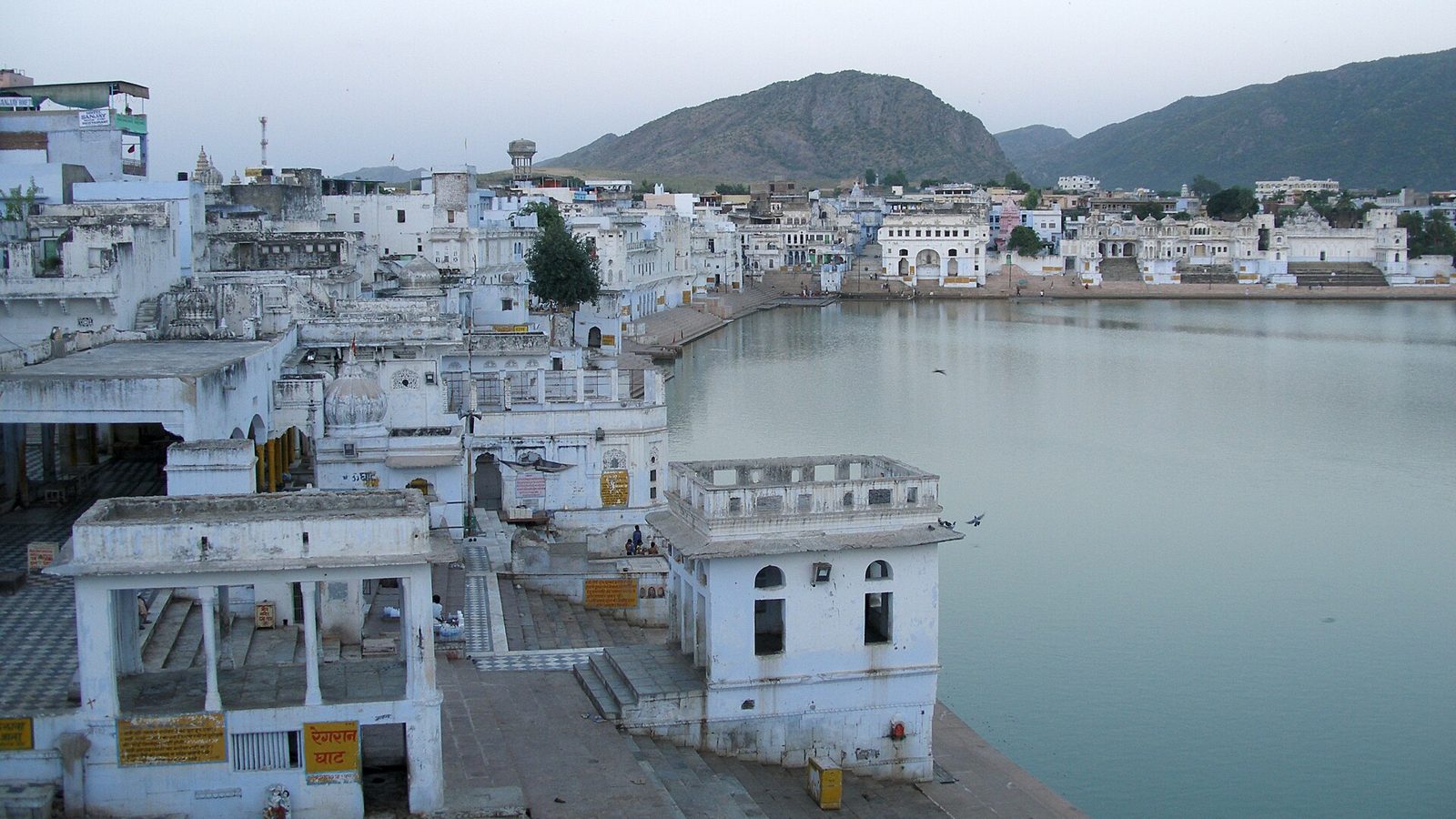
A small pilgrimage town in Rajasthan, built around a holy lake and ringed by desert hills. You walk barefoot on the ghats at dawn, climb to a hilltop temple for the sunset and eat malpua and dal baati in a town where meat and alcohol are banned.
- Best time to visit: October to March
- Daily budget (budget traveller): $20 to $90 USD
- Ideal trip length: 3 to 5 days
Pushkar is a small town in Rajasthan, about 15km from Ajmer and three hours by road from Jaipur. It wraps around a small sacred lake that Hindus believe was formed where Brahma dropped a lotus flower. There are 52 ghats, the stone steps where pilgrims bathe, and hundreds of temples, including one of the very few in India dedicated to Brahma. As a holy town, Pushkar is vegetarian and officially alcohol-free. Bells, drums and chanting carry over the water from before sunrise until late in the evening. The main bazaar is one long, narrow lane of shops, cafés and cows, and much of it is easy to walk. Climb to the Savitri Temple for the view, walk around the lake in the early morning and take a camel ride into the dunes at sunset. Pushkar has a long backpacker history, so you will find cheap hostels, rooftop cafés and plenty of other travellers. It also has persistent fake priests and touts on the ghats, and the town's population swells hugely during the Camel Fair in November. Pick your dates carefully, learn a couple of polite ways to say no and Pushkar is one of the easiest and friendliest places in India to spend a slow week on your own.
Pushkar is one of the oldest pilgrimage towns in India, and its lake is among the holiest in Hinduism. It is a compact place of whitewashed and pastel houses, 52 ghats and hundreds of temples, set in a valley between the Aravalli hills and the edge of the Thar Desert. The Brahma Temple is the reason many pilgrims come, since temples to Brahma are extremely rare. For travellers, the appeal lies in how daily life here revolves around the water: bathing at dawn, offerings through the day and lamps and drums at dusk. Pushkar has been on the backpacker trail for decades, so alongside the temples you will find rooftop cafés, yoga classes, silver shops and cheap hostels with pools. It is not a quiet town, but it is a slow one, and many people stay much longer than they planned.
Getting here is simple. There is no airport or useful railway station in Pushkar itself, so most people come through Ajmer, 15km away over the Nag Pahar hill. Trains from Jaipur reach Ajmer Junction in about 2 hours, and faster services link it with Delhi. From Ajmer, cheap local buses run very often, and taxis take about 30 minutes. The nearest airport is Kishangarh, about an hour away, though Jaipur has far more flights. Once you are here, walk. Base yourself near the Main Market for cafés and the ghats, in Badi Basti for the Brahma Temple and Savitri hill, or in Choti Basti for quieter lanes. Use rickshaws for the dunes and buses for Ajmer.
Timing shapes the trip. October to March is cool and sunny, though winter nights can be cold and few budget rooms have heating. April to June is fierce, with heat above 40°C. The monsoon brings green hills and a full lake. The Camel Fair in October or November, from 17 to 24 November in 2026, turns the town into a sea of pilgrims, traders, camels and tents. It is unforgettable, but room prices rise several times over. Holi in March is famous and very rowdy. Pushkar is vegetarian and alcohol-free, temples expect modest dress and the ghats are barefoot. If you can shrug off the fake priests and enjoy a little chaos, it rewards you with sunrises over the water and an easy rhythm that suits travelling alone.
Pushkar itinerary
Arrive and find your feet
Morning: Take a train to Ajmer, then a local bus over the hill to Pushkar (30 to 45 minutes). Drop your bag and get chai in the bazaar.
Afternoon: Walk the Main Market lane end to end, then go barefoot down to Gau Ghat and Brahma Ghat for your first look at the lake.
Evening: Watch the sunset from the eastern ghats near Sunset Café, then sit through the evening aarti at Varaha Ghat. Dinner on a rooftop.
Brahma Temple and Savitri hill
Morning: Visit the Brahma Temple soon after it opens, leaving your phone and shoes in a locker. Then eat hot malpua from a sweet shop nearby.
Afternoon: Rest through the midday heat and temple closures. Have a long thali lunch and browse the silver and textile shops.
Evening: Walk or take the ropeway (about ₹110 one way) up to the Savitri Temple for sunset over the lake and desert. Come down before dark.
Quiet ghats and the dunes
Morning: Walk a full loop of the lake at dawn, stopping at the quieter far-side ghats such as Gujar Ghat and Jodhpur Ghat.
Afternoon: Take a yoga class or a cooking class, or read in a hostel garden. Book your sunset ride through your guesthouse.
Evening: Ride a camel or horse into the dunes near Ganahera for sunset (about ₹500 to ₹1,500). Back in town for dinner.
Ajmer by bus
Morning: Take a local bus to Ajmer (about ₹20-40). Visit the Ajmer Sharif Dargah, the Sufi shrine, with your head covered and modest clothes.
Afternoon: See the ruined mosque of Adhai Din Ka Jhonpra next door, then the gilded Jain hall at Soniji ki Nasiyan. Lunch in the old city, where meat dishes are available.
Evening: Walk along the Ana Sagar lake promenade at sunset, then take a bus or taxi back over the hill to Pushkar.
Sunrise hill and the villages
Morning: Climb to Pap Mochani Temple north of town for sunrise over the lake. It is quieter than Savitri.
Afternoon: Hire a scooter or rickshaw to Budha Pushkar and the rose fields around town. Buy rose water or gulkand to take home.
Evening: Join the sunset drumming circle on the eastern ghats, then have falafel or wood-fired pizza at a backpacker café.
Kishangarh day trip
Morning: Hire a driver or take a bus via Ajmer to Kishangarh, known for its miniature painting tradition and its old fort palace on Gundolav lake.
Afternoon: See the fort area and the lake, and ask locally whether the white marble dumping yard is open to visitors. Lunch in town.
Evening: Back to Pushkar for a last evening aarti at Brahma Ghat and dinner with people from your hostel.
Slow morning and depart
Morning: Make a final barefoot walk around the lake at dawn and have breakfast on a rooftop overlooking the ghats.
Afternoon: Pick up any last bazaar shopping, then take a bus or taxi to Ajmer for your onward train. Book trains several days ahead.
Evening: Arrive in Jaipur, or carry on towards Jodhpur or Udaipur.
Best neighbourhoods
- Main Market and the central ghats: The long bazaar lane that runs parallel to the north shore of the lake, with Brahma Ghat, Gau Ghat and Varaha Ghat just off it. You have cafés, clothes shops, cash machines and most guesthouses on your doorstep. It is noisy and busy from early morning, so ask for a room away from the lane and the temple loudspeakers.
- Badi Basti and the Brahma Temple: The western end of town, around the Brahma Temple and the road up to the Savitri Temple ropeway. Several hostels and mid-range guesthouses are here, and the fairground is a short walk north. It feels a little calmer than the market but is still within ten minutes of the lake.
- Choti Basti: The eastern side of town, towards the Ajmer road, with a mix of family homes, small guesthouses and heritage havelis. You are close to Varaha Ghat and the quieter eastern ghats, and it is a good base for early walks and peaceful evenings. Some lanes are dark after 10pm.
- Fairground and the edge of town: The open sandy ground north-west of the centre where the Camel Fair is held, ringed by resorts and seasonal tent camps. For most of the year it is quiet, and some hotels here have pools. It suits you if you want space and calm, but you will walk 15 to 20 minutes into the bazaar.
- Ganahera and Motisar Road: Villages and dunes a few kilometres out of town, with desert camps, resorts and camel safari operators. Nights are very quiet and the sky is dark. You will need a rickshaw or scooter for every trip into town, so it is better for a night or two than a whole stay.
Must-do experiences
- Walk the ghats at sunrise: Take off your shoes and walk around the lake in the early morning, when pilgrims bathe and priests make offerings. All the ghats are free to visit. Photograph the lake and buildings if you like, but never people bathing, and ignore anyone who says you need a paid blessing.
- Visit the Brahma Temple: This is one of the very few temples in India dedicated to Brahma, the god of creation, with a red spire above the west end of town. Entry is free, but you leave shoes, phones and bags in lockers outside for a few rupees. It closes in the middle of the day, so go in the morning.
- Climb to the Savitri Temple: The hilltop temple to Savitri, Brahma's wife, has the best view over the lake and the desert. Walk up the steps in 30 to 60 minutes or take the ropeway, which costs about ₹110 one way or ₹180 return. Carry cash, as the card machine does not always work, and watch out for the monkeys.
- Catch the evening aarti: At dusk, priests swing oil lamps and chant at Brahma Ghat and Varaha Ghat while bells and drums echo across the water. Find a step to sit on, keep your shoes off and leave your camera in your bag. Photography during the ceremony is generally not allowed.
- Ride into the dunes at sunset: Camel and horse safaris leave from the western edge of town for the dunes near Ganahera and Motisar. A short sunset ride usually costs about ₹500 to ₹1,500, depending on how long you go for. Agree the price and route in advance, and pick an operator whose animals look well cared for.
- Wander the main bazaar: The narrow market lane is full of textiles, silver jewellery, leather-free sandals, rose products and music shops. Bargain politely, and start at roughly half the first price for clothes. Stop for a lassi or a plate of hot malpua on the way.
- See the Camel Fair, if your dates fit: In 2026 the Pushkar Fair runs from 17 to 24 November and ends at Kartik Purnima, the full moon, when huge crowds bathe in the lake at dawn. Trading is busiest early in the fair, and competitions and cultural shows come later. Book rooms early and expect prices to soar.
Hidden gems
- Pap Mochani Temple on the hill north of town, a shorter climb than the Savitri Temple, with a quiet sunrise view back over the lake
- The quieter ghats on the far side of the lake, such as Gujar Ghat and Jodhpur Ghat, which are calmer than the central ghats and have fewer touts
- Budha Pushkar, the small 'old Pushkar' lake a few kilometres outside town, which few foreign visitors ever see
- The rose fields and small rose water and gulkand workshops around town, since Pushkar's roses are sold across Rajasthan
- The Old Rangji Temple's tall South Indian-style gateway, rising above the bazaar rooftops and easy to walk straight past
Daily budget
- Accommodation: budget $4 to $10 USD / night (hostel dorm), mid-range $20 to $50 USD (guesthouse or heritage haveli room), splurge $120+ USD (Westin Pushkar or a luxury resort). Prices rise several times over during the Camel Fair, and tent camps open only for fair week. Winter weekends and holidays are also busier. Female-only dorms are common.
- Food: budget $4 to $8 USD / day (street snacks, thalis, chai), mid-range $10 to $20 USD (café breakfast, rooftop dinner, lassis), splurge $30+ USD (hotel restaurants and buffets). A local thali costs roughly ₹150-300 and a café main around ₹250-450. Everything is vegetarian, and alcohol is officially banned. Prices are rough guides.
- Transport: budget $0 to $2 USD / day (walking, local bus to Ajmer), mid-range $5 to $15 USD (rickshaws, scooter hire), splurge $30 to $60 USD (private driver for a day trip). The Ajmer bus costs about ₹20-40 and a taxi about ₹400-600. Agree rickshaw fares in advance, as meters are not used.
- Activities: budget $0 to $3 USD / day (ghats, temples, Savitri ropeway), mid-range $6 to $20 USD (sunset camel ride, yoga class), splurge $40+ USD (cooking class, private guide, fair activities). Temples and ghats are free, though Brahma Temple lockers cost a few rupees. The Savitri ropeway costs about ₹110 one way or ₹180 return, payable in cash.
- Drinks & nightlife: budget $1 to $3 USD (chai, lassi, fresh juice), mid-range $4 to $8 USD (coffees and smoothies on a rooftop), splurge $15+ USD (hotel bar outside the town limits). Nightlife means sunset drumming, rooftop cafés and live music at hostels. Chai costs about ₹20-30, and a lassi ₹60-150.
Where to stay
- Social hostel in Badi Basti and the lake edge ($4 to $10 USD / night (dorm)): Moustache Pushkar and Zostel Pushkar are both a short walk from the ghats. Both have gardens or pools, rooftop areas and female-only dorms. They are easy places to find company for sunset or a day trip.
- Heritage haveli in Choti Basti ($30 to $70 USD / night): Old merchant houses such as Inn Seventh Heaven are built around courtyards, with carved balconies and rooftop restaurants. They are quieter than the bazaar but only a few minutes from Varaha Ghat.
- Lakeside guesthouse in Main Market and the central ghats ($12 to $35 USD / night): Simple family-run guesthouses near the ghats give you lake views from the roof and dawn rituals on your doorstep. Expect bells and loudspeakers early, and pick an upper room away from the lane.
- Splurge in Fairground and the edge of town ($120 to $300+ USD / night): The Westin Pushkar Resort & Spa and other resorts on the outskirts have pools, spas and space to breathe. A rickshaw takes you into the bazaar in about 10 minutes.
What to eat
- Malpua: syrupy fried pancakes cooked fresh in big pans at sweet shops near the Brahma Temple, and Pushkar's best-known sweet
- Dal baati churma: baked wheat balls with lentils and sweet crumbled churma, the classic Rajasthani dish, served at most thali places
- A Rajasthani thali: unlimited dal, vegetable curries, rice and chapati for a few dollars at local restaurants. Lunch is the best time to try one
- Kachori and samosa from street stalls for breakfast, with sweet chai from a clay cup
- Lassi in every flavour, from plain to saffron or rose. Bhang lassi is sold openly, but it is much stronger than people expect, so give it a miss
- Falafel, hummus and wood-fired pizza at backpacker cafés such as Honey & Spice or the rooftops along the bazaar, all vegetarian and good for a change
Day trips
- Ajmer (About 15km east of Pushkar, 30 to 45 minutes by bus): A busy city with the Ajmer Sharif Dargah, the shrine of the Sufi saint Moinuddin Chishti and one of India's most important pilgrimage sites. You can also see the ruined Adhai Din Ka Jhonpra mosque, the gilded Jain hall at Soniji ki Nasiyan and the Ana Sagar lakeside. Take a local bus from Pushkar for about ₹20-40, or a taxi for about ₹400-600. Cover your head and dress modestly at the Dargah, and keep valuables close in the crowded lanes.
- Kishangarh (About 40km north-east of Pushkar, around an hour by road): A small town known for the Kishangarh school of miniature painting, an old fort palace above Gundolav lake and the white marble dumping yard on the outskirts, which looks like a snowfield. Hire a driver for the day through your guesthouse, or take a bus via Ajmer. Check locally whether the marble yard is open to visitors and whether there are photography rules.
- Jaipur (About 145km north-east, around 3 hours by road or 2 hours by train from Ajmer): Rajasthan's capital, with the Amber Fort, the Hawa Mahal and the pink old city bazaars. It is a long day trip, so it works better as your next stop. Take a bus or taxi to Ajmer, then a train to Jaipur, or take a direct bus from Pushkar. Book trains ahead and check return times before you set off.
When to visit
- Winter (November - February): 22-28°C by day, 5-12°C at night, dry and sunny. Crowds: Busy, very busy during the Camel Fair and over Christmas and New Year. The best season. Warm days, clear skies and cafés in full swing. Bring a fleece for cold nights, and book well ahead for fair week.
- Spring (March): 28-35°C, warming fast, dry. Crowds: Moderate, with a spike around Holi. Still pleasant early in the month. Holi is huge fun but messy and rowdy, so wear old clothes and stay with other travellers.
- Hot season (April - June): 38-45°C, very hot and dry, with dust storms. Crowds: Low, with many foreign-run cafés closed. Only for the heat-tolerant. Rooms are cheap and the 30-day e-visa costs less, but sightseeing is limited to dawn and dusk.
- Monsoon and early autumn (July - October): 30-36°C, humid, with showers in July and August, drying out by October. Crowds: Low in the monsoon, rising through October. The lake fills and the hills turn green. It is quiet and good value, and October is warm and lovely before the winter crowds arrive.
Entry rules for your passport
Visa rules for India depend on the passport you travel on. Check the official source before you book: Government of India e-Visa portal
Getting there
Pushkar has no airport, and its small railway station has very few useful trains. The nearest airport is Kishangarh, about an hour away, with a handful of domestic flights. Jaipur's international airport, about 150km away, is the better-connected option, and a taxi from there takes roughly 3 hours. Most people travel by train to Ajmer Junction. It is about 2 hours from Jaipur, and the fastest trains from Delhi take around 6 to 7 hours. Book trains through the IRCTC website or an app several days ahead, especially in winter. From Ajmer's main bus stand, state and private buses leave for Pushkar every 15 to 30 minutes. The trip takes 30 to 45 minutes and costs about ₹20-40. A taxi or rickshaw from Ajmer station costs around ₹400-600. Direct buses also run to Pushkar from Jaipur, Jodhpur, Udaipur and Delhi. Many private sleeper buses actually stop in Ajmer, so check where yours drops off. During the Camel Fair, roads into town are very congested, so allow extra time.
Getting around
Pushkar is small enough to walk almost everywhere. From the Brahma Temple at the west end to Varaha Ghat in the east takes about 15 minutes on foot, though the bazaar lane is crowded with people, motorbikes and cows. The ghats are barefoot-only, so carry a small bag for your sandals. Auto-rickshaws wait near the bus stands and on the main roads around town. Agree the fare before you get in, as meters are not used. A short hop around town costs roughly ₹50-150, more to the dunes or the Savitri ropeway. Many guesthouses rent out scooters and bicycles, which are handy for Budha Pushkar and the villages, but traffic is chaotic and you need an international driving permit. Local buses run very often to Ajmer for about ₹20-40, and the trip takes 30 to 45 minutes over the hill. Taxis to Ajmer cost about ₹400-600. Uber intercity cabs are sometimes available, and your guesthouse can book a driver for longer day trips.
Safety
Pushkar is generally safe, and violent crime against visitors is rare. The main nuisance is the fake priests on the ghats. They hand you a flower, lead you to the water for a 'blessing' and then demand a large 'donation'. Ghats and temples are free, and you do not need a red string to enter. A polite but firm 'no, thank you' and walking on is enough. Watch your bag in the bazaar and during the fair, when pickpockets work the crowds. Be careful with bhang lassi, which can be very strong, and with tap water. Drink bottled or filtered water. Keep your distance from monkeys near the Savitri Temple and from cows and bulls in the lanes. From April to June, heat above 40°C is a real risk. India's emergency number is 112. Travel insurance with medical cover is essential, as good hospitals are in Ajmer and Jaipur, not Pushkar.
Solo travel tips
- Learn to say no early: The flower-and-blessing routine on the ghats starts on your first walk. Decide in advance that you will smile, say 'nahin, dhanyavaad' (no, thank you) and keep walking. It gets easier after day one.
- Go out at dawn and dusk: Pushkar is at its best from sunrise until about 10am and again from late afternoon. Spend the hot middle of the day in a café, a hostel pool or a class, as the temples close anyway.
- Check the fair dates: In 2026 the Camel Fair runs from 17 to 24 November. Either plan your trip around it and book months ahead, or avoid that week if you want normal prices and quiet ghats.
- Eat where the pilgrims eat: An unlimited thali at a local restaurant costs a fraction of a rooftop café meal and is often better. Save the cafés for breakfast and sunset views.
- Safety for solo travellers: Dress modestly, keep to busy lanes after dark and come down from the hills before sunset ends. Drink only bottled or filtered water, and skip bhang lassi if you are alone.
- Meet people at hostels and classes: Hostels such as Zostel and Moustache run group dinners, rooftop music nights and outings. Yoga classes, cooking classes and the sunset drumming on the ghats are easy ways to start a conversation.
Cultural etiquette
- Greet people with 'namaste' and say 'dhanyavaad' (thank you). In Pushkar you will also hear 'Jai Brahma' or 'Ram Ram' as a friendly hello.
- Take your shoes off before walking on any ghat or entering a temple. Carry a small bag for your sandals.
- Never photograph people bathing or praying, and keep your camera away during the evening aarti. Ask before photographing sadhus, who may expect a small payment.
- Respect the ban on meat, eggs and alcohol in the town, and do not smoke or drink on the ghats.
- Dress modestly, with shoulders and knees covered, especially in temples and at the ghats. Public displays of affection cause offence.
- Use your right hand to eat and to give or receive money, and do not point your feet at shrines or people.
- Bargain with a smile in the bazaar, but give fair prices to small vendors. Tip around 5-10% in sit-down restaurants.
Frequently asked questions
How do I get to Pushkar and from the bus stand to my room?
Most people take a train to Ajmer Junction, about 2 hours from Jaipur or around 6 to 7 hours from Delhi on the fastest trains. From Ajmer's main bus stand, local buses leave for Pushkar every 15 to 30 minutes, take 30 to 45 minutes over the hill and cost about ₹20-40. A taxi or rickshaw from Ajmer station costs about ₹400-600. Pushkar's bus stands are on the edge of town, 10 to 15 minutes' walk from the lake, and rickshaws wait outside. Ask your guesthouse for exact directions, as many are down narrow lanes.
How many days do I need in Pushkar?
Two nights covers the ghats, the Brahma Temple, the Savitri Temple and an evening aarti. Three to five nights lets you add a sunset camel ride, the quieter ghats, Pap Mochani at sunrise and a day trip to Ajmer. A week suits you if you want to slow right down, take a yoga or cooking class, or combine the town with the Camel Fair.
When is the best time to visit Pushkar?
October to March is the best time. Days are warm and sunny at around 22-30°C, and nights are cool and can be cold in December and January. April to June is very hot, often above 40°C, and many cafés go quiet. The monsoon, from July to September, brings humidity and some rain, but it also fills the lake and turns the hills green. Avoid the Camel Fair week unless you actually want to see it.
When is the Pushkar Camel Fair in 2026?
Rajasthan Tourism lists the 2026 fair from 17 to 24 November, ending on Kartik Purnima on 24 November. The livestock trading is busiest in the first few days, and camel competitions, cultural shows and the big dawn bathing come towards the end. Entry is free. Rooms and tent camps sell out and prices rise steeply, so book as early as you can and confirm the final programme locally.
Can I eat meat or drink alcohol in Pushkar?
Not openly. Pushkar is a holy town, and meat, eggs and alcohol are officially banned within it. All the restaurants are vegetarian, and many cafés cook without eggs. Some places quietly serve beer, but drinking in public or near the ghats causes real offence. If you want a drink or a meat dish, wait until you are in Ajmer or your next stop.
How do I deal with the priests on the ghats?
Expect someone to offer you a flower or a 'blessing' by the water, often called the Pushkar passport, and then ask for a large donation. Visiting the ghats and temples is free, and you do not need to pay anyone or wear a red string to walk around the lake. Say no politely, avoid taking flowers you have not asked for and keep walking. If you do want a puja, arrange it through your guesthouse and agree the price first.
Is Pushkar safe for solo female travellers?
Yes, it is one of the more relaxed towns in Rajasthan for women travelling alone, with lots of other solo travellers and female-only dorms at hostels such as Moustache. You may get stares, selfie requests and pushy shopkeepers. Dress modestly, with shoulders and knees covered, avoid empty lanes and the dunes after dark, and use rickshaws your guesthouse recommends. Be wary of men offering free rides, drinks or invitations, and take extra care in the fair crowds.
What entry rules apply to India in 2026?
Most visitors, including those from the UK, US, Canada, Australia and the EU, need a visa arranged before they travel. The e-Tourist visa is applied for online at indianvisaonline.gov.in, 4 to 120 days before arrival. The 30-day version costs about $25 USD, or $10 for arrivals from April to June, and the one-year version is $40. Five-year fees are much higher and vary by nationality. A small bank charge is added. Since October 2025, foreign nationals fill in a digital e-Arrival card online before arrival instead of the paper form. Check the official Indian government websites and your own government's travel advice before you go.
Tours and activities in Pushkar | Pushkar in 2 days | Pushkar in 3 days | Pushkar in 4 days | Pushkar in 5 days | Pushkar in 7 days
Joy Plus home | Destinations | Itineraries | Activities | Flights | Budget planner | Calendar | Map | Blog | Lifetime access