Pushkar in 7 days
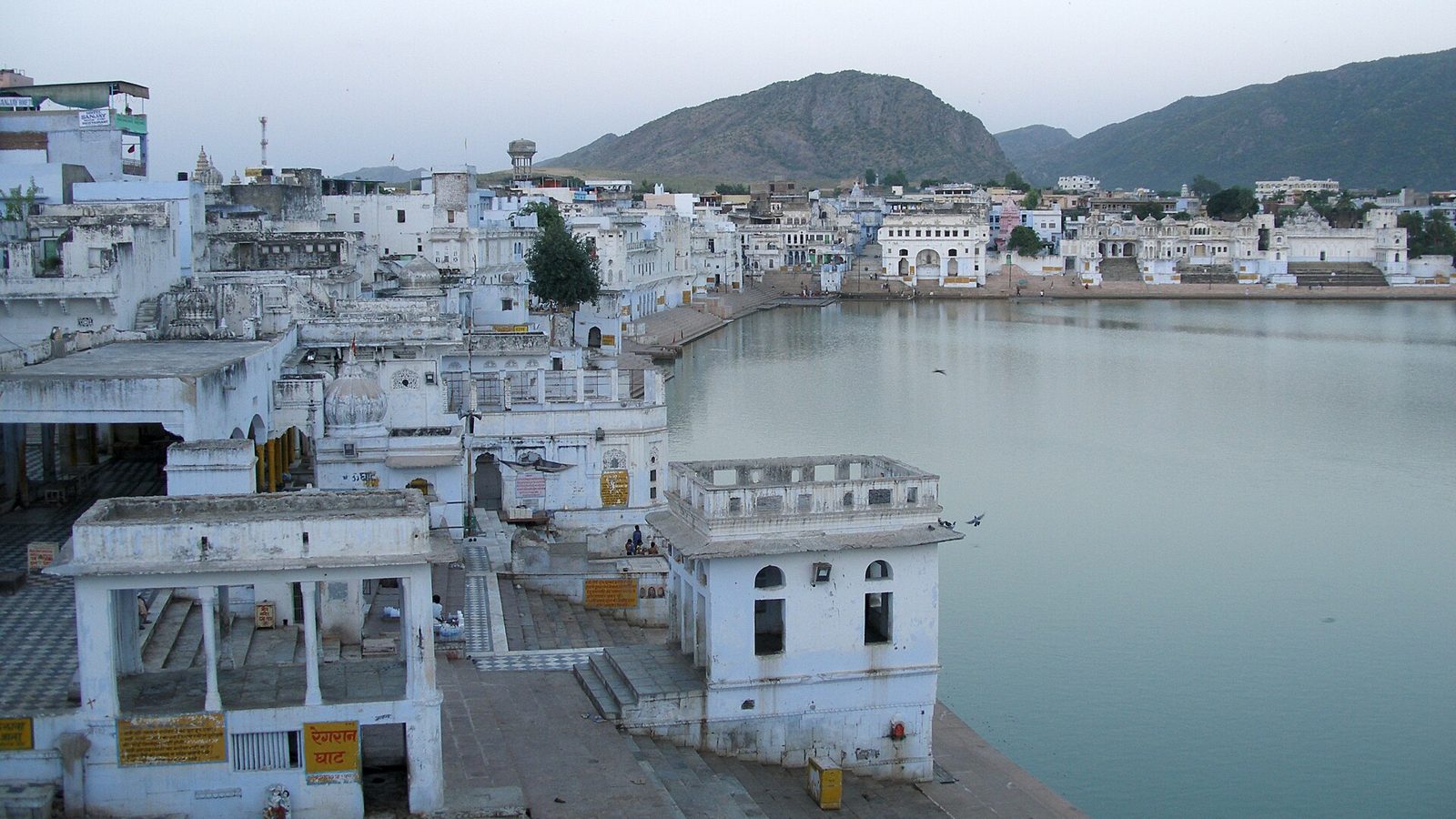
A small pilgrimage town in Rajasthan, built around a holy lake and ringed by desert hills. You walk barefoot on the ghats at dawn, climb to a hilltop temple for the sunset and eat malpua and dal baati in a town where meat and alcohol are banned. Best time to visit: October to March. Daily budget (budget traveller): $20 to $90 USD.
Arrive and find your feet
Morning: Take a train to Ajmer, then a local bus over the hill to Pushkar (30 to 45 minutes). Drop your bag and get chai in the bazaar.
Afternoon: Walk the Main Market lane end to end, then go barefoot down to Gau Ghat and Brahma Ghat for your first look at the lake.
Evening: Watch the sunset from the eastern ghats near Sunset Café, then sit through the evening aarti at Varaha Ghat. Dinner on a rooftop.
Brahma Temple and Savitri hill
Morning: Visit the Brahma Temple soon after it opens, leaving your phone and shoes in a locker. Then eat hot malpua from a sweet shop nearby.
Afternoon: Rest through the midday heat and temple closures. Have a long thali lunch and browse the silver and textile shops.
Evening: Walk or take the ropeway (about ₹110 one way) up to the Savitri Temple for sunset over the lake and desert. Come down before dark.
Quiet ghats and the dunes
Morning: Walk a full loop of the lake at dawn, stopping at the quieter far-side ghats such as Gujar Ghat and Jodhpur Ghat.
Afternoon: Take a yoga class or a cooking class, or read in a hostel garden. Book your sunset ride through your guesthouse.
Evening: Ride a camel or horse into the dunes near Ganahera for sunset (about ₹500 to ₹1,500). Back in town for dinner.
Ajmer by bus
Morning: Take a local bus to Ajmer (about ₹20-40). Visit the Ajmer Sharif Dargah, the Sufi shrine, with your head covered and modest clothes.
Afternoon: See the ruined mosque of Adhai Din Ka Jhonpra next door, then the gilded Jain hall at Soniji ki Nasiyan. Lunch in the old city, where meat dishes are available.
Evening: Walk along the Ana Sagar lake promenade at sunset, then take a bus or taxi back over the hill to Pushkar.
Sunrise hill and the villages
Morning: Climb to Pap Mochani Temple north of town for sunrise over the lake. It is quieter than Savitri.
Afternoon: Hire a scooter or rickshaw to Budha Pushkar and the rose fields around town. Buy rose water or gulkand to take home.
Evening: Join the sunset drumming circle on the eastern ghats, then have falafel or wood-fired pizza at a backpacker café.
Kishangarh day trip
Morning: Hire a driver or take a bus via Ajmer to Kishangarh, known for its miniature painting tradition and its old fort palace on Gundolav lake.
Afternoon: See the fort area and the lake, and ask locally whether the white marble dumping yard is open to visitors. Lunch in town.
Evening: Back to Pushkar for a last evening aarti at Brahma Ghat and dinner with people from your hostel.
Slow morning and depart
Morning: Make a final barefoot walk around the lake at dawn and have breakfast on a rooftop overlooking the ghats.
Afternoon: Pick up any last bazaar shopping, then take a bus or taxi to Ajmer for your onward train. Book trains several days ahead.
Evening: Arrive in Jaipur, or carry on towards Jodhpur or Udaipur.
What to eat in Pushkar
- Malpua: syrupy fried pancakes cooked fresh in big pans at sweet shops near the Brahma Temple, and Pushkar's best-known sweet
- Dal baati churma: baked wheat balls with lentils and sweet crumbled churma, the classic Rajasthani dish, served at most thali places
- A Rajasthani thali: unlimited dal, vegetable curries, rice and chapati for a few dollars at local restaurants. Lunch is the best time to try one
- Kachori and samosa from street stalls for breakfast, with sweet chai from a clay cup
- Lassi in every flavour, from plain to saffron or rose. Bhang lassi is sold openly, but it is much stronger than people expect, so give it a miss
- Falafel, hummus and wood-fired pizza at backpacker cafés such as Honey & Spice or the rooftops along the bazaar, all vegetarian and good for a change
Hidden gems
- Pap Mochani Temple on the hill north of town, a shorter climb than the Savitri Temple, with a quiet sunrise view back over the lake
- The quieter ghats on the far side of the lake, such as Gujar Ghat and Jodhpur Ghat, which are calmer than the central ghats and have fewer touts
- Budha Pushkar, the small 'old Pushkar' lake a few kilometres outside town, which few foreign visitors ever see
- The rose fields and small rose water and gulkand workshops around town, since Pushkar's roses are sold across Rajasthan
- The Old Rangji Temple's tall South Indian-style gateway, rising above the bazaar rooftops and easy to walk straight past
Getting around
Pushkar is small enough to walk almost everywhere. From the Brahma Temple at the west end to Varaha Ghat in the east takes about 15 minutes on foot, though the bazaar lane is crowded with people, motorbikes and cows. The ghats are barefoot-only, so carry a small bag for your sandals. Auto-rickshaws wait near the bus stands and on the main roads around town. Agree the fare before you get in, as meters are not used. A short hop around town costs roughly ₹50-150, more to the dunes or the Savitri ropeway. Many guesthouses rent out scooters and bicycles, which are handy for Budha Pushkar and the villages, but traffic is chaotic and you need an international driving permit. Local buses run very often to Ajmer for about ₹20-40, and the trip takes 30 to 45 minutes over the hill. Taxis to Ajmer cost about ₹400-600. Uber intercity cabs are sometimes available, and your guesthouse can book a driver for longer day trips.
Safety
Pushkar is generally safe, and violent crime against visitors is rare. The main nuisance is the fake priests on the ghats. They hand you a flower, lead you to the water for a 'blessing' and then demand a large 'donation'. Ghats and temples are free, and you do not need a red string to enter. A polite but firm 'no, thank you' and walking on is enough. Watch your bag in the bazaar and during the fair, when pickpockets work the crowds. Be careful with bhang lassi, which can be very strong, and with tap water. Drink bottled or filtered water. Keep your distance from monkeys near the Savitri Temple and from cows and bulls in the lanes. From April to June, heat above 40°C is a real risk. India's emergency number is 112. Travel insurance with medical cover is essential, as good hospitals are in Ajmer and Jaipur, not Pushkar.
Frequently asked questions
What does this 7-day Pushkar itinerary cover?
Day 1: Arrive and find your feet. Day 2: Brahma Temple and Savitri hill. Day 3: Quiet ghats and the dunes. Day 4: Ajmer by bus. Day 5: Sunrise hill and the villages. Day 6: Kishangarh day trip. Day 7: Slow morning and depart.
Is 7 days enough for Pushkar?
Our recommended trip length for Pushkar is 3 to 5 days. This 7-day plan focuses on the highlights and groups sights by area so you spend less time travelling between them.
How much does 7 days in Pushkar cost?
A budget traveller spends about $20 to $90 USD a day in Pushkar, so roughly $140 to $630 USD for 7 days, not counting flights.
Where should I stay for 7 days in Pushkar?
Main Market and the central ghats: The long bazaar lane that runs parallel to the north shore of the lake, with Brahma Ghat, Gau Ghat and Varaha Ghat just off it. Badi Basti and the Brahma Temple: The western end of town, around the Brahma Temple and the road up to the Savitri Temple ropeway.
When is the best time to visit Pushkar?
The best time to visit Pushkar is October to March.
How do I get around Pushkar?
Pushkar is small enough to walk almost everywhere. From the Brahma Temple at the west end to Varaha Ghat in the east takes about 15 minutes on foot, though the bazaar lane is crowded with people, motorbikes and cows.
Is Pushkar safe for solo travellers?
Pushkar is generally safe, and violent crime against visitors is rare. The main nuisance is the fake priests on the ghats.
More 7-day guides
- Mumbai in 7 days
- Jaipur in 7 days
- Goa in 7 days
- New Delhi in 7 days
- Udaipur in 7 days
- Jodhpur in 7 days
- Agra in 7 days
- Varanasi in 7 days
Pushkar in 2 days | Pushkar in 3 days | Pushkar in 4 days | Pushkar in 5 days | Full Pushkar guide
Joy Plus home | Destinations | Itineraries | Activities | Flights | Budget planner | Calendar | Map | Blog | Lifetime access