Destinations / Europe
Quedlinburg, Germany travel guide
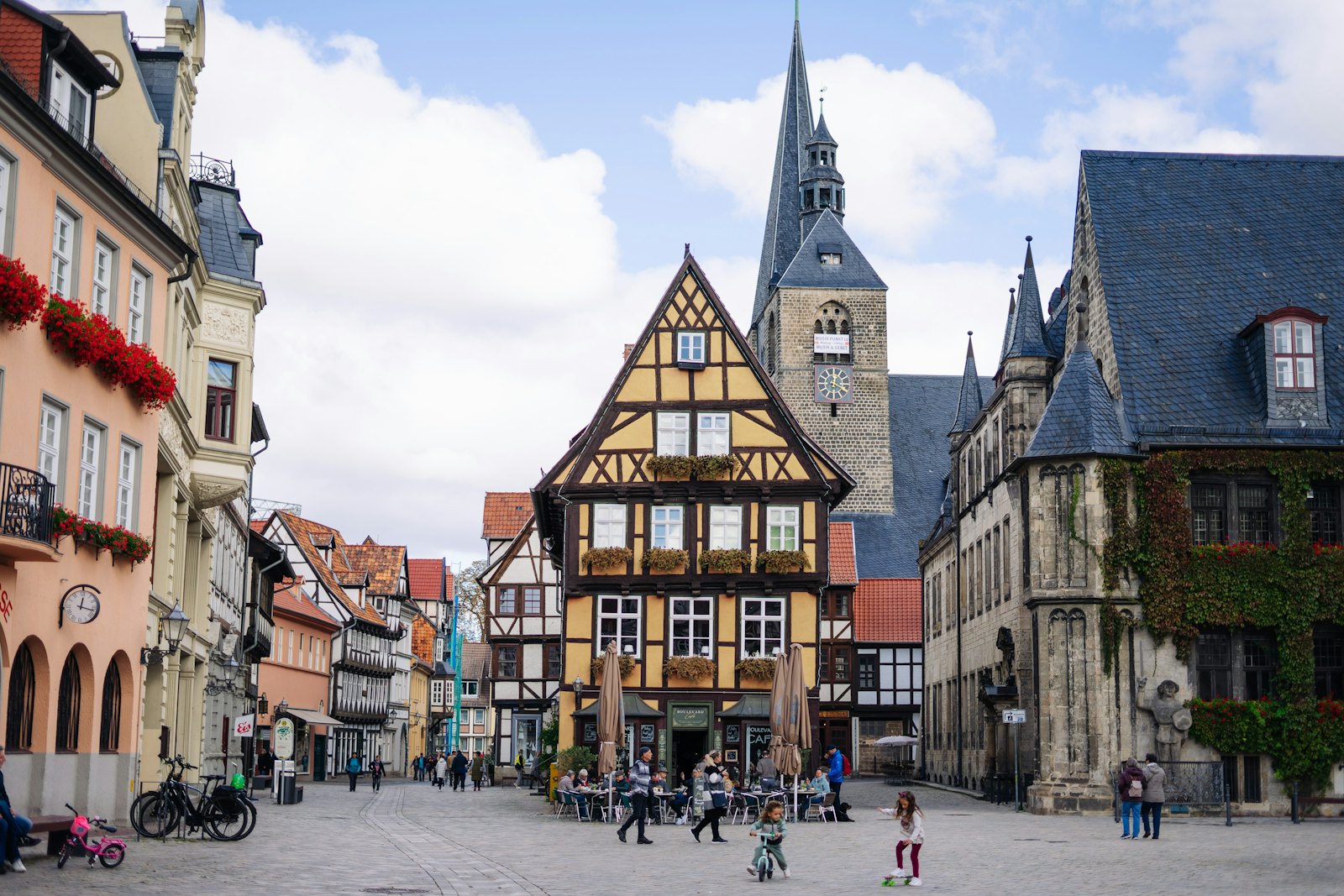
A small medieval town in the Harz foothills with more than 2,000 half-timbered houses, a Romanesque church on a sandstone hill and steam trains running out to the mountains.
- Best time to visit: May to September
- Daily budget (budget traveller): $75 to $240 USD
- Ideal trip length: 3 to 7 days
Quedlinburg is on the northern edge of the Harz mountains in Saxony-Anhalt, roughly an hour by regional train from Magdeburg. Its old town has been on the UNESCO World Heritage list since 1994. The reason is simple. More than 2,000 half-timbered houses survived here, crowded along cobbled lanes below a sandstone hill. On top of the hill stands the Stiftskirche St. Servatius, where Heinrich I, the first German king, was buried in 936. Its treasury still holds manuscripts and reliquaries more than a thousand years old. Most visitors come on a day trip, walk the market square and leave by teatime. Stay a few nights instead and you get quiet evening lanes, early light on the Münzenberg and easy day trips. Thale's gorge is ten minutes away by train, and the narrow-gauge Selketalbahn steams off into the hills from the town station. Quedlinburg is safe, compact and fairly cheap by German standards. Things are quiet after dark, and a solo traveller can manage the whole place on foot.
Quedlinburg is a town of about 24,000 people on the northern edge of the Harz. It became a royal seat in the 10th century, when Heinrich I and his successors held court here. After his death in 936, his widow Mathilde founded a convent of noblewomen on the castle hill, and its abbesses ruled the town for centuries. That history shows in the Stiftskirche and its treasury. The town's real fame came later, from its houses. Because Quedlinburg escaped major war damage and was too poor to rebuild in GDR times, more than 2,000 half-timbered houses from six centuries survived, many restored since 1990. Day-trippers fill the Markt around midday. Stay overnight and you get the lanes to yourself in the early morning and evening.
Logistics are straightforward. Regional trains run roughly hourly from Magdeburg through Halberstadt to Quedlinburg and Thale, and the station is a short walk from the old town. The Harz narrow-gauge railway leaves from the same station for Gernrode and the Selke valley, and connects onward to the wider network that reaches Wernigerode and the Brocken. With a Deutschlandticket, most of this travel is covered, apart from the Brocken line. Stay in the Altstadt or at the foot of the Schlossberg if you want to walk everywhere. The Neustadt is often a little cheaper. Plan museum days carefully, because the main ones close on different weekdays.
The season shapes the trip. From May to September the museums are open long hours, the Harz trails are dry and you can eat outside until late. Late April brings Walpurgisnacht in Thale, and the Advent weekends bring the courtyard Christmas market, both busy times to book ahead. Winter is cold and still, with fog on the Brocken, closed or reduced museums and very empty streets. That suits some people well. Quedlinburg is not a party town. It is a place for long walks, old buildings, a beer in a brewery pub and a steam train into the hills.
Quedlinburg itinerary
Arrive and walk the old town
Morning: This plan assumes a Friday arrival. Take a regional train via Magdeburg, drop your bags and grab a coffee and pastry from a bakery near the Markt.
Afternoon: Visit the Fachwerkmuseum in Wordgasse (about €5, closed Thursdays) to learn how the houses work. Then loop through Word, Westendorf and the Neustadt looking at beams and carvings.
Evening: Dinner and a house beer at Brauhaus Lüdde, then a slow walk back across the empty Markt.
The Schlossberg and Münzenberg
Morning: Walk up to the Stiftskirche for opening at 10:00. See the crypt, Heinrich I's tomb and the Domschatz (about €8). On Saturdays a public tour runs at 11:00.
Afternoon: Visit the Klopstockhaus (about €3.50) and stroll down to Finkenherd. Then climb the Münzenberg steps for the classic view back to the church.
Evening: Watch the late light on the Schlossberg from the Münzenberg, then have an early dinner in Westendorf.
Thale and the Bode gorge
Morning: Take an early train to Thale (about 10 minutes). Walk into the Bode gorge past the Teufelsbrücke before the crowds arrive. Wear sturdy shoes.
Afternoon: Ride the chairlift up to the Rosstrappe or the cable car to the Hexentanzplatz. The SuperSpar ticket covers both for about €15.50. Picnic with gorge views.
Evening: Train back to Quedlinburg. Have a simple dinner and rest your legs.
Steam into the Selke valley
Morning: Board a Harz narrow-gauge train at Quedlinburg station towards Gernrode (Deutschlandticket valid). Check which departures are steam-hauled.
Afternoon: Visit St. Cyriakus in Gernrode with its early Holy Sepulchre replica, then ride on to Alexisbad for a short woodland walk along the Selke.
Evening: Return to Quedlinburg. Today is a Monday, so the Domschatz is closed, which makes it a good day to be out of town.
Wernigerode and the Brocken
Morning: Take a regional train to Wernigerode, changing in Halberstadt. Board the Brockenbahn (about €65 return) for the climb to 1,141m.
Afternoon: Walk the summit loop if the weather allows, then ride back down. Spend an hour in Wernigerode's old town around its Rathaus.
Evening: Train back to Quedlinburg. Pack a warm layer, because the Brocken is often cold and foggy even in summer.
Halberstadt's cathedral treasures
Morning: Train to Halberstadt (about 20 minutes). Visit the cathedral and its treasury, one of the largest church treasuries in Europe.
Afternoon: Walk around the cathedral square and the rebuilt old centre, then try a Halberstädter Würstchen from a snack stand.
Evening: Back in Quedlinburg, take a sunset stroll through the Brühl park below the Wipertus side of town.
Teufelsmauer and the Feininger gallery
Morning: Take a short bus or taxi ride to Weddersleben and walk part of the Teufelsmauer ridge, or explore the crypt of St. Wiperti if it is open.
Afternoon: Visit the Lyonel-Feininger-Galerie (about €8-9, open today because it is Thursday). Then take a last coffee and cake on the Markt.
Evening: Take an evening train towards Magdeburg, or stay one more night and leave early.
Best neighbourhoods
- Altstadt (around the Markt): The heart of town, built around the market square and the Renaissance town hall. Hotels, cafés, the tourist office and most restaurants are within a few minutes' walk. It gets busy with day-trippers around midday but empties out by early evening.
- Westendorf and the foot of the Schlossberg: The lanes directly below the castle hill, including Finkenherd and the Klopstockhaus. It is the quietest and most photogenic part of the old town. The Feininger gallery and the walk up to the Stiftskirche are right on your doorstep.
- Neustadt: Despite the name, this 'new town' dates from the 12th century. It sits east of the Markt around the Nikolaikirche and has plenty of half-timbering with fewer tour groups. Guesthouses and holiday flats here are often slightly cheaper.
- Münzenberg: A small hill opposite the Schlossberg, covered in tiny houses built into the ruins of a former convent. It is a residential neighbourhood rather than a place to stay, but its steps and lookouts give you the best view of the Stiftskirche.
- Thale: A small town ten minutes away by train, at the mouth of the Bode gorge. It suits hikers who want to be on the trails first thing. It has far less atmosphere than Quedlinburg, and evenings are very quiet.
Must-do experiences
- See the Stiftskirche and the Domschatz: The Romanesque collegiate church on the Schlossberg holds the tomb of Heinrich I and a treasury of ivories, gospel books and Europe's oldest surviving knotted carpet. A combined ticket costs about €8. It is closed on Mondays, and public tours run at weekends at 11:00 and 13:00.
- Walk the old town lanes at dawn or dusk: Start at the Markt, then drift through Word, Westendorf and the Neustadt before the day-trippers arrive. Look out for the carved beams, dated lintels and leaning gables. A loop takes one to two hours.
- Climb the Münzenberg: Walk up the steep steps to this hill opposite the castle. The houses here were built on top of a medieval convent. From the top you get the classic view back to the Stiftskirche, and it is best in the late afternoon.
- Visit the Lyonel-Feininger-Galerie: A modern gallery at the foot of the Schlossberg with one of the world's largest collections of Feininger's prints, saved from the Nazis by a local friend of the artist. Entry costs about €8-9. It is closed on Tuesdays.
- Hike the Bode gorge from Thale: Take the train to Thale, then walk the path into the Bode gorge, with granite cliffs, a churning river and the Teufelsbrücke. Ride the cable car up to the Hexentanzplatz or the chairlift up to the Rosstrappe for the views.
- Ride the Selketalbahn: Harz narrow-gauge trains leave Quedlinburg station for Gernrode, Alexisbad and the Selke valley, with steam on selected services. The Deutschlandticket is valid on this line, which makes it a cheap and slow day out.
- Learn how the houses were built at the Fachwerkmuseum: The museum fills a 14th-century post-built house in Wordgasse, one of the oldest timber-framed buildings in Germany. Models and hands-on joints show how the town was built. Entry is about €5. It is closed on Thursdays and over the winter.
Hidden gems
- The crypt of St. Wiperti, south of the Schlossberg, a rare pre-Romanesque space that is often quieter than the main church. Check the opening times locally
- Finkenherd, a small square below the castle where, according to legend, Heinrich was told he had been made king while he was catching birds
- The Brühl park, a long green stretch below the Wipertus side of town, with old trees and a monument to the poet Klopstock
- The Teufelsmauer near Weddersleben, a jagged sandstone ridge in the fields between Quedlinburg and Thale, with a short marked trail along the top
- The Holy Sepulchre replica inside St. Cyriakus in Gernrode, one of the oldest of its kind in Germany, a short Selketalbahn ride away
Daily budget
- Accommodation: budget €30-45 / night (hostel dorm or simple room), mid-range €80-130 (old town hotel or guesthouse), splurge €150-250+ (top old town hotels). Single rooms are common in Germany, which helps solo travellers. Book ahead for Walpurgisnacht, summer weekends and Advent. Many hotels add a small local tourist tax per night.
- Food: budget €20-30 / day (bakeries, snack stands, supermarket), mid-range €40-60 (café lunch and a pub dinner), splurge €80+ (hotel restaurant, wine). Bakery breakfasts are cheap and good. Pub mains run about €14-22. Many kitchens stop serving around 21:00, earlier on quiet weekdays.
- Transport: budget €0-10 / day (walking, Deutschlandticket spread over the trip), mid-range €15-30 (single regional tickets, short taxi rides), splurge €65+ (Brocken steam train return). The Deutschlandticket covers regional trains, buses and most of the HSB, but not the Brocken line. Thale is only about 10 minutes away by train.
- Activities: budget €0-10 / day (old town walks, hikes, churches), mid-range €15-30 (Domschatz about €8, Feininger about €8-9, Fachwerkmuseum about €5), splurge €65-90 (Brocken train plus cable cars and guided tours). In Thale, the cable car return to the Hexentanzplatz costs about €10.50 and the chairlift return to the Rosstrappe about €7. Children under 18 often get in free.
- Drinks & nightlife: budget €5-10 (one beer), mid-range €15-30 (a few beers or wine), splurge €40+ (wine bar, concert tickets). Nightlife means brewery pubs, wine bars and summer concerts. A half-litre of beer is roughly €4-5.50. Things wind down early.
Where to stay
- Social hostel in Westendorf, below the Schlossberg (€30-45 / night): The DJH youth hostel sits in a historic building near the castle hill, with dorms and simple private rooms. You do not have to be young to stay, but DJH membership or a small extra fee applies.
- Boutique hotel in Altstadt (Markt) (€90-150 / night): Hotel Theophano is a small hotel in half-timbered houses right on the market square, with characterful rooms and everything on foot.
- Apartment in Neustadt or Altstadt (€60-110 / night): Holiday flats in restored half-timbered houses are common and often cheaper than hotels for stays of three nights or more. A kitchen helps with budget breakfasts and picnics for Harz days.
- Splurge in Below the Schlossberg (€150-250+ / night): Romantik Hotel am Brühl is a quiet, upmarket hotel on Billungstraße, a short walk from the Stiftskirche and the Brühl park, with its own restaurant.
What to eat
- Harzer Käse: a pungent, low-fat sour-milk cheese, often served with onions, vinegar and caraway as 'Harzer mit Musik' alongside rye bread
- Soljanka: a sour, spicy meat soup with gherkins and lemon, a former East German staple that still appears on many local menus
- Wild dishes from the Harz: venison goulash, wild boar and game sausages, especially in autumn, with red cabbage and dumplings
- Halberstädter Würstchen: a well-known sausage from nearby Halberstadt, sold at snack stands and on market days
- A house beer at Brauhaus Lüdde, a brewery pub in the old town serving its own beers and hearty plates
- Kaffee und Kuchen: an afternoon slice of Streuselkuchen or Bienenstich in one of the cafés around the Markt, a solid local habit
Day trips
- Thale and the Bode gorge (About 10 minutes by train): A dramatic granite gorge with river paths, the Teufelsbrücke and two famous viewpoints, the Hexentanzplatz and the Rosstrappe. Walpurgisnacht on 30 April is the busiest night of the year here. Take an hourly regional train from Quedlinburg to Thale Hbf. The cable car and chairlift leave from the valley near the gorge entrance. Cable car return costs about €10.50, chairlift return about €7, or about €15.50 for both.
- Wernigerode and the Brocken (About 1 hour by train to Wernigerode, then 1.5-2 hours by steam train to the summit): A pretty half-timbered town with a fairytale castle, and the Harz's highest peak above it, reached by one of Germany's best-known steam railways. Weather on top changes fast. Take a regional train to Wernigerode via Halberstadt. The Brockenbahn costs about €43 one way and €65 return, or €55 for the afternoon return fare. The Deutschlandticket is not valid on the Brocken line.
- Gernrode and the Selke valley (About 15-20 minutes by narrow-gauge train to Gernrode, longer to Alexisbad): Gernrode has St. Cyriakus, one of the best-preserved Ottonian churches in Germany. Further up the line, the Selke valley offers easy woodland walks and old mill villages. Board the Harz narrow-gauge railway (Selketalbahn) at Quedlinburg station. The Deutschlandticket is valid. A full Quedlinburg to Stiege return without it is around €48, and shorter hops cost much less.
When to visit
- Spring (April - May): 8-18°C, fresh, some showers. Crowds: Moderate, busy around Easter and Walpurgisnacht (30 April). A lovely time for walking, with blossom and the museums back on summer hours. Book early if you want to see Walpurgisnacht in Thale.
- Summer (June - August): 18-26°C, warm, occasional thunderstorms. Crowds: Busiest, with coach groups and German school holidays. Long evenings, concerts in the Stiftskirche and dry hiking trails. Go out early to beat the midday crowds on the Markt.
- Autumn (September - October): 9-19°C, crisp, golden woods. Crowds: Moderate, quieter on weekdays. The local pick. Autumn colour in the Bode gorge, game dishes on menus and comfortable hiking weather. Museum hours start to shorten in November.
- Winter (November - March): -2 to 6°C, grey, frost and occasional snow. Crowds: Very quiet, except on the Advent weekends. Atmospheric at the Christmas market, very still otherwise. Some museums close or shorten their hours, and cobbles can be icy.
Entry rules for your passport
Visa rules for Germany depend on the passport you travel on. Check the official source before you book: European Commission: Schengen visa policy
Getting there
There is no airport nearby. Berlin BER is the main international gateway, and Leipzig/Halle and Hanover are other options. From Berlin, take a train to Magdeburg Hbf and change for a regional RE to Quedlinburg. The whole trip takes about three hours. On some weekends the Harz-Berlin-Express runs direct from Berlin to Quedlinburg and Thale. From Magdeburg, regional trains run roughly hourly via Halberstadt and take a little over an hour. From Hanover or Brunswick, travel via Magdeburg or Halberstadt. The Deutschlandticket covers all regional legs. Quedlinburg station sits at the eastern edge of the town centre, about 10-15 minutes on foot from the Markt. Harz narrow-gauge trains to Gernrode and the Selke valley leave from the same station. By car, Quedlinburg is about two hours from Berlin, and the old town has paid car parks around its edge.
Border checks: non-EU visitors (other than Swiss, Norwegian, Icelandic, Liechtenstein, Andorran, Monegasque, San Marinese and Vatican citizens, and holders of an EU residence permit or long-stay visa) are registered in the EU's Entry/Exit System (EES) instead of getting a passport stamp. On your first crossing, officers take your photo and/or fingerprints, so allow extra time at passport control. ETIAS, the planned travel authorisation, is not in operation yet, so don't pay any website for one.
Getting around
Quedlinburg's old town is compact and best seen on foot. The walk from the station to the Markt takes about 10-15 minutes. The streets are cobbled and the Schlossberg and Münzenberg are steep, so wear proper shoes. Regional RE trains run roughly hourly to Thale (about 10 minutes) and to Halberstadt and Magdeburg. Change in Halberstadt for Wernigerode. The Harz narrow-gauge railway (HSB) leaves from the same station for Gernrode and the Selke valley. The Deutschlandticket covers regional trains, local buses and most of the HSB network, but not the Brocken line, which has its own fare. Regional buses link nearby villages but are thin in the evenings and at weekends. Taxis exist but need ordering by phone. Cycling works well in the flat farmland north of the Harz, but the hills get steep quickly. A car is useful for remote trailheads but not needed for the town itself.
Safety
Quedlinburg is a very safe small town, and crime against visitors is rare. Like many towns in eastern Germany, the region has some far-right activity. Problems in the tourist centre are uncommon, but stay aware in quiet areas late at night. The main hazards are physical. Cobbles are slippery when wet and icy in winter, and the steps on the Schlossberg and Münzenberg are steep. In the Harz, stick to marked paths, carry water and check the weather, because the Brocken can switch to fog, wind and cold in minutes, even in summer. Ticks live in woods and long grass, so check yourself after hikes. Pharmacies (Apotheke) are easy to find, and 112 is the emergency number. Carry travel insurance or an EHIC/GHIC card if you are eligible.
Solo travel tips
- Stay in the old town: Everything is walkable, so you can head out early and come back late without dealing with buses. Westendorf and the Altstadt are the most atmospheric. The Neustadt is a good, slightly cheaper alternative.
- Check museum closing days: The Domschatz shuts on Mondays, the Feininger gallery on Tuesdays and the Fachwerkmuseum on Thursdays. Build your days around those, and use the closed days for Thale or the steam train.
- Get a Deutschlandticket: If you are in Germany for more than a few days, it covers your regional trains, local buses and most of the Harz narrow-gauge network. It saves money and spares you queues at ticket machines.
- Eat earlier than you might at home: Many kitchens close around 21:00, and some earlier midweek in winter. Brewery pubs and hotel restaurants are relaxed places to eat alone, and bar seats are normal.
- Safety for solo travellers: The town is calm and safe. The main risks are slippery cobbles, steep steps and changeable weather on Harz trails. Stick to marked paths, share your route with your host and carry a layer for the Brocken.
- Join a guided walk: Old town walking tours and the weekend tours at the Stiftskirche are an easy way to meet other travellers and pick up stories you would miss alone. Ask at the tourist office on the Markt for English-language dates.
Cultural etiquette
- Greet people with 'Guten Tag' or 'Hallo' when you enter a shop or café, and say 'Tschüss' or 'Auf Wiedersehen' when you leave.
- Sunday is a rest day. Most shops close, and noise should stay low in residential lanes. Bakeries and cafés usually open for part of the day.
- In churches, dress modestly, keep your voice down and avoid visiting during services unless you are joining in.
- Many residents live in the historic houses. Do not wander into courtyards or press against windows for photos unless a sign shows the courtyard is open.
- Wait for the green man at pedestrian crossings, even on empty streets. Locals notice.
- Bring cash for small bakeries, snack stands and some guesthouses. Cards are spreading, but not everywhere takes them.
- Recycling is taken seriously. Bottles marked 'Pfand' carry a deposit you can reclaim at supermarket machines.
Frequently asked questions
How do I get to Quedlinburg?
By train, the usual route is via Magdeburg. Regional RE trains run roughly hourly from Magdeburg Hbf through Halberstadt to Quedlinburg and Thale, and the journey takes a little over an hour. From Berlin the trip takes about three hours with a change in Magdeburg. On some weekends the Harz-Berlin-Express runs direct. The station is a short walk from the old town.
How many days do I need in Quedlinburg?
Two full days cover the old town, the Stiftskirche and the museums. Four or five days let you add Thale, the Selketalbahn and Wernigerode. A full week leaves time for the Brocken, Halberstadt and a slower walk along the Teufelsmauer.
When is the best time to visit Quedlinburg?
May to September brings mild weather, long evenings and every museum open. Late April is busy around Walpurgisnacht on 30 April, when Thale's Hexentanzplatz holds a large witches' festival. The Advent weekends bring the 'Advent in den Höfen' Christmas market in the old courtyards. Between January and March it is cold and quiet, and some museums close.
Is the Deutschlandticket worth it here?
Usually, yes. It covers regional trains to Thale, Halberstadt, Wernigerode and Magdeburg, local buses and the Harz narrow-gauge railway, with the exception of the Brocken line. If you stay several days and take a few day trips, it often costs less than single tickets. Check the current monthly price and cancellation terms before you buy.
How much does the Brocken steam train cost?
The Harz narrow-gauge railway charges a fixed Brocken fare from any station: about €43 one way and €65 return for an adult. An afternoon return costs about €55 on selected trains. Most people from Quedlinburg take a regional train to Wernigerode and board there.
Which museums close on which days?
The Stiftskirche and Domschatz close on Mondays, the Lyonel-Feininger-Galerie on Tuesdays and the Fachwerkmuseum on Thursdays. The Klopstockhaus has been open from Wednesday to Sunday. Hours are shorter from November to March, and the Fachwerkmuseum closes for winter apart from the Advent weekends, so check before you go.
Is Quedlinburg good for solo female travellers?
Yes. It is small, calm and easy to walk around, with good lighting in the old town and friendly guesthouse owners. Evenings are very quiet, so it suits people who like an early dinner and a stroll rather than nightlife. On hikes, tell your host your route and stick to marked trails.
Do people speak English in Quedlinburg?
Hotel and museum staff usually speak some English, and the larger museums have English texts or audio guides. In small cafés, bakeries and on buses, English is more limited, especially among older people. A few German phrases and a translation app help a lot.
More about Quedlinburg
Tours and activities in Quedlinburg | Quedlinburg in 2 days | Quedlinburg in 3 days | Quedlinburg in 4 days | Quedlinburg in 5 days | Quedlinburg in 7 days
Joy Plus home | Destinations | Itineraries | Activities | Flights | Budget planner | Calendar | Map | Blog | Lifetime access