Destinations / Oceania
Rarotonga, Cook Islands travel guide
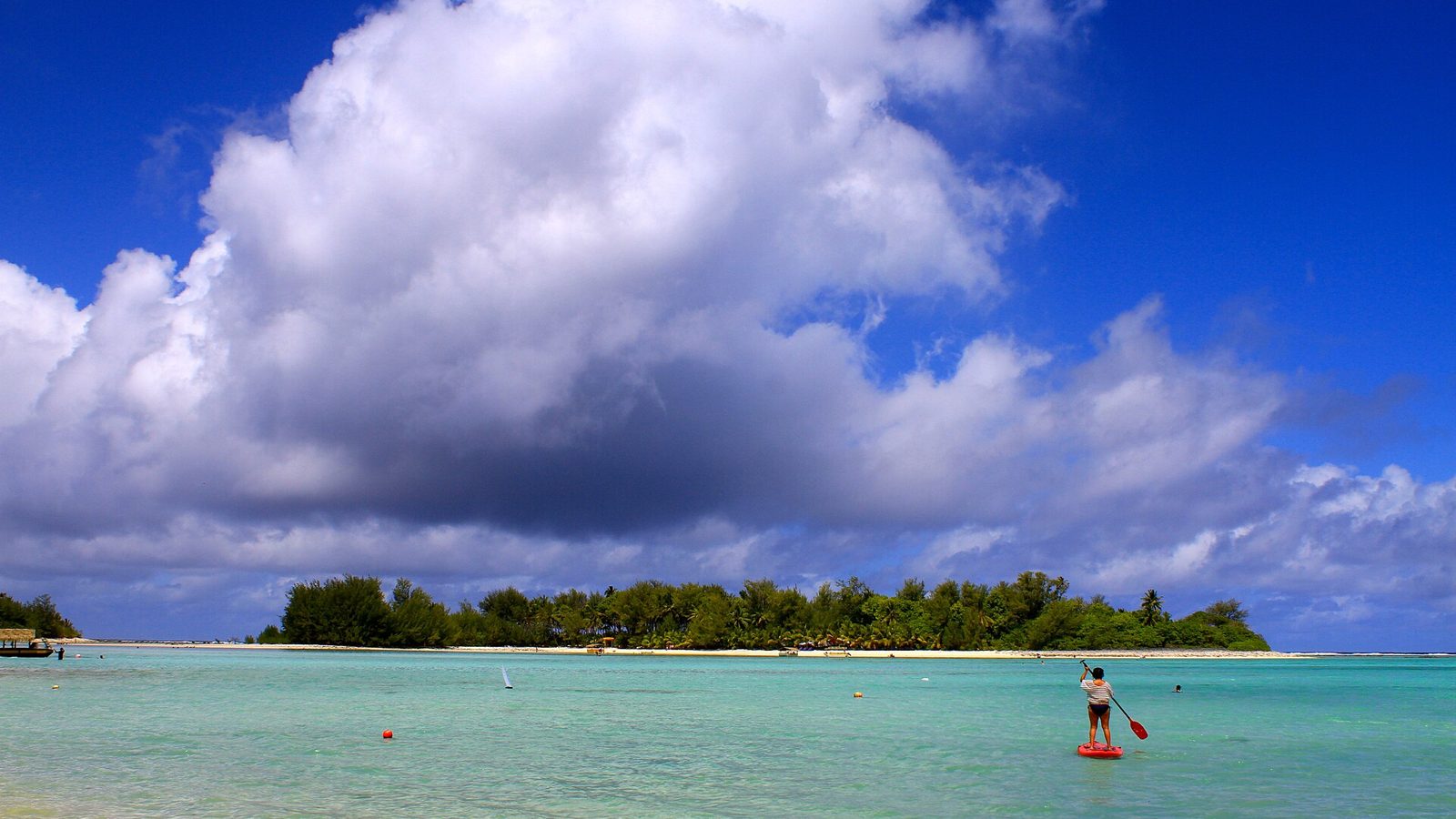
A green volcanic island ringed by a turquoise lagoon, with one road running around the coast and two buses, one going each way. You paddle out to tiny islets off Muri, hike past the Needle to a waterfall and spend Saturday morning eating ika mata at the Avarua market.
- Best time to visit: May to October
- Daily budget (budget traveller): $70 to $250 USD
- Ideal trip length: 5 to 7 days
Rarotonga is the main island of the Cook Islands, a small self-governing country in free association with New Zealand, roughly halfway between New Zealand and Hawaii. It is only 32km around. A coastal road called the Ara Tapu circles the island, with jungle-covered peaks in the middle and a shallow lagoon behind the reef on every side. Avarua is the small capital on the north coast, with the market, the banks and the harbour. Muri, on the south-east side, has the calmest water and most of the places to stay and eat. There are no high-rises and no traffic lights, and nothing is built taller than a coconut palm. Days are simple: snorkel in a marine reserve, kayak to an islet, walk the Cross-Island Track past Te Rua Manga, the Needle, and watch the sun set from the west coast. Sundays are for church and family, and much of the island shuts. Rarotonga is not cheap, because almost everything is imported, but the public bus, free lagoon swimming, self-catering kitchens and a market full of island food keep a solo budget under control.
Rarotonga is the capital island of the Cook Islands, a nation of 15 islands spread across a vast area of the South Pacific, with only around 15,000 people in total. Most of them live on Rarotonga. It is a young volcanic island, steep and jungle-covered in the middle, with a flat strip of coast where villages, taro fields and guesthouses sit between the mountains and the lagoon. The Cook Islands are self-governing in free association with New Zealand, so the New Zealand dollar is used, English is spoken everywhere and Cook Islands Māori is heard in churches, markets and homes. Many visitors fly in from Auckland for a week at a resort. As a solo traveller, you get a different version: the bus around the island, conversations at the Saturday market, a hike over the middle and evenings watching the sun drop into the sea from the west coast.
Getting here means flying. Air New Zealand flies daily from Auckland, with Jetstar on certain days and direct flights from Sydney, Brisbane, Papeete and, from May to October, Christchurch. Travellers from Europe and North America usually connect through Auckland. Once you are here, the island is easy. The bus goes both ways around the 32km coast road for about NZ$5 a ride, bikes are cheap to hire, and scooters are popular if you sort out the licence. Base yourself in Muri for the lagoon and the restaurants, Titikaveka for quiet beaches and snorkelling, or Arorangi for sunsets and cheaper lodges. Avarua is where you go for the market, the banks and supplies.
Timing matters more than you might think. The dry season, from May to October, brings sunny, breezy days and whales offshore from July. The wet season, from November to April, is hot and humid, with heavy downpours and the risk of cyclones, but rooms are cheaper. The week has its own rhythm too. Saturday morning is market day, and Sunday is quiet, with church, family lunches, limited buses and most shops closed. Rarotonga is not a party island. Nightlife means a few bars in Avarua, an island night show and a drink by the water. If you want a safe, friendly island where you can swim, walk and slow right down, it is hard to beat.
Rarotonga itinerary
Arrive and slow down
Morning: Land, pick up your transfer and settle in. If you arrived overnight, sleep late, then walk down to the lagoon for a first swim.
Afternoon: Take the bus into Avarua (about NZ$5). Get cash at an ATM, buy groceries and a local SIM, and look around the Cook Islands Christian Church.
Evening: Take the clockwise bus to Black Rock for sunset, then have a cheap dinner at a takeaway near Avarua before the last bus.
Muri lagoon
Morning: Hire a kayak or paddleboard on Muri Beach (about $15-25 USD) and paddle to Koromiri or Taakoka while the water is calm.
Afternoon: Snorkel along the edge of the lagoon, or join a lagoon cruise with lunch (around $60-70 USD). Rest in the shade through the hottest hours.
Evening: Eat at the Muri Night Market if it is on, or at one of the beachfront cafés in Muri.
Cross-Island Track
Morning: Take an early bus towards Avarua and walk up Uruau Drive to the trailhead. Climb to the base of the Needle for views of both coasts (free, or $35-60 USD with a guide).
Afternoon: Descend to Wigmore's Waterfall for a swim, then walk out to the south coast road and catch the bus home. Carry plenty of water and food.
Evening: Rest your legs. Have an early dinner and a drink near your accommodation.
South coast snorkelling and an island night
Morning: Take the bus to Tikioki and snorkel the Fruits of Rarotonga marine reserve. Go in the morning, before the wind picks up.
Afternoon: Walk along the white beaches of Titikaveka and stop for a fish sandwich at The Mooring Fish Café at Avana harbour.
Evening: Book an island night, such as the Te Vara Nui dinner and show in Muri (about $80-90 USD), or a cheaper resort show.
Aitutaki day trip
Morning: Take an early Air Rarotonga flight to Aitutaki (about 50 minutes) on a day tour. Check the price and pick-up time when you book.
Afternoon: Cruise the Aitutaki lagoon, snorkel, eat lunch on a motu and get your passport stamped on One Foot Island.
Evening: Fly back to Rarotonga in the evening. Have a simple dinner and an early night.
West coast and sunset
Morning: Climb Raemaru behind Arorangi, or visit the Highland Paradise cultural centre in the hills, if it is open that day.
Afternoon: Snorkel in the Aroa Marine Reserve and laze on the beach. On a Saturday, swap this for the Punanga Nui Market in the morning.
Evening: Watch the sunset from a west coast bar, then catch the night bus or a pre-booked taxi home.
Market or church, then depart
Morning: If it is Saturday, spend the morning at the Punanga Nui Market. If it is Sunday, go to a church service for the singing.
Afternoon: Have a last swim at Muri and buy pareu, a pearl or vanilla to take home. Check your transfer time.
Evening: Many flights leave late at night. Have dinner, take a final look at the lagoon and head to the airport.
Best neighbourhoods
- Muri: The south-east corner, with the widest, calmest part of the lagoon and four small islets (motu) just offshore. Most kayak and paddleboard hire, lagoon cruises, cafés and the night market are here. It is the easiest base for a first visit, though rooms cost more than elsewhere.
- Avarua: The small capital on the north coast, with the Punanga Nui Market, banks, the post office, supermarkets, the main church and the bus terminal at Cook's Corner. It has a few bars and cafés but little good swimming. It is practical for a night or two, especially near a Saturday.
- Titikaveka: A quiet stretch of the south coast west of Muri, with long white beaches and some of the best snorkelling on the island at the Fruits of Rarotonga marine reserve. You will mostly find self-catering bungalows and small resorts. It is peaceful, with fewer shops and restaurants close by.
- Arorangi: The west coast village, facing the sunset. It has a mix of budget lodges, beach bungalows and resorts, the trail up Raemaru and the Aroa Marine Reserve to the south. The lagoon is narrower here, but the evenings are the best on the island.
- Nikao and Black Rock: The north-west corner between Avarua and the airport, with Black Rock (Tuoro) and a few hotels and guesthouses. It is handy for late-night arrivals or early flights, and the sunsets are good. Lagoon swimming is limited, and you will hear the planes.
Must-do experiences
- Walk the Cross-Island Track: Start at the end of Uruau Drive in the Avatiu valley and climb through the jungle to the base of Te Rua Manga, the Needle, at about 413m. Then drop down the south side to Wigmore's (Papua) Waterfall. It is about 6km and three to four hours, steep and muddy, and free to walk. Guided walks cost roughly $35-60 USD.
- Paddle to the motu at Muri: Hire a kayak or paddleboard on Muri Beach for about $15-25 USD and cross the lagoon to Koromiri, Oneroa or Taakoka, the small islets just offshore. Go early in the morning when the wind is lightest. For a lazier day, lagoon cruises with snorkelling and a barbecue lunch cost around $60-70 USD.
- Snorkel the marine reserves: Swim out from the beach at Tikioki on the south coast, known as Fruits of Rarotonga, or at Aroa in the south-west. The water is shallow and clear and full of fish, and you may see turtles. It is free if you bring your own mask, or hire gear for about $10 USD a day. Never swim near the reef passages.
- Go to the Punanga Nui Market: Saturday morning is the island's big social event. Arrive between about 8 and 9am for ika mata, fresh fruit, coconut buns, pearls, pareu and tivaevae quilts, plus a free cultural show on the stage. Some stalls trade on weekdays, but Saturday is when it all happens, and it winds down around noon.
- See an island night show: Cook Islands dancing is fast, loud and very skilled, with drums that shake the floor. Te Vara Nui Village in Muri runs a well-known dinner and show, from roughly $80-90 USD. Several resorts hold their own island nights for less, so check which evenings they run.
- Join a Sunday church service: The Cook Islands Christian Church services are famous for their powerful, unaccompanied hymn singing. Visitors are welcome at the white coral-block church in Avarua and others around the island. Dress modestly, sit towards the back and stay for tea and food if you are invited.
- Ride the bus around the island: Two buses circle the island, one clockwise and one anticlockwise, from Cook's Corner in Avarua. A single ride is about $3 USD and a full loop takes roughly an hour. It is the cheapest island tour you can do. Pay in cash, and finish the day at Black Rock for the sunset.
Hidden gems
- The free mid-morning cultural show on the Punanga Nui Market stage, which many visitors miss because they leave after breakfast
- The Raemaru track behind Arorangi, a steep scramble to a flat-topped mountain with views over the west coast and far fewer walkers than the Needle
- The inland back road (Ara Metua), an old road behind the coastal one that passes taro patches, plantations and village life
- The lagoon at Muri at dawn, when it is glassy and still before the wind and the kayak hire stalls get going
- The coral-block Cook Islands Christian Church in Avarua on a weekday, when the churchyard and the graves of early missionaries are quiet
Daily budget
- Accommodation: budget $30-55 USD / night (backpacker dorm or basic private room), mid-range $110-200 USD (beach bungalow or small studio with kitchen), splurge $350+ USD (lagoon-front villa or adults-only resort). Prices rise in July and August and over Christmas. Few places have dorms, so book backpacker beds early. Many budget rooms have shared kitchens, which saves a lot on food.
- Food: budget $25-35 USD / day (market food, supermarket self-catering, a fish sandwich), mid-range $50-80 USD (café lunch and a sit-down dinner), splurge $100+ USD (resort dining, island night buffet, cocktails). Most food is imported, so supermarket prices are high. Market stalls, night market plates and cooking for yourself are the best value. Prices are rough guides.
- Transport: budget $3-12 USD / day (bus rides or a day pass), mid-range $12-25 USD (scooter or e-bike hire), splurge $45+ USD (small car hire or taxis). The bus costs about NZ$5 a ride or NZ$20 for a day pass, cash only. A visitor scooter licence costs about NZ$20-40. Airport transfers are usually booked through your accommodation.
- Activities: budget $0-15 USD / day (lagoon swimming, Cross-Island Track, own snorkel gear), mid-range $25-70 USD (kayak hire, lagoon cruise, guided hike), splurge $400+ USD (Aitutaki day tour, scuba diving, private tours). The Cross-Island Track and the marine reserves are free, though there is a small fee at Wigmore's Waterfall. Island night shows with dinner cost about $80-90 USD.
- Drinks & nightlife: budget $5-10 USD (a local beer at a bar), mid-range $20-40 USD (a few drinks at a beach bar or sunset spot), splurge $60+ USD (cocktails and wine at a resort). A coffee costs about $3-4 USD and a beer $5-7 USD. Nightlife centres on a few bars in Avarua and resort bars, and Friday is the big night out.
Where to stay
- Social hostel in Arorangi, west coast ($30-55 USD / night): Rarotonga Backpackers is a long-running budget lodge with dorms, simple private rooms and shared kitchens. It is close to sunset spots and on the bus route, and one of the few places to meet other independent travellers.
- Boutique hotel in Muri ($150-300 USD / night): Small lagoon-side hotels and bungalow resorts in Muri put you steps from the kayak hire, the cafés and the night market. Some are adults-only and quiet, which suits a solo stay.
- Apartment in Titikaveka and Muri ($90-180 USD / night): Self-catering studios and garden bungalows give you a kitchen to cook in, often near the beach. Check bus stop distance and whether bikes or snorkel gear are included.
- Splurge in Muri or Titikaveka ($400-800+ USD / night): Pacific Resort Rarotonga in Muri and the adults-only Little Polynesian in Titikaveka sit right on the lagoon, with pools, good restaurants and kayaks to borrow.
What to eat
- Ika mata: raw fish in lime and coconut cream with chopped vegetables, the national dish, best from a market stall on Saturday morning
- Fish sandwiches: a big grilled mahi-mahi or tuna sandwich from The Mooring Fish Café at Avana harbour, one of the island's favourite cheap lunches
- Rukau and island food plates: taro leaves cooked in coconut cream, served with taro, breadfruit and pork at market stalls and umukai feasts
- Poke: a sweet, sticky pudding of banana or pumpkin with arrowroot and coconut cream, sold at the market and in some cafés
- Tropical fruit and smoothies: papaya, pawpaw, starfruit, soursop juice and drinking coconuts, much cheaper at the market than in cafés
- Muri Night Market: a row of food stalls in Muri on several evenings a week, with plates of curry, seafood and barbecue at sensible prices
Day trips
- Aitutaki (About 260km north, roughly 50 minutes by plane): A huge, shallow turquoise lagoon dotted with islets, often called the most beautiful in the Pacific. Day tours include a lagoon cruise, snorkelling, lunch on a motu and a visit to One Foot Island. Book an Air Rarotonga day tour that includes flights, transfers, the cruise and lunch. Expect to pay well over $400 USD. Staying a night or two on Aitutaki gives you more time for the money.
- Atiu (About 215km north-east, roughly 45 minutes by plane): A raised coral island with limestone caves, forest and birdlife, including the Anatakitaki cave and its rare kopeka birds. It is far quieter and more traditional than Rarotonga, and coffee is grown here. Fly with Air Rarotonga. Flights do not run every day, so most visitors stay two or three nights rather than going for the day. Book a cave tour and a scooter through your guesthouse.
- Raemaru (Behind Arorangi on the west coast, a 2 to 3 hour return hike): A distinctive flat-topped mountain with a steep, rooty climb and wide views over the west coast lagoon and the ocean. It is far quieter than the Needle. Take the bus to Arorangi and walk inland to the trailhead, asking locally for directions. Ropes help on the steepest section. Avoid it after rain and bring plenty of water.
When to visit
- Early dry season (April - June): 24-28°C, less humid, occasional showers, lagoon around 25-27°C. Crowds: Low to moderate, busier around Easter and Anzac Day. A very good time. Settled weather, good hiking conditions and better room prices before the winter rush from New Zealand.
- Peak dry season (July - August): 20-26°C, sunny and breezy, cool nights. Crowds: Busy, especially during New Zealand and Australian school holidays. The most comfortable weather, plus the Te Maeva Nui festival and the start of whale season. Book flights and beds well ahead, as prices peak.
- Late dry season (September - October): 23-27°C, mostly dry, warming up. Crowds: Moderate, quieter than midwinter. The locals' pick. Humpback whales are still around, the hiking is good and prices drop after the school holidays.
- Wet and cyclone season (November - March): 27-31°C, hot and humid, heavy tropical downpours. Crowds: Low, apart from Christmas and New Year. Cheapest rooms and the warmest water, but the Cross-Island Track gets slippery and cyclones are possible. Take insurance and stay flexible.
Getting there
Every international visitor arrives at Rarotonga International Airport, just west of Avarua. Air New Zealand flies daily from Auckland, with extra flights in the busy season, and the trip takes about four hours. Jetstar flies from Auckland on certain days of the week, and there are direct flights from Sydney and Brisbane. Air New Zealand runs seasonal direct flights from Christchurch from late May to October 2026, and Air Tahiti links Papeete with Rarotonga. From North America and Europe, most routes connect through Auckland, and Air New Zealand fares from Los Angeles usually start at around $1,400 USD return. If you transit through New Zealand, check whether you need a New Zealand transit eTA. Departure tax is now included in most airfares. Many flights land late at night, when the bus is not running, so book a transfer through your accommodation. In the daytime, the bus stops on the main road outside the airport, with a small charge for each large bag. Air Rarotonga flies on to Aitutaki and the other outer islands.
Getting around
One road, the Ara Tapu, circles the island, so you cannot really get lost. The Cooks' Island Bus runs both ways around the coast from Cook's Corner in Avarua. Clockwise buses leave on the hour from about 7am Monday to Saturday, and anticlockwise buses leave at half past the hour from about 8.30am on weekdays, finishing earlier on Saturdays. There is no anticlockwise bus on Sundays, and Sunday clockwise services are limited. A night bus follows the clockwise route on some evenings. Fares are about NZ$5 ($3 USD) a ride, NZ$35 for 10 rides or NZ$20 ($12 USD) for a day pass, and you pay the driver in cash. Large bags cost extra. Flag the bus down anywhere on the road. Scooters cost about $12-15 USD a day, but you need a motorcycle licence from home or a Cook Islands visitor licence from the police station in Avarua, which involves a theory and practical test for most visitors. Helmets are compulsory. Bicycles and e-bikes are a good alternative on the flat coast road. Taxis exist but are few, so ask your accommodation to book one, especially at night.
Safety
Rarotonga is very safe, and violent crime against visitors is rare. Petty theft from scooters, beach bags and unlocked rooms does happen, so do not leave valuables on the sand while you snorkel. The biggest risks are on the road and in the water. Scooter crashes are the most common cause of injury, so ride slowly, wear a helmet and avoid riding after drinking. The lagoon is calm, but currents rip out through the reef passages, such as Avaavaroa and Avana, and people drown there. Swim inside the lagoon, away from passages, and never go out on the reef alone. Wear reef shoes for coral, sea urchins and stonefish. The Cross-Island Track is slippery after rain, so start early, tell someone where you are going and carry water. Dengue fever is present in the Pacific, so use insect repellent. Cyclone season runs from November to April. Medical care is basic, and serious cases go to New Zealand, so take insurance with evacuation cover. The emergency number is 999.
Solo travel tips
- Plan around Saturday and Sunday: Saturday brings the market, and Sunday brings church, closed shops and limited buses. Do your shopping on Saturday and plan a lazy beach day for Sunday.
- Book transfers for late flights: Many international flights land or leave at night, outside bus hours. Ask your accommodation to arrange a transfer when you book, and confirm it the day before.
- Cook for yourself: Food is expensive because almost everything is imported. A room with a kitchen, market produce and a few supermarket staples will cut your daily costs sharply.
- Hike in the morning: Start the Cross-Island Track by 8am, when it is cooler and drier. Avoid it after heavy rain, and tell someone at your accommodation when you expect to be back.
- Safety for solo travellers: The main risks are scooter crashes and currents in the reef passages. Ride slowly with a helmet, swim inside the lagoon and use the night bus or a taxi after dark rather than walking along unlit roads.
- Meet people at the market and island nights: Saturday morning at Punanga Nui is the easiest place to chat with locals and other visitors. Island nights, guided hikes and lagoon cruises are also friendly and sociable.
Cultural etiquette
- Greet people with 'kia orana', which means 'may you live long' and is used for hello. Say 'meitaki' for thank you, or 'meitaki ma'ata' for thank you very much.
- Wear swimwear on the beach only. Cover up with a pareu or shorts and a top in shops, cafés and villages.
- Dress modestly for church, with shoulders and knees covered. Many local women wear hats. Sit quietly, and do not take photos during the service.
- Respect Sunday as a day of rest. Keep noise down, and do not expect shops, tours or many restaurants to open.
- Do not pick fruit or coconuts without asking. Every tree belongs to a family, even if it looks wild.
- Follow the rules in ra'ui areas, the traditional marine reserves. Do not fish, collect shells or stand on coral.
- Tipping and bargaining are not part of local culture. A smile and a thank you go a long way, and prices at the market are fixed.
Frequently asked questions
How do I get to Rarotonga and from the airport to my room?
All international flights land at Rarotonga International Airport, just west of Avarua. Air New Zealand flies daily from Auckland in about four hours, and Jetstar flies from Auckland on certain days. There are also flights from Sydney, Brisbane, Papeete and, in season, Christchurch. Visitors from North America usually connect through Auckland. Many flights land late at night or very early in the morning, when the bus is not running, so book a transfer through your accommodation. During the day, the bus stops on the main road outside the airport and charges a little extra for large bags.
How many days do I need in Rarotonga?
Three days covers Muri lagoon, the Cross-Island Track and a snorkel at a marine reserve. Five days lets you add a Saturday market, an island night and a lazy day on the west coast. A week gives you time for an Aitutaki day trip and some proper rest, which is really what most people come for. Try to include a Saturday and a Sunday, as they are the most distinctive days on the island.
When is the best time to visit Rarotonga?
May to October is the dry season, with sunny days around 25°C, cooler nights and lower humidity. July and August are busiest, with New Zealand and Australian school holidays and the Te Maeva Nui festival around the start of August. From July to October humpback whales pass close to the reef. November to April is hotter, wetter and cheaper, but it is cyclone season, so take good insurance and keep plans flexible.
Can I ride a scooter in Rarotonga?
Yes, but you need the right licence. If your licence from home includes motorcycles, you just get a visitor licence from the police station in Avarua for about NZ$20. If it only covers cars, you have to sit a theory test and a short practical test there, which costs about NZ$40 ($24 USD) in total. The licensing office keeps short weekday hours, so go in the morning. Helmets are compulsory. A licence issued on Aitutaki is cheaper, needs no test and is valid on Rarotonga.
Where is the best swimming and snorkelling?
Muri has the widest, calmest lagoon and is easiest for beginners and kayakers. For snorkelling, head to the Fruits of Rarotonga marine reserve at Tikioki on the south coast, or the Aroa Marine Reserve in the south-west. Both are free and you can walk straight in from the beach. Stay inside the lagoon and well away from the reef passages, where strong currents pull out to sea.
Is a day trip to Aitutaki worth it?
If you can afford it, yes. Aitutaki's lagoon is one of the most beautiful in the Pacific, and day tours include the roughly 50-minute flight, a lagoon cruise with snorkelling, lunch and a stop at One Foot Island. Expect to pay well over $400 USD, so check current prices. If you have the time, staying two or three nights on Aitutaki is better value and much more relaxed.
Is Rarotonga safe for solo female travellers?
Yes. It is one of the most relaxed places in the Pacific to travel alone, and locals are friendly and protective of visitors. Take normal care at bars on Friday nights in Avarua, avoid riding a scooter or walking unlit stretches of road late at night, and use a booked taxi or the night bus instead. Lock your room and do not leave bags on the beach. Do not hike the Cross-Island Track alone after heavy rain.
What entry rules apply to the Cook Islands in 2026?
Most nationalities, including UK, US, Canadian and EU passport holders, get a 31-day visitor permit on arrival, and New Zealand and Australian passport holders get 90 days. Your passport must be valid for six months beyond your departure date, and you need an onward or return ticket. Immigration also asks to see your accommodation booking on arrival. Stays can be extended for a fee. If you transit through Auckland, you may need a New Zealand transit eTA. Check the official Cook Islands Tourism entry page and your government's travel advice before you go.
Tours and activities in Rarotonga | Rarotonga in 2 days | Rarotonga in 3 days | Rarotonga in 4 days | Rarotonga in 5 days | Rarotonga in 7 days
Can't decide? Compare Rarotonga with...
Joy Plus home | Destinations | Itineraries | Activities | Flights | Budget planner | Calendar | Map | Blog | Lifetime access