Destinations / Europe
Rethymno, Greece travel guide
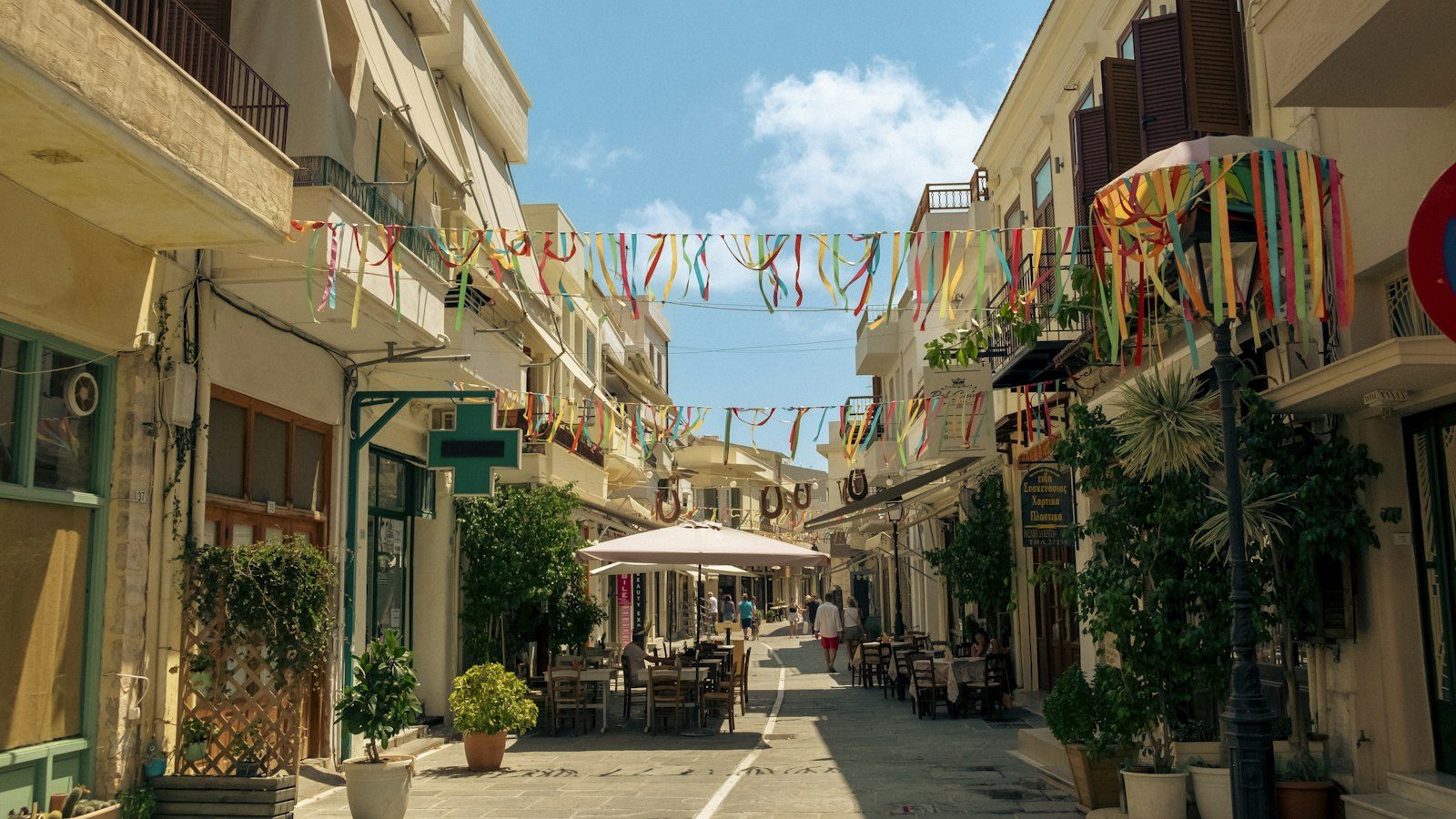
A Venetian and Ottoman port town halfway along Crete's north coast. You wander lanes of wooden balconies and minarets, walk the walls of a huge hilltop fortress and swim off a long sandy beach that starts right next to the old harbour.
- Best time to visit: May to June and September to October
- Daily budget (budget traveller): $65 to $215 USD
- Ideal trip length: 4 to 7 days
Rethymno is Crete's third-largest town. It sits on the north coast between Chania and Heraklion, about an hour from Chania and an hour and a half from Heraklion by bus. Venice ruled here for more than four centuries and the Ottomans for over two, and the old town shows both. Stone Venetian doorways and a Renaissance fountain stand next to domed mosques, a slim minaret and timber balconies hanging over the lanes. Above it all is the Fortezza, a huge late 16th-century fortress on the hill by the sea. Plenty of Greek harbour towns have no real beach, but Rethymno has a sandy one on the doorstep. It starts beside the Venetian harbour and runs east for kilometres past the resort strip at Perivolia and Platanias. The old town is compact and mostly free of cars, so you can see it in a day, but it is best enjoyed over slow evenings. A university campus keeps the town lively outside the summer, with cheap tavernas and bars full of students. Buses run to Arkadi Monastery, the south coast beaches at Plakias and Preveli, and Chania for the day. Rethymno gets busy in July and August, when the beach hotels fill with package holidaymakers. Even so, an old town hostel bed, bakery breakfasts, free swimming and bus rides at a few euros each make it one of the easiest and best-value bases in Crete for a solo traveller.
Rethymno is the most atmospheric old town on Crete after Chania. It is smaller, calmer and usually cheaper than Chania, with a harbour, a fortress and a long sandy beach all within a short walk. The town has around 35,000 people and a large university campus, so it feels like a real place rather than a resort. Venice ruled here from the 13th century until the Ottomans took the town in 1646, and you see both in the lanes: carved Venetian doorways, the Rimondi Fountain, the Neratze Mosque and wooden Ottoman balconies above the streets. Most visitors come from the beach hotels for a few hours. Stay in the old town and you get the better version: empty lanes at 7am, a swim before lunch, the Fortezza walls in the late light and raki after dinner. A hostel bed, free beaches and cheap buses keep costs low.
Getting here is simple. Most people fly into Chania or Heraklion. A few direct KTEL buses a day run from Chania airport for around €8-9, and from Heraklion you take a city bus to the KTEL station, then an intercity bus for €8. Buses between Rethymno, Chania and Heraklion run regularly through the day. Once you are here, walk. The old town is compact, the beach starts at the harbour and the bus station is a short walk west. Base yourself in the old town for atmosphere, or by the seafront if you want the beach on your doorstep. Use KTEL buses for Arkadi, Plakias and Chania, and consider a day of car hire for the mountain villages.
Timing shapes the trip. May, June, September and early October bring warm sea, long days and fewer crowds. July and August are hot and busy, and the beach strip fills with package holidaymakers, though summer brings the wine festival and open-air events at the Fortezza. From November to March, Rethymno is quiet and mild, with students filling the cafés, but many beach hotels close and buses to the south coast become rare. Carnival, in the weeks before Orthodox Lent, is the biggest in Crete. Rethymno is very safe and most people in tourism speak good English. Nightlife is lively but not wild in the old town. If you want big clubs, look to the beach strip. If you want a swim, a walk on the walls and grilled octopus by the water, stay in the old town.
Rethymno itinerary
Arrive and find your feet
Morning: Take a bus from Chania or Heraklion airport. Drop your bag at your hostel or room and head for a bougatsa near the Rimondi Fountain.
Afternoon: Wander the old town lanes to the Neratze Mosque and Porta Guora. Have a first swim at the town beach by the harbour.
Evening: Walk out along the breakwater to the lighthouse at sunset, then eat dakos and grilled octopus in a back-lane taverna.
Fortezza, museum and beach
Morning: Climb to the Fortezza at opening time (about €5) before the heat. Walk the sea-facing north walls for the best views.
Afternoon: Visit the Archaeological Museum in the old church of St Francis (about €5), then spend the afternoon on the beach east of the centre.
Evening: Walk round to Koumbes for sunset and a fish dinner by the rocks.
Arkadi Monastery
Morning: Take the morning KTEL bus to Arkadi Monastery (about €3.30, around 40 minutes). Entry is about €3-4. See the church, the museum and the old gunpowder store.
Afternoon: Catch the return bus, checking the time in advance, as there are only a few a day. Lunch in the old town, then a slow swim.
Evening: Sit by the Municipal Garden or in the old town lanes for a carafe of house wine and some meze.
Plakias and the south coast
Morning: Take an early bus to Plakias (about €5, around an hour) across the mountains. Swim off the long beach while it is still calm.
Afternoon: Walk over to Damnoni beach, or take a summer boat towards Preveli. Pack water and a hat, as shade is limited.
Evening: Catch the last bus back to Rethymno. Have a simple dinner and raki in the old town.
A day in Chania
Morning: Take a KTEL bus to Chania (about €7-8, roughly an hour). Walk around the Venetian harbour and the lighthouse before the crowds.
Afternoon: Explore the Splantzia quarter and the covered market, and have lunch in the old town lanes.
Evening: Bus back to Rethymno. Sunset at the Fortezza walls if you missed it on day two.
Spili and Agia Galini
Morning: Take the bus towards Agia Galini (about €6.70). Stop off at Spili to see its Venetian fountain with lion-head spouts.
Afternoon: Carry on to Agia Galini, a fishing village on the south coast, for lunch and a swim. Check the return bus before you settle in.
Evening: Back in Rethymno for a farewell dinner at the harbour or in Koumbes.
Slow morning and depart
Morning: Have a last early swim at the town beach and breakfast in the old town before the lanes fill up.
Afternoon: Buy olive oil, raki or local ceramics, then catch a bus to Chania or Heraklion airport. Check times the day before.
Evening: Fly home, or carry on to your next stop in Crete.
Best neighbourhoods
- Old town: The heart of Rethymno, a maze of Venetian and Ottoman lanes between the Fortezza and Porta Guora, the old town gate. You have the Rimondi Fountain, the Neratze Mosque, the Archaeological Museum, the hostel and most of the bakeries and tavernas. It stays lively until late in summer, so choose a room on a side lane if you sleep lightly.
- Venetian harbour and the seafront: The small round harbour, lined with fish restaurants, and Eleftheriou Venizelou, the long seafront road beside the town beach. Hotels and apartments here put you a minute from the sand and five minutes from the old town. It is convenient and busy, with traffic and bar noise on summer nights.
- Koumbes: The rocky seafront west of the Fortezza, with a promenade, small fish tavernas and locals swimming off the rocks. It is close to the KTEL bus station and much calmer than the harbour. The old town is a 10 to 15-minute walk around the fortress hill.
- Perivolia and Platanias: The beach strip 2 to 5km east of the centre, with hotels, apartments, supermarkets and bars along the sand. City buses run regularly into town. It suits you if you want a pool and a sunbed outside your door, but it feels like a resort rather than Crete.
- Adelianos Kampos and Pigianos Kampos: Quieter beach villages further east, about 8 to 10km out, with bigger resort hotels and a wide stretch of sand. The beach here has more space than in town. Evenings are calm, and you will rely on the city bus or a taxi to reach the old town.
Must-do experiences
- Walk the walls of the Fortezza: The Venetians built this huge fortress on Paleokastro hill in the late 16th century. Adult entry is about €5 at the gate, with no online booking. Inside are a domed mosque, a small church, old stores and walls with views along the coast. There is little shade, so go early or late.
- Get lost in the old town: Start at the Rimondi Fountain, a Venetian fountain from 1626 with lion-head spouts. Follow the lanes past the Venetian Loggia to the Neratze Mosque and out through Porta Guora. It is free, and the wooden Ottoman balconies look best in the quiet early morning.
- See the Archaeological Museum: For now the collection is housed in the restored Venetian church of St Francis in the old town, with local finds from Minoan to Roman times. Adult tickets cost about €5, and entry is free on the first Sunday of each month from November to March. Check the closing day before you go.
- Watch sunset at the Venetian harbour: The small harbour is ringed with fish restaurants, and a breakwater leads out to an old stone lighthouse. Walk out at dusk for the view back to the Fortezza and the town. Waiters on the quay can be pushy, so eat in the lanes behind if you prefer.
- Swim off the town beach: A long sandy beach starts right beside the harbour and runs east for kilometres. It is free, but sunbeds and umbrellas cost extra. Walk 10 to 15 minutes east of the centre for more space, and respect the flags, as waves get big when the wind is up.
- Visit Arkadi Monastery: About 23km southeast of town, this fortified monastery is a symbol of Cretan resistance. In 1866, the people trapped inside by Ottoman troops blew up the gunpowder store rather than surrender. Entry is about €3-4. A KTEL bus runs a few times a day for around €3.30.
- Cross the island to Plakias: The south coast is about an hour away by bus, over the mountains and through a gorge. Plakias has a long beach and a relaxed village feel, and Damnoni and Preveli are close by. The bus costs about €5 each way, with several departures a day in summer.
Hidden gems
- The Municipal Garden near Porta Guora, a shady park on the site of an old Ottoman cemetery that hosts the town's wine festival, usually in July
- Kirkor, a small old shop near the Rimondi Fountain where filo pastry is still stretched by hand and served hot as bougatsa or kataifi
- The north walls of the Fortezza, facing the open sea, where few visitors walk and the views are the best on the site
- The Koumbes seafront at sunset, a rocky promenade west of the fortress with small fish tavernas and locals swimming off the rocks
- Margarites, a pottery village in the hills east of town where workshops still make big clay pots, an easy stop on a drive to Arkadi
Daily budget
- Accommodation: budget €18-30 / night (hostel dorm), mid-range €70-130 (old town room or 3-star hotel), splurge €250+ (boutique palazzo or beach resort). Prices jump in July and August. A climate resilience fee is added per room per night, for example €5 at a 3-star hotel from April to October and €1.50 in winter, or €8 for a short-term rental apartment.
- Food: budget €15-25 / day (bakery breakfast, gyros or dakos, supermarket picnic), mid-range €35-55 (taverna lunch and dinner), splurge €80+ (fish by the kilo, wine, fine dining). A gyros pita costs a few euros and taverna mains are roughly €10-18. Whole fish is priced per kilo, so ask before ordering. Prices are rough guides.
- Transport: budget €0-8 / day (walking, city buses), mid-range €10-20 (intercity bus day trips), splurge €50-70 (a day of car hire with fuel). KTEL fares run about €7-8 to Chania, €8 to Heraklion, €5 to Plakias and €3.30 to Arkadi. City buses cost around €1.20.
- Activities: budget €0-10 / day (beach, old town, Fortezza at about €5), mid-range €10-20 (Archaeological Museum at about €5, Arkadi at €3-4), splurge €40+ (guided tours, boat trips, cooking classes). State museums are free on the first Sunday of the month from November to March. Carry ID for student and senior reductions.
- Drinks & nightlife: budget €4-8 (a beer or glass of house wine), mid-range €15-30 (a few drinks at an old town bar), splurge €50+ (cocktails at a seafront or rooftop bar). A freddo espresso costs about €2.50-3.50. House wine comes cheaply by the carafe, and raki is often free after a meal.
Where to stay
- Social hostel in Old town (€18-30 / night (dorm)): Rethymno Youth Hostel is a long-running, friendly hostel on Tombazi Street in the middle of the old town, a few minutes from the museum and the beach. It has dorms, a kitchen and a garden courtyard, and it is the easiest place in town to meet other travellers.
- Boutique hotel in Old town, near the Rimondi Fountain (€150-280 / night): Rimondi Boutique Hotels occupies restored Venetian and Ottoman buildings in the old town lanes, with stone walls and a small pool. The fountain, the harbour and the beach are all a short walk away.
- Apartment in Old town and the seafront (€60-120 / night): Small rooms to let and apartments in old houses give you a kitchen and a local feel. Expect stairs and no lift in the old town, and check the exact location if you have heavy luggage.
- Splurge in Missiria, on the beach strip east of town (€300-600+ / night): Grecotel Creta Palace is a large beachfront resort with pools, a spa and gardens, about 5km from the old town. A short taxi or city bus ride gets you to the harbour for dinner.
What to eat
- Bougatsa and kataifi: hot filo pastry with cream or cheese for breakfast, from Kirkor or any old town bakery
- Dakos: a barley rusk topped with tomato, mizithra cheese and olive oil, a cheap and filling lunch in almost any taverna
- Kalitsounia: small cheese pies filled with soft mizithra and often mint, baked or fried, sold in bakeries and tavernas
- Gamopilafo and snails: rich Cretan wedding rice cooked in meat stock, and chochlioi boubouristi, snails fried in olive oil with rosemary, best at village-style tavernas
- Raki (tsikoudia): the clear grape spirit often served free with fruit or a sweet at the end of a meal. Sip it slowly and do not feel you have to finish the carafe
- Seafood at Koumbes or the harbour: grilled octopus, sardines and whole fish sold by the kilo. Ask the price per kilo before you order
Day trips
- Arkadi Monastery (About 23km southeast of Rethymno, around 40 minutes by bus): A fortified 16th-century monastery with a carved church front, gardens and a small museum. In 1866, those trapped inside blew up the gunpowder store rather than surrender to Ottoman troops, and it remains a national symbol. Take the KTEL bus from Rethymno, which runs a few times a day for about €3.30, or a taxi for roughly €20-30. Entry is about €3-4. Check the return bus time before you set off.
- Plakias and Preveli (About 35 to 40km south, around an hour by bus): The south coast at its best: a long beach and laid-back village at Plakias, sandy coves at Damnoni and the famous palm-lined river beach at Preveli. The water is often clearer and calmer than in the north. KTEL buses run to Plakias several times a day in summer for about €5, and two a day go towards Preveli for around €4.60. Services are much thinner in winter.
- Chania (About 60km west, around an hour by bus): Crete's prettiest harbour town, with a Venetian lighthouse, a covered market and lanes full of shops and tavernas. It is busier than Rethymno but worth a day. KTEL buses run regularly through the day for about €7-8 each way. Get an early bus to beat the crowds and check the last return before you leave.
When to visit
- Spring (April - May): 18-25°C, fresh and green, sea cool until late May. Crowds: Low to moderate, busier around Orthodox Easter. Good for walking, Arkadi and cheap rooms. Wild flowers cover the hills. Swimming is chilly until the end of May, and some beach hotels open only in late April.
- Early summer (June): 25-29°C, sunny, sea around 22-24°C. Crowds: Moderate, rising towards the end of the month. Arguably the best month. Long evenings, warm water and a town that still feels relaxed. All the south coast buses are running.
- High summer (July - August): 29-33°C, hot and dry, sea up to about 26°C, meltemi wind. Crowds: Busy, very busy on the beach strip and in August. Great for swimming and summer events, but rooms cost the most and the heat is intense. Book well ahead and explore early or late in the day.
- Autumn and winter (September - March): September 25-29°C, then cooling to 12-17°C in winter, with rain. Crowds: Moderate in September and October, quiet from November. September and October are the locals' pick, with warm water and calm streets. Winter is cheap and authentic, but beach hotels close and buses thin out.
Entry rules for your passport
Visa rules for Greece depend on the passport you travel on. Check the official source before you book: European Commission: Schengen visa policy
Getting there
Rethymno has no airport. The nearest are Chania, about 70km west, and Heraklion, about 80km east. From Chania airport, a handful of direct KTEL buses a day run to Rethymno in about 1 hour 15 minutes for around €8-9. From Heraklion airport, take the city bus to the centre (€1.30 if bought in advance, €2.30 from the driver), walk to the KTEL station near the port, then take an intercity bus to Rethymno. These run often through the day, take about 1.5 hours and cost €8. A taxi from Heraklion costs roughly €90-140. KTEL buses also link Rethymno with Chania town regularly for about €7-8. Buses can fill up in high summer, so buy tickets at the station and allow extra time. By sea, most visitors arrive on overnight ferries from Piraeus to Chania or Heraklion and then take the bus, as ferry services into Rethymno port itself have been irregular. If you drive, the national road along the north coast is fast but busy, so take care with overtaking.
Border checks: non-EU visitors (other than Swiss, Norwegian, Icelandic, Liechtenstein, Andorran, Monegasque, San Marinese and Vatican citizens, and holders of an EU residence permit or long-stay visa) are registered in the EU's Entry/Exit System (EES) instead of getting a passport stamp. On your first crossing, officers take your photo and/or fingerprints, so allow extra time at passport control. ETIAS, the planned travel authorisation, is not in operation yet, so don't pay any website for one.
Getting around
Rethymno's old town is small and mostly closed to cars, so you will walk almost everywhere. It takes about 10 minutes from the harbour to Porta Guora, and the lanes are flat apart from the climb to the Fortezza. The KTEL intercity bus station is on the western seafront below the fortress, a 10 to 15-minute walk from the old town. City buses run along the beach strip to Perivolia, Platanias and Adelianos Kampos for around €1.20. Intercity KTEL buses go to Chania for about €7-8, Heraklion for €8, Plakias for about €5 and Arkadi for about €3.30. Buy tickets at the station where you can, as some drivers take only cash. Services to Arkadi, Preveli and the south coast run only a few times a day and fewer in winter, so check the return time before you set off. Taxis wait near the harbour and Porta Guora, and a ride to Arkadi costs roughly €20-30. If you drive, leave the car in the paid car parks by the harbour or the Fortezza, as old town lanes are narrow and often pedestrian-only. Car hire is the easiest way to explore inland villages and the south coast, but mountain roads are slow and winding.
Safety
Rethymno is very safe, and violent crime against visitors is rare. Watch your bag in crowded old town lanes on summer evenings and around busy bars. The real risks are the heat, the sea and the roads. The town beach can have strong waves and currents when the wind blows, so follow the lifeguard flags and do not swim alone in rough water. In July and August, the meltemi wind can whip up the sea, and wildfire risk is high, so never light fires or drop cigarettes outdoors. Traffic on the seafront road is fast and scooters weave through, so take care crossing. Mountain roads are narrow and twisty, and Crete has a poor road safety record. Tap water is treated and generally safe, though many locals drink bottled, so ask your host. The EU emergency number is 112. EU travellers should carry an EHIC and UK travellers a GHIC, and everyone else needs travel insurance with medical cover.
Solo travel tips
- Stay in the old town: You can walk to the beach, the harbour and the Fortezza in minutes and get home late on foot. The beach strip is easier for pools but feels cut off from the real town.
- Get out early: Coach groups arrive mid-morning and the heat peaks after noon. Do the Fortezza, the old town and Arkadi before 10am or after 5pm, and save the middle of the day for swimming.
- Plan around return buses: Buses to Arkadi, Preveli and the south coast run only a few times a day. Note the last return bus before you set off, and plan the rest of the day around it.
- Eat cheaply in the lanes: A bakery bougatsa, a gyros pita and a supermarket picnic on the beach keep food costs low. Tavernas a few lanes back from the harbour are cheaper and often better.
- Safety for solo travellers: The main risks are rough sea on windy days, the heat and fast traffic on the seafront road. Swim near other people, carry water and take a taxi rather than walking long, dark stretches of the beach road at night.
- Meet people at the hostel or on a tour: The old town hostel has a sociable courtyard, and walking tours, cooking classes and boat trips are easy places to meet people. Evening raki in the tavernas often turns into conversation.
Cultural etiquette
- Greet people with 'yia sas' (hello) or 'kalimera' (good morning) and say 'efharisto' (thank you). A few words of Greek go a long way.
- Cover up when you leave the beach. Walking through the old town or into shops in swimwear is frowned upon.
- Dress modestly at Arkadi and in churches, with covered shoulders and knees, and keep your voice down if a service is on.
- Accept raki or fruit offered after a meal. It is hospitality, and refusing outright can seem cold, but a small sip is enough.
- Ask the price of whole fish per kilo before you order, so the bill is not a surprise.
- Leaving around 5-10% or rounding up for good taverna service is appreciated, though not compulsory.
- Respect the 1866 story at Arkadi. It is a place of national memory, so treat it more like a memorial than a sight.
Frequently asked questions
How do I get to Rethymno and from the bus station to my room?
Most people fly into Chania or Heraklion. From Chania airport, a handful of direct KTEL buses a day reach Rethymno in about 1 hour 15 minutes for around €8-9. From Heraklion airport, take the city bus to the KTEL station, then an intercity bus to Rethymno. These run often during the day, take about 1.5 hours and cost €8. The Rethymno bus station is on the western seafront, and the old town is a 10 to 15-minute walk away. If you have heavy luggage, a taxi from the station is short and cheap.
How many days do I need in Rethymno?
Two nights covers the old town, the Fortezza, the harbour and a beach afternoon. Four to five nights lets you add Arkadi Monastery, a day on the south coast at Plakias or Preveli and the Archaeological Museum. A week works if you want to slow down, add Chania for the day or explore inland villages.
When is the best time to visit Rethymno?
May, June, September and early October are the sweet spot. The sea is warm, the days are long and the beach is not packed. July and August are hot and busy, and rooms cost the most. From November to March the town is quiet and mild, with students keeping it lively, but many beach hotels close and buses to the south coast are rare. Carnival in the weeks before Orthodox Lent is the biggest in Crete.
Do I need a car in Rethymno?
Not for the town itself. The old town is walkable, city buses run along the beach and KTEL buses reach Chania, Heraklion, Arkadi and Plakias cheaply. A car helps if you want to explore mountain villages, Margarites or the quieter south coast beaches on your own schedule. Hiring one for a day or two in the middle of your stay is a good compromise.
Where can I swim in Rethymno?
The town beach starts beside the Venetian harbour and runs east for kilometres. It is sandy, free and easy to reach, with paid sunbeds if you want them. Walk further east for more space, or take the city bus to Platanias or Adelianos Kampos. Locals also swim off the rocks at Koumbes. For clearer, calmer water on windy days, take the bus to Plakias or Preveli on the south coast.
Can I reach the south coast without a car?
Yes. KTEL buses run from Rethymno to Plakias several times a day in summer for about €5, taking about an hour. Two buses a day go towards Preveli for around €4.60, and a few run to Agia Galini via Spili for about €6.70. Services drop sharply from November to April, so check the return time before you go.
Is Rethymno safe for solo female travellers?
Yes. It is a relaxed, friendly town, and the old town is busy and well lit in the evenings. Take normal care with drinks in bars, especially in the beach resort strip at night, and watch your bag in crowds. Use licensed taxis late at night rather than walking long, dark stretches of the beach road.
What entry rules apply to Greece in 2026?
Greece is in the EU and the Schengen area. Many non-EU visitors, including those from the UK, US, Canada and Australia, can stay visa-free for up to 90 days in any 180-day period across Schengen. The EU's Entry/Exit System has been fully running since April 2026 and records non-EU travellers' fingerprints and photos at the external border. The ETIAS travel authorisation is not running yet and has no confirmed start date, so do not pay any website for it. Confirm the rules on official EU and Greek government websites and check your own government's travel advice.
Tours and activities in Rethymno | Rethymno in 2 days | Rethymno in 3 days | Rethymno in 4 days | Rethymno in 5 days | Rethymno in 7 days
Can't decide? Compare Rethymno with...
Joy Plus home | Destinations | Itineraries | Activities | Flights | Budget planner | Calendar | Map | Blog | Lifetime access