Rethymno in 2 days
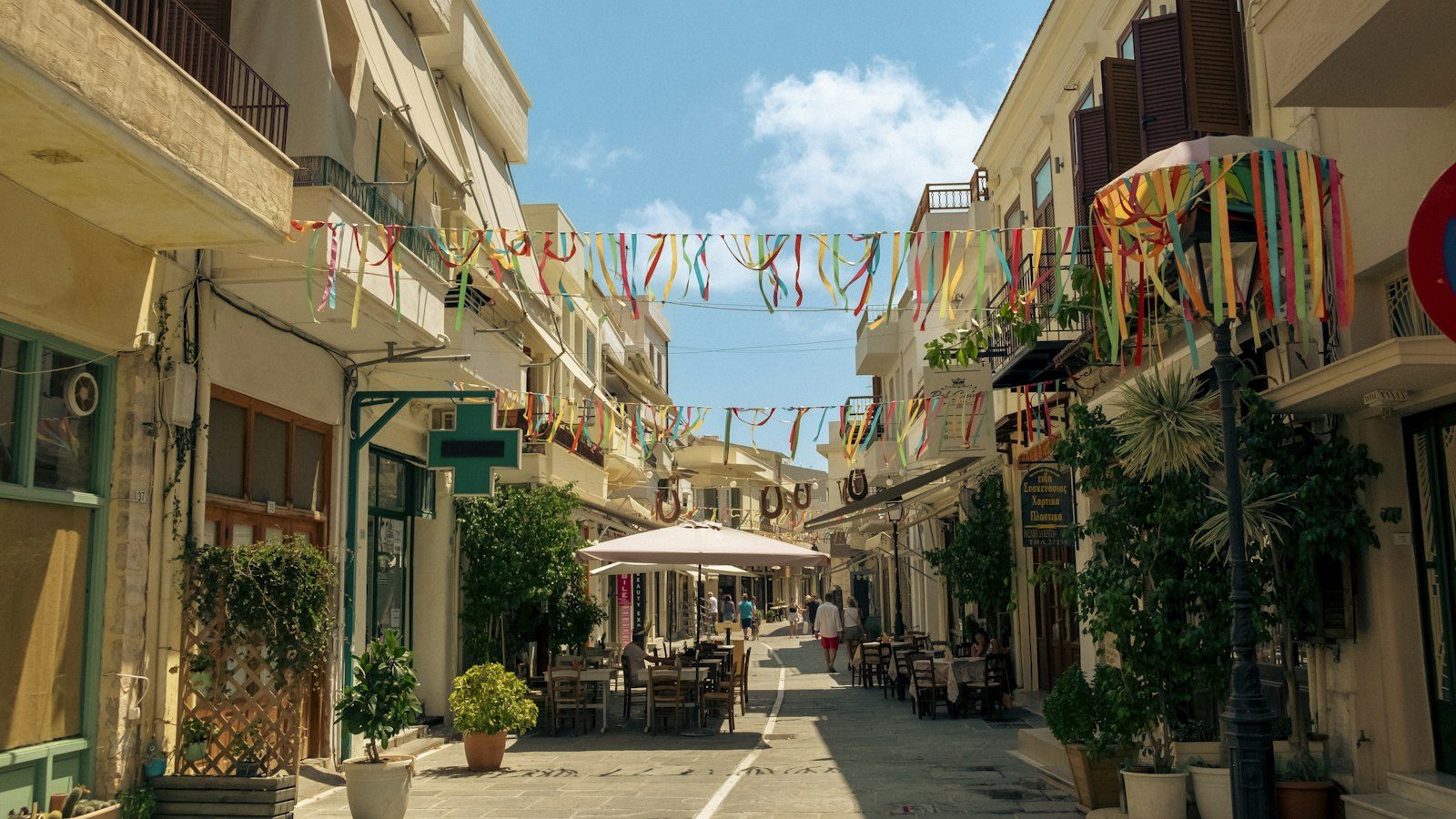
A Venetian and Ottoman port town halfway along Crete's north coast. You wander lanes of wooden balconies and minarets, walk the walls of a huge hilltop fortress and swim off a long sandy beach that starts right next to the old harbour. Best time to visit: May to June and September to October. Daily budget (budget traveller): $65 to $215 USD.
Arrive and find your feet
Morning: Take a bus from Chania or Heraklion airport. Drop your bag at your hostel or room and head for a bougatsa near the Rimondi Fountain.
Afternoon: Wander the old town lanes to the Neratze Mosque and Porta Guora. Have a first swim at the town beach by the harbour.
Evening: Walk out along the breakwater to the lighthouse at sunset, then eat dakos and grilled octopus in a back-lane taverna.
Fortezza, museum and beach
Morning: Climb to the Fortezza at opening time (about €5) before the heat. Walk the sea-facing north walls for the best views.
Afternoon: Visit the Archaeological Museum in the old church of St Francis (about €5), then spend the afternoon on the beach east of the centre.
Evening: Walk round to Koumbes for sunset and a fish dinner by the rocks.
Heading home: Buy olive oil, raki or local ceramics, then catch a bus to Chania or Heraklion airport. Fly home, or carry on to your next stop in Crete.
What to eat in Rethymno
- Bougatsa and kataifi: hot filo pastry with cream or cheese for breakfast, from Kirkor or any old town bakery
- Dakos: a barley rusk topped with tomato, mizithra cheese and olive oil, a cheap and filling lunch in almost any taverna
- Kalitsounia: small cheese pies filled with soft mizithra and often mint, baked or fried, sold in bakeries and tavernas
- Gamopilafo and snails: rich Cretan wedding rice cooked in meat stock, and chochlioi boubouristi, snails fried in olive oil with rosemary, best at village-style tavernas
- Raki (tsikoudia): the clear grape spirit often served free with fruit or a sweet at the end of a meal. Sip it slowly and do not feel you have to finish the carafe
- Seafood at Koumbes or the harbour: grilled octopus, sardines and whole fish sold by the kilo. Ask the price per kilo before you order
Hidden gems
- The Municipal Garden near Porta Guora, a shady park on the site of an old Ottoman cemetery that hosts the town's wine festival, usually in July
- Kirkor, a small old shop near the Rimondi Fountain where filo pastry is still stretched by hand and served hot as bougatsa or kataifi
- The north walls of the Fortezza, facing the open sea, where few visitors walk and the views are the best on the site
- The Koumbes seafront at sunset, a rocky promenade west of the fortress with small fish tavernas and locals swimming off the rocks
- Margarites, a pottery village in the hills east of town where workshops still make big clay pots, an easy stop on a drive to Arkadi
Getting around
Rethymno's old town is small and mostly closed to cars, so you will walk almost everywhere. It takes about 10 minutes from the harbour to Porta Guora, and the lanes are flat apart from the climb to the Fortezza. The KTEL intercity bus station is on the western seafront below the fortress, a 10 to 15-minute walk from the old town. City buses run along the beach strip to Perivolia, Platanias and Adelianos Kampos for around €1.20. Intercity KTEL buses go to Chania for about €7-8, Heraklion for €8, Plakias for about €5 and Arkadi for about €3.30. Buy tickets at the station where you can, as some drivers take only cash. Services to Arkadi, Preveli and the south coast run only a few times a day and fewer in winter, so check the return time before you set off. Taxis wait near the harbour and Porta Guora, and a ride to Arkadi costs roughly €20-30. If you drive, leave the car in the paid car parks by the harbour or the Fortezza, as old town lanes are narrow and often pedestrian-only. Car hire is the easiest way to explore inland villages and the south coast, but mountain roads are slow and winding.
Safety
Rethymno is very safe, and violent crime against visitors is rare. Watch your bag in crowded old town lanes on summer evenings and around busy bars. The real risks are the heat, the sea and the roads. The town beach can have strong waves and currents when the wind blows, so follow the lifeguard flags and do not swim alone in rough water. In July and August, the meltemi wind can whip up the sea, and wildfire risk is high, so never light fires or drop cigarettes outdoors. Traffic on the seafront road is fast and scooters weave through, so take care crossing. Mountain roads are narrow and twisty, and Crete has a poor road safety record. Tap water is treated and generally safe, though many locals drink bottled, so ask your host. The EU emergency number is 112. EU travellers should carry an EHIC and UK travellers a GHIC, and everyone else needs travel insurance with medical cover.
Frequently asked questions
What does this 2-day Rethymno itinerary cover?
Day 1: Arrive and find your feet. Day 2: Fortezza, museum and beach.
Is 2 days enough for Rethymno?
Our recommended trip length for Rethymno is 4 to 7 days. This 2-day plan focuses on the highlights and groups sights by area so you spend less time travelling between them.
How much does 2 days in Rethymno cost?
A budget traveller spends about $65 to $215 USD a day in Rethymno, so roughly $130 to $430 USD for 2 days, not counting flights.
Where should I stay for 2 days in Rethymno?
Old town: The heart of Rethymno, a maze of Venetian and Ottoman lanes between the Fortezza and Porta Guora, the old town gate. Venetian harbour and the seafront: The small round harbour, lined with fish restaurants, and Eleftheriou Venizelou, the long seafront road beside the town beach.
When is the best time to visit Rethymno?
The best time to visit Rethymno is May to June and September to October.
How do I get around Rethymno?
Rethymno's old town is small and mostly closed to cars, so you will walk almost everywhere. It takes about 10 minutes from the harbour to Porta Guora, and the lanes are flat apart from the climb to the Fortezza.
Is Rethymno safe for solo travellers?
Rethymno is very safe, and violent crime against visitors is rare. Watch your bag in crowded old town lanes on summer evenings and around busy bars.
More 2-day guides
- Lefkada in 2 days
- Nafplio in 2 days
- Parga in 2 days
- Sifnos in 2 days
- Skiathos in 2 days
- Santorini in 2 days
- Athens in 2 days
- Mykonos in 2 days
Rethymno in 3 days | Rethymno in 4 days | Rethymno in 5 days | Rethymno in 7 days | Full Rethymno guide
Joy Plus home | Destinations | Itineraries | Activities | Flights | Budget planner | Calendar | Map | Blog | Lifetime access