Destinations / Europe
Rothenburg ob der Tauber, Germany travel guide
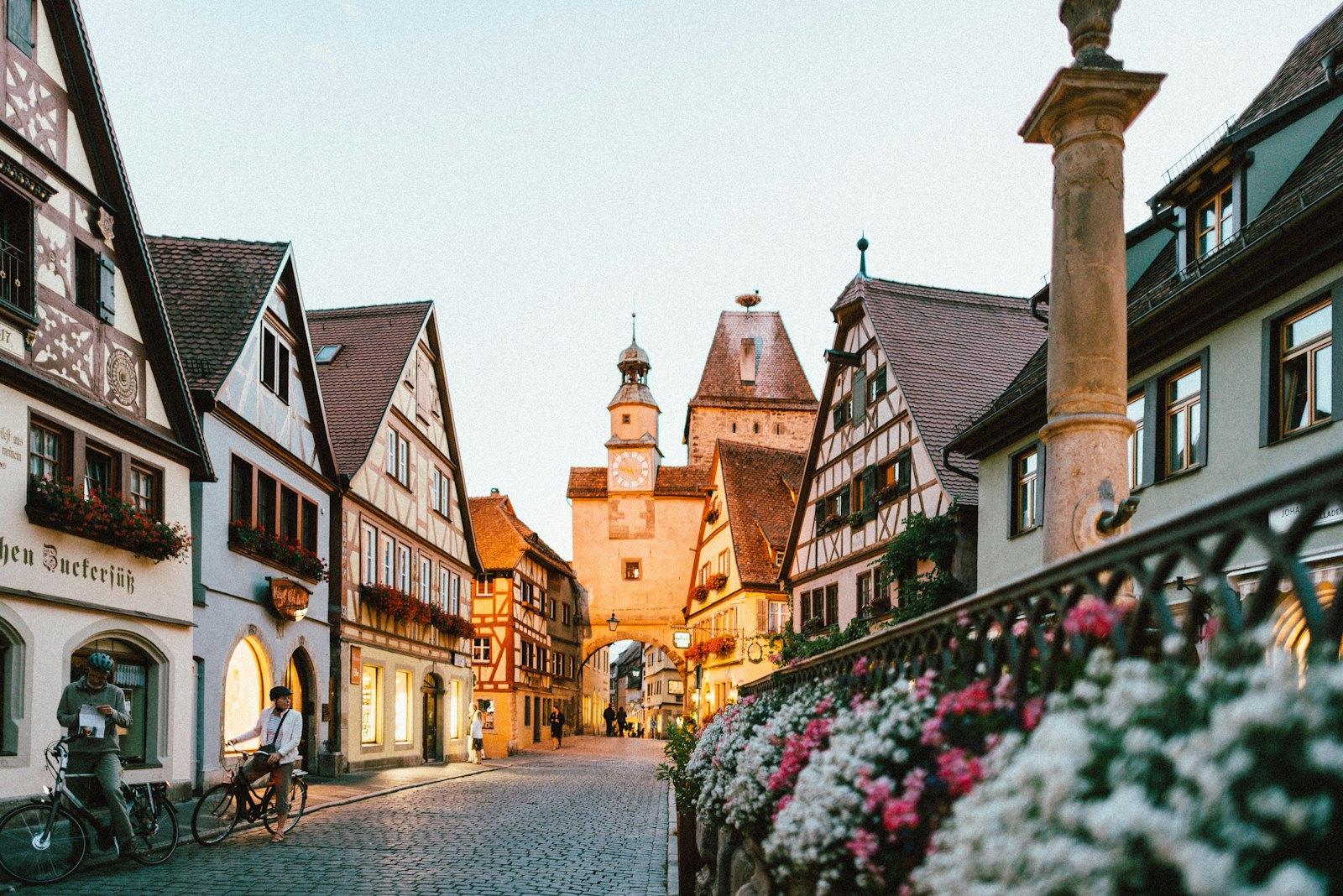
A storybook walled town on the Romantic Road: half-timbered lanes, a walkable medieval rampart, and candlelit night watchman tales.
- Best time to visit: May to October, or late November to December for the Christmas market
- Daily budget (budget traveller): $95 to $215 USD
- Ideal trip length: 1 to 2 days
Perched on a ridge above the Tauber valley in Franconia, Rothenburg ob der Tauber is one of the best preserved medieval towns in Europe and a headline stop on Germany's Romantic Road. Its cobbled lanes, half-timbered houses, and gabled gateways feel like a film set, yet this is a living town with working bakeries, churches, and family-run guesthouses. Daytime brings tour groups, but the pace shifts completely once the coaches leave. That is when the solo traveller can wander the lamplit streets, join a night watchman tour, and walk the old ramparts in near silence. The compact centre means you can see the major sights on foot in a single day, while the Tauber valley below rewards a slower second day of riverside paths, small chapels, and quiet viewpoints. For anyone travelling alone, Rothenburg is easy, safe, and endlessly photogenic, with a gentle rhythm that invites lingering over coffee and a Franconian pastry.
Rothenburg ob der Tauber has a reputation problem: it looks so much like a film set that people assume it must be fake. It is not. The walls, towers and gabled houses survived because the town ran out of money in the 17th century, was bombed on 31 March 1945 and then rebuilt with donations from around the world. The result is a roughly 4km town-wall circuit and more than 40 historic towers and a core you can cross on foot in 15 minutes. It is easy to see, but the hours you pick decide whether you get the fairytale or the queue.
Between roughly 10am and 4pm the Marktplatz, Plönlein and Herrngasse fill with coach groups from Frankfurt and Munich, and the Christmas shops hum. Before 9am and after 5pm the town is yours. The covered rampart walk is nearly empty, the lamps come on, and the night watchman's English tour leaves the Marktplatz at about 8pm with a few dozen people and a lot of plague jokes. The solo trick here is simple: sleep inside the walls, do the postcard stuff at dawn, and spend the middle of the day in the Tauber valley, where almost nobody goes.
Two nights is the sweet spot, three if you want the valley and Detwang's Riemenschneider altar at an easy pace. The town also works as a base for Würzburg, Nuremberg and Dinkelsbühl, though the branch line from Steinach means every journey has a change and a clock to watch. Bring comfortable shoes for the cobbles, cash for bakeries and Weinstuben, and an appetite for Schäufele, Silvaner and one very large Schneeball, ideally shared.
Rothenburg ob der Tauber itinerary
Arrive, orient, Marktplatz and the night watchman
Morning: Take the shuttle train from Steinach (about 12 minutes), then walk 10 to 15 minutes from the station through Rödertor and along Rödergasse to the Marktplatz. Drop bags at your hotel. Pick up the free town map at the Tourist Information in the Ratstrinkstube, Marktplatz 2.
Afternoon: Climb the Rathausturm for the roof view (about €4, 220 steps, check posted hours as it closes for lunch some months). Catch the Meistertrunk clock show on the Ratstrinkstube, which plays on the hour from 11am to 3pm and again in the evening. Share a Schneeball from Friedel's.
Evening: Early dinner at Baumeisterhaus (Obere Schmiedgasse 3) in its Renaissance courtyard. Then join the night watchman's English tour at about 8pm from the Marktplatz (about €9, cash only; confirm the seasonal schedule). Finish with a glass of Silvaner at Zur Höll, Burggasse 8.
Walls, Plönlein and Riemenschneider
Morning: Be on the rampart at 8am via Rödertor, following the covered ramparts north toward Klingentor, then continuing through the old town to the Burggarten. Then walk the south lanes to the Plönlein while it is still empty, with the Siebersturm and Kobolzeller Tor behind you.
Afternoon: St. Jakobskirche for the Holy Blood Altar by Tilman Riemenschneider in the west gallery (about €5). Then the Medieval Crime Museum on Burggasse (about €10), a grim and brilliant collection of torture devices and shame masks.
Evening: Sunset on a bench in the Burggarten above the Tauber valley. Dinner at Altfränkische Weinstube am Klosterhof, with Franconian wine and a plate of Schäufele.
Taubertal, Doppelbrücke and Detwang
Morning: Leave through the Burgtor and drop down to the valley. Look at the Topplerschlösschen, a little tower house from the 1380s, and the Doppelbrücke, a two-tiered stone bridge. Follow the river path for about 20 minutes to Detwang.
Afternoon: In Detwang, the church of St. Peter and Paul holds a Riemenschneider Crucifixion altar (opening hours are limited, so check the door). Lunch in a village Gasthaus, then take the uphill path back via Kobolzell. Afterwards visit the Reichsstadtmuseum in the old convent (about €8).
Evening: Quiet evening: bakery supper or a Weinstube table. Check for ticks after the meadow walk.
Würzburg day trip
Morning: Leave by about 8am. Take the shuttle to Steinach and then the regional train to Würzburg (about 1h15 total). Walk to the Residenz (about €10), the Baroque palace with Tiepolo's huge staircase fresco.
Afternoon: Cross the Alte Mainbrücke with a glass of wine in hand, as the locals do, and head up to the Marienberg fortress, or take the vineyard path for the view. Late lunch at the Bürgerspital Weinstuben (Theaterstraße 19).
Evening: Train back to Rothenburg. Check the last connections on DB Navigator before dinner, because missing the Steinach link means an expensive taxi.
Dinkelsbühl, the quieter walled twin
Morning: Take the regional bus toward Dinkelsbühl (about an hour, check DB Navigator for the current route and changes). Arrive for a stroll through the Altstadt, which has almost no tour groups.
Afternoon: See St. Georgskirche, one of southern Germany's finest late Gothic hall churches, and walk the town wall. Lunch of Franconian sausage or Spätzle in a Gasthof near the Weinmarkt.
Evening: Bus back. Dinner at Gasthof Rödertor or whatever has a table, then an early night.
Nuremberg, sausages and castles
Morning: Take the train via Steinach to Nuremberg (about 1h20 each way). Walk up from the station through the Altstadt to the Kaiserburg, the imperial castle (about €9 for the combined ticket).
Afternoon: Lunch is Drei im Weggla: three small Nuremberg sausages in a roll, at Bratwursthäusle or Bratwurst Röslein (about €6-9 for six). Then the Hauptmarkt and Frauenkirche, or the Documentation Centre for the Nazi party rally grounds if you want something sobering.
Evening: Train home. If you want a late dinner, eat in Nuremberg before you head back.
Slow morning, Spitalbastei, depart
Morning: Coffee and a final walk through the Spitalbastei, the multi-layered southern fortress most day trippers skip. Pick up a Schneeball to take home or a bottle of Frankenwein.
Afternoon: Last lunch Mittagstisch, then walk to the station for your onward connection via Steinach. Allow a buffer, as the shuttle is not frequent.
Evening: Arrive in Nuremberg, Würzburg or Frankfurt, depending on your onward plans.
Best neighbourhoods
- Marktplatz and Herrngasse: The ceremonial heart of the old town, centred on the Rathaus and its climbable tower, with the main shopping street, bakeries, and cafes spilling out beneath gabled facades.
- Plönlein and Schmiedgasse: The southern old town, home to the famous fork in the road framed by the Siebersturm and Kobolzeller Tor, plus quieter lanes of craft shops and small guesthouses.
- Burggarten and the Burgviertel: The western tip of the ridge, where a former castle site is now a peaceful garden with sweeping views over the Tauber valley and the Doppelbrücke below.
- Taubertal (Tauber Valley): The green river valley beneath the town walls, with footpaths, a small riverside castle, and the village of Detwang, ideal for a slow, crowd free walk.
Must-do experiences
- Walk the Town Wall: Follow the covered rampart walk along about 2.5 kilometres of the old town's roughly 3.4 kilometre circuit for rooftop views, tower glimpses, and a free, unhurried introduction to the layout of Rothenburg.
- Climb the Rathaus Tower: Ascend the steep stairs of the town hall tower, over 200 steps, for a panoramic view across the red roofs, the Marktplatz, and the surrounding Franconian countryside.
- Admire the Holy Blood Altar in St. Jakobskirche: Step inside the Gothic church of St. James to see the intricately carved Holy Blood Altar by Tilman Riemenschneider, one of the great masterpieces of late medieval woodcarving.
- Photograph the Plönlein: Visit the postcard fork where a half-timbered house stands between the Siebersturm and Kobolzeller Tor, ideally early in the morning or at dusk when the lane is nearly empty.
- Join a Night Watchman Tour: Follow a costumed guide through the lamplit streets after dark for stories of plague, war, and town legends. Check the current English language schedule locally, as times vary by season.
- Relax in the Burggarten: Stroll through the terraced gardens on the former castle site to enjoy peaceful benches, a small chapel, and long views over the Tauber valley, especially lovely in late afternoon light.
Hidden gems
- The Spitalbastei at the southern end of the old town, an elaborate multi-layered fortress with courtyards, gates, and defensive towers that most day trippers skip
- The Topplerschlösschen and the Doppelbrücke in the Tauber valley, a tiny medieval tower house and a two-tiered stone bridge reached by an easy downhill walk from town
- The village of Detwang in the valley below, where the church of St. Peter and Paul contains a carved altar by Tilman Riemenschneider, far from the crowds
- The Medieval Crime Museum, a fascinating and slightly macabre collection of historic instruments of law and punishment housed in a former Johanniter commandery
Daily budget
- Accommodation: budget €38-55 / night (Jugendherberge dorm with breakfast), mid-range €120-210 (guesthouse or 3-4 star hotel inside the walls), splurge €250-450 (Hotel Eisenhut, Burg-Hotel with valley views). Rothenburg is a day-trip town, so the cheapest beds are scarce. Book early for weekends, Pentecost and Advent. Single-room rates barely drop below double rates.
- Food: budget €22-32 / day (bakery breakfast, Mittagstisch, supermarket dinner), mid-range €50-70 (Franconian dinner with a glass of wine), splurge €110+ (multi-course dinner at a hotel restaurant such as Eisenhut). Lunch is the hack: many Gasthöfe run a Mittagstisch for €11-15, while the same dish costs €18-24 at dinner. A Bratwurst with Kraut runs €10-14, a Schneeball €3-5.
- Transport: budget €0-8 / day (everything inside the walls is walkable), mid-range €15-30 (a day trip by regional train), splurge €60+ (taxi to Steinach or a private driver along the Romantic Road). A Bayern-Ticket (about €29 for one) covers regional trains in Bavaria on a day trip, and the Deutschland-Ticket is €63 a month if you are touring more widely. Don't bring a car into the old town.
- Activities: budget €5-12 / day (free wall walk and Burggarten, one tower or church), mid-range €25-40 (Rathausturm, St. Jakobskirche, Crime Museum, night tour), splurge €80+ (private guide, Würzburg Residenz plus wine tasting). The rampart walk, Burggarten and valley paths are free. Expect about €3 for the Rathausturm, about €5 for St. Jakobskirche, about €10 for the Medieval Crime Museum and about €10 for the night watchman tour.
- Drinks & nightlife: budget €8 (a half-litre of Franconian beer, a pretzel), mid-range €20-30 (two glasses of Silvaner plus a snack in a Weinstube), splurge €50+ (wine flight and late dinner). This is a candlelit town, not a clubbing one. Kitchens close by 9pm and most Weinstuben wind down by 10 or 11pm. A 0.25l glass of Frankenwein is €6-8, a 0.5l beer €4.50-5.50.
Where to stay
- Social hostel in Southern old town (€38-55 / night): The Jugendherberge Rothenburg sits in a converted 16th-century horse mill (the Rossmühle), inside the walls, with dorms, family rooms and breakfast. It is social in a school-trip way, so expect groups and early lights-out.
- Boutique hotel in Rödergasse and the Marktplatz (€120-210 / night): Hotel Markusturm and similar historic hotels give you beamed ceilings, hearty breakfasts and a two-minute walk to the Marktplatz. Quiet after the coaches leave.
- Apartment in Plönlein and Schmiedgasse (€85-140 / night): A Ferienwohnung on a side lane gives you a kitchen, a washing machine and a quiet street. Best for 3+ nights, though many hosts require a 2-night minimum.
- Splurge in Herrngasse and the valley edge (€250-450 / night): Hotel Eisenhut occupies four Renaissance townhouses, while the Burg-Hotel in Klostergasse has terraces looking over the Tauber valley. Both come with period rooms and proper restaurants.
What to eat
- Schneeball: Rothenburg's signature pastry, a ball of crisp shortcrust strips coated in sugar, chocolate, or nuts, best shared since a whole one is substantial
- Franconian Bratwurst and Schäufele: grilled local sausages and slow roasted pork shoulder with crackling, usually served with potato dumplings and sauerkraut
- Dampfnudeln: soft steamed yeast dumplings with a golden base, traditionally served with vanilla sauce or as a savoury accompaniment in regional kitchens
- Franconian wine: crisp, dry Silvaner from nearby vineyards, often poured in traditional taverns and a good match for hearty regional dishes
Day trips
- Würzburg (About 1h15 by train via Steinach): Baroque prince-bishops' city on the Main, with the UNESCO Residenz and Tiepolo's staircase fresco, the Marienberg fortress, and the best Franconian wine cellars. Glass of wine on the Alte Mainbrücke is a local ritual. Shuttle to Steinach, then regional train to Würzburg Hbf, about €18-22 each way or covered by a Bayern-Ticket (about €29). Leave by 8am to make the most of the day.
- Dinkelsbühl (About 1 hour by regional bus): A second Romantic Road walled town, with a late Gothic hall church (St. Georgskirche), intact towers and far fewer tour groups than Rothenburg. The Kinderzeche festival is held every July. Regional bus from Rothenburg, with a possible change. Check DB Navigator for current routes, and confirm the last bus back.
- Nuremberg (About 1h20 by train via Steinach): Bavaria's second city, with the imperial Kaiserburg, a rebuilt old town, Nuremberg sausages and the sobering Documentation Centre at the Nazi rally grounds. It is a big day, but easily done. Shuttle to Steinach, then regional train to Nuremberg Hbf, about €20-25 each way. A Bayern-Ticket covers it and is cheaper for two or more.
When to visit
- Spring (April to June): 8-22°C, fresh mornings, regular showers, long light evenings. Crowds: Building, heavy at Easter and Pentecost. A lovely window. Gardens in bloom and wall walks in soft light. The Meistertrunk festival at Pentecost (22 to 25 May 2026) is fun but books out rooms, so reserve early.
- Summer (July to August): 20-29°C, occasional heatwaves and thunderstorms. Crowds: Heavy, coaches and school groups all day. Doable if you play it smart: wall at 8am, valley walk midday, night watchman at 8pm. Rooms inside the walls cost the most now.
- Autumn (September to October): 8-20°C, crisp mornings, golden light, fog in the valley. Crowds: Moderate, falling sharply after mid-October. The best all-round pick. Clear air, Silvaner and Federweißer season, and the Reichsstadt-Festtage in early September if you like costumes.
- Winter (November to March): -3 to 5°C, frost, occasional snow, dark by 4:30pm. Crowds: Busy during the Christmas market (20 November to 23 December 2026), generally quieter after the holidays. Advent is magical but busy and pricey. January and February are cheap and silent, though some museums and restaurants shorten hours or close for a few weeks.
Entry rules for your passport
Visa rules for Germany depend on the passport you travel on. Check the official source before you book: European Commission: Schengen visa policy
Getting there
Rothenburg has no airport. The closest are Nuremberg (NUE, about 70km, U2 metro to the Hauptbahnhof in 12 minutes), Frankfurt (FRA, about 3 hours by train with changes) and Munich (MUC, about 3h30). Trains reach Rothenburg via a short branch line from Steinach (b Rothenburg) on the Würzburg to Nuremberg line, about 12 minutes each way, so plan one change from Nuremberg (about 1h20, around €20-25), Würzburg (about 1h15, around €18-22) or Frankfurt (about 3 hours, Sparpreis from around €25). The station is about 1km from the Marktplatz, a 10 to 15 minute walk through Rödertor. Check DB Navigator in advance because the branch can be replaced by buses at times. The Deutschland-Ticket is €63 a month and covers regional trains. Drivers should use the pay-and-display car parks outside the walls rather than the old town lanes, and expect to pay a few euros for a day ticket. Seasonal Romantic Road coaches and tours run from Frankfurt and Munich, so check current operators.
Border checks: non-EU visitors (other than Swiss, Norwegian, Icelandic, Liechtenstein, Andorran, Monegasque, San Marinese and Vatican citizens, and holders of an EU residence permit or long-stay visa) are registered in the EU's Entry/Exit System (EES) instead of getting a passport stamp. On your first crossing, officers take your photo and/or fingerprints, so allow extra time at passport control. ETIAS, the planned travel authorisation, is not in operation yet, so don't pay any website for one.
Getting around
The old town is compact, largely pedestrian friendly, and best explored entirely on foot, though the cobbles and stairs call for comfortable shoes. Rothenburg has a small railway station served by a short branch line that connects to the main Würzburg to Nuremberg line at Steinach, so plan for one change when arriving by regional train from Nuremberg, Würzburg, or Frankfurt. Regional services are covered by the Deutschland-Ticket monthly pass, while single journeys are priced by distance. Long distance coaches and Romantic Road tours also stop here, and drivers should use the car parks outside the walls rather than trying to enter the centre. Taxis are available but rarely needed. The nearest major international airports are Frankfurt, Nuremberg, and Munich.
Safety
Rothenburg is very safe for solo travellers, with low crime and a calm, family friendly atmosphere even after dark. Pickpocketing is uncommon but can occur in the busiest squares during peak season, so keep valuables secure. The main hazards are practical: uneven cobblestones, steep wall stairs, and slippery surfaces in wet or icy weather, so wear sturdy shoes. Bavaria includes tick-borne encephalitis risk areas, so use repellent and check your skin after walks through the valley meadows. In winter, expect cold temperatures and early darkness. The emergency number across Europe is 112, and tap water is safe to drink.
Solo travel tips
- Sleep inside the walls: A bed within the old town means you can walk home under the lamps after the night tour and be on the rampart at 8am before anyone else. Staying outside saves €20-30 but costs you the best hours of the day.
- Use the night watchman as your icebreaker: The English tour starts at around 8pm on the Marktplatz and draws a mix of solos, couples and families. It is a good way to meet people, and afterwards a few of the group usually end up in the same Weinstube.
- Respect the Steinach connection: Rothenburg's branch line is short and not very frequent. Check DB Navigator before every journey, note the last train home, and never plan a tight evening trip back. A taxi from Steinach can run to €30-40.
- Do the postcard spots at dawn: The Plönlein, Marktplatz and Herrngasse are empty before 9am. By 10:30am you will queue behind a tour group for a photo. Do the sights early, then retreat to the valley or a museum while the coaches peak.
- Share a table, share a Schneeball: Traditional Weinstuben put strangers at the same table. Ask 'Ist hier noch frei?' and you are in. A whole Schneeball is a lot for one person, so split it with a neighbour or buy a mini one.
- Solo female travellers: Rothenburg is very safe and calm after dark, with lit streets and few late bars. Take normal precautions: watch your drink, keep a phone charged, and note that streets are almost empty after 10pm. The wall is not lit, so avoid walking it alone after dusk.
Cultural etiquette
- Greet shopkeepers and hotel staff with 'Grüß Gott' or 'Guten Tag', and say 'Auf Wiedersehen' when you leave. It is the norm in Franconia and the first test of friendliness.
- Tip about 5-10% at sit-down meals by rounding up when you pay. Say the total you want to pay ('Machen Sie 25') instead of leaving coins on the table.
- Sunday is quiet: supermarkets and many shops are closed, so stock up on Saturday. Restaurants stay open but fill early.
- Do not stand in the road at the Plönlein for photos. People live on that lane, and cars and delivery vans still pass through.
- In a Weinstube, sharing a table is normal. Ask 'Ist hier noch frei?' and greet the table when you sit and leave.
- Keep voices low in the evening lanes and after 10pm. Rothenburg is residential, and quiet hours are taken seriously.
- Tap water in restaurants is rarely free. Order 'Leitungswasser' or accept a bottle of Mineralwasser at €3-4. Bottle deposits (Pfand) are €0.25 at shops.
Frequently asked questions
How do I get to Rothenburg ob der Tauber by train?
Take a regional train to Steinach (bei Rothenburg) on the Würzburg to Nuremberg line, then change to the short branch line that runs into Rothenburg. Journeys from Nuremberg or Würzburg usually take around one to two hours with the change, while Frankfurt typically takes longer. Check current timetables on the Deutsche Bahn website or app before you travel.
How many days do I need in Rothenburg?
One full day covers the main sights, including the town wall, Rathaus tower, St. Jakobskirche, and the Plönlein. Staying two days lets you add a relaxed Tauber valley walk, the museums, and an evening tour without rushing, and you will see the town at its best after the day trippers leave.
When is the best time to visit Rothenburg?
May to October offers the mildest weather for walking the walls and valley paths, though July and August are the busiest. Late November to December brings the Christmas market and the town's famous festive shops, with a magical atmosphere but cold weather. Spring and early autumn are good for fewer crowds.
Do I need cash or can I pay by card?
Cards are increasingly accepted in hotels, larger restaurants, and shops, but Germany is still more cash friendly than many countries. Carry some euros for bakeries, small cafes, museum entries, and tips, as smaller businesses may prefer cash or accept only certain cards.
Is walking the town wall free?
Yes, walking the covered rampart is free of charge, with access via stairs at several points around the old town. Some sections can occasionally close for maintenance or in bad weather, so be prepared to descend and rejoin the wall further along. The Rathaus tower, by contrast, charges a small entry fee.
How can I avoid the crowds?
Day trippers generally arrive mid morning and leave by late afternoon. Spend the early morning on the walls and at the Plönlein, then take your meal breaks in side streets or the Tauber valley, and return to the main squares in the evening. Staying overnight inside the walls is the best way to enjoy the quietest hours.
Is Rothenburg safe for solo female travellers?
Yes, Rothenburg is considered very safe for solo female travellers. The streets are well lit, the atmosphere is calm, and locals are helpful. Standard precautions apply, such as keeping your belongings secure in crowded areas and avoiding unlit paths in the valley after dark.
What entry rules apply to travellers visiting Germany in 2026?
Germany is part of the Schengen Area. Citizens of many countries, including the US, UK, Canada, and Australia, can generally visit visa-free for short stays of up to 90 days within any 180 day period, while EU and EEA citizens can travel freely with a valid ID or passport. Visitors normally need a passport valid for the length of their stay, and the EU is rolling out digital border systems for non-EU travellers, including the Entry/Exit System, with ETIAS authorisation also planned. Rules can change, so always confirm current requirements for your nationality on the German Federal Foreign Office website or the official EU travel pages before you travel.
More about Rothenburg ob der Tauber
Tours and activities in Rothenburg ob der Tauber | Rothenburg ob der Tauber in 2 days | Rothenburg ob der Tauber in 3 days | Rothenburg ob der Tauber in 4 days | Rothenburg ob der Tauber in 5 days | Rothenburg ob der Tauber in 7 days
Joy Plus home | Destinations | Itineraries | Activities | Flights | Budget planner | Calendar | Map | Blog | Lifetime access