Destinations / Europe
Salamanca, Spain travel guide
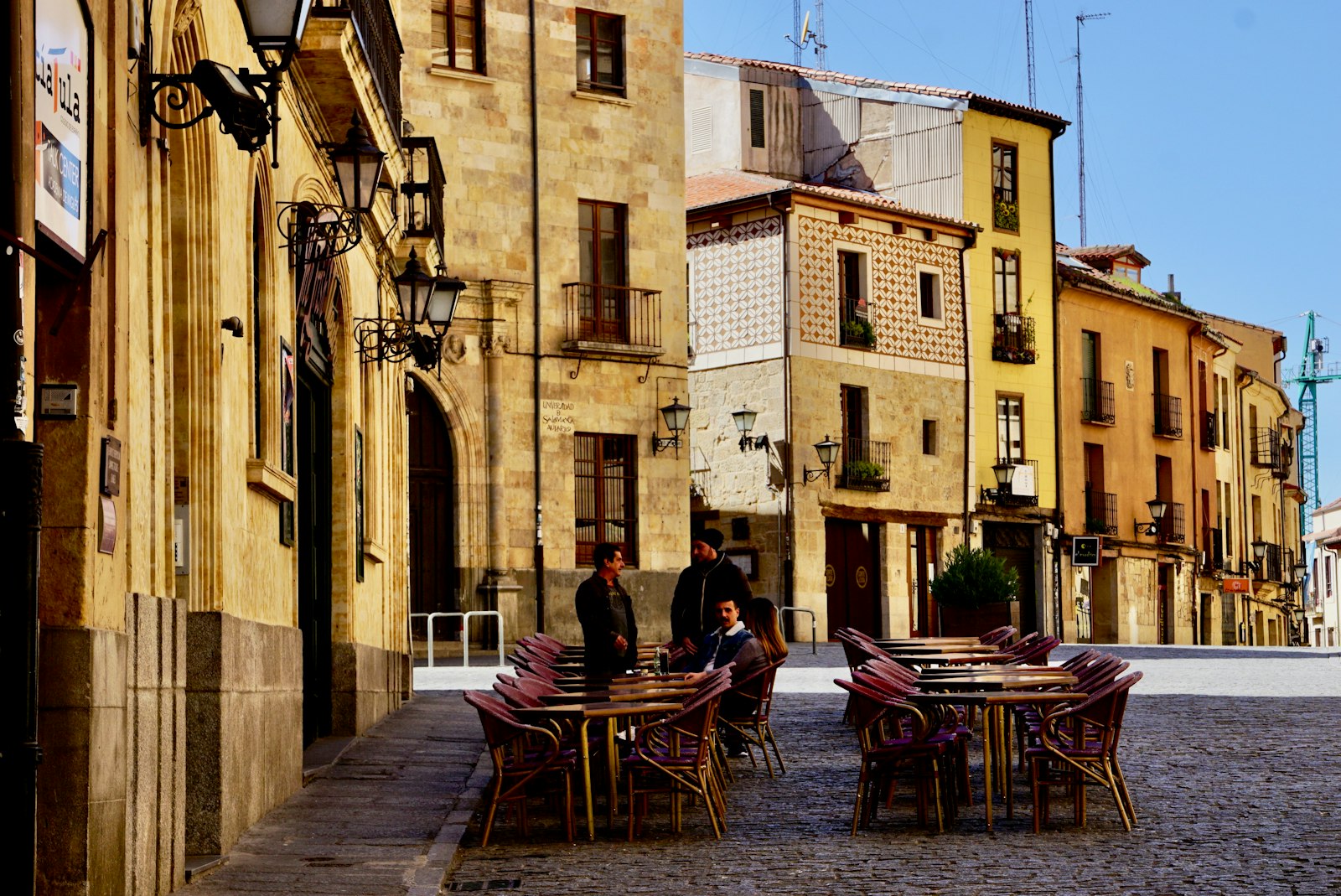
Spain's golden sandstone university city: baroque plazas, ancient universities and a huge student night out.
- Best time to visit: April-June and September-October
- Daily budget (budget traveller): $100 to $200 USD
- Ideal trip length: 2 days
Salamanca glows. Its buildings, carved from local Villamayor sandstone, turn honey-gold at sunset, and its Plaza Mayor is widely considered Spain's most beautiful main square. Home to one of Europe's oldest universities (founded 1218), the city has a student energy that keeps its bars and cafes buzzing until dawn. Joy Plus balances baroque plazas, university history and the deep late-night tapas scene.
Salamanca is a city carved out of one stone. Villamayor sandstone, quarried a few kilometres away, turns the whole old town honey-gold at golden hour, and then the plaza lights come on and it gets better. This is a city of about 145,000 people, and roughly 30,000 of them are students at a university founded in 1218. The result is an old town that looks like a cathedral museum and behaves like a party. You can spend the morning staring at a Plateresque facade and the night in a bar where a caña costs less than the water in Madrid.
The geography does the work for you. The UNESCO old town is tiny, nearly everything sits within a 10 to 15 minute walk of the Plaza Mayor, and the Tormes river forms its southern edge. You will not touch a bus or a taxi once you arrive, apart from the walk or short ride from the station. Prices are gentler than in Madrid, Barcelona or Seville, lunch menus run €12 to €16, and the best views (the Ieronimus towers, the Roman bridge at sunset) cost between nothing and about €10.
Timing shapes the experience. From mid-September to June the students are in, the bars run until 4am and the streets around Calle Prior, Calle Varillas and Calle Clavel hum on a Thursday. In July and August it is hot, quiet and cheaper, and the city feels like a film set after the crew has gone home. Two days is the honest minimum, three is the sweet spot, and a week works if you use Salamanca as a base for Ávila, Ciudad Rodrigo and Zamora. Come in spring or autumn and you get the full show.
How many days in Salamanca?
For Salamanca, we recommend 2 days.
| Trip length | What you'll see | Itinerary |
|---|---|---|
| 2 days · Recommended | Plaza Mayor and the golden hour; University, frog and both cathedrals | Salamanca in 2 days |
| 3 days | Adds: Casa Lis, San Esteban and the river | Salamanca in 3 days |
| 4 days | Adds: Ávila day trip | Salamanca in 4 days |
| 5 days | Adds: Ciudad Rodrigo and its walls | Salamanca in 5 days |
| 7 days | Adds: Zamora or a slow day; Market | Salamanca in 7 days |
Salamanca itinerary
Arrive, Plaza Mayor and the golden hour
Morning: Take the Alvia or MD train from Madrid Chamartín (about 1h45 to 2h30), then walk the 15 to 20 minutes from the station to the old town. Drop bags, then coffee at Café Novelty on the Plaza Mayor.
Afternoon: See the Casa de las Conchas courtyard (free), then the Clerecía. Lunch menú del día at a bar near the Mercado Central.
Evening: Sunset on the Plaza Mayor with a caña. Then a tapas walk through Calle Prior and Calle Varillas, ending at Tío Vivo on Calle Clavel.
University, frog and both cathedrals
Morning: Get to the Escuelas Mayores of the Universidad de Salamanca at opening (around 10am, ticket about €10). Spot the frog on the facade, then see the Cielo de Salamanca fresco in the Escuelas Menores.
Afternoon: Do both cathedrals with the Ieronimus towers (about €10). Find the astronaut and the ice-cream-eating dragon on the New Cathedral's door. Lunch with hornazo or farinato.
Evening: Dinner at Casa Paca on the plaza, or splash out at Víctor Gutiérrez (book ahead). Finish at Camelot or another bar on Calle Libreros.
Casa Lis, San Esteban and the river
Morning: Casa Lis (Art Nouveau and Art Deco glass, about €6), then the Convento de San Esteban and its cloister (about €4, closed at midday).
Afternoon: Late lunch in the old town. Walk the Huerto de Calixto y Melibea gardens (free) and cross the Roman bridge.
Evening: Watch sunset from the south bank of the Tormes, with both cathedrals glowing across the river. Finish with a tapas dinner back near Plaza del Mercado.
Ávila day trip
Morning: ALSA bus to Ávila (about 1h20, €9-14). Walk the medieval walls (about €6), the best-preserved in Europe.
Afternoon: Lunch on a chuletón or the local judías del Barco, then yemas de Santa Teresa from a pastry shop.
Evening: Bus back to Salamanca. Easy dinner and an early night.
Ciudad Rodrigo and its walls
Morning: Bus to Ciudad Rodrigo (about 1h, around €7). Walk the 12th to 17th century walls, which are free.
Afternoon: Coffee at the Parador in the castle, then lunch in the Plaza Mayor.
Evening: Bus back to Salamanca. Dinner and a slow evening at a terrace.
Zamora or a slow day
Morning: Bus to Zamora (about 1h, €6-8), a city of Romanesque churches and a cathedral with a tiled dome.
Afternoon: Walk the old town and riverside, then lunch on local arroz a la zamorana.
Evening: Return to Salamanca for one last big tapas crawl.
Slow morning, market, depart
Morning: Coffee and a pastry near the Plaza del Mercado, then browse the Mercado Central for ham and cheese.
Afternoon: Revisit your favourite plaza, buy a tiny stone frog, collect your bags.
Evening: Walk or taxi to the station or bus terminal and head back to Madrid or on to Portugal.
Best neighbourhoods
- Plaza Mayor & Casco Antiguo: The golden old town centred on the Plaza Mayor, with cathedrals, university buildings and tapas bars.
- Calle Toro & Gran Vía: The main shopping streets running north of the Plaza Mayor, full of chain stores and terraces.
- Barrio de San Esteban: The quieter southern edge of the old town, home to the Convento de San Esteban and Huerto de Calixto y Melibea gardens.
- Puente Romano & the Tormes riverbank: The Roman bridge and river promenade give the best views back to the two cathedrals.
Must-do experiences
- Sit on the Plaza Mayor at sunset: The 18th-century baroque square glows gold as the sun drops, order a caña and watch the paseo.
- Find the frog on the university facade: The Plateresque facade of the Universidad de Salamanca hides a tiny stone frog: spotting it is said to bring luck to students.
- Visit both cathedrals: The Old Cathedral (12th century) and the New Cathedral (16th century) are joined side by side; climb the Ieronimus towers for rooftop views.
- See the Casa de las Conchas: This 15th-century palace is covered in over 300 carved scallop shells and now houses a public library and courtyard.
- Bar-hop the Calle Van Dyck tapas street: A drink with a generous pincho costs about €3 here, and a few bars still include the pincho free: join the locals on Van Dyck for the classic crawl.
Hidden gems
- The Art Nouveau and Art Deco Casa Lis museum in a stained-glass villa.
- Huerto de Calixto y Melibea gardens with cathedral views.
- Cielo de Salamanca astronomical fresco inside the old university.
- Iberian ham (jamón de Guijuelo) tastings in old-town bars.
Daily budget
- Accommodation: budget €25-45 / night (dorm or basic hostal), mid-range €85-140 (boutique double), splurge €220+ (Hospes Palacio de San Esteban). Prices rise for Easter, the September fiestas and graduation weekends. Book those dates months ahead.
- Food: budget €25-35 / day (menú del día + tapas), mid-range €50-80 (one sit-down dinner), splurge €110+ (Víctor Gutiérrez tasting menu). Menú del día runs €12-16 with a drink and dessert. A drink with a generous pincho costs about €3, and only a few bars still include the pincho free.
- Transport: budget €0-4 / day (walking), mid-range €10-20 (taxis plus a day-trip bus), splurge €40+ (private driver to Ávila or the Sierra de Francia). The old town is fully walkable. A taxi from the station is €6-8, and a city bus single is around €1.25.
- Activities: budget €10-15 / day (free plazas, one monument), mid-range €25-35 (university, cathedrals with towers, Casa Lis), splurge €70+ (private guided tour, wine day in the region). Casa de las Conchas courtyard, the Roman bridge and the gardens are free. Look for free slots on some museum mornings.
- Drinks & nightlife: budget €8-12 (a few cañas at €2-3), mid-range €25-40 (bar crawl plus a club entry), splurge €60+ (cocktails, late club, taxis). Cañas cost €2-3, gin and tonics €7-9. Clubs often include a drink with entry, ask at the door.
Where to stay
- Social hostel in Casco Antiguo / Calle Toro (€25-45 / night): Choose a small old-town hostel or a hostal like Hostal Plaza Mayor. You are a two-minute walk from the plaza and the bars. Dorm availability is limited, so book early.
- Boutique hotel in Near the Plaza Mayor and cathedrals (€110-190 / night): Hotel Rector is quiet, design-led and a short walk from every monument. A sensible base for 2 to 4 nights.
- Apartment in Plaza del Mercado or San Esteban (€70-110 / night): Quieter streets, a kitchen for market ham and cheese, and a real neighbourhood feel. Best value for 4+ nights.
- Splurge in Barrio de San Esteban (€220-380 / night): Hospes Palacio de San Esteban sits in a restored palace facing the convent, with a spa and a quiet courtyard. Cathedral views and no traffic.
What to eat
- Jamón ibérico de Guijuelo
- Hornazo (savoury meat-filled pastry)
- Chanfaina (rice and offal stew)
- A caña with a generous pincho for about €3
Day trips
- Ávila (About 1h20 by bus): Walled medieval city with the best-preserved walls in Spain, Santa Teresa's convent and yemas pastries. Walk the walls first thing, lunch on chuletón. ALSA bus from Salamanca bus station, around €9-14 each way. Several departures daily, check the schedule the day before.
- Ciudad Rodrigo (About 1h by bus): A small fortified town near the Portuguese border with intact walls, a castle Parador and a quiet plaza. Very few tourists. Bus from Salamanca bus station, around €7 each way. Check return times, since services thin out in the evening.
- Zamora (About 1h by bus): A quiet river city with 24 Romanesque churches, a tiled-dome cathedral and a calm old town. Good for people who like quiet streets. ALSA bus from Salamanca, around €6-8 each way. Easy to do and return the same day.
When to visit
- Spring (April - June): 12-26°C, sunny days, cool evenings, occasional showers. Crowds: Moderate, busiest around Easter. The best window. Terraces in full swing, students still in town, and Semana Santa processions in the old town. Book Easter week early.
- Summer (July - August): 17-35°C, dry, hot afternoons and cool nights. Crowds: Low from students, steady with tour groups. Hot at midday but pleasant after 8pm. Nights are quiet because the students leave, and some local bars shut for part of August. Cheap rooms.
- Autumn (September - October): 10-25°C, clear skies, first cool nights. Crowds: Moderate, students return mid-September. Locals' favourite. The Ferias y Fiestas around 8 September and the return of the student crowd give the city its best energy.
- Winter (November - March): -2 to 10°C, frost, fog and crisp blue days. Crowds: Low. Cold at 800m altitude but dramatic: golden stone under low sun, hot chocolate and churros weather. Pack a proper coat.
Entry rules for your passport
Visa rules for Spain depend on the passport you travel on. Check the official source before you book: European Commission: Schengen visa policy
Getting there
Salamanca's own airport (SLM) has very few flights, so most people fly into Madrid (MAD) and continue by train or bus. The Alvia or MD train from Madrid Chamartín takes about 1h45 to 2h30 and costs roughly €25-40 one way, so book early on Renfe's site for the best fares. ALSA buses run from Madrid's Estación Sur and from Barajas T4, take 2.5 to 3 hours and cost around €15-25. The train station is about a 15 to 20 minute walk from the old town, a taxi is €6-8. The bus station on Avenida Filiberto Villalobos is also about a 15 minute walk, or €5 by taxi. Driving from Madrid via the A-6 and A-50 takes around 2h15. In the old town, parking is restricted, so use a public car park and pay about €15-20 a day.
Border checks: non-EU visitors (other than Swiss, Norwegian, Icelandic, Liechtenstein, Andorran, Monegasque, San Marinese and Vatican citizens, and holders of an EU residence permit or long-stay visa) are registered in the EU's Entry/Exit System (EES) instead of getting a passport stamp. On your first crossing, officers take your photo and/or fingerprints, so allow extra time at passport control. ETIAS, the planned travel authorisation, is not in operation yet, so don't pay any website for one.
Getting around
Salamanca's old town is very small and entirely walkable, most sights are within a 10-minute stroll of the Plaza Mayor. The train and bus stations are both a 15-20 minute walk from the centre or a cheap taxi ride. Once inside the old town you never really need public transport, save your euros for tapas.
Safety
Salamanca is very safe for solo travellers, including at night when the student bar scene keeps the old town lively until 3-4am. Standard pickpocket precautions apply in the Plaza Mayor and around the cathedrals; the walk between the train station and the centre is fine even after dark on the main streets.
Solo travel tips
- Eat at the bar: Standing at the counter and ordering a drink with a pincho (about €3 for a generous one) gets you a chat with the bartender. It is the easiest way to feel local in the first ten minutes.
- Time your sightseeing around siesta: Churches, convents and some museums close from about 2pm to 4:30pm. Book mornings for monuments, afternoons for the river and gardens.
- Hostels are thin, choose carefully: Salamanca has fewer true dorm hostels than bigger cities. Read recent reviews, and for a social stay look at the small hostels near Calle Toro or Plaza del Mercado. Alternatively book a cheap hostal and meet people at the bars.
- Join the student night, with limits: Bars on Calle Prior, Calle Varillas and Calle Clavel are friendly to solos. Stay near the lit main streets after 2am and skip the quieter lanes by the river.
- Solo female travellers: Salamanca is one of the easiest Spanish cities for women alone. Keep your drink in sight, walk the lit main streets late, and use a taxi from bars to your lodging after 3am.
- Find your people on a tour or a language class: Free walking tours from the Plaza Mayor start at 10:30am or noon and are a good way to meet other travellers. Spanish courses at the university run short programs and fill with solo students.
Cultural etiquette
- Say buenos días and gracias. Spanish in Castilla is clear and formal, so a little effort goes a long way.
- Tipping is modest. Round up at bars and leave €1 to €3 at sit-down meals, or around 5 to 10% for good service.
- Meal times are late. Lunch is 2 to 4pm and dinner starts around 9pm. Arrive at 7pm and the kitchen will often be closed.
- Shops and some monuments shut for a few hours in the afternoon. Plan around it rather than complaining.
- Dress covered in churches and convents. Shoulders and knees are expected, and no touring during Mass.
- Student tunas in capes sing in the plazas. Listen, clap, and tip a coin if you take photos.
- Standing at the bar is normal, and it is often cheaper than a terrace table. Terrace prices carry a surcharge.
Frequently asked questions
How many days do you need in Salamanca?
Two days is ideal. One full day covers the Plaza Mayor, both cathedrals, the university facade and Casa de las Conchas, and an evening on Calle Van Dyck. A second day lets you visit Casa Lis, the Convento de San Esteban and the Roman bridge, and enjoy a slower tapas dinner without rushing.
Is Salamanca worth visiting?
Yes. It's one of Spain's most beautiful small cities, with a UNESCO-listed old town, the country's most famous Plaza Mayor and a huge student energy that keeps prices low and bars packed. It's the perfect 1-2 night stop between Madrid and Portugal.
When is the best time to visit Salamanca?
April to June and September to October offer warm days, cool evenings and lower crowds. July and August are hot (35°C+) and the students are away, so the city feels quieter but the terraces still buzz. Winter is cold but photogenic when the golden sandstone catches low sunlight.
Is Salamanca safe for solo travellers?
Yes, extremely. It's a small, student-heavy city with a very low crime rate and streets that stay busy until late. Standard pickpocket awareness in the Plaza Mayor is enough, and solo dining or bar-hopping is completely normal, especially given the drink-and-pincho tradition.
How do you get from Madrid to Salamanca?
The direct ALVIA and MD trains from Madrid Chamartín reach Salamanca in about 1 hour 40 minutes to 2 hours 30 minutes depending on service, and cost around €25-40 one-way. Buses are cheaper (around 2.5 to 3 hours). Driving on the A-6/A-50 takes around 2 hours 15 minutes.
What is the frog on the University of Salamanca?
A tiny stone frog carved on the Plateresque facade of the old university entrance, perched on top of a skull. Tradition says students who spot it unaided will pass their exams (and, in modern versions, find love). Locals sell frog souvenirs everywhere in town.
Is Salamanca a good day trip from Madrid?
It's possible but rushed. The train each way is under 2 hours, but you'll only have about 5 to 6 hours in the city, enough for the Plaza Mayor, one cathedral and a quick lunch. To see both cathedrals, the university and the tapas scene properly, plan on at least one overnight.
More about Salamanca
- Where to Travel in 2027: 15 Places Worth Planning a Trip Around
- Total Solar Eclipse 2 August 2027: Where to Watch It and How to Plan Now
- Barcelona in 3 Days: Gaudí, Tapas, the Beach and 2026 Prices
Tours and activities in Salamanca | Salamanca in 2 days | Salamanca in 3 days | Salamanca in 4 days | Salamanca in 5 days | Salamanca in 7 days
Can't decide? Compare Salamanca with...
Joy Plus home | Destinations | Itineraries | Activities | Flights | Budget planner | Calendar | Map | Blog | Lifetime access