Destinations / Central America
San Blas Islands, Panama travel guide
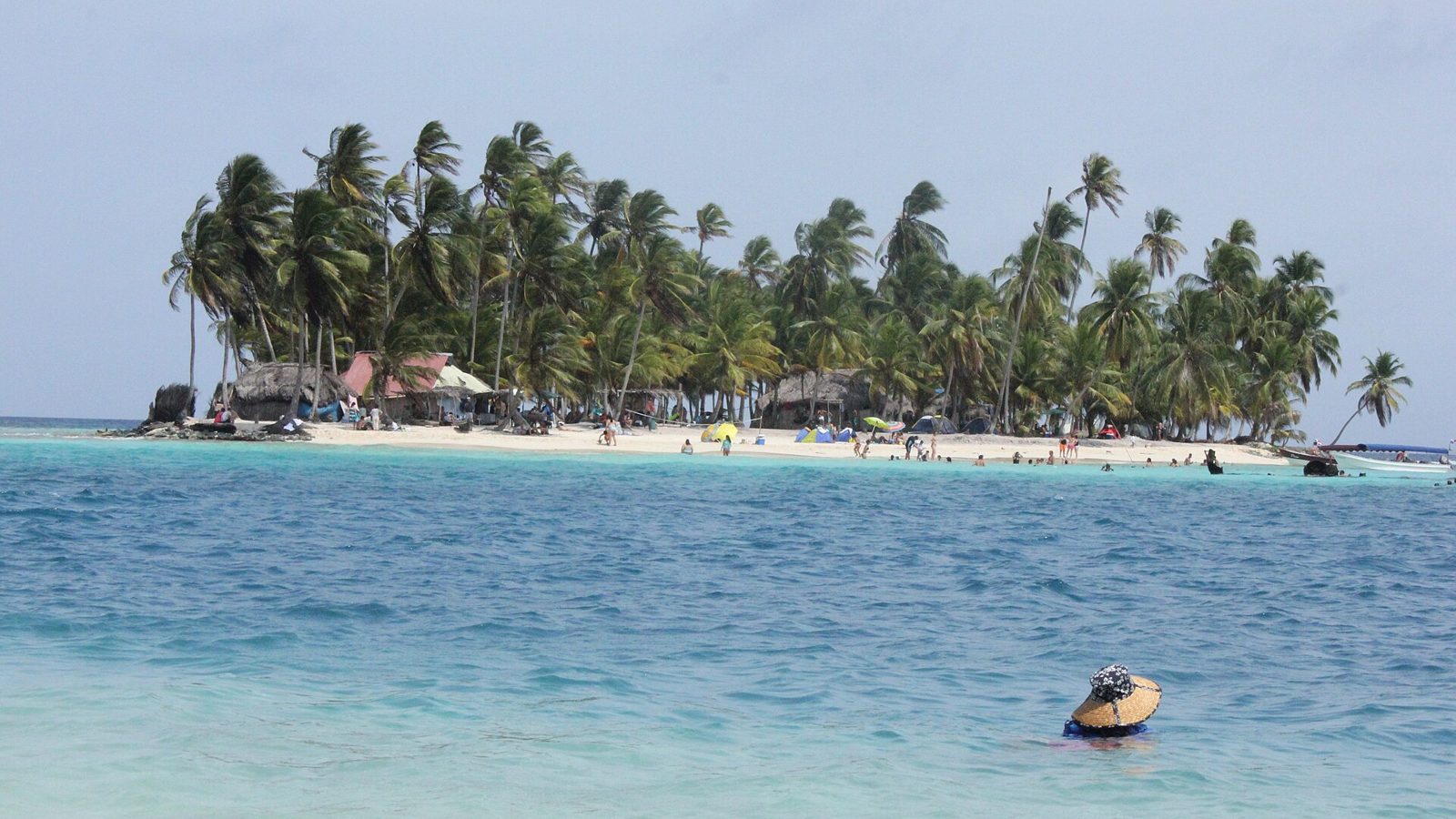
A chain of low palm islands off Panama's Caribbean coast, run by the Guna people as their own autonomous territory. You sleep in a simple cane cabin on the sand, snorkel over reefs and a sunken ship and eat fish caught that morning.
- Best time to visit: January to April
- Daily budget (budget traveller): $80 to $250 USD
- Ideal trip length: 3 to 5 days
The San Blas Islands are spread along Panama's northeast Caribbean coast. There are more than 300 of them, most no bigger than a football pitch, with a few palms, a strip of white sand and a reef around the edge. The whole area is Guna Yala, a comarca that the indigenous Guna govern under their own laws. You come as a guest. There are no resorts, chain hotels or big developments, only family-run islands with cane-and-thatch cabins, shared bathrooms, a kitchen that serves three meals a day and electricity for a few hours in the evening. Getting here takes some effort. A licensed 4x4 drives you over the mountains from Panama City to the port at Cartí in about 2 to 3 hours, and a Guna motorboat takes you on to your island. Once you arrive there is very little to do apart from swim, snorkel, read in a hammock and join a boat trip to the Natural Pool or the wreck off Isla Perro. Wifi is patchy or non-existent, almost everything is paid in cash and the comforts are basic. For a solo traveller, though, the all-inclusive cabin packages are surprisingly good value, the shared tables at dinner make meeting people easy, and the islands themselves look exactly like the photos.
Guna Yala, the official name for the San Blas Islands, is a narrow strip of jungle coast and an archipelago of more than 300 islands, stretching from the Gulf of San Blas towards the Colombian border. Only a few dozen islands are inhabited. Most Guna live in crowded villages on islands close to the mainland, while the small outer islands are used for coconut farming and, more and more, for tourism. Since the Guna Revolution of 1925, the comarca has governed itself through its own General Congress, and outsiders cannot buy land here. That is why San Blas still feels unlike anywhere else in the Caribbean: no high-rises, no jet skis and no all-inclusive resorts. Rising seas are a real worry. In 2024 around 300 families moved from the island of Gardi Sugdub to a new mainland village called Isberyala, and more communities may follow. Your entry fee and cabin money are an important part of the local economy.
Getting here is part of the experience. A licensed 4x4 picks you up in Panama City before dawn and climbs the steep, winding road through the jungle to the Guna Yala checkpoint. There you pay your entry fee in cash and show your passport, before dropping down to the port at Cartí. From Cartí, boats fan out to the islands. The most popular areas are Chichime, Cayos Limones with Pelicano and Isla Perro, and the remote Cayos Holandeses. Most visitors buy a package covering transport, cabin, three meals and a boat trip. Choose your island carefully. Some are social and lively, while others are quiet places where you will barely see another visitor.
Expect simple comforts. Cabins are usually cane walls, a sand or wooden floor and a bed with a mosquito net, and showers may be a bucket of fresh water. Electricity often comes from solar panels or a generator for a few hours each evening, and phone signal ranges from decent near the mainland to nothing at all. The dry season from mid-December to April brings sunshine and strong winds, while the wetter months bring calmer seas and short, heavy storms. If you need air conditioning, hot water and fast wifi, San Blas will be hard work. If you are happy with a hammock, a snorkel and a plate of fried fish, few places are better for a few slow days alone.
San Blas Islands itinerary
Over the mountains to Cartí
Morning: A 4x4 picks you up in Panama City at around 5am. Pay the Guna Yala entry fee in cash at the checkpoint, then wait at Cartí port for your boat.
Afternoon: Ride out to your island in Cayos Limones, check into your cabin and have lunch. Swim and snorkel straight off the beach.
Evening: Watch the sunset from a hammock, eat dinner at the shared table and turn in early once the generator goes off.
Natural Pool and Isla Perro
Morning: Join the island-hopping boat to the Natural Pool before the day trippers arrive, and wade across the sandbank looking for starfish.
Afternoon: Stop at Isla Perro to snorkel over the sunken ship just off the beach, then have lunch and a lazy hour in the shade.
Evening: Back on your island for a lobster or crab dinner, if it is in season, and stargazing on the sand.
A day in Cayos Holandeses
Morning: Take the long boat ride out to the Dutch Cays, the clearest water in the archipelago. Bring seasickness tablets if the wind is up.
Afternoon: Snorkel the outer reefs, have lunch on a near-empty beach and swim in the turquoise channel known as the Swimming Pool.
Evening: Return to your island tired and salty. A simple fish dinner and an early night.
Move to Chichime
Morning: Your host's boat takes you across to Chichime (arrange this and the price in advance). Drop your bag in a private cabin.
Afternoon: Walk the beach all the way round the island, paddle a kayak along the channel and read in the shade.
Evening: Watch the sailboats swing at anchor as the sun goes down, and chat with the yacht crews who come ashore.
Guna village visit
Morning: Take a boat to Cartí Sugtupu to walk the lanes, see the congress house and visit the small Guna culture museum.
Afternoon: Buy a mola directly from its maker, then head back to Chichime for a late lunch and a swim.
Evening: Join a bonfire if your island has one, or simply lie on the sand and wait for the stars.
A slow island day
Morning: Swim at sunrise on the quiet eastern side of the island, then have breakfast and a coffee in a hammock.
Afternoon: Snorkel the reef off the beach, or ask about a short boat trip to Isla Diablo nearby. Then nap.
Evening: A last seafood dinner. Settle any extra drinks and meals in cash and tip your hosts and boat captain.
Back to Panama City
Morning: Boat back to Cartí, usually early, then the 4x4 drive over the mountains to Panama City.
Afternoon: Arrive in the city around lunchtime. Have a proper shower and get some cash out if you need it.
Evening: Spend the night in Casco Viejo, or catch an evening flight. Leave a buffer night if you have an international flight.
Best neighbourhoods
- Cartí and Cartí Sugtupu: The gateway to the archipelago. The mainland port at Cartí is where every 4x4 drops you and every boat leaves from. Just offshore is Cartí Sugtupu, a crowded Guna island village with a small culture museum and mola sellers. Few visitors sleep here, but it is the best place to see everyday Guna life rather than a postcard island.
- El Porvenir and Wichub-Huala: The administrative heart of the western islands, with an airstrip, a police post and a couple of simple places to stay. The neighbouring Guna villages of Wichub-Huala and Nalunega are a short paddle or boat hop away. It suits you if you fly in, want a village atmosphere or plan to sail on from here.
- Chichime: Two palm-covered islands about an hour by boat from Cartí, with a sandy beach all the way round, sailboats at anchor in the channel and some of the more comfortable cabins in San Blas, including private ones with en-suite bathrooms. It is popular and can feel busy when day boats arrive, but it empties out by late afternoon.
- Cayos Limones and Isla Perro: A cluster of small islands around 40 to 60 minutes from Cartí, including Pelicano, Isla Perro (Perro Chico) and the Natural Pool sandbank. This is the most social part of the archipelago, with dorm-style cabins, backpackers and good snorkelling straight off the beach. Day trippers crowd the area at midday.
- Cayos Holandeses: The Dutch Cays are the outer islands, about 70 to 90 minutes by boat from Cartí, with the clearest water, the best reefs and very few buildings. Overnight stays here cost the most. Most people visit on a long day excursion from Cayos Limones or by sailboat.
Must-do experiences
- Wade out to the Natural Pool: The Natural Pool is a waist-deep sandbank in open water near Cayos Limones, where you can stand with the sea all around you and look for starfish. It is on almost every island-hopping trip. Go in the morning before the day boats arrive, and never pick up the starfish.
- Snorkel the wreck off Isla Perro: A sunken cargo ship lies in shallow water just off the beach at Isla Perro, covered in coral and full of small fish. You can swim to it in a couple of minutes, and snorkel gear is usually included in your package. Scuba diving is banned in Guna Yala, so this is snorkelling only.
- Spend a day in Cayos Holandeses: The outer cays have the clearest water and the healthiest reefs in San Blas. Day excursions usually run from Cayos Limones or Pelicano and include lunch on a beach. Expect a long and sometimes choppy boat ride, especially in the windy months from January to March.
- Visit a Guna village: Ask your host to take you to Cartí Sugtupu or another inhabited island to see homes, the congress house and daily life away from the tourist islands. Some villages charge a small entry fee. Ask before taking photos of people, as many expect a dollar per photo or prefer not to be photographed at all.
- Buy a mola from the maker: Molas are the layered, hand-stitched panels that Guna women wear on their blouses and sell to visitors, usually for around $15 to $60 USD. Buying directly from the woman who made it means the money stays in the community. Look for fine, even stitching and many layers.
- Sleep on an island: Day trips from Panama City are possible, but you spend most of the day in a 4x4. Stay at least one night and you get the island after the day boats leave: sunset from a hammock, dinner at a shared table, a sky full of stars and an early swim before anyone else arrives.
- Sail on to Colombia: Boats link San Blas with Colombia, which is useful because there is no road across the Darién Gap. Speedboat trips through the islands to Capurganá take five days and cost about $595 USD, and sailboat trips to Cartagena cost roughly $650 to $780 USD. Book ahead and sort out your Panama exit stamp first.
Hidden gems
- The small Guna culture museum on Cartí Sugtupu, a simple room of photos and objects that explains the 1925 Guna Revolution and the comarca's self-rule
- The sandbars that appear between the Cayos Limones islands at low tide, where you can wade from one island to the next
- Sunrise on the eastern side of Chichime, before the sailboat crews wake up and the day boats arrive
- Wichub-Huala, a small inhabited island next to El Porvenir where you can wander the sand lanes between cane houses and watch children paddling dugout canoes
- The night sky from any outer island when the generator goes off, around 10pm on many islands, with no light pollution for miles
Daily budget
- Accommodation: budget $35 to $80 USD / night (shared cabin or dorm, meals included), mid-range $90 to $175 USD (private cabin, en-suite on some islands), splurge $280 to $625+ USD (catamaran bunk or Cayos Holandeses bungalow). Most prices include three meals. The first night in a package costs more because it includes the 4x4 and boat. Extra nights are much cheaper. Some operators add 7% tax.
- Food: budget $0 to $10 USD / day (meals in your package, snacks from Panama City), mid-range $10 to $30 USD (extra lobster or crab, drinks), splurge $40+ USD (seafood dinners, private chef on a sailboat). There are no restaurants or shops on most islands. Lobster and crab cost extra and depend on the season. Bring fruit and snacks from the city.
- Transport: budget $50 to $80 USD round trip (shared 4x4 and boat, often in your package), mid-range $100 to $160 USD (extra island transfers or a private boat), splurge $120 to $160 USD one way (small plane to El Porvenir), or $700+ USD for a charter. A shared 4x4 costs about $25 to $35 USD each way. Moving between islands mid-trip means paying for a boat. Flights are limited and weather-dependent.
- Activities: budget $22 to $30 USD (Guna Yala fee, Cartí port fee, small island fees), mid-range $30 to $60 USD (extra island-hopping trip, village visit), splurge $100+ USD (Cayos Holandeses excursion or private boat day). The entry fee is about $22 USD in cash, plus a couple of dollars at Cartí. Snorkel gear is usually included. Scuba diving is not allowed.
- Drinks & nightlife: budget $2 to $5 USD (a beer or a fresh coconut), mid-range $10 to $25 USD (a few beers and a rum at sunset), splurge $40+ USD (drinks on a catamaran or a bottle of rum to share). Nightlife means a bonfire, a speaker and a hammock on the more social islands. Bring your own water bottle and buy large bottles of water if your island sells them.
Where to stay
- Shared island cabin in Cayos Limones (Pelicano) ($35 to $80 USD / night (dorm, meals included)): Pelicano has dorms and simple cabins, a social crowd and easy snorkelling off the beach, with the Natural Pool and Isla Perro close by. Two-night packages with transport and meals start at around $300 USD.
- Private cabin in Chichime ($80 to $215 USD / night (meals included)): Chichime has some of the more comfortable cabins in San Blas, including private rooms with en-suite bathrooms, a beach that circles the island and a view of sailboats at anchor. It is a good choice if you want more privacy without paying luxury prices.
- Sailboat or catamaran in Moving between the islands ($280 to $350 USD / night (shared cabin, meals included)): A bunk on a shared catamaran lets you wake up at a different island each day, with meals cooked on board. It suits you if you want to see more of the archipelago or are sailing on to Colombia.
- Splurge in Cayos Holandeses ($425 to $625+ USD / night (all-inclusive)): Overwater bungalows and beachfront cabins in the Dutch Cays come with private bathrooms, 24-hour power and the clearest water in San Blas. They are remote, quiet and sell out early for the dry season.
What to eat
- Fresh fish with coconut rice and patacones: the standard island lunch, usually snapper or jack caught that morning and fried whole
- Lobster, crab and octopus: offered on most islands for a few extra dollars at dinner. Lobster is off the menu during the spring closed season, so ask your host
- Tule masi: the traditional Guna stew of fish and green plantain in coconut milk, worth asking for if your island cooks it
- Fresh coconut water straight from the shell. Never pick coconuts yourself, as every palm belongs to a family and coconuts are sold for income
- Balboa or Atlas beer and a glass of Panamanian rum such as Ron Abuelo, sold cold on most islands, with prices a little above the mainland
- Snacks and fruit bought in Panama City before you leave, as there are no shops on most islands and meals come at fixed times
Day trips
- Cayos Holandeses (About 70 to 90 minutes by boat from Cartí, or 40 to 60 minutes from Cayos Limones): The outer cays have the clearest water, the healthiest reefs and hardly any buildings. A day here usually includes snorkelling, lunch on a beach and a swim in the sheltered channel known as the Swimming Pool. Book an excursion through your island host or operator, often as part of a two or three-night package. Trips depend on the weather and can be cancelled when the wind is strong.
- Natural Pool and Isla Perro (About 40 to 60 minutes by boat from Cartí, a few minutes from Cayos Limones): The classic San Blas half-day: wading on a sandbank in open water, then snorkelling over a coral-covered shipwreck just off the beach at Isla Perro. It gets busy at midday, so go early. Included in most overnight packages and many day tours from Panama City, which cost about $125 to $150 USD with the 4x4. The Guna Yala fee is often extra.
- Cartí Sugtupu (About 10 minutes by boat from Cartí port): A densely packed Guna island village with cane houses, a congress house and a small museum of Guna culture and history. It is the easiest place to see how most Guna actually live. Ask your boat captain to stop on the way to or from your island, or arrange a visit with your host. Expect a small community fee and ask before taking photos.
When to visit
- Dry season, windy (December - March): 28-31°C, sunny and dry, strong trade winds and choppy seas. Crowds: Busy, very busy over Christmas, New Year and Carnival. The most reliable sunshine, but boat rides can be rough and wet, and some outer trips get cancelled. Book cabins and transport early.
- Late dry season (April): 29-32°C, mostly dry, winds easing. Crowds: Moderate, busy around Easter. Often the best balance of sunshine and calmer water. A good month for Cayos Holandeses.
- Early wet season (May - August): 28-31°C, humid, afternoon showers and storms, often clear mornings. Crowds: Low to moderate, with a bump in July and August. Greener, quieter and cheaper. Rain usually comes in short bursts, and the sea is often calm enough for long boat trips.
- Late wet season (September - November): 27-31°C, the wettest stretch, with heavy downpours and calm, glassy seas. Crowds: Quiet. Flat water and empty islands, but expect some grey days and storms. Pack a rain jacket and a good book.
Entry rules for your passport
Visa rules for Panama depend on the passport you travel on. Check the official source before you book: Panama National Migration Service
Getting there
Almost every trip to San Blas starts in Panama City, which is reached by international flights to Tocumen airport. From the city, Guna-licensed 4x4s leave very early, usually around 5am, and take about 2 to 2.5 hours to reach Cartí port via the El Llano to Cartí road. A shared seat costs roughly $25 to $35 USD each way, and most island packages include the round trip. At the checkpoint you pay the Guna Yala entry fee of about $22 USD in cash and show your original passport. Only 4x4 vehicles are let through, and normal cars are turned back. At Cartí you also pay a small port fee before boarding a motorboat to your island, which takes 30 to 90 minutes. Small planes fly from Albrook airport in Panama City to El Porvenir or Corazón de Jesús in about 30 to 40 minutes. Scheduled seats cost around $120 to $160 USD one way, but they are limited, and private charters cost far more. From Colombia, speedboat trips run from Capurganá and sailboats from Cartagena, taking about five to six days through the islands to Panama.
Getting around
There are no roads or cars on the islands, so every journey is by boat. Your host or tour operator meets you at Cartí port and takes you to your island in a motorboat called a lancha. The ride takes from 30 minutes to the nearest islands to around 90 minutes to Cayos Holandeses. Island-hopping trips to the Natural Pool, Isla Perro and nearby beaches are usually included in overnight packages, or cost extra on a per-trip basis. Boats leave when the captain decides the sea is calm enough, not to a timetable. If you want to move between islands mid-trip, arrange it with your host in advance and expect to pay for the boat. Rides can be wet and bumpy, especially from January to March when the trade winds are strong. Keep your bag in a dry bag and sit towards the back if you get seasick. Life jackets should be provided, so ask for one if you are not handed one. Kayaks and paddleboards are available on many islands for short trips across calm water.
Safety
Crime against visitors on the islands is rare, and the Guna communities keep a close eye on who comes and goes. The real risks are the sea, the sun and being far from medical help. Boat rides can be rough, so wear a life jacket and hold on. Currents can be strong between islands, so swim near the beach, never alone after dark, and ask your host where it is safe. Coral cuts get infected quickly in the tropics, so clean them well. Sunburn comes fast on the water, and sandflies and mosquitoes bite at dusk. There are no hospitals in the archipelago, so bring a basic first-aid kit and any medication you need, and make sure your travel insurance covers medical evacuation. Do not drink the tap water on the islands. Drink bottled or filtered water instead. Keep your passport and cash in a dry bag. Panama's emergency number is 911. Some governments warn against travel to parts of the Darién region further east, but the main San Blas tourist islands near Cartí are not in that zone. Check your own government's advice before you travel.
Solo travel tips
- Pick a social island: If you want company, choose Pelicano or another Cayos Limones island with dorm cabins and shared tables. If you want silence, go for a quiet island with only a few cabins, but know you may be the only guest.
- Carry small notes: Everything is cash, and change can be scarce. Take $1, $5 and $10 notes for the entry fee, drinks, molas, photos and tips, plus a spare $50 in case something goes wrong.
- Leave a buffer day: Rough seas can delay boats and close the road, especially in the windy months. Do not plan an international flight for the day you return from San Blas.
- Prepare to go offline: Download books, maps and music before you leave Panama City, and tell family when you will be back in signal. A small power bank is useful, as charging is only possible for a few hours a day.
- Safety for solo travellers: Book with an established Guna-run operator, wear a life jacket on boats and do not swim alone or after dark. Keep your passport, cash and phone in a dry bag, and carry a head torch for night-time trips to the bathroom.
- Meet people on the boat: The 4x4 and the boat to the islands are full of other travellers, and island-hopping trips and shared dinners do the rest. Sailboat and speedboat trips to Colombia are especially sociable.
Cultural etiquette
- Remember that you are in an autonomous indigenous territory. The Guna make the rules here, including entry fees, island fees and limits on activities such as scuba diving.
- Always ask before photographing people, especially women in traditional dress. Many people charge about a dollar a photo, and some will say no.
- Do not pick coconuts or take them from the ground. Every palm belongs to a family, and coconuts are an important source of income.
- Leave shells, coral and starfish where you find them, and do not stand on or touch the reef.
- Cover up with a T-shirt or sarong when you visit inhabited villages. Swimwear is fine on the tourist islands but not in community streets.
- Buy molas and crafts directly from the makers and bargain gently, if at all. The price reflects many hours of hand stitching.
- Take your rubbish back to the mainland if you can, as waste disposal on small islands is very limited.
Frequently asked questions
How do I get to the San Blas Islands from Panama City?
Most people go by road. A Guna-licensed 4x4 picks you up from your hotel in Panama City very early, usually around 5am, and drives over the mountains to Cartí port in about 2 to 2.5 hours. A shared 4x4 costs roughly $25 to $35 USD each way, and it is often included in island packages. At Cartí a motorboat takes you on to your island, which takes 30 to 90 minutes. Only 4x4s are allowed through the Guna Yala checkpoint, so do not try it in a normal hire car. Small planes also fly from Albrook airport to El Porvenir or Corazón de Jesús in about 30 to 40 minutes, but seats are limited and many flights are charters.
How many days do I need in San Blas?
A day trip is possible but tiring, as you spend around five hours on the road for a few hours on the water. Two nights is the minimum that feels worth it. Three to four nights gives you time for the Natural Pool, Isla Perro and a Cayos Holandeses excursion, plus some proper hammock time. A week works if you split it between two islands or join a sailboat.
When is the best time to visit San Blas?
The dry season runs from about mid-December to April, with the most sunshine. January to March can be very windy, though, making boat rides rough and wet. April is often a sweet spot, with dry weather and calmer seas. From May to November there are more showers and thunderstorms, but they often clear quickly, and the sea is usually calmer and the islands quieter, especially in September and October. Christmas, New Year and Easter are the busiest times.
How much cash do I need, and what is the entry fee?
Foreign visitors pay a Guna Yala entry fee of about $22 USD in cash at the checkpoint, although some operators quote $20 to $23. You need your original passport to pay it, as copies are not accepted. There is also a port fee of a couple of dollars at Cartí, plus small fees on some islands. There are no ATMs on the islands and card payments are rare, so take enough US dollars in small notes for fees, drinks, extra meals, molas and tips. Around $100 to $150 USD on top of your prepaid package is a sensible amount for a few nights.
Can I visit San Blas without booking a tour?
Yes, but in practice almost everyone books the 4x4, boat and cabin together, either through a Guna-run operator such as San Blas Dreams or Sea San Blas, or directly with an island family. Overnight packages with round-trip transport, three meals a day and a boat trip start at about $140 to $200 USD for one night, and each extra night costs much less. Turning up at Cartí without a booking is possible, but you risk paying more and finding the better islands full.
Can I travel from San Blas to Colombia by boat?
Yes. Speedboat trips such as San Blas Adventures island-hop for five days from Cartí to Capurganá for about $595 USD. From Capurganá, onward boats and vans reach Cartagena or Medellín. Sailboats spend about three days in the islands, then sail across open sea to Cartagena in roughly two days, for about $650 to $780 USD depending on the boat. Transport to the departure point and the Guna Yala fee are usually extra. You must get a Panama exit stamp before you leave and a Colombian entry stamp on arrival, so ask your captain how this works.
Is San Blas safe for solo female travellers?
Generally yes. The islands are small, family-run and very calm, and many women travel here alone. Choose an established operator with good recent reviews, and pick a social island such as Pelicano or one in Cayos Limones if you want company. Shared bathrooms are often outside, so pack a head torch for night-time trips. Take normal care with drinks, and tell your host if anything makes you uncomfortable. The bigger risks are the sea and the sun, not people.
What entry rules apply to Panama in 2026?
Many nationalities, including UK, EU, US, Canadian and Australian citizens, can visit Panama without a visa. US and Canadian citizens are usually given up to 180 days, and most others 90. You need a passport valid for at least three months beyond your entry date (six is safer for airlines), a return or onward ticket and proof of funds, usually at least $500 USD. Panama also asks visitors to complete an online immigration and customs declaration. There is no tourist card fee, and the airport departure tax is normally included in your ticket. Make sure your passport is stamped on arrival, because you need it at the Guna Yala checkpoint. Check the Panamanian immigration website and your own government's advice before you go.
Tours and activities in San Blas Islands | San Blas Islands in 2 days | San Blas Islands in 3 days | San Blas Islands in 4 days | San Blas Islands in 5 days | San Blas Islands in 7 days
Joy Plus home | Destinations | Itineraries | Activities | Flights | Budget planner | Calendar | Map | Blog | Lifetime access