Destinations / North America
San Miguel de Allende, Mexico travel guide
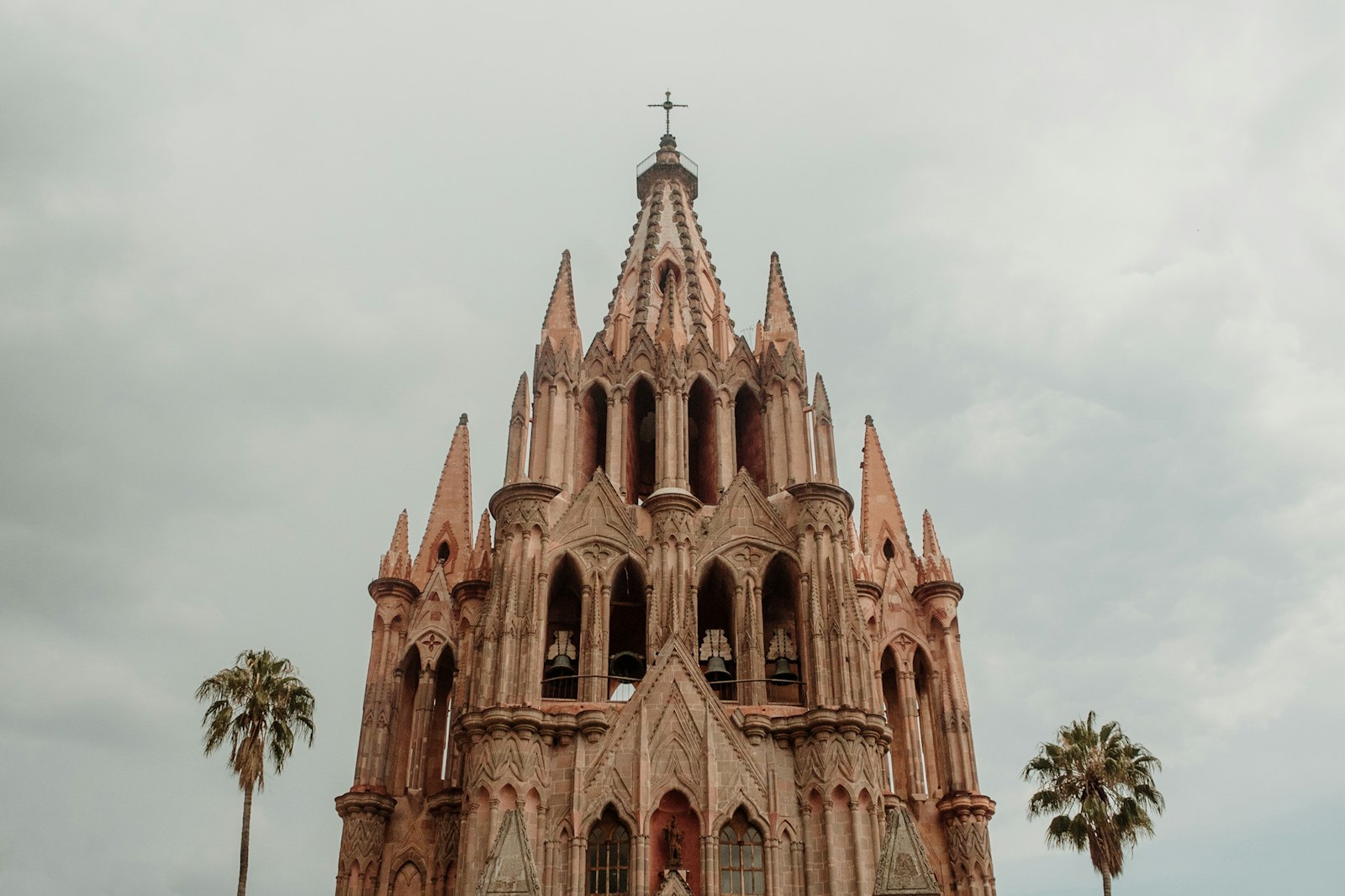
A UNESCO colonial hill town of pink spires, rooftop bars and the best expat-meets-Mexican food scene in the Bajío.
- Best time to visit: October-April
- Daily budget (budget traveller): $90 to $200 USD
- Ideal trip length: 3 to 4 days
San Miguel de Allende is the pastel-and-cobblestone town everyone means when they say colonial Mexico: the neo-Gothic Parroquia de San Miguel Arcángel rising over a laurel-shaded jardín, art studios in 18th-century courtyards, and rooftop terraces catching a 6,200-foot mountain sunset. It has been voted best small city in the world more times than is reasonable, and yes it is touristy, but the craft, the food and the light genuinely earn it.
San Miguel de Allende is the Mexico you picture before you've been: a pink neo-Gothic parish church that looks like a wedding cake, jacaranda-shaded benches, and honey-coloured streets that tilt down a hill at 1,900 metres. It is a UNESCO World Heritage town and it knows it. The jardín is lined with rooftop bars, galleries sit in 18th-century courtyards, and half the people at the next table are retirees from Texas or remote workers from Vancouver. Yes, it is touristy. It is also one of the few places where the craft, the cooking and the light justify the hype.
The trick is to treat it as two towns. The first runs on the Jardín Allende, with the Parroquia, mariachi and mezcal flights at MXN 300 a pop. The second is the Mexico one street back: comida corrida at Mercado Ignacio Ramírez for MXN 100, tacos for MXN 30 each, and Guadalupe's murals and the old textile mill at Fábrica La Aurora. Walk five minutes from the jardín in any direction and prices drop by a third, English drops by half, and the town gets noticeably better.
Plan around three things: the altitude (go easy on mezcal on night one), the cobblestones (they will win against bad shoes), and the rhythm. Mornings are cool and quiet, lunch runs 2 to 4pm, rooftops fill around 5:30pm, and dinner starts late. Do that and three to four days is plenty, with day trips to Guanajuato, the hot springs and the ghost-mining village of Mineral de Pozos to stretch it to a week. Church bells and fireworks at 6am are a feature, not a bug.
How many days in San Miguel de Allende?
For San Miguel de Allende, we recommend 3 to 4 days. With more time, add a day trip to Mineral de Pozos.
| Trip length | What you'll see | Itinerary |
|---|---|---|
| 2 days | The jardín at dusk; Markets, cooking and Bellas Artes | San Miguel de Allende in 2 days |
| 3 days · Recommended | Adds: Charco del Ingenio and Fábrica La Aurora | San Miguel de Allende in 3 days |
| 4 days · Recommended | Adds: Guanajuato day trip | San Miguel de Allende in 4 days |
| 5 days | Adds: Hot springs, Atotonilco and Dolores Hidalgo | San Miguel de Allende in 5 days |
| 7 days | Adds: Slow day: churches, books and rooftops; Sunrise mirador | San Miguel de Allende in 7 days |
San Miguel de Allende itinerary
Arrive, settle, the jardín at dusk
Morning: Land at QRO and take a shared shuttle (about 70 min, MXN 600 to 800) to the centro. Drop bags, then coffee and a concha at Cumpanio. Drink water, since you're at 1,900 metres.
Afternoon: Walk the Jardín Allende and step inside the Parroquia de San Miguel Arcángel, then wander Calle Cuna de Allende and Calle Umarán for first looks at courtyards and galleries.
Evening: Dinner on the roof at La Posadita with the Parroquia lit up in front of you. One mezcal, not four. Early night.
Markets, cooking and Bellas Artes
Morning: Mercado Ignacio Ramírez opens early. Do a market-tour cooking class (about MXN 1,800 to 2,800 with lunch) or just graze: tamales, fresh juice and tacos de carnitas.
Afternoon: Mercado de Artesanías for tin lanterns and textiles, then the free courtyard of Bellas Artes (Centro Cultural Ignacio Ramírez 'El Nigromante') with Siqueiros's unfinished mural.
Evening: Sunset at Quince Rooftop Garden Bar, arriving by 5:30pm for a seat. Dinner at La Parada for Peruvian-Mexican plates.
Charco del Ingenio and Fábrica La Aurora
Morning: Charco del Ingenio botanical garden and canyon at opening (entry about MXN 100). Walk the cactus trails and the reservoir overlook before the heat.
Afternoon: Uber to Fábrica La Aurora (MXN 80 to 120). Browse the galleries and design shops, lunch in the courtyard, then wander Guadalupe's murals.
Evening: Back to the centro for a tasting menu at Moxi (Hotel Matilda) or Áperi, or keep it cheap with tacos on Calle Mesones.
Guanajuato day trip
Morning: Bus or driver to Guanajuato (about 1h45, MXN 200 to 300 by bus). Go straight to the Callejón del Beso and Teatro Juárez before the groups arrive.
Afternoon: Lunch at Mercado Hidalgo, then ride the funicular to the Pípila monument for the whole-city view of colour-blocked hills.
Evening: Optional callejoneada (strolling musicians) with students at 8:30pm, then a late bus back. Check the last departure and book a driver if you want to stay late.
Hot springs, Atotonilco and Dolores Hidalgo
Morning: Uber or taxi to La Gruta hot springs (about MXN 300 entry, 15 min out, closed Mondays and Tuesdays, so do this day Wednesday to Sunday). Arrive at 9am for the grotto tunnel before the day-trippers.
Afternoon: Visit the Santuario de Atotonilco, the 'Sistine Chapel of Mexico' with floor-to-ceiling murals, then continue to Dolores Hidalgo for strange ice-cream flavours (shrimp, avocado, tequila).
Evening: Bus or taxi home. Light dinner of pozole or quesadillas near the market, then early to bed.
Slow day: churches, books and rooftops
Morning: Café Santa Ana in the Biblioteca Pública courtyard, then the Templo de San Francisco's churrigueresque facade and the Oratorio de San Felipe Neri.
Afternoon: Siesta, then a mezcal flight (about MXN 250 to 450) and one last shopping pass for ceramics and tinwork.
Evening: Dinner at Hecho en México or a rooftop at La Azotea, then live music at Berlin Bar or Mama Mia.
Sunrise mirador, depart
Morning: Walk up to the Mirador before 7am for the valley in the mist with the Parroquia below. Pan dulce and coffee at Lavanda or El Pegaso.
Afternoon: Last browse for gifts at Mercado de Artesanías, then a shared shuttle to QRO or BJX, or an ETN bus to Mexico City.
Evening: Fly home or continue on to Guanajuato, Querétaro or Mexico City.
Best neighbourhoods
- Centro Histórico: The jardín, the Parroquia and the densest cluster of galleries, restaurants and boutique hotels.
- Guadalupe: The mural-covered arts barrio, cheaper rentals and Fábrica La Aurora nearby.
- San Antonio: Residential, leafy and popular with long-stay visitors; a 15-minute walk downhill from centro.
- Los Frailes: Quiet outskirts near the presa, good for villa rentals and golf-adjacent calm.
Must-do experiences
- See the Parroquia at dusk: The pink neo-Gothic church on the jardín, best from a rooftop bar as the lights come on.
- Browse Fábrica La Aurora: A former textile mill turned into 40-plus galleries, design shops and a courtyard café.
- Soak at La Gruta hot springs: Thermal pools and a tunnel-fed grotto 15 minutes out of town.
- Walk the Charco del Ingenio: A botanical garden and canyon reserve of cacti and native plants above the town.
- Take a Mexican cooking class: Market tour plus moles, salsas and handmade tortillas, one of the town's best-run experiences.
Hidden gems
- Mercado de Artesanías, the crafts alley behind the Ignacio Ramírez market.
- Templo de San Francisco's churrigueresque facade, quieter than the Parroquia.
- The Tuesday market (Tianguis de los Martes) on the edge of town, for food stalls and a local crowd.
- The Mirador viewpoint before sunrise, with the whole valley in the mist.
Daily budget
- Accommodation: budget MXN 350-700 / night (hostel dorm), mid-range MXN 2,200-3,800 (boutique double), splurge MXN 8,000+ (Casa de Sierra Nevada, Rosewood San Miguel from MXN 12,000). Weekends and holidays add 30 percent. Guadalupe and San Antonio are 20 to 40 percent cheaper than the jardín blocks.
- Food: budget MXN 350-550 / day (market comida corrida, tacos, pan dulce), mid-range MXN 900-1,500 (one sit-down dinner at La Posadita or La Parada), splurge MXN 2,500+ (tasting menu at Moxi or Áperi). Comida corrida at Mercado Ignacio Ramírez is MXN 90-140 for soup, main, rice and agua fresca. Same food on the jardín costs triple.
- Transport: budget MXN 100-200 / day (walk plus one taxi), mid-range MXN 250-400 (Uber for the Fábrica La Aurora and hot springs hops), splurge MXN 1,800+ (private driver to Guanajuato). In-town taxis run MXN 70-120. Ask the fare before you get in, or use Uber. Don't rent a car.
- Activities: budget MXN 100-250 / day (free churches, Bellas Artes, Fábrica La Aurora, Charco del Ingenio), mid-range MXN 500-900 (hot springs, Sunday house tour, a gallery or two), splurge MXN 2,500+ (private cooking class, hot-air balloon, guided Guanajuato day). La Gruta and Escondido Place run MXN 250-450 depending on day. Go Wednesday to Friday for half the crowd, as La Gruta is closed Mondays and Tuesdays.
- Drinks & nightlife: budget MXN 150-250 (cantina beer MXN 50-70, a mezcal at the market), mid-range MXN 500-800 (rooftop cocktails at Quince, a mezcal flight), splurge MXN 1,500+ (Luna Rooftop at Rosewood, bottle service). Nightlife is rooftops and live music, not clubs. Most places wind down by midnight, and Berlin Bar and Mama Mia stay lively later.
Where to stay
- Social hostel in Centro Histórico (MXN 350-700 / night): Hostel Inn and other Centro dorms put you five minutes from the Parroquia, with courtyards, rooftop terraces and a mix of backpackers and long-stay nomads.
- Boutique hotel in Centro Histórico (MXN 2,500-4,500 / night): Hotel Matilda, Dos Casas or Posada de las Monjas, with design-led rooms, courtyard pools and rooftop terraces, all walking distance from everything.
- Apartment in Guadalupe or San Antonio (MXN 1,200-2,200 / night): Residential streets, local bakeries and cheaper rents, with Fábrica La Aurora a short walk or Uber away. Best value for a stay of five nights or more.
- Splurge in Centro Histórico (MXN 9,000-18,000 / night): Casa de Sierra Nevada (a Belmond hotel) or Rosewood San Miguel, with colonial courtyards, spa, tasting menus and rooftop views over the Parroquia.
What to eat
- Street tacos al pastor and carnitas around the Mercado
- Mole poblano and chiles en nogada in season
- Rooftop mezcal flights with valley views
- Mexican coffee and pan dulce on the jardín
Day trips
- Guanajuato (1h45 by bus): A UNESCO silver-mining city of colour-blocked hillsides, tunnels and tiny plazas. Highlights are the Callejón del Beso, Teatro Juárez, Mercado Hidalgo and the funicular to the Pípila viewpoint. Go early and plan an overnight if you want the evening callejoneadas. Primera Plus or Flecha Amarilla bus from San Miguel's station, roughly MXN 200 to 300 each way. Private driver MXN 1,800 to 2,500 round trip.
- Dolores Hidalgo & Atotonilco (40 min by bus or car): Dolores Hidalgo is the 'cradle of Mexican independence' and the town for eccentric ice cream (shrimp, mole, avocado) and Talavera ceramics. En route, the Santuario de Atotonilco has a UNESCO-listed interior of folk-baroque murals. Pair with La Gruta hot springs for a full day. Bus to Dolores Hidalgo from the San Miguel station, MXN 60 to 90 each way. For Atotonilco and the hot springs, take Uber or a taxi (MXN 150 to 250 each way).
- Mineral de Pozos (About 1 hour by car): A semi-abandoned silver-mining village of crumbling mine shafts, artisans' workshops and a ghost-town atmosphere. Wander the ruins, buy ceramics and have lunch in a courtyard restaurant. Best on a weekday when it's empty. Uber or taxi is easiest, about MXN 700 to 1,000 each way. Small-group tours from town run MXN 900 to 1,400.
When to visit
- Autumn (October - November): 10-26°C, dry, sunny days and crisp nights, hills still green. Crowds: Moderate, spiking around Día de Muertos (Nov 1-2). The best all-rounder. Rains have just ended, the light is golden, and the Día de Muertos altars and the November jazz festival add a lot. Book early for early November.
- Winter (December - February): 4-24°C, bone dry, cold nights that can touch freezing. Crowds: Busy over Christmas and New Year, calm in January. Postcard weather by day, but hotels rarely have heating, so pack layers. Late January and February are the sweet spot for quiet streets and good rates.
- Spring (March - May): 13-31°C, hot and dry, strong sun. Crowds: Heavy during Semana Santa, then easing. Jacarandas bloom purple from March. Semana Santa is gorgeous but packed and priced up. May is the hottest month, with siestas essential and rooftops best after 6pm.
- Summer (June - September): 15-28°C, short afternoon downpours, lush green hills. Crowds: Low, except Sept 15-16 (Independence) and the San Miguel Arcángel fiesta in late September. Underrated. Mornings are clear, rain hits at 4pm and clears by dinner, and rooms drop 20 to 30 percent. Cobblestones get slippery, so mind your footing.
Entry rules for your passport
Visa rules for Mexico depend on the passport you travel on. Check the official source before you book: Mexico National Migration Institute
Getting there
San Miguel has no commercial airport. Most visitors fly into Querétaro (QRO), 70 minutes away, or León/Bajío (BJX), about 90 minutes. Shared shuttles from both run MXN 600 to 800 per person, and a private transfer costs MXN 1,600 to 2,200. Mexico City is a comfortable bus ride: ETN and Primera Plus leave Terminal Norte every hour or two, take 3h45 to 4h and cost MXN 550 to 800. The San Miguel bus station is on the edge of town; a taxi to the centro costs MXN 80 to 120. Don't rent a car for the town itself, as parking on narrow cobblestone streets is a headache. If you do want one for the countryside, rent it at QRO and return it there when you fly out.
Getting around
The centre is compact and entirely walkable, but the cobblestones are brutal, so bring flat, gripped shoes. Taxis around town cost about $3 to $5 and Uber works. Querétaro Airport (QRO) is 70 minutes by shuttle for roughly $30, León/Bajío (BJX) about 90 minutes, and Mexico City is a comfortable 4-hour ETN bus from Terminal Norte.
Safety
San Miguel de Allende is one of the safest towns in Mexico, though Guanajuato state has serious gang violence in its southern and central industrial belt, away from the tourist towns. Standard care applies: use registered taxis or Uber at night, avoid intercity driving after dark, and watch your footing on uneven cobblestones. Altitude is 6,200 feet, so pace the mezcal on day one and drink extra water.
Solo travel tips
- Eat at the market counters: At Mercado Ignacio Ramírez and Mercado San Juan de Dios, sit at a counter, point at what the person next to you has, and ask 'qué recomienda?'. A full comida corrida is MXN 90-140 and you'll be chatting within minutes.
- Take a class on day one: Cooking classes, Spanish lessons, pottery and painting at Instituto Allende are the town's social engine. Book something for your first full day and you'll have people to share rooftops with by evening.
- Hostel pick: Hostel Inn or a Centro guesthouse: San Miguel is short on classic party hostels. Look for a Centro dorm or guesthouse with a shared courtyard, where solos and long-stay nomads actually talk to each other. Dorm beds run MXN 350 to 700.
- Claim a bench in the Jardín: At 7pm families, mariachi and couples fill the Jardín Allende, and sitting alone with a paletero ice cream is perfectly normal. It's the best free people-watching in town and a natural way to start a conversation.
- Solo female travellers: San Miguel is one of Mexico's safest towns, and solo women are everywhere. Take Uber rather than street taxis after 10pm, wear flat shoes on wet cobbles, and let your hotel know your plans on day trips.
- Join a group for Guanajuato: Day trips by bus are easy, but a small-group tour (about MXN 900 to 1,400) puts you with other solos and handles the logistics. Guanajuato's alleys are confusing and a local guide pays for itself.
Cultural etiquette
- Greet before you ask. Say 'buenos días' or 'buenas tardes' when entering a shop, taxi or market stall, and a 'gracias' on leaving. It changes the tone of every interaction.
- Tipping is 10 to 15 percent in restaurants (check whether 'servicio' is already included), MXN 20 to 50 for porters, and round up for taxis. Always have small bills.
- Cover shoulders and knees in churches and don't photograph people during Mass. The Parroquia is a working church, not a set.
- Ask before photographing street vendors, artisans or festival participants. A purchase or a smile usually settles it.
- Don't drink the tap water. Order 'agua purificada', ask for no ice if you're unsure, and use bottled water for brushing your teeth.
- Lunch (comida) is 2 to 4pm and dinner starts at 8pm. Arrive at 6pm and you'll get a half-empty restaurant and the tourist menu.
- The waiter won't bring the check unprompted. Say 'la cuenta, por favor' or make the little signing gesture when you're ready.
Frequently asked questions
How many days do you need in San Miguel de Allende?
Three to four days. Two cover the centro, the Parroquia, galleries and rooftops; a third adds the hot springs or Charco del Ingenio; a fourth lets you day-trip to Guanajuato city or the Atotonilco sanctuary without rushing.
Is San Miguel de Allende safe for tourists?
Yes, it's consistently rated among Mexico's safest towns and has a large resident foreign community. Petty theft is the main risk. Use Uber or registered taxis late, don't drive between cities after dark, and take the cobblestones seriously in the rain.
Is San Miguel de Allende expensive?
Mid-range by Mexican standards: $90 to $200 a day. Boutique hotels run $90 to $200, hostels $20 to $35, a good dinner $15 to $30 and hot springs entry about $15. Restaurants on the jardín charge a big premium over the same food two streets away.
When is the best time to visit San Miguel de Allende?
October to April for dry, sunny days around 24C and cool nights. The jacarandas bloom in March, Día de Muertos in early November is spectacular, and the summer rainy season brings short afternoon downpours rather than washouts.
How do you get to San Miguel de Allende?
Fly into Querétaro (QRO), 70 minutes away, or León/Bajío (BJX), about 90 minutes; both have shared shuttles for $30 to $40. From Mexico City, ETN and Primera Plus run comfortable 4-hour buses from Terminal Norte for around $30.
Is San Miguel de Allende good for solo travellers?
Very. It's walkable, safe, English is widely spoken, and the art-class, cooking-class and rooftop-bar culture makes meeting people easy. Solo diners are completely normal, and there are hostels plus a big digital-nomad scene for company.
Do you need a car in San Miguel de Allende?
No. The historic centre is walkable and taxis or Uber cover everything else cheaply. A car is only worth it if you plan several rural day trips, and parking inside the centro is scarce and awkward on narrow cobbled streets.
More about San Miguel de Allende
- The 7-Day Mexico City Itinerary for 2026, with Real Prices
- Mexico City vs Medellín for Digital Nomads: Which Base Suits You in 2026?
Tours and activities in San Miguel de Allende | San Miguel de Allende in 2 days | San Miguel de Allende in 3 days | San Miguel de Allende in 4 days | San Miguel de Allende in 5 days | San Miguel de Allende in 7 days
Can't decide? Compare San Miguel de Allende with...
Joy Plus home | Destinations | Itineraries | Activities | Flights | Budget planner | Calendar | Map | Blog | Lifetime access