Destinations / Europe
Segovia, Spain travel guide
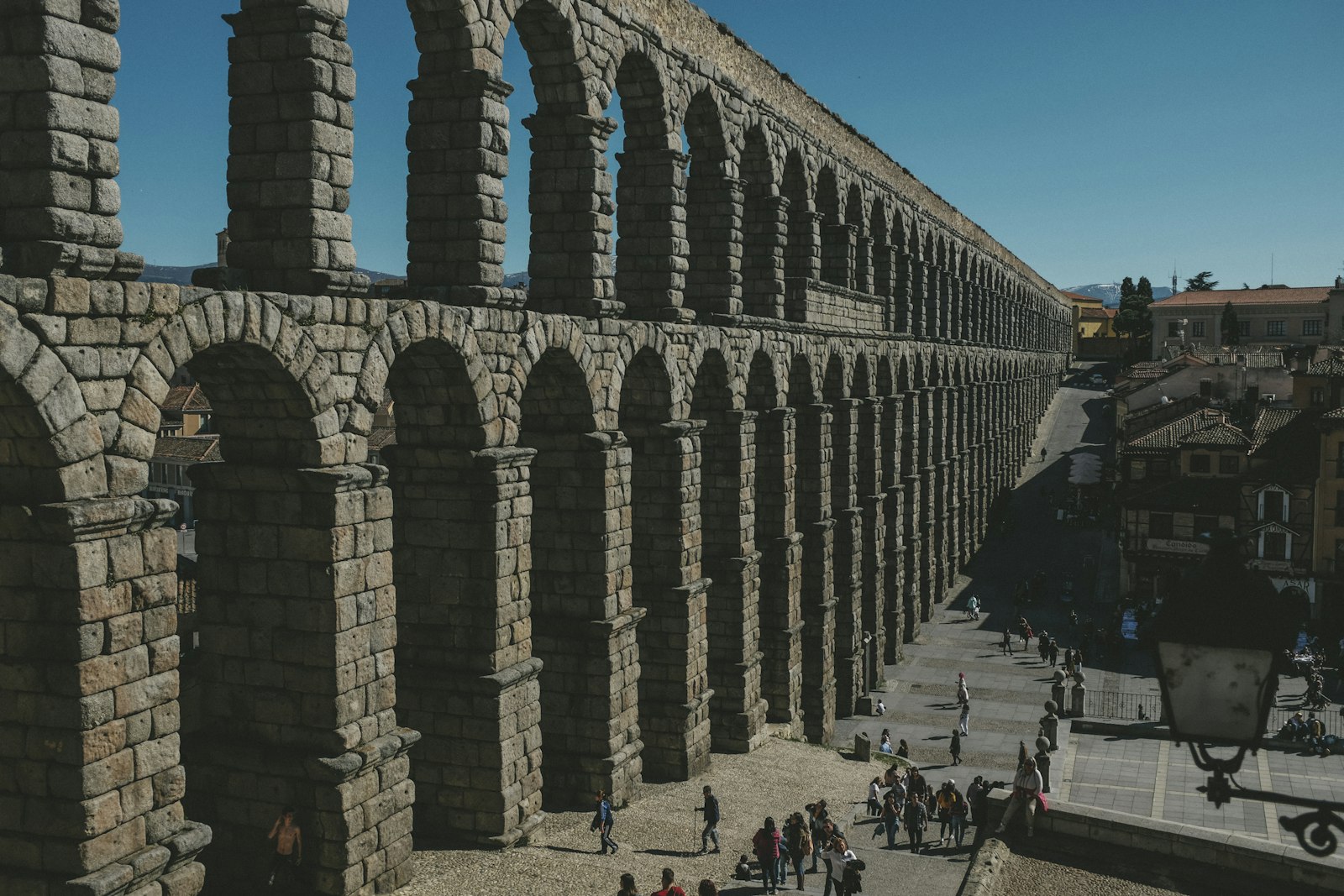
A Roman aqueduct, a fairytale alcázar and the best roast suckling pig in Spain, 30 minutes from Madrid.
- Best time to visit: April-June, September-October
- Daily budget (budget traveller): $90 to $180 USD
- Ideal trip length: 1 to 2 days
Segovia opens with one of the great sights of the ancient world: a 28-metre Roman aqueduct of 20,000 granite blocks, standing without mortar for nearly 2,000 years and running straight through the middle of town. Beyond it, a honey-coloured old town climbs to the Alcázar, the ship-prow castle that helped inspire Disney's silhouette. In between are Romanesque churches, a late-Gothic cathedral and wood-fired ovens turning out cochinillo.
Segovia is a town you can read in one line. Start at the Roman aqueduct in Plaza del Azoguejo, 166 granite arches stacked 28 metres high with no mortar, built around the 1st century and still carrying the skyline. Climb Calle Real for 15 minutes, past Romanesque towers and the Plaza Mayor, and the street ends at the Alcázar, a ship-prow castle on a cliff. Walt Disney's team famously studied it, and it is easy to see why. The whole walk is under 2km. The old town sits at roughly 1,000 metres, so the air is thin, the light is sharp and the wind is real.
Most people do it as a day trip from Madrid, and the AVANT train from Chamartín makes that painless at 27 to 30 minutes. That is also why the town changes around 5pm. The coaches leave, the Plaza Mayor empties, and the cathedral glows over a handful of locals drinking vermut. Stay one night if you can. Segovia also has a food tradition that works as a destination in its own right. Cochinillo asado is suckling pig roasted in a wood-fired oven until the skin shatters, and it is carved at the table with the edge of a plate. Mesón de Cándido, José María and Casa Duque have been doing it for generations. Judiones de La Granja, a giant buttery bean stew, and ponche segoviano, a marzipan-topped custard cake, round out the table.
This guide treats Segovia as a base rather than a checklist. Two days covers the aqueduct, the Alcázar, the cathedral, the Judería and the Vera Cruz church outside the walls, and a long weekend adds La Granja palace, Ávila's full medieval wall and Pedraza. It is affordable by Spanish standards, very safe and quiet at night. The only things that punish you are the winter wind, the August heat on the climb to the castle and arriving at 2pm on a Saturday without a cochinillo reservation. Book the table first and plan the sightseeing around it.
How many days in Segovia?
For Segovia, we recommend 1 to 2 days.
| Trip length | What you'll see | Itinerary |
|---|---|---|
| 2 days · Recommended | Aqueduct and a cochinillo lunch; Alcázar, cathedral and the Judería | Segovia in 2 days |
| 3 days | Adds: La Granja de San Ildefonso | Segovia in 3 days |
| 4 days | Adds: Ávila walls day | Segovia in 4 days |
| 5 days | Adds: Pedraza, medieval village | Segovia in 5 days |
| 7 days | Adds: Vera Cruz, El Parral and the Eresma valley; Walls | Segovia in 7 days |
Segovia itinerary
Arrive, aqueduct and a cochinillo lunch
Morning: Take the AVANT from Madrid Chamartín (27 minutes) to Segovia-Guiomar, then bus 11 to Plaza del Azoguejo. Drop bags, then stand under the aqueduct and climb the stairs to Plaza de Díaz Sanz for the arch-level view.
Afternoon: Cochinillo at Mesón de Cándido, booked a week ahead for 1:30pm. Walk it off up Calle Real to the Plaza Mayor and have a ponche slice at Limón y Menta.
Evening: Cathedral lit at dusk, then vermut and tapas on Calle Infanta Isabel. Bed early, tomorrow starts at the castle.
Alcázar, cathedral and the Judería
Morning: Alcázar at 10am opening, about €10 with €2.50 extra for the 152-step tower. See the Hall of Kings and the Mudéjar ceilings before the tour groups arrive.
Afternoon: Menú del día at Casa Duque with judiones. Cathedral (about €5), then wander the Judería and the Museo Didáctico de la Judería.
Evening: Sunset at the Mirador de la Pradera de San Marcos for the full ship-prow view. Dinner at El Fogón Sefardí.
La Granja de San Ildefonso
Morning: Avanza bus from the bus station to La Granja (about 20 minutes). Palace opens at 10am, about €9 to €12. Check the royal fountain calendar, shows run on set afternoons in warm months.
Afternoon: Walk the gardens (free) and the Real Fábrica de Cristales glass museum. Lunch of judiones at a village asador.
Evening: Bus back, light tapas at Bar Cueva de San Esteban, early night.
Ávila walls day
Morning: Bus to Ávila (about 1 hour, roughly €7). Walk the medieval walls, about €5, the best-preserved circuit in Spain.
Afternoon: Chuletón lunch inside the walls, then yemas de Santa Teresa and a look at the Basílica de San Vicente.
Evening: Bus back to Segovia. Drinks on Plaza Mayor, the old town is empty and lovely at night.
Pedraza, medieval village
Morning: Pedraza has no practical bus, so book a taxi (around €45 each way) or join a small-group tour from Segovia. Walk the Plaza Mayor, Calle Real and the castle (Zuloaga museum).
Afternoon: Roast lamb (lechazo) at an asador on the main street. Browse the pottery and cheese shops.
Evening: Back in Segovia. If it is July, stay in Pedraza for the candlelit concerts.
Vera Cruz, El Parral and the Eresma valley
Morning: Walk to Iglesia de la Vera Cruz, the 13th-century 12-sided Templar-linked church outside the walls (about €3, check afternoon hours). Continue past the Monasterio de El Parral.
Afternoon: Stroll the Eresma valley path, then the Casa-Museo Antonio Machado for the poet's spartan room. Late lunch of tapas on Plaza de San Martín.
Evening: Second pass at the Alcázar viewpoints from below the walls. Final dinner at José María, standing at the tapas bar if the dining room is full.
Slow morning, walls and depart
Morning: Coffee and a napolitana on Plaza Mayor. Walk the wall at Puerta de San Andrés and the Mirador de la Canaleja.
Afternoon: Last cochinillo at José María if you skipped it, or a take-home ponche. Bus 11 back to the AVANT station.
Evening: Train to Madrid Chamartín, metro line 10 to Nuevos Ministerios, then line 8 to Barajas, or onward to your next city.
Best neighbourhoods
- Casco Antiguo: The walled old town between aqueduct and Alcázar, with the Plaza Mayor and cathedral at its centre.
- Judería: The old Jewish quarter of narrow lanes, with a museum and views over the valley.
- San Millán & Azoguejo: Around the aqueduct, with the bus station, cheaper hotels and busy tapas bars.
- San Lorenzo & the valley: Below the walls, where locals live and the classic Alcázar viewpoints are found.
Must-do experiences
- Stand under the Roman Aqueduct: 167 arches of unmortared granite in Plaza del Azoguejo, still the entrance to the city.
- Tour the Alcázar: The clifftop castle with painted Mudéjar ceilings, an armoury and a tower climb over the valley.
- Visit Segovia Cathedral: The last great Gothic cathedral built in Spain, nicknamed the Lady of Cathedrals.
- Eat cochinillo asado: Roast suckling pig, traditionally carved with the edge of a plate at Mesón de Cándido or José María.
- Walk to Mirador de la Pradera de San Marcos: The meadow below the castle for the full ship-prow profile.
Hidden gems
- Iglesia de la Vera Cruz, a 13th-century Templar-linked round church outside the walls.
- La Granja de San Ildefonso, a baroque royal palace with monumental fountains, 20 minutes away.
- The Casa-Museo Antonio Machado, the poet's spartan lodgings.
- The walk along the city walls at Puerta de San Andrés.
Daily budget
- Accommodation: budget €45-75 / night (hostal private double, no real dorm scene), mid-range €90-150 (Infanta Isabel or Palacio San Facundo), splurge €200+ (Parador de Segovia, Eurostars Convento Capuchinos). Rooms inside the walls cost more on weekends. Midweek and winter prices drop by a third.
- Food: budget €25-35 / day (menú del día €14-17 plus tapas), mid-range €55-80 (cochinillo at lunch, tapas at night), splurge €120+ (cochinillo, judiones, starters and a Ribera del Duero bottle). Cochinillo runs €32-40 per person at the famous asadores. Have it at lunch, order a starter to share and skip dinner.
- Transport: budget €12-15 (Avanza bus return from Moncloa, plus local bus), mid-range €26-32 (AVANT return, bus 11, one La Granja bus), splurge €150+ (private driver from Madrid with a La Granja stop). The old town is walkable. Do not drive in, the centre is a restricted zone and parking costs €15-20 a day.
- Activities: budget €0-12 (aqueduct, walls, miradores free, cathedral €5), mid-range €25-40 (Alcázar with tower, cathedral, Vera Cruz), splurge €80+ (private guide, La Granja palace, a Ribera del Duero bodega visit). The aqueduct and every viewpoint are free. The Alcázar is the one ticket that matters, buy it online.
- Drinks & nightlife: budget €8-12 (caña €2-3 at the bar, vermut), mid-range €20-30 (wine and tapas crawl around Plaza Mayor), splurge €60+ (Ribera del Duero by the bottle, hotel terrace cocktails). Nightlife is a quiet tapas circuit, not a club scene. Bars near Calle Infanta Isabel close around 1am.
Where to stay
- Social hostel in San Millán & Azoguejo (€45-75 / night): No real dorm scene, so go for family-run Hostal Don Jaime or Hotel Las Sirenas. Walk to the aqueduct and bus station, cheap and central.
- Boutique hotel in Casco Antiguo (€100-170 / night): Hotel Palacio San Facundo or Hotel Infanta Isabel on Plaza Mayor. Stone walls, quiet courtyards and a 2-minute walk to the cathedral.
- Apartment in Judería (€80-130 / night): Renovated flats on old-quarter lanes with beams and kitchens. Best for stays of 3+ nights and for stocking up on market cheese and Ribera wine.
- Splurge in Valle del Eresma (€200-320 / night): Parador de Segovia sits across the valley with the best skyline view in town, a pool and a hotel restaurant. Eurostars Convento Capuchinos is the old-town alternative.
What to eat
- Cochinillo asado, the city's defining dish
- Judiones de La Granja, big buttery beans stewed with pork
- Ponche segoviano, a marzipan-topped custard cake
- Ribera del Duero reds from an hour north
Day trips
- La Granja de San Ildefonso (11km, 20 minutes): A baroque royal palace modelled on Versailles, with gardens, glass-works and musical fountains that run on set afternoons in warm months. Avanza bus from Segovia bus station, about €2 each way. Palace ticket about €9 to €12, gardens free.
- Ávila (65km, about 1 hour): Spain's best-preserved medieval walls, 2.5km long with 88 towers, plus Santa Teresa's yemas and a famous chuletón. Direct bus from Segovia bus station, about €7 each way. Walking the wall costs about €5.
- Pedraza (37km, 35 minutes by car): A walled medieval village with a castle, stone arcades, roast lamb and candlelit concerts in July. No practical bus. Taxi around €45 each way, or a small-group tour from Segovia. Renting a car for the day (about €45) is easiest.
When to visit
- Spring (April - June): 10-24°C, bright sun, cold mornings, occasional hail or showers. Crowds: Building, busiest on Easter weekends and May puentes. The best window. Green valley below the Alcázar, comfortable climbs, and the Titirimundi puppet festival in May fills the squares.
- Summer (July - August): 16-33°C, dry, strong sun, cool nights at altitude. Crowds: Heavy on weekend afternoons when Madrid drives up. Doable if you go early and book lunch. Shade is scarce on Calle Real by 3pm. Pedraza's candlelit concerts in July are a good reason to stay overnight.
- Autumn (September - October): 8-25°C, golden light, first cold nights. Crowds: Moderate, quieter midweek. The locals' pick. Warm enough for the Pradera at sunset, mushroom season on menus, and the Hay Festival Segovia brings readers and writers in late September.
- Winter (November - March): -3 to 9°C, frosty, windy, snow a few days a year. Crowds: Very low, apart from the December puente. Cheapest hotels and the best case for cochinillo with a glass of Ribera del Duero. Pack proper layers, the wind off the Guadarrama is brutal.
Entry rules for your passport
Visa rules for Spain depend on the passport you travel on. Check the official source before you book: European Commission: Schengen visa policy
Getting there
From Madrid, the AVANT high-speed train leaves Chamartín about every hour and takes 27 to 30 minutes, around €13 each way, arriving at Segovia-Guiomar 6km out. Bus 11 (about €1.50) runs to Plaza del Azoguejo in 15 minutes, or a taxi costs €10 to €12. From Barajas airport, take metro line 8 to Nuevos Ministerios, change to line 10 for Chamartín and add the €3 airport supplement. Avanza buses from Madrid's Moncloa interchange are cheaper (around €6 to €8 each way) and slower at 75 to 90 minutes, but they drop you at the bus station 5 minutes' walk from the aqueduct. Driving is not recommended: the centre is restricted and car parks near Azoguejo cost €15 to €20 a day.
Border checks: non-EU visitors (other than Swiss, Norwegian, Icelandic, Liechtenstein, Andorran, Monegasque, San Marinese and Vatican citizens, and holders of an EU residence permit or long-stay visa) are registered in the EU's Entry/Exit System (EES) instead of getting a passport stamp. On your first crossing, officers take your photo and/or fingerprints, so allow extra time at passport control. ETIAS, the planned travel authorisation, is not in operation yet, so don't pay any website for one.
Getting around
The old town is compact and walkable but uphill from the aqueduct; local bus 11 links the AVE station with the centre. High-speed trains from Madrid Chamartín take 27 minutes for roughly $15, and Avanza buses from Moncloa take 75 minutes for around $6. Ávila is an hour away by bus, making a two-city day possible.
Safety
Segovia is very safe, with minimal crime beyond peak-season pickpocketing at the aqueduct. Winters are cold and windy at 1,000 metres altitude, and summer afternoons are hot with little shade on the climb. Cobbles are uneven and the Alcázar tower has 152 tight spiral steps.
Solo travel tips
- Ask for an individual cochinillo: Cochinillo is often a shared roast, but the asadores do single portions. Book for one, say so on the phone and eat at 1:30pm midweek, when the dining room is full of locals and nobody notices you.
- Stay one night, not zero: Day-trip crowds vanish by 5pm. Evenings in the old town are quiet, atmospheric and safe, the single best reason to sleep here rather than commute from Madrid.
- Bars beat tables: José María and Cueva de San Esteban run lively bar counters with tapas. Stand, order a caña and a plate, and you are in the conversation within minutes.
- No real hostel scene: Segovia has no party hostels. Take a private room at Hostal Don Jaime or Hotel Las Sirenas and meet people at the tapas bars, or join a walking tour from the aqueduct.
- Solo female travellers: Segovia is calm and well-lit at night. Standard rules apply, watch your bag at the aqueduct at midday, use Radio Taxi Segovia after 11pm if you are climbing from the AVE station, and wear proper shoes on the cobbles.
- Use the free tour trick: Free walking tours leave from the aqueduct most mornings and cover the Judería and Plaza Mayor in two hours. Tip €5 to €10 and use the guide for restaurant tips.
Cultural etiquette
- Book asadores a week ahead for weekends. Walking in at 2pm on a Saturday gets you a polite no, not a table.
- Lunch runs 2pm to 4pm, dinner from 9pm. A 7pm dinner request is met with a blank face.
- At Mesón de Cándido and José María the cochinillo is carved with the plate edge and the plate is then smashed. Let the waiter do it, do not try to cut it yourself.
- Tipping is not expected. Round up at bars, leave 5 to 10% only if service at a sit-down asador was great.
- Cover shoulders and keep voices low in the cathedral and Vera Cruz. Services run during opening hours.
- Don't climb on or lean against the aqueduct. It is protected, and guards in summer will whistle.
- Many shops close 2pm to 5pm and on Sundays. Plan errands for the morning.
Frequently asked questions
How many days do you need in Segovia?
One day is enough for the aqueduct, the cathedral, the Alcázar and a cochinillo lunch. Stay a night if you want the empty evening old town and a second day for La Granja palace or the Vera Cruz church outside the walls.
How do you get from Madrid to Segovia?
AVANT trains from Madrid Chamartín take 27 minutes and cost about $15, arriving at Guiomar station 6km out, where bus 11 runs to the aqueduct. Avanza buses from Moncloa take 75 minutes for around $6 and stop right in the centre.
Is Segovia worth visiting?
Yes. The Roman aqueduct is one of the best-preserved in the world and genuinely astonishing up close, the Alcázar is the most storybook castle in Spain, and the food tradition is a destination in itself. It's the strongest one-day trip from Madrid after Toledo.
Is Segovia expensive?
Affordable: budget $90 to $180 a day. Hotels run $70 to $130, the Alcázar about $10 and the cathedral $4. The one splurge is cochinillo, which runs $28 to $40 per person at the famous asadores, and it's worth booking a week ahead.
What is Segovia famous for?
Its 1st-century Roman aqueduct built without mortar, the Alcázar castle said to have inspired Disney's silhouette, the last Gothic cathedral built in Spain, and cochinillo asado, roast suckling pig carved with a plate to prove its tenderness.
When is the best time to visit Segovia?
April to June and September to October for mild weather on the climbs. Winter is genuinely cold at 1,000 metres but atmospheric and empty. Avoid summer weekend afternoons, when Madrid empties into the old town and restaurant tables disappear.
Is Segovia good for solo travellers?
Yes. It's very safe, small enough to walk end to end and easy as a solo day trip from Madrid. The only awkward part is cochinillo, usually served as a shared roast, but the asadores do single portions and bar tapas around Plaza Mayor are easy alone.
More about Segovia
- Where to Travel in 2027: 15 Places Worth Planning a Trip Around
- Total Solar Eclipse 2 August 2027: Where to Watch It and How to Plan Now
- Barcelona in 3 Days: Gaudí, Tapas, the Beach and 2026 Prices
Tours and activities in Segovia | Segovia in 2 days | Segovia in 3 days | Segovia in 4 days | Segovia in 5 days | Segovia in 7 days
Can't decide? Compare Segovia with...
Joy Plus home | Destinations | Itineraries | Activities | Flights | Budget planner | Calendar | Map | Blog | Lifetime access