Destinations / Asia
Siem Reap, Cambodia travel guide
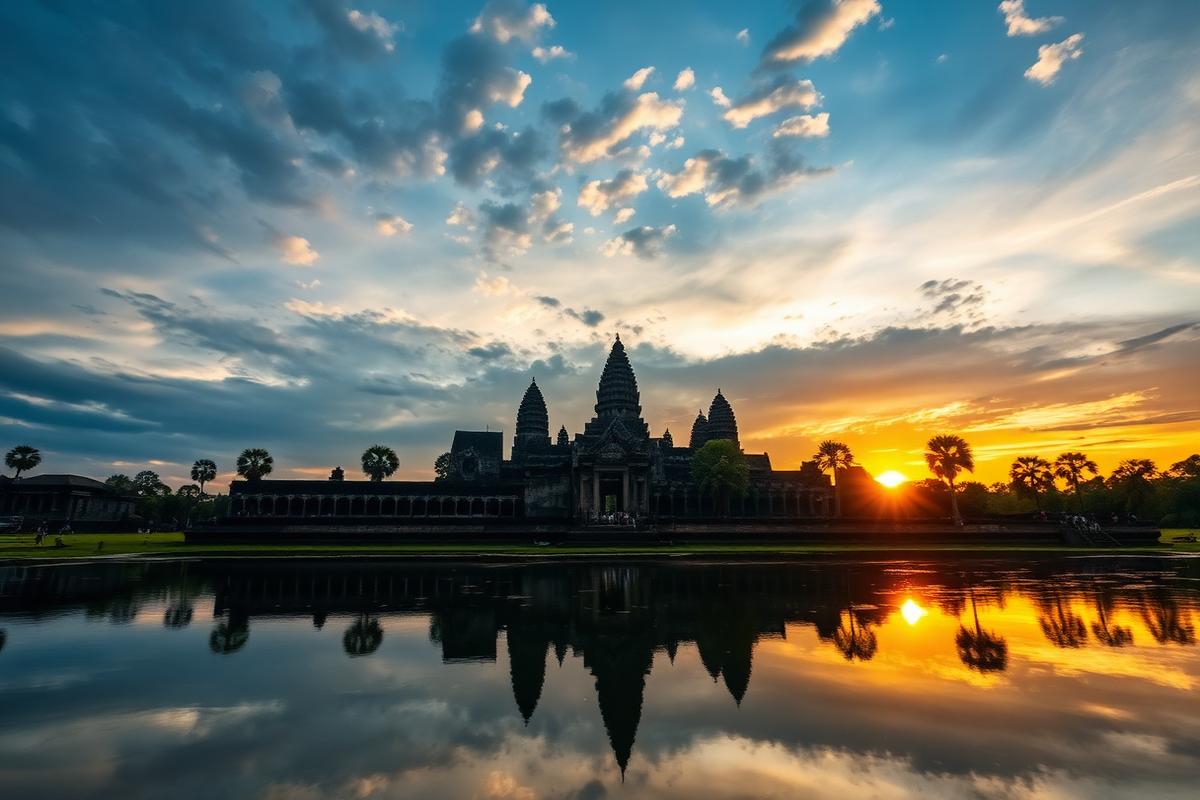
Gateway to Angkor: sunrise over ancient temples, jungle-wrapped ruins, buzzing markets and riverside nightlife.
- Best time to visit: November-February (cool, dry season)
- Daily budget (budget traveller): $35 to $75 USD
- Ideal trip length: 3 to 4 days
Siem Reap is the launchpad for Angkor, the vast temple complex of the Khmer Empire, where Angkor Wat glows at sunrise and Ta Prohm sits strangled by jungle roots. The town itself has grown into a lively base of markets, riverside bars and great-value food. Joy Plus times the temples to beat heat and crowds, picks the right multi-day Angkor pass, and balances ruins with rest.
Siem Reap is a small, sweaty, friendly town that happens to sit next to the largest religious monument on earth. The Khmer Empire built Angkor Wat, the Bayon and Ta Prohm between the 9th and 13th centuries, and the park is spread over roughly 400 square kilometres of forest and moat. The town is the easy part. It is a grid of cheap guesthouses, $1 noodle soups, $0.75 beers and tuk-tuk drivers who all know a guy. The temples are the hard part. They are huge, hot and badly signposted, so a good plan matters more here than in most places.
The golden rule is to be inside a temple at opening time and back at the pool by 11am. Angkor Wat at 5:30am is gorgeous and packed. The Bayon at 7:30am has the smiling faces to itself for about 40 minutes. Ta Prohm in the first hour is quiet enough to hear the roots creak. By midday it is 34°C, the tour buses arrive and you should be eating amok in a fan-cooled room. Build days around that rhythm, put the park on a 3-day pass and spend the gaps in town. Wander Kandal Village, watch a Phare Circus show at 8pm, and take a boat out to the Tonlé Sap stilt villages.
Siem Reap is cheap by any standard, though Angkor passes are the one big line item. The passes cost $37 for 1 day, $62 for 3 days and $72 for 7 days. Check the Angkor Enterprise site before you go. Everything else is easy on a budget: dorm beds from $6, a tuk-tuk day for around $20, a three-course Khmer dinner for $10 to $15. Dollars are the working currency, riel is for change, and the people are warm in a way that makes you stay a day longer than planned.
How many days in Siem Reap?
For Siem Reap, we recommend 3 to 4 days. With more time, add a day trip to Beng Mealea & Phnom Kulen.
| Trip length | What you'll see | Itinerary |
|---|---|---|
| 2 days | Town orientation, Phare Circus; Angkor Wat sunrise, the Bayon, Ta Prohm | Siem Reap in 2 days |
| 3 days · Recommended | Adds: The Grand Circuit and Pre Rup sunset | Siem Reap in 3 days |
| 4 days · Recommended | Adds: Banteay Srei, Kbal Spean, Landmine Museum | Siem Reap in 4 days |
| 5 days | Adds: Tonlé Sap floating villages | Siem Reap in 5 days |
| 7 days | Adds: Slow day, museum, spa, markets; Last temple morning | Siem Reap in 7 days |
Siem Reap itinerary
Arrive, town orientation, Phare Circus
Morning: Land at Siem Reap Angkor International Airport (SAI), about 50km out. Pre-booked taxi or Grab to town is $20-26. Check in, shower, eat a bowl of noodles at an Old Market stall for $2.
Afternoon: Walk Old Market (Psar Chas), then cut across to Kandal Village for coffee at Little Red Fox Espresso. Visit the Artisans Angkor workshops (free, near the Old Market) to see silk and stone carving.
Evening: Phare, the Cambodian Circus, 8pm show (tickets from about $18). Late dinner at Marum or Chanrey Tree, then one beer on Pub Street.
Angkor Wat sunrise, the Bayon, Ta Prohm
Morning: Tuk-tuk at 4:45am. Be at the Angkor Wat pond by 5:15am, sunrise around 5:50am. Breakfast at the stalls on the west side. Then the Bayon at about 7:30am, followed by Baphuon and the Terrace of the Elephants.
Afternoon: Ta Prohm for the roots, then back to the hotel by 12:30pm. Nap, pool, shower. Do not push through the midday heat.
Evening: Sunset drinks at Asana Wooden House, dinner at Mahob or Haven (training-restaurant that supports local youth).
The Grand Circuit and Pre Rup sunset
Morning: Preah Khan at opening, then Neak Pean and Ta Som. Lunch in the park at a roadside stall, grilled fish with rice for $3-4.
Afternoon: Back for a pool break. Mid-afternoon, tuk-tuk out to East Mebon and Pre Rup.
Evening: Sunset at Pre Rup instead of fighting the Phnom Bakheng queue. Dinner at Genevieve's or a Khmer BBQ on Street 8.
Banteay Srei, Kbal Spean, Landmine Museum
Morning: Leave at 7:30am for Banteay Srei (about 35km, 1 hour). Pink sandstone carvings at opening, quiet and photogenic.
Afternoon: Kbal Spean, the river of a thousand lingas, a 30-minute jungle walk to the carvings. On the way back stop at the Cambodia Landmine Museum (about $5), a moving counterpoint to the temples.
Evening: Slow dinner. Cheap foot massage in town for $5-8. Early night.
Tonlé Sap floating villages
Morning: Hire a driver for Kampong Khleang (about 1 hour east) or the closer Kampong Phluk. Boat trips are $20-35 plus the ride. Go in the morning to avoid heat.
Afternoon: Lunch in the village. Back in town by 3pm. Cooking class at Le Tigre de Papier or Sugar Palm, usually $20-30 including a market visit.
Evening: Eat what you cooked. Cocktails at Miss Wong in the Lane 8 alley, or a rooftop at your hotel.
Slow day, museum, spa, markets
Morning: Sleep in. Brunch at Joe-to-Go or Little Red Fox. Angkor National Museum (about $12) is air-conditioned and good context for the temples you have seen.
Afternoon: Spa at Bodia or a cheap Khmer massage. Wander Wat Bo and Wat Damnak, an area of leafy residential streets.
Evening: Angkor Night Market for souvenirs (5pm to midnight, haggle politely). Dinner on the river.
Last temple morning and depart
Morning: Optional return to the Bayon or Angkor Wat if your pass is still valid, or a bike ride along the river for $2. Final coffee in Kandal Village.
Afternoon: Pick up silk scarves and Kampot pepper at Old Market. Lunch of fish amok.
Evening: Transfer to the airport (leave your hotel about 3 hours before an international flight, SAI is far from town). Last fresh sugarcane juice on the way.
Best neighbourhoods
- Pub Street & Old Market: The lively nightlife and market core in the town centre.
- Riverside: Quieter cafés, galleries and boutique stays along the Siem Reap River.
- Wat Bo area: A leafy, local-feeling neighbourhood of guesthouses.
- Angkor Archaeological Park: The temple complex just north of town.
- Kandal Village: A small, hip strip of cafés, design shops and restaurants.
Must-do experiences
- Sunrise at Angkor Wat: The classic dawn view of the world's largest religious monument.
- Ta Prohm 'Tomb Raider' temple: Ruins dramatically entwined with giant tree roots.
- Angkor Thom & Bayon: The walled city and its temple of giant smiling stone faces.
- Tonlé Sap floating villages: A boat trip to stilted communities on Southeast Asia's biggest lake.
Hidden gems
- The pink-sandstone carvings of Banteay Srei, further out and quieter.
- A Khmer cooking class in town.
- Phare, the Cambodian Circus, for acrobatics with a social mission.
- Sunset from the Pre Rup temple instead of the crowded Phnom Bakheng.
Daily budget
- Accommodation: budget $6-12 / night (hostel dorm), mid-range $40-80 (boutique double with pool), splurge $300+ (Raffles Grand Hotel d'Angkor, Park Hyatt, Amansara from $1,000). Pool is non-negotiable in the afternoons. Rooms with a pool and breakfast at $35-50 around Wat Bo and Kandal are the best value.
- Food: budget $8-14 / day (noodle soup, rice plates, Old Market stalls), mid-range $25-40 (amok dinner, a good cafe, one cocktail), splurge $80+ (Cuisine Wat Damnak set menu, hotel dining). Street noodle bowls are $1.50-3, a fish amok in a proper restaurant is $5-8. Skip restaurants on the main Pub Street strip for dinner, walk two blocks away.
- Transport: budget $2-4 per town tuk-tuk ride, $18-25 for a full Angkor tuk-tuk day, mid-range $35-50 (Grab/PassApp plus a driver for Banteay Srei), splurge $60-90 (private air-con car and guide for the day). Hire one driver for all your temple days and negotiate a daily rate. Bicycles are $2-3, e-bikes $10-15 per day.
- Activities: budget $21 / day (3-day Angkor pass averaged, $62 in total), mid-range $50-80 (pass + Phare Circus + a cooking class), splurge $150+ (private guide, sunrise hot-air balloon, spa). Pass is valid 3 days within 7 days. Buy tickets from the Angkor ticket office on Street 60, which opens at 5am. After 4:45pm you can buy the next day's ticket and enter for sunset.
- Drinks & nightlife: budget $3-6 (draught Angkor beer $0.50-1 at happy hour), mid-range $15-25 (cocktails at Asana, Miss Wong or Laundry Bar), splurge $50+ (Raffles Elephant Bar, rooftop hotel cocktails). Pub Street is loud and cheap. Locals drink on Street 8 or on the river. Never leave a drink unattended.
Where to stay
- Social hostel in Pub Street & Old Market ($6-14 / night): Mad Monkey Siem Reap, Onederz Hostel or Lub d Siem Reap. Pools, tours and cheap dorms a short walk from the Old Market and bars. Pick a quieter room if you want sleep before a 4:45am sunrise.
- Boutique hotel in Riverside / Kandal Village ($70-170 / night): Jaya House River Park or Viroth's Hotel. Pool, breakfast, quiet gardens and an easy walk to Kandal Village cafes and the river.
- Apartment in Wat Bo & Wat Damnak ($30-60 / night): Leafy, local streets with serviced apartments and small hotels. Great if you stay a week and want a kitchen, laundry and neighbours who say hello.
- Splurge in Central Siem Reap / Angkor outskirts ($300-1,200 / night): Raffles Grand Hotel d'Angkor (colonial elegance, Elephant Bar), Park Hyatt, or Amansara (private Angkor access, from about $1,000). Cool rooms, spa and a proper pool for the midday retreat.
What to eat
- Fish amok, the creamy coconut curry steamed in banana leaf
- Lok lak, stir-fried beef with a lime-pepper dip
- Khmer red curry and num banh chok noodles
- Fresh sugarcane juice from a street cart
Day trips
- Banteay Srei & Kbal Spean (35km, about 1 hour by tuk-tuk): Pink sandstone carvings so fine they look like wood, then a jungle walk to the river of a thousand lingas. Add the Cambodia Landmine Museum on the way back. Tuk-tuk or Grab driver for $35-45 return for the day. Included in the Angkor pass (landmine museum is separate, about $5). Go at opening to avoid tour buses.
- Tonlé Sap floating villages (16 to 50km, 30 to 60 minutes): Kampong Phluk has stilted houses over flooded forest in rainy season. Kampong Khleang is bigger, less touristy and more authentic. Best between September and December when water is high. Tuk-tuk or driver ($20-30) plus a boat ($20-35). Go in the morning. Prefer community-run boats and avoid the cheap packaged tours with shopping stops.
- Beng Mealea & Phnom Kulen (65km (Beng Mealea) and 50km (Kulen), 1 to 1.5 hours): Beng Mealea is an overgrown temple with no restoration, a real Indiana Jones experience. Phnom Kulen has a waterfall, the river of lingas and a reclining Buddha, best done in green season. Hire a car or tuk-tuk for $45-70 for the day. Beng Mealea is now covered by the Angkor pass, or $10 on its own. Phnom Kulen is about $20 and needs a separate ticket. Combine them only if you start at 7am.
When to visit
- Cool Season (November - February): 22-32°C, dry, low humidity, cool mornings. Crowds: Heavy from mid-December to January. The best conditions for temples. Book guesthouses and a sunrise driver early, and expect the Angkor Wat sunrise to be a wall of phones.
- Hot Season (March - May): 34-40°C, dry, brutal after 10am. Crowds: Low, thin outside Khmer New Year (13 to 16 April). Cheap rooms and empty temples, but you must be done by 10am. Pool afternoons are mandatory. Khmer New Year closes many local shops.
- Green Season (June - August): 26-33°C, afternoon downpours, lush and green. Crowds: Low. Underrated. Rice paddies glow, temple moats fill and rain usually hits late afternoon. Hotel deals are 30-50% off, and a thin poncho is all you need.
- Late Wet Season (September - October): 25-31°C, heaviest rain, high humidity. Crowds: Very low, Pchum Ben holiday brings domestic travellers in late Sep or Oct. The Tonlé Sap is at its fullest and the floating villages are at their best. Some dirt roads to outer temples turn to mud, so check conditions before booking Beng Mealea or Koh Ker.
Entry rules for your passport
Visa rules for Cambodia depend on the passport you travel on. Check the official source before you book: Cambodia's official e-Visa site
Getting there
Siem Reap Angkor International Airport (SAI) opened in late 2023 about 50km east of town, a 60 to 90 minute drive. A pre-booked taxi or Grab is $20-26, an official airport taxi is a fixed $35 for 1-3 people ($45 for a minivan), the public airport shuttle bus to 7 Makara St in town is $8, and a few hotels offer shuttles. Allow time, the old airport near town is closed. Direct flights come from Bangkok, Singapore, Kuala Lumpur, Hanoi, Ho Chi Minh City and Phnom Penh. Overland, buses from Phnom Penh (Giant Ibis, Mekong Express, about 6 hours) cost $12-15. The Poipet border crossing from Bangkok has been closed since June 2025 because of the border conflict, so fly from Bangkok unless you have confirmed it has reopened. Cambodia e-visa is $30 online at evisa.gov.kh (including the processing fee), and visa on arrival is $30, payable by card or cash, but the e-visa avoids the queue.
Getting around
Tuk-tuks (often booked via the local PassApp or Grab) are the way to explore the temples and town cheaply; hire one for a full Angkor day. The centre is walkable. The new airport is about an hour from town, so pre-book a transfer. Bicycles and e-bikes are an option for fit travellers wanting to cycle the temple roads at their own pace.
Safety
Siem Reap is friendly and safe for tourists. Drink bottled water, cover shoulders and knees at temples, and watch for the strong sun, heat and uneven temple stones. Be wary of overpriced tuk-tuk deals and child beggars (giving directly is discouraged); keep valuables secure in busy Pub Street at night. Land crossings between Thailand and Cambodia have been closed or restricted since June 2025 because of a border conflict, so fly between the two countries unless you have confirmed a crossing is open.
Solo travel tips
- Find one driver and keep him: Ask your hostel or hotel for a trusted tuk-tuk driver and WhatsApp him. Rates are about $18-25 for a full Angkor day, $35-40 for Banteay Srei. You get a reliable ride at 4:45am and zero haggling stress.
- Hostel pick: Mad Monkey or Onederz: Both run walking tours, family dinners and pub nights without forcing you into them. Mad Monkey's pool and Onederz's rooftop make it easy to meet people and split a tuk-tuk for sunrise.
- Split the tuk-tuk, not the sunrise: A 4:45am tuk-tuk is $18-25 whether it holds one person or three. Post in the hostel chat the night before, share the cost and the day, and everyone sees different temples.
- Pub Street after dark: It is loud, cheap and mostly harmless, but drink-spiking and bag snatching happen. Watch your drink, keep your phone in a front pocket and don't flash it from a tuk-tuk seat as bags get grabbed from the road side.
- Solo female travellers: Siem Reap is comfortable for women alone. Dress modestly for temples, use Grab or PassApp after dark rather than street tuk-tuks, and share your live location. Most hostels have female dorms and lockers.
- Meet people at Phare or a cooking class: The 8pm circus show is easy solo (individual seats, no need to book friends), and cooking classes seat strangers at shared stations. Both are reliable ways to land a dinner companion.
Cultural etiquette
- Cover shoulders and knees at all temples, especially Angkor Wat. Guards will turn you away and you will have to buy a sarong at the gate.
- The upper level of Angkor Wat has timed entry slots, a dress code and an age limit. It closes on Buddhist holy days, so check before you queue.
- Don't touch a monk, and women should not hand items directly to monks. Ask before photographing them.
- Don't point your feet at Buddha images or people, and don't touch anyone's head. Remove shoes and hats before entering a pagoda.
- Greet with a sompiah, palms together at chest height, a slight bow. It goes a long way with hotel staff and drivers.
- Haggle with a smile at markets and for tuk-tuks, but don't haggle over $0.50 with a vendor who is earning $10 a day. Agree the price before getting in.
- Skip orphanage visits and don't give money or sweets to begging children. Support social-enterprise restaurants and NGOs such as Haven or Phare instead.
Frequently asked questions
How many days do you need for Angkor?
Two to three temple days suit most people: a one-day pass for the highlights or a three-day pass to explore at a relaxed pace with rest in between. Add town time for markets and food.
Is the Angkor Wat sunrise worth waking up for?
Yes, it's iconic, though crowded. Arrive early for a spot by the reflecting pool, and consider a sunrise at a quieter temple on a second day for variety.
What should I wear to the Angkor temples?
Cover your shoulders and knees, as the temples are active religious sites. Light, breathable clothing, a hat and good walking shoes make the heat and rough stone manageable.
How many days do you need in Siem Reap?
Plan on 3 to 4 days. That gives you time for the highlights such as Sunrise at Angkor Wat, Ta Prohm 'Tomb Raider' temple, Angkor Thom & Bayon, plus at least one slow morning to wander a neighbourhood without a checklist. Add a day if you want a day trip outside the city.
When is the best time to visit Siem Reap?
November-February (cool, dry season) is the sweet spot for weather and crowds. Shoulder season brings lower prices and easier bookings, while peak months mean higher accommodation costs and longer queues at the best known sights, so book early if you travel then.
How much does a solo trip to Siem Reap cost?
Budget on roughly $35-$75 USD per day in Siem Reap as a solo traveller. That covers a hostel bed or simple room, local food, getting around and a couple of paid sights. Mid-range comfort with private rooms, sit-down dinners and the odd tour runs closer to double, while shoestring travellers who cook and stick to street food can come in under it.
Is Siem Reap safe for solo female travellers?
Siem Reap is generally a comfortable place to travel solo, including for women, as long as you use normal city sense. Siem Reap is friendly and safe for tourists. Drink bottled water, cover shoulders and knees at temples, and watch for the strong sun, heat and uneven temple stones. Be wary of overpriced tuk-tuk deals and child beggars (giving directly is discouraged); keep valuables secure in busy Pub Street at night. Land crossings between Thailand and Cambodia have been closed or restricted since June 2025 because of a border conflict, so fly between the two countries unless you have confirmed a crossing is open.
How do you get around Siem Reap?
Tuk-tuks (often booked via the local PassApp or Grab) are the way to explore the temples and town cheaply; hire one for a full Angkor day. The centre is walkable. The new airport is about an hour from town, so pre-book a transfer. Bicycles and e-bikes are an option for fit travellers wanting to cycle the temple roads at their own pace.
Do I need a visa for Cambodia?
Most visitors need a tourist visa for a 30-day stay: US$30 on arrival (by card or in cash), or about US$36 including the processing fee as an e-visa from the official site, evisa.gov.kh. If you fly in, you must also complete the free Cambodia e-Arrival card on arrival.gov.kh within the seven days before you land. Citizens of ASEAN countries are visa-exempt.
More about Siem Reap
Tours and activities in Siem Reap | Siem Reap in 2 days | Siem Reap in 3 days | Siem Reap in 4 days | Siem Reap in 5 days | Siem Reap in 7 days
Can't decide? Compare Siem Reap with...
Joy Plus home | Destinations | Itineraries | Activities | Flights | Budget planner | Calendar | Map | Blog | Lifetime access