Destinations / Europe
Sitges, Spain travel guide
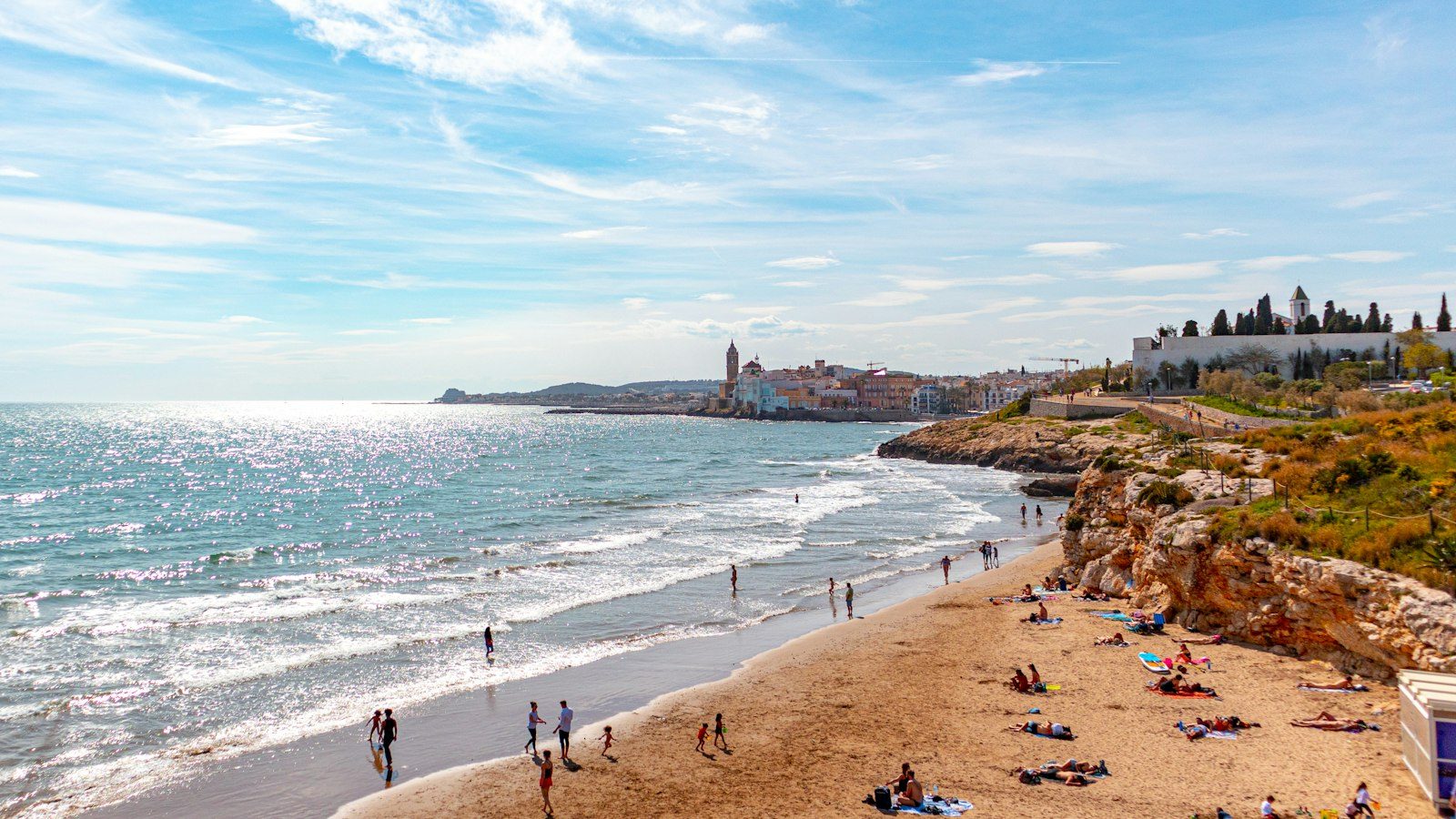
A whitewashed seaside town 35 minutes south of Barcelona by train. You swim off sandy town beaches below a clifftop church, walk the long seafront to the villas at Terramar and stay up late in one of the most relaxed and open-minded towns on the Spanish coast.
- Best time to visit: May to June and September
- Daily budget (budget traveller): $85 to $270 USD
- Ideal trip length: 3 to 5 days
Sitges sits on the Catalan coast about 35km south-west of Barcelona, cut off from the city by the steep limestone hills of the Garraf massif. Trains take around 35 to 45 minutes, so plenty of people come for the day, but the town is at its best once they have gone home. The old centre is a knot of white houses and narrow lanes leading down to a headland called La Punta, where the church of Sant Bartomeu i Santa Tecla stands over the sea. Below it, a long promenade runs west past a string of sandy beaches to the grand villas of Terramar. In the late 19th century the painter Santiago Rusiñol made Sitges a meeting place for Catalan artists, and the town has kept its creative, easy-going character ever since. Today it is also one of Europe's best-known LGBTQ+ destinations, and it throws some of Spain's wildest parties at Carnival and the August Festa Major. Rooms are not cheap and summer weekends get crowded. Even so, free beaches, a €4.60 train to Barcelona, weekday set lunches and a walkable centre make it an easy and sociable base for a solo traveller.
Sitges is a town of about 30,000 people on the coast south of Barcelona, squeezed between the sea and the bare hills of the Garraf. For centuries it was a fishing and wine town. In the 1890s Santiago Rusiñol arrived, set up his home and studio in two old cottages on the headland and invited the leading Catalan artists of the day. They were followed by local families coming home rich from Cuba and the Americas, who built the grand villas you still see behind the seafront. The mix of art, money and openness never really left. Today Sitges is one of Europe's best-known LGBTQ+ destinations, a summer escape for Barcelona families and a festival town that takes its parties very seriously. Most visitors come for an afternoon on the beach. Stay a few nights and you get the better version: an early swim at La Fragata, a set lunch in the back lanes, the church glowing at sunset and a late drink on Carrer del Pecat.
Getting here is easy. Rodalies R2 Sud trains from Barcelona Sants and Passeig de Gràcia take around 35 to 45 minutes and cost about €4.60 one way. Bus Garraf coaches run direct from Barcelona airport and from the city, and keep going at night after the last train. Once you are here, walk. The station, the old town and the main beaches are all within 10 to 15 minutes of each other, and the seafront promenade carries on for several kilometres to Terramar. Base yourself near the seafront or the old town for swimming and nightlife, in Sant Sebastià for a quieter feel, or in Terramar or Aiguadolç for space and lower prices. Trains also make it easy to reach Vilanova i la Geltrú, Tarragona and Barcelona.
Timing shapes the trip. May, June and September bring warm water, long evenings and fewer crowds. July and August are hot, busy and expensive, especially at weekends when half of Barcelona heads for the beach. Winter is mild and calm, a good time for walking, xató lunches and the museums, but some beach bars shut. Festivals change everything: Carnival in February, Pride in June, the Festa Major in late August and the film festival in October all fill the town and raise prices. The Catalan tourist tax went up in April 2026 and is added per night at your accommodation. Catalan is the local language, but Spanish is spoken by everyone and English is widely understood. Sitges is safe, friendly and easy to enjoy alone. Come for the beaches, and stay for the evenings.
Sitges itinerary
Arrive and find your feet
Morning: Take the R2 Sud train from Barcelona (35 to 45 minutes) or the coach from the airport. Drop your bag and walk down to the seafront for a coffee.
Afternoon: Wander the old town lanes around Cap de la Vila, then go for a first swim at La Fragata or La Ribera.
Evening: Climb to La Punta for sunset by the church, then have tapas and a vermut at El Cable or another back-street bar.
Museums and the old town
Morning: Visit Cau Ferrat and Maricel on the joint ticket (about €12) when they open at 10am. Remember they close on Mondays.
Afternoon: Look into Fundació Stämpfli, then find a weekday set lunch in the lanes. Spend the late afternoon on Sant Sebastià beach.
Evening: Walk past the americanos villas on the streets behind the seafront, then have dinner and a drink around Carrer del Pecat.
Seafront walk to Terramar
Morning: Walk the Passeig Marítim west to the Ermita del Vinyet and on to Terramar while it is still cool, about 30 to 40 minutes.
Afternoon: Swim from one of the quieter western beaches and have lunch at a beach bar. Take a local bus back if it is hot.
Evening: Try xató or arròs a la sitgetana with a glass of Malvasia, then an evening stroll along the lit promenade.
Garraf hills and village
Morning: Head into the Garraf Natural Park on a marked trail, starting early with plenty of water. There is little shade.
Afternoon: Take the train one stop to Garraf village and its small bay lined with green-and-white beach huts. Swim and have a late lunch.
Evening: Back in Sitges for a quiet dinner. Check the next day's bus or tour times for the Penedès.
Penedès wine country
Morning: Take a bus to Vilafranca del Penedès, the region's wine capital, or join a winery tour with transport from Sitges.
Afternoon: Visit a cava cellar or vineyard, or the Vinseum wine museum in Vilafranca. Book tastings ahead, especially on weekends.
Evening: Return to Sitges for a light dinner and an early night, or a sunset swim if you are back in time.
Roman Tarragona
Morning: Take a train south to Tarragona, about an hour. Walk up to the old town and the cathedral.
Afternoon: See the Roman amphitheatre by the sea and walk the old walls. Lunch in the old town, then catch an afternoon train back.
Evening: A farewell dinner in Sitges and a last drink on a seafront terrace.
Slow morning and depart
Morning: Have a last early swim at La Fragata and breakfast near the market before the beaches fill up.
Afternoon: Buy a bottle of Malvasia for home, then take the coach to the airport or the train to Barcelona. Check times the day before.
Evening: Arrive in Barcelona, or carry on to your next stop.
Best neighbourhoods
- Old town and Cap de la Vila: The heart of Sitges, around the small square where Carrer Major, Carrer Parellades and Carrer de Sant Francesc meet. You have shops, tapas bars, the museums and the church headland a few minutes away, and the beach is two blocks down. It is lively until late in summer, so ask for a room at the back if you sleep lightly.
- Passeig de la Ribera and the seafront: The main promenade behind La Ribera and La Fragata beaches, lined with palms, hotels and terrace restaurants. It is the classic postcard Sitges and the most convenient base for swimming. Carrer Primer de Maig, the bar street locals call Carrer del Pecat, is just behind it, so expect noise on summer nights.
- Sant Sebastià: The area east of the church headland, set around a small sandy beach with a few fishing boats pulled up on the sand. It is calmer than the centre and has a more local feel, with apartments and smaller hotels. The old town is five minutes on foot, and Balmins beach is just around the corner.
- Terramar and the western seafront: The far western end of the promenade, about 25 to 30 minutes' walk from the centre, with early 20th-century villas, gardens and longer, quieter beaches. It suits you if you want space and calm, but the walk back from a late dinner in town is long. Local buses help.
- Aiguadolç: The marina district on the hill east of town, about 15 to 20 minutes' walk from the centre. You will find apartment blocks, a few hotels with sea views and restaurants around the harbour. It is quiet and often cheaper than the seafront, but the streets are steep.
Must-do experiences
- Climb up to La Punta: Walk up the steps from La Fragata beach to the church of Sant Bartomeu i Santa Tecla, which stands on the rocky headland right above the sea. It is free to look around outside. Come early in the morning or at sunset, when the light turns the church gold and the promenade below is quiet.
- See Cau Ferrat and Maricel: Santiago Rusiñol joined two fishermen's houses to make his home and studio, Cau Ferrat, and filled it with ironwork, ceramics and paintings, including works by El Greco and Picasso. A joint ticket with the Maricel museum next door costs about €12. Both are closed on Mondays, and there are free open days, so check the museum website.
- Walk the seafront to Terramar: Follow the Passeig Marítim west from La Fragata past a long line of beaches to the small Ermita del Vinyet chapel and on to the villas of Terramar. The full walk takes about 30 to 40 minutes one way. It is flat and free, and best early in the morning or after 6pm in summer.
- Swim from a different beach each day: Sitges has more than a dozen beaches within walking distance. La Fragata and La Ribera are central and busy, Sant Sebastià is smaller and more local, and the beaches further west towards Terramar have more room. Most have showers and lifeguards in summer, and swimming is free.
- Eat xató and drink Malvasia: Xató is the local winter salad of curly endive, salt cod, anchovies and tuna in a nutty, romesco-style sauce. Have it with a glass of Malvasia de Sitges, a sweet amber wine made here for centuries. In winter, look out for the xatonades, local food festivals built around the dish.
- Hike in the Garraf Natural Park: The dry limestone hills behind the town are a protected park with scrub, pine and sea views. Marked trails start from the edge of Sitges and from Garraf village. Take plenty of water and avoid the midday heat in summer, as there is very little shade.
- Time your trip around a festival: Sitges is famous for its festivals. Carnival runs from 4 to 10 February 2027, with big parades on the Sunday and Tuesday. In June the old town lanes are covered in flower carpets for Corpus Christi, the Festa Major in late August brings fireworks and fire-running devils, and October hosts the Sitges fantasy film festival. Book rooms early for all of them.
Hidden gems
- The houses of the americanos, the grand villas built in the 19th century by local families who made their fortunes in Cuba and the Americas, scattered along the streets behind the seafront
- Fundació Stämpfli, a small contemporary art collection in the old town that most beach visitors walk straight past
- Casa Bacardí in the town's old market building, a reminder that the founder of the rum company was born in Sitges
- Sant Sebastià beach early in the morning, when the fishing boats are on the sand and the sun comes up over the sea
- The Mercat Municipal near the station, where locals shop for fish, fruit and cheese and you can put together a cheap beach picnic
Daily budget
- Accommodation: budget €35-60 / night (hostel dorm or basic hostal), mid-range €120-200 (3-star hotel or seafront apartment), splurge €280+ (sea-view suite or Dolce Sitges). Prices jump in July and August, on summer weekends and during festivals. Catalan tourist tax is added per night, from €0.80 in hostels to €4.50 in 5-star hotels, for up to seven nights.
- Food: budget €25-35 / day (market picnic, weekday set lunch, tapas), mid-range €50-80 (café breakfast, set lunch and a sit-down dinner), splurge €100+ (seafood rice, wine, dessert on the seafront). A weekday menú del dia is about €15-20. Seafront restaurants charge noticeably more than the back lanes. Prices are rough guides.
- Transport: budget €0-10 / day (walking, a train to Barcelona), mid-range €15-35 (trains, local buses and a taxi), splurge €70-90 (private airport transfer). The R2 Sud train costs about €4.60 each way to Barcelona. The airport coach is roughly €8-11. A 10-trip T-casual zone 3 card costs about €33-35.
- Activities: budget €0-12 / day (beaches, La Punta, the seafront walk, Cau Ferrat and Maricel), mid-range €15-40 (Casa Bacardí, film festival screenings, guided walks), splurge €70+ (Penedès winery tours, boat trips). The joint Cau Ferrat and Maricel ticket is about €12, and the museums hold free open days. Both close on Mondays. Beaches and parades are free.
- Drinks & nightlife: budget €5-10 (a beer or vermut on a terrace), mid-range €20-40 (a few drinks on Carrer del Pecat), splurge €60+ (cocktails and a late club night). A coffee costs about €1.80-2.50, a small beer €2.50-4 and a cocktail €10-14. Nights start late, and most bars only fill up after 11pm.
Where to stay
- Social hostel in Near the station and old town (€35-60 / night (dorm or basic room)): Dorm beds are scarce in Sitges, with only a handful of hostels and simple family-run hostals, mostly between the station and the old town. Book early in summer, as they fill fast. You are 10 minutes from the beach and close to the train for Barcelona.
- Boutique hotel in Old town (€110-200 / night): Hotel Romàntic is set in a row of 19th-century villas on a quiet street, with a leafy garden and old-fashioned charm. The beach, the station and the bars are all a short walk away.
- Apartment in Sant Sebastià and the seafront (€100-180 / night): An apartment gives you a kitchen for market food and a more local feel. Check the exact location, whether there is a lift and how close it is to the bar streets before you book.
- Splurge in Hills above Aiguadolç (€250-450+ / night): Dolce Sitges is a large resort hotel on the hillside east of town, with sea views, pools and a spa. It is a taxi or a long walk from the centre, so you get calm and comfort with the town close by.
What to eat
- Xató: the local salad of endive, salt cod, anchovies and tuna in a sauce of almonds, hazelnuts and dried peppers, best in winter and early spring
- Arròs a la sitgetana: the town's own rice dish, mixing meat and seafood. Most places make it for two or more, so ask if a single portion is possible
- Menú del dia: a weekday set lunch of two courses, dessert and a drink for roughly €15-20 in the back streets, far cheaper than dinner on the seafront
- Tapas and pa amb tomàquet: bread rubbed with tomato and olive oil, plus patatas bravas and anchovies, at old-school bars such as El Cable
- Malvasia de Sitges and cava: the local sweet wine, and the sparkling wine from the nearby Penedès, both sold by the glass in many bars
- Vermut at noon: a glass of red vermouth with olives and crisps before lunch, a weekend ritual in Catalan towns
Day trips
- Garraf Natural Park and Garraf village (The park starts at the edge of Sitges. Garraf village is about 8km east, one stop by train): Dry limestone hills, scrub and pine, with wide views over the sea. Garraf village has a small bay lined with green-and-white beach huts and is a good place to finish a walk with a swim. Walk into the park on marked trails from the edge of town, or take an R2 Sud train one stop to Garraf. Not all trains stop there, so check the timetable. Bring water and avoid midday heat in summer.
- Penedès wine country (About 25km inland, 30 to 45 minutes by road): Catalonia's main wine region, famous for cava. Vilafranca del Penedès has an old centre and the Vinseum wine museum, and Sant Sadurní d'Anoia is lined with cava cellars that offer tours and tastings. Buses link Sitges and Vilafranca, but services are limited, so check times. Many visitors book a winery tour with transport from Sitges. Book tastings ahead, especially at weekends.
- Tarragona (About 55km south-west, around an hour by train): A Roman provincial capital with an amphitheatre by the sea, long stretches of ancient walls and a Gothic cathedral in a lively old town. It makes a good contrast to the beaches. Take a regional or Rodalies train south from Sitges station. Some services need a change at Sant Vicenç de Calders. Fares are under €10 each way, and you should check return times before you set off.
When to visit
- Spring (March - May): 15-23°C, mild and sunny, sea cool until late May. Crowds: Low to moderate, busier at Easter and on May weekends. Great for walking, the Garraf hills and the museums, with fair room prices. Swimming is for the brave until late May.
- Early summer (June): 23-27°C, sunny, sea around 21-23°C. Crowds: Moderate, very busy during Pride. Arguably the best month. Long evenings, warm water, Corpus Christi flower carpets and a lively town without the August crush.
- High summer (July - August): 27-31°C, hot and humid, sea up to about 25°C. Crowds: Busy, very busy at weekends and during the Festa Major. Great for beach life and nightlife, but rooms cost the most and the beaches fill with day trippers. Book early and swim early or late in the day.
- Autumn and winter (September - February): September 22-27°C, then mild winters of 12-16°C by day. Crowds: Moderate in September and October, quiet in winter apart from Carnival. September is the locals' pick, with warm water and calmer beaches. Winter is cheap and peaceful, with xató season and Carnival in February.
Entry rules for your passport
Visa rules for Spain depend on the passport you travel on. Check the official source before you book: European Commission: Schengen visa policy
Getting there
There is no airport in Sitges. The nearest is Josep Tarradellas Barcelona-El Prat, about 27km away. From Terminal 1, Bus Garraf coaches run direct to Sitges every 30 minutes at peak times and hourly off-peak, taking about 40 to 45 minutes for roughly €8-11 one way. You can also take the train from Terminal 2 and change at El Prat de Llobregat for an R2 Sud train, which takes 50 to 70 minutes including the wait. From Barcelona city, R2 Sud trains from Sants and Passeig de Gràcia reach Sitges in about 35 to 45 minutes for around €4.60. Buy a zone 3 ticket, as a standard city ticket will not cover the trip. The last train back to Barcelona leaves at around 10.30pm, after which night buses run from Plaça d'Espanya. Taxis and private transfers from the airport cost roughly €60-90. If you drive, the C-32 motorway through the Garraf tunnels is fast but has tolls, and the old coast road is slow and winding. Parking in Sitges is scarce in summer.
Border checks: non-EU visitors (other than Swiss, Norwegian, Icelandic, Liechtenstein, Andorran, Monegasque, San Marinese and Vatican citizens, and holders of an EU residence permit or long-stay visa) are registered in the EU's Entry/Exit System (EES) instead of getting a passport stamp. On your first crossing, officers take your photo and/or fingerprints, so allow extra time at passport control. ETIAS, the planned travel authorisation, is not in operation yet, so don't pay any website for one.
Getting around
Sitges is small and mostly flat, so you will walk almost everywhere. It takes about 10 minutes from the train station to the beach and the old town, and about 30 to 40 minutes to walk the seafront from La Punta to Terramar. Aiguadolç and some streets behind the station are steep. A small network of local buses links the centre with Terramar, Aiguadolç and the outer districts, and short hops cost a couple of euros. Taxis wait at the station and can be booked by phone, but they are not cheap. Rodalies R2 Sud trains run to Barcelona every 15 to 30 minutes, taking about 35 to 45 minutes for around €4.60 one way. They also run the other way to Vilanova i la Geltrú, one stop south. If you plan several trips, a T-casual zone 3 card gives you 10 journeys for about €33-35 and also works on Bus Garraf coaches. Bus Garraf (run by Monbus) links Sitges with Barcelona and the airport, and runs night buses after the last train. Driving is not worth it in town, as parking is scarce and expensive in summer.
Safety
Sitges is a safe town, and violent crime against visitors is rare. The main problem is petty theft. Watch your phone and bag on crowded beaches, at festivals and on the train to and from Barcelona, where pickpockets work the busy stations. Never leave valuables on the sand while you swim. During the Festa Major and other fire festivals, the correfoc means people with fireworks running through the streets. Stand well back, or wear long cotton sleeves and a hat if you want to join in. Watch the beach flags for jellyfish and rough sea, and take the summer heat seriously. Balmins and other naturist coves east of town are fine by day, but the paths are quiet after dark. Tap water is safe to drink, though many locals prefer bottled for the taste. The EU emergency number is 112. EU travellers should carry an EHIC and UK travellers a GHIC, and everyone else needs travel insurance with medical cover.
Solo travel tips
- Stay near the seafront: A room within a few minutes of La Fragata lets you swim before breakfast and walk home from dinner without thinking about it. Ask for a quiet room away from Carrer del Pecat if you want sleep.
- Avoid summer weekends if you can: On Saturdays and Sundays in summer, Barcelona empties onto Sitges' beaches. Come on weekdays, or swim early and late and spend the middle of the day in the museums.
- Check festival dates first: Carnival, Pride, the Festa Major and the film festival can double room prices and fill the town. Decide whether you want to be part of it or avoid it, then book.
- Eat your big meal at lunch: Weekday set lunches in the back lanes cost a fraction of a seafront dinner. Add a market picnic and tapas in the evening and your food budget goes much further.
- Safety for solo travellers: The main risks are theft on beaches and trains, the summer heat and festival crowds. Keep valuables out of sight, swim near other people, and keep to the lit promenade at night rather than the paths to the eastern coves.
- Meet people at the bar or on a tour: Sitges is a sociable town, and bars on Carrer del Pecat and the seafront terraces are easy places to start a conversation. A guided walk, a winery tour or a festival parade is another easy way to meet people.
Cultural etiquette
- Greet people with 'bon dia' (good morning) or 'bona tarda' (good afternoon) in Catalan, and say 'gràcies' (thank you). Spanish is fine too, and people appreciate the effort either way.
- Catalan is the local language and a source of pride. Do not describe it as a dialect of Spanish.
- Eat on local time. Lunch is from about 2pm to 4pm and dinner rarely before 9pm, so many kitchens are closed in between.
- Cover up when you leave the beach. Walking through town, into shops or into restaurants in swimwear is frowned upon.
- Keep nudity to the designated naturist beaches such as Balmins, and be discreet with photos on any beach.
- Dress modestly inside the church of Sant Bartomeu i Santa Tecla, and keep quiet if a service is on.
- Keep noise down in the old town lanes late at night. People live above the bars, and sound carries between the houses.
Frequently asked questions
How do I get to Sitges from Barcelona and the airport?
From Barcelona, take a Rodalies R2 Sud train from Sants or Passeig de Gràcia. The journey takes about 35 to 45 minutes and a zone 3 single costs around €4.60. From the airport, the direct Bus Garraf coach leaves Terminal 1 every 30 to 60 minutes and takes about 40 to 45 minutes. Fares are quoted at roughly €8-11, so check before you travel. Alternatively, take the train from Terminal 2 and change at El Prat. Sitges station is about a 10-minute walk from the beach and the old town.
How many days do I need in Sitges?
One day covers the old town, La Punta and a swim, and many people do it as a day trip from Barcelona. Three to five nights lets you add the museums, the seafront walk to Terramar, a Garraf hike and a wine day in the Penedès. A week works if you want to slow down and add Tarragona or a couple of days in Barcelona.
When is the best time to visit Sitges?
May, June and September are the sweet spot. The sea is warm enough to swim, the evenings are long and rooms cost less than in high summer. July and August are hot and busy, especially at weekends. Winter is mild and quiet, with sunny days that are good for walking, but some beach bars close. Carnival in February and the film festival in October fill the town and push prices up.
Should I stay in Sitges or visit from Barcelona?
If you only want a beach day, a day trip is easy. Stay overnight if you want the town without the crowds. Day trippers arrive mid-morning and leave by early evening, and the old town and La Punta are at their best at sunset and after dark. Staying here also gives you a calmer base for Barcelona, which is only 35 to 45 minutes away by train.
Which are the best beaches in Sitges?
La Fragata and La Ribera are the central town beaches, sandy and busy, with showers and lifeguards in summer. Sant Sebastià, east of the church, is smaller and more local. Walk west along the promenade towards Terramar for more space. Balmins, east of Sant Sebastià, is a naturist beach popular with gay visitors. All are free, and sunbeds and umbrellas can be hired in summer.
When are the big festivals in Sitges?
Carnival runs from 4 to 10 February 2027, with the Rua de la Disbauxa parade on Sunday 7 February and the Rua de l'Extermini on Tuesday 9 February. Sitges Pride is in June, and Corpus Christi brings flower carpets to the old town in late May or June. The Festa Major for Sant Bartomeu is around 23 and 24 August, and the fantasy film festival is in October. Rooms sell out fast for all of these, so book months ahead.
Is Sitges safe for solo female travellers?
Yes. It is a relaxed, welcoming town, and the centre and seafront stay busy and well lit late into the evening. Take normal care with drinks in bars and at festivals, keep an eye on your bag on the train and the beach, and use the lit promenade rather than the quiet paths to the eastern coves at night. If you miss the last train back from Barcelona, take the night bus or a taxi rather than waiting alone at a quiet stop.
What entry rules apply to Spain in 2026?
Spain is in the EU and the Schengen area. Many non-EU visitors, including those from the UK, US, Canada and Australia, can stay visa-free for up to 90 days in any 180-day period across Schengen. The EU's Entry/Exit System has been fully running since April 2026 and records non-EU travellers' fingerprints and photos at the border. The ETIAS travel authorisation is due to start in the last quarter of 2026, but no launch date had been announced in early November, so check before you travel. Confirm the rules on official EU and Spanish government websites and check your own government's travel advice.
More about Sitges
Tours and activities in Sitges | Sitges in 2 days | Sitges in 3 days | Sitges in 4 days | Sitges in 5 days | Sitges in 7 days
Can't decide? Compare Sitges with...
Joy Plus home | Destinations | Itineraries | Activities | Flights | Budget planner | Calendar | Map | Blog | Lifetime access