Sitges in 3 days
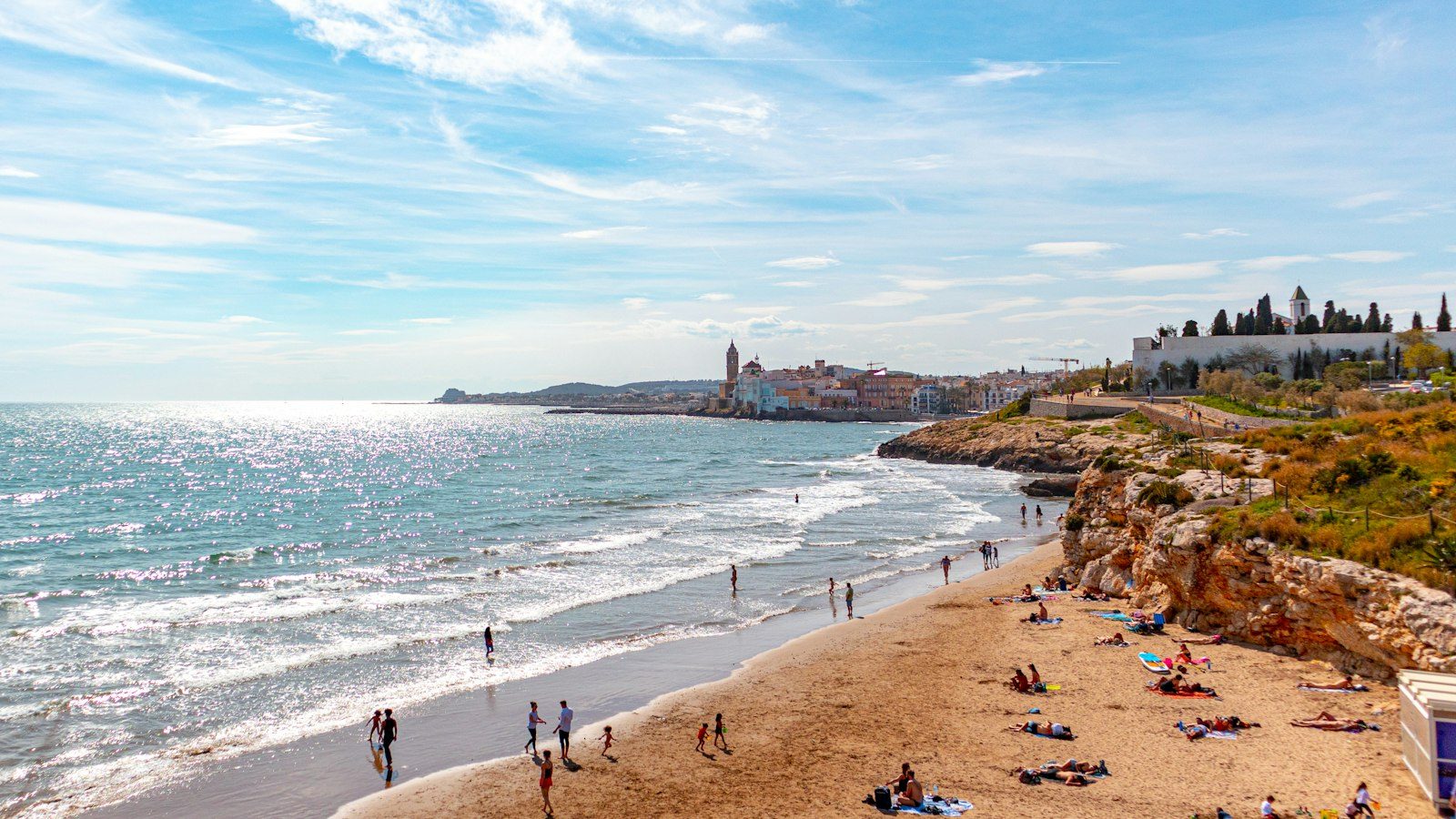
A whitewashed seaside town 35 minutes south of Barcelona by train. You swim off sandy town beaches below a clifftop church, walk the long seafront to the villas at Terramar and stay up late in one of the most relaxed and open-minded towns on the Spanish coast. Best time to visit: May to June and September. Daily budget (budget traveller): $85 to $270 USD.
Arrive and find your feet
Morning: Take the R2 Sud train from Barcelona (35 to 45 minutes) or the coach from the airport. Drop your bag and walk down to the seafront for a coffee.
Afternoon: Wander the old town lanes around Cap de la Vila, then go for a first swim at La Fragata or La Ribera.
Evening: Climb to La Punta for sunset by the church, then have tapas and a vermut at El Cable or another back-street bar.
Museums and the old town
Morning: Visit Cau Ferrat and Maricel on the joint ticket (about €12) when they open at 10am. Remember they close on Mondays.
Afternoon: Look into Fundació Stämpfli, then find a weekday set lunch in the lanes. Spend the late afternoon on Sant Sebastià beach.
Evening: Walk past the americanos villas on the streets behind the seafront, then have dinner and a drink around Carrer del Pecat.
Seafront walk to Terramar
Morning: Walk the Passeig Marítim west to the Ermita del Vinyet and on to Terramar while it is still cool, about 30 to 40 minutes.
Afternoon: Swim from one of the quieter western beaches and have lunch at a beach bar. Take a local bus back if it is hot.
Evening: Try xató or arròs a la sitgetana with a glass of Malvasia, then an evening stroll along the lit promenade.
Heading home: Buy a bottle of Malvasia for home, then take the coach to the airport or the train to Barcelona.
What to eat in Sitges
- Xató: the local salad of endive, salt cod, anchovies and tuna in a sauce of almonds, hazelnuts and dried peppers, best in winter and early spring
- Arròs a la sitgetana: the town's own rice dish, mixing meat and seafood. Most places make it for two or more, so ask if a single portion is possible
- Menú del dia: a weekday set lunch of two courses, dessert and a drink for roughly €15-20 in the back streets, far cheaper than dinner on the seafront
- Tapas and pa amb tomàquet: bread rubbed with tomato and olive oil, plus patatas bravas and anchovies, at old-school bars such as El Cable
- Malvasia de Sitges and cava: the local sweet wine, and the sparkling wine from the nearby Penedès, both sold by the glass in many bars
- Vermut at noon: a glass of red vermouth with olives and crisps before lunch, a weekend ritual in Catalan towns
Hidden gems
- The houses of the americanos, the grand villas built in the 19th century by local families who made their fortunes in Cuba and the Americas, scattered along the streets behind the seafront
- Fundació Stämpfli, a small contemporary art collection in the old town that most beach visitors walk straight past
- Casa Bacardí in the town's old market building, a reminder that the founder of the rum company was born in Sitges
- Sant Sebastià beach early in the morning, when the fishing boats are on the sand and the sun comes up over the sea
- The Mercat Municipal near the station, where locals shop for fish, fruit and cheese and you can put together a cheap beach picnic
Getting around
Sitges is small and mostly flat, so you will walk almost everywhere. It takes about 10 minutes from the train station to the beach and the old town, and about 30 to 40 minutes to walk the seafront from La Punta to Terramar. Aiguadolç and some streets behind the station are steep. A small network of local buses links the centre with Terramar, Aiguadolç and the outer districts, and short hops cost a couple of euros. Taxis wait at the station and can be booked by phone, but they are not cheap. Rodalies R2 Sud trains run to Barcelona every 15 to 30 minutes, taking about 35 to 45 minutes for around €4.60 one way. They also run the other way to Vilanova i la Geltrú, one stop south. If you plan several trips, a T-casual zone 3 card gives you 10 journeys for about €33-35 and also works on Bus Garraf coaches. Bus Garraf (run by Monbus) links Sitges with Barcelona and the airport, and runs night buses after the last train. Driving is not worth it in town, as parking is scarce and expensive in summer.
Safety
Sitges is a safe town, and violent crime against visitors is rare. The main problem is petty theft. Watch your phone and bag on crowded beaches, at festivals and on the train to and from Barcelona, where pickpockets work the busy stations. Never leave valuables on the sand while you swim. During the Festa Major and other fire festivals, the correfoc means people with fireworks running through the streets. Stand well back, or wear long cotton sleeves and a hat if you want to join in. Watch the beach flags for jellyfish and rough sea, and take the summer heat seriously. Balmins and other naturist coves east of town are fine by day, but the paths are quiet after dark. Tap water is safe to drink, though many locals prefer bottled for the taste. The EU emergency number is 112. EU travellers should carry an EHIC and UK travellers a GHIC, and everyone else needs travel insurance with medical cover.
Frequently asked questions
What does this 3-day Sitges itinerary cover?
Day 1: Arrive and find your feet. Day 2: Museums and the old town. Day 3: Seafront walk to Terramar.
Is 3 days enough for Sitges?
Our recommended trip length for Sitges is 3 to 5 days. This 3-day plan focuses on the highlights and groups sights by area so you spend less time travelling between them.
How much does 3 days in Sitges cost?
A budget traveller spends about $85 to $270 USD a day in Sitges, so roughly $255 to $810 USD for 3 days, not counting flights.
Where should I stay for 3 days in Sitges?
Old town and Cap de la Vila: The heart of Sitges, around the small square where Carrer Major, Carrer Parellades and Carrer de Sant Francesc meet. Passeig de la Ribera and the seafront: The main promenade behind La Ribera and La Fragata beaches, lined with palms, hotels and terrace restaurants.
When is the best time to visit Sitges?
The best time to visit Sitges is May to June and September.
How do I get around Sitges?
Sitges is small and mostly flat, so you will walk almost everywhere. It takes about 10 minutes from the train station to the beach and the old town, and about 30 to 40 minutes to walk the seafront from La Punta to Terramar.
Is Sitges safe for solo travellers?
Sitges is a safe town, and violent crime against visitors is rare. The main problem is petty theft.
Read more about Sitges
More 3-day guides
- Tarifa in 3 days
- Zaragoza in 3 days
- Cádiz in 3 days
- Barcelona in 3 days
- Madrid in 3 days
- Valencia in 3 days
- San Sebastián in 3 days
- Seville in 3 days
Sitges in 2 days | Sitges in 4 days | Sitges in 5 days | Sitges in 7 days | Full Sitges guide
Joy Plus home | Destinations | Itineraries | Activities | Flights | Budget planner | Calendar | Map | Blog | Lifetime access