Destinations / Europe
Sóller, Spain travel guide
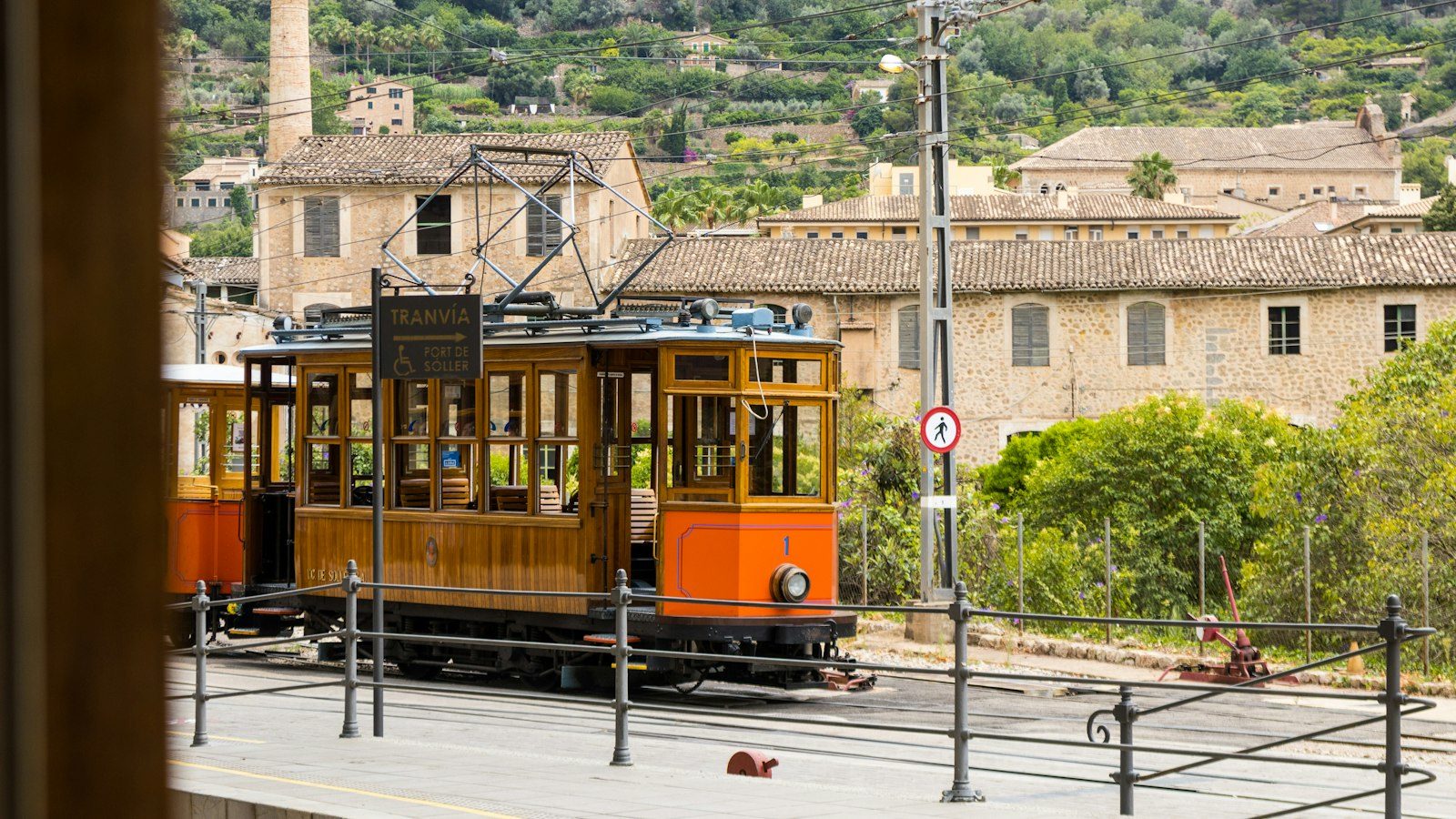
An orange-growing town in a deep valley in Mallorca's Tramuntana mountains, linked to its own small harbour by a wooden tram. You arrive on a 1912 train, walk old mule paths between stone villages and finish the day with a swim in a sheltered bay.
- Best time to visit: April to June and late September to October
- Daily budget (budget traveller): $80 to $270 USD
- Ideal trip length: 3 to 5 days
Sóller sits in a bowl of mountains on the north-west coast of Mallorca, about 30km from Palma. For centuries the mountains cut it off from the rest of the island, so the town traded oranges and lemons by sea with France. The money that came back paid for the modernist church front, the bank on the main square and the grand houses along the back streets. The town itself is a few kilometres inland. Its harbour, Port de Sóller, sits on an almost round bay, and the wooden tram that has run between the two since 1913 is still the nicest way to get there. Most visitors come on a day trip from Palma, arriving on the vintage train through the mountains, eating an ice cream on the square and leaving by late afternoon. Stay the night and the place gets much quieter. You can walk up the Biniaraix gorge before the heat, take a boat along the cliffs to Sa Calobra and watch the sun set from the Cap Gros lighthouse. Sóller is not cheap, and there are very few budget beds. Still, the walking is free and the local buses cost little, which makes it a very good base for a solo traveller who likes hiking.
Sóller is the town that the Serra de Tramuntana, Mallorca's UNESCO-listed mountain range, kept to itself. Until the railway arrived in 1912 and the road tunnel opened in 1997, it was easier to sail from here to Marseille than to cross the mountains to Palma. That isolation shaped the town. Oranges and lemons were shipped to France, families emigrated and came back rich, and the money paid for the modernist buildings that make the centre so unusual. Today about 14,000 people live in the municipality, spread between the town, the port and hamlets like Biniaraix. Most visitors come for a few hours by train. Stay a few nights and you get the better version: the square empty at 8am, a gorge walk before the heat, a swim at the port and fish by the water as the light goes.
Getting here is easy. The TIB 204 bus runs from Plaça d'Espanya in Palma to Sóller and the port in about 40 to 45 minutes, many times a day. The heritage train from the same square takes about an hour and costs €23 one way, but it is closed from 22 November 2026 to early February 2027. Once you are here, walk. The town is small, the tram and buses link it to the port, and old stone paths lead to Biniaraix, Fornalutx and Deià. Stay in the town for hiking, quieter evenings and buses, or at the port for swimming and boat trips.
Timing matters more than you might expect. April to June and late September to October are ideal, with warm days, cooler mornings for walking and the sea warm enough from late May. July and August bring heat, full buses and crowds of day trippers, so hike at dawn and swim in the afternoon. From November to March, Sóller is green and very quiet. Some hotels and restaurants close, the train stops for its winter break and rain can wash out a day or two, but the orange harvest and empty trails make up for it. Most people in tourism speak English, and locals speak Catalan and Spanish. Evenings are relaxed, not loud. If you want clubs, go to Palma. If you want mountains, a swim and a good dinner, stay here.
Sóller itinerary
Arrive and find your feet
Morning: Take the train from Palma (about an hour, €23) or the faster 204 bus. Drop your bag and walk down to Plaça de sa Constitució for a coffee.
Afternoon: Look at Sant Bartomeu and the Banc de Sóller, then wander the back streets towards Carrer de sa Lluna. Have an orange ice cream at Sa Fàbrica de Gelats.
Evening: Dinner on the square or a nearby side street once the day trippers have gone. Early night before tomorrow's walk.
Biniaraix gorge and Fornalutx
Morning: Leave early and walk 20 minutes to Biniaraix, then climb the stone steps of the Barranc de Biniaraix. Go as far as you like, but L'Ofre is a good target for fit walkers.
Afternoon: Walk back down and follow the signed path from Biniaraix to Fornalutx. Have a late lunch in the village square and rest in the shade.
Evening: Walk or take a bus back to Sóller. A simple dinner of pa amb oli and a glass of local wine.
Modernism, tram and the port
Morning: Visit Can Prunera (€11) when it opens, then browse the market, especially on a Saturday.
Afternoon: Take the tram to Port de Sóller (€10) and swim at Platja d'en Repic. Walk along the promenade to Santa Catalina and the Museu de la Mar.
Evening: Walk up to the Cap Gros lighthouse for sunset, then eat fish in Santa Catalina. Take the bus or a late tram back to town.
Boat to Sa Calobra
Morning: Check the sea conditions, then take a morning boat from Port de Sóller to Sa Calobra (roughly €35-45 return), passing cliffs you cannot reach by road.
Afternoon: Walk through the tunnels in the rock to the mouth of the Torrent de Pareis and swim from the pebbles. Pack lunch, as food there is pricey.
Evening: Boat back to the port and have a drink on the promenade. Try Sóller red prawns if you are treating yourself.
Deià and Valldemossa
Morning: Take the 203 bus to Deià, or walk the GR221 there in about three hours if you are fit and it is not too hot. Climb to the church and Robert Graves's grave.
Afternoon: Carry on by bus to Valldemossa for its monastery and cobbled lanes. Have a coca de patata with a coffee.
Evening: Bus back to Sóller. A slow dinner near the square.
Gardens and the eastern cliffs
Morning: Visit the Jardí Botànic de Sóller while it is cool, then pick up picnic food at the market.
Afternoon: Take the tram to the port and walk the path up to the Torre Picada watchtower on the eastern cliffs. Swim back in the bay afterwards.
Evening: Farewell dinner at the port or in town, followed by a late drink on the square.
Slow morning and depart
Morning: Have a last fresh orange juice and an ensaïmada on the square before the crowds arrive.
Afternoon: Buy olive oil or oranges to take home, then take the 204 bus to Palma and the A1 bus to the airport. Allow time in summer, when buses can be full.
Evening: Fly home or carry on to Palma for a night.
Best neighbourhoods
- Sóller town and Plaça de sa Constitució: The centre of the valley, built around the main square with the church of Sant Bartomeu, the modernist bank and the train station just above. Most cafés, shops, the market and Can Prunera are here. It is the best base for hiking and buses, and it gets quiet once the day trippers leave.
- Port de Sóller: The harbour town on a near-circular bay, about 20 minutes away by tram. It has the beaches, the seafront promenade, the boats to Sa Calobra and most of the bigger hotels. Pick it if you want to swim every day, but it is busier and more resort-like than the town.
- Santa Catalina: The old fishermen's quarter on the west side of the port, on the slope below the Cap Gros lighthouse. It has narrow lanes, the little Museu de la Mar and fish restaurants by the water. It is quieter than the main promenade and close to the lighthouse walk for sunset.
- Biniaraix: A tiny stone hamlet about 20 minutes' walk east of the town, at the foot of the gorge path. There are a few village houses, a washing place and almost no traffic. It suits you if you want peace and early starts on the trails, but you will walk back to town for most meals.
- Fornalutx: A steep, very pretty mountain village about 3km from Sóller, with stone steps, green shutters and views up to Puig Major. It has a handful of small hotels and restaurants. It is lovely for a quiet stay, though buses are limited and the last stretch from town is uphill.
Must-do experiences
- Ride the wooden train from Palma: The Ferrocarril de Sóller has run through the Tramuntana since 1912, through 13 tunnels and over a viaduct. A single from Palma costs €23 and a return €30 in 2026. The ticket window sells for the same day only. The train closes from 22 November 2026 until early February 2027.
- Take the tram down to the port: The tram leaves from the front of the train station and rattles through orange groves to the seafront in about 20 minutes. It costs €10 each way. In summer, ride in the open carriages. A combined train and tram return from Palma is €40, booked online for a set train.
- Sit on Plaça de sa Constitució: Have a coffee under the plane trees and look up at the church of Sant Bartomeu. Its modernist front was designed by Joan Rubió, a pupil of Gaudí, as was the Banc de Sóller next door with its wrought-iron windows. Go early, before the first train arrives.
- Visit Can Prunera: This modernist mansion on Carrer de sa Lluna was built for a family who had made money in the fruit trade. Inside you will find the original furniture, a collection of 19th and 20th-century art and a sculpture garden. General entry is €11, and it is cheaper online.
- Walk the Biniaraix gorge: From the town, walk to the hamlet of Biniaraix, then follow the old stone pilgrim steps up the Barranc de Biniaraix towards L'Ofre. It is free and one of the best walks on the island. Start early, take plenty of water and turn back whenever you like.
- Take a boat to Sa Calobra: Boats leave Port de Sóller for Sa Calobra and the mouth of the Torrent de Pareis gorge, running past cliffs you cannot reach by road. A return costs roughly €35-45. Boats run in the warmer months and are cancelled in rough seas, so check on the morning.
- Watch the sunset from Cap Gros: Walk through Santa Catalina and up the road to the lighthouse at the western mouth of the bay. It takes about 30 minutes from the tram terminus and is free. Bring a drink and watch the sun drop into the sea beyond the cliffs.
Hidden gems
- The Saturday morning market in the streets around the square, where farmers sell oranges, olives, cheese and herbs before the train crowds arrive
- The old stone washing place (safareig) in Biniaraix, a cool, shady spot where the gorge path begins
- The Museu de la Mar in the former oratory of Santa Catalina above the port, small but with a great view over the bay
- The Torre Picada, a 17th-century watchtower on the cliffs east of the bay, reached by a short path through pines
- The Jardí Botànic de Sóller on the edge of town, a quiet garden of Balearic and Mediterranean plants that few day trippers find
Daily budget
- Accommodation: budget €25-90 / night (refuge dorm or simple hostal room), mid-range €140-230 (boutique or 3-star hotel), splurge €350+ (Jumeirah Mallorca or Gran Hotel Sóller). There are very few dorm beds, so book the Muleta refuge early. The Balearic tourist tax is €1-4 per person per night from May to October, plus 10% VAT, and 75% less in winter.
- Food: budget €25-35 / day (bakery breakfast, pa amb oli lunch, market picnic), mid-range €50-80 (set lunch and a sit-down dinner), splurge €110+ (red prawns, fish and wine at the port). A weekday menú del día costs roughly €15-20. Sóller red prawns are sold by weight and can cost a lot, so ask before ordering. Prices are rough guides.
- Transport: budget €0-10 / day (walking, local buses), mid-range €20-45 (train one way plus tram), splurge €40-60 (train and tram combined return, or a taxi). The train costs €23 one way or €30 return, the tram €10 each way, and the airport A1 bus €5. The 204 bus to Palma is the cheap option, at a few euros.
- Activities: budget €0-11 / day (hiking, beaches, Can Prunera at €11), mid-range €15-45 (museums, Sa Calobra boat), splurge €50+ (speedboat or guided hiking tours). The Sa Calobra boat costs roughly €35-45 return and depends on the weather. Can Prunera is €11, with 10% off online. Most of the best walks are free.
- Drinks & nightlife: budget €5-10 (a beer or wine on the square), mid-range €15-30 (a few drinks at a port bar), splurge €50+ (cocktails at a clifftop hotel bar). A coffee costs about €1.80-2.50 and a beer or glass of wine €3-5. Nightlife means terraces and quiet bars. Palma has the clubs.
Where to stay
- Social hostel in Cap Gros, above Port de Sóller (€20-35 / night (dorm)): The Refugi de Muleta is a Consell de Mallorca walkers' refuge on the GR221, set by the lighthouse and run as a simple dorm with meals. It is the main budget bed in the area and a natural place to meet hikers.
- Boutique hotel in Sóller town centre (€150-280 / night): Small hotels in restored townhouses, such as Hotel Salvia, put you a few minutes from the square, the station and the trailheads. Expect gardens, pools and a quiet night once the trains stop.
- Apartment in Port de Sóller and Santa Catalina (€100-180 / night): Holiday flats near the bay give you a kitchen and a swim on your doorstep. Check that the listing has a tourist licence number, and expect steep lanes in Santa Catalina.
- Splurge in Clifftop above Port de Sóller (€350-700+ / night): Jumeirah Mallorca sits high on the cliffs above the bay, with infinity pools, a spa and sunset views over the sea. Gran Hotel Sóller is the more central luxury option in town.
What to eat
- Sóller red prawns (gamba vermella): the local catch, grilled simply at port restaurants. They are priced by weight and expensive, so ask first
- Orange ice cream: made with valley fruit at Sa Fàbrica de Gelats near the square, along with flavours like lemon and almond
- Fresh orange juice: squeezed from local oranges at cafés and market stalls, often for less than in Palma
- Pa amb oli: bread rubbed with tomato and olive oil, topped with cheese or ham, a cheap lunch in most bars
- Ensaïmada and coca de trempó: a spiral pastry for breakfast and a flat pastry with peppers and onions for a picnic, both from any bakery
- Sobrassada and frit mallorquí: the soft paprika sausage on toast, and a fried dish of offal, potatoes and peppers on local set menus
Day trips
- Sa Calobra and the Torrent de Pareis (About 10km east along the coast, roughly 45 minutes by boat): A tiny cove at the mouth of a deep gorge, reached on a short path through tunnels in the rock. The boat trip from Port de Sóller runs along some of the wildest cliffs in Mallorca. Take a boat from Port de Sóller, roughly €35-45 return, in the warmer months. Boats are cancelled in rough seas. Avoid driving the hairpin road in summer, which gets badly jammed.
- Deià and Valldemossa (Deià about 10km south-west, Valldemossa about 20km): Deià is a honey-coloured village on a hill above the sea, once home to the poet Robert Graves. Valldemossa has a monastery where Chopin spent a winter, plus lanes full of potted plants. Take the TIB 203 bus along the coast road. Fit walkers can hike the GR221 from Sóller to Deià in about three hours and take the bus back.
- Palma (About 30km south, 40 to 45 minutes by bus or an hour by train): Mallorca's capital has a huge Gothic cathedral, an old town of courtyards and tapas bars, and proper nightlife. It makes a good contrast to the quiet valley. Take the 204 bus from Sóller to the Estació Intermodal, or the heritage train to Plaça d'Espanya when it is running. Check the time of the last bus back.
When to visit
- Spring (March - May): 15-24°C, fresh and green, sea cool until late May. Crowds: Moderate, busier at Easter and on May weekends. The best hiking season, with orange blossom in the valley and Sa Fira i es Firó in May. Swimming is only for the brave until late May.
- Early summer (June): 24-29°C, sunny, sea around 21-24°C. Crowds: Busy by day, calmer in the evenings. Long days and warm water. Hike early and swim late. Probably the best all-round month for a short stay.
- High summer (July - August): 29-33°C, hot, sea up to about 26°C. Crowds: Very busy, with full trains and buses. Great for the port and boat trips, but too hot for midday walks, and rooms cost the most. Book well ahead and do everything early.
- Autumn and winter (September - February): September 24-28°C, then 9-17°C in winter, with more rain in October and November. Crowds: Moderate in September and October, quiet from November. Late September and October are the locals' pick. Winter is cheap and peaceful, but the train closes from 22 November 2026 to early February 2027 and some places shut.
Entry rules for your passport
Visa rules for Spain depend on the passport you travel on. Check the official source before you book: European Commission: Schengen visa policy
Getting there
There is no airport in Sóller. Palma de Mallorca airport is about 40 minutes away by road, with flights from all over Europe. From the airport, take the EMT A1 bus to Plaça d'Espanya in central Palma, which takes about 20 minutes for €5. From there, the TIB 204 bus runs to Sóller and Port de Sóller through the mountain tunnel in about 40 to 45 minutes, many times a day, for a few euros. In summer, buses can fill up, so arrive early at the Estació Intermodal. The heritage Ferrocarril de Sóller also leaves from Plaça d'Espanya and takes about an hour, for €23 one way or €30 return. The station ticket window only sells tickets for the same day. The train closes from 22 November 2026 until early February 2027. A taxi from the airport costs roughly €50-70. If you hire a car, you cannot drive into the centre of Sóller, which is a low-emission zone, so use the signed visitor car parks. Ferries from Barcelona and Valencia arrive in Palma, from where you continue by bus or train.
Border checks: non-EU visitors (other than Swiss, Norwegian, Icelandic, Liechtenstein, Andorran, Monegasque, San Marinese and Vatican citizens, and holders of an EU residence permit or long-stay visa) are registered in the EU's Entry/Exit System (EES) instead of getting a passport stamp. On your first crossing, officers take your photo and/or fingerprints, so allow extra time at passport control. ETIAS, the planned travel authorisation, is not in operation yet, so don't pay any website for one.
Getting around
Sóller town is small, so you will walk almost everywhere. It takes about 10 minutes from the station to the far side of the centre. Expect some steep streets. The tram links the town to Port de Sóller in about 20 minutes for €10 each way, and the frequent 204 bus covers the same stretch more cheaply. TIB buses are the main way to get around. The 204 runs between Port de Sóller, Sóller and Palma through the tunnel, roughly every 25 to 30 minutes in summer, with fewer buses in winter. The 203 goes along the coast to Deià and Valldemossa. Fares are a few euros. The free travel scheme in 2026 only applies to holders of registered TIB cards, which are mostly residents, so most visitors pay the normal fare. Footpaths are often the best option. Old mule tracks and the GR221 link Sóller with Biniaraix, Fornalutx and Deià. If you drive, the town centre is a low-emission zone for residents only, with €200 fines, so use the signed visitor car parks. Taxis wait near the square and the port.
Safety
Sóller is very safe, and crime against visitors is rare. Watch your bag on the crowded train, the tram and the busy port promenade. The real risks are outdoors. Summer heat on exposed mountain paths is serious, so start walks early, carry at least 1.5 litres of water and tell someone your route. Trails are rocky and slippery after rain, and torrent beds such as the Torrent de Pareis can flood fast after storms, so never enter them if rain is forecast. On the seafront, the tram runs right along the promenade, so look both ways. In the sea, watch out for jellyfish in late summer and stay inside the swimming areas, away from boats. Tap water is safe but hard, and many people drink bottled or filtered water. The emergency number is 112. EU travellers should carry an EHIC and UK travellers a GHIC, and everyone else needs travel insurance with medical cover.
Solo travel tips
- Stay in town if you hike: The town is where the paths, buses and market are, and it is far quieter at night than the port. The tram gets you to the sea in 20 minutes whenever you want a swim.
- Beat the day trippers: Trains and coach tours arrive mid-morning and leave by late afternoon. See the square and Can Prunera early, and come back to the port after 5pm.
- Use the train once, the bus otherwise: Take the heritage train one way for the views, then use the 204 bus for everyday trips. It is quicker, far cheaper and runs late into the evening.
- Eat a big lunch: Many restaurants offer a set menu at lunchtime that costs much less than dinner. Add market fruit and bakery pastries, and save the red prawns for one special meal.
- Safety for solo travellers: The real risks are heat, slippery stone paths and walking alone off the main trails. Start early, carry water, share your route and never enter torrent beds when rain is forecast.
- Meet people on the trail: The GR221 and the refuge at Muleta attract walkers from all over Europe, and conversations start easily over shared dinners. A guided hike or a boat trip is another simple way to meet people.
Cultural etiquette
- Greet people with 'bon dia' (good morning) and say 'gràcies' (thank you) in Catalan. Spanish 'hola' and 'gracias' are fine too.
- Cover up when you leave the beach. Walking around town or into shops in swimwear is frowned upon.
- Dress modestly in Sant Bartomeu and other churches, with covered shoulders, and stay quiet if a service is on.
- Expect some shops to close for a long lunch break, and dinner to start late, rarely before 8pm.
- Keep noise down in the narrow streets at night. Sound carries, and most people live above the shops.
- Stay on marked paths, close farm gates behind you and never pick oranges from the groves, which are private farms.
- Tipping is not expected, but rounding up or leaving 5 to 10% for good table service is appreciated.
Frequently asked questions
How do I get to Sóller from Palma and the airport?
From the airport, take the EMT A1 bus to Plaça d'Espanya in Palma, which takes about 20 minutes and costs €5. From there, the TIB 204 bus to Sóller and Port de Sóller takes about 40 to 45 minutes for a few euros. It is the quickest and cheapest option. The heritage train leaves from the same square and costs €23 one way. It is slower and more scenic, and it does not run from 22 November 2026 to early February 2027. A taxi from the airport costs roughly €50-70.
How many days do I need in Sóller?
Two nights covers the town, Can Prunera, the tram, the port and one good walk. Three to five nights lets you add the Biniaraix gorge, a boat to Sa Calobra, Fornalutx and a bus or walk to Deià. A week works well if you are hiking sections of the GR221 or want slow beach days.
When is the best time to visit Sóller?
April to June and late September to October are best. It is warm enough to swim from late May and cool enough to hike. The orange blossom is out in spring, and Sa Fira i es Firó, the mock battle between Moors and Christians, takes place in May. July and August are hot and crowded, and hiking is only comfortable at dawn. Winter is quiet and green, but it rains more, the train closes for a few months and some hotels shut.
Is the Sóller train worth it, and how do tickets work?
Yes, at least once, for the mountain views and the wooden carriages. In 2026, a single costs €23 and a return €30. The station ticket window only sells tickets for that day. The €40 train and tram combined return is bought online for a fixed departure. Many people take the train one way and the 204 bus the other, which saves money and time.
Can I drive into Sóller?
Not into the centre. The middle of town is a low-emission zone for residents and authorised vehicles only, and the fine is €200. Use the signed visitor car parks on the edge of town or at the port, which have time limits that change by season. Honestly, you do not need a car. Buses, the tram and footpaths cover almost everything a solo traveller wants to see.
Where can I swim near Sóller?
Port de Sóller has two main beaches inside the bay. Platja d'en Repic is the longer, sandy one on the south side, and the smaller beach by the main promenade is closer to the tram stop. Both are free and the water is calm. For clearer water, take a boat to Sa Calobra or Cala Tuent, or swim off the rocks near Santa Catalina in calm weather.
Is Sóller safe for solo female travellers?
Yes. It is a calm, friendly town, and the port stays busy and well lit on summer evenings. The main thing to plan for is hiking alone. Stick to well-used routes such as the Biniaraix gorge and the GR221, start early, share your plans and carry water and a charged phone. Take normal care with drinks in bars and with your bag in crowds.
What entry rules apply to Spain in 2026?
Spain is in the EU and the Schengen area. Many non-EU visitors, including those from the UK, US, Canada and Australia, can stay visa-free for up to 90 days in any 180-day period across Schengen. The Entry/Exit System has been fully running since April 2026 and records non-EU travellers' fingerprints and photos at the border. ETIAS has not started, and no launch date had been announced by late October 2026. Hotels in Spain will ask for your passport details when you check in. Check the official EU and Spanish government websites and your own government's travel advice before you go.
More about Sóller
Tours and activities in Sóller | Sóller in 2 days | Sóller in 3 days | Sóller in 4 days | Sóller in 5 days | Sóller in 7 days
Joy Plus home | Destinations | Itineraries | Activities | Flights | Budget planner | Calendar | Map | Blog | Lifetime access