Sóller in 5 days
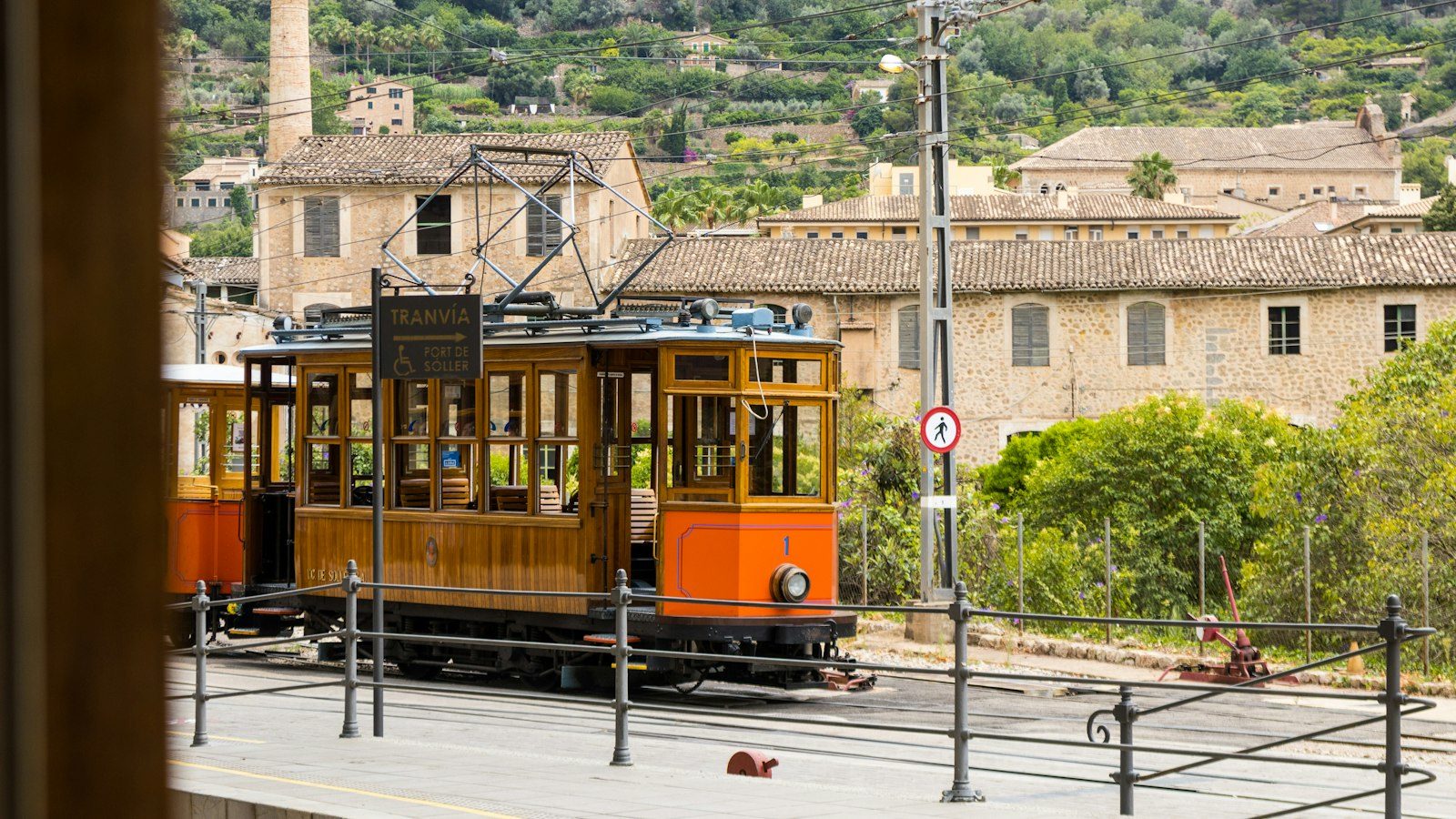
An orange-growing town in a deep valley in Mallorca's Tramuntana mountains, linked to its own small harbour by a wooden tram. You arrive on a 1912 train, walk old mule paths between stone villages and finish the day with a swim in a sheltered bay. Best time to visit: April to June and late September to October. Daily budget (budget traveller): $80 to $270 USD.
Arrive and find your feet
Morning: Take the train from Palma (about an hour, €23) or the faster 204 bus. Drop your bag and walk down to Plaça de sa Constitució for a coffee.
Afternoon: Look at Sant Bartomeu and the Banc de Sóller, then wander the back streets towards Carrer de sa Lluna. Have an orange ice cream at Sa Fàbrica de Gelats.
Evening: Dinner on the square or a nearby side street once the day trippers have gone. Early night before tomorrow's walk.
Biniaraix gorge and Fornalutx
Morning: Leave early and walk 20 minutes to Biniaraix, then climb the stone steps of the Barranc de Biniaraix. Go as far as you like, but L'Ofre is a good target for fit walkers.
Afternoon: Walk back down and follow the signed path from Biniaraix to Fornalutx. Have a late lunch in the village square and rest in the shade.
Evening: Walk or take a bus back to Sóller. A simple dinner of pa amb oli and a glass of local wine.
Modernism, tram and the port
Morning: Visit Can Prunera (€11) when it opens, then browse the market, especially on a Saturday.
Afternoon: Take the tram to Port de Sóller (€10) and swim at Platja d'en Repic. Walk along the promenade to Santa Catalina and the Museu de la Mar.
Evening: Walk up to the Cap Gros lighthouse for sunset, then eat fish in Santa Catalina. Take the bus or a late tram back to town.
Boat to Sa Calobra
Morning: Check the sea conditions, then take a morning boat from Port de Sóller to Sa Calobra (roughly €35-45 return), passing cliffs you cannot reach by road.
Afternoon: Walk through the tunnels in the rock to the mouth of the Torrent de Pareis and swim from the pebbles. Pack lunch, as food there is pricey.
Evening: Boat back to the port and have a drink on the promenade. Try Sóller red prawns if you are treating yourself.
Deià and Valldemossa
Morning: Take the 203 bus to Deià, or walk the GR221 there in about three hours if you are fit and it is not too hot. Climb to the church and Robert Graves's grave.
Afternoon: Carry on by bus to Valldemossa for its monastery and cobbled lanes. Have a coca de patata with a coffee.
Evening: Bus back to Sóller. A slow dinner near the square.
Heading home: Buy olive oil or oranges to take home, then take the 204 bus to Palma and the A1 bus to the airport. Fly home or carry on to Palma for a night.
What to eat in Sóller
- Sóller red prawns (gamba vermella): the local catch, grilled simply at port restaurants. They are priced by weight and expensive, so ask first
- Orange ice cream: made with valley fruit at Sa Fàbrica de Gelats near the square, along with flavours like lemon and almond
- Fresh orange juice: squeezed from local oranges at cafés and market stalls, often for less than in Palma
- Pa amb oli: bread rubbed with tomato and olive oil, topped with cheese or ham, a cheap lunch in most bars
- Ensaïmada and coca de trempó: a spiral pastry for breakfast and a flat pastry with peppers and onions for a picnic, both from any bakery
- Sobrassada and frit mallorquí: the soft paprika sausage on toast, and a fried dish of offal, potatoes and peppers on local set menus
Hidden gems
- The Saturday morning market in the streets around the square, where farmers sell oranges, olives, cheese and herbs before the train crowds arrive
- The old stone washing place (safareig) in Biniaraix, a cool, shady spot where the gorge path begins
- The Museu de la Mar in the former oratory of Santa Catalina above the port, small but with a great view over the bay
- The Torre Picada, a 17th-century watchtower on the cliffs east of the bay, reached by a short path through pines
- The Jardí Botànic de Sóller on the edge of town, a quiet garden of Balearic and Mediterranean plants that few day trippers find
Getting around
Sóller town is small, so you will walk almost everywhere. It takes about 10 minutes from the station to the far side of the centre. Expect some steep streets. The tram links the town to Port de Sóller in about 20 minutes for €10 each way, and the frequent 204 bus covers the same stretch more cheaply. TIB buses are the main way to get around. The 204 runs between Port de Sóller, Sóller and Palma through the tunnel, roughly every 25 to 30 minutes in summer, with fewer buses in winter. The 203 goes along the coast to Deià and Valldemossa. Fares are a few euros. The free travel scheme in 2026 only applies to holders of registered TIB cards, which are mostly residents, so most visitors pay the normal fare. Footpaths are often the best option. Old mule tracks and the GR221 link Sóller with Biniaraix, Fornalutx and Deià. If you drive, the town centre is a low-emission zone for residents only, with €200 fines, so use the signed visitor car parks. Taxis wait near the square and the port.
Safety
Sóller is very safe, and crime against visitors is rare. Watch your bag on the crowded train, the tram and the busy port promenade. The real risks are outdoors. Summer heat on exposed mountain paths is serious, so start walks early, carry at least 1.5 litres of water and tell someone your route. Trails are rocky and slippery after rain, and torrent beds such as the Torrent de Pareis can flood fast after storms, so never enter them if rain is forecast. On the seafront, the tram runs right along the promenade, so look both ways. In the sea, watch out for jellyfish in late summer and stay inside the swimming areas, away from boats. Tap water is safe but hard, and many people drink bottled or filtered water. The emergency number is 112. EU travellers should carry an EHIC and UK travellers a GHIC, and everyone else needs travel insurance with medical cover.
Frequently asked questions
What does this 5-day Sóller itinerary cover?
Day 1: Arrive and find your feet. Day 2: Biniaraix gorge and Fornalutx. Day 3: Modernism, tram and the port. Day 4: Boat to Sa Calobra. Day 5: Deià and Valldemossa.
Is 5 days enough for Sóller?
Our recommended trip length for Sóller is 3 to 5 days. This 5-day plan focuses on the highlights and groups sights by area so you spend less time travelling between them.
How much does 5 days in Sóller cost?
A budget traveller spends about $80 to $270 USD a day in Sóller, so roughly $400 to $1,350 USD for 5 days, not counting flights.
Where should I stay for 5 days in Sóller?
Sóller town and Plaça de sa Constitució: The centre of the valley, built around the main square with the church of Sant Bartomeu, the modernist bank and the train station just above. Port de Sóller: The harbour town on a near-circular bay, about 20 minutes away by tram.
When is the best time to visit Sóller?
The best time to visit Sóller is April to June and late September to October.
How do I get around Sóller?
Sóller town is small, so you will walk almost everywhere. It takes about 10 minutes from the station to the far side of the centre.
Is Sóller safe for solo travellers?
Sóller is very safe, and crime against visitors is rare. Watch your bag on the crowded train, the tram and the busy port promenade.
Read more about Sóller
More 5-day guides
- Cáceres in 5 days
- Pamplona in 5 days
- Sitges in 5 days
- Tarifa in 5 days
- Zaragoza in 5 days
- Cádiz in 5 days
- Barcelona in 5 days
- Madrid in 5 days
Sóller in 2 days | Sóller in 3 days | Sóller in 4 days | Sóller in 7 days | Full Sóller guide
Joy Plus home | Destinations | Itineraries | Activities | Flights | Budget planner | Calendar | Map | Blog | Lifetime access