Destinations / Europe
Split, Croatia travel guide
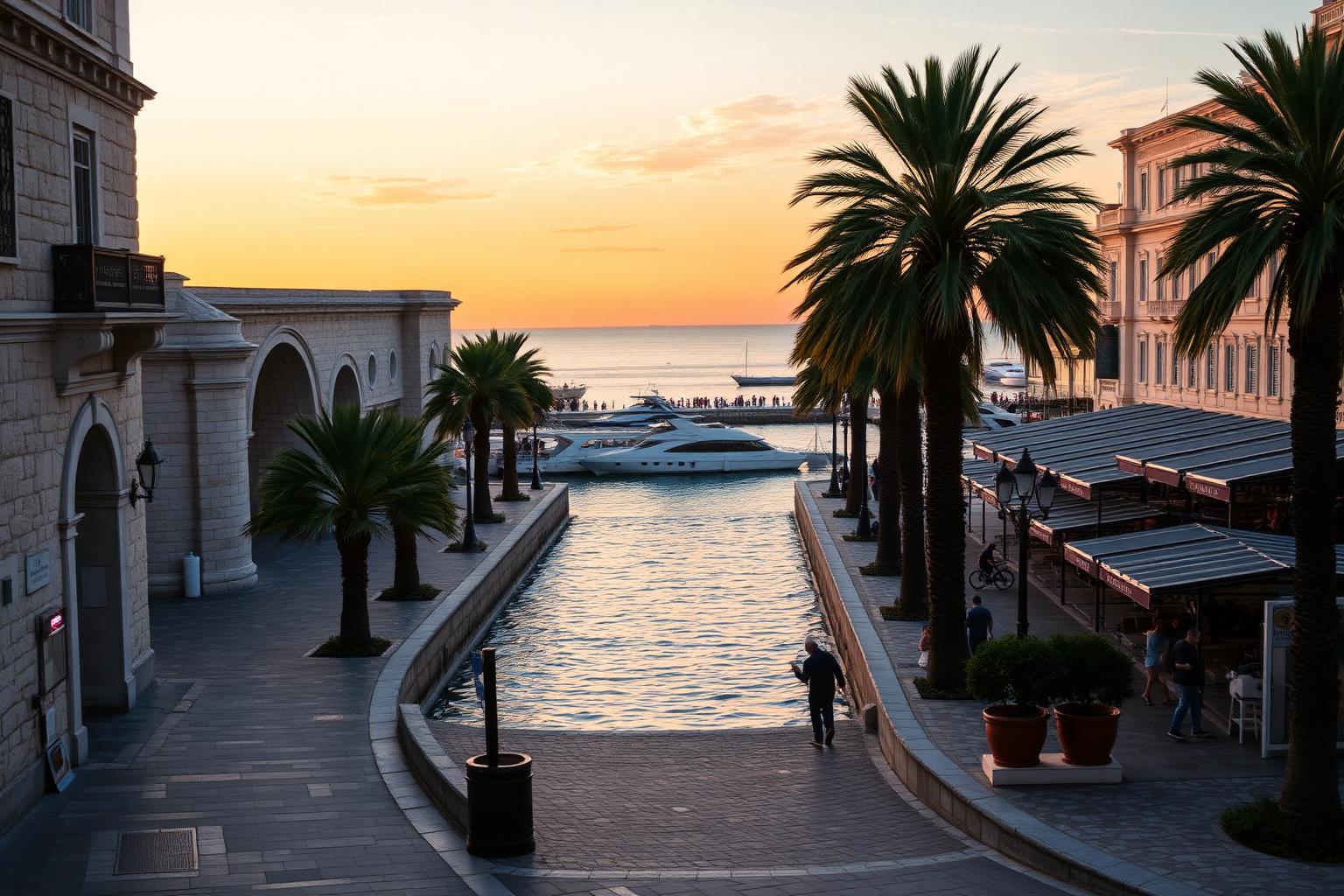
Live inside a Roman palace, then island-hop the Adriatic from the prettiest port in Dalmatia.
- Best time to visit: May-June and September (warm sea, fewer crowds)
- Daily budget (budget traveller): $70 to $130 USD
- Ideal trip length: 3 to 4 days
Split is built inside a Roman emperor's retirement palace, and people still live, eat and drink within its walls 1,700 years later. Add a palm-lined waterfront, swimmable coves a walk from the centre, and ferries to the best islands in Croatia, and you have the ideal Dalmatian base. Joy Plus walks the palace at the right hour, slots the beaches and the Marjan hill, and flags the island day trips to book because they sell out in summer.
Split is the rare city where the main attraction is also the neighbourhood. Emperor Diocletian built his retirement palace here around 305 AD, and today roughly 2,000 people still live inside the walls. Laundry hangs over Roman columns, a pizzeria sits in a Roman cellar, and the Peristyle courtyard is where the whole city meets for coffee. Walk it at 7am, before the cruise groups land, and it feels like a very old village that happens to have espresso machines.
The rest of the city is just as practical. The palm-lined Riva promenade is the evening living room. Varoš, the old fishermen's quarter, climbs towards Marjan, a pine-covered hill with sea views and rocky swimming coves. Bačvice is a sandy city beach where locals play picigin, a waist-deep ball game, from morning to dusk. The bus station, train station and ferry port sit side by side, a five-minute walk from the palace gate, so Split is the most convenient base on the Dalmatian coast.
The islands are the other half of the trip. Hvar, Brač, Vis and the Blue Cave on Biševo are all one ferry or speedboat ride away. Day trips to Trogir and Krka's waterfalls fit between them. Split is busy in July and August, with cruise ships, party boats and sold-out catamarans, so the smartest move is May to June or September. Book the Hvar and Blue Cave days a week ahead, keep one slow beach day free, and eat where the menu is short and the fish is sold by weight.
How many days in Split?
For Split, we recommend 3 to 4 days.
| Trip length | What you'll see | Itinerary |
|---|---|---|
| 2 days | Walk the palace and Riva; Bell tower, cellars, Varoš and Marjan sunset | Split in 2 days |
| 3 days · Recommended | Adds: Trogir half day, then Bačvice | Split in 3 days |
| 4 days · Recommended | Adds: Hvar and the Pakleni islands | Split in 4 days |
| 5 days | Adds: Krka waterfalls (or the Blue Cave in calm seas) | Split in 5 days |
| 7 days | Adds: Kasjuni, Meštrović Gallery and a slow day; Pazar, last coffee | Split in 7 days |
Split itinerary
Arrive, settle, walk the palace and Riva
Morning: Land at SPU, take the Pleter airport shuttle (about €8, 30 min) to the bus station, 5 minutes on foot from the old town. Drop bags and have a burek and coffee at a pekara near the ferry port.
Afternoon: Enter through the Bronze Gate, cross the Peristyle and wander the palace lanes without a plan. Pop into the Temple of Jupiter (now the baptistery) and rub Gregory of Nin's toe by the Golden Gate.
Evening: Dinner at Konoba Matejuška or Trattoria Bajamont. Then a slow Riva stroll with gelato from Luka Ice Cream.
Bell tower, cellars, Varoš and Marjan sunset
Morning: Climb the Cathedral of St Domnius bell tower at opening (about 8am in summer, combined ticket around €15) for empty rooftops. Then the Palace Cellars (about €10). Buy figs and cheese at Pazar by the Silver Gate.
Afternoon: Late lunch at Konoba Fetivi in Varoš. Then climb the stone steps from Varoš to Marjan.
Evening: Sunset drinks at Vidilica, the cliff-top café on Marjan, then walk down for supper at Villa Spiza (tiny, queue early, no reservations).
Trogir half day, then Bačvice
Morning: Bus 37 from the Sukoišan local bus station (east of the old town, about 1.5 km from the main bus station) to Trogir (45 to 60 min, around €3). Walk the island town, see the Cathedral of St Lawrence portal and Kamerlengo fortress.
Afternoon: Lunch at Konoba Trs, then bus back. Swim and join a picigin game at Bačvice, where the water is shallow and warm.
Evening: Dinner at Pizzeria Galija, then Bačvice beach bar for sunset beers. Early night for the Hvar boat.
Hvar and the Pakleni islands
Morning: Take the first catamaran to Hvar town (about 1 hr, €15-22, check the Jadrolinija and Krilo schedules). Climb to the Španjola fortress before the heat.
Afternoon: Water taxi to the Pakleni islands (about €8-12 return) for Palmižana swimming coves and a long lunch.
Evening: Late catamaran back to Split. Light dinner near the port, early to bed.
Krka waterfalls (or the Blue Cave in calm seas)
Morning: Bus to Skradin or Lozovac (about 1 hr 15 min, €8-12). Walk the boardwalks at Skradinski Buk. Swimming there is banned.
Afternoon: Boat back to Skradin, late lunch in town. Alternatively book a speedboat to the Blue Cave on Biševo (about €120-170, plus €18-24 cave entry), best light around 11am to noon.
Evening: Back in Split, grilled fish at a Varoš konoba. Pazar is closed by now, so pick up bakery snacks at Bobis earlier in the day.
Kasjuni, Meštrović Gallery and a slow day
Morning: Walk or taxi to the Meštrović Gallery (about €10), then through the Marjan forest to Kasjuni cove. Bring water shoes.
Afternoon: Swim, read, repeat. Lunch at the beach kiosk.
Evening: Aperitivo in the palace at Academia Ghetto Club courtyard, then a final dinner at Bokeria Kitchen & Wine Bar.
Pazar, last coffee, depart
Morning: Pazar market for fruit and cheese, coffee at the Peristyle. Fish market (Peškarija) by Matejuška harbour if you are up early.
Afternoon: Buy rakija or olive oil to take home, then Pleter shuttle to SPU (allow 2.5 hrs before the flight).
Evening: Land home, pack the sunscreen away, plan the next island.
Best neighbourhoods
- Diocletian's Palace: The living Roman old town: marble lanes, the peristyle, and the cathedral bell tower.
- Varoš: Steep stone fishermen's lanes climbing toward Marjan hill.
- Bačvice: The city beach district, sandy and shallow, lively after dark.
- Riva: The palm-lined seafront promenade, the heart of evening life.
- Meje: Leafy and upscale, below the Marjan forest park.
Must-do experiences
- Explore Diocletian's Palace: The cellars, the peristyle, and climbing the cathedral bell tower for the views.
- Marjan Hill at sunset: A pine-forest park with viewpoints over the city and islands.
- Swim at Kasjuni or Bačvice: Kasjuni is the prettier cove; Bačvice is the sandy classic.
- Island day trip: Ferry to Hvar or Brač's Zlatni Rat beach, or a Blue Cave tour.
Hidden gems
- Sneak up the cathedral bell tower early for an empty-rooftops photo.
- Sunset drinks at a bar carved into the Varoš lanes below Marjan.
- A day trip to Trogir, a tiny UNESCO island town 45 to 60 minutes away by bus.
- Fresh figs and cheese from the Pazar green market by the palace walls.
Daily budget
- Accommodation: budget €30-55 / night (hostel dorm, summer), mid-range €150-260 (boutique double in or near the palace), splurge €350+ (Hotel Vestibul Palace, Marmont). Dorm prices halve outside July and August. Varoš and Bačvice apartments are the best value for 4+ nights.
- Food: budget €22-32 / day (burek, bakery, pizza slice, one konoba lunch), mid-range €55-80 (konoba dinner with fish and wine), splurge €110+ (Noštromo or Zoi tasting dinner). Konobas often run a lunch plate of the day for €10-14. Fish is priced per kg, so ask before you order.
- Transport: budget €2-6 / day (walking plus a bus ride), mid-range €25-45 (island ferry plus Bolt for beaches), splurge €120+ (private speedboat transfer or driver to Krka). The old town is pedestrian-only. Local buses cost about €2. Catamaran to Hvar is €15-22 one way, the car ferry to Brač is €6-8.
- Activities: budget €0-15 / day (palace lanes, Marjan, beaches, cellars), mid-range €35-70 (bell tower, Krka or Hvar fortress, kayak), splurge €130-180 (Blue Cave speedboat tour). Walking the palace and Marjan is free. Krka entry runs about €30-40 in season and the Blue Cave itself adds €18-24 on top of a tour.
- Drinks & nightlife: budget €8-12 (beer on the Riva steps, wine at a konoba), mid-range €25-45 (cocktails and a bar or two in the palace), splurge €80+ (rooftop table, then a club night). Beer is €3.5-5 in the old town, €3 a few streets out. Cocktails cost €9-13 near the Peristyle.
Where to stay
- Social hostel in Old town / palace edge (€30-55 / night (summer), €18-30 off-season): Swanky Mint Hostel or Booze & Snooze. Steps from the Peristyle and the ferry port, with social common rooms and organised island trips.
- Boutique hotel in Inside Diocletian's Palace / Bačvice (€150-260 / night): Hotel Peristil or Heritage Hotel Antique Split inside the walls. Hotel Park on Bačvice if you want a beach morning. Book a courtyard room, not a lane-facing one.
- Apartment in Varoš (€80-140 / night): Stone houses on quiet fishermen's lanes with views to Marjan. Ten-minute walk to the palace and a short climb to the forest. Best for stays of 4+ nights.
- Splurge in Old town / Marmontova (€350-650 / night): Hotel Vestibul Palace in the palace's old vestibule, or Marmont on the quieter edge. Rooftop terraces, big baths and no dragging bags through crowds.
What to eat
- Black risotto (crni rižot) made with cuttlefish ink
- Grilled fresh Adriatic fish, sold by weight
- Pašticada, slow-braised beef in sweet wine sauce
- Soparnik (Swiss chard pie) from the Dalmatian hinterland
Day trips
- Trogir (45 to 60 min by bus): A tiny UNESCO island town with a Romanesque cathedral, a medieval harbour and a quiet fortress. Go in the morning, then be back for a Bačvice swim. Bus 37 from the Sukoišan local bus station (east of the old town, about 1.5 km from the main bus station), about €3, every 20 to 30 min. Check the route on the Promet Split app.
- Hvar and the Pakleni islands (1 hr by catamaran): Lavender, Venetian stone and some of the Adriatic's clearest water. Do the fortress at 8am, then a water taxi to Palmižana for swimming. Jadrolinija or Krilo catamaran from the main port, €15-22 one way. Buy tickets online or at the port kiosks, and book a week ahead in July and August.
- Krka National Park (1 hr 15 min by bus): Seven travertine waterfalls and wooden boardwalks around Skradinski Buk, where swimming is banned. Go early to avoid tour buses. Direct bus from Split to Skradin or Lozovac, €8-12 each way. Park entry is about €30-40 in season, boat to the falls included from Skradin.
When to visit
- Spring (April - June): 16-27°C, mostly sunny, sea still cool (15-21°C). Crowds: Building, manageable. May and June are the sweet spot. Long days, full ferry schedules, terraces open and the sea warms up by late May.
- Summer (July - August): 29-36°C, dry, sea 24-26°C. Crowds: Heavy, cruise ships, party boats and sold-out catamarans. Gorgeous water, but prices spike and the palace lanes feel like a queue. Book ferries and rooms weeks ahead, and do sightseeing before 9am.
- Autumn (September - October): 20-28°C in September, 15-22°C by late October, sea at its warmest. Crowds: Moderate, drops sharply after mid-October. The locals' favourite. Bath-warm sea, calmer lanes, cheaper rooms and harvest-season konoba menus.
- Winter (November - March): 6-14°C, rainy spells, cold bura wind. Crowds: Very low. Cheapest rooms and a real local feel, but reduced ferries, shuttered island restaurants and wet marble. Fine for a palace-and-food weekend, not for beaches.
Entry rules for your passport
Visa rules for Croatia depend on the passport you travel on. Check the official source before you book: European Commission: Schengen visa policy
Getting there
Split airport (SPU) is 20km west of the centre in Kaštela. The Pleter shuttle meets most flights and runs to the bus station beside the Riva, about €8 and 30 minutes. Local bus 37 is cheaper (around €3-4) but stops on the main road a short walk from the terminal. Bolt costs €25-35, and the airport taxi rank quotes €40-50 flat. By land, FlixBus and Arriva run to Zagreb (5 to 6 hrs, €20-35), Dubrovnik (4 to 4.5 hrs, €20-30) and Plitvice. Trains to Zagreb take about 5 to 6 hrs. By sea, Jadrolinija sails to Ancona in Italy. The bus station, train station and ferry port sit side by side, a 5-minute walk from the palace.
Border checks: non-EU visitors (other than Swiss, Norwegian, Icelandic, Liechtenstein, Andorran, Monegasque, San Marinese and Vatican citizens, and holders of an EU residence permit or long-stay visa) are registered in the EU's Entry/Exit System (EES) instead of getting a passport stamp. On your first crossing, officers take your photo and/or fingerprints, so allow extra time at passport control. ETIAS, the planned travel authorisation, is not in operation yet, so don't pay any website for one.
Getting around
The old town is pedestrian-only and tiny, you'll walk everywhere. Local buses and taxis reach the beaches and the bus station. The ferry port is right beside the old town; Jadrolinija and catamaran lines serve the islands. Book island ferries online in advance during summer.
Safety
Split is very safe, including at night and for solo women. Summer brings huge cruise and party crowds, so visit shoulder season for calm. The main hazards are slippery marble lanes, strong midday sun, and rocky beach entries, water shoes help. Book island ferries early in July and August.
Solo travel tips
- Eat at the konoba bar: Many small konobas have a counter or a shared table. Sit there, ask what the day's catch is and point. Staff are friendly once you show interest, and you will be sharing the table with locals in minutes.
- Join a day boat for company: Island tours (Blue Cave, Hvar and Pakleni, Brač and Šolta) are full of solos and small groups. A boat day is the easiest way to meet people, and you skip the ferry-timetable headache.
- Hostel pick: Swanky Mint or Booze & Snooze: Both sit inside or beside the old town. Swanky Mint is calmer, Booze & Snooze runs pub crawls and boat trips. Ask for a room away from the street, palace nights are loud.
- Learn picigin at Bačvice: Locals play this waist-deep ball game all summer and always need an extra hand. Say hi, watch two rounds, and you are in. Dry off, then grab a beer at the beach bars.
- Solo female travellers: Split is one of Europe's safer cities for women alone, including late at night. Standard rules apply: watch drinks in party bars, use Bolt after midnight, and be careful on Hvar and Pakleni party boats.
- Slow-travel with a free walking tour: The tip-based walking tours leave from the Peristyle and Golden Gate and are a quick way to get history context and meet other solos. Do it on day one, then spend the rest of the trip following your own pace.
Cultural etiquette
- Say dobar dan (good day) and hvala (thanks) when you walk in. A greeting changes how you are served.
- Do not walk the old town in swimwear or topless. The city fines this, so cover up between the beach and the palace.
- Fish is priced per kilo. Ask the price before ordering, and check the weight when it arrives.
- Tipping is 10% at sit-down meals, round up at cafés. Pay at the table, not the till.
- Cover your shoulders and knees for the cathedral and churches. Keep shirts on near the Peristyle.
- Coffee is a social event, not a sprint. Order, linger and ignore the urge to ask for the bill after one drink.
- Respect quiet hours after 11pm in the palace lanes. People live there, and noise complaints are real.
Frequently asked questions
How many days do you need in Split?
Three to four days: a day for the palace and old town, a beach-and-Marjan day, and one or two island day trips to Hvar, Brač or the Blue Cave.
Is Split good for solo travellers?
Yes. It's safe, walkable, and the hostel and island-tour scene makes it easy to meet people. It works as both a relaxing base and a party town in summer.
Is Split a good base for the Croatian islands?
It's the best on the Dalmatian coast. Ferries and catamarans from the central port reach Hvar, Brač, Vis and more, so you can island-hop on day trips or stay overnight.
When is the best time to visit Split?
May-June and September (warm sea, fewer crowds) is the sweet spot for weather and crowds. Shoulder season brings lower prices and easier bookings, while peak months mean higher accommodation costs and longer queues at the best known sights, so book early if you travel then.
How much does a trip to Split cost?
Budget around $70 to $130 USD per person per day, covering a hostel bed or simple room, local transport, two or three meals out and an activity or entry ticket. You can go lower with markets and free walking tours, or far higher with boutique hotels and private guides.
How much does a solo trip to Split cost?
Budget on roughly $70-$130 USD per day in Split as a solo traveller. That covers a hostel bed or simple room, local food, getting around and a couple of paid sights. Mid-range comfort with private rooms, sit-down dinners and the odd tour runs closer to double, while shoestring travellers who cook and stick to street food can come in under it.
Is Split safe for solo female travellers?
Split is generally a comfortable place to travel solo, including for women, as long as you use normal city sense. Split is very safe, including at night and for solo women. Summer brings huge cruise and party crowds, so visit shoulder season for calm. The main hazards are slippery marble lanes, strong midday sun, and rocky beach entries, water shoes help. Book island ferries early in July and August.
How do you get around Split?
The old town is pedestrian-only and tiny, you'll walk everywhere. Local buses and taxis reach the beaches and the bus station. The ferry port is right beside the old town; Jadrolinija and catamaran lines serve the islands. Book island ferries online in advance during summer.
More about Split
Tours and activities in Split | Split in 2 days | Split in 3 days | Split in 4 days | Split in 5 days | Split in 7 days
Can't decide? Compare Split with...
- Dubrovnik vs Split
- Split vs Zadar
- Hvar vs Split
- Zagreb vs Split
- Šibenik vs Split
- Trogir vs Split
- Makarska vs Split
Joy Plus home | Destinations | Itineraries | Activities | Flights | Budget planner | Calendar | Map | Blog | Lifetime access