Destinations / North America
Taxco, Mexico travel guide
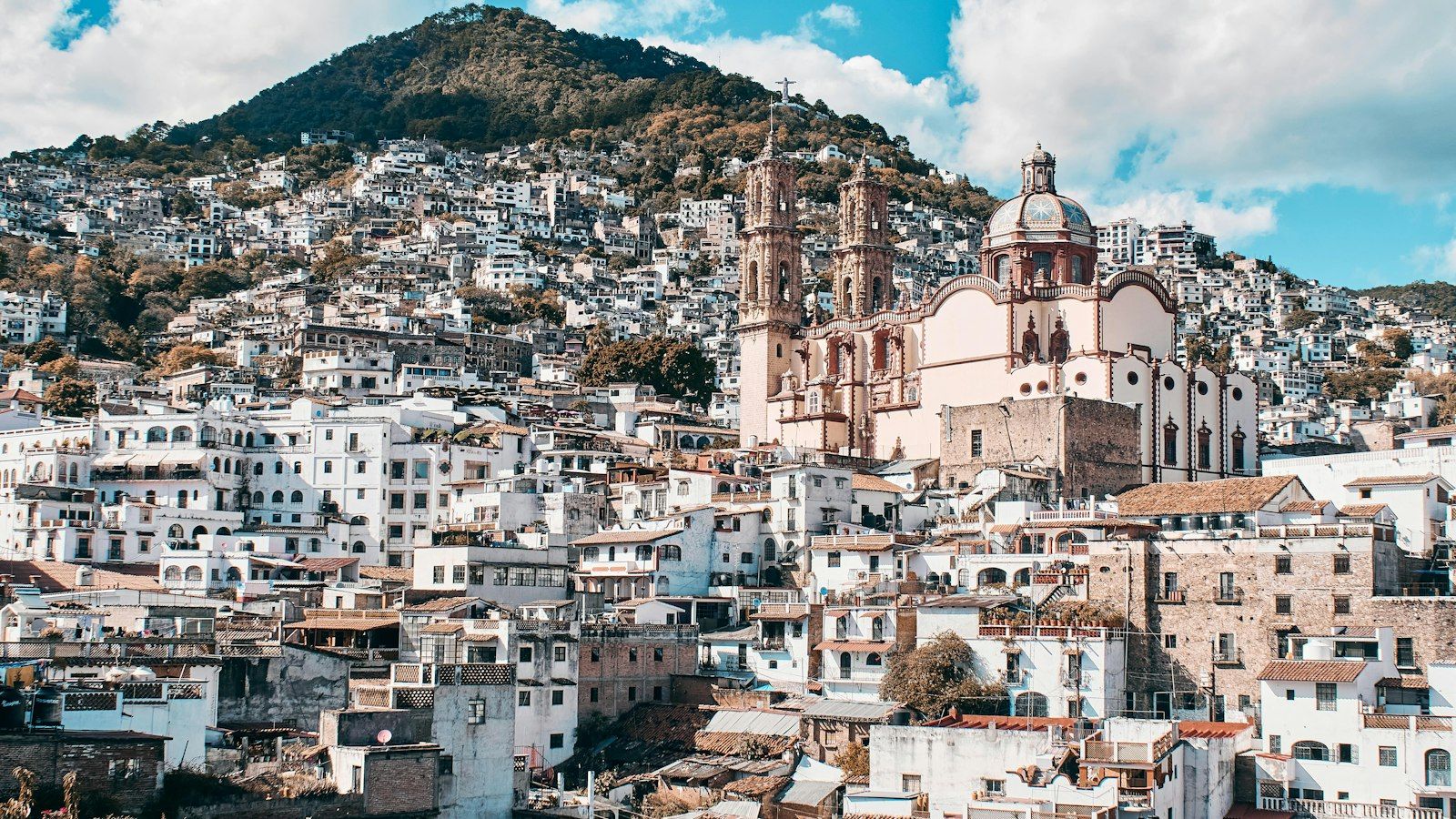
A silver-mining town stacked up a Guerrero hillside, with a pink baroque church, white-walled lanes and hundreds of silver workshops. It suits slow, careful solo travel.
- Best time to visit: November to April
- Daily budget (budget traveller): $55 to $190 USD
- Ideal trip length: 3 to 5 days
Taxco de Alarcón is about 170km south-west of Mexico City, around two and a half hours by bus. It climbs a mountainside at roughly 1,800m in northern Guerrero. The whole town is built around silver. José de la Borda made a fortune from the mines and paid for the Parroquia de Santa Prisca, a pink stone church built between 1751 and 1758. Then in 1929 the American designer William Spratling arrived and started the modern silver trade, which now runs to more than 300 workshops. For a solo traveller the appeal is simple. You get cobbled lanes too steep for most cars, cheap pozole, rooftop terraces facing Santa Prisca, a cable car above the rooftops and one of Latin America's biggest cave systems half an hour away. You also need to be honest with yourself about safety. The US government rates all of Guerrero, Taxco included, at its highest warning level. Read your own government's advice before booking, arrive by daytime bus, stay central and use organised transport for day trips.
Taxco exists because of silver. The Spanish were mining the hills here by the 1530s, and in the 18th century José de la Borda made a fortune and spent part of it on the Parroquia de Santa Prisca. Its pink stone towers still rise above everything in town. By the early 20th century the mines had faded, until William Spratling, an American architect and designer, arrived in 1929 and set up a workshop. He trained local craftsmen and started the silver trade that still employs much of the town. Today Taxco has more than 300 workshops, a Saturday silver market and an annual national silver fair, and the government has named it a Pueblo Mágico. It feels Mexican rather than international, because most visitors are weekenders from Mexico City and Cuernavaca.
The town is small, steep and best on foot. Base yourself within a few blocks of Plaza Borda and you can walk to almost everything: Santa Prisca, the Spratling museum, Casa Humboldt, the market and dozens of terrace restaurants. Expect to climb; the walk from the bus terminal to the centre alone is a stiff 15 minutes uphill. The cable car, the Cristo Monumental viewpoint and Barrio de Guadalupe give you the views. The Grutas de Cacahuamilpa and the Pozas Azules de Atzala make easy half-day or full-day trips if you use an organised tour or a trusted taxi. Weekdays are noticeably cheaper and quieter than weekends.
The honest catch is safety. Guerrero is one of Mexico's most violent states, and the US State Department rates the whole state, Taxco included, at its highest 'Do not travel' level. In January 2024 the US Embassy barred its staff from Taxco after a series of incidents. Plenty of Mexican and foreign visitors still come, and reports from travellers suggest the historic centre works normally for tourists. But this is a destination where you plan carefully: read your own government's advice, check your insurance, arrive and leave by daytime bus, stay central and never travel between towns after dark. Do that and Taxco gives you one of the best-preserved colonial townscapes in Mexico at a very low daily cost.
Taxco itinerary
Bus from Mexico City, first look at Santa Prisca
Morning: Take a mid-morning Estrella de Oro bus from the Terminal del Sur (Taxqueña), which takes about 2 hours 40. Get a taxi from the Taxco terminal up to your hotel near Plaza Borda, as the walk is steep with bags.
Afternoon: Lunch at a fonda near the square, then step inside Santa Prisca (free) to see the gilded altarpieces. Wander Plaza Borda and window-shop the silver stores without buying yet.
Evening: Sunset drink on a terrace facing the church, such as La Terraza at Hotel Agua Escondida, then an easy dinner nearby.
Spratling, Casa Humboldt and the market
Morning: Museo Guillermo Spratling behind Santa Prisca (about 85 MXN, Tuesday to Sunday from 9am). Then walk to Casa Humboldt and its Museo de Arte Virreinal (about 40 MXN).
Afternoon: Get lost in the Mercado de Tetitlán and have a comida corrida at a market fonda. Visit a silver workshop to see pieces being made, and ask about price by weight.
Evening: Pozole at Pozolería Tía Calla on Plaza Borda (closed Tuesdays), green if it's Thursday. Drinks around Plazuela de San Juan.
Cable car, Montetaxco and the Cristo
Morning: Combi or taxi (about 100 MXN) to the cable car base at the northern end of Avenida de los Plateros. Ride up to Montetaxco (185 MXN return, cash only) and take in the view from the hotel terraces.
Afternoon: Back down and lunch in the centre. Then taxi up to the Cristo Monumental viewpoint west of town for the full panorama of white houses and Santa Prisca's towers.
Evening: Slow dinner at Del Angel Inn, whose terrace looks across to Santa Prisca, then an early night before the caves.
Grutas de Cacahuamilpa
Morning: Join an organised tour or book a hotel-arranged taxi for the roughly 40-minute drive to the national park. Tours run roughly hourly from about 10am. Entry is about 120-200 MXN, so check on arrival.
Afternoon: Walk about 2km into the main cave and 2km back, which takes two to three hours. Bring a light layer, as the caves are cool and damp. Eat at the stalls by the entrance.
Evening: Back in Taxco by late afternoon. Rest your legs, then tacos and a beer near Plazuela de San Juan.
Pozas Azules de Atzala
Morning: Hotel-booked taxi or tour to the Pozas Azules de Atzala, which open around 8:30am. Entry is about 150 MXN, so confirm before you go. Go early for clear water and space to swim.
Afternoon: Swim in the cold turquoise pools, then head back to town by mid-afternoon. Take a siesta, because Taxco's hills take it out of you.
Evening: Try mole rosa for dinner at a traditional restaurant in the centre, then a Berta on Plaza Borda.
Saturday silver market and the barrios
Morning: Plan this day for a Saturday. Browse the tianguis de plata early, before the crowds. Compare prices across several stalls, check for .925 stamps and bargain with a smile.
Afternoon: Climb into Barrio de Guadalupe for the view down onto Santa Prisca, then wander north to the Ex-Convento de San Bernardino de Siena.
Evening: Weekend live music on Plaza Borda. A farewell dinner on a terrace, then a taxi back if you're staying up a hill.
Last morning, bus back to Mexico City
Morning: Breakfast at the market, then go back to any workshop pieces you liked for a final purchase. Check out and keep your passport and cash close.
Afternoon: Taxi to the Estrella de Oro terminal and take an early-afternoon bus to Mexico City (about 2 hours 40). Book a departure that gets you into Taxqueña in daylight.
Evening: Metro or ride-hail from Taxqueña to your Mexico City hotel or the airport. Leave plenty of margin before any flight.
Best neighbourhoods
- Centro and Plaza Borda: The town's small main square, right under the towers of Santa Prisca. Silver shops, the Casa Borda cultural centre, terrace restaurants and the best-located hotels are all within a few minutes' walk. This is the safest and most practical base for a solo trip.
- Plazuela de San Juan and Calle Juan Ruiz de Alarcón: A small square and the lanes around it, a couple of minutes downhill from Plaza Borda. It has cheaper eateries, pozolerías, bars and Casa Humboldt, and it is a good spot for an evening drink away from the tour groups.
- Barrio de Guadalupe: A steep residential quarter above the centre, topped by the Guadalupe church. It has the classic view over Taxco's white houses and red roofs. Come in the morning when the light is soft and the stairways are quiet.
- Avenida de los Plateros: The long main road along the bottom of town, with both bus terminals, silver wholesalers, larger hotels and the cable car base at the northern end. It's handy for early buses, but it's noisy, so you'll want to walk or take a combi up to the centre.
- Montetaxco: A hilltop above the north end of town, reached by cable car or by road. It's home to the Hotel Montetaxco resort, a pool and wide views over the whole town. It's quiet and slightly cut off, so treat it as a splurge base or a sunset drink.
Must-do experiences
- Stand inside Santa Prisca: Taxco's pink stone parish church faces Plaza Borda and is packed with gilded baroque altarpieces. Entry is free and it usually opens from about 9am to 7pm. Dress modestly and stay quiet during Mass.
- See Spratling's legacy at the Museo Guillermo Spratling: This small museum behind Santa Prisca holds the American silversmith's pre-Hispanic collection and his own silver designs. Entry is about 85 MXN, and it opens Tuesday to Sunday from around 9am. Labels are mostly in Spanish.
- Ride the Teleférico de Taxco: An 800m cable car runs from the northern edge of town up to Hotel Montetaxco, taking about five minutes each way. A return is 185 MXN and you pay cash at the station. Have a drink on the hotel terrace at the top.
- Hunt for silver at the Saturday tianguis: On Saturdays, stalls run by local silversmiths fill the streets of the centre. Prices are usually lower than in the shops on Plaza Borda. Look for the .925 stamp and bargain politely.
- Go underground at the Grutas de Cacahuamilpa: A national park about 30km away with one of the largest cave systems in the Americas. Guided tours run roughly 2km in and 2km back through huge chambers of stalactites. Allow two to three hours inside.
- Eat Thursday pozole verde: Guerrero's green pozole is made with tomatillo, chilli and pumpkin seed and served with chicharrón and avocado. Taxco eats it on Thursdays, and Pozolería Tía Calla on Plaza Borda has served it since 1951.
- Watch sunset over the rooftops: Take a taxi up to the Cristo Monumental viewpoint west of the centre, or head to a terrace bar facing Santa Prisca. You'll see the town's white walls turn gold before the church lights come on.
Hidden gems
- Pozas Azules de Atzala, a set of cold, turquoise natural pools a short drive outside town, open daily from about 8:30am to 4:45pm for around 150 MXN. Go with a hotel-booked taxi or a tour
- Casa Humboldt, an 18th-century mansion where Alexander von Humboldt stayed in 1803. It now houses the Museo de Arte Virreinal, with colonial religious art and a good room on Santa Prisca, for about 40 MXN
- The Ex-Convento de San Bernardino de Siena, a quiet former Franciscan monastery a few minutes' walk north of Plaza Borda, where few visitors bother to go
- The stairways of Barrio de Guadalupe at 8am, when you share the view over Santa Prisca's towers with nobody but schoolchildren and bread delivery bikes
- Mercado de Tetitlán, the working municipal market below Santa Prisca, a maze of stalls stepping down the hill with cheap fondas, fruit and everyday silver
Daily budget
- Accommodation: budget 350-700 MXN / night (hostel bed or basic posada room), mid-range 1,200-2,200 MXN (central boutique hotel with a view), splurge 2,500-4,500+ MXN (Hotel Montetaxco, best terrace rooms in the centre). Prices rise sharply on Friday and Saturday nights, in Semana Santa and during the Feria de la Plata. Sunday to Thursday is much cheaper. Many cheaper places have no parking and sit up long flights of steps, so check the location before booking.
- Food: budget 250-400 MXN / day (market fondas, tacos, a bowl of pozole), mid-range 600-1,000 MXN (terrace lunch, sit-down dinner with a drink), splurge 1,200+ MXN (Plaza Borda terrace dinners, wine). A market comida corrida is around 80-130 MXN and a pozole is about 80-100 MXN. Restaurants facing Santa Prisca charge for the view. Tip 10-15% at sit-down places.
- Transport: budget 30-150 MXN / day (walking, combis, one short taxi), mid-range 200-450 MXN (taxis around town, cable car transfer), splurge 1,500+ MXN (private driver for a day trip). The bus from Mexico City's Terminal del Sur costs roughly 250-350 MXN each way with Estrella de Oro, depending on class and day. In-town taxis are roughly 50-100 MXN. Agree the fare before you get in, and check current bus fares online.
- Activities: budget 0-200 MXN / day (Santa Prisca free, Spratling museum about 85 MXN, Casa Humboldt about 40 MXN), mid-range 300-800 MXN (cable car 185 MXN, Cacahuamilpa entry plus transport), splurge 800-1,500+ MXN (guided private tours to the caves and pools). The cable car is cash only. Cacahuamilpa entry has been quoted between about 120 and 200 MXN, and Pozas Azules de Atzala at about 150 MXN, so check current prices. Many museums close on Mondays.
- Drinks & nightlife: budget 60-150 MXN (a beer or two in a plazuela bar), mid-range 250-500 MXN (terrace cocktails, a Berta or two), splurge 800+ MXN (sunset drinks at Montetaxco). Nightlife means terrace bars and live music on Plaza Borda, busiest on weekends and during the silver fair. Most places wind down by midnight. Walk back via the lit main streets, or have a bar call a taxi.
Where to stay
- Social hostel in Centro, Taxco (300-600 MXN / night): Taxco has only a handful of hostels, such as Hostel Casa Taxco and Hostal Joan Sebastian, which appear on booking sites. Read recent reviews to confirm they are open, check how many stairs you'll climb, and make sure the location is central.
- Boutique hotel in Plaza Borda and Calle Hidalgo (1,200-2,600 MXN / night): Hotel Mi Casita, a former family house just off the main square with a terrace facing Santa Prisca, or Boutique Pueblo Lindo on Calle Hidalgo, with its heated pool and an on-site restaurant. Both are a short walk from everything.
- Apartment in Around Plazuela de San Juan (700-1,500 MXN / night): Rental flats and rooms in colonial houses around the centre give you a kitchen, a terrace and a local street life. Shop at the Mercado de Tetitlán and cook a few meals. Check the access steps and confirm the exact address before paying.
- Splurge in Montetaxco hilltop (2,500-4,500+ MXN / night): Hotel Montetaxco sits at the top of the cable car with a pool, a spa and the widest views in town. It is quiet and resort-like. Alternatively, book the best terrace room at Hotel Agua Escondida on Plaza Borda to stay right in the centre.
What to eat
- Pozole verde: Guerrero's green hominy stew made with pumpkin seed and tomatillo, eaten every Thursday with chicharrón, avocado, oregano and a tostada. A bowl usually costs 80 to 100 MXN at a pozolería
- Mole rosa: Taxco's own pink mole, a mild, slightly sweet sauce traditionally made with beetroot and pine nuts. It is served over chicken at the more traditional restaurants in the centre
- Jumiles: tiny stink bugs eaten raw, toasted or ground into salsa, at their best in the weeks around the Day of the Dead. Pozolería Tía Calla serves them when they are in season
- Comida corrida at the Mercado de Tetitlán: a fixed-price lunch of soup, rice, a main and an agua fresca from a market fonda, usually around 80 to 130 MXN
- Tacos de barbacoa and chivo: slow-cooked meat tacos sold from market stalls and street counters, mostly in the morning and early afternoon, before they sell out
- The Berta: Taxco's local drink of tequila, lime, honey and soda, named after a long-running bar on Plaza Borda. Order one at a terrace bar at sunset
Day trips
- Grutas de Cacahuamilpa National Park (About 30km, roughly 40 minutes by road north of Taxco): One of the largest cave systems in the Americas. Guided tours lead roughly 2km into a series of huge chambers filled with stalactites and stalagmites, then back the same way. Allow two to three hours in the caves. For safety and simplicity, join an organised tour or use a hotel-booked taxi. Buses towards Pilcaya leave from Taxco's Estrella Blanca terminal and drop you on the main road, then it's a short walk. Entry is around 120-200 MXN, with tours roughly hourly from about 10am. Check prices and opening days before you go.
- Pozas Azules de Atzala (A short drive outside Taxco, so ask your hotel for current travel time): Cold, clear turquoise pools up to about 8m deep in an ecotourism park, good for a swim after days of hill-climbing. The water is clearest in the dry season and mornings are quietest. Hotel-arranged taxi with a waiting time agreed, or a local tour. Open daily from about 8:30am to 4:45pm, with entry around 150 MXN. Fares have changed recently, so confirm by phone first.
- Ixcateopan de Cuauhtémoc (Roughly an hour by road south-west of Taxco): A small town where marble paves the streets, known for the church where remains claimed to be those of the last Aztec emperor, Cuauhtémoc, are kept. It is quiet and rural and gives you a feel for Guerrero's countryside. Only go with a tour or a trusted, hotel-booked driver, by day. Ask locally about current road conditions before you commit, and skip it if anyone hesitates.
When to visit
- Dry season (November - February): 22-27°C by day, 8-13°C at night, clear skies, almost no rain. Crowds: Moderate, with peaks for the Feria de la Plata, Christmas and New Year. The best all-round window. Sunny days for walking, cool evenings on the terraces, and the silver fair in late November and early December. Bring a warm layer for nights.
- Hot dry season (March - May): 26-31°C, dry and dusty, hottest in April and May. Crowds: Very heavy in Semana Santa, otherwise moderate. Semana Santa processions are among the most dramatic in Mexico, but hotels sell out and prices jump. Book months ahead, or come after Easter for quieter streets.
- Rainy season (June - September): 23-27°C, green hills, heavy afternoon and evening storms. Crowds: Low on weekdays, busier in the July and August school holidays. Mornings are usually fine, so sightsee early and be indoors by 3pm. The cobbles get slippery and the Atzala pools can turn cloudy after heavy rain. Hotels are cheaper.
- Shoulder (October): 23-27°C, rains tailing off, fresh and green. Crowds: Low until Day of the Dead at the start of November. A quiet month with good light and lower prices. Stay into early November for Day of the Dead altars and the start of jumil season.
Entry rules for your passport
Visa rules for Mexico depend on the passport you travel on. Check the official source before you book: Mexico National Migration Institute
Getting there
Most international travellers fly into Mexico City's Benito Juárez International Airport (MEX). Most nationalities can visit visa-free for tourism, with a permitted stay decided at immigration, but check the current rules on the official Mexican government site before you fly. From the airport, take an authorised airport taxi or a ride-hail car to the Terminal del Sur (Taxqueña) bus station. It takes 45 to 60 minutes and also sits at the end of Metro Line 2. Estrella de Oro runs frequent buses to Taxco from early morning to early evening, taking about 2 hours 30 to 2 hours 45, with fares roughly 250 to 350 MXN depending on class. Buy at the counter or online, and choose a departure that arrives in daylight. Buses arrive at the Estrella de Oro terminal at the southern end of Avenida de los Plateros. From there it's a short taxi ride (about 50-80 MXN) or a steep 15-minute walk up to Plaza Borda. Lines in the Estrella Blanca group use a second terminal at the north-east end of town. If you are driving, take the 95D toll highway via Cuernavaca, park on the edge of the centre, and don't drive at night.
Getting around
Taxco is a walking town, but the walking is hard work. The streets are steep, cobbled and often one-way, and many are too narrow for buses. White combis (shared minibuses) run up and down the main routes and along Avenida de los Plateros for a few pesos. Fares change, so ask the driver and carry coins. Local taxis are everywhere and cheap for short hops. Expect roughly 50 to 100 MXN within town, but agree the fare first, and at night ask your hotel to call one. From Mexico City, Estrella de Oro runs frequent buses from the Terminal del Sur (Taxqueña) to its terminal at the southern end of Avenida de los Plateros. The trip takes about 2 hours 30 to 2 hours 45, with fares roughly 250 to 350 MXN depending on the class of bus. Buses on the Estrella Blanca group also use a second terminal at the north-east end of town. If you drive, take toll highway 95D via Cuernavaca and park outside the centre. Don't drive on rural roads, and don't drive between towns after dark.
Safety
Be clear-eyed about this one. The US State Department rates all of Guerrero at Level 4 'Do not travel' due to crime and names Taxco specifically. In January 2024 the US Embassy barred its staff from visiting Taxco after security incidents. Other governments set their own advice, so read yours, and check that your travel insurance still covers you. Policies are often void where your government advises against travel. Visitors who do go generally report that the historic centre works normally for tourists, but conditions can change quickly. To keep your risk down, arrive and leave by daytime bus on the toll road from Mexico City via Cuernavaca and stay in or near the centre. Use organised tours or hotel-booked taxis for the caves and pools, never travel between towns after dark, and avoid back roads and remote waterfalls. Follow local news and your hotel's advice. Day to day, the hazards are mundane: steep, slippery cobbles (wear shoes with grip), strong sun at altitude, and fake or plated 'silver' sold as sterling. Use ATMs inside bank branches during the day, don't show off cash or new jewellery, and keep a copy of your passport on your phone. Local transport strikes have stopped combis at short notice before, so keep cash for taxis.
Solo travel tips
- Sleep within five minutes of Plaza Borda: Taxco's hills punish bad hotel choices. Staying in the centre means you walk everywhere, eat late without a taxi ride home, and stay in the part of town where visitors are most comfortable. Check for steep stairs before you book if you have a heavy bag.
- Travel by daylight on the toll road: Take Estrella de Oro buses from Mexico City's Terminal del Sur on the 95D toll highway via Cuernavaca, and pick departures that arrive well before dark. Never drive or ride between towns at night, and skip remote back-road attractions.
- Read your government's advice and check your insurance: Guerrero carries some of the strictest travel warnings in Mexico. Read the latest advice from your own government, and confirm in writing that your travel insurance covers Taxco. Many policies exclude areas under a 'do not travel' warning.
- Buy silver like a local: Look at several stalls before buying, check for the .925 stamp and a maker's code, and ask the price by weight. The Saturday tianguis is usually cheaper than the shops on Plaza Borda. Avoid 'alpaca', which contains no silver at all.
- Carry cash and small notes: The cable car is cash only, as are combis, many fondas and most market stalls. Withdraw from ATMs inside bank branches in daylight, and keep a stash of 20 and 50 peso notes for taxis and pozole.
- Meet people on the terraces: Taxco has few hostels and little backpacker scene, so company comes from tours and terraces. Join a group tour to Cacahuamilpa, sit at the bar rather than a table, and chat with Mexican weekenders, who are usually curious about solo foreigners.
Cultural etiquette
- Greet people as you enter shops and fondas with 'buenos días' or 'buenas tardes', and say 'gracias' as you leave. Skipping the greeting comes across as rude.
- Dress modestly inside Santa Prisca and other churches. Cover your shoulders, take off your hat, and do not wander about or take flash photos during Mass.
- Semana Santa processions are religious events, not shows. Stay quiet, never block the route, and ask before photographing penitents up close.
- Bargaining is normal at the Saturday silver market and expected for larger purchases, but keep it friendly. Shops with marked prices may offer only a small discount for cash.
- Lunch is the main meal, usually between 2pm and 4pm. Many fondas run out of the day's dishes by late afternoon.
- Thursday is pozole day across Guerrero. Join in, and don't be surprised to find some restaurants serving little else.
- Ask before photographing artisans at work in their workshops. Most say yes, and buying even a small piece is appreciated.
Frequently asked questions
How do I get to Taxco from Mexico City airport?
There is no direct airport bus that suits most travellers. Take an authorised airport taxi or a ride-hail car to the Terminal del Sur (Taxqueña) bus station, which takes 45 to 60 minutes depending on traffic. Taxqueña is also the end of Metro Line 2 if you are travelling light. From there, Estrella de Oro buses run to Taxco throughout the day and take about 2 hours 30 to 2 hours 45. Aim to arrive in daylight, and if you land late, sleep in Mexico City and travel the next morning.
How many days do I need in Taxco?
Two nights covers Santa Prisca, the museums, the cable car and some silver shopping. Three to five days lets you add the Grutas de Cacahuamilpa, the Pozas Azules de Atzala and a Saturday at the silver market without rushing. Many people visit as a day trip from Mexico City, but five hours on a bus for a few hours in town is hard work.
When is the best time to visit Taxco?
November to April is dry and sunny, with warm days and cool nights. Late November into early December brings the Feria Nacional de la Plata, a festival of silver competitions, exhibitions and free concerts on Plaza Borda. The 2025 edition ran from 29 November to 6 December, so confirm the 2026 dates locally. Semana Santa (Easter week) is famous for its processions but very crowded and expensive. June to September is the rainy season, with afternoon storms and slippery cobbles.
Is Taxco safe for solo travellers?
There is no simple answer. The US government advises against all travel to Guerrero, including Taxco, and other governments have their own warnings, so read yours and check your insurance. Travellers who go generally report that the historic centre feels calm and works normally for visitors. If you decide to go, travel by daytime bus on the toll road, stay central, use organised tours or hotel-booked taxis for day trips, and never travel between towns after dark. Solo women report the usual Mexican hassle levels, no more.
Can I use my credit card in Taxco?
Larger hotels, terrace restaurants and established silver shops take cards. You will need cash in pesos for the cable car, which is cash only, as well as combis, taxis, market fondas, pozolerías and most Saturday market stalls. Use ATMs inside bank branches around the centre during the day, and take out enough before weekends and holidays, when machines can run dry.
How do I know if Taxco silver is real?
Sterling silver should be stamped .925, usually alongside 'Mexico' and a registered maker's code. 'Alpaca' or 'German silver' contains no silver at all, and silver-plated pieces wear through quickly. Buy from established workshops or market stalls where you can see items being made, ask for the price by weight, and compare a few stalls before you buy. If a price looks too good to be true, it probably is.
Do I need to speak Spanish in Taxco?
It helps a lot. Taxco gets mostly Mexican tourists, so English is limited outside the bigger hotels and some silver shops, and museum labels are mostly in Spanish. Learn greetings, numbers for bargaining and 'cuánto cuesta', and keep a translation app with offline Spanish downloaded.
What entry rules apply to travellers visiting Mexico in 2026?
Citizens of the UK, the EU, the US, Canada and many other countries can usually visit Mexico for tourism without a visa. The immigration officer decides how many days you get, up to a maximum of 180. Your tourist permit (FMM) is now usually recorded electronically or with a passport stamp at major airports. You may be asked for proof of onward travel, accommodation and funds, and your passport should be valid for your whole stay. Rules change, so confirm on the official Mexican government site (gob.mx, Instituto Nacional de Migración) and with your own government's travel advice before you book.
More about Taxco
- The 7-Day Mexico City Itinerary for 2026, with Real Prices
- Mexico City vs Medellín for Digital Nomads: Which Base Suits You in 2026?
Tours and activities in Taxco | Taxco in 2 days | Taxco in 3 days | Taxco in 4 days | Taxco in 5 days | Taxco in 7 days
Joy Plus home | Destinations | Itineraries | Activities | Flights | Budget planner | Calendar | Map | Blog | Lifetime access