Destinations / Middle East
Tel Aviv, Israel travel guide
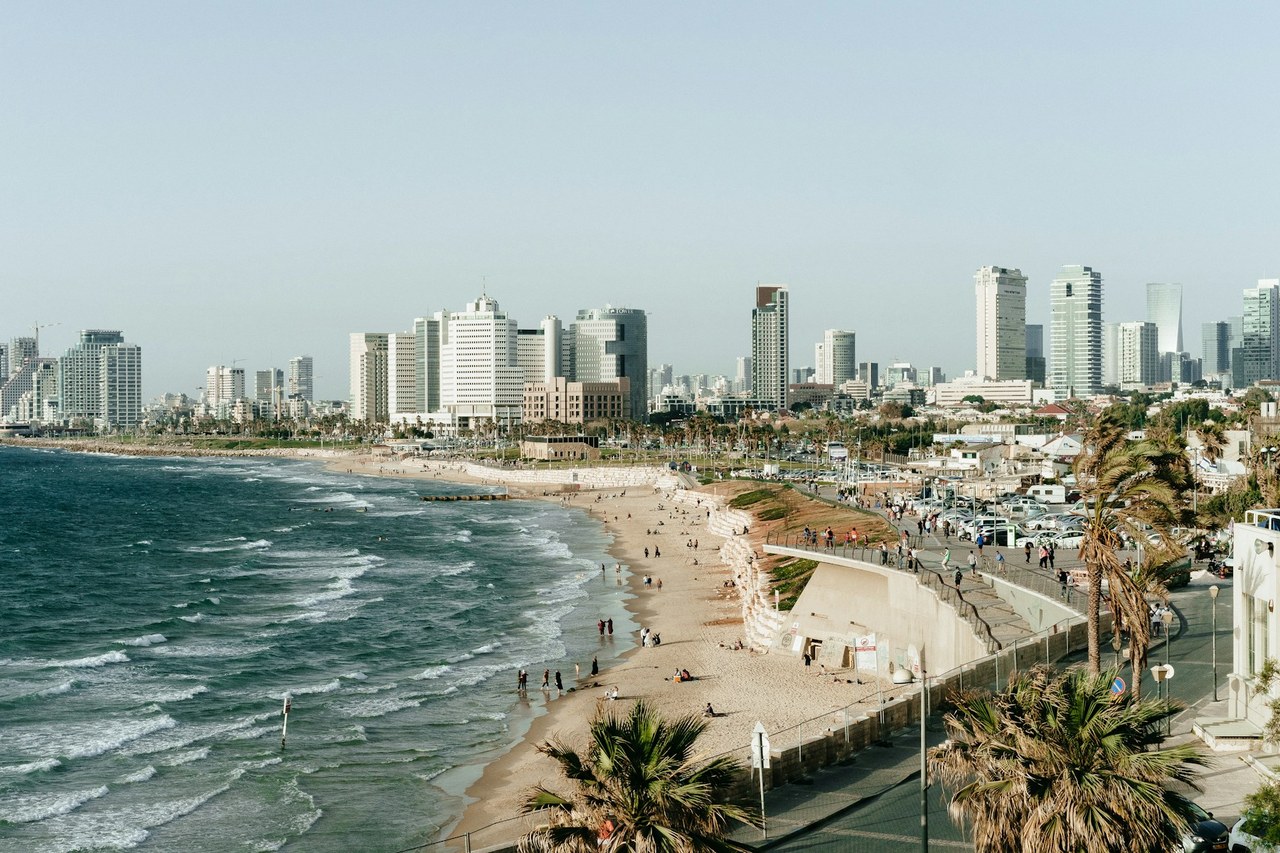
The Mediterranean's party capital: golden beaches, Bauhaus architecture, and a non-stop food and nightlife scene.
- Best time to visit: April-June and September-November
- Daily budget (budget traveller): $100 to $180 USD
- Ideal trip length: 3 to 4 days
Tel Aviv is the liberal, sun-soaked counterpoint to ancient Jerusalem: miles of beach, a UNESCO trove of Bauhaus buildings, and a food and nightlife scene that rarely sleeps. By day it's beach volleyball and market stalls; by night it's rooftop bars and dancing until dawn. Joy Plus balances the beach, the markets and the old port of Jaffa, and times the day trip to Jerusalem.
Tel Aviv is a 14-kilometre ribbon of sand with a city stapled to it. It was founded in 1909 on dunes north of ancient Jaffa and now holds roughly 4,000 Bauhaus and International Style buildings, the biggest cluster on earth, UNESCO-listed in 2003. Most of them are peeling, balconied and covered in bougainvillea, which is exactly why they work. Locals live on the beach, argue over hummus like football, and treat 11pm as an early dinner. It is also one of the priciest cities on the planet, so the trick is knowing where the real value hides: the shuk, the hummusiyas, the happy hours and the free sea.
The week runs on its own clock. Sunday is a normal working day and Friday is a long brunch-and-beach affair. Shabbat, from Friday afternoon to Saturday after dark, stops trains, buses and the light rail, and shuts Carmel Market. Beaches, bars, Jaffa and a good share of restaurants stay open, and shared sheruts keep rolling. Summer is hot and sticky, with 70%+ humidity that turns noon into a siesta. Spring and October are the sweet spots. Jewish holidays matter more than any other calendar item here: on Yom Kippur (10 to 11 October in 2027) the whole country goes silent and the empty roads belong to kids on bikes.
This guide gives you seven days that cluster the sights by neighbourhood: Rothschild and the White City, Carmel Market and Neve Tzedek, Jaffa at sunset, a Jerusalem day trip, Florentin by night, and a Shabbat-proof beach day. Costs are in shekels (₪) for 2026. Expect to spend more than you planned on beds and beer, and less than you feared on food. Check your government's travel advisory before booking, download the Home Front Command app for alerts, and ask your hotel or hostel where the nearest shelter is. Israelis are direct, quick to help and very curious about where you are from.
How many days in Tel Aviv?
For Tel Aviv, we recommend 3 to 4 days. With more time, add a day trip to Akko or Dead Sea and Masada.
| Trip length | What you'll see | Itinerary |
|---|---|---|
| 2 days | Rothschild and the White City; Carmel Market and Neve Tzedek | Tel Aviv in 2 days |
| 3 days · Recommended | Adds: Jaffa from market to sunset | Tel Aviv in 3 days |
| 4 days · Recommended | Adds: Jerusalem day trip | Tel Aviv in 4 days |
| 5 days | Adds: Florentin by day and night | Tel Aviv in 5 days |
| 7 days | Adds: Shabbat-proof beach day; Last shakshuka | Tel Aviv in 7 days |
Tel Aviv itinerary
Arrive, Rothschild and the White City
Morning: Land at TLV, take the train from Ben Gurion Airport to Tel Aviv Savidor Center (about 15 min, roughly ₪17). Drop bags in Lev Ha'ir. Breakfast at Benedict on Rothschild, open 24 hours.
Afternoon: Walk Rothschild Boulevard past Independence Hall (number 16, seen from outside while it is closed for restoration), then Habima Square and Dizengoff Square. Pick up the Bauhaus map at the Bauhaus Center on Dizengoff.
Evening: Sunset on Frishman Beach. Sabich at Sabich Frishman (Frishman 42) for about ₪35. Early night, jet lag is real.
Carmel Market and Neve Tzedek
Morning: Carmel Market at 9am, before the crowds (open Sunday to Friday, closes around 3pm on Fridays, shut on Saturdays). Grab a ₪15-25 pomegranate juice, burekas and halva. If it is Tuesday or Friday, the Nachalat Binyamin craft market is next door.
Afternoon: Walk into Neve Tzedek via Shabazi Street. Lunch at Suzanna and a pastry from Dallal. Browse the boutiques and drift down to the beach.
Evening: Dinner at Miznon (King George 30), the cauliflower is the famous bit. Drinks at Beer Bazaar by the market.
Jaffa from market to sunset
Morning: Walk the promenade south to Jaffa (about 40 min). Bourekas at Abulafia Bakery (Yefet 7, open 24 hours). Then the flea market, Shuk HaPishpeshim, and haggle.
Afternoon: Hummus at Abu Hassan (Ha-Dolfin 1), arrive before noon because it sells out. Then Kedumim Square, the Wishing Bridge, St Peter's Church and the Ilana Goor Museum (Mazal Dagim 4).
Evening: Sunset on the Jaffa Port pier. Mezze dinner at The Old Man and the Sea on the port, about ₪100 a head. Gett back to your bed.
Jerusalem day trip
Morning: Fast train from HaHagana or Savidor Center to Yitzhak Navon (about 33 min), then light rail Red Line to City Hall and walk to Jaffa Gate. Church of the Holy Sepulchre, Via Dolorosa, Western Wall. Cover shoulders and knees.
Afternoon: Hummus at Abu Shukri in the Muslim Quarter. Then Machane Yehuda Market (shuts early on Fridays). Never go on Saturday, the city is closed.
Evening: Train back by 8pm. Late falafel at HaKosem (Shlomo HaMelech 1) for about ₪25. Bed.
Florentin by day and night
Morning: Levinsky Market for spices, halva, dried fruit and Persian bread. Street-art walk down Vital and Abarbanel streets.
Afternoon: Beach nap at Bograshov, or a swim at Gordon Pool (about ₪75). Coffee and a long sit in a Florentin café.
Evening: Dinner at Port Said (Har Sinai 5). Drinks at Kuli Alma on Mikveh Israel Street. On a Thursday, Friday or Saturday night, The Block (cover roughly ₪80-120) goes until dawn.
Shabbat-proof beach day
Morning: Rent a bike-share bike and ride the Tayelet north to Tel Aviv Port (Namal), about 25 min. Namal's restaurants and cafés stay open on Shabbat.
Afternoon: Beach hopping: Gordon, Frishman, Alma. Watch the matkot (paddleball) pros, join a game if invited. Swim only where a lifeguard is on duty: a white flag means swimming is fine, red means rough water (take care and stay between the red flags), and black means no swimming.
Evening: Fish dinner on the seafront. After Saturday sundown the city flips on again, so bars fill from about 8pm.
Slow morning, last shakshuka, depart
Morning: Neve Tzedek stroll, coffee on Shabazi, last-minute shopping. Pack.
Afternoon: Shakshuka at Dr. Shakshuka in Jaffa (Beit Eshel 3), about ₪58. A final swim if the flight is late.
Evening: Train from HaHagana to Ben Gurion, but not between Friday afternoon and Saturday night, when a Gett costs ₪150-190. Arrive 3 hours early for airport security.
Best neighbourhoods
- Florentin: Gritty, creative, the best street art, bars and late-night food.
- Neve Tzedek: The city's oldest, prettiest quarter: boutiques and leafy lanes.
- Jaffa (Yafo): The ancient port: flea market, alleys, and Mediterranean sunsets.
- Lev Ha'ir: The Bauhaus 'White City' heart, near Rothschild Boulevard and the beach.
- Carmel Market area: Around the city's busiest food and produce market.
Must-do experiences
- Beach day on the Tayelet: Swim, sunbathe and people-watch along the seafront promenade.
- Carmel Market food crawl: Graze through stalls of produce, spices, sweets and street food.
- Old Jaffa at sunset: Wander the ancient port's alleys and flea market as the light turns gold.
- Bauhaus 'White City' walk: The world's biggest concentration of 1930s Bauhaus architecture.
Hidden gems
- Sarona Market, a sleek indoor food hall in restored Templer buildings.
- A bike ride up the coast on the city's excellent cycle paths.
- Hummus at a no-frills local spot, not a tourist café.
- Rooftop bars in Florentin for sunset over the rooftops.
Daily budget
- Accommodation: budget ₪180-280 / night (hostel dorm), mid-range ₪800-1,300 (boutique double), splurge ₪2,000+ (The Norman, The Jaffa). Foreign passport holders are VAT-exempt (18%) at hotels, so ask at booking or check-in and pay with a foreign card. Prices jump around Passover, Rosh Hashanah and Sukkot.
- Food: budget ₪100-140 / day (falafel, sabich, hummus, shuk), mid-range ₪250-380 (one sit-down dinner), splurge ₪650+ (Claro in Sarona, chef's menus). Falafel is ₪22-28, sabich ₪30-38, a hummus plate ₪35-45. Many restaurants run weekday business lunches (roughly noon to 5pm) at ₪60-90.
- Transport: budget ₪8 a ride (Rav-Kav daily cap + walking), mid-range ₪40-90 (transit + Gett taxis), splurge ₪600+ (private driver to Jerusalem and the Dead Sea). A single bus or light-rail ride is ₪8. Trains, regular buses and the light rail stop from Friday afternoon to Saturday night, so budget for taxis or sheruts then, or use the city's free Na'im Busofash weekend buses. Skip the rental car.
- Activities: budget ₪0-50 / day (beach, Bauhaus walk, Jaffa, free street-art tour), mid-range ₪120-250 (Tel Aviv Museum of Art, Jerusalem train, Gordon Pool), splurge ₪600+ (private Old City guide, Masada sunrise tour, sailing). The sea, the Tayelet promenade, Rothschild Boulevard and Jaffa's alleys are all free. Gordon Pool is about ₪75 for an open-air lap pool on the sea.
- Drinks & nightlife: budget ₪40-60 (one happy-hour pint, 5 to 8pm), mid-range ₪150-250 (Florentin bar crawl + a club cover), splurge ₪450+ (rooftop cocktails + a table at The Block). A normal pint is ₪35-45 and a cocktail ₪55-70, so happy hours are the hack. Thursday and Friday nights are biggest, and Saturday restarts after sundown.
Where to stay
- Social hostel in Lev Ha'ir / Carmel Market (₪180-300 / night (dorm)): Abraham Hostel on Levontin Street: Carmel Market is a 5-minute walk, with a busy bar and Friday Shabbat dinners. Privates are available but book early.
- Boutique hotel in Lev Ha'ir (Rothschild) (₪850-1,500 / night): Hotel Montefiore or Cinema Hotel, both in restored Bauhaus buildings, with good restaurants downstairs. The beach is a 10-minute walk and the cafés are on your doorstep.
- Apartment in Florentin (₪450-800 / night): Real local streets, a balcony, street art outside and bars below. The best value for a 5+ night stay. Jaffa is walkable and Neve Tzedek is 10 minutes away.
- Splurge in Jaffa or Lev Ha'ir (₪2,200-4,500 / night): The Jaffa (a converted 19th-century hospital and convent) or The Norman (two Bauhaus villas, rooftop pool). Both are serious design hotels.
What to eat
- Hummus and fresh pita from a renowned hummusiya
- Sabich and falafel from a street stand
- Fresh Mediterranean seafood in Jaffa
- Shakshuka for a late, lazy brunch
Day trips
- Jerusalem (35 min by fast train): The Old City, Western Wall, Church of the Holy Sepulchre and Machane Yehuda Market, in one packed day. Go early, dress modestly, and avoid Fridays after noon and all of Saturday when it shuts. Fast train from HaHagana or Savidor Center to Yitzhak Navon, about ₪26 each way. Red Line light rail to City Hall for Jaffa Gate.
- Akko (Acre) (About 1h05 by train): Crusader halls, an Ottoman old city, a working harbour and a lively souk. Eat fish at the harbour. Combine with the Baha'i Gardens in Haifa on the way back. Train from Savidor Center to Akko, around ₪35 each way. Not on Shabbat.
- Dead Sea and Masada (About 2h by road): Float in the Dead Sea at Ein Bokek's public beach and hike Masada's Snake Path at sunrise. Bring water, a hat and cheap sandals for the salt. Cover all open scratches. Small-group tours from Tel Aviv run ₪300-450. Buses are fiddly, but Egged 421 runs direct from Tel Aviv's Arlozorov Terminal (Tel Aviv 2000, not the Central Bus Station) to Ein Bokek.
When to visit
- Spring (April - June): 21-28°C, sunny, low humidity, sea 20-24°C. Crowds: Building, busy around Passover (21 to 28 April in 2027) and Pride in June. The best window. Warm enough for the beach, cool enough to walk Jaffa at noon. Book hotels early for Passover and Pride week.
- Summer (July - August): 30-33°C, 70-80% humidity, sea 28-30°C. Crowds: Heavy, with Israeli school holidays and tourist peak. Brutal midday, glorious nights. Beach by 8am, air-con 1 to 5pm, bars after sunset. Hotel prices are at their highest.
- Autumn (September - November): 25-31°C in September, 21-27°C by November, sea still 26-27°C. Crowds: Moderate, spiking during the High Holidays. The locals' pick, especially October. Check dates: Rosh Hashanah 1 to 3 Oct, Yom Kippur 10 to 11 Oct (everything shuts), Sukkot 15 to 23 Oct in 2027.
- Winter (December - March): 10-19°C, rainy spells, sea 17-19°C. Crowds: Low. Cheapest rooms, empty cafés, dramatic storms over the sea. Poor swimming, but great for the Dead Sea, markets and museums. Pack a rain jacket.
Entry rules for your passport
Visa rules for Israel depend on the passport you travel on. Check the official source before you book: Israel Population and Immigration Authority
Getting there
Ben Gurion Airport (TLV) is about 20km southeast of the city. Israel Railways connects the airport to Tel Aviv Savidor Center, HaShalom and HaHagana in 15 to 25 minutes for roughly ₪17, with a Rav-Kav card at ₪5. Trains stop from Friday afternoon until after Saturday sundown. A regulated taxi from the rank or Gett to Lev Ha'ir is ₪150-190, with a 25% surcharge at night and on Shabbat. Check entry rules before you fly, including the ETA-IL online approval (around ₪25), and make sure your passport is valid for at least 90 days after you arrive. Arrive 3 hours early for departures, security is thorough.
Getting around
Flat and walkable, with the beach promenade linking most of the centre. Bike-share bikes and e-scooters are everywhere. Use Gett or local taxis at night; note buses and trains largely stop for Shabbat (Friday afternoon to Saturday evening), when sheruts (shared taxis) keep running.
Safety
Tel Aviv is a modern, liberal city, welcoming to solo and LGBTQ+ travellers, but Israel has been at war or under threat of attack repeatedly since October 2023, including a war with Iran that began in February 2026, with missile and rocket fire reaching the city at times and flights suspended at short notice. The main airport, closed to most flights from 28 February until it fully reopened on 9 April 2026, is open again, but flights are not back to normal; the US rates Israel 'Reconsider travel' (reissued August 2026). Check your government's current advice before booking and again before you fly, know where the nearest shelter is, and follow official alerts. Day to day, petty theft on the beach is the common risk, so watch your bags, and note Shabbat closures when planning.
Solo travel tips
- Eat at the counter: Hummusiyas have counter seats and shared tables, and Israelis talk to strangers without invitation. Order at Abu Hassan or Hummus Ben Sira, sit wherever there is space, and someone will tell you how to eat it properly (with pita, not a fork).
- Hostel pick: Abraham Hostel: On Levontin Street near Carmel Market, it is the social anchor for solos. It runs Friday Shabbat dinners, bar crawls and small-group tours to Jerusalem and the Dead Sea. Dorms run ₪180-300 depending on season.
- Download Gett and Moovit: Gett gives a fixed price before you ride, which helps late at night and on Shabbat when trains, regular buses and the light rail stop. Moovit handles buses and light rail properly. Avoid hailing street cabs without a meter running.
- Plan your Shabbat before Friday 3pm: Shop for groceries, buy train tickets and book Saturday transport early. Join the beach drum circle on Friday at sunset, then book a Shabbat dinner through your hostel or an Eatwith host. Saturday is for Jaffa, the Port and the sea.
- Solo female travellers and safety basics: Tel Aviv is one of the region's easiest cities for women alone, with standard city rules. Avoid the Neve Sha'anan area around the Central Bus Station after dark. Check your government advisory, install the Home Front Command app and locate the nearest shelter on arrival.
- Find your tribe on a walk or a beach: Florentin street-art tours and Jaffa food walks skew solo and small-group, so conversation is easy. Beach volleyball and matkot at Gordon and Frishman are open to anyone who looks keen. Ride e-scooters carefully, accidents are common.
Cultural etiquette
- Shabbat runs from Friday sunset to Saturday after dark. Buses, trains and Carmel Market stop, but many bars, beaches and restaurants stay open. Say 'Shabbat shalom' on Fridays.
- Dress modestly in Jerusalem and at religious sites: shoulders and knees covered, scarf handy for women, head covering for men at the Western Wall.
- Israelis are direct, loud and very helpful. Blunt is not rude. Say 'toda' (thanks) and 'sababa' (cool) and you will get a smile.
- On the beach, don't walk through matkot games, swim only where a lifeguard is on duty and the flag is white or red (red means rough water, so take care), and never swim under a black flag.
- Security checks are normal at malls, cafés and venues. Open your bag, smile, move on.
- Tip 10-15% at sit-down restaurants, service is almost never included. Round up for taxis, leave ₪10 per round at a bar.
- Politics comes up fast. Listen first, ask questions, and don't open with hot-button opinions.
Frequently asked questions
How many days do you need in Tel Aviv?
Three to four days: time for the beach, the markets, Jaffa and the Bauhaus city, plus a day trip to Jerusalem or the Dead Sea.
Is Tel Aviv good for solo travellers?
Yes. It's walkable, liberal and sociable, with a strong café, beach and nightlife scene and a reputation as one of the most LGBTQ+-friendly cities in the world.
What should I know about Shabbat in Tel Aviv?
From Friday afternoon to Saturday evening, most public transport and many shops pause. Beaches, bars and many restaurants stay open, and shared sheruts keep running, so plan transport accordingly.
When is the best time to visit Tel Aviv?
April-June and September-November is the sweet spot for weather and crowds. Shoulder season brings lower prices and easier bookings, while peak months mean higher accommodation costs and longer queues at the best known sights, so book early if you travel then.
How much does a trip to Tel Aviv cost?
Budget around $100 to $180 USD per person per day, covering a hostel bed or simple room, local transport, two or three meals out and an activity or entry ticket. You can go lower with markets and free walking tours, or far higher with boutique hotels and private guides.
How much does a solo trip to Tel Aviv cost?
Budget on roughly $100-$180 USD per day in Tel Aviv as a solo traveller. That covers a hostel bed or simple room, local food, getting around and a couple of paid sights. Mid-range comfort with private rooms, sit-down dinners and the odd tour runs closer to double, while shoestring travellers who cook and stick to street food can come in under it.
Is Tel Aviv safe for solo female travellers?
Tel Aviv is generally a comfortable place to travel solo, including for women, as long as you use normal city sense. Tel Aviv is a modern, liberal city, welcoming to solo and LGBTQ+ travellers, but Israel has been at war or under threat of attack repeatedly since October 2023, including a war with Iran that began in February 2026, with missile and rocket fire reaching the city at times and flights suspended at short notice. The main airport, closed to most flights from 28 February until it fully reopened on 9 April 2026, is open again, but flights are not back to normal; the US rates Israel 'Reconsider travel' (reissued August 2026). Check your government's current advice before booking and again before you fly, know where the nearest shelter is, and follow official alerts. Day to day, petty theft on the beach is the common risk, so watch your bags, and note Shabbat closures when planning.
How do you get around Tel Aviv?
Flat and walkable, with the beach promenade linking most of the centre. Bike-share bikes and e-scooters are everywhere. Use Gett or local taxis at night; note buses and trains largely stop for Shabbat (Friday afternoon to Saturday evening), when sheruts (shared taxis) keep running.
Do I need a visa or an ETA to enter Israel?
Visitors from visa-exempt countries, including the EU, the UK and the US, have needed an electronic travel authorisation called ETA-IL since 1 January 2025. It costs 25 shekels (about €7), is applied for online, and is valid for two years or until your passport expires, for stays of up to 90 days. Apply at least 72 hours before you travel.
Tours and activities in Tel Aviv | Tel Aviv in 2 days | Tel Aviv in 3 days | Tel Aviv in 4 days | Tel Aviv in 5 days | Tel Aviv in 7 days
Can't decide? Compare Tel Aviv with...
Joy Plus home | Destinations | Itineraries | Activities | Flights | Budget planner | Calendar | Map | Blog | Lifetime access