Destinations / Europe
Tenerife, Spain travel guide
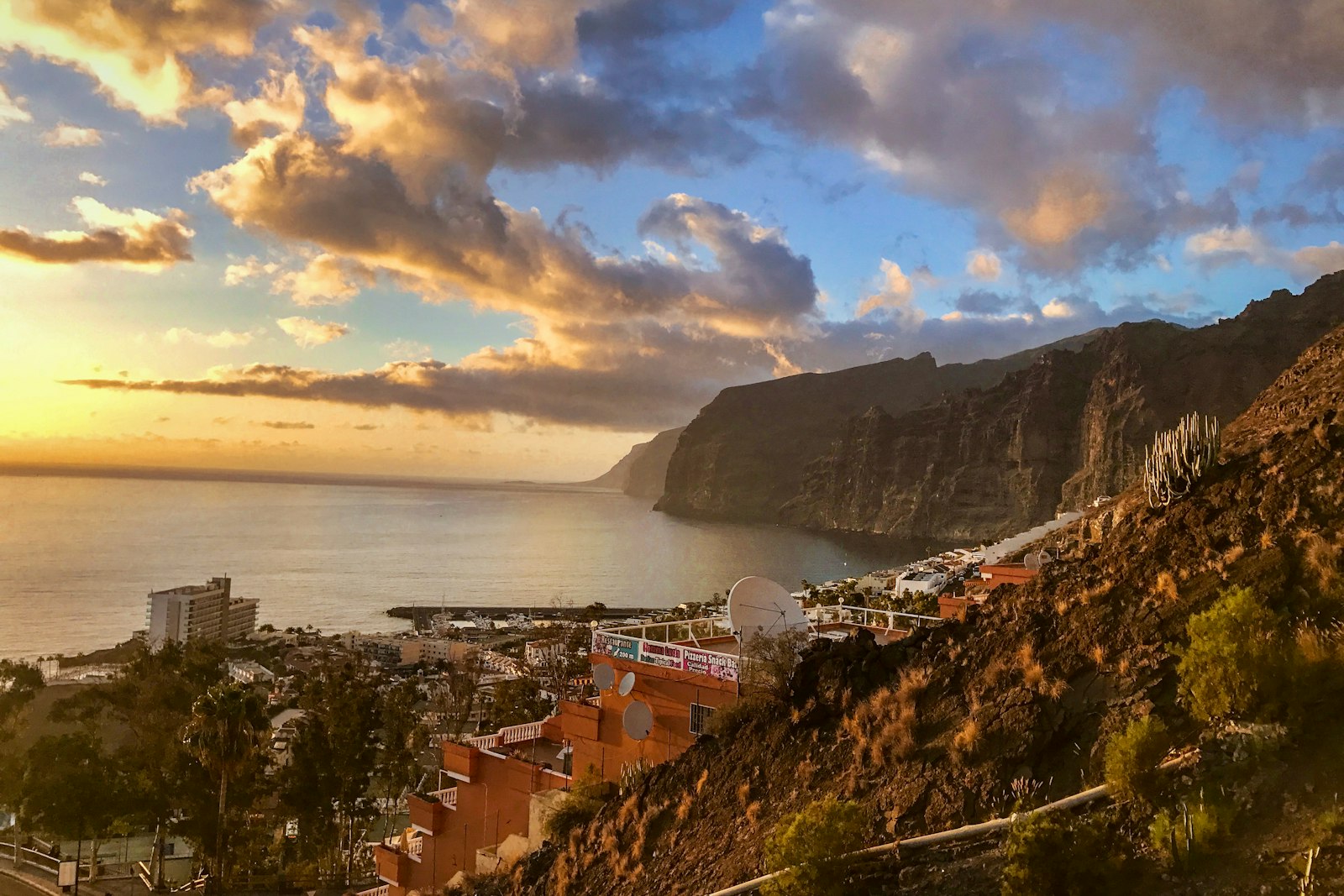
The Canary Islands' giant: Spain's highest volcano, black-sand beaches, whale watching and year-round sun.
- Best time to visit: Year-round; spring and autumn are ideal
- Daily budget (budget traveller): $100 to $170 USD
- Ideal trip length: 4 to 6 days
Tenerife packs astonishing variety into one Atlantic island: the snow-capped volcano of Teide, Spain's highest peak, lush laurel forests, banana plantations, black-sand beaches and a lively resort south. Add a handsome colonial town in La Laguna and great whale watching offshore and you have an island that rewards far more than a poolside week. Joy Plus shapes Teide, the beaches, the towns and the boat trips into an easy, sun-filled few days.
Tenerife is one mountain with a coastline stuck to it. Teide tops out at 3,715m, the highest point in Spain, and the island's weather splits around it. The south is dry, bright and 22 to 28°C most of the year. The north sits under a cloud blanket the locals call the panza de burro (donkey's belly), with banana terraces, laurel forest and black-sand beaches. The two sides are about an hour apart by motorway, and the difference is bigger than the distance suggests. If you spend the whole trip in one resort, you will have seen perhaps a third of the island.
The best plan is two bases and a car. Spend the first half in Costa Adeje or Los Cristianos for beaches, whale boats and sure sun. Then move north to Puerto de la Cruz or La Laguna for Anaga's mist forest, the Garachico lava pools and a UNESCO old town where the cafés are full of students instead of package tourists. Teide sits between the two and works from either side if you leave early. Eat Canarian: papas arrugadas with mojo, grilled fish, queso asado and a barraquito for the road. Skip the English breakfast signs in Playa de las Américas.
Tenerife is cheap by Western European standards and very easy. Spanish is spoken everywhere, hospitals are good, and there is no tourist tax. The Canaries charge IGIC (7%) instead of the mainland's 21% IVA, so fuel, shopping and many bills come in lower. A local rental company with full insurance costs about the same as a weekend taxi habit. The real constraints are time and altitude. Mountain roads are slow, Teide needs a booked permit for the summit, and the cable car and the Masca trail both want advance tickets. This guide sequences all of that so you aren't driving in circles or standing in line at noon.
How many days in Tenerife?
For Tenerife, we recommend 4 to 6 days. With more time, add a day trip to La Gomera.
| Trip length | What you'll see | Itinerary |
|---|---|---|
| 2 days | The south, Los Cristianos harbour; Whale watching and Costa Adeje beaches | Tenerife in 2 days |
| 3 days | Adds: Mount Teide | Tenerife in 3 days |
| 4 days · Recommended | Adds: Masca, Los Gigantes and Garachico | Tenerife in 4 days |
| 5 days · Recommended | Adds: Puerto de la Cruz and La Orotava | Tenerife in 5 days |
| 7 days | Adds: La Laguna and Anaga rainforest; Santa Cruz | Tenerife in 7 days |
Tenerife itinerary
Land in the south, Los Cristianos harbour
Morning: Land at TFS (Tenerife South). Take bus 111 or a €22-28 taxi to Los Cristianos. Drop bags and have a barraquito at a harbour café.
Afternoon: Walk the seafront from Playa de Las Vistas towards Playa de Las Américas, about 3km, and swim wherever the sea looks calm.
Evening: Fish and papas arrugadas at the harbour, then watch the La Gomera ferry lights. Early night.
Whale watching and Costa Adeje beaches
Morning: Book a Barco Azul certified boat (Royal Delfín or similar) from Puerto Colón or Los Cristianos, about €30-45 for 2 to 3 hours. Pilot whales and dolphins are resident year-round.
Afternoon: Playa del Duque and the La Caleta promenade. For a hike, book Barranco del Infierno (about €10, limited daily entries).
Evening: Dinner in the old fishing village of La Caleta, then a walk back along the Fañabé seafront.
Mount Teide
Morning: Drive up via Vilaflor (TF-51 then TF-21, about 1h15). Be at the cable car for the 9am first car, around €45 return. Pre-book the summit permit on Tenerife ON (tenerifeon.es), where new slots open every Monday at 7am for up to 28 days ahead. Non-residents also pay a €15 eco-tax (since 19 January 2026), and the Montaña Blanca trail is also charged.
Afternoon: Walk the Roques de García loop (3km, about 1.5 hours), then coffee at the Parador de Las Cañadas del Teide.
Evening: Join a stargazing tour from the park (€30-60, transport available) or drive down for dinner in Vilaflor, the highest village on the island.
Masca, Los Gigantes and Garachico
Morning: Be in Masca before 10am, before the coaches. Walk the village paths, or the ravine if you have a permit.
Afternoon: The Los Gigantes cliffs viewpoint, then Garachico: Castillo de San Miguel and a swim in the El Caletón lava pools.
Evening: Drive 40 minutes to Puerto de la Cruz. Check in and have a beer on Plaza del Charco.
Puerto de la Cruz and La Orotava
Morning: Lago Martiánez, César Manrique's seawater lagoons (opens 10am, about €6). Or go to the Jardín Botánico.
Afternoon: Bus 345 or a 10-minute drive to La Orotava. See the Casa de los Balcones and the Jardines Victoria viewpoint.
Evening: Seafood in the old fishing quarter, then Plaza del Charco bar terraces.
La Laguna and Anaga rainforest
Morning: Drive to La Laguna (35 min). Calle San Agustín, Plaza del Adelantado, the cathedral and Casa Lercaro.
Afternoon: Anaga: Cruz del Carmen visitor centre, the Sendero de los Sentidos loop, Pico del Inglés viewpoint, then Taganana and Benijo beach.
Evening: Sunset at Benijo's roques, then back to La Laguna. Bar crawl on Calle Herradores with students.
Santa Cruz and depart
Morning: Mercado de Nuestra Señora de África (open mornings, closes about 2pm). Walk Plaza de España and Parque García Sanabria.
Afternoon: Auditorio de Tenerife exterior, then Playa de Las Teresitas for a last swim.
Evening: Return the car and take TF-1 to TFS (55 min) or head to TFN, depending on your flight.
Best neighbourhoods
- Costa Adeje & Los Cristianos (South): The sunny resort south with the best beaches, marinas, boat trips and family-friendly hotels.
- Santa Cruz de Tenerife: The lively capital with the striking Auditorio, a palm-lined seafront, shopping and a famous carnival.
- La Laguna: A UNESCO-listed colonial old town of pastel mansions, churches and a student buzz, often cooler and greener.
- Puerto de la Cruz (North): An atmospheric northern resort with botanical gardens, black-sand beaches and lush surroundings.
Must-do experiences
- Mount Teide National Park: Drive through an otherworldly volcanic landscape and ride the cable car to just below the summit of Spain's highest peak.
- Whale & dolphin watching: Take a boat trip off the south coast to spot resident pilot whales and dolphins year-round.
- La Laguna old town: Wander the UNESCO colonial streets, churches and historic mansions of the former capital.
- Black-sand beaches & coast: Swim at volcanic beaches like Playa de la Arena or the golden imported sand of Playa de las Teresitas.
Hidden gems
- Sunrise or stargazing on Teide, one of the world's best spots for clear night skies.
- The remote, dramatic cliffs and villages of the Anaga rainforest in the northeast.
- The picture-perfect coastal village of Garachico, rebuilt after a volcanic eruption.
- Natural volcanic rock pools for swimming along the wilder north coast.
Daily budget
- Accommodation: budget €22-40 / night (hostel dorm or private room in a guesthouse), mid-range €90-150 (boutique or apartment), splurge €350+ (Bahía del Duque, Ritz-Carlton Abama €600+). Hostels are few, so book early. Apartments in Puerto de la Cruz and Los Cristianos are the best value for stays of 4+ nights.
- Food: budget €20-30 / day (bakery breakfast, menú del día, supermarket), mid-range €45-70 (one good fish dinner), splurge €120+ (El Rincón de Juan Carlos, Michelin star; M.B at Abama €250+). Lunch menús del día cost €10-14 with a drink. Order papas arrugadas with mojo, grilled fish and queso asado, and avoid the laminated photo menus in Playa de las Américas.
- Transport: budget €5-10 / day (TITSA buses with a Ten+ card, Santa Cruz to La Laguna tram), mid-range €35-55 (local-brand rental car at €25-40 plus fuel), splurge €100+ (private driver or taxi tours). Rent from Cicar or Autoreisen, both include full insurance and no big deposit. Petrol runs about €1.35-1.50 a litre. Get the car for the Teide and Anaga days if you can't have it all week.
- Activities: budget €0-15 / day (beaches, Teide National Park trails, free hikes), mid-range €35-60 (Teide cable car around €45, whale boat €30-45), splurge €120+ (private catamaran, stargazing tour with an astronomer). Entrance to Teide National Park is free. Barranco del Infierno is about €10 and Masca needs an online permit around €28. Both need booking ahead.
- Drinks & nightlife: budget €8-12 (caña €1.80-2.50, barraquito €2.50-3.50), mid-range €20-35 (La Laguna bar crawl or Santa Cruz), splurge €60+ (Papagayo Beach Club, Las Américas). Dorada is the local beer. La Laguna and Santa Cruz are cheap and local. The Verónicas strip in Playa de las Américas charges €5-7 for a beer.
Where to stay
- Social hostel in Los Cristianos (€22-40 / night (private €50-70)): Hostels are rare on Tenerife and the best cluster is around the harbour. Pick one with a rooftop terrace and shared kitchen. The La Gomera ferry and whale boats leave from the doorstep.
- Boutique hotel in La Laguna (€90-150 / night): Hotel Laguna Nivaria sits in an 18th century mansion on Plaza del Adelantado. It is cool, quiet at night, and the tram reaches Santa Cruz in 25 minutes.
- Apartment in Puerto de la Cruz (€60-100 / night): Old town and Playa Martiánez apartments have kitchens and balconies, and the botanical garden is a short walk. The north is cooler and greener. Best for 4+ nights.
- Splurge in Costa Adeje, Playa del Duque (€350-700 / night): Gran Hotel Bahía del Duque (colonial-style gardens on the beach) or Royal Hideaway Corales. For the ultimate, The Ritz-Carlton Abama has M.B, a two-star restaurant.
What to eat
- Papas arrugadas, wrinkly salt-boiled potatoes with mojo sauces
- Mojo rojo and mojo verde, garlicky red and green Canarian sauces
- Home cooking and local wine at a guachinche, the island's rustic family-run taverns
- Gofio, toasted grain flour used in traditional Canarian dishes
Day trips
- Anaga Rural Park (40 min drive from Santa Cruz or La Laguna): Mist-draped laurel forest, razor ridges and tiny villages like Taganana and Benijo. Do the Sendero de los Sentidos loop, then Pico del Inglés viewpoint. Go early, as cloud arrives by midday. Drive via TF-12 from La Laguna to Cruz del Carmen. TITSA also runs Anaga lines from Santa Cruz and La Laguna, but check timetables as frequency is low.
- Masca and Los Gigantes (1 hour drive from Costa Adeje): A cliff-hung village at the end of a switchback road, and the sheer Los Gigantes cliffs. The Masca ravine hike needs an online permit (around €28) and ends at the coast. Arrive before 10am. Drive via Santiago del Teide and TF-436. TITSA line 355 runs to Masca a few times daily. Park in Masca village and book the permit before you go.
- La Gomera (50 min by ferry from Los Cristianos): Quiet, steep and green, with Garajonay National Park's ancient laurel forest and the terraced Valle Gran Rey. Best with a hired car or a local taxi tour. Fred. Olsen Express or Naviera Armas ferry from Los Cristianos to San Sebastián de La Gomera, from about €35 one way. Book return slots in high season.
When to visit
- Spring (March - May): South 21-25°C, north 18-22°C, mostly sunny, sea 19-20°C. Crowds: Easter week is busy, otherwise moderate. The best window for Teide and hiking. The tajinaste (red echium) blooms on the volcano in May. Book your Teide summit permit weeks ahead.
- Summer (June - August): South 27-31°C, north 24-27°C with morning cloud, sea 22-23°C. Crowds: Heavy in July and August (Spanish and Canarian holidays). Reliable beach weather, but hot, busy and pricey. Teide is the cool escape. Book cars and boat trips early, and check wildfire advisories in August.
- Autumn (September - November): South 24-28°C, falling to 22-24°C by November, sea 23-24°C. Crowds: Moderate, quieter from mid-October (half-term weeks excepted). The locals' pick. The sea is at its warmest, whale boats run on calm water and hotel prices drop. The north gets its first rain in late November.
- Winter (December - February): South 20-23°C, north 16-19°C and showery, Teide can hit 0°C or below with snow. Crowds: Peak in the south, Santa Cruz Carnaval in February is huge. A real sun escape if you stay south. Expect the highest prices of the year. The Teide cable car and road can close for wind or snow, so keep a flexible day.
Entry rules for your passport
Visa rules for Spain depend on the passport you travel on. Check the official source before you book: European Commission: Schengen visa policy
Getting there
Tenerife has two airports. TFS (Reina Sofía) in the south handles most international flights, including Ryanair, easyJet, Jet2, TUI and Vueling, and sits about 20 minutes from Costa Adeje and Los Cristianos. TFN (Los Rodeos) in the north serves inter-island Binter flights and some mainland routes, and is 10 minutes from La Laguna. Flights from the UK take about 4.5 hours, and from Madrid around 3 hours. From TFS, TITSA bus 111 serves Los Cristianos and Las Américas, and bus 450 goes to Santa Cruz (about 1 hour, roughly €4-9). Taxis are metered, about €22-28 to Los Cristianos, €30-35 to Costa Adeje and €70-85 to Santa Cruz. Rental desks for Cicar and Autoreisen are at both airports. Book ahead in high season. There is no ride-hailing network to rely on, so use taxi ranks.
Border checks: non-EU visitors (other than Swiss, Norwegian, Icelandic, Liechtenstein, Andorran, Monegasque, San Marinese and Vatican citizens, and holders of an EU residence permit or long-stay visa) are registered in the EU's Entry/Exit System (EES) instead of getting a passport stamp. On your first crossing, officers take your photo and/or fingerprints, so allow extra time at passport control. ETIAS, the planned travel authorisation, is not in operation yet, so don't pay any website for one.
Getting around
A rental car is the best way to explore Tenerife's varied corners and reach Teide, the north and hidden coves. Buses (guaguas) run by TITSA cover the island affordably with a Ten+ travel card, and trams link Santa Cruz and La Laguna. Distances look short but mountain roads are slow, so plan driving time around the island's altitude and microclimates.
Safety
Tenerife is very safe and easy for solo travellers including women. Violent crime is rare; the main risks are petty theft in busy resort areas and on beaches, plus natural hazards, strong Atlantic currents, sudden weather changes and cold at altitude on Teide. Respect beach flags, carry layers for the volcano and you'll be fine.
Solo travel tips
- Rent a car, or split one: Public buses are cheap but slow and thin on Teide and Anaga. A local-brand rental (Cicar, Autoreisen) costs €25-40 a day with full insurance. Post on Hostelworld or a hiking group to split costs for the two big days.
- Choose your base carefully: True hostels are scarce. Los Cristianos has the best cluster near the harbour, with rooftop terraces and shared kitchens, and El Médano has surf and kite hostels. Otherwise book private rooms at small guesthouses.
- Eat at the bar: Every bar has a counter. Sit there, order a caña and a ración of queso asado with mojo, and you'll be chatting within minutes. Guachinches (home wine-houses) in the north have shared tables.
- Respect altitude on Teide: The top cable car station is at 3,555m. Headaches and breathlessness are common. Go slow, drink water and don't hike alone after 3pm. The weather can flip within an hour.
- Solo female travellers: Tenerife is among the easiest Spanish destinations for women alone. Keep valuables out of sight on beaches, share rides from night spots in Las Américas, and respect red flags. The Atlantic is stronger than it looks.
- Find your tribe in El Médano or La Laguna: Kitesurf and windsurf schools in El Médano mix solos in small groups. In La Laguna, students and expats fill the Calle Herradores bars, so it is the easiest town for a quick conversation.
Cultural etiquette
- Locals call themselves canarios. A hola, gracias and por favor go a long way, and don't assume everyone speaks English outside resorts.
- Lunch is 1-4pm and dinner starts around 8pm. Small shops close for a siesta between about 1:30 and 5pm, and many are shut on Sundays.
- Tipping is modest: round up or leave 5-10% for good service at sit-down meals. Guachinches are often cash only.
- Leave volcanic rocks, sand and plants where they are. Taking material from Teide National Park can bring heavy fines.
- Pick Barco Azul certified whale boats. Don't swim with or feed the animals and keep your voice down when they surface.
- Respect beach flags. Red means stay out. Atlantic currents and shore break are stronger than the postcards suggest.
- On narrow mountain roads like Masca, the uphill vehicle has priority. Pull in early, don't stop in curves to take photos.
Frequently asked questions
How many days do you need in Tenerife?
Four to six days lets you balance Teide, beaches, La Laguna and a whale-watching trip without rushing. A week suits exploring both the sunny south and the greener north, plus the Anaga forest and remote villages.
Is Tenerife safe for solo travellers?
Yes, very. Tenerife is safe and welcoming for solo travellers including women. The main cautions are petty theft in busy resorts, strong Atlantic currents at some beaches and cold, thin air at altitude on Teide, so respect flags and pack layers.
When is the best time to visit Tenerife?
Tenerife enjoys mild weather year-round thanks to its 'eternal spring' climate. Spring and autumn are ideal for hiking and beaches with fewer crowds, summer is hot and busy, and winter is a popular sunny escape, though the north can be cloudier and cooler.
Do you need a car in Tenerife?
A car is highly recommended to reach Teide, the north coast, the Anaga forest and quieter beaches. If you stay in one resort and join organised tours, the cheap TITSA bus network and trams can cover the basics without one.
Can you visit Mount Teide without booking?
You can drive up and walk the lower trails freely, and the cable car climbs near the summit. The final trail to the peak needs a reservation on Tenerife ON (tenerifeon.es), where new slots open every Monday at 7am, and since 19 January 2026 non-residents pay a €15 eco-tax for daytime access. The trail up from Montaña Blanca is also charged, so book early if you want to stand on the very top.
Which part of Tenerife is best to stay in?
The south (Costa Adeje, Los Cristianos) has the best beaches, sun and boat trips, the capital Santa Cruz and La Laguna suit culture and city life, and Puerto de la Cruz in the north offers a greener, more traditional base with botanical gardens.
Is Tenerife good for whale watching?
Yes, it's one of Europe's best spots. Resident pilot whales and bottlenose dolphins live off the southwest coast year-round, and responsible boat trips from Los Cristianos and Costa Adeje offer reliable sightings on most outings.
More about Tenerife
- Winter Sun 2026 to 2027: 16 Warm Places to Go, December to February
- Where to Travel in 2027: 15 Places Worth Planning a Trip Around
- Total Solar Eclipse 2 August 2027: Where to Watch It and How to Plan Now
- Barcelona in 3 Days: Gaudí, Tapas, the Beach and 2026 Prices
Tours and activities in Tenerife | Tenerife in 2 days | Tenerife in 3 days | Tenerife in 4 days | Tenerife in 5 days | Tenerife in 7 days
Can't decide? Compare Tenerife with...
- Tenerife vs Gran Canaria
- Tenerife vs Lanzarote
- Barcelona vs Tenerife
- Funchal vs Tenerife
- Palma de Mallorca vs Tenerife
- Tenerife vs Fuerteventura
Joy Plus home | Destinations | Itineraries | Activities | Flights | Budget planner | Calendar | Map | Blog | Lifetime access