Destinations / Europe
Trogir, Croatia travel guide
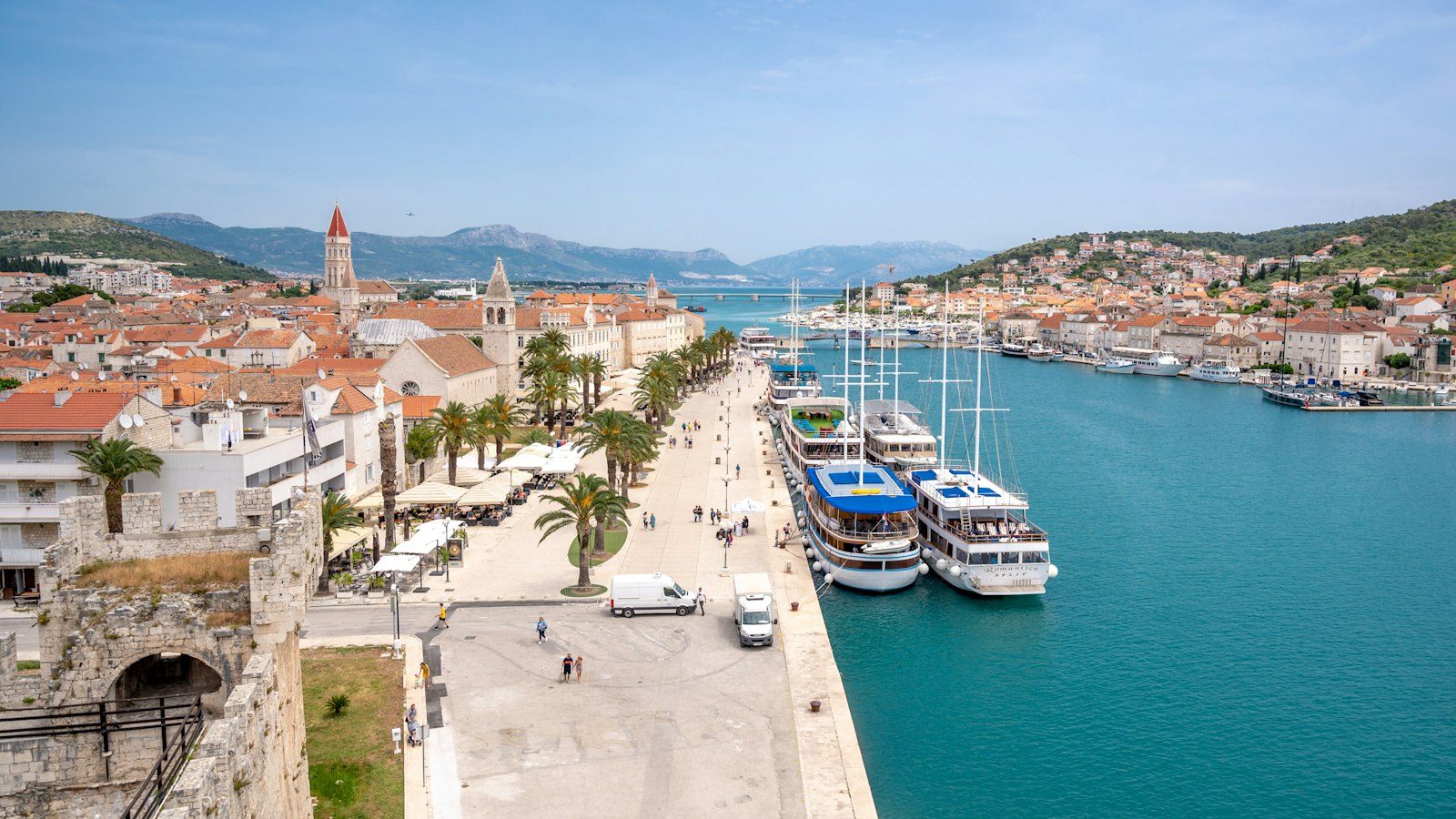
A walled medieval town on a tiny island between the Dalmatian mainland and Čiovo, half an hour from Split. You wander marble lanes past a Romanesque cathedral, climb its bell tower, swim off Čiovo's pebble beaches and watch the sun set behind Kamerlengo Fortress.
- Best time to visit: May to June and September
- Daily budget (budget traveller): $80 to $250 USD
- Ideal trip length: 3 to 5 days
Trogir sits on a small island in a narrow channel, joined by short bridges to the mainland on one side and to the larger island of Čiovo on the other. Greek settlers founded it more than 2,000 years ago, and later Venice ruled it for centuries. The whole old town has been on UNESCO's World Heritage list since 1997. It is tiny. You can walk from the Land Gate to Kamerlengo Fortress in 10 minutes, but the lanes are so tangled that you will get lost at least once, which is half the fun. The Cathedral of St Lawrence and Radovan's carved portal are the big sights, and the climb up the bell tower gives you the best view in town. The waterfront Riva is lined with cafés, yachts and excursion boats. For swimming, cross the bridge to Čiovo or walk west to Pasike. Split Airport is only about 6km away, so Trogir makes an easy first or last stop on a Croatia trip. It gets busy with day trippers from Split in July and August, and rooms in the old town are not cheap in summer. Even so, a hostel bed, cheap local buses, the summer boat to Split and free beaches make it a good base for a solo traveller.
Trogir is one of the best-preserved medieval towns on the Adriatic. Its old town fills a small island in the channel between the mainland and Čiovo, with walls, towers, palaces and churches packed into a few hundred metres. Greek colonists from the island of Vis founded it as Tragurion, and the Romans, Croatian kings, Hungarians and Venetians all left their mark. The Venetians stayed longest, and their lion still appears on walls and gates. Most visitors come for a couple of hours from Split. Stay a few nights and you get the better version: Radovan's portal with nobody in front of it, the Riva quiet at 7am, a swim on Čiovo in the afternoon and the fortress walls at sunset. It is not the cheapest place in Croatia, but hostel beds, free beaches and cheap buses keep costs reasonable.
Getting here is easy. Split Airport is about 6km away, and bus 37 runs from just outside the terminal to Trogir bus station for €2.50, or less in the Promet Split app. From Split itself, intercity buses take about 30 minutes for around €4.80-6.50, and bus 37 takes longer but stops more often. From early May to the end of October, Bura Line boats sail between Split, Slatine and Trogir for €10. Once you are here, walk. Base yourself in the old town for atmosphere, on Čiovo by the bridge for value, or in Okrug Gornji or Seget Donji if beaches matter most.
Timing shapes the trip. May, June and September bring warm sea, working boat lines and lanes you can actually walk down. July and August are hot and crowded, though they bring open-air concerts and events at Kamerlengo Fortress. From November to March, Trogir is quiet and cheap, but the Split boat stops, many restaurants close and the bura can blow hard for days. Trogir is very safe, and most people in tourism speak good English. Evenings are relaxed, with cafés on the Riva and beach bars on Čiovo rather than clubs. If you want big nights out, go to Split. If you want old stone, sea views and a glass of Pošip by the water, stay here.
Trogir itinerary
Arrive and find your feet
Morning: Fly into Split and take bus 37 to Trogir (about 20 minutes). Drop your bag and walk in through the Land Gate.
Afternoon: Wander the lanes to John Paul II Square and look at Radovan's portal. Pick up fruit at the green market by the bus station.
Evening: Walk the Riva at sunset, then have pizza or grilled sardines on a back-lane terrace.
Cathedral, tower and fortress
Morning: Buy the €10 red ticket and see the cathedral, the baptistery and the bell tower before the crowds. Cover shoulders and knees.
Afternoon: Escape the heat in the Town Museum and the Convent of St Nicholas to see the Kairos relief. Then swim at Pasike.
Evening: Walk the walls of Kamerlengo Fortress (about €5) for sunset, then dinner at a konoba such as Trs.
Beaches on Čiovo
Morning: Cross the bridge and take a local bus or summer taxi boat to Okrug Gornji. Swim early before the loungers fill up.
Afternoon: Walk along the shore to quieter coves, or head towards the Prizidnica hermitage on the south coast. Pack water and a picnic.
Evening: Back to Trogir for a drink on the Riva and a slow wander through the lit-up lanes.
Blue Lagoon by boat
Morning: Take a shared boat trip from the Riva (around €30-45) to the Blue Lagoon at Krknjaši, between the Drvenik islands.
Afternoon: Snorkel in the shallows, then stop at Šolta or a Čiovo bay, depending on the route. Bring sunscreen and a hat.
Evening: Back in Trogir by late afternoon. Try pašticada or black risotto for dinner.
Split by sea
Morning: Take the Bura Line boat to Split (about an hour, €10). Walk straight into Diocletian's Palace.
Afternoon: Explore the Peristyle, the cellars and the market, then climb Marjan hill for views or swim at Bačvice.
Evening: Return on the last boat if it fits, otherwise take an intercity bus or bus 37 back to Trogir.
Krka and Šibenik
Morning: Join an organised Krka tour (about €60-80) or take a bus north. See the waterfalls at Skradinski buk early, before the heat and the groups.
Afternoon: Continue to Šibenik and visit the Cathedral of St James, another UNESCO site, and the old town lanes.
Evening: Back to Trogir for a late swim at Pasike and a glass of Babić or Pošip.
Slow morning and depart
Morning: Have one last early walk through the empty old town and a swim, then breakfast with burek and coffee.
Afternoon: Buy rafioli or wine for home, then catch bus 37 or a taxi to Split Airport. Allow extra time for summer traffic.
Evening: Fly out, or carry on south to Split and the islands.
Best neighbourhoods
- Old town island: The UNESCO-listed core, set around John Paul II Square with the cathedral, the town loggia and the Ćipiko Palace. Everything is on foot, and the Riva, the fortress and the bus station are all within a few minutes. It is beautiful but noisy on summer nights, and many rooms are up steep stone stairs.
- Čiovo by the bridge: The Čiovo side of the channel facing the old town, with the marina, the Bura Line boat stop, small supermarkets and cheaper guesthouses. The old town is a two-minute walk across the bridge. It is a practical, good-value base, though less pretty than the island itself.
- Okrug Gornji: A beach village on the south side of Čiovo, about 4km from the old town, with the long pebble Copacabana beach, beach bars and lots of apartments. It suits you if swimming comes first. Getting back to Trogir means a local bus, a taxi boat in summer or a long walk.
- Seget Donji: A quieter seaside village about 2km west of Trogir on the mainland, with a promenade, small pebble beaches and big holiday apartment blocks. You can walk or cycle into the old town along the coast. It is calmer and often cheaper than Trogir in high season.
- Mainland side near the bus station: The modern strip just north of the old town, with the bus station, the green market, the fish market and supermarkets. It is not scenic, but it is cheap, handy for early buses to Split and the airport, and only a minute from the Land Gate.
Must-do experiences
- Study Radovan's portal: The west door of the Cathedral of St Lawrence was carved by Master Radovan in 1240, with Adam and Eve, lions, saints and scenes of farm work for each month. You can see it from the square for free. Come before 9am, when the tour groups have not arrived and the light is soft.
- Climb the cathedral bell tower: The tower was built over several centuries, so each level is in a different style. The stairs are steep and narrow. A tower-only ticket costs €5, or the €10 combined ticket covers the cathedral, the baptistery and the tower. Cover shoulders and knees for the cathedral itself.
- Walk the walls of Kamerlengo Fortress: The Venetians built this fortress on the south-western corner of the island in the early 15th century. Entry is about €5. Inside it is mostly bare, but the walls and tower give good views over the marina and Čiovo. Go just before sunset.
- Get lost in the old town lanes: Trogir's streets were laid out in the Middle Ages and still twist in odd directions. Walk from the Land Gate past the Town Museum to the cathedral, then down to the Riva. It costs nothing, and the back lanes are almost empty early in the morning.
- Swim on Čiovo: Cross the bridge to Čiovo for the closest proper swimming. Okrug Gornji's long pebble beach has bars and loungers, while the coves further along the island are quieter. Bring water shoes. Entry to the beaches is free, but loungers can cost €15 or more a day in summer.
- Take the boat to Split: Bura Line boats link Trogir, Slatine on Čiovo and Split from early May to the end of October. The trip takes about an hour and costs €10 one way for adults, which beats the bus for views. Check the current timetable, as departures change through the season.
- Join a Blue Lagoon boat trip: Day and half-day boats leave the Riva for the clear shallow water at Krknjaši, between the Drvenik islands, often with stops on Šolta or Čiovo. Expect around €30-45 for a shared trip. Go on a weekday early in the season, as the lagoon gets crowded in August.
Hidden gems
- The Kairos relief in the Convent of St Nicholas, a Greek carving of the god of the fleeting moment, kept in the small convent museum near the South Gate
- The tiny Church of St Barbara near the main square, one of the oldest buildings in Trogir and part of the cathedral ticket options
- Marmont's Gloriette, a small classical pavilion built by the French at the western end of the island near Kamerlengo, quiet at dusk
- The town loggia on the main square, with its old stone judges' table and a carved relief by the sculptor Ivan Meštrović
- The hermitage church of Our Lady of Prizidnica on the south coast of Čiovo, built into the rock above a quiet bay
Daily budget
- Accommodation: budget €25-45 / night (hostel dorm), mid-range €90-160 (old town room or Čiovo apartment), splurge €250+ (heritage hotel suite or sea-view resort). Prices rise sharply in July and August. A small per-night tourist tax is added. Book June to September early, especially for private single rooms in the old town.
- Food: budget €20-30 / day (bakery breakfast, market picnic, pizza or grilled sardines), mid-range €40-65 (café lunch and a konoba dinner), splurge €90+ (whole fish by the kilo, wine, dessert). Pizza costs about €10-15 and konoba mains roughly €15-30. Whole fish is priced per kilo, so ask first. Prices are rough guides.
- Transport: budget €0-6 / day (walking, bus 37), mid-range €10-25 (Split boat, local buses, a taxi boat), splurge €60-80 (organised Krka tour). Bus 37 to the airport is €2.50, or less in the app. Intercity buses to Split cost about €4.80-6.50, and the Bura Line boat is €10 each way from May to October.
- Activities: budget €0-15 / day (beaches, bell tower at €5, Kamerlengo at about €5), mid-range €15-45 (cathedral combined ticket, Blue Lagoon boat trip), splurge €55+ (island speedboat tours, private boat). The €10 red ticket covers the cathedral, baptistery and bell tower. Blue Lagoon trips cost about €30-45. Loungers on Čiovo can add €15 or more a day.
- Drinks & nightlife: budget €5-10 (a beer or glass of wine on the Riva), mid-range €15-30 (a few drinks at a waterfront or beach bar), splurge €50+ (cocktails, festival or event tickets). A coffee costs about €2-3 and a glass of local wine €4-6. Trogir nightlife means bars and terraces. Split has the clubs.
Where to stay
- Social hostel in Old town and Čiovo by the marina (€25-45 / night (dorm)): City Hostel Trogir is in an old stone house a minute from the main square, though it has no guest kitchen. Hostel Marina Trogir is cheaper, just over the bridge near the marina and the Split boat.
- Boutique hotel in Old town (€130-240 / night): Heritage Hotel Tragos is a small four-star hotel in a restored medieval house in the old town lanes. The cathedral, the Riva and the bus station are all a few minutes' walk away.
- Apartment in Čiovo, Seget Donji or the old town (€80-150 / night): Apartments give you a kitchen and more space for less money, especially on Čiovo or in Seget. Old town flats often have steep stairs and no lift, so check before booking with heavy luggage.
- Splurge in Riva and the Čiovo coast (€250-450+ / night): A sea-view suite in one of the heritage palace hotels on the old town waterfront, or a resort hotel with a pool on the coast nearby. You get comfort, views and the old town on your doorstep.
What to eat
- Trogirski rafioli: the town's own sweet pastry, filled with almonds and traditionally made for weddings and feast days, found in some bakeries and cake shops
- Pašticada with gnocchi: Dalmatian beef slow-cooked in wine and prunes, on the menu at most konobas, including Konoba Trs in the old town
- Grilled sardines (srdele) or a whole fish sold by weight on the Riva. Ask the price per kilo before you order
- Black risotto with cuttlefish ink, or peka (meat or octopus baked under a bell), which you usually have to order a day ahead
- Pošip and Plavac Mali wines, plus Babić from nearby Primošten, at a few euros a glass
- Burek from a bakery for breakfast, fruit from the green market by the bus station and fritule (small doughnuts) in the evening
Day trips
- Split (About 27km east, around 30 minutes by intercity bus or an hour by boat): Croatia's second city grew up inside the Roman emperor Diocletian's palace. You can walk its Peristyle, cellars and lanes, then climb Marjan hill or swim at Bačvice. Take the Bura Line boat from May to October for €10, an intercity bus for about €4.80-6.50 or the slower bus 37. Check return times before you set off, especially for the last boat.
- Blue Lagoon and the Drvenik islands (About 45 minutes to an hour by boat): A shallow, clear lagoon at Krknjaši between the Drvenik islands, good for swimming and snorkelling. Most trips add stops on Šolta or Čiovo. Shared boat trips leave from the Riva for about €30-45, with speedboat tours costing more. A small Jadrolinija ferry also runs from Trogir to the Drvenik islands if you want to go independently, so check times locally.
- Krka National Park and Šibenik (About 1 hour by road to Šibenik and the park): Krka's travertine falls and wooden walkways are among Croatia's most famous sights, and Šibenik has the UNESCO-listed Cathedral of St James and a lively old town. An organised tour from Trogir costs about €60-80 and handles the timing. Independently, take a bus to Šibenik and continue to Skradin or Lozovac for the park. Park tickets cost most in summer, so check the current price.
When to visit
- Spring (April - May): 16-23°C, mild and fresh, sea cool until late May. Crowds: Low to moderate, busier at Easter and on May holidays. Good for walking the old town and cheaper rooms. The Bura Line boat to Split starts in early May. Swimming is for the brave until late May.
- Early summer (June): 24-29°C, sunny, sea around 21-24°C. Crowds: Moderate, rising towards the end of the month. Arguably the best month. Long evenings, warm water and the old town still manageable. Blue Lagoon trips are less crowded than in August.
- High summer (July - August): 29-33°C, hot and dry, sea up to about 26°C. Crowds: Very busy, with day trippers from Split and cruise and yacht crowds. Great for swimming, boat trips and summer events, but rooms cost the most and the lanes are packed at midday. Book early and sightsee before 10am or after 6pm.
- Autumn and winter (September - March): September 22-27°C, then cooling to 8-14°C in winter, with rain and bura wind. Crowds: Moderate in September, quiet from late October. September is the locals' pick, with warm water and calmer streets. Winter is cheap and peaceful, but boats and many restaurants stop and the cathedral keeps short hours.
Entry rules for your passport
Visa rules for Croatia depend on the passport you travel on. Check the official source before you book: European Commission: Schengen visa policy
Getting there
Split Airport is about 6km from Trogir, which makes it one of the easiest towns on the coast to reach. Promet Split bus 37 stops on the main road a short walk from the terminal and runs to Trogir bus station in about 15 to 20 minutes. A ticket costs €2.50 from the driver or about half that in the Promet Split app. Taxis and ride-hailing cars take about 15 minutes. From Split, intercity buses leave the main bus station by the ferry port and take about 30 minutes for roughly €4.80-6.50, while bus 37 is cheaper but slower. From early May to the end of October, Bura Line boats sail between Split, Slatine on Čiovo and Trogir in about an hour for €10. Long-distance buses link Trogir with Zadar, Šibenik and Zagreb, though some go only from Split. If you drive, the old town is closed to cars, and parking on the mainland side fills up in summer, so ask your host about parking before you arrive.
Border checks: non-EU visitors (other than Swiss, Norwegian, Icelandic, Liechtenstein, Andorran, Monegasque, San Marinese and Vatican citizens, and holders of an EU residence permit or long-stay visa) are registered in the EU's Entry/Exit System (EES) instead of getting a passport stamp. On your first crossing, officers take your photo and/or fingerprints, so allow extra time at passport control. ETIAS, the planned travel authorisation, is not in operation yet, so don't pay any website for one.
Getting around
The old town is car-free, and you will walk everywhere on it. It takes about 10 minutes to cross. The streets are polished stone and some are steep, so wear shoes with grip. The bus station and green market are just over the small bridge on the mainland side, and the larger bridge to Čiovo is at the south side of the island. Promet Split bus 37 links Trogir with Split Airport and Split, running from about 4am to after midnight. A ticket to the airport costs €2.50 from the driver or about half that in the Promet Split app. Intercity buses from Split's main bus station take about 30 minutes for roughly €4.80-6.50. Local buses cross to Okrug Gornji and Slatine on Čiovo, and in summer small taxi boats run from the Riva to the Čiovo beaches. From May to October, Bura Line boats sail to Split via Slatine for €10. Ride-hailing apps and taxis work around Trogir, but traffic on the bridges can be slow in high season.
Safety
Trogir is very safe, and violent crime against visitors is rare. Keep an eye on your bag on the crowded Riva and on packed buses to Split in summer. The real risks are physical. The marble streets get slippery, the bell tower stairs are steep and narrow, and summer heat is intense. Carry water and rest in the shade at midday. Cars and scooters use the busy road along the Čiovo shore, so take care walking to the beaches. In the sea, watch for sea urchins on rocky entry points and occasional jellyfish, and keep clear of boat lanes near the marina. In winter, the bura wind can be fierce and the jugo brings rain and big waves. Tap water is safe to drink. The EU emergency number is 112. EU travellers should carry an EHIC and UK travellers a GHIC, and everyone else needs travel insurance with medical cover.
Solo travel tips
- Use the Promet Split app: Bus tickets bought in the app cost about half the driver's price. The app also shows bus 37 timetables, which helps when you are heading to the airport.
- Get out early: Day trippers from Split arrive mid-morning and leave in the late afternoon. See the portal, the bell tower and the square before 10am, then go back after 6pm.
- Check the boat calendar: The Bura Line boat runs only from May to October, and timetables change several times a season. Plan your Split day around the boat, and book island trips for weekdays.
- Eat cheaply by the market: The green market and the bakeries near the bus station are the cheapest places to eat. Make lunch a picnic and save the per-kilo whole fish for one good dinner.
- Safety for solo travellers: The main risks are heat, slippery stone and busy roads on Čiovo. Drink plenty of water, swim near other people and take a taxi back from Okrug late at night rather than walking the road.
- Meet people on a boat or a walk: Shared Blue Lagoon trips and old town walking tours are easy places to meet other travellers. The hostels in the old town and by the marina are small and sociable.
Cultural etiquette
- Greet people with 'dobar dan' (good day) and say 'hvala' (thank you). A few words of Croatian are always appreciated.
- Cover up when you leave the beach. Walking through the old town in swimwear or without a top can bring a fine in some Dalmatian towns and is frowned upon everywhere.
- Cover your shoulders and knees in the cathedral and other churches, and keep quiet if a service is on.
- Keep noise down in the old town lanes at night. Sound carries between the stone houses, and people live above the bars.
- Ask the price of whole fish per kilo before you order, so the bill is not a surprise.
- Rounding up or leaving about 10% for good restaurant service is appreciated but not compulsory.
- Take your rubbish with you from beaches and boats, and do not climb on the old walls or carved stonework.
Frequently asked questions
How do I get from Split Airport to Trogir?
It is only about 6km. Promet Split bus 37 stops on the main road a short walk from the terminal and runs from about 4am to just after midnight. The ride takes around 15 to 20 minutes, and a ticket costs €2.50 from the driver or about half that in the Promet Split app. The bus ends at Trogir bus station, a minute's walk from the Land Gate. A taxi or ride-hailing car takes about 15 minutes, but the bridges can be slow in summer traffic.
How many days do I need in Trogir?
Many people visit for half a day from Split, but that only covers the main square and the cathedral. Two nights lets you see the old town early and late, climb the bell tower and walk the fortress walls at sunset. Three to five nights lets you add Čiovo beaches, a Blue Lagoon boat trip and Split by boat. A week works if you also want Krka National Park and Šibenik.
When is the best time to visit Trogir?
May, June and September are best. The sea is warm enough to swim, the boats to Split are running and the old town is not too packed. July and August are hot and crowded, and rooms cost the most. From November to March, Trogir is quiet and cheap, but many restaurants and boat trips stop, the Split boat does not run and the cathedral keeps shorter hours.
Is Trogir a good base for Split?
Yes, if you prefer a smaller town. Bus 37 and intercity buses run to Split all day, and in season the Bura Line boat takes about an hour for €10. Trogir is quieter at night than Split, and a little cheaper in summer. The trade-off is that Split's ferries to Hvar, Brač and Vis leave from Split, so allow time to get there for early sailings.
Where can I swim near Trogir?
There is no real beach on the old town island. The nearest swimming is at Pasike, a small pebble beach a 10 to 15-minute walk west on the mainland, and along the Čiovo shore. Okrug Gornji's long Copacabana beach is the busiest and has bars and loungers. Seget Donji has calmer pebble beaches to the west. Water shoes help everywhere.
How do the cathedral tickets work?
Single tickets cover the cathedral (€6), the baptistery (€2) and the bell tower (€5), with smaller fees for the sacred art collection and the churches of St John and St Barbara. Combined tickets cost more but save money, and the €10 red ticket covering the cathedral, baptistery and bell tower is the best value. Buy them at the ticket office opposite the bell tower. Cover your shoulders and knees for the cathedral.
Is Trogir safe for solo female travellers?
Yes. Trogir is one of the safer towns on the Croatian coast, and the old town stays busy and well lit on summer evenings. Take normal care with drinks in bars, especially on party boats and at Okrug's beach bars. Watch your bag in crowds. If you are staying on Čiovo, use the lit main road or a taxi rather than dark shore paths late at night.
What entry rules apply to Croatia in 2026?
Croatia is in the EU and has been in the Schengen area since 2023, and it uses the euro. Many non-EU visitors, including those from the UK, US, Canada and Australia, can stay visa-free for up to 90 days in any 180-day period across Schengen. The EU's Entry/Exit System has been fully running since April 2026 and records non-EU travellers' fingerprints and photos at the external border. ETIAS has no confirmed start date and is not expected before 2027. Check official EU and Croatian government websites and your own government's travel advice before you go.
Tours and activities in Trogir | Trogir in 2 days | Trogir in 3 days | Trogir in 4 days | Trogir in 5 days | Trogir in 7 days
Can't decide? Compare Trogir with...
Joy Plus home | Destinations | Itineraries | Activities | Flights | Budget planner | Calendar | Map | Blog | Lifetime access