Destinations / Europe
Veliko Tarnovo, Bulgaria travel guide
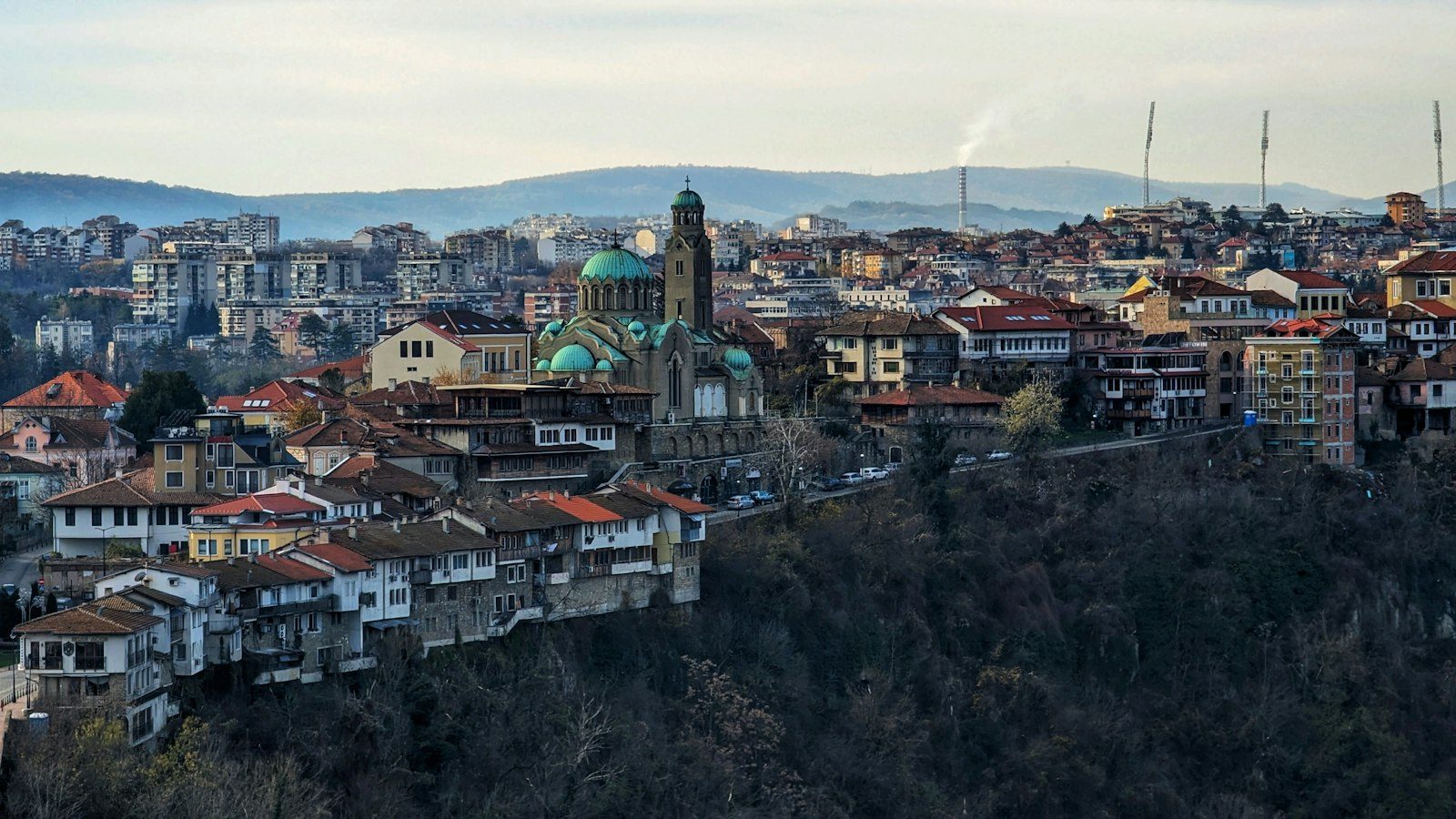
Bulgaria's old royal capital, built on steep hills above the looping Yantra River. You walk the walls of a medieval fortress, wander cobbled craft streets and eat clay-pot stews on terraces above the gorge, and it costs less than almost anywhere else in the EU.
- Best time to visit: May to June and September to October
- Daily budget (budget traveller): $40 to $140 USD
- Ideal trip length: 3 to 5 days
Veliko Tarnovo sits in north-central Bulgaria, about three hours by bus from Sofia and a little more from Bucharest. From the late 12th century to 1393 it was the capital of the Second Bulgarian Empire, and the fortress of Tsarevets still fills the hill where the tsars lived. The Yantra River winds through a deep gorge below it, and old houses with wooden balconies are stacked up the cliffs on either side. The old quarter of Varosha has cobbled lanes, the Samovodska Charshiya craft street, small museums and plenty of cheap places to eat with a view. It is a university town too, so the evenings feel young and relaxed rather than touristy. Bulgaria switched to the euro on 1 January 2026, and prices are still low. A dorm bed costs about €10-18, a hearty dinner rarely goes over €15, and the fortress costs under €8. Every route here goes up or down, so bring good shoes and pack light. The village of Arbanasi, a second fortress at Trapezitsa and several monasteries are all a short bus or taxi ride away. That makes Veliko Tarnovo one of the easiest and best-value places in the Balkans for a solo traveller to spend a few days.
Veliko Tarnovo was the capital of the Second Bulgarian Empire from 1185 until the Ottomans took it in 1393, and the town still feels built for drama. Tsarevets fortress fills a rocky hill almost entirely surrounded by a bend of the Yantra, and the old town climbs the cliffs opposite in tiers of whitewashed houses with red roofs and wooden balconies. About 70,000 people live here, many of them students, so the bars and cafés stay busy outside the tourist season. Most visitors come on a day trip from Sofia or a coach tour. Stay a few nights and you get the better version: the fortress walls almost empty at 8am, a slow lunch on a terrace above the gorge, sunset at the Asen monument and a clay pot of kavarma for under €10. It is one of the cheapest places to travel in the EU, even after the switch to the euro.
Getting here is easy by bus. Direct coaches from Sofia take about three hours for roughly €12-26, and there are regular services from Plovdiv, Varna, Ruse and Bucharest. The train is slower. There is no direct service from Sofia, so you change at Gorna Oryahovitsa, about 10km away, and the whole trip takes about five hours. Once you are here, walk, but plan for hills. Base yourself in Varosha for atmosphere, on Gurko Street for views, or in the flatter centre if you have heavy luggage. Use cheap city buses and taxis for the bus stations, Asenova and Arbanasi.
Timing matters more than you might think. From May to October everything is open, including the Trapezitsa funicular and the two-day museum pass, and the Sound and Light show runs on more dates. Summer is hot on the exposed fortress hill, so start early. Winter brings snow, short opening hours and cosy, empty taverns, but the cobbles get icy. Veliko Tarnovo is very safe, and younger Bulgarians usually speak good English, but signs are often only in Cyrillic, so learn the alphabet basics. Remember too that a nod can mean no and a shake of the head can mean yes. Come for the fortress and stay for the slow evenings above the river.
Veliko Tarnovo itinerary
Arrive and find your feet
Morning: Take a morning bus from Sofia (about three hours). Taxi from the bus station to your room and drop your bag.
Afternoon: Wander Samovodska Charshiya and its craft shops, then drop down to Gurko Street for the first view over the gorge.
Evening: Walk to the Monument of the Asens for sunset, then have kavarma and a shopska salad at a mehana on Stambolov Street.
Tsarevets and Asenova
Morning: Be at the Tsarevets gate for 8am opening (€7.67). Walk the walls, Baldwin's Tower and the palace ruins, and climb to the Patriarchal Cathedral.
Afternoon: Walk down into Asenova for the Holy Forty Martyrs and St Peter and Paul churches, then rest through the hottest part of the day.
Evening: If a show is scheduled, watch the Sound and Light show from the panoramic hall (around €15-18). Otherwise, see the fortress lit up from Tsar Asen Square.
Trapezitsa and the museums
Morning: Take the funicular up to Trapezitsa in season (€5.11 return), or walk up the path. Explore the church foundations and the restored tower.
Afternoon: Visit Sarafkina House and the Prison Museum or the Archaeological Museum. The two-day pass covers them from April to October.
Evening: Have a drink on a terrace over the gorge, then a cheap kebapche dinner in the centre.
Arbanasi
Morning: Take the Aleks OK bus (€1-2) or a taxi (about €5) to Arbanasi. Start with the Church of the Nativity and its dense frescoes.
Afternoon: Visit the Konstantsaliev House and wander the walled stone lanes. Have lunch with a view back over Tsarevets.
Evening: Head back to town for a wine tasting, with Gamza and Mavrud, near Samovodska Charshiya.
Preobrazhenski Monastery and Sveta Gora
Morning: Take a taxi or walk the woodland trail north to Preobrazhenski Monastery, set under the cliffs. Look for the Wheel of Life fresco on the church.
Afternoon: Return to town and climb Sveta Gora for a picnic with a view back over the old town and the river bend.
Evening: Cross the old Stambolov Bridge at dusk and finish with dinner on Gurko Street.
Dryanovo Monastery and Bacho Kiro Cave
Morning: Take a train or bus south to Dryanovo, then a taxi to Dryanovo Monastery in its wooded gorge.
Afternoon: Tour the Bacho Kiro Cave next to the monastery for a small fee, and walk the riverside eco trail. Pack water and snacks.
Evening: Head back to Veliko Tarnovo for a relaxed last dinner and a glass of rakia.
Slow morning and depart
Morning: Have a last banitsa and boza breakfast, then take a final walk along Gurko Street before the town wakes up.
Afternoon: Buy pottery or wine on Samovodska Charshiya, then taxi to the bus station for a bus to Sofia, Plovdiv, Varna or Bucharest. Check times the day before.
Evening: Arrive at your next stop.
Best neighbourhoods
- Varosha and Samovodska Charshiya: The old Bulgarian Revival quarter on the slope below Tsarevets, centred on the cobbled craft street of Samovodska Charshiya. You have potters, woodcarvers, a few cafés, the Sarafkina House and most of the guesthouses and hostels. It is the most atmospheric base, but the lanes are steep and some are not reachable by taxi.
- Gurko Street: A narrow cobbled lane running along the cliff edge, lined with old houses that hang over the river bend. It is quiet, very photogenic and only a few minutes' walk from the main street. Rooms here have some of the best views in town, but expect stairs and uneven paving with a bag.
- Asenova: The riverside quarter below Tsarevets and Trapezitsa, with medieval churches such as the Holy Forty Martyrs and St Peter and Paul. It feels like a village, with few shops and almost no nightlife. It is a good pick if you want peace and early starts at the fortresses, though the walk back up to the centre is steep.
- City centre and Stambolov Street: The modern centre around Mother Bulgaria Square and the main street, which changes name from Nezavisimost to Stambolov as it heads east towards the old town. You will find banks, supermarkets, bars and restaurant terraces over the gorge here. It is flatter and practical, and the fortress is still only 15 to 20 minutes on foot.
- Arbanasi: A hilltop village about 4km north-east of town, full of fortified stone merchants' houses and painted churches. It has boutique hotels, a few restaurants and wide views back over Tsarevets. It is lovely and very quiet at night, but you depend on taxis or a few buses a day to get into town.
Must-do experiences
- Walk the walls of Tsarevets: The fortress hill was the seat of the Bulgarian tsars, and its walls, palace ruins and Baldwin's Tower spread over the whole ridge. A standard ticket costs €7.67. It opens 8am to 7pm from April to October, with shorter hours in winter, and ticket sales stop an hour before closing. Allow at least two hours and go early.
- Climb to the Patriarchal Cathedral: At the highest point of Tsarevets stands the rebuilt Patriarchal Cathedral of the Holy Ascension. Inside, dark modernist murals from the 1980s tell the story of Bulgaria in a very unusual way. A small extra charge may apply. The view from the top takes in the whole river bend.
- Catch the Sound and Light show: Lights, lasers, music and church bells play across the fortress after dark for about 20 minutes. It does not run every night, so check the dates on the official website. Seats in the panoramic hall cost around €15-18. On national holidays the show is free to watch from Tsar Asen Square.
- Wander Samovodska Charshiya and Gurko Street: Start at the craft street of Samovodska Charshiya, where artisans still work in small shops, then cut down to Gurko Street for the classic view of houses hanging over the gorge. It costs nothing. Go late in the afternoon, when the light turns the walls gold.
- Ride up to Trapezitsa: The second fortress hill holds the foundations of more than a dozen medieval churches and a restored tower, with far fewer visitors than Tsarevets. The funicular from the Asenova side runs only in the warmer months and costs €5.11 return, plus entry. You can also walk up the path.
- See the Monument of the Asens at sunset: Four huge horsemen honour the Asen dynasty on a loop of the river below the old town, next to the State Art Gallery. The monument itself is free. It is one of the best places to watch the sun drop behind Gurko Street and the cliffs.
- Spend half a day in Arbanasi: This hilltop village has stone merchants' houses and churches covered in 17th-century frescoes, especially the Church of the Nativity. The Konstantsaliev House shows how wealthy families lived. Take a local bus or a cheap taxi, and expect a few euros per site.
Hidden gems
- The Church of St Dimitar of Thessaloniki in Asenova, where the brothers Asen and Peter are said to have announced the revolt of 1185 that created the Second Bulgarian Empire
- Sarafkina House, a 19th-century merchant's home on Gurko Street with five floors on the river side and only two facing the street
- Sveta Gora park on the hill across the gorge, a free picnic spot with views back over the old town and the fortress
- The walk through the woods to Preobrazhenski (Transfiguration) Monastery north of town, with a painted church set under the cliffs
- The old Stambolov Bridge over the Yantra early in the morning, before the town wakes up and while mist still sits in the gorge
Daily budget
- Accommodation: budget €10-18 / night (hostel dorm), mid-range €40-80 (guesthouse or 3-star hotel with a view), splurge €90-160 (boutique hotel on Gurko Street, Stambolov Street or in Arbanasi). Prices rise a little in summer and on holiday weekends. A small tourist tax is added per night. Single rooms in guesthouses are good value.
- Food: budget €12-20 / day (bakery breakfast, kebapche plate, supermarket snacks), mid-range €25-40 (café lunch and a mehana dinner with wine), splurge €50+ (tasting menu or long dinner on a gorge terrace). A full meal costs about €6-10 in the centre and €10-16 with a gorge view. A beer is about €1.50-2.50. Prices are rough guides.
- Transport: budget €0-3 / day (walking, city buses at about €1), mid-range €5-15 (taxis, Arbanasi bus, funicular), splurge €90+ (private day tour to monasteries and waterfalls). The Sofia bus is about €12-26 each way. The Trapezitsa funicular costs €5.11 return or €2.56 one way. Taxis around town cost a few euros.
- Activities: budget €0-10 / day (viewpoints, Gurko Street, Tsarevets at €7.67), mid-range €10-25 (two-day museum pass at €20.45, Trapezitsa, Arbanasi houses), splurge €30+ (Sound and Light panoramic hall, guided tours, wine tastings). The two-day pass covers 10 sites from 1 April to 30 October. Museum-led tours with translation cost €20.45. The Sound and Light show is free from the square on national holidays.
- Drinks & nightlife: budget €3-8 (a beer or glass of wine on a terrace), mid-range €10-20 (a few drinks in a student bar or wine bar), splurge €35+ (wine tasting and cocktails with a view). A coffee costs about €1.50-2.50 and a glass of local wine €2.50-5. Nightlife means student bars and terraces, not clubs.
Where to stay
- Social hostel in Varosha, near Samovodska Charshiya (€10-18 / night (dorm)): Hostel Mostel is a long-running, sociable hostel close to the old craft street, with group trips and an easy walk to the fortress. It is a good place to meet other travellers.
- Boutique hotel in Gurko Street (€50-90 / night): Hotel Gurko is set in an old house on the cliff-edge lane, with traditional rooms and views over the river bend. Gurko Street is quiet at night but only minutes from the main street.
- Apartment in City centre and Varosha (€30-60 / night): Apartments in old houses or modern blocks give you a kitchen and more space for very little money. Check the exact location and the number of stairs before you book.
- Splurge in Stambolov Street (€90-160 / night): Hotel Bolyarski sits on the gorge with balconies facing the Asen monument and the river, and the centre and old town are right outside. For more seclusion, look at boutique hotels in Arbanasi.
What to eat
- Kavarma: a slow-cooked pork or chicken stew with peppers and onions, served bubbling in a clay pot at almost every mehana (tavern) for about €7-10
- Shopska salad and rakia: tomatoes, cucumber, peppers and grated white cheese, eaten with a small glass of fruit brandy before the main course
- Banitsa and boza or ayran: a flaky cheese pastry from a bakery with a thick fermented grain drink or salty yoghurt drink, the classic cheap breakfast
- Tarator: a cold yoghurt and cucumber soup with dill and walnuts, perfect on a hot summer day
- Kebapche and kyufte: grilled minced meat sausages and patties with chips and lyutenitsa, the cheapest filling dinner in town
- Local wine: Gamza from nearby Suhindol, Mavrud and Melnik reds at a few euros a glass, with tasting rooms on Stambolov Street and around Samovodska Charshiya
Day trips
- Arbanasi (About 4km north-east of Veliko Tarnovo, 10 to 15 minutes by road): A hilltop village of fortified merchants' houses and churches with 17th-century frescoes, especially the Church of the Nativity. There are wide views back over Tsarevets and the town. Take the Aleks OK bus a few times a day for €1-2, or a taxi for about €5. You can also walk up from Asenova, but the climb is long and steep. Expect a few euros per house or church.
- Dryanovo Monastery and Bacho Kiro Cave (About 25km south-west, 30 to 45 minutes by road): A monastery in a wooded limestone gorge with a history tied to the 1876 April Uprising, and a show cave next door. There are good short walks along the river. Take a train or bus to Dryanovo, then a taxi for the last few kilometres to the monastery. Check return times before you set off, as services are limited.
- Tryavna (About 45km south-west, around 45 minutes to an hour by bus or train): A small, quiet town known for its 19th-century houses and woodcarving tradition, with a pretty old square and a clock tower. It is a calm contrast to the hills of Veliko Tarnovo. Buses take about 45 minutes for roughly €3, and trains run on the line via Dryanovo. You can combine it with Dryanovo Monastery on the same day if you start early.
When to visit
- Spring (March - May): 8-22°C, fresh, with some rain and cold snaps in March. Crowds: Low in March and April, rising in May. Good for walking and cheap rooms. There are free Sound and Light shows around 3 March and 22 March. May is green and warm, and the funicular starts again.
- Summer (June - August): 25-32°C, hot and sunny, with occasional thunderstorms. Crowds: Moderate to busy, with coach tours at Tsarevets by mid-morning. Long evenings and lively terraces, but the fortress is hot at midday. Visit early, rest in the afternoon and head out again after 5pm.
- Autumn (September - October): 14-25°C, settled and mild, cooler at night. Crowds: Moderate in September, quieter in October. The best time to visit. Warm days, autumn colour in the gorge and the wine harvest. There are free shows around 6 and 22 September, and the museum pass runs until 30 October.
- Winter (November - February): -3 to 8°C, cold and grey, often with snow and ice. Crowds: Quiet apart from Christmas and New Year. Cheap and atmospheric, with snowy rooftops and warm mehanas. Opening hours are shorter, the funicular is off, and the cobbles can be dangerous.
Entry rules for your passport
Visa rules for Bulgaria depend on the passport you travel on. Check the official source before you book: European Commission: Schengen visa policy
Getting there
Veliko Tarnovo has no passenger airport. Most people fly into Sofia, about three hours away by road, or into Varna or Bucharest. From Sofia's Central Bus Station, Union Ivkoni, Biomet and Group Plus run direct coaches every couple of hours. The trip takes about three hours and costs roughly €12-26 one way, and some services also pick up at Sofia Airport. Buses arrive at the South (Yug) or West (Zapad) bus station, so check which one before you travel. From Bucharest, FlixBus and other operators take about three to four hours from about €12, crossing at Ruse. By train there is no direct service from Sofia. Change at Gorna Oryahovitsa, about 10km away, then take a local train or a city bus or minibus into town. The whole trip takes about five hours but is cheap. Veliko Tarnovo's own station is below the old town, on the line south to Dryanovo and Tryavna. If you drive, Bulgarian motorways and main roads need an e-vignette, so buy one online before you set off.
Border checks: non-EU visitors (other than Swiss, Norwegian, Icelandic, Liechtenstein, Andorran, Monegasque, San Marinese and Vatican citizens, and holders of an EU residence permit or long-stay visa) are registered in the EU's Entry/Exit System (EES) instead of getting a passport stamp. On your first crossing, officers take your photo and/or fingerprints, so allow extra time at passport control. ETIAS, the planned travel authorisation, is not in operation yet, so don't pay any website for one.
Getting around
Veliko Tarnovo is small, and you will walk almost everywhere, but it is built on three hills and nearly every route is steep. It takes about 15 to 20 minutes from Mother Bulgaria Square to the Tsarevets gate and about 10 minutes from Samovodska Charshiya. City buses run from early morning to around 9pm, and several lines pass the fortress. A ticket costs about €1, paid to the conductor on board. Taxis are cheap and metered. Use a well-known company or ask your host to call one, and expect a few euros for most trips in town. The main intercity buses arrive at the South (Yug) bus station or the West (Zapad) station, both outside the old town, so a taxi with luggage makes sense. Private buses run by Aleks OK go to Arbanasi a few times a day for €1-2, or a taxi costs about €5. The Trapezitsa funicular runs only in the warmer months. Cobbles get very slippery in rain and ice, so wear shoes with grip.
Safety
Veliko Tarnovo is very safe, and violent crime against visitors is rare. Watch your bag in busy spots and around the bus stations. Taxi overcharging is the most common annoyance, so use metered cars from known companies. The real risks are physical: steep, polished cobbles, uneven steps and fortress walls with few railings. In winter, snow and ice make the old town lanes treacherous. Stray dogs are less common than they were, but give any you meet some space. Summer days can be very hot on the exposed fortress hill, so carry water. Tap water is safe to drink. The EU emergency number is 112. EU travellers should carry an EHIC and UK travellers a GHIC, and everyone else needs travel insurance with medical cover.
Solo travel tips
- Pack light for the hills: Every street is steep, many are cobbled and some old town lanes have no car access. A backpack is easier than a wheeled case, and you can always ask your host where a taxi can drop you.
- Get to Tsarevets early: Coach tours arrive by mid-morning, and the fortress has little shade. Go at 8am in summer and you will have the walls almost to yourself, with soft light for photos.
- Check show and funicular dates: The Sound and Light show runs only on scheduled nights, and the Trapezitsa funicular runs only in the warmer months. Plan those first, then build the rest of your days around them.
- Eat like a student: Bakery banitsa, kebapche plates and lunch menus in the centre keep food costs very low. Save the terrace-with-a-view restaurants for one or two dinners.
- Safety for solo travellers: The main risks are slippery cobbles, unrailed fortress walls and taxi overcharging. Wear grippy shoes, use metered cars from known firms and keep to lit streets at night rather than wooded paths.
- Meet people in hostels and tours: The town's hostels are social and often run group dinners or trips to Arbanasi and the monasteries. Free walking tours, wine tastings and student bars are also easy places to start a conversation.
Cultural etiquette
- Greet people with 'zdraveyte' (hello) and say 'blagodarya' or 'mersi' (thank you). A few words go a long way.
- Remember that many Bulgarians nod for no and shake their head for yes. If in doubt, say 'da' (yes) or 'ne' (no).
- Cover your shoulders and knees in churches and monasteries, keep your voice down and ask before taking photos inside.
- When you toast with rakia or wine, say 'nazdrave' and look the other person in the eye.
- Learn the basics of the Cyrillic alphabet. Bus signs, menus and street names are often written only in Bulgarian.
- Leaving around 10% for good table service is normal, and rounding up for taxis is appreciated.
- If you see red and white martenitsa bracelets in March, they are a spring tradition. Accept one with thanks if offered.
Frequently asked questions
How do I get to Veliko Tarnovo and from the bus station to my room?
Most people come by bus from Sofia. Direct coaches run every couple of hours with Union Ivkoni, Biomet and Group Plus, take about three hours and cost roughly €12-26 one way. Buses also run from Plovdiv, Varna and Bucharest. They arrive at the South (Yug) or West (Zapad) bus station, both outside the old town, so take a taxi for a few euros. Some old town lanes are too narrow for cars, so ask your host where the driver should drop you.
How many days do I need in Veliko Tarnovo?
Two nights covers Tsarevets, Gurko Street, Samovodska Charshiya and a sunset at the Asen monument. Three to five nights lets you add Trapezitsa, Arbanasi, the churches of Asenova and a walk to Preobrazhenski Monastery. A week gives you time for Tryavna, Dryanovo Monastery and the Bacho Kiro Cave.
When is the best time to visit Veliko Tarnovo?
May, June, September and October are the best months. It is warm without being too hot, the hills are green or turning gold, and everything is open. July and August can top 30°C on the exposed fortress, though evenings are lively. Winter is cold and often snowy, with shorter opening hours, and the Trapezitsa funicular does not run.
Does the Sound and Light show run every night?
No. It runs on scheduled dates, usually published on the official Sound and Light website, and some shows need enough tickets sold to go ahead. Seats in the panoramic hall cost around €15-18. On national holidays such as 3 March, 22 March, 24 May, 6 September and 22 September, it is usually shown free with sound for everyone on Tsar Asen Square.
Is it worth buying a combined museum ticket?
If you plan to see a lot, yes. From 1 April to 30 October, a two-day pass for 10 museum sites costs €20.45. It covers Tsarevets, Trapezitsa, the Archaeological Museum, the Prison Museum, Sarafkina House and several churches. Tsarevets on its own costs €7.67, so the pass pays for itself after about three sites. The museum service also lists free entry on the last Thursday of the month.
Do I need cash, and is Bulgaria on the euro?
Bulgaria adopted the euro on 1 January 2026, and the lev is no longer in use, so all prices are in euros. Cards work in most hotels, restaurants and supermarkets. Carry some cash for city buses, the Arbanasi bus, small craft shops, bakeries and church entry fees.
Is Veliko Tarnovo safe for solo female travellers?
Yes. It is a calm student town, and the centre and old town are busy and well lit in the evenings. Take normal care with drinks in bars, use metered taxis late at night and stick to lit streets rather than the wooded paths on Sveta Gora or towards the monasteries after dark.
What entry rules apply to Bulgaria in 2026?
Bulgaria is in the EU and has been a full Schengen member since 1 January 2025. Many non-EU visitors, including those from the UK, US, Canada and Australia, can stay visa-free for up to 90 days in any 180-day period across Schengen. The Entry/Exit System has been fully running since 10 April 2026 and records non-EU travellers' fingerprints and photos at the border. As of November 2026, ETIAS has no confirmed start date and no applications are open. Check official EU and Bulgarian government websites and your own government's travel advice before you go.
More about Veliko Tarnovo
- Cheap Skiing in Europe: The Best-Value Resorts for 2026 to 2027
- The Mediterranean Alternative: The Historic Walled Old Towns of Gdańsk and Sofia
Tours and activities in Veliko Tarnovo | Veliko Tarnovo in 2 days | Veliko Tarnovo in 3 days | Veliko Tarnovo in 4 days | Veliko Tarnovo in 5 days | Veliko Tarnovo in 7 days
Joy Plus home | Destinations | Itineraries | Activities | Flights | Budget planner | Calendar | Map | Blog | Lifetime access