Destinations / Europe
Visby, Sweden travel guide
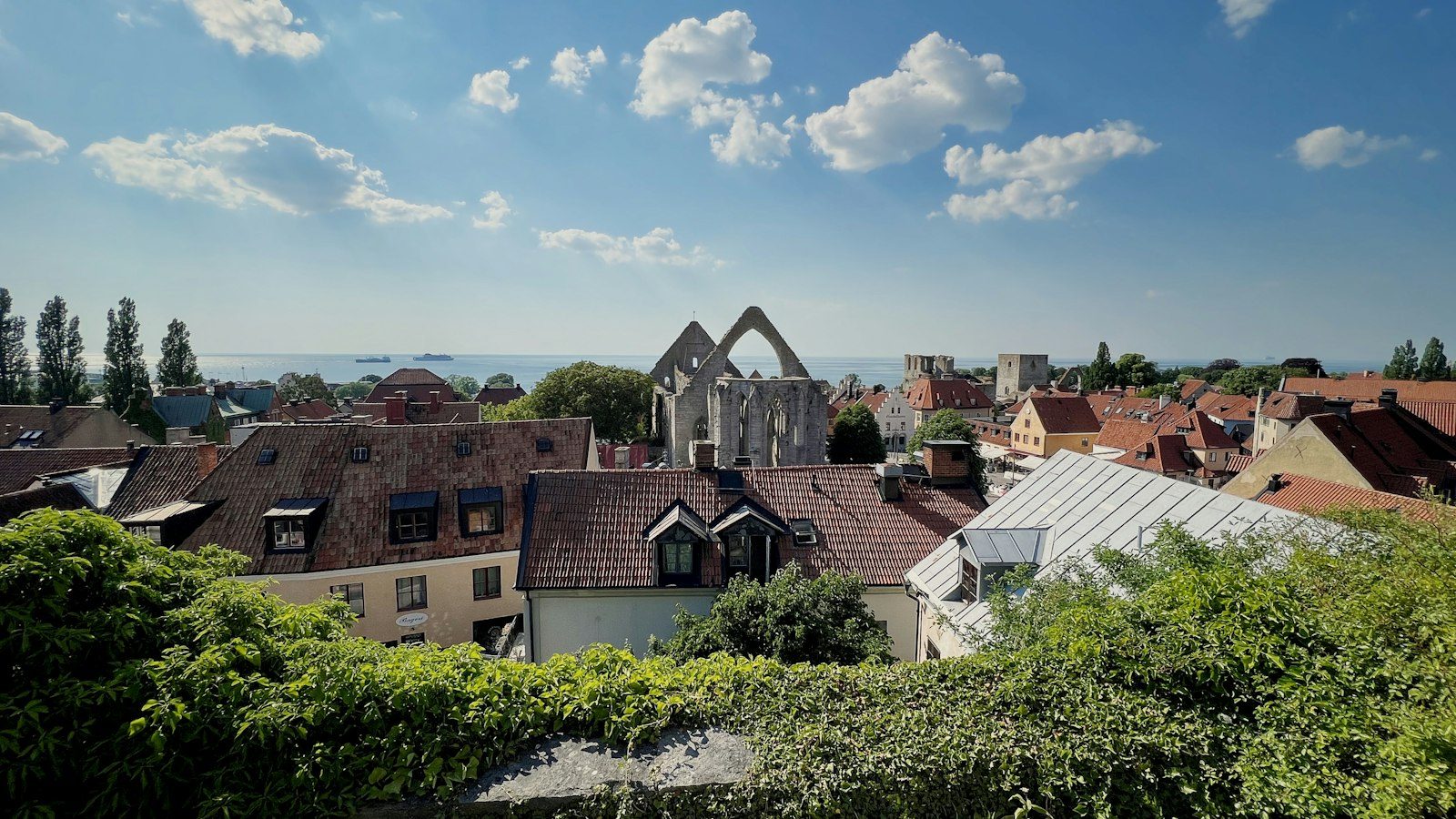
A walled Hanseatic town on the west coast of Gotland, Sweden's biggest island. You walk the 3.4km ring wall, wander between roofless medieval churches and cycle out to limestone cliffs over the Baltic before eating saffron pancakes under the rose bushes.
- Best time to visit: June and late August to September
- Daily budget (budget traveller): $85 to $270 USD
- Ideal trip length: 3 to 5 days
Visby is the main town on Gotland, an island in the middle of the Baltic about three hours by ferry from the Swedish mainland. In the Middle Ages it was one of the richest trading towns in northern Europe, and the money paid for a stone ring wall, merchant houses and more than a dozen churches. Most of those churches are now ruins, standing open to the sky between cobbled lanes and cottage gardens, and the whole old town has been a UNESCO World Heritage Site since 1995. It is small, walkable and full of roses in summer, which is why Swedes call Gotland the island of roses. There are no big sights to queue for. You walk the wall, look into ruins, spend a morning in the Gotland Museum and watch the sun go down over the sea from Almedalen park. Then you hire a bike or take a bus out to the cliffs, caves and beaches around the island. Sweden is not cheap, and Visby gets very full and expensive in July and early August. Still, a hostel bed, free ruins, a bike and supermarket picnics keep a solo trip manageable, and the town is calm and safe to explore alone.
Visby is the best-preserved medieval trading town in Scandinavia. Its stone ring wall still wraps almost all the way around the old town, and inside you find steep cobbled lanes, step-gabled merchant houses, rose-covered cottages and the ruins of churches built when Visby was a key Hanseatic port. Around 24,000 people live in Visby, so it feels like a proper small town rather than a museum. Most visitors come in July for the beaches and the nightlife. Stay outside the peak and you get the better version: the wall glowing at 6am, ruins with nobody in them, a bike ride along the coast and a quiet fika in a garden café. Sweden is expensive, but the main sights are free and a hostel bed, a bike and supermarket food keep costs down.
Getting here means a ferry or a short flight. Destination Gotland sails from Nynäshamn, about an hour south of Stockholm, in around 3 hours 15 minutes, and from Oskarshamn in about 3 hours. Fares rise as sailings fill up, so book early for summer. Flights from Stockholm take about 40 minutes and land a few kilometres north of town. Once here, walk. The old town is car-free in practice and small enough to cross in 15 minutes. Base yourself inside the walls for atmosphere, by the harbour for easy arrival and bike hire, or just outside the walls to save money. Use bikes and the island buses for Högklint, Lummelunda, Tofta and Fårö.
Timing shapes the trip. June and late August to September bring long days, the sunniest weather in Sweden and calmer streets. July is the busiest and priciest month, with student party weeks, and Medieval Week takes over the town in week 32. From October to April Visby is quiet and peaceful but cold, many cafés close and the Lummelunda cave shuts for the season. Visby is very safe and nearly everyone speaks excellent English. Evenings are relaxed most of the year. If you want clubs, come in July. If you want ruins, sea views and a slow bike ride, come either side of it.
Visby itinerary
Arrive and find your feet
Morning: Take the morning ferry from Nynäshamn (about 3 hours 15 minutes). Drop your bag at your hostel or guesthouse near the harbour.
Afternoon: Walk up Strandgatan into the old town and around Stora torget and the ruin of St Karin's. Have a fika with saffron pancake in a garden café.
Evening: Picnic on the grass in Almedalen and watch the sunset over the sea, then walk back up through the botanical garden.
Museum, cathedral and ruins
Morning: Spend the morning at the Gotland Museum on Strandgatan (190 kr in summer, 150 kr in winter) for the picture stones and Viking silver.
Afternoon: Visit St Mary's Cathedral, which is free, then climb the steps to Klinten. Find St Drotten, St Lars and St Nicolai ruins on the way.
Evening: Walk the outside of the ring wall from Norderport towards Österport as the light softens. Dinner at a lunch-style restaurant or Bakfickan on the square.
Bike to Högklint
Morning: Hire a bike near the harbour (around 200-300 kr a day) and ride about 8km south along the coast to the Högklint cliffs.
Afternoon: Take in the view back towards Visby, have a picnic in the nature reserve and cycle back slowly, stopping for a swim if the weather is warm.
Evening: Return the bike and walk up to Galgberget north of town for a quiet sunset over the water.
A day on Fårö
Morning: Take an early bus to Fårösund (about 1 hour 15 minutes, only a few a day), then the free car ferry across to Fårö.
Afternoon: See the limestone sea stacks at Langhammars or Digerhuvud. Hire a bike on the island or check summer buses before you go, as services are limited.
Evening: Catch the last bus back to Visby. Keep dinner simple, then a final walk through the lanes.
Lummelunda cave and the north coast
Morning: Ride or take a bus 13km north to Lummelunda cave (195 kr, guided tours only, open in the warmer months). Book online in July and August.
Afternoon: Follow the coast back towards town and stop at the beaches around Snäck for a swim or a walk.
Evening: Drinks on the terraces around Stora torget, or a quieter evening on the Norderstrand promenade.
Beach day at Tofta
Morning: Take a bus south to Tofta, about 20km away, one of Gotland's longest sandy beaches.
Afternoon: Swim, walk the dunes and eat a cheap lunch at a beach kiosk in season. In cooler months, swap this for a slow day of ruins and cafés in Visby.
Evening: Bus back to Visby. Farewell dinner of Gotland lamb or smoked fish.
Slow morning and depart
Morning: Early walk on the wall and through the empty lanes of Klinten before the town wakes up.
Afternoon: Buy saffron pancake mix or smoked fish for home, then catch an afternoon ferry or flight. Check in on time, as ferries close boarding early.
Evening: Arrive in Nynäshamn or Stockholm, or carry on to your next stop.
Best neighbourhoods
- Innerstaden and Stora torget: The walled old town, set around the main square with the ruin of St Karin's church on one side. Most cafés, restaurants, shops and guesthouses are here, all within a few minutes' walk. It gets lively and loud on summer nights, especially in July, so ask for a room away from the square if you sleep lightly.
- Klinten: A steep slope inside the walls above the cathedral, covered in tiny wooden and stone cottages with hollyhocks by the doors. There are a few rentals and rooms here and the views over the roofs to the sea are the best in town. Expect steps everywhere, which is hard work with a suitcase.
- The harbour and Strandgatan: The lower edge of the old town by the sea, where the ferries dock and Strandgatan runs past the Gotland Museum and old warehouses. You will find hotels, a hostel and bike hire close to the terminal. It is the easiest base if you arrive on foot and want to start cycling straight away.
- Outside the walls and Östercentrum: The modern town just east and south of the wall, with the bus station, supermarkets and cheaper hotels and apartments. It is less charming, but rooms cost noticeably less and the old town is only five to ten minutes away on foot through one of the gates.
- Norderstrand and Snäck: The coast north of the walls, with a seafront promenade, the botanical garden close by and the Snäck area with holiday flats and a small beach about 2km out. It is quieter than the old town, good for sea swims and sunsets, and an easy walk or cycle back into the centre.
Must-do experiences
- Walk the ring wall: The wall runs for about 3.4km around the old town, with more than two dozen towers still standing. Follow the path on the outside from the harbour round to Norderport and Österport, then come back inside along the lanes. It is free and takes about an hour and a half at a slow pace.
- Spend a morning at the Gotland Museum: Fornsalen on Strandgatan tells the island's story from fossils and Viking silver to the Hanseatic town, and the picture stones are the highlight. Adults pay 190 kr from May to September and 150 kr from October to April. Entry is free on the first Thursday of the month from 4pm to 8pm between October and April.
- Hunt for church ruins: Start at St Karin's on Stora torget, then find St Nicolai by the botanical garden and St Drotten and St Lars side by side on the hill. Most can be seen for free from the outside or wandered through. Early morning is best, when the lanes are empty and the light comes through the empty windows.
- Visit St Mary's Cathedral: The only medieval church in Visby still in use, with its black tower tops visible from all over town. Entry is free. Sit inside for a few minutes, then climb the steps behind it up to Klinten for the view.
- Watch sunset from Almedalen: Almedalen is the park below the old town wall by the sea, once the old harbour. Bring a picnic and sit on the grass as the sun goes down over the water. Walk up through the botanical garden afterwards, which is free and full of roses in summer.
- Cycle to Högklint: Hire a bike near the harbour for around 200-300 kr a day and ride about 8km south to Högklint, a limestone cliff about 50m above the sea. The views back to Visby are excellent. There are no fences on the edge, so keep well back.
- Join Medieval Week: Every year in week 32, Visby turns into a medieval town for eight days, with markets, jousting, music and thousands in costume. In 2026 it ran from 2 to 9 August, and day wristbands started at around 132 kr. Book a bed months ahead if you want to go.
Hidden gems
- The lanes of Klinten in the early evening, when the cottage gardens are in flower and the roofs below turn gold
- Galgberget, the hill just north of town with the stone pillars of a medieval gallows, a short walk through the woods with wide views over the sea
- The quiet ruin of St Clemens, tucked behind houses in the old town and often empty even in summer
- Fiskarporten, a small gate in the sea wall where locals walk through to the shore path
- Norderstrand promenade at sunset, a calmer alternative to the crowds in Almedalen
Daily budget
- Accommodation: budget €35-55 / night (hostel dorm), mid-range €110-180 (old town guesthouse or 3-star hotel), splurge €250+ (historic hotel inside the walls). Prices jump in July and during Almedalen and Medieval Week. Rooms outside the walls are cheaper. Book summer and single rooms early.
- Food: budget €25-35 / day (supermarket breakfast, café lunch, picnic dinner), mid-range €50-75 (lunch special and a sit-down dinner), splurge €100+ (seafood or tasting menu with wine). Weekday lunch deals (dagens lunch) are the cheapest hot meal, often around 130-160 kr. Restaurant mains are roughly 250-350 kr. Prices are rough guides.
- Transport: budget €3-10 / day (walking, zone A bus at 30 kr), mid-range €18-30 (bike hire or island buses), splurge €70+ (car hire for the day). Ferry fares are dynamic, from about €20-30 off-peak to over €100 in peak summer. Bikes cost roughly 200-300 kr a day. The Fårö car ferry is free.
- Activities: budget €0-10 / day (wall, ruins, cathedral, botanical garden), mid-range €15-25 (Gotland Museum at 190 kr, Lummelunda cave at 195 kr), splurge €50+ (guided tours, cave adventure tours, festival tickets). The museum costs 150 kr from October to April and is free on the first Thursday evening of those months. Lummelunda is open only in the warmer months.
- Drinks & nightlife: budget €8-12 (a beer from the shop or one pint), mid-range €25-40 (a few drinks in a bar), splurge €60+ (cocktails and late nights in July). A coffee costs about 40-50 kr and a pint 80-100 kr. Strong alcohol is only sold in Systembolaget shops, which close early and are shut on Sundays.
Where to stay
- Social hostel in The harbour (€35-55 / night (dorm or basic single)): Fängelset is a hostel in Visby's old prison by the harbour, with simple rooms in former cells. It is a few minutes from the ferry and the old town and good value by Swedish standards.
- Boutique hotel in Innerstaden (€120-220 / night): Small guesthouses and hotels in old merchant houses inside the walls put you a short walk from the square, the ruins and the sea. Many include a generous Swedish breakfast.
- Apartment in Klinten or outside the walls (€90-170 / night): Cottages on Klinten give you views and character, while flats outside the walls are cheaper and close to supermarkets. Expect steep steps on Klinten.
- Splurge in Strandgatan (€250-450+ / night): Clarion Hotel Wisby sits in historic buildings on Strandgatan, with a pool and the museum and harbour on the doorstep. It is the classic upmarket stay in the old town.
What to eat
- Saffranspannkaka: Gotland's baked saffron rice pudding cake, served with dewberry jam and whipped cream at most cafés
- Gotland lamb: the island is famous for its sheep, and grilled or slow-cooked lamb is on most restaurant menus
- Smoked fish: flounder, salmon or herring from small smokehouses around the island, good for a cheap picnic lunch
- Fika in a garden café: coffee and a cardamom or cinnamon bun at Rosas in the old town or Café Amalia at the museum
- Gotlandsdricka and local beer: the old home-brewed juniper ale if you can find it, or beer from the island's breweries
- Seafood at Bakfickan on Stora torget for a treat, or a supermarket picnic from the shops outside the walls to save money
Day trips
- Fårö (About 65km north-east of Visby, around 1.5 hours by bus and ferry): A flat, windswept island with limestone sea stacks (raukar), long beaches at Sudersand and links to the film director Ingmar Bergman. It feels wilder and emptier than the rest of Gotland. Take a bus from Visby bus station to Fårösund, which runs only a few times a day, then the free car ferry across. Hire a bike on arrival or check summer bus times on Fårö before you set off.
- Lummelunda cave (About 13km north of Visby): A limestone cave system with stalactites and underground streams. The guided show tour lasts about 40 minutes and stays cool even in high summer, which makes it a good choice on a rainy day. Cycle along the coast or take a local bus north. Adults pay 195 kr. It is open daily in summer and on fewer days in spring and autumn, and closes in winter, so book online in peak season.
- Högklint and Tofta (Högklint about 8km south, Tofta about 20km south): Högklint is a tall limestone cliff with wide views back to Visby. Further south, Tofta has one of Gotland's longest sandy beaches with pine woods behind. Cycle to Högklint on quiet roads, or take a southbound bus. Buses also run towards Tofta, so check return times, as rural services can be sparse.
When to visit
- Spring (April - May): 6-16°C, bright but cool, cold sea. Crowds: Low, busier at Easter and on May weekends. Good for walking the wall and cheap rooms. Many cafés open only at weekends until late May, and Lummelunda keeps short hours.
- Early summer (June): 16-21°C, long light evenings, sea around 14-17°C. Crowds: Moderate, very busy in Almedalen week in late June. Arguably the best month. Endless evenings, roses starting to bloom and everything open. Avoid Almedalen week unless you want the buzz.
- High summer (July - August): 19-24°C, mostly sunny, sea up to about 18-20°C. Crowds: Very busy in July and during Medieval Week in early August. Great for beaches, cycling and festivals, but rooms cost the most and ferries sell out. Late August is calmer and still warm.
- Autumn and winter (September - March): September 12-17°C, then 0-5°C in winter, short dark days. Crowds: Moderate in September, very quiet from October. September is the locals' pick, with mild days and empty ruins. Winter is cheap and peaceful, with a medieval Christmas market in early December, but many places close.
Entry rules for your passport
Visa rules for Sweden depend on the passport you travel on. Check the official source before you book: European Commission: Schengen visa policy
Getting there
Visby Airport is about 4km north of town, with flights of around 40 minutes from Stockholm Arlanda and Bromma and extra routes from other Swedish cities in summer. A taxi into town costs roughly 200-250 kr, and buses link with some flights. Most people come by ferry with Destination Gotland. From Nynäshamn, the crossing takes about 3 hours 15 minutes, with up to several sailings a day in summer, including a late-night sailing. Nynäshamn is about an hour from central Stockholm by SL commuter train or by the connecting bus from Cityterminalen. From Oskarshamn, further south, the crossing takes about 3 hours. Fares are dynamic, so foot passengers can pay as little as €20-30 off-peak while busy summer sailings often cost well over €100. Book as early as you can. Viking Line also links Visby with Mariehamn in the Åland Islands on a couple of days a week. The ferry terminal is next to the old town, so you can walk to most rooms.
Border checks: non-EU visitors (other than Swiss, Norwegian, Icelandic, Liechtenstein, Andorran, Monegasque, San Marinese and Vatican citizens, and holders of an EU residence permit or long-stay visa) are registered in the EU's Entry/Exit System (EES) instead of getting a passport stamp. On your first crossing, officers take your photo and/or fingerprints, so allow extra time at passport control. ETIAS, the planned travel authorisation, is not in operation yet, so don't pay any website for one.
Getting around
Visby's old town is small and best seen on foot. It takes about 15 minutes to cross from the harbour to Norderport, but the lanes are cobbled and steep in places, especially around Klinten. For the rest of Gotland, a bike is the classic choice. Hire shops near the harbour charge roughly 200-300 kr a day, and the island is fairly flat, with quiet roads and the signed Gotlandsleden cycle route. Gotlands kollektivtrafik runs the island buses from Visby bus station just outside the walls. A single ticket in zone A, which covers Visby and about 8km around it, costs 30 kr. Longer trips across the island cost more, roughly 80-100 kr. Buy tickets in the app before you board if you can, as the driver is the backup option. Rural buses can be infrequent, with only a few a day to Fårö, so check times the evening before. Taxis are reliable but expensive. Renting a car makes sense for the far north and east, but you do not need one in Visby.
Safety
Visby is very safe, and crime against visitors is rare. The main issues are summer crowds and noise. In July, young Swedes come for party weeks and Stora torget can be rowdy late at night, so pick your room with that in mind. Keep an eye on your bag in the crowds during Almedalen and Medieval Week. Cobbles and steep steps are slippery when wet. On cliffs such as Högklint and the sea stacks on Fårö there are no fences, so keep back from the edge. When cycling, wear a helmet and lights, as rural roads have no lighting. Ticks are common in long grass in summer, so check yourself after walks. Tap water is safe to drink. The emergency number is 112 and 1177 is the healthcare advice line. EU travellers should carry an EHIC and UK travellers a GHIC, and everyone else needs travel insurance with medical cover.
Solo travel tips
- Avoid the festival weeks unless you want them: Almedalen in late June and Medieval Week in August fill every bed on the island. If you go, book months ahead. If not, plan around them for lower prices.
- Get out early: Day trippers and cruise passengers fill the lanes from late morning. Walk the wall and the ruins before 9am or after 6pm and you will have them almost to yourself.
- Book the ferry first: Ferry fares go up as sailings fill, and summer weekends sell out. Lock in your crossing, then plan beds and days around it.
- Eat a big lunch: Weekday lunch deals with salad, bread and coffee included are far cheaper than dinner. Then have a supermarket picnic in Almedalen in the evening.
- Safety for solo travellers: The main risks are cliff edges, unlit roads when cycling and rowdy July nights around the main square. Keep back from the edge, use lights on your bike and choose a quiet street to sleep on.
- Meet people on two wheels: Hostel common rooms, guided walking tours and bike hire shops are easy places to meet people. Cyclists on the Gotlandsleden route often share tips and end up riding together.
Cultural etiquette
- Say 'hej' (hello) and 'tack' (thank you). Almost everyone speaks English, but a little Swedish is appreciated.
- Queue patiently, and take a number from the ticket machine in shops, pharmacies and some cafés.
- Keep your voice down in the old town at night. Many people live in the lanes and sound carries off the stone walls.
- Do not climb on the ring wall or the church ruins. They are fragile and protected.
- Respect allemansrätten, the right to roam. You can walk almost anywhere in nature, but leave no rubbish, keep away from houses and do not pick protected flowers.
- Take off your shoes if you visit someone's home, which is normal in Sweden.
- Tipping is not expected. Rounding up or adding about 5-10% for great table service is a kind extra.
Frequently asked questions
How do I get to Visby and from the ferry to my room?
Most people take the Destination Gotland ferry from Nynäshamn, south of Stockholm, which takes about 3 hours 15 minutes, or from Oskarshamn, which takes about 3 hours. Fares change with demand. Foot passengers can pay as little as €20-30 off-peak, and busy summer sailings often cost over €100, so book early. Nynäshamn is about an hour from Stockholm by commuter train or connecting bus. The ferry docks right by the old town, and most rooms inside the walls are a 5 to 15 minute walk away. Flights from Stockholm take about 40 minutes.
How many days do I need in Visby?
Two nights covers the ring wall, the ruins, the museum and a sunset in Almedalen. Three to five nights lets you add a bike ride to Högklint, the Lummelunda cave in season and a day on Fårö. A week works if you want to cycle more of Gotland or spend time on the beaches.
When is the best time to visit Visby?
June and late August to September are the sweet spot. The days are long, the weather is often the sunniest in Sweden and the town is busy without being packed. July and early August are the peak, with the highest prices, party weeks and Medieval Week in week 32. From October to April Visby is quiet, cold and dark early. Many cafés and seasonal sights close, but you get cheap rooms and the medieval Christmas market in early December.
Can I use euros in Visby?
Not really. Sweden uses the Swedish krona (kr or SEK), at roughly 11 kr to the euro. Sweden is almost cashless, and many places only take cards or the Swish app. A contactless debit or credit card will cover nearly everything, including buses booked through the app. Keep a small amount of cash only as a backup for the odd farm stall.
Do I need a car on Gotland?
Not for Visby itself, which you will walk. For the island, a bike and the buses get you to Högklint, Lummelunda, the beaches at Tofta and Fårö, though buses to the north run only a few times a day. A car helps if you want to see the far east and south coasts in one trip. The short car ferry from Fårösund to Fårö is free.
What happens during Almedalen and Medieval Week?
Almedalen week is a big political festival in late June, when Swedish parties, journalists and lobbyists fill the town. In 2026 it ran from 22 to 26 June. Medieval Week takes place every year in week 32, with markets, jousting and costumes, and in 2026 it ran from 2 to 9 August. Both are fun to see, but beds sell out and prices rise sharply, so book months ahead or avoid those weeks if you want a quiet trip.
Is Visby safe for solo female travellers?
Yes. Visby is one of the safest small towns in Europe to visit alone, and Sweden is easy to travel in, with English spoken almost everywhere. The old town is compact and busy on summer evenings. Take normal care in bars during the July party weeks, and use lit routes rather than dark coastal paths or unlit roads late at night.
What entry rules apply to Sweden in 2026?
Sweden is in the EU and the Schengen area. Many non-EU visitors, including those from the UK, US, Canada and Australia, can stay visa-free for up to 90 days in any 180-day period across Schengen. The EU's Entry/Exit System has been fully running since April 2026 and records non-EU travellers' fingerprints and photos at the external border. ETIAS is not in operation yet and has no confirmed start date, with 2027 now widely expected. Check official EU and Swedish government websites and your own government's travel advice before you go.
More about Visby
Tours and activities in Visby | Visby in 2 days | Visby in 3 days | Visby in 4 days | Visby in 5 days | Visby in 7 days
Joy Plus home | Destinations | Itineraries | Activities | Flights | Budget planner | Calendar | Map | Blog | Lifetime access