Destinations / Europe
Zakopane, Poland travel guide
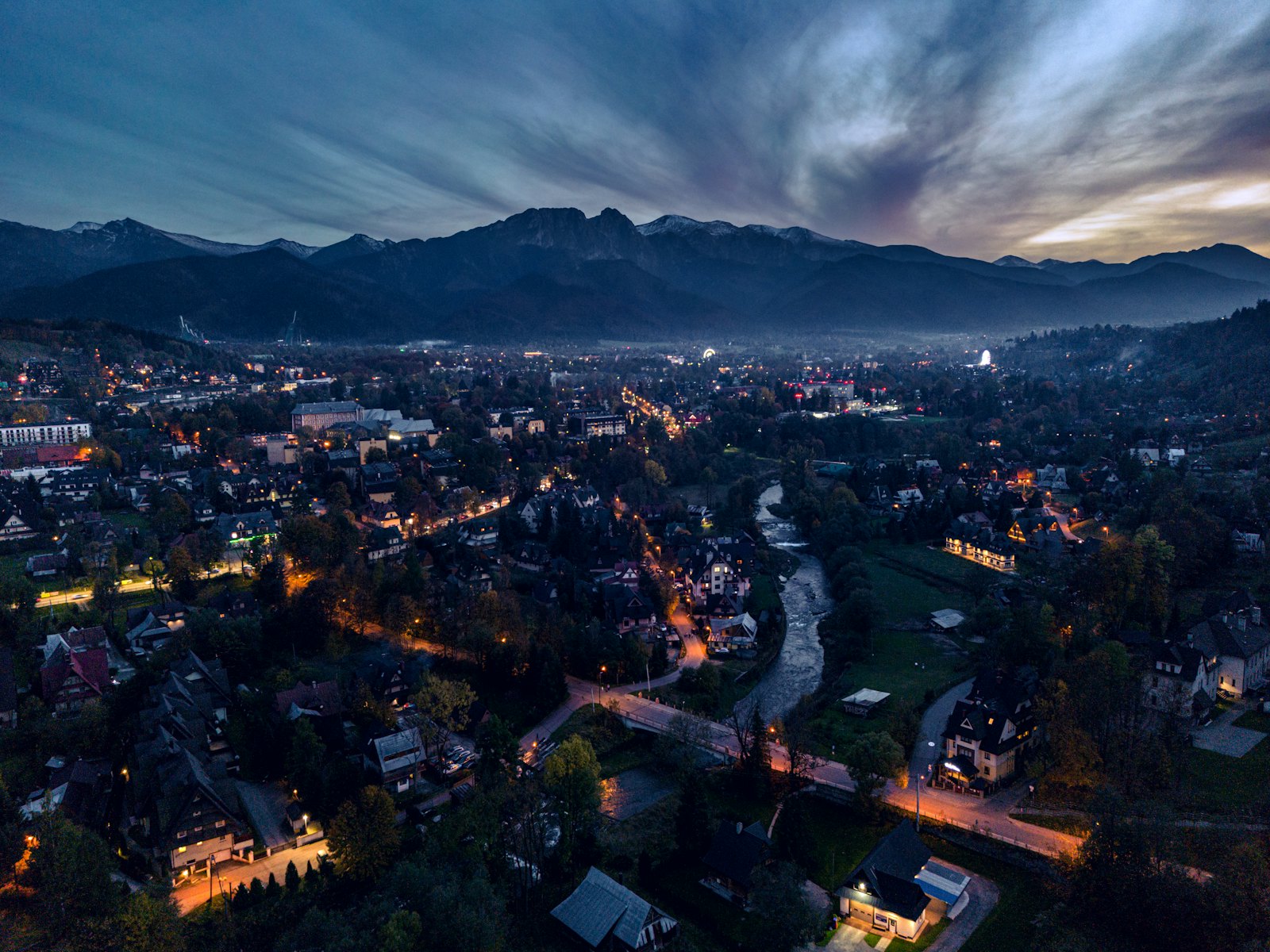
A wooden mountain town at the foot of the Tatras, where you take the funicular up Gubałówka, walk to Morskie Oko lake and eat grilled oscypek cheese from a market stall.
- Best time to visit: June to September, or January to March for snow
- Daily budget (budget traveller): $50 to $175 USD
- Ideal trip length: 4 to 7 days
Zakopane sits about two hours south of Kraków, right under the Polish Tatras. It is a town of roughly 27,000 people, and it gets several million visitors a year. Most of them come for the mountains. Tatra National Park starts at the edge of town, and trails lead from the streets straight into beech forest and up to granite peaks, high lakes and huts that serve soup and beer. The town has its own look too. The Zakopane style of carved timber villas, steep roofs and painted wooden churches came out of the local Górale (highlander) culture, and you still see it along ulica Kościeliska. Krupówki, the main street, is loud and touristy, with stalls, horse cabs and grilled cheese. Walk ten minutes in almost any direction and it gets much calmer. Zakopane is very easy for a solo traveller. Trains and buses from Kraków are cheap, cheap minibuses run to the trailheads, there are hostels and simple guesthouses everywhere, and you meet other walkers on every trail. Just come ready for proper mountain weather.
Zakopane sits at about 800-1,000m in the Podhale region, directly below the Tatras, the highest range in the Carpathians. Tatra National Park begins where the town ends, with roughly 275km of marked trails, so you can walk from your guesthouse into a valley in under an hour. Most visitors hit the same few places: Krupówki, Gubałówka, Morskie Oko and Kasprowy Wierch. They are popular for good reason. To enjoy them, go early in the morning or on a weekday, outside peak season. In between, the town has a quieter side. You can walk among the carved villas on ulica Kościeliska, visit the cemetery at Pęksowy Brzyzek and hike long valleys to huts serving soup and cake. Górale highland culture is still part of everyday life here, in the dialect, the music, the food and the wooden houses. Zakopane is good value for a solo traveller. Dorm beds, cheap minibuses, 11 zł park tickets and filling karczma lunches keep costs down.
Getting here is easy. Kraków is the gateway, with an international airport and trains and buses heading south all day. The train takes two to two and a half hours and is the most relaxed option, though punctuality is patchy. Buses are similar in price and time but get stuck in weekend traffic. Base yourself near the centre if you want to walk to restaurants and catch the minibuses, or near Kuźnice if you want to be on the trail early. Buy your park tickets online and book Kasprowy Wierch time slots ahead in busy periods. Plan a backup for every big hike. Valleys such as Kościeliska and Strążyska stay doable when cloud covers the peaks.
Season changes everything. July and August are hot in town, crowded on the trails and prone to afternoon thunderstorms. September is often the sweet spot. Winter turns Zakopane into Poland's main ski town, but the high trails become serious avalanche terrain that needs proper skills. Spring brings crocus meadows and melting snow. Most people speak some English in hotels, hostels and restaurants, though less so on minibuses and in the huts, so a few Polish words help. Expect a lively town and quiet mountains. Start early, finish before the storms and spend the evening over kwaśnica and a beer.
Zakopane itinerary
Arrive and ride up Gubałówka
Morning: Take a morning train from Kraków Główny (about two to two and a half hours). Sit on the left for mountain views as you near Zakopane. Walk from the station to your bed and drop your bags.
Afternoon: Walk down Krupówki, grab grilled oscypek with cranberry from a stall and buy a 7-day park ticket online if you plan to hike most days.
Evening: Take the Gubałówka funicular for sunset over the Tatras, then walk back down or ride. Dinner at a karczma away from the busiest stretch of Krupówki.
Villas, the old cemetery and Dolina Strążyska
Morning: Walk ulica Kościeliska. See the Old Church and cemetery at Pęksowy Brzyzek, then Willa Koliba and the Museum of Zakopane Style. Add the Tatra Museum on Krupówki if it rains.
Afternoon: Take a short ride or walk to the Dolina Strążyska entrance. Hike the valley to the Siklawica waterfall, and climb to Sarnia Skała for a view of Giewont if your legs are fresh.
Evening: Early dinner and an early night. Pack water and snacks and set an alarm for tomorrow's first minibuses.
Morskie Oko
Morning: Catch one of the first minibuses to Palenica Białczańska (about 15-25 zł cash). Walk the 9km road to Morskie Oko, or take the e-bus to Włosienica for 69 zł including the park ticket.
Afternoon: Climb the steep path to Czarny Staw above the lake for the best view, then eat kwaśnica at the hut by the shore before walking down.
Evening: Minibus back to Zakopane. Rest your legs and have trout or pierogi for dinner.
Kasprowy Wierch and Hala Gąsienicowa
Morning: Minibus to Kuźnice for an early Kasprowy Wierch time slot booked online. At the top, step onto the border ridge and take in the view across Poland and Slovakia.
Afternoon: Walk down to Hala Gąsienicowa and the Murowaniec hut for lunch, then descend via Boczań to Kuźnice. Allow about three hours of walking. Watch for afternoon storms.
Evening: Back in town for a slow dinner. If the forecast is good, decide whether you want to try Giewont on another morning.
Dolina Kościeliska and Mroźna Cave
Morning: Minibus to Kiry. Walk up Dolina Kościeliska past the rock gates. If it is open, add Mroźna Cave (10 zl extra). It usually runs from spring to autumn only.
Afternoon: Lunch at the Ornak hut, then walk back down the valley. On a clear day, fit walkers can add the short side trip to Smreczyński Staw.
Evening: Minibus back to town. Evening in a karczma with live highland music, if one is on.
Chochołów and the thermal pools
Morning: Take a local bus to Chochołów to see its street of old wooden houses. Keep it low-key, because people still live in them.
Afternoon: Spend three hours at Termy Chochołowskie (from about 85 zł), moving between the outdoor pools with the mountains in view.
Evening: Head back to Zakopane for a final big dinner. Try placki po zbójnicku if you have not yet.
Wielka Krokiew and departure
Morning: Walk out to the Wielka Krokiew ski jump, then continue to the wooden chapel at Jaszczurówka if you have time. Coffee in the centre.
Afternoon: Browse the market below Gubałówka for oscypek and wool to take home, then catch a train or bus back to Kraków.
Evening: Arrive in Kraków in the early evening for your onward connection, or stay the night near Kraków Główny.
Best neighbourhoods
- Krupówki and the centre: The pedestrian main street and the blocks around it. This is where you find restaurants, karczmas (highland taverns), the Tatra Museum and bars, and the train and bus stations are a short walk away. It is handy and lively, but noisy at night and in high season.
- Ulica Kościeliska: The old road west of the centre, lined with carved timber villas. The Old Church and cemetery at Pęksowy Brzyzek and Willa Koliba, home of the Museum of Zakopane Style, are both here. It is quieter than Krupówki and still close enough to walk to dinner.
- Bystre and the road to Kuźnice: The southern edge of town, on the way up to Kuźnice, where the Kasprowy Wierch cable car and the trails to Hala Gąsienicowa and Giewont begin. Pensions here are close to the trailheads and the forest. Minibuses run down to the centre.
- Kościelisko: A separate village just west of Zakopane, spread over meadows with Tatra views. It has lots of guesthouses and self-catering apartments, and it is close to the Kiry entrance for Dolina Kościeliska. You will rely on minibuses or longish walks to reach town.
- Olcza and Cyrhla: Residential areas east of the centre, on the side facing the road to Morskie Oko. Rooms here are often cheaper and quieter, with good mountain views. It suits people who do not mind a 20 to 30 minute walk or a short ride into town.
Must-do experiences
- Walk to Morskie Oko: The largest lake in the Tatras sits under a ring of peaks. It is about 9km on a paved road from Palenica Białczańska, which takes roughly two hours each way. If you have the legs, climb on to Czarny Staw above it. Go early, because summer weekends get very busy.
- Ride the cable car up Kasprowy Wierch: The cable car runs from Kuźnice to a 1,987m summit on the Polish-Slovak border. Book a time slot online, then walk the ridge or hike down via Hala Gąsienicowa and the Murowaniec hut rather than riding back down.
- Take the funicular up Gubałówka: A short funicular climbs the ridge north of town, and the views across to the whole Tatra range are excellent. It is touristy at the top, but walking along the ridge towards Butorowy Wierch quickly gets quieter. Sunset is the best time to go.
- Walk ulica Kościeliska and Pęksowy Brzyzek: See the little wooden Old Church and the atmospheric cemetery where artists, writers and mountain guides are buried. Then visit Willa Koliba, the first villa built in the Zakopane style, which now houses a museum.
- Hike Dolina Kościeliska: This is a long, gentle valley with rock gates, streams and meadows, so it works well on a cloudy day or as a first walk. Walk on to the Ornak hut for soup. If it is open, add the Mroźna Cave detour, which costs extra.
- Climb Giewont, if you are experienced: The 'Sleeping Knight' peak above town ends with a chained section to a summit cross. Start at dawn and turn back if storms are forecast. People have died here from lightning. Weekends bring queues on the chains.
- Soak in a thermal pool: After a few hard hiking days, rest your legs in a geothermal pool. Termy Chochołowskie, west of town, is the largest nearby complex, and from the outdoor pools you look straight at the mountains.
Hidden gems
- Sarnia Skała, a rocky viewpoint reached from Dolina Strążyska or Dolina Białego, with a close-up view of Giewont and far fewer people than the main peaks
- Ścieżka nad Reglami, a forest trail along the lower slopes that links several valleys, good for a half-day walk when the high trails are in cloud
- The Jaszczurówka chapel on the road to Morskie Oko, a small timber church built in the Zakopane style
- Willa Atma, the wooden villa where the composer Karol Szymanowski lived, now a small museum with occasional concerts
- Polana Kalatówki above Kuźnice, a meadow that turns purple with crocuses in early spring, when the snowmelt allows
Daily budget
- Accommodation: budget 60-120 zł / night (hostel dorm or simple room in a guesthouse), mid-range 250-450 zł (guesthouse with breakfast or small hotel), splurge 700+ zł (spa hotel such as Aries or Grand Hotel Stamary). Prices jump at Christmas, New Year, winter school holidays and in July and August. Look for 'pokoje gościnne' (guest rooms) signs for cheap private rooms. Many places have a minimum stay in peak weeks.
- Food: budget 60-100 zł / day (bakery breakfast, hut soup, cheap karczma dinner), mid-range 120-200 zł (sit-down lunch and dinner with a drink), splurge 250+ zł (top restaurants, wine). Hut meals are filling and fairly priced. Kwaśnica or pierogi usually cost around 25-40 zł. Restaurants on Krupówki are the priciest, so walk a block away for better value. Prices are rough guides.
- Transport: budget 10-40 zł / day (minibuses to the trailheads), mid-range 60-100 zł (e-bus or taxis), splurge 150+ zł (private transfers and car hire). The train or bus from Kraków costs about 30-65 zł each way. Minibuses take cash only. Palenica parking is roughly 36-85 zł a day and must be booked online if you drive.
- Activities: budget 11-50 zł / day (park ticket, Gubałówka), mid-range 130-200 zł (Kasprowy Wierch cable car, thermal pools), splurge 250+ zł (guided climbs, ski passes, rafting tours). Park ticket 11 zł a day or 55 zł for 7 days. Gubałówka return 37-49 zł. Kasprowy return 129-165 zł. Termy Chochołowskie from about 85 zł for 3 hours. Check current prices.
- Drinks & nightlife: budget 20-40 zł (a beer or two at a hostel or hut), mid-range 60-120 zł (bar evening with live highland music), splurge 150+ zł (cocktails and late nights on Krupówki). Beers in town cost roughly 15-25 zł. Nightlife is mostly karczmas with live folk bands and bars around Krupówki. Hikers go to bed early.
Where to stay
- Social hostel in Centre (60-120 zł / night): Hostel Stara Polana is a long-running, sociable hostel a short walk from Krupówki and the minibuses. It has dorms, a shared kitchen and plenty of hikers to plan routes with.
- Boutique hotel in Krupówki (400-700 zł / night): Hotel Sabała occupies a historic timber building on Krupówki. You get Zakopane-style character, a restaurant downstairs and the whole centre on your doorstep.
- Apartment in Kościelisko (200-400 zł / night): Self-catering apartments and guest rooms with meadow views, close to the Dolina Kościeliska entrance. A kitchen cuts food costs, but you will need minibuses to get into town.
- Splurge in Centre (800-1,500+ zł / night): Aries Hotel & Spa and Grand Hotel Stamary are both central, with spas and good restaurants. They are a comfortable place to recover after big hiking days.
What to eat
- Oscypek: smoked sheep's cheese pressed in carved moulds and protected by EU designation. Market stalls sell it grilled with cranberry sauce
- Kwaśnica: sour sauerkraut soup cooked with pork ribs, the standard warming lunch in highland karczmas and mountain huts
- Placki po zbójnicku: potato pancakes topped with a goulash-style meat stew, a big plate after a long hike
- Pstrąg: trout, often grilled whole with butter and herbs, which is common on Podhale menus
- Bryndza and bundz: soft sheep's cheeses from the shepherds' huts, spread on bread or served with potatoes
- A bowl of soup and a slice of szarlotka (apple cake) at a mountain hut such as Murowaniec, where you pay at the counter and share tables
Day trips
- Morskie Oko and Czarny Staw (About 30km from Zakopane to Palenica Białczańska, then 9km on foot): This is the classic Tatra lake, set under sheer granite walls, with a hut on the shore. Climb on to Czarny Staw for a quieter, higher view. Rysy is for experienced hikers only. Minibus from Zakopane bus station to Palenica (about 15-25 zł cash, 30-40 minutes), then walk. The park e-bus to Włosienica costs 69 zł from Palenica or 89 zł from Zakopane, park ticket included.
- Chochołów and Termy Chochołowskie (About 15-20km northwest of Zakopane): A highland village with a street of old timber houses, close to the region's largest thermal pool complex. It is a good rest day for tired legs. Local buses and minibuses from Zakopane bus station towards Chochołów, about 30 minutes for a few złoty. Pools from about 85 zł for 3 hours.
- Dunajec Gorge rafting (About 1.5 hours east by road to Sromowce Wyżne-Kąty in the Pieniny): Raftsmen in traditional dress pole wooden rafts through a limestone gorge on the Polish-Slovak border, ending in Szczawnica. The trip runs in the warmer months only, roughly April to October. The easiest option is an organised tour from Zakopane that includes transport back from Szczawnica. Doing it yourself by bus takes changes and planning. Check current fares and season dates before you go.
When to visit
- Winter (December - March): -8 to 3°C in town, much colder and windier on the peaks, regular snow. Crowds: Very busy at Christmas, New Year and during Polish school winter holidays. Great for skiing at Kasprowy Wierch and smaller slopes, and for snowy valley walks. High trails are avalanche terrain, smog can build on still days and prices rise in holiday weeks.
- Spring (April - May): 5-18°C, changeable, snow lingering above about 1,500m. Crowds: Low, apart from Easter and the May bank holidays. Crocuses in the meadows and cheap rooms. Valleys are lovely, but high routes can still be icy and the cable car may close for a maintenance break.
- Summer (June - August): 15-25°C in town, frequent afternoon thunderstorms in the mountains. Crowds: Peak in July and August, especially at weekends. The full trail network is open and the huts are busy and sociable. Start at dawn, finish early and avoid Morskie Oko and Giewont on summer Saturdays.
- Autumn (September - November): 5-18°C in September and October, colder and greyer in November. Crowds: Moderate in September, quiet from mid-October. The locals' pick. September brings stable weather and golden colours on the slopes. November is grey and many things pause, and first snow can arrive on the peaks in October.
Entry rules for your passport
Visa rules for Poland depend on the passport you travel on. Check the official source before you book: European Commission: Schengen visa policy
Getting there
The nearest international airport is Kraków John Paul II (KRK) at Balice. Trains link it to Kraków Główny station in about 20 minutes. From Kraków Główny, trains run by PKP Intercity, Koleje Małopolskie and POLREGIO go to Zakopane around 15 times a day. The fastest takes 1 hour 57 minutes, a typical journey about two and a half hours, and fares are roughly 30-65 zł depending on train type and how early you book. Delays are common, so do not plan tight connections. Buses run by Szwagropol, Majer Bus and FlixBus leave from the MDA bus station next to Kraków Główny. They take about two hours and cost roughly 30-40 zł, but the main road south gets jammed on Friday and Sunday afternoons. Direct PKP Intercity trains also reach Zakopane from Warsaw and other Polish cities, some of them overnight. Zakopane's railway and bus stations sit side by side, about a 10-minute walk from Krupówki. Poland is in the Schengen Area, so check entry rules for your nationality, including the EU's new border registration systems.
Border checks: non-EU visitors (other than Swiss, Norwegian, Icelandic, Liechtenstein, Andorran, Monegasque, San Marinese and Vatican citizens, and holders of an EU residence permit or long-stay visa) are registered in the EU's Entry/Exit System (EES) instead of getting a passport stamp. On your first crossing, officers take your photo and/or fingerprints, so allow extra time at passport control. ETIAS, the planned travel authorisation, is not in operation yet, so don't pay any website for one.
Getting around
Central Zakopane is easy to cover on foot, from the stations to Krupówki and ulica Kościeliska. For the mountains, use the private minibuses (busy) that leave from the stands by the main bus station, next to the railway station. Rough fares are about 5 zł to Kuźnice, 8 zł to Kiry for Dolina Kościeliska and 15-25 zł to Palenica Białczańska for Morskie Oko. You pay the driver, so carry cash. Buses leave when they fill up, and in summer they run often from early morning. The national park also runs electric buses on the Morskie Oko road. From Palenica Białczańska to Włosienica they cost 69 zł, park ticket included, and from Zakopane 89 zł. Coming back from Włosienica costs 58 zł to Palenica. Since 1 September 2026, horse carts only cover the 2.9km stretch from Palenica to Wodogrzmoty Mickiewicza, run as a park pilot scheme. You do not need a car. Trailhead car parks have to be booked online in season, and Palenica costs roughly 36-85 zł a day. Taxis wait at ranks around the centre. Traffic on the main road into town is heavy on Friday and Sunday afternoons.
Safety
Zakopane itself is safe. The main risks are on Krupówki late at night, when groups get drunk, and pickpockets in crowds. The mountains are the real hazard. Summer storms often build after midday, so start early, get off ridges and summits by early afternoon and never stay near the chains on Giewont in thunder. Snow can linger on high trails into June and come back in October, and winter brings real avalanche risk, so check the TOPR avalanche bulletin and only go high with proper gear and experience. Save the TOPR mountain rescue numbers, 985 or +48 601 100 300, as well as 112, and install the free Ratunek app. Rescue on the Polish side is free, but on the Slovak side you can be charged, so get insurance that covers mountain rescue if you cross the border. Brown bears live in the Tatras. Keep your food packed away, do not feed wildlife and back away slowly if you meet one. In winter, smoke from coal and wood stoves can make the air in town poor on still days.
Solo travel tips
- Stay within walking distance of the bus station: Most trail days start with a minibus from beside the station. Staying in the centre means no taxis at dawn and an easy walk home after dinner.
- Start every hike early: You beat the crowds at Morskie Oko and Giewont and avoid the summer storms that often build after midday. It is the single most useful habit here.
- Use the huts to meet people: Mountain huts have shared tables and a relaxed atmosphere. Order at the counter, sit with others and you will soon be swapping route tips. Book ahead if you want to sleep in one.
- Keep a valley backup: If the peaks are in cloud, switch to Dolina Kościeliska, Strążyska or the Ścieżka nad Reglami path. You still get a good day out, and the views are not wasted.
- Safety for solo hikers: Tell your host your route, carry a charged phone and a power bank, install the Ratunek app and save 985. Do not hike high in thunder, snow or fog, and turn back when in doubt.
- Carry cash and download maps: Minibuses and market stalls want złoty. Signal is patchy in the valleys, so download offline maps and screenshot your tickets before you set off.
Cultural etiquette
- Say 'Dzień dobry' (good day) when you walk into shops and huts, and 'Dziękuję' (thank you). Hikers often greet each other on quieter trails too.
- Górale highland culture is a source of real pride. Treat the costumes, music and dialect as living culture, not fancy dress, and ask before photographing people in traditional dress.
- Dress modestly in churches, including the Old Church and the Fatima sanctuary at Krzeptówki. Keep quiet in the Pęksowy Brzyzek cemetery, which is still in use.
- Stay on marked trails, take all rubbish home and do not pick plants. Park rangers fine people for breaking these rules.
- Give way to people coming down on narrow and chained sections, and do not overtake on the chains on Giewont.
- In huts, order and pay at the counter, clear your own tray and share tables. Do not take a seat and wait for table service.
- Tip around 10% in restaurants for good service, and round up for taxis.
Frequently asked questions
How do I get from Kraków to Zakopane?
Take a train from Kraków Główny or a bus from the MDA bus station next door. Around 15 trains a day run on the line. The fastest takes just under two hours, a typical one about two and a half, and fares are roughly 30-65 zł. Buses run by Szwagropol, Majer Bus and FlixBus take about two hours and cost roughly 30-40 zł, but they get stuck in traffic at weekends. In Zakopane, both stations are a 10-minute walk from Krupówki.
How many days do I need in Zakopane?
Four or five days gives you Morskie Oko, Kasprowy Wierch, a valley walk, Gubałówka and a buffer day for bad weather. A week lets you add Giewont or a long hike, a thermal pool day and a trip to Chochołów or the Dunajec Gorge. A day trip from Kraków is possible but rushed, and most of the day goes on transport.
When is the best time to visit Zakopane?
June to September is the hiking season. July and August are the busiest months and have the most afternoon storms. September is often the best month, with stable weather and smaller crowds. January to March is ski season, with Christmas, New Year and the Polish winter school holidays the busiest weeks. April, May and November are quiet in-between months, with mud, lingering snow higher up and some closures.
Do I need a ticket to enter Tatra National Park?
Yes. Every trail in the park needs a ticket. In 2026 a one-day ticket costs 11 zł, or 5.50 zł with a discount, and a 7-day ticket is 55 zł. Buy online through the park's e-ticket site to skip queues at the trail entrances. Mroźna Cave costs an extra 10 zł. The 7-day ticket pays off if you hike five days or more.
How do I get to Morskie Oko without a car?
Take a minibus marked Morskie Oko or Palenica Białczańska from the bus station in Zakopane. It takes about 30-40 minutes and costs roughly 15-25 zł, paid in cash to the driver. From Palenica it is about 9km on foot along a paved road. The park's electric bus to Włosienica costs 69 zł including the park ticket and saves most of the walk. Horse carts now only run the first 2.9km.
How much does the Kasprowy Wierch cable car cost?
In the low season (October to mid-December 2026) a return ticket costs 129 zł and one way 119 zł. In the summer high season, online return prices ranged from 99 to 165 zł depending on the time slot, and the ticket office charged 165 zł. The cable car closes for maintenance breaks, including 19 October to 6 November 2026, so check the PKL site before you plan around it.
Is Zakopane safe for solo female travellers?
Yes. The town is friendly and used to visitors, and the main trails are busy enough that you are rarely alone in season. Take the usual care on Krupówki late at night. In the mountains, tell your host your route, start early, carry a charged phone with the Ratunek app and turn back if the weather changes. Hostels and mountain huts are good places to find hiking company.
Can I use cards in Zakopane, or do I need cash?
Cards and phone payments work in most restaurants, shops, hotels and at the cable cars. You need cash, in Polish złoty, for minibuses, market stalls, some guesthouses and the odd mountain hut. There are plenty of ATMs in the centre. Avoid the Euronet ones that offer currency conversion, and always choose to be charged in złoty.
More about Zakopane
Tours and activities in Zakopane | Zakopane in 2 days | Zakopane in 3 days | Zakopane in 4 days | Zakopane in 5 days | Zakopane in 7 days
Joy Plus home | Destinations | Itineraries | Activities | Flights | Budget planner | Calendar | Map | Blog | Lifetime access