Destinations / Europe
Zurich, Switzerland travel guide
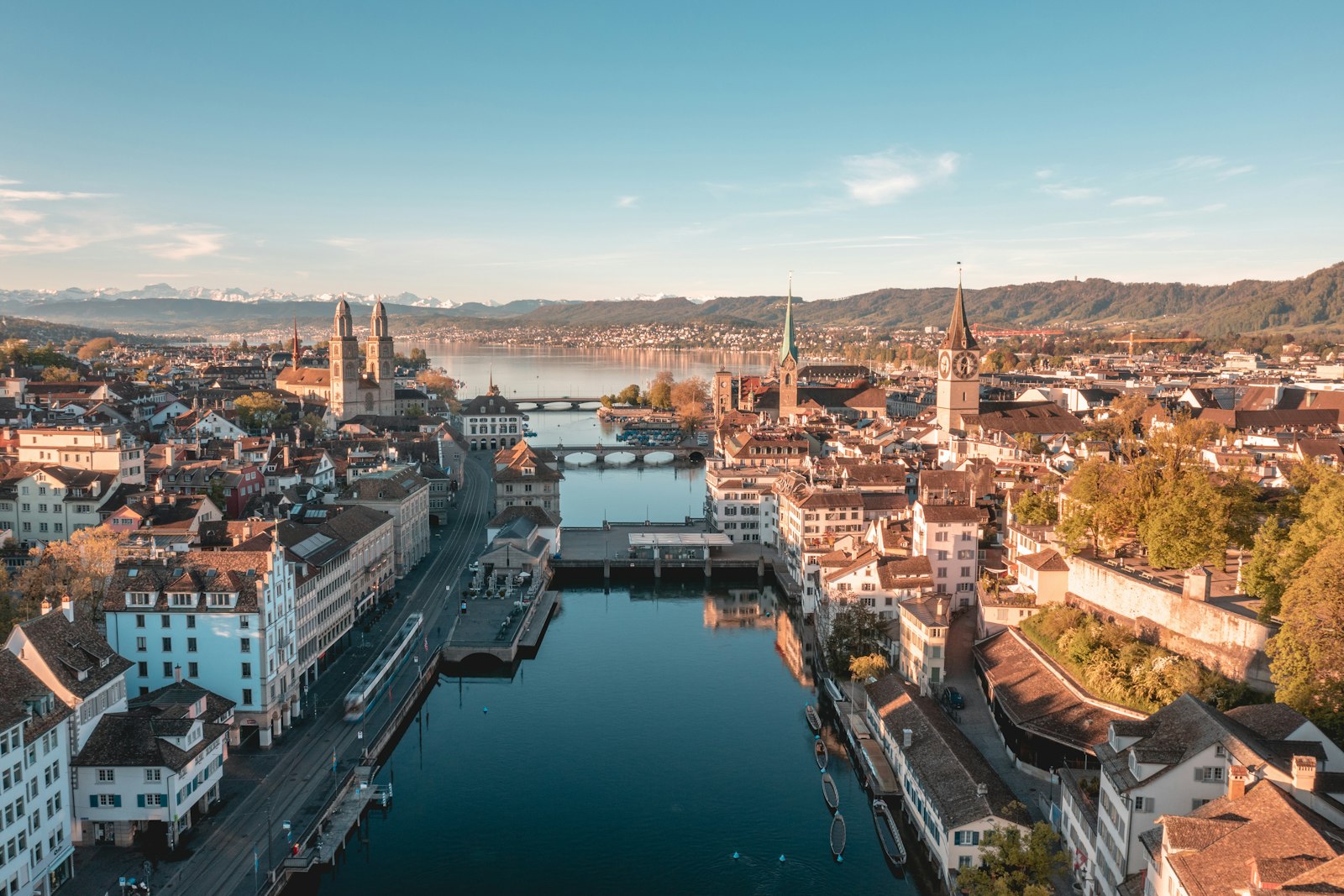
Switzerland's polished lakeside city: a charming old town, a crystal lake and Alpine day trips at the door.
- Best time to visit: May-September
- Daily budget (budget traveller): $180 to $300 USD
- Ideal trip length: 2 to 3 days
Zurich is Switzerland's biggest city and one of the world's most liveable, where a beautifully preserved medieval old town meets a sparkling lake, swimmable rivers in summer and an effortless gateway to the Alps. It's pricey, but its public spaces, lake baths and mountain day trips make it feel less like a banking hub and more like a holiday. Joy Plus shapes the old town, the lake and the surrounding peaks into a smooth, walkable itinerary.
Zurich is where Switzerland keeps its money and, more usefully for you, where it keeps its good mood. About 440,000 people live here, the old town is a few hundred metres of cobbled lanes on either side of the Limmat, and in summer half the city seems to be wearing a towel. The surprise is how un-bank-like it feels. You can finish a meeting on Bahnhofstrasse and be floating down the river twenty minutes later, then drink from one of the 1,200 public fountains on the way home. Nothing here shouts. It just works, and the trams arrive when the board says they will.
It is also brutally expensive, and pretending otherwise ruins the trip. A dorm bed costs CHF 50 to 70, a mediocre beer CHF 7 and a sit-down dinner CHF 50 without wine. The trick is to spend where Zurich is genuinely great and cheat everywhere else. Lake and river swimming is free or nearly so, Lindenhof's view costs nothing, a Migros or Coop takeaway box is CHF 10 to 15, and Wednesday is free at the Kunsthaus. Save the money for the mountain train, because the Alps are close enough for lunch.
Treat Zurich as a base rather than a checklist. Two days covers the Altstadt, the lake and a viewpoint. Add a third for Lucerne, Rigi or the Rhine Falls, since Hauptbahnhof is the best-connected station in the country. Walk everything inside the centre, buy one ZVV day pass, carry a swimsuit from May to September, and come hungry for fondue between October and March. Stay off the pavements at red lights and you will blend in perfectly.
How many days in Zurich?
For Zurich, we recommend 2 to 3 days.
| Trip length | What you'll see | Itinerary |
|---|---|---|
| 2 days · Recommended | Bahnhofstrasse and the lake; Altstadt, churches and Niederdorf | Zurich in 2 days |
| 3 days · Recommended | Adds: Lake day: boat, Badi and Chinagarten | Zurich in 3 days |
| 4 days | Adds: Lucerne day trip | Zurich in 4 days |
| 5 days | Adds: Uetliberg, Zürich-West and rooftops | Zurich in 5 days |
| 7 days | Adds: Rhine Falls or Rigi; Kunsthaus, last swim | Zurich in 7 days |
Zurich itinerary
Arrive, Bahnhofstrasse and the lake
Morning: Land at ZRH, S2, S16 or S24 from the underground station to Hauptbahnhof in about 10 to 14 minutes, around CHF 7. Drop bags at your hotel or the HB lockers. Coffee and a Luxemburgerli (about CHF 2.50 each) at Café Sprüngli on Paradeplatz.
Afternoon: Walk Bahnhofstrasse south to the lake at Bürkliplatz, then along the quay toward Bellevue. Pick up a bratwurst at Sternen Grill, Theaterstrasse 22 (about CHF 10).
Evening: Dinner at Zeughauskeller on Bahnhofstrasse, a huge beer hall serving Zürcher Geschnetzeltes (mains CHF 30-40). Early night.
Altstadt, churches and Niederdorf
Morning: Start at Lindenhof for the free view. Then the Fraumünster for the Chagall windows (opens 10:00, no photos inside, about CHF 5). Grossmünster tower after (about CHF 5).
Afternoon: Cross the Münsterbrücke into Niederdorf. Lunch at Hiltl, Sihlstrasse 28, a vegetarian buffet priced by weight, from 1898. Swiss National Museum if the weather turns.
Evening: Fondue at Swiss Chuchi, Rosengasse 10 (about CHF 35-40 per person in cold months), then a drink in Niederdorf.
Lake day: boat, Badi and Chinagarten
Morning: Scheduled ZSG lake boat from Bürkliplatz to Zürichhorn, covered by your ZVV pass. Walk the shore to the Chinagarten (seasonal, small entry fee).
Afternoon: Swim at Seebad Utoquai (about CHF 8, open May to mid September), or Seebad Enge for a quieter deck. Picnic from Coop, grab a spot on the grass.
Evening: Cross to Seefeld for dinner. Sunset on the Quaibrücke and a drink at Bellevue.
Lucerne day trip
Morning: IC from Zürich HB to Luzern, about 45 minutes. Cross the Kapellbrücke and walk the old town. Lion Monument and the Löwengarten.
Afternoon: Lake Lucerne cruise or head up Mount Pilatus if the weather is clear. Lunch at a lakeside kiosk rather than a restaurant to save CHF 30.
Evening: Train back to Zurich, light dinner at Migros or Coop takeaway. Rest day for your legs.
Uetliberg, Zürich-West and rooftops
Morning: S10 from the underground Sihl platforms (51-54) at HB to Uetliberg, about 20 minutes, covered by zone 110. Ten minutes uphill to Uto Kulm and the tower, then walk the Planetenweg to Felsenegg. The gondola drops you to Adliswil, from where S4 takes you home.
Afternoon: Lunch at the Markthalle Im Viadukt, then browse the arch shops (check Monday closures). Walk to Frau Gerolds Garten.
Evening: Dinner and drinks at Frau Gerolds Garten, Geroldstrasse 23. Finish with a panorama drink at Clouds in Prime Tower.
Rhine Falls or Rigi
Morning: Train from HB to Neuhausen Rheinfall via Winterthur or Schaffhausen, about 1 hour, around CHF 25 one way. Take the Felsenboot to the rock in the falls (about CHF 10). Or catch the train to Arth-Goldau for the Rigi cogwheel to Rigi Kulm.
Afternoon: Walk the viewing platforms at Schloss Laufen and have lunch in Neuhausen. If on Rigi, hike one stage down to Rigi Kaltbad and ride the cogwheel back.
Evening: Back to Zurich. Dinner at Kronenhalle if you want the classic Geschnetzeltes (mains CHF 50+, with Chagall and Miró on the walls).
Kunsthaus, last swim, depart
Morning: Kunsthaus Zürich on Heimplatz, free for the permanent collection on Wednesdays (closed Mondays). Otherwise a river swim at Oberer Letten (free) if it is summer.
Afternoon: Last lunch at Hiltl, Tibits or a Migros restaurant. Stock up on chocolate at Sprüngli or Läderach.
Evening: Train to the airport, 10 to 14 minutes from HB. Allow time because Swiss security queues are efficient but strict.
Best neighbourhoods
- Altstadt (Old Town): Medieval lanes on both banks of the Limmat, with the Grossmünster, Fraumünster and Bahnhofstrasse shopping street.
- Zürich-West: A former industrial district turned hip, with viaduct shops, rooftop bars and the Frau Gerolds Garten.
- Niederdorf: The lively, pedestrian east-bank old town packed with bars, cafés and restaurants.
- Seefeld & the lakefront: Upscale lakeside living with promenades, swimming spots and the Chinagarten.
Must-do experiences
- Wander the Altstadt: Explore the cobbled old town, climb the Grossmünster tower and see Chagall's windows in the Fraumünster.
- Lake Zurich promenade & boat: Stroll the lakefront and take a steamer cruise with the Alps on the horizon.
- Uetliberg mountain: Ride the train up Zurich's local peak for a panoramic view over the city, lake and Alps.
- Swim in the lake or river: In summer, join locals at the historic Badi bathing houses or float down the Limmat.
Hidden gems
- The trendy viaduct arches of Im Viadukt full of design shops and a food market.
- Rooftop drinks and city views from Frau Gerolds Garten in Zürich-West.
- The serene Chinagarten lakeside garden, a gift from sister-city Kunming.
- Lindenhof hill, a quiet square with one of the best free views over the old town.
Daily budget
- Accommodation: budget CHF 50-75 / night (hostel dorm), mid-range CHF 220-340 (boutique double), splurge CHF 700+ (Baur au Lac, Widder, Storchen). Weekends are often cheaper than weekdays, because business travel drives rates. Expect spikes at Street Parade and during the Film Festival.
- Food: budget CHF 40-55 / day (bakery breakfast, Migros or Coop takeaway, Sternen Grill bratwurst), mid-range CHF 90-130 (lunch menu plus one proper dinner), splurge CHF 250+ (tasting menu at a Michelin-starred room, Kronenhalle with wine). Tagesmenü at lunch is CHF 20-28 against CHF 45+ for the same food at dinner. Migros and Coop restaurants are the cheapest sit-down meals in town.
- Transport: budget About CHF 10 / day (24h ZVV pass, zone 110), mid-range CHF 15-35 (day pass plus short boat or a train to Lucerne with a discount), splurge CHF 100+ (taxis, first-class train, Rigi round trip). Walk the centre. Scheduled ZSG lake boats inside the city zone are covered by your ZVV ticket, a free cruise. Look for the SBB Saver Day Pass (from about CHF 52) for big train days.
- Activities: budget CHF 10-20 / day (free Lindenhof and Oberer Letten river baths, Grossmünster tower CHF 5, Wednesday at the Kunsthaus free), mid-range CHF 50-90 (Fraumünster, Kunsthaus, Badi, Uetliberg and a boat), splurge CHF 150+ (Rigi or Titlis day, private cruise, spa at the Dolder). The Zürich Card (about CHF 27 for 24h) covers transport plus museums, but only pays off if you hit three or four paid things in a day.
- Drinks & nightlife: budget CHF 10-15 (supermarket beer at the lake), mid-range CHF 40-60 (Frau Gerolds Garten, two cocktails or a Turbinenbräu session), splurge CHF 120+ (Clouds at Prime Tower, club night in Zürich-West). Beer is CHF 6-8, wine CHF 8-12, a cocktail CHF 18-24. Open drinking at the lake and river is normal and legal. Many bars wind down early on weeknights.
Where to stay
- Social hostel in Niederdorf / Altstadt (CHF 50-80 / night): City Backpacker Biber on Niederdorfstrasse puts you in the old town with dorms, privates and a social crowd. Zurich Youth Hostel in Wollishofen is the quieter lakeside backup.
- Boutique hotel in Niederdorf or Kreis 4/5 (CHF 220-340 / night): Marktgasse Hotel in Niederdorf or Greulich Design & Lifestyle Hotel in Kreis 4. Design-led, central, walkable to the old town and Zürich-West.
- Apartment in Wiedikon or Kreis 4 (CHF 150-230 / night): Real residential Zurich with bakeries, Coop and a tram stop on the corner. Self-catering is the single biggest saver here, so use the kitchen for breakfast and dinner.
- Splurge in Lakefront / Bahnhofstrasse (CHF 700-1,200 / night): Baur au Lac, on the canal at the edge of the lake, or Storchen on the Limmat for river views from the room. Old-school service and a walk to everything.
What to eat
- Zürcher Geschnetzeltes, creamy veal with rösti
- Cheese fondue or raclette in a cosy stube
- Luxemburgerli, featherlight mini-macarons from Sprüngli
- Swiss chocolate from a historic chocolatier
Day trips
- Lucerne (45 min by train): Wooden Kapellbrücke, a postcard old town, Lake Lucerne and the Lion Monument. Pilatus and Rigi are nearby if you want a mountain. IC from Zürich HB every 30 minutes. About CHF 30 each way full fare, about half with a Half Fare Card or an SBB Saver Day Pass.
- Rigi Kulm (1h30 by train, then cogwheel): The Queen of the Mountains, with views to the Alps, lakes and Zurich on a clear day. Take the cogwheel up and walk down to Rigi Kaltbad. Train to Arth-Goldau, then the Rigi Bahnen cogwheel to Rigi Kulm. Expect about CHF 100-130 return in total without discounts.
- Rhine Falls (Rheinfall) (About 1 hour by train): Europe's largest waterfall by volume. Walk the platforms below Schloss Laufen and take the Felsenboot out to the rock in the middle of the roar. Train from Zürich HB to Neuhausen Rheinfall via Winterthur or Schaffhausen. About CHF 25 each way, boat about CHF 10.
When to visit
- Spring (April - June): 8-22°C, bright spells and sharp showers, lake still cold until late May. Crowds: Light to moderate, building through June. Gardens bloom and Sechseläuten (Monday 19 April in 2027) burns the Böögg on Sechseläutenplatz. Badis open mid May. Good value, just pack a shell.
- Summer (July - August): 22-30°C, heat spikes to 33°C, lake around 23-25°C. Crowds: Busy but spread out, hotel prices peak around Street Parade (second Saturday of August). The best version of Zurich. Lake baths, Limmat floating, rooftop bars and clear Alpine views. Book hotels early and avoid Street Parade weekend unless that is the point.
- Autumn (September - October): 10-22°C, crisp, sunny days, first fog by late October. Crowds: Moderate, spikes during the Zurich Film Festival in late September. The locals' favourite. Hiking weather, golden vineyards, mountain trains with room to sit, and fondue season restarts in October.
- Winter (November - March): -1 to 7°C, frequent grey Hochnebel fog, occasional snow. Crowds: Low, except Christmas market weeks. Cosy rather than pretty. The Christkindlimarkt in Hauptbahnhof (late November to 24 December) and the Singing Christmas Tree at Werdmühleplatz are worth it. Pair with a ski day if you want sun.
Entry rules for your passport
Visa rules for Switzerland depend on the passport you travel on. Check the official source before you book: European Commission: Schengen visa policy
Getting there
Zurich Airport (ZRH) is 10km north of the centre in Kloten, with its own underground railway station. The S2, S16 and S24, plus IC and IR services, run to Zürich Hauptbahnhof in 10 to 14 minutes for about CHF 7 one way, every few minutes. Trams 10 and 12 also run to the airport, slower at about 30 minutes but covered by city-zone tickets. A taxi or Uber costs CHF 60 to 80, not worth it. By rail, Basel is about 55 minutes, Munich 3.5 hours, Stuttgart 3 hours, Milan 3.5 hours via the Gotthard Base Tunnel, Paris 4 hours by TGV Lyria and Vienna about 7.5 hours by Railjet. Book on the SBB app. Zürich HB is the hub for every Swiss route, so plan day trips from here.
Border checks: non-EU visitors (other than Swiss, Norwegian, Icelandic, Liechtenstein, Andorran, Monegasque, San Marinese and Vatican citizens, and holders of an EU residence permit or long-stay visa) are registered in the EU's Entry/Exit System (EES) instead of getting a passport stamp. On your first crossing, officers take your photo and/or fingerprints, so allow extra time at passport control. ETIAS, the planned travel authorisation, is not in operation yet, so don't pay any website for one.
Getting around
Zurich has a superb, punctual public transport network of trams, buses, suburban trains and boats, all on one ZVV ticket; a 24-hour or 9 o'clock day pass is great value. The compact centre is very walkable, and the airport is just 10 to 15 minutes from the main station by train. A Zürich Card covers transport plus museum discounts.
Safety
Zurich is exceptionally safe, consistently ranked among the world's safest cities, and very comfortable for solo travellers including women at any hour. Crime is rare; the main caution is petty pickpocketing in nightlife areas like Langstrasse and at the main station late at night. The biggest shock for most visitors is simply how expensive everything is.
Solo travel tips
- Eat at Hiltl or Tibits: Both are buffets priced by weight, with no minimum, no waiter hovering and shared tables. It is the easiest way to eat well alone in a city where a single main course costs CHF 40.
- Float the Limmat the local way: In summer, locals swim from Oberer Letten with a Wickelfisch, a Swiss waterproof dry bag that keeps phone and clothes dry. The current is stronger than it looks, so exit at the marked Badi stairs, never at random walls.
- Hostel pick: City Backpacker Biber or Zurich Youth Hostel: City Backpacker Biber sits on Niederdorfstrasse, steps from the bars and old town. Zurich Youth Hostel is quieter, in Wollishofen on the lake side, a 15 minute transit ride out, with better value if you travel off season.
- Use the Badis as your social calendar: Seebad Utoquai and Oberer Letten are where solos land conversations, because everyone is lying on a deck with a drink and nowhere to be. The women-only Frauenbadi on Stadthausquai is a calm alternative.
- Solo female travellers: Zurich is among the safest cities in Europe for women alone, at any hour. Standard rules apply around Langstrasse and the main station late at night, where pickpockets work the crowds. Night trams and S-Bahn run until about 4am on weekends.
- Tell someone before you hike alone: The Uetliberg is easy, but Rigi and higher routes are different. Check MeteoSwiss before going, carry water and a charged phone, and leave your route with your hostel. Swiss mountain weather turns fast.
Cultural etiquette
- Say 'Grüezi' when entering a shop, café or lift, and 'Merci' or 'Uf Wiederluege' leaving. Staff will switch to English quickly, but the greeting matters.
- Punctuality is real. Trains run to the minute, meetings start on time, and being late to a restaurant reservation is rude.
- Tipping is not expected because service is included by law. Round up the bill or leave CHF 2-5 at a sit-down meal for good service.
- Wait for the green pedestrian light, even on an empty street. Jaywalking gets disapproving looks, and sometimes a fine.
- Sunday is quiet. Most shops close, laundry and drilling are out, and noise after 10pm is frowned on in residential blocks. HB Shopville and Migros at the station stay open.
- No photos inside the Fraumünster. Keep voices low in churches and in the SBB quiet coaches.
- Fondue has traditions. Drink white wine, tea or kirsch with it, not cold water, and in some groups a dropped bread cube means a round of drinks.
Frequently asked questions
How many days do you need in Zurich?
Two days covers the old town, the lakefront, a boat trip and a local viewpoint like Uetliberg or Lindenhof. A third day is perfect for an Alpine excursion to Rigi, Mount Titlis or Lucerne, all easily reached by train.
Is Zurich safe for solo travellers?
Yes, extremely. Zurich is one of the safest cities in the world and very comfortable for solo travellers including women, even late at night. Crime is rare; just watch for occasional pickpockets around the main station and the Langstrasse nightlife strip.
When is the best time to visit Zurich?
May to September offers the best weather, lake swimming and clear Alpine views. December brings Christmas markets and a festive old town, while spring and autumn are mild and quieter. Winter is cold but ideal if you want to pair the city with nearby skiing.
Is Zurich expensive to visit?
Yes, very. Zurich is one of the world's most expensive cities for hotels, restaurants and drinks. You can save by using transport day passes, picnicking by the lake, drinking tap water (it's excellent and free at public fountains) and visiting free sights like the old town and Lindenhof.
Is Zurich worth visiting?
Yes. Zurich combines a charming medieval old town, a beautiful swimmable lake, riverside summer life and quick access to the Alps. It's polished, walkable and clean, and makes a superb base for exploring central Switzerland despite the high prices.
How do I get from Zurich Airport to the city?
The train from Zurich Airport reaches the central station (Hauptbahnhof) in 10 to 15 minutes and runs frequently, making it the fastest and best-value option. Trams and taxis also serve the city, with taxis taking around 20 minutes but costing significantly more.
Can you do Alpine day trips from Zurich?
Yes, easily. Thanks to Switzerland's fast rail network, you can reach Lucerne in under an hour, the summits of Rigi or Mount Titlis in a couple of hours, and even Interlaken or the Rhine Falls as day trips. Zurich's main station is the hub for it all.
More about Zurich
Tours and activities in Zurich | Zurich in 2 days | Zurich in 3 days | Zurich in 4 days | Zurich in 5 days | Zurich in 7 days
Can't decide? Compare Zurich with...
Joy Plus home | Destinations | Itineraries | Activities | Flights | Budget planner | Calendar | Map | Blog | Lifetime access