Alghero in 3 days
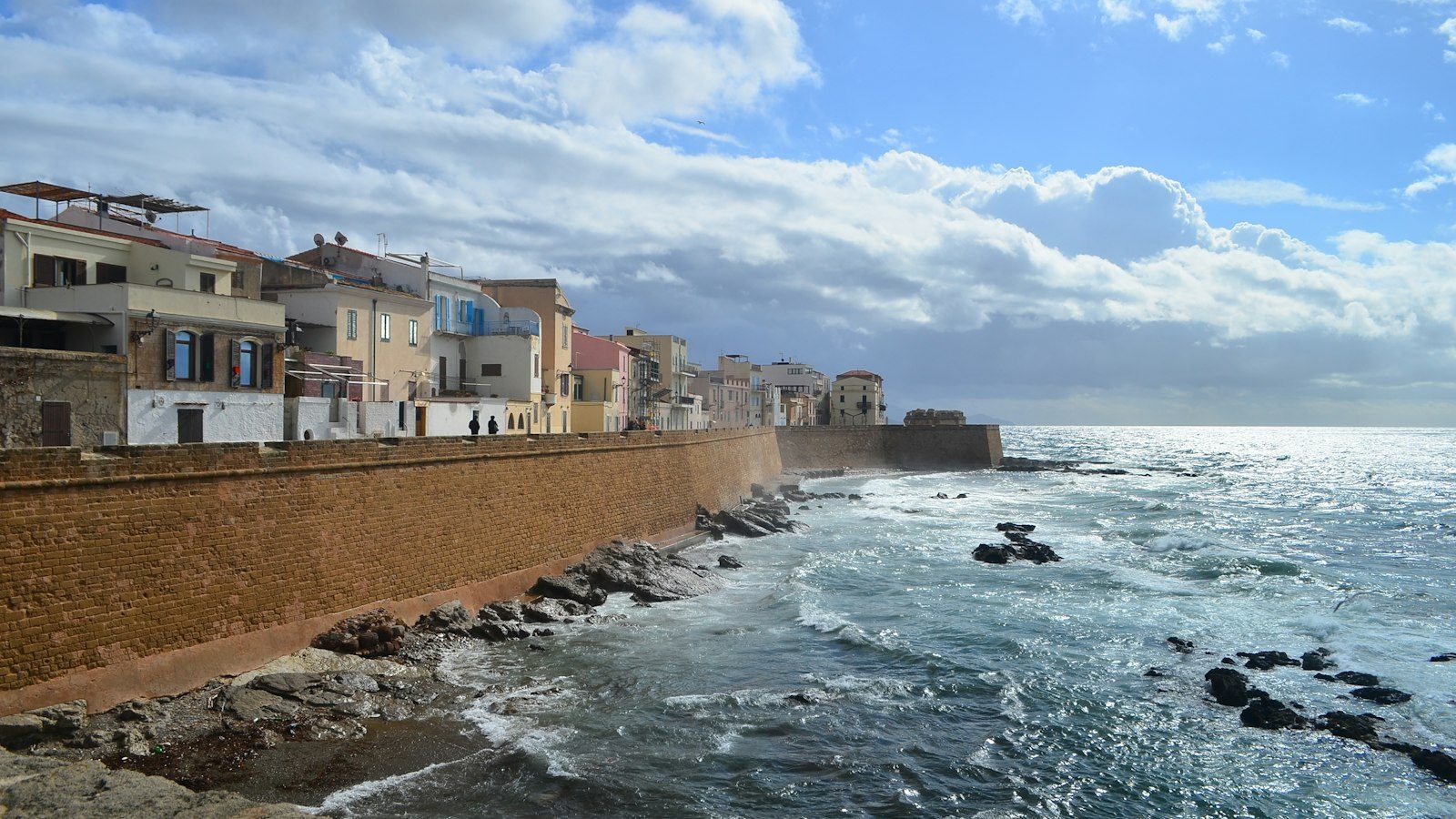
A walled Catalan town on Sardinia's north-west coast, with honey-coloured sea walls, a long sandy beach and the cliffs of Capo Caccia on the horizon. You walk the ramparts at sunset, take a boat to Neptune's Grotto and eat lobster cooked the Catalan way. Best time to visit: May to June and September. Daily budget (budget traveller): $75 to $215 USD.
Arrive and find your feet
Morning: Take the ALFA bus from the airport (€1, 20 to 30 minutes) to Via Catalogna. Drop your bag and get a coffee in Piazza Civica.
Afternoon: Wander Via Carlo Alberto and the side lanes, then look into the Cathedral of Santa Maria. Have a first swim at the Lido di San Giovanni, a short walk north of the port.
Evening: Walk the Bastioni Marco Polo at sunset, then grab fainè or pizza al taglio and eat it on the walls.
Neptune's Grotto by boat
Morning: Check the sea forecast, then take a morning boat from the port to Capo Caccia (about 40 minutes each way). Buy the €18 grotto ticket and join the guided tour.
Afternoon: Back in town, cool off in MACOR, the coral museum on Via XX Settembre (about €7), and browse the coral jewellers afterwards.
Evening: See whether a concert is on in the San Francesco cloister. Dinner in the old town, with aragosta alla catalana if you are splurging.
Palmavera and Maria Pia
Morning: Bus or cycle out towards Fertilia and on to the Palmavera nuraghe (€7) before the heat. Allow about an hour.
Afternoon: Spend the afternoon on Maria Pia beach, with dunes and pine shade. Pack a picnic from the Mercato Civico.
Evening: Stroll the Fertilia seafront at dusk, then take the bus back to Alghero for a drink on the walls.
Heading home: Buy Torbato wine, bottarga or pecorino for home, then catch the ALFA bus to the airport. Fly home, or carry on to the rest of Sardinia.
What to eat in Alghero
- Aragosta alla catalana: lobster with tomato, onion and lemon, Alghero's signature dish. It is priced by the hectogram (etto), so a whole lobster can easily pass €60. Ask before ordering
- Fainè: a thin chickpea flatbread baked in wood ovens, often topped with onion or sausage. Cheap, filling and mostly served from autumn to spring
- Spaghetti ai ricci: pasta with fresh sea urchin roe, a winter and early spring dish, as harvesting is regulated
- Seadas: a fried pastry filled with sheep's cheese and drizzled with honey, the dessert you will see on every menu
- Torbato, Vermentino and Cannonau: local white and red wines from vineyards around Alghero, with a myrtle liqueur (mirto) to finish
- Pizza al taglio or a panino from a bakery for lunch, then gelato on the walls in the evening
Hidden gems
- The cloister of San Francesco on Via Carlo Alberto, a calm two-level courtyard that hosts summer concerts and is easy to walk straight past
- The Torre di San Giovanni, a round tower on the landward walls that is often used for exhibitions and gives a different view over the old town roofs
- The Mercato Civico on Via Sassari in the morning, where fishmongers lay out the day's catch and locals argue about prices
- The Fertilia seafront at dusk, a quiet promenade with Roman bridge remains and views back across the bay to Alghero
- The Anghelu Ruju necropolis north of town, a field of rock-cut prehistoric tombs that sees a fraction of the Grotto's visitors
Getting around
Alghero's old town is small and largely closed to cars, so you will walk almost everywhere. The bus terminal on Via Catalogna is a few minutes from Porta Terra, and the walk from the walls to the far end of the Lido takes about 30 minutes. Local buses run along the Lido and out to Fertilia, and a single ticket costs about €1 from a machine or app. The ALFA bus links the airport, Fertilia and the town centre roughly hourly. Out of town, ARST buses go to Capo Caccia, Porto Conte, Bosa and Sassari, but departures are limited and fewer in winter, so check times before you plan a day. A small train line runs from Alghero to Sassari in about 35 minutes for a few euros. Cycling is a good option, as a flat cycle path runs along the seafront to Fertilia and on towards Maria Pia. To reach the remoter beaches, Le Prigionette and Bosa at your own pace, hire a car or scooter for a day or two. Parking in summer is tight and mostly paid near the centre. Taxis are not cheap, at roughly €30 to the airport, so book through your accommodation.
Safety
Alghero is very safe, and violent crime against visitors is rare. Watch your bag on busy summer evenings in the old town, on the walls and at crowded beaches, and do not leave valuables on the sand while you swim. The bigger risks are the sun, the sea and the wind. Sardinia gets very hot in July and August, so carry water and avoid hiking at midday. The maestrale (mistral) wind can whip up big waves at short notice. Respect red flags, as many beaches have lifeguards only in high season, and Neptune's Grotto and the boats close in rough seas. The Escala del Cabirol and the Capo Caccia cliff paths are steep and exposed, so wear proper shoes. Wildfires are a real summer risk, so never light fires or drop cigarettes. Tap water is generally safe to drink, though many locals buy bottled because of the taste. The EU emergency number is 112. EU travellers should carry an EHIC and UK travellers a GHIC, and everyone else needs travel insurance with medical cover.
Frequently asked questions
What does this 3-day Alghero itinerary cover?
Day 1: Arrive and find your feet. Day 2: Neptune's Grotto by boat. Day 3: Palmavera and Maria Pia.
Is 3 days enough for Alghero?
Our recommended trip length for Alghero is 4 to 6 days. This 3-day plan focuses on the highlights and groups sights by area so you spend less time travelling between them.
How much does 3 days in Alghero cost?
A budget traveller spends about $75 to $215 USD a day in Alghero, so roughly $225 to $645 USD for 3 days, not counting flights.
Where should I stay for 3 days in Alghero?
Centro Storico (old town): The walled Catalan core, with the cathedral, the church of San Francesco, Piazza Civica and the bastions over the sea. New town and Via Sassari: The grid of streets just east of the walls, around Via Sassari, Piazza Sulis and the covered market.
When is the best time to visit Alghero?
The best time to visit Alghero is May to June and September.
How do I get around Alghero?
Alghero's old town is small and largely closed to cars, so you will walk almost everywhere. The bus terminal on Via Catalogna is a few minutes from Porta Terra, and the walk from the walls to the far end of the Lido takes about 30 minutes.
Is Alghero safe for solo travellers?
Alghero is very safe, and violent crime against visitors is rare. Watch your bag on busy summer evenings in the old town, on the walls and at crowded beaches, and do not leave valuables on the sand while you swim.
Read more about Alghero
More 3-day guides
- Portofino in 3 days
- Procida in 3 days
- Tropea in 3 days
- Assisi in 3 days
- Bolzano in 3 days
- Montepulciano in 3 days
- Orvieto in 3 days
- Stresa in 3 days
Alghero in 2 days | Alghero in 4 days | Alghero in 5 days | Alghero in 7 days | Full Alghero guide
Joy Plus home | Destinations | Itineraries | Activities | Flights | Budget planner | Calendar | Map | Blog | Lifetime access