Killarney in 2 days
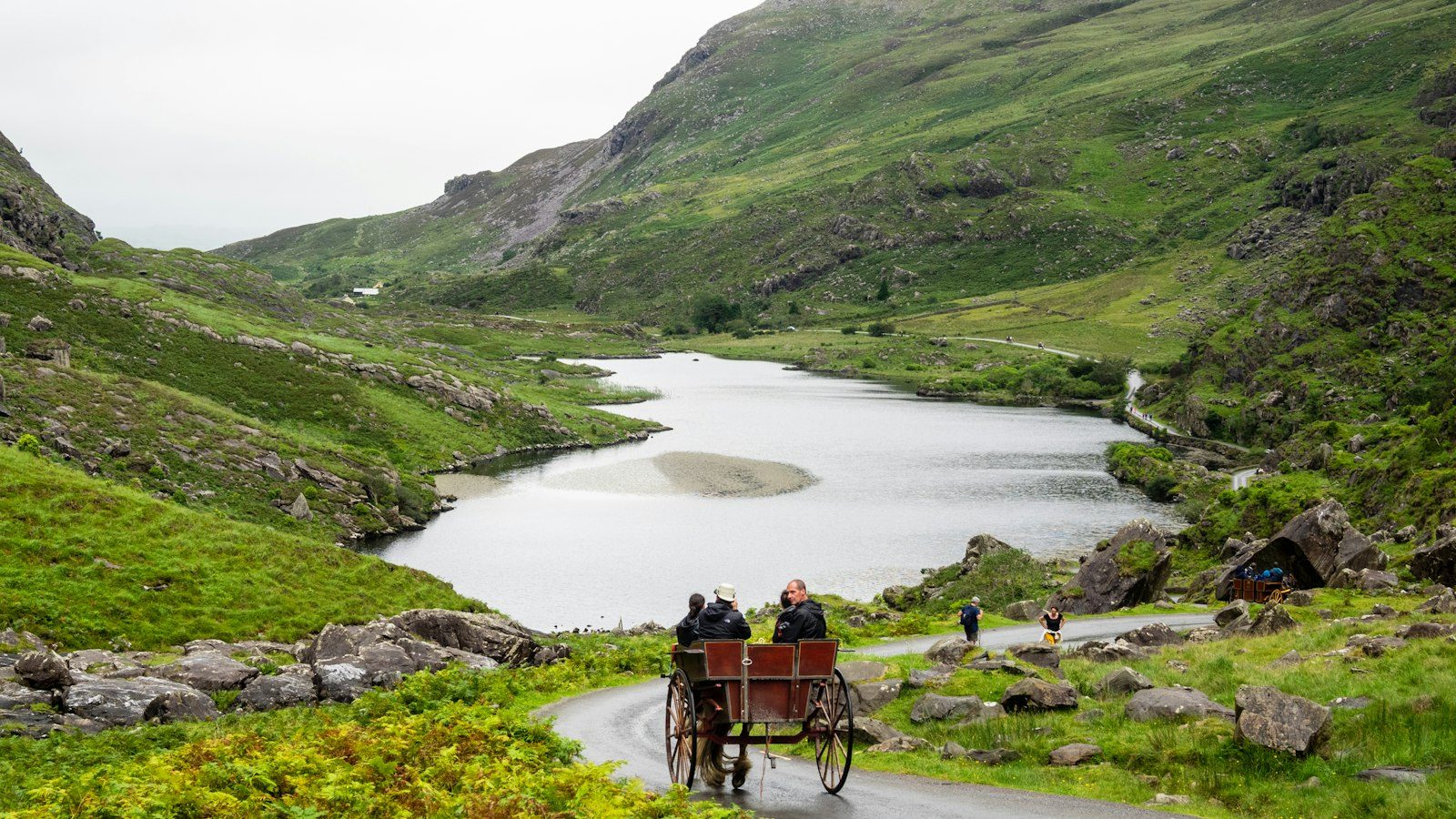
A busy, friendly market town on the edge of Ireland's oldest national park. You can cycle to lakeside castles and waterfalls, walk the Gap of Dunloe mountain pass and finish the day with trad music in a pub. Best time to visit: May to June and September. Daily budget (budget traveller): $95 to $270 USD.
Arrive and find your feet
Morning: Take a morning train from Dublin (about three to three and a half hours). Drop your bag at your hostel and get a coffee on High Street.
Afternoon: Walk through Killarney House gardens into Knockreer and down to the shore of Lough Leane. Look inside St Mary's Cathedral on the way back.
Evening: Have chowder and brown bread in a pub, then catch the music at O'Connor's or another session on High Street.
Bike to Muckross and Torc
Morning: Hire a bike (€15-25) and ride the park paths to Muckross Abbey before the crowds. Walk around the cloister and the yew tree.
Afternoon: Tour Muckross House (€9) and stroll the free gardens, then ride on to Torc Waterfall and climb the steps for the view.
Evening: Ride back along the lakeside path, return the bike and eat fish and chips at Quinlan's.
Heading home: For the airport or station, see Getting there in the full Killarney guide.
What to eat in Killarney
- Full Irish breakfast: sausages, rashers, black and white pudding, egg and brown bread. Hostels and B&Bs often include it, and cafés charge around €12-16
- Seafood chowder and brown bread: served in most pubs at lunch, filling and one of the best-value meals in town
- Fish and chips: battered fresh fish from Quinlan's Seafood Bar, which is owned by a Kerry fishing family
- Kerry lamb: slow-cooked in Irish stew or roasted, on most pub and restaurant menus
- Boxty: Irish potato pancakes with savoury fillings, served at Bricín on High Street
- Murphy's Ice Cream on Main Street: a Kerry ice cream maker with flavours such as brown bread and sea salt, worth having even when it rains
Hidden gems
- Knockreer estate, entered through a gate opposite St Mary's Cathedral, with quiet paths down to Lough Leane and red deer in the fields at dusk
- Aghadoe Hill at sunset, where an old church ruin and the stump of a round tower look out over the lakes and the Reeks
- Dinis Cottage and the Meeting of the Waters, a quiet spot deep in the park where the lakes meet, reached by bike or on foot
- Inisfallen Island, with the ruins of a monastery where monks wrote the Annals of Inisfallen, reached by boat from Ross Castle in summer
- Ross Island's copper mine trail, a short loop past Bronze Age mining sites and lakeside woods, easily added to a castle visit
Getting around
Killarney's town centre is small, and you can walk from the train station to the main streets in five minutes. The national park starts at Killarney House, right next to the centre. A bike is the best way to see the park. Several shops in town hire them for around €15-25 a day, and the paths to Muckross House, the abbey and Torc are mostly flat and traffic-free. Jaunting cars, the local horse and traps, wait at the park gates and near the cathedral. Agree the price and route before you set off. Taxis wait at the rank on College Street. A ride to Muckross House or Ross Castle costs roughly €10-20. There is no local bus around the park. Bus Éireann runs from Killarney to Tralee, Cork and Kenmare, and the Ring of Kerry has a limited bus service, mostly in summer. Day tours are the easy option. For the Gap of Dunloe, tour companies run bus and boat combinations from town. Roads outside town are narrow, winding and often have no pavement.
Safety
Killarney is safe, and serious crime against visitors is rare. Watch your bag in crowded pubs and on busy summer weekends. Late on Friday and Saturday nights the main streets can get rowdy, so keep a little distance from groups that are drinking. The real risks are outdoors. Weather in Kerry changes fast, and mountain walks such as Carrauntoohil, Ireland's highest peak, cause accidents every year. Hire a guide for the Reeks, and avoid the Devil's Ladder route in wet weather. Many country roads, including the N71 to Ladies View, have no pavement, so wear something bright and walk facing the traffic. Give the red deer a wide berth, especially during the autumn rut, and check for ticks after walking through long grass. Tap water is safe to drink. Dial 112 or 999 in an emergency. EU visitors should bring an EHIC, UK visitors a GHIC, and everyone else needs travel insurance with medical cover.
Frequently asked questions
What does this 2-day Killarney itinerary cover?
Day 1: Arrive and find your feet. Day 2: Bike to Muckross and Torc.
Is 2 days enough for Killarney?
Our recommended trip length for Killarney is 3 to 5 days. This 2-day plan focuses on the highlights and groups sights by area so you spend less time travelling between them.
How much does 2 days in Killarney cost?
A budget traveller spends about $95 to $270 USD a day in Killarney, so roughly $190 to $540 USD for 2 days, not counting flights.
Where should I stay for 2 days in Killarney?
Town centre: Main Street, High Street, New Street and Plunkett Street, plus the lanes between them. Muckross Road: The road running south from town towards the national park, lined with hotels, guesthouses and B&Bs.
When is the best time to visit Killarney?
The best time to visit Killarney is May to June and September.
How do I get around Killarney?
Killarney's town centre is small, and you can walk from the train station to the main streets in five minutes. The national park starts at Killarney House, right next to the centre.
Is Killarney safe for solo travellers?
Killarney is safe, and serious crime against visitors is rare. Watch your bag in crowded pubs and on busy summer weekends.
More 2-day guides
- Dublin in 2 days
- Galway in 2 days
- Cork in 2 days
- Dingle in 2 days
- Kutná Hora in 2 days
- Lake District in 2 days
- Lefkada in 2 days
- Lübeck in 2 days
Killarney in 3 days | Killarney in 4 days | Killarney in 5 days | Killarney in 7 days | Full Killarney guide
Joy Plus home | Destinations | Itineraries | Activities | Flights | Budget planner | Calendar | Map | Blog | Lifetime access