Paro in 2 days
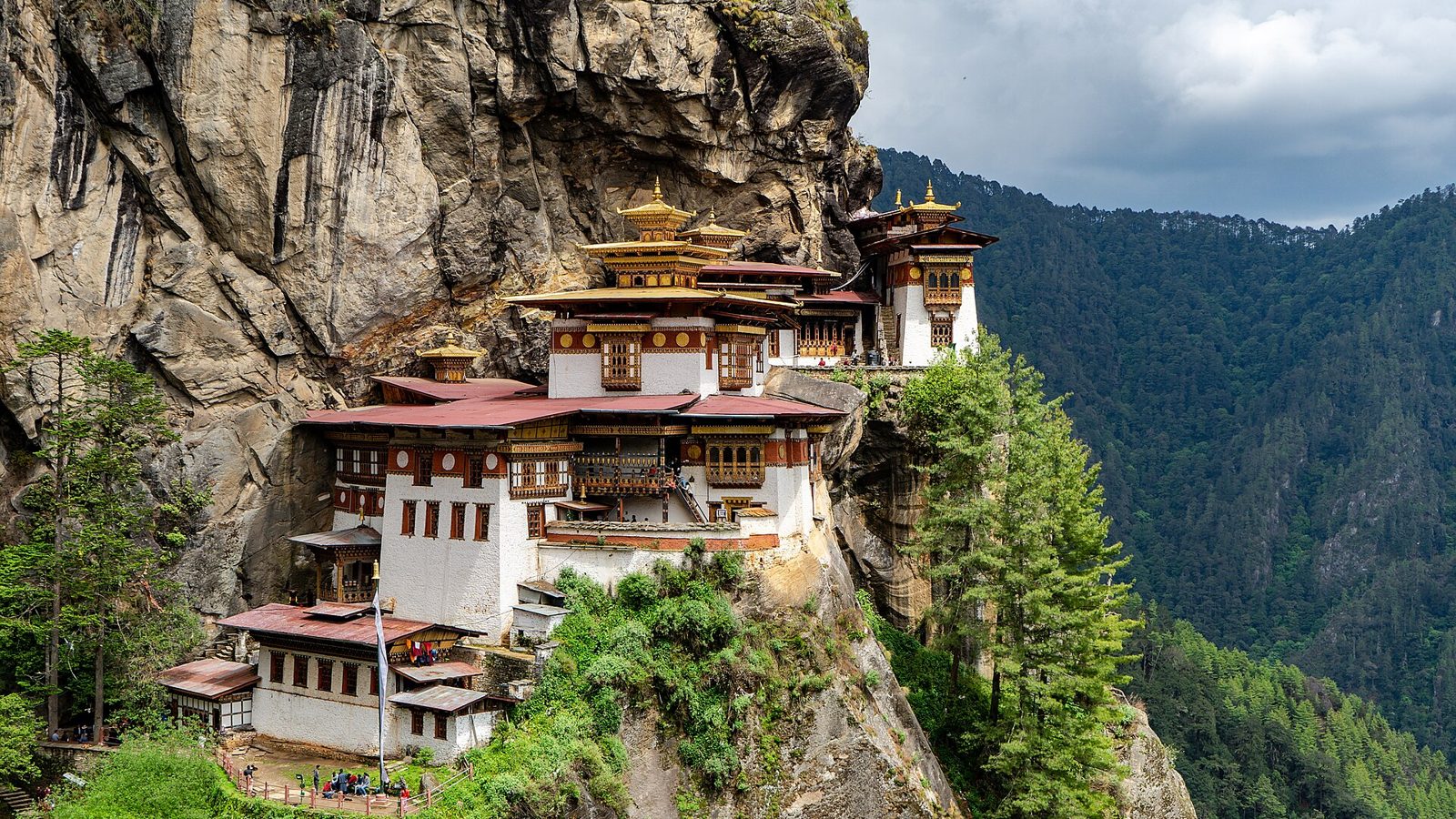
A wide green valley in western Bhutan where every international flight lands. You hike up to the Tiger's Nest on its cliff, walk across a wooden bridge to a huge white fortress and eat chillies and cheese in a valley full of farmhouses and prayer flags. Best time to visit: March to May and October to November. Daily budget (budget traveller): $200 to $600 USD.
Land and take it easy
Morning: Fly in from Kathmandu, Delhi or Bangkok, sitting on the left on the Kathmandu flight for views of the Himalaya. Your guide or hotel meets you at the airport.
Afternoon: Check in, drink plenty of water and take a gentle walk around Paro town and the main street shops. No big climbs today.
Evening: Walk to Nyamai Zam to see the dzong lit up, then have momos and ema datshi in a café in town.
Dzong, museum and Zuri walk
Morning: With your guide, visit the National Museum in Ta Dzong, then walk down to Rinpung Dzong. Dress modestly for both.
Afternoon: Take the short forest path up to Zuri Dzong for views over the valley and the airport. Visit Dungtse Lhakhang on the way back.
Evening: Free time in town without a guide. Browse the handicraft shops and have an early night before the hike.
Heading home: Transfer to the airport about 10 minutes away. Weather delays happen, so leave a buffer before onward flights.
What to eat in Paro
- Ema datshi: chillies cooked in melted cheese, the national dish. Ask for it 'less spicy' if you are not used to it
- Red rice: the slightly nutty local rice grown in the Paro valley, served with almost every meal
- Momos: steamed dumplings filled with cheese, vegetables or beef, sold in small cafés in town for a few dollars a plate
- Shakam paa and phaksha paa: dried beef or pork cooked with chillies and radish, heavy and very good after a cold day
- Suja and ara: salted butter tea and the local spirit made from rice or maize, often offered in farmhouses
- Coffee and cake at Champaca Café, or a local lunch at Sonam Trophel in town, a break from the buffet food in tourist hotels
Hidden gems
- Zuri Dzong, a small fortress on the ridge above the museum, reached by a short forest walk with views over the whole valley and the airport
- Dungtse Lhakhang near the Paro Chhu, a chorten-shaped temple built by the iron bridge builder Thangtong Gyalpo, with painted floors that represent levels of Buddhist cosmology
- Watching planes from the road above the airport, where you can see aircraft bank between the ridges on their final turn
- The ruins and rebuilt walls of Drukgyel Dzong at the head of the valley, where Jomolhari sometimes shows itself on clear mornings
- The Sunday vegetable market by the river, where farmers sell red rice, dried chillies, chunks of hard yak cheese and betel nut
Getting around
Paro town is small and flat enough to walk. It takes about 10 minutes from the main street to Nyamai Zam, then a steady climb up to the dzong and the museum. The valley stretches more than 15km, though, and the Tiger's Nest trailhead is about 10km north of town, so for most sights you will travel by car. Tourists usually book a guide and car together. Expect about $80 to $100 USD a day for both, and less on days when you only need a driver. You do not need a guide to walk around Paro town, shop or eat, so plan one or two free days on foot to save money. Taxis wait near the town centre for short hops, and your hotel can call one. Agree the price first. Roads are narrow and winding, and the drive to Thimphu takes about 1 to 1.5 hours. Travel beyond Paro and Thimphu, including Haa and Punakha, needs a guide and route permit. There is no public transport worth relying on for visitors, and you cannot rent a car without arranging permits through an operator.
Safety
Paro is one of the safest places in Asia, and crime against visitors is rare. The real risks are altitude, roads and weather. The town is at about 2,200m, the Tiger's Nest at 3,120m and Chele La close to 4,000m, so take a gentle first day, drink plenty of water and go easy on alcohol until you have adjusted. Tell your guide if you get a bad headache, nausea or breathlessness. The Tiger's Nest trail is steep, dusty or muddy depending on the season, and has long drops and hundreds of steps near the top. Wear proper shoes and do not lean over the edges. Roads are narrow with sharp bends, and landslides are common during the June to September monsoon. Stray dogs bark loudly at night and can be territorial, so give them space. Tap water is not safe to drink. Use filtered or bottled water. Emergency numbers are 113 for police, 112 for ambulance and 110 for fire. Travel insurance with medical and evacuation cover is essential.
Frequently asked questions
What does this 2-day Paro itinerary cover?
Day 1: Land and take it easy. Day 2: Dzong, museum and Zuri walk.
Is 2 days enough for Paro?
Our recommended trip length for Paro is 3 to 5 days. This 2-day plan focuses on the highlights and groups sights by area so you spend less time travelling between them.
How much does 2 days in Paro cost?
A budget traveller spends about $200 to $600 USD a day in Paro, so roughly $400 to $1,200 USD for 2 days, not counting flights.
Where should I stay for 2 days in Paro?
Paro town: A compact grid of streets lined with painted wooden shops, small hotels, cafés and handicraft stores, on the west bank of the Paro Chhu. Dzong and museum hillside: The slope just east of town, with Rinpung Dzong, the round Ta Dzong watchtower that houses the National Museum, and paths up to Zuri Dzong.
When is the best time to visit Paro?
The best time to visit Paro is March to May and October to November.
How do I get around Paro?
Paro town is small and flat enough to walk. It takes about 10 minutes from the main street to Nyamai Zam, then a steady climb up to the dzong and the museum.
Is Paro safe for solo travellers?
Paro is one of the safest places in Asia, and crime against visitors is rare. The real risks are altitude, roads and weather.
More 2-day guides
- Thimphu in 2 days
- Perhentian Islands in 2 days
- Puerto Princesa in 2 days
- Pushkar in 2 days
- Quy Nhon in 2 days
- Siquijor in 2 days
- Sukhothai in 2 days
- Sumba in 2 days
Paro in 3 days | Paro in 4 days | Paro in 5 days | Paro in 7 days | Full Paro guide
Joy Plus home | Destinations | Itineraries | Activities | Flights | Budget planner | Calendar | Map | Blog | Lifetime access