Destinations / Asia
Battambang, Cambodia travel guide
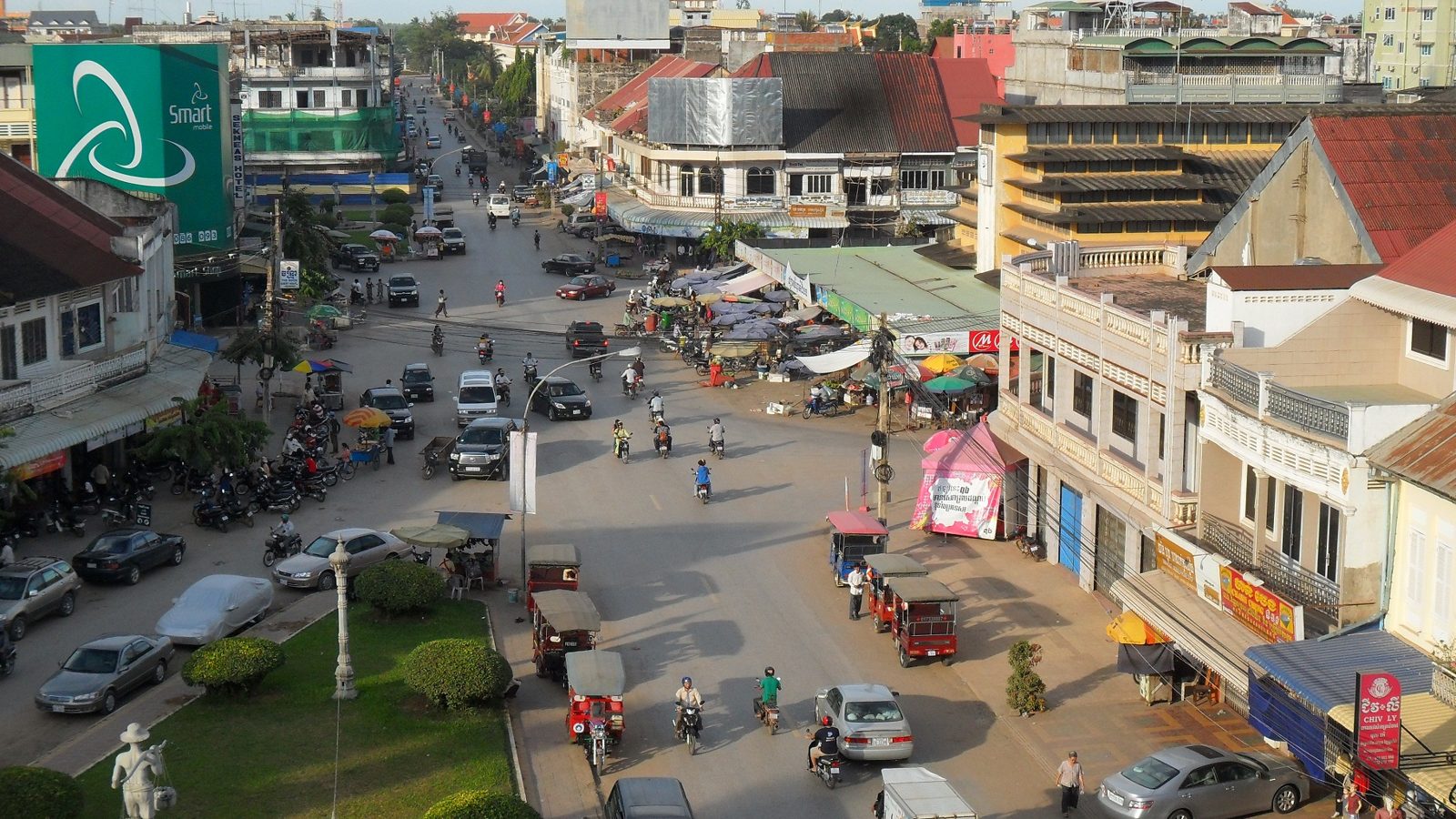
Cambodia's second-biggest province town, on a lazy river in the rice bowl of the northwest. You wander streets of French shophouses, ride the bamboo train through paddy fields, watch a million bats leave a cave at dusk and catch a student circus show at night.
- Best time to visit: November to February
- Daily budget (budget traveller): $25 to $90 USD
- Ideal trip length: 3 to 5 days
Battambang sits on the Sangker River in northwest Cambodia, about four and a half hours by bus from Phnom Penh and three to four from Siem Reap. Most visitors call it the country's second city, though it feels more like a big market town. The centre is a grid of French colonial shophouses, many faded and some beautifully restored, laid out around the art deco Psar Nat market. Head out of town on any road and you are in rice fields within minutes. Battambang is known across Cambodia for its rice, its oranges and its artists. Phare Ponleu Selpak, the arts school whose graduates run the famous circus in Siem Reap, is based here, and small galleries and cafés fill the streets near the river. The big sights are all a tuk-tuk ride out of town: the bamboo train near Phnom Banan, the hilltop temple at Banan, the Killing Caves on Phnom Sampeau and the bat cave below it at sunset. There is not much nightlife and few big-name sights, which is exactly why people like it. Cheap guesthouse rooms, $2 noodle breakfasts, easy bicycle hire and friendly tuk-tuk drivers make Battambang a relaxed and good-value stop for a solo traveller between Phnom Penh and Siem Reap.
Battambang is the capital of Cambodia's most productive rice province. It is a low-rise town of around 200,000 people on both banks of the slow, brown Sangker River. The French built much of the centre in the early 20th century, and the shophouse grid, the art deco market and the old governor's residence survived the Khmer Rouge years better than in most Cambodian towns. Most travellers stop for a night between Phnom Penh and Siem Reap. Stay longer and you get the better version: a noodle breakfast at Psar Nat, a slow bike ride through village lanes, sunset at the bat cave and a circus show in a big top on the edge of town. Battambang is cheap even by Cambodian standards, with guesthouse rooms, dollar meals and shared tuk-tuks keeping costs low.
Getting here is straightforward. Buses run day and night from Phnom Penh, taking around 4.5 to 5 hours for $10 to $16 USD, and from Siem Reap in 3 to 4 hours. A daily train from Phnom Penh is slower but scenic. The nearest international airports are Siem Reap Angkor and Techo International in Phnom Penh. The land border with Thailand has been closed since June 2025, so overland routes from Bangkok do not work. In town, walk the old quarter and use tuk-tuks or a bicycle for everything else. Stay in the old French quarter for cafés and buses, on the east bank for quiet nights, or in Wat Kor village for the countryside on your doorstep.
Timing shapes the trip. November to February is cool, dry and the best time for cycling, temples and circus nights, which run four times a week then. March to May is fiercely hot, so plan outdoor trips for early morning and late afternoon. The rainy season from June to October brings green paddies, cheaper rooms and the best chance of the boat to Siem Reap running, but also muddy roads and afternoon storms. Big festivals such as Khmer New Year in April and Pchum Ben in September or October fill buses and close some businesses. Battambang is safe and easy-going, and plenty of people speak English. Evenings mean riverside food stalls and a quiet beer rather than clubs.
Battambang itinerary
Arrive and find your feet
Morning: Take a morning bus from Phnom Penh (about 4.5 to 5 hours) or Siem Reap (3 to 4 hours). A tuk-tuk to your guesthouse costs a couple of dollars.
Afternoon: Drop your bag and walk to Psar Nat. Wander the colonial shophouses on Streets 2 and 2.5 and look into a gallery or two.
Evening: Watch locals exercise on the riverbank at sunset, then eat lort cha and barbecue at the riverside stalls.
The big tuk-tuk day
Morning: Leave by 7am for Wat Banan to climb the stairs before the heat, then ride the bamboo train nearby (about $5).
Afternoon: Stop for lunch and kralan by the road, then head to Phnom Sampeau. Visit the hilltop temples and the Killing Caves (roughly $2 to $3 entry).
Evening: Grab a drink at a stall at the foot of the hill by 5pm and watch the bats pour out of the cave at dusk. Back to town for a late dinner.
Bikes, villages and the circus
Morning: Rent a bicycle and ride south to Wat Kor village to see the old wooden houses. Leave a small donation if a family shows you round.
Afternoon: Rest through the hottest hours, then book a market tour and afternoon cooking class, or visit a few studios in the old quarter.
Evening: Take a tuk-tuk to Phare Ponleu Selpak for the 7pm circus show ($16). Arrive early to see the art exhibition.
Ek Phnom and village workshops
Morning: Cycle or take a tuk-tuk 11km north along the river to Ek Phnom. Stop at family workshops making rice paper, fish paste and dried bananas on the way.
Afternoon: Explore the temple ruins and the giant Buddha at the pagoda next door, then head back to town for a long lunch.
Evening: A quiet night. Try nom banh chok or fish amok at a family restaurant, then have a drink on Street 1.5.
Kamping Puoy reservoir
Morning: Take a tuk-tuk 25km west to Kamping Puoy, passing lotus fields. Rent a hammock hut by the water.
Afternoon: Take a short boat ride on the lake and eat grilled fish at the lakeside stalls. Head back before the late-afternoon storms in the wet season.
Evening: Back in town, have a sunset drink by the river and an early night.
Slow day in town
Morning: Wake early for the busiest hour at Psar Nat, then have breakfast at a café in a restored shophouse.
Afternoon: Walk the riverside to the provincial museum and the temples along Street 1, or rest by your guesthouse pool.
Evening: If you missed it, see another circus show, or join a street-food tour by tuk-tuk.
Slow morning and depart
Morning: Have a last noodle breakfast and buy some Battambang oranges or rice for the road.
Afternoon: Catch a bus to Siem Reap or Phnom Penh, or the boat to Siem Reap if the river is high enough. Confirm times the day before.
Evening: Arrive in Siem Reap or Phnom Penh, or carry on to your next stop.
Best neighbourhoods
- Old French quarter and Psar Nat: The grid of colonial streets on the west bank, numbered 1 to 3 with half-streets in between, wrapped around the Psar Nat market. Most guesthouses, cafés, galleries and travel agents are here, and it is all walkable. Rooms on the main streets can be noisy from early morning, so ask for one at the back.
- Riverside (Street 1): The road along the west bank of the Sangker, with the provincial museum, temples and a strip of food stalls and drink carts in the evening. Locals come here to exercise and eat at sunset. It is a pleasant base with river views, and the market is two minutes away.
- East bank: Across the bridges from the old town, quieter and more residential, with a few of the better boutique hotels, villas with pools and some local restaurants. It feels calmer at night. You will cross the river on foot or by bike to reach most cafés, which takes 5 to 15 minutes.
- Wat Kor village: A riverside village a few kilometres south of the centre, known for its wooden Khmer houses, some over a century old. It is green and rural, with a couple of upmarket stays and small homestays. Perfect for peace and bike rides, but you will need a tuk-tuk or bicycle to get into town.
- Phnom Sampeau: The village at the foot of the hill with the Killing Caves and bat cave, about 12km southwest of town. A few simple homestays and drink stalls line the road. Stay here if you want to see the bats without rushing back, but evenings are very quiet and there is little else nearby.
Must-do experiences
- Walk the colonial streets: Start at Psar Nat, the 1930s art deco market, then wander Streets 2 and 2.5 to see rows of French shophouses with shutters and balconies. It is free. Go early in the morning or late in the afternoon, when the light is soft and the heat is bearable, and stop for coffee in one of the small galleries.
- Ride the bamboo train: The original line near town closed when the railway was restored, and the tourist norry now runs on a short line near Phnom Banan, about 20km south. A ride costs about $5 per person and takes around 15 minutes each way, with a short break at the far end. It is touristy, but still fun.
- Watch the bats at Phnom Sampeau: Climb the hill to see the temples, the views and the Killing Caves, a sobering Khmer Rouge memorial. There is a hill entry fee of roughly $2 to $3, and motorbikes wait at the base to take you up for a few dollars. Come back down by 5pm to watch huge numbers of bats stream out of a cave at dusk, which is free.
- See the Phare circus: Phare Ponleu Selpak is a non-profit arts school, and its students put on circus shows in a big top on campus at 7pm. From November to February there are shows on Mondays, Wednesdays, Thursdays and Saturdays, and adult tickets cost $16. In 2026 the Tini Tinou circus festival comes to the campus from 21 to 24 November, with $10 shows.
- Climb to Wat Banan: This 11th-century Angkorian temple sits on a hilltop about 25km south of town, with five crumbling towers at the top of a long stone stairway. There is a small entry fee, usually a couple of dollars. Go in the early morning, and combine it with the bamboo train, which starts nearby.
- Cycle out to Ek Phnom: Ride or take a tuk-tuk 11km north along the river to the ruins of an 11th-century temple next to a working pagoda with a giant seated Buddha. On the way, stop at family workshops making rice paper, fish paste and dried bananas. Entry is a small fee, and the route is flat and green.
- Take a Khmer cooking class: Several small family-run schools in town take you to the market in the morning and then teach you to cook fish amok, a curry and a salad. Expect to pay from about $15 for half a day, including the meal. It is an easy way to meet other travellers.
Hidden gems
- Wat Kor village by bicycle, where some families open their century-old wooden houses to visitors for a small donation
- The riverbank on Street 1 at sunset, when locals come out for group aerobics and the drink carts start serving sugar cane juice
- Kamping Puoy reservoir, a large lake 25km west of town built in the Khmer Rouge years, where families rent hammock huts and lotus fields line the road
- Small galleries and studios in the old quarter run by young Battambang artists, many trained at Phare Ponleu Selpak
- The early-morning fresh market inside and around Psar Nat, at its busiest and most photogenic before 8am
Daily budget
- Accommodation: budget $5 to $10 USD / night (hostel dorm or basic fan room), mid-range $25 to $50 USD (boutique guesthouse with air con and pool), splurge $100+ USD (villa hotel or Wat Kor riverside stay). Prices rise a little from December to February and around festivals. Many mid-range places have pools, which you will appreciate from March. Book ahead for the Tini Tinou festival.
- Food: budget $6 to $10 USD / day (market noodles, street stalls, fruit), mid-range $15 to $25 USD (café breakfast and restaurant meals), splurge $35+ USD (hotel restaurants and Western food with wine). A noodle breakfast costs about $1 to $2 and a local restaurant main $3 to $6. Western dishes cost more. Prices are rough guides.
- Transport: budget $1 to $5 USD / day (walking, bicycle hire, short tuk-tuk rides), mid-range $10 to $20 USD (shared tuk-tuk day trips), splurge $35+ USD (private tuk-tuk or car for the full circuit). Buses to Phnom Penh cost about $10 to $16 USD and to Siem Reap about $6 to $12 USD. A full tuk-tuk day costs $18 to $35 USD for the vehicle, so share it if you can.
- Activities: budget $5 to $10 USD / day (bamboo train $5, hill and temple fees of a few dollars), mid-range $15 to $30 USD (circus show at $16, cooking class), splurge $40+ USD (private guided tours, day trips with a guide). The bats at Phnom Sampeau are free to watch. Circus tickets cost $16 for adults, or $10 per show during Tini Tinou in November 2026.
- Drinks & nightlife: budget $2 to $5 USD (a draught beer or sugar cane juice by the river), mid-range $8 to $15 USD (a few drinks at a café bar), splurge $25+ USD (cocktails at a hotel bar). Draught beer can cost under $1 at local places, and iced coffee about $1 to $2. Nightlife is low-key, mostly a handful of bars on Street 1.5 and Street 2.
Where to stay
- Social hostel in Old French quarter ($5 to $10 USD / night (dorm)): A handful of small hostels and backpacker guesthouses sit around Psar Nat and Street 1.5, many with cheap dorms, cafés and noticeboards for sharing tuk-tuks. You are a short walk from the bus offices, the river and the bars.
- Boutique hotel in Old French quarter or east bank ($25 to $60 USD / night): Restored colonial villas and modern boutique guesthouses offer air con, pools and good breakfasts at prices well below Siem Reap. The east bank ones are quieter, and the old town ones are closer to the cafés.
- Homestay in Wat Kor village or Phnom Sampeau ($10 to $25 USD / night): Family homestays in wooden houses give you rural life, home cooking and quiet nights. Phnom Sampeau puts you next to the bat cave, while Wat Kor is a short bike ride from town.
- Splurge in Wat Kor village or east bank ($80 to $180+ USD / night): Upmarket stays such as Maisons Wat Kor, with traditional wooden houses set in gardens, and Bambu Hotel on the east bank both have pools, spa treatments and calm surroundings.
What to eat
- Nom banh chok: rice noodles with a green fish curry and fresh herbs, sold from carts and market stalls for breakfast at about $1 to $2
- Fish amok: fish steamed in banana leaf with coconut and kroeung spice paste, the Cambodian classic, best at a family restaurant
- Lort cha: short, fat rice noodles stir-fried with beansprouts, egg and chives, a cheap night-market favourite
- Battambang oranges: green-skinned and sweet, sold all over town and on the roadsides, especially from November
- Kralan: sticky rice with beans and coconut, roasted in bamboo tubes and sold on the roads out to Banan and Sampeau
- Khmer barbecue and a cold Angkor or Cambodia beer at the riverside stalls in the evening, plus a fresh coconut during the day
Day trips
- Phnom Banan and the bamboo train (About 20 to 25km south of Battambang, 40 minutes to an hour by tuk-tuk): An Angkorian hilltop temple with five towers at the top of a long stairway, and the tourist bamboo train line nearby. The ride through the fields takes about 15 minutes each way. Take a tuk-tuk, often as part of a full-day loop with Phnom Sampeau for about $18 to $35 USD. The bamboo train costs about $5 per person, and Wat Banan has a small entry fee. Go early to beat the heat.
- Ek Phnom and the river villages (About 11km north of Battambang): An 11th-century temple ruin next to a modern pagoda with a huge seated Buddha. The quiet river road passes homes making rice paper, fish paste and rice wine. Cycle along the river road, which is flat and takes about an hour each way, or hire a tuk-tuk for a half day for around $10 to $15 USD. Pay a small entry fee at the temple.
- Kamping Puoy reservoir (About 25km west of Battambang): A large reservoir built under the Khmer Rouge, now a weekend spot for local families, with hammock huts, boat rides and lotus fields along the way. It is a moving place once you know its history. Take a tuk-tuk, about 45 minutes each way, and agree a return time with the driver. Hammock huts and simple food stalls charge a few dollars. Weekdays are quieter.
When to visit
- Cool dry season (November - February): 20-32°C, sunny, low humidity and almost no rain. Crowds: Moderate, busiest around Christmas and New Year. The best time to visit. Ideal for cycling and tuk-tuk days, circus shows run four nights a week and the oranges are in season. The Tini Tinou circus festival comes to town from 21 to 24 November 2026.
- Hot season (March - May): 25-38°C, very hot and hazy, first storms in May. Crowds: Low, busy around Khmer New Year in mid-April. Tough in the midday heat, so sightsee early and late. Rooms are cheap. Khmer New Year is fun, but buses fill up and some businesses close for several days.
- Early wet season (June - August): 25-33°C, humid, with afternoon downpours. Crowds: Low. The fields turn bright green and prices drop. Mornings are often dry, so plan trips early. Dirt roads can be muddy, and mosquitoes are worse.
- Late wet season (September - October): 24-32°C, the wettest months, with occasional floods. Crowds: Low, busy during Pchum Ben. Lush and quiet, and the river is high, so the boat to Siem Reap is more likely to run. Some country roads flood, so keep plans flexible.
Entry rules for your passport
Visa rules for Cambodia depend on the passport you travel on. Check the official source before you book: Cambodia's official e-Visa site
Getting there
Battambang has no commercial flights. The nearest international airports are Siem Reap Angkor International, about 3 to 4 hours away by road, and Techo International in Phnom Penh, about 5 hours away. From Phnom Penh, more than 20 buses and minibuses run every day, taking roughly 4.5 to 5 hours for $10 to $16 USD. Daytime buses are safer than night ones. Royal Railway trains leave Phnom Penh daily at 6.40am and take around 7 hours, for about $10. From Siem Reap, buses and minivans take 3 to 4 hours and cost around $6 to $12 USD. When the river is high enough, usually during and after the rainy season, a slow boat links Battambang and Siem Reap across the Tonle Sap. It takes most of a day. The land border with Thailand, including Poipet, has been closed since June 2025, so fly from Bangkok to Siem Reap or Phnom Penh instead. Most nationalities need a visa: the e-visa costs $30 plus a fee, or you can get a visa on arrival for about $30 in cash. If you fly in, you must also complete the free e-Arrival card within seven days before you land.
Getting around
The old quarter is small and flat, so you can walk between guesthouses, cafés, the market and the river. Most of the sights are out of town, and the usual way to see them is by tuk-tuk. A half-day trip costs roughly $10 to $15 USD and a full day covering the bamboo train, Wat Banan, Phnom Sampeau and the bats around $18 to $35 USD, depending on the route. Agree the price and stops before you set off. Many drivers speak good English and act as informal guides. Ride-hailing apps such as PassApp and Grab work in town and are useful for short hops at fixed prices. Bicycles cost a dollar or two a day from guesthouses and are ideal for Wat Kor and the river road to Ek Phnom. Scooters cost a little more, but traffic is chaotic and your travel insurance may not cover you without a valid licence. Carry small US dollar notes and riel for fares.
Safety
Battambang is calm and friendly, and violent crime against visitors is rare. The main risk is the road. Traffic is chaotic, helmets are often skipped and night driving on country roads is dangerous, so pick daytime travel and wear a helmet on any motorbike. Bag snatching from tuk-tuks and motorbikes happens occasionally, so keep your bag on your lap and your phone out of the street side. The province was heavily mined during the civil war. Main roads and tourist sites are cleared, but in remote countryside stay on paths and never touch metal objects. Fighting broke out along the Thai border in 2025, and the land crossings stay closed, so check your government's advice before going anywhere near the western border districts. Do not drink the tap water. Use mosquito repellent against dengue, especially in the wet season, and take the heat seriously from March to May. Dial 117 for police and 119 for an ambulance. For anything serious, the better hospitals are in Phnom Penh, so get travel insurance with medical evacuation cover.
Solo travel tips
- Share your tuk-tuk: A full day out costs the same for one or four people. Ask at your guesthouse or post in a hostel group the night before, and you can cut the cost to a few dollars each.
- Get out early: From March to May the heat builds fast after 10am. Leave at 7am for Wat Banan and the bamboo train, rest at midday and save Phnom Sampeau for late afternoon.
- Book the circus night first: Phare shows run only on certain nights, and the schedule changes between seasons. Check the dates, book your ticket and then plan the rest of your stay around it.
- Eat at the market: Noodles at Psar Nat, fruit from the stalls and riverside barbecue in the evening keep food costs to a few dollars a day. Save the café brunches for once or twice.
- Safety for solo travellers: The main risks are traffic, bag snatching from tuk-tuks and the heat. Keep your bag on your lap, travel by day between towns and stay on paths in remote countryside.
- Meet people on a class or tour: Cooking classes, bike tours and the circus are easy ways to meet other travellers. Guesthouse common areas and the riverside stalls at sunset are good places to start a conversation.
Cultural etiquette
- Greet people with 'chom reap suor' (hello) and a sampeah, palms pressed together, and say 'arkun' (thank you).
- Cover your shoulders and knees at temples and pagodas, and take off your shoes and hat before going into shrine halls.
- Treat the Killing Caves and other Khmer Rouge memorials with respect. Keep your voice down and think before taking photos.
- Women should not touch monks or hand things directly to them. Place the item down or pass it through a man.
- Do not touch anyone's head, and avoid pointing your feet at people or Buddha images.
- Agree tuk-tuk and moto fares before you set off, and bargain gently and with a smile at markets.
- Tipping is not expected but is appreciated. Leave a dollar or two for good service or a helpful driver.
Frequently asked questions
How do I get to Battambang and from the bus to my room?
Most people take a bus. From Phnom Penh, over 20 buses a day make the trip in roughly 4.5 to 5 hours for about $10 to $16 USD, and from Siem Reap it takes 3 to 4 hours for around $6 to $12 USD. There is also a daily train from Phnom Penh at 6.40am that costs about $10. Buses stop at company offices in or near the old quarter, and tuk-tuk drivers wait at each one. A ride to most guesthouses costs a couple of dollars, so agree the fare first or use PassApp.
How many days do I need in Battambang?
Two nights covers the colonial streets, a full tuk-tuk day out to the bamboo train, Wat Banan, Phnom Sampeau and the bats, plus a circus show. Three to five nights lets you add cycling to Ek Phnom and Wat Kor, a cooking class and the Kamping Puoy reservoir. A week works if you want to slow right down, or wait for the boat to Siem Reap.
When is the best time to visit Battambang?
November to February is the cool, dry season, with clear skies, green fields after the rains, more circus shows and Battambang oranges in the markets. March to May is very hot, often well over 35°C. From June to October the rains come, usually in afternoon downpours. The countryside looks lush and rooms are cheaper, but dirt roads get muddy and some days are washed out.
Can I travel overland between Battambang and Thailand?
Not at the moment. Thailand closed all its land border crossings with Cambodia in June 2025 during a border conflict, including Poipet, the usual route between Bangkok and Battambang. No reopening date had been announced by autumn 2026. Instead, fly from Bangkok to Siem Reap or Phnom Penh and take a bus to Battambang. Check the latest situation before you book.
How do I get around and see the sights outside town?
Hire a tuk-tuk. A full day covering the bamboo train, Wat Banan, Phnom Sampeau and the bat cave costs about $18 to $35 USD for the vehicle, so it is cheaper if you share with people from your guesthouse. Agree the price, stops and finish time before you leave. For Ek Phnom and Wat Kor, rent a bicycle for a dollar or two a day. The routes are flat and mostly on quiet roads.
Can I take the boat to Siem Reap?
Sometimes. A boat runs along the Sangker River and across the Tonle Sap lake to Siem Reap, passing floating villages, but it depends on the water level. It usually runs only during and after the rainy season, when the river is high, and in the dry months it may stop or involve a long transfer. The trip can take 6 to 9 hours and costs more than the bus. Ask your guesthouse a few days ahead whether it is running.
Is Battambang safe for solo female travellers?
Yes. Battambang is relaxed and generally safe, and many women travel here alone. Dress modestly, especially at temples, and keep your bag secure on tuk-tuks. Use registered tuk-tuks or ride-hailing apps after dark rather than walking along unlit roads, and avoid travelling between towns at night.
What entry rules apply to Cambodia in 2026?
Most visitors need a visa. A 30-day tourist e-visa costs $30 plus a small processing fee at the official site, evisa.gov.kh, and takes about three working days. Visa on arrival is also available at airports for about $30 in cash with a passport photo. If you arrive by air, you must also complete the free Cambodia e-Arrival card at arrival.gov.kh within seven days before you land. Your passport should be valid for at least six months. Avoid look-alike sites that charge extra, and check your own government's travel advice.
More about Battambang
Tours and activities in Battambang | Battambang in 2 days | Battambang in 3 days | Battambang in 4 days | Battambang in 5 days | Battambang in 7 days
Joy Plus home | Destinations | Itineraries | Activities | Flights | Budget planner | Calendar | Map | Blog | Lifetime access