Battambang in 5 days
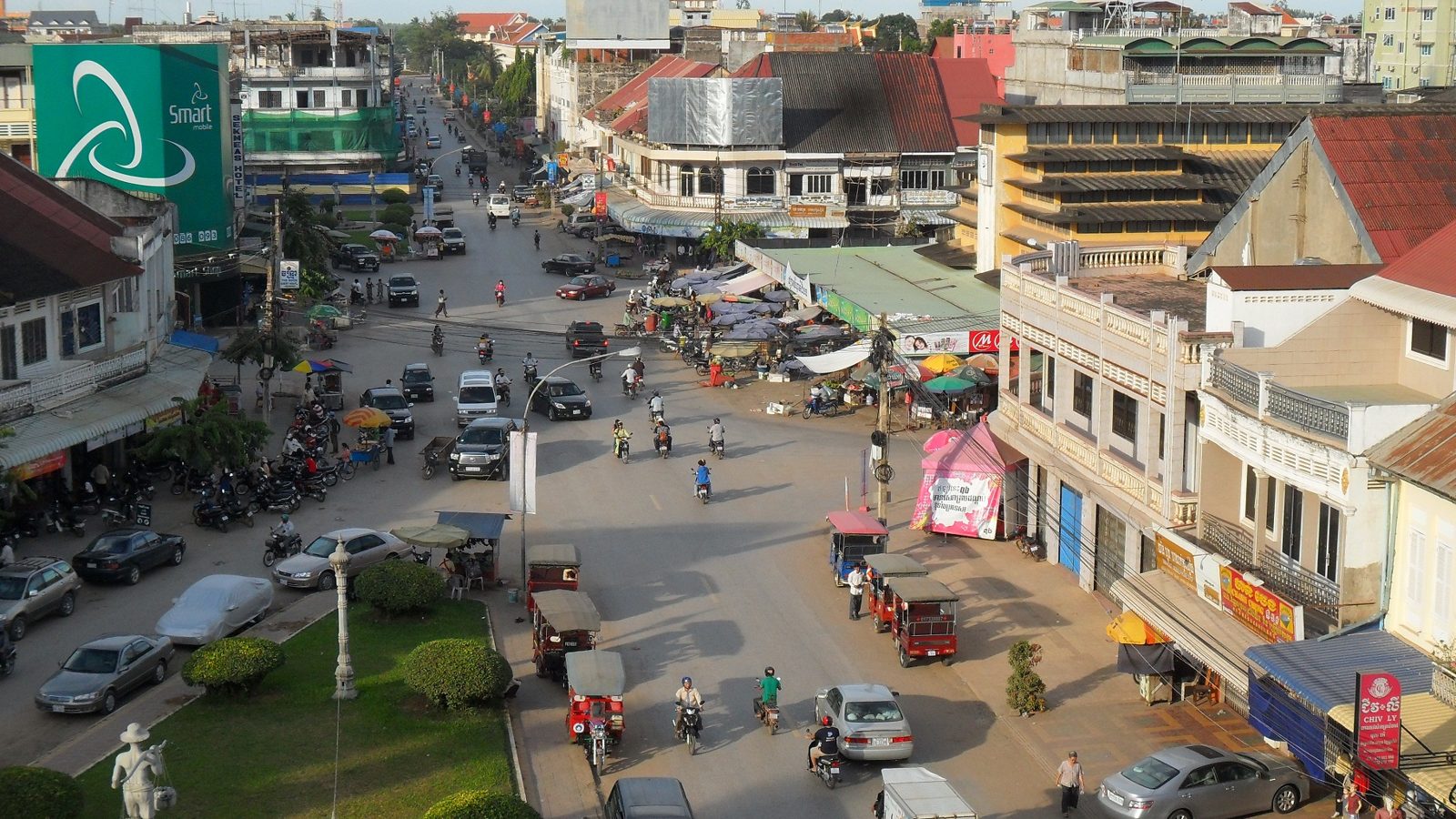
Cambodia's second-biggest province town, on a lazy river in the rice bowl of the northwest. You wander streets of French shophouses, ride the bamboo train through paddy fields, watch a million bats leave a cave at dusk and catch a student circus show at night. Best time to visit: November to February. Daily budget (budget traveller): $25 to $90 USD.
Arrive and find your feet
Morning: Take a morning bus from Phnom Penh (about 4.5 to 5 hours) or Siem Reap (3 to 4 hours). A tuk-tuk to your guesthouse costs a couple of dollars.
Afternoon: Drop your bag and walk to Psar Nat. Wander the colonial shophouses on Streets 2 and 2.5 and look into a gallery or two.
Evening: Watch locals exercise on the riverbank at sunset, then eat lort cha and barbecue at the riverside stalls.
The big tuk-tuk day
Morning: Leave by 7am for Wat Banan to climb the stairs before the heat, then ride the bamboo train nearby (about $5).
Afternoon: Stop for lunch and kralan by the road, then head to Phnom Sampeau. Visit the hilltop temples and the Killing Caves (roughly $2 to $3 entry).
Evening: Grab a drink at a stall at the foot of the hill by 5pm and watch the bats pour out of the cave at dusk. Back to town for a late dinner.
Bikes, villages and the circus
Morning: Rent a bicycle and ride south to Wat Kor village to see the old wooden houses. Leave a small donation if a family shows you round.
Afternoon: Rest through the hottest hours, then book a market tour and afternoon cooking class, or visit a few studios in the old quarter.
Evening: Take a tuk-tuk to Phare Ponleu Selpak for the 7pm circus show ($16). Arrive early to see the art exhibition.
Ek Phnom and village workshops
Morning: Cycle or take a tuk-tuk 11km north along the river to Ek Phnom. Stop at family workshops making rice paper, fish paste and dried bananas on the way.
Afternoon: Explore the temple ruins and the giant Buddha at the pagoda next door, then head back to town for a long lunch.
Evening: A quiet night. Try nom banh chok or fish amok at a family restaurant, then have a drink on Street 1.5.
Kamping Puoy reservoir
Morning: Take a tuk-tuk 25km west to Kamping Puoy, passing lotus fields. Rent a hammock hut by the water.
Afternoon: Take a short boat ride on the lake and eat grilled fish at the lakeside stalls. Head back before the late-afternoon storms in the wet season.
Evening: Back in town, have a sunset drink by the river and an early night.
Heading home: For the airport or station, see Getting there in the full Battambang guide.
What to eat in Battambang
- Nom banh chok: rice noodles with a green fish curry and fresh herbs, sold from carts and market stalls for breakfast at about $1 to $2
- Fish amok: fish steamed in banana leaf with coconut and kroeung spice paste, the Cambodian classic, best at a family restaurant
- Lort cha: short, fat rice noodles stir-fried with beansprouts, egg and chives, a cheap night-market favourite
- Battambang oranges: green-skinned and sweet, sold all over town and on the roadsides, especially from November
- Kralan: sticky rice with beans and coconut, roasted in bamboo tubes and sold on the roads out to Banan and Sampeau
- Khmer barbecue and a cold Angkor or Cambodia beer at the riverside stalls in the evening, plus a fresh coconut during the day
Hidden gems
- Wat Kor village by bicycle, where some families open their century-old wooden houses to visitors for a small donation
- The riverbank on Street 1 at sunset, when locals come out for group aerobics and the drink carts start serving sugar cane juice
- Kamping Puoy reservoir, a large lake 25km west of town built in the Khmer Rouge years, where families rent hammock huts and lotus fields line the road
- Small galleries and studios in the old quarter run by young Battambang artists, many trained at Phare Ponleu Selpak
- The early-morning fresh market inside and around Psar Nat, at its busiest and most photogenic before 8am
Getting around
The old quarter is small and flat, so you can walk between guesthouses, cafés, the market and the river. Most of the sights are out of town, and the usual way to see them is by tuk-tuk. A half-day trip costs roughly $10 to $15 USD and a full day covering the bamboo train, Wat Banan, Phnom Sampeau and the bats around $18 to $35 USD, depending on the route. Agree the price and stops before you set off. Many drivers speak good English and act as informal guides. Ride-hailing apps such as PassApp and Grab work in town and are useful for short hops at fixed prices. Bicycles cost a dollar or two a day from guesthouses and are ideal for Wat Kor and the river road to Ek Phnom. Scooters cost a little more, but traffic is chaotic and your travel insurance may not cover you without a valid licence. Carry small US dollar notes and riel for fares.
Safety
Battambang is calm and friendly, and violent crime against visitors is rare. The main risk is the road. Traffic is chaotic, helmets are often skipped and night driving on country roads is dangerous, so pick daytime travel and wear a helmet on any motorbike. Bag snatching from tuk-tuks and motorbikes happens occasionally, so keep your bag on your lap and your phone out of the street side. The province was heavily mined during the civil war. Main roads and tourist sites are cleared, but in remote countryside stay on paths and never touch metal objects. Fighting broke out along the Thai border in 2025, and the land crossings stay closed, so check your government's advice before going anywhere near the western border districts. Do not drink the tap water. Use mosquito repellent against dengue, especially in the wet season, and take the heat seriously from March to May. Dial 117 for police and 119 for an ambulance. For anything serious, the better hospitals are in Phnom Penh, so get travel insurance with medical evacuation cover.
Frequently asked questions
What does this 5-day Battambang itinerary cover?
Day 1: Arrive and find your feet. Day 2: The big tuk-tuk day. Day 3: Bikes, villages and the circus. Day 4: Ek Phnom and village workshops. Day 5: Kamping Puoy reservoir.
Is 5 days enough for Battambang?
Our recommended trip length for Battambang is 3 to 5 days. This 5-day plan focuses on the highlights and groups sights by area so you spend less time travelling between them.
How much does 5 days in Battambang cost?
A budget traveller spends about $25 to $90 USD a day in Battambang, so roughly $125 to $450 USD for 5 days, not counting flights.
Where should I stay for 5 days in Battambang?
Old French quarter and Psar Nat: The grid of colonial streets on the west bank, numbered 1 to 3 with half-streets in between, wrapped around the Psar Nat market. Riverside (Street 1): The road along the west bank of the Sangker, with the provincial museum, temples and a strip of food stalls and drink carts in the evening.
When is the best time to visit Battambang?
The best time to visit Battambang is November to February.
How do I get around Battambang?
The old quarter is small and flat, so you can walk between guesthouses, cafés, the market and the river. Most of the sights are out of town, and the usual way to see them is by tuk-tuk.
Is Battambang safe for solo travellers?
Battambang is calm and friendly, and violent crime against visitors is rare. The main risk is the road.
Read more about Battambang
More 5-day guides
- Kampot in 5 days
- Siem Reap in 5 days
- Phnom Penh in 5 days
- Koh Rong in 5 days
- Batumi in 5 days
- Beppu in 5 days
- Cameron Highlands in 5 days
- Gangneung in 5 days
Battambang in 2 days | Battambang in 3 days | Battambang in 4 days | Battambang in 7 days | Full Battambang guide
Joy Plus home | Destinations | Itineraries | Activities | Flights | Budget planner | Calendar | Map | Blog | Lifetime access