Destinations / Europe
Delft, Netherlands travel guide
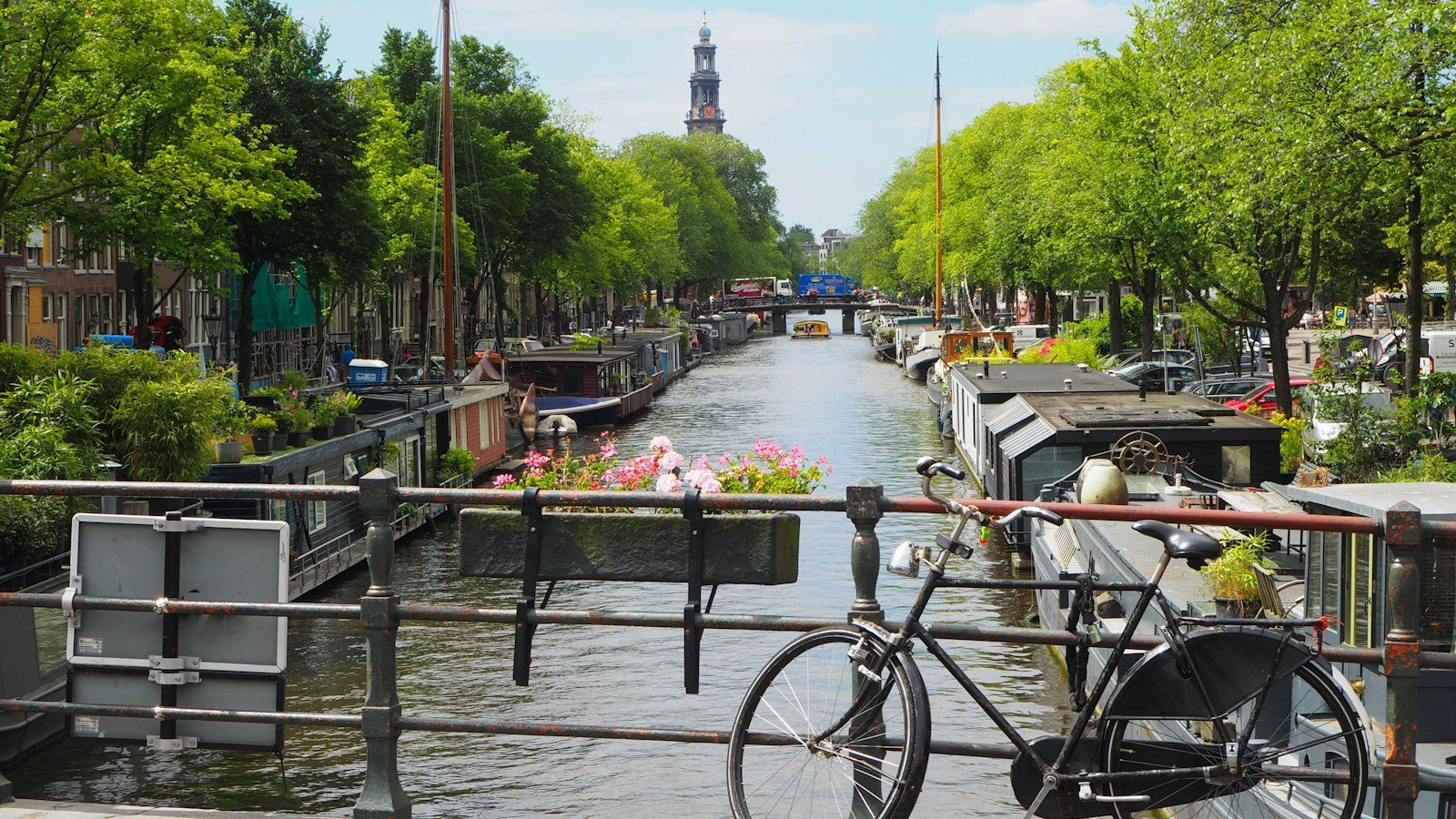
A small canal city between The Hague and Rotterdam, known for Vermeer, blue-and-white pottery and the House of Orange. You climb a 108m church tower, walk tree-lined canals and use the cheap, fast trains to reach two big cities in about 15 minutes.
- Best time to visit: April to June and September
- Daily budget (budget traveller): $85 to $270 USD
- Ideal trip length: 3 to 5 days
Delft is a compact old city in South Holland, about an hour from Amsterdam by train and just minutes from The Hague and Rotterdam. Its centre is a ring of narrow canals lined with gabled houses, humpbacked bridges and lime trees, and almost all of it is easy to walk. The big square, the Markt, has the Nieuwe Kerk at one end and the Renaissance town hall at the other. The Nieuwe Kerk holds the tomb of William of Orange and the Dutch royal crypt, and you can climb its 376 steps for views as far as Rotterdam. Across town, the Oude Kerk leans noticeably over its canal, and Johannes Vermeer is buried inside. This is also the home of Delft Blue, and Royal Delft is the last of the 17th-century potteries still painting by hand. Delft is a student city, with TU Delft on its east side, so the bars and cafés stay busy outside the tourist season. It gets crowded with day trippers in spring and summer, but most of them leave by late afternoon. The big city museum, the Prinsenhof, is closed for renovation until about late 2027. Rooms cost a fair bit, but they are cheaper than in Amsterdam, and the short train rides to The Hague, Rotterdam and Leiden make Delft a calm, practical base for a solo traveller.
Delft is a city of about 100,000 people, and a good share of them are students at TU Delft. Its old centre is one of the best preserved in the Netherlands, a grid of narrow canals and brick gables that survived largely intact because it never grew into a major port. It has two claims to fame. The House of Orange is tied to Delft: William of Orange, father of the Dutch nation, was assassinated here in 1584 and lies in the Nieuwe Kerk, as do most Dutch monarchs since. The other is Delft Blue, the tin-glazed pottery that began as a local copy of Chinese porcelain. Vermeer lived and worked here, and so did Carel Fabritius, who was killed in the gunpowder explosion that flattened part of the city in 1654. Many visitors come for a few hours from Amsterdam. If you stay longer, you get the canals at dawn, the market without the coach groups and the cafés full of locals at night.
Getting here is easy. Direct trains run from Schiphol in about 40 minutes and from Amsterdam Centraal in about an hour, and Rotterdam and The Hague are each 10 to 15 minutes away. You can tap in and out with a contactless card, so there is no need to buy paper tickets. Rotterdam The Hague Airport is close by, and the Eurostar to Rotterdam brings London within reach by rail. Once you are here, walk or cycle. The old centre takes about 15 minutes to cross. Stay near the Markt to be in the middle of things, on the Oude Delft for quiet canal views or near the station if you plan a lot of day trips.
Timing matters more than you might expect. Spring brings tulip season and the busiest weekends, summer brings warm evenings on canal-side terraces and the chamber music festival, and September is calm and mild. From November to January the churches close to visitors on Sundays and keep short weekday hours, the canal boats mostly stop and it gets dark by 5pm. Prices are high by European standards, but lower than in Amsterdam, and you can stretch your money with markets, picnics and free canal walks. Almost everyone speaks good English. Evenings mean brown cafés, beer and student bars rather than clubs. For a big night out, Rotterdam is 15 minutes away by train.
Delft itinerary
Arrive and find the Markt
Morning: Take the train from Schiphol or Amsterdam (40 to 60 minutes). Drop your bag and walk to the Markt for coffee facing the Nieuwe Kerk.
Afternoon: Buy the €15 churches and tower ticket. See William of Orange's tomb, climb the tower, then walk to the Oude Kerk to see Vermeer's memorial stone.
Evening: Wander the Oude Delft as the lights come on, then have bitterballen and a local beer in a brown café.
Delft Blue and Vermeer
Morning: Walk or cycle south to Royal Delft (around €18) and watch the painters at work before the tour groups arrive.
Afternoon: Back in the centre, visit the Vermeer Centrum (around €12-15) and then find Vlamingstraat, the likely setting of The Little Street.
Evening: Dinner in one of the restaurants around the Markt or along the Beestenmarkt, a leafy square full of terraces in summer.
Markets, canals and a windmill
Morning: If it is Thursday, browse the market on the Markt and the flower stalls. If it is Saturday, go to the Brabantse Turfmarkt market and the canal-side flea market. Eat herring or kibbeling for a snack.
Afternoon: Visit the Paul Tetar van Elven canal house, then walk west to Molen De Roos. Take a canal boat if they are running.
Evening: Watch the Oostpoort at sunset, then go for a drink at Locus Publicus or another beer café.
The Hague and the sea
Morning: Take the train (about 10 minutes) or tram 1 to The Hague. See the real View of Delft and Girl with a Pearl Earring at the Mauritshuis.
Afternoon: Walk past the Binnenhof and through the old centre, then take tram 1 to the beach at Scheveningen.
Evening: Watch the sunset on the North Sea, then take tram 1 back to Delft.
Bikes and green space
Morning: Rent a bike (about €12-15 a day) and ride to the Delftse Hout for a loop of the lake and woods.
Afternoon: Cycle back via the TU Delft campus and the Botanical Garden. Have lunch in a student café.
Evening: Picnic or have a simple dinner by a canal, then a quiet walk through the old centre.
A day in Rotterdam
Morning: Train to Rotterdam Centraal (about 15 minutes). Walk to the Markthal and the cube houses.
Afternoon: Cross the Erasmus Bridge, explore the Kop van Zuid and go up the Euromast if the weather is clear.
Evening: Dinner and drinks on the Witte de Withstraat, then a late train back to Delft.
Slow morning and depart
Morning: Have a last walk along the Oude Delft and breakfast at Stads-Koffyhuis or a café on the Markt.
Afternoon: Buy Delft Blue (genuine Royal Delft is marked on the base) or stroopwafels to take home, then take the train to Schiphol or onwards.
Evening: Arrive at the airport, or carry on to Leiden or Amsterdam.
Best neighbourhoods
- Markt and the historic centre: The heart of Delft, between the Nieuwe Kerk and the town hall. You get the main square, the Vermeer Centrum, the market streets and most of the cafés and restaurants on your doorstep. It is busy by day and lively on summer evenings, so ask for a room at the back if you sleep lightly.
- Oude Delft and the Oude Kerk quarter: The oldest canal in the city runs past grand merchant houses, the leaning Oude Kerk and the closed Prinsenhof. It is quieter and prettier than the Markt but only five minutes away. This is the best base if you want early-morning canal walks and calm nights.
- Station and the south: The area around the modern station and the Zuidpoort shopping centre is less charming, but it is practical. The station is a short walk from the centre, so you can be on a train to The Hague or Rotterdam within minutes. It suits a trip built around day trips and early departures.
- Oostpoort and the east side: The quiet canals around the Oostpoort, Delft's last surviving medieval city gate. They have a residential feel and a few guesthouses and apartments. The Markt is about 10 minutes' walk away, and the Delftse Hout park is an easy cycle from here.
- Wippolder and TU Delft: The university district south-east of the centre, with student cafés, the TU Delft Botanical Garden and modern campus buildings. Royal Delft is nearby. It is less pretty, but rooms can be cheaper, and buses and bikes get you into the old town in minutes.
Must-do experiences
- Climb the Nieuwe Kerk tower: The tower on the Markt is 108.75m tall, the second highest church tower in the country, and takes 376 narrow steps to climb. A tower ticket is €7.50, or €15 with entry to both churches. Backpacks and umbrellas are not allowed, and the tower closes an hour before the church and in high winds.
- See the royal tombs and the leaning Oude Kerk: A €10 combined ticket covers both main churches. The Nieuwe Kerk holds the marble tomb of William of Orange above the royal crypt. The Oude Kerk leans about two metres off vertical and has Vermeer's memorial stone and fine stained glass. From November to January the churches close to visitors on Sundays.
- Watch Delft Blue being painted: Royal Delft, about 15 minutes' walk south of the centre, has been making pottery since 1653. Adult tickets cost around €18 and include an audio guide through the museum, the factory floor and the painters' studio. It is open daily, roughly 9.30am to 5pm.
- Step into Vermeer's world: The Vermeer Centrum on Voldersgracht stands on the site of the painters' guild where Vermeer was a member. It shows reproductions of all 37 of his paintings, not the originals, alongside displays on how he worked. Tickets cost around €12-15, and a combined ticket with both churches costs €18.50.
- Walk the Oude Delft at dawn: Follow Delft's oldest canal from the Oude Kerk south past the gabled merchant houses before the day trippers arrive. Cross the small arched bridges for the classic view of the leaning tower over the water. It is free, and early morning light suits it best.
- Shop the Thursday and Saturday markets: On Thursdays a general market fills the Markt, and flower stalls line the canals nearby. On Saturdays the market moves to the Brabantse Turfmarkt, and from spring to early autumn there is a flea and antiques market along the canals. Grab raw herring or kibbeling from a fish stall.
- Cycle to the Delftse Hout: Rent a bike in town for about €12-15 a day and ride 10 minutes east to the Delftse Hout. It is a park with woods, a lake for summer swimming and quiet paths. It is a good break from the old streets, and the ride itself shows you how the Dutch get around.
Hidden gems
- Vlamingstraat 40-42, the spot that researchers believe Vermeer painted in The Little Street, a short walk east of the Markt
- Molen De Roos, a working windmill on the western edge of the old town where volunteers sometimes let you climb up to the gallery on open days
- The Paul Tetar van Elven canal house museum on Koornmarkt, a 19th-century artist's home that feels as if he has just stepped out
- The TU Delft Botanical Garden, with glasshouses and quiet lawns that most visitors never find
- The Oostpoort early in the morning, when the twin towers and the drawbridge are reflected in still water
Daily budget
- Accommodation: budget €35-55 / night (hostel dorm), mid-range €110-180 (canal-side 3-star hotel or apartment), splurge €250+ (boutique hotel such as Hotel Arsenaal). Prices peak in April, May and summer weekends. A tourist tax is added on top of the room rate. Single rooms are scarce, so book early.
- Food: budget €25-35 / day (supermarket breakfast, market herring, sandwich lunch), mid-range €50-75 (café lunch and a sit-down dinner), splurge €120+ (tasting menu with wine). A broodje costs about €6-10, restaurant mains roughly €20-30 and a coffee about €3-4. Supermarkets such as Albert Heijn keep costs down. Prices are rough guides.
- Transport: budget €0-8 / day (walking, a short train ride), mid-range €12-25 (bike rental plus a day trip by train), splurge €40+ (taxis, first class or longer trips). Amsterdam Centraal to Delft is about €17 one way, Schiphol about €13. The Hague and Rotterdam cost a few euros each way. Tap in and out with a contactless card.
- Activities: budget €0-15 / day (canal walks, markets, both churches for €10), mid-range €20-40 (tower, Royal Delft, Vermeer Centrum), splurge €50+ (Mauritshuis, guided tours, painting workshops). Churches plus tower cost €15, Royal Delft is around €18 and the Vermeer Centrum around €12-15. A Delft Pass or Rotterdam Pass gives free entry to the churches and tower.
- Drinks & nightlife: budget €6-12 (a beer or two in a brown café), mid-range €20-35 (a few drinks and bitterballen), splurge €50+ (cocktails or a night out in Rotterdam). A small beer costs about €3.50-5 and a glass of wine €5-7. Student bars are cheapest. Nightlife here means cafés and pubs rather than clubs.
Where to stay
- Social hostel in Historic centre, near the Markt (€35-55 / night (dorm)): Hostel Delft is a small, central hostel a few minutes from the Markt and the canals. It is the cheapest way to sleep in the old town and an easy place to meet other travellers.
- Boutique hotel in Doelenplein, west of the Markt (€120-200 / night): Hotel De Plataan is an independent hotel on a quiet, leafy square, with some themed rooms and a café downstairs. The Oude Kerk and the Oude Delft are a short walk away.
- Apartment in Canal houses around the Oude Delft and Oostpoort (€100-170 / night): Apartments in old canal houses give you a kitchen and a local feel. Expect very steep Dutch stairs and no lift, so travel light.
- Splurge in Historic centre (€250-450+ / night): Hotel Arsenaal Delft is set in a converted 17th-century arsenal, with stylish rooms and an acclaimed restaurant. It is quiet but still only minutes from the Markt.
What to eat
- Raw herring or kibbeling (fried cod chunks): from a fish stall on the market, eaten standing up with onions and pickles
- Stroopwafels: thin waffles with caramel syrup, best warm and freshly made at a market stall
- Broodjes and sandwiches at Stads-Koffyhuis on the Oude Delft, where you can eat on a moored boat terrace in summer
- Bitterballen: crisp fried ragout balls with mustard, the standard bar snack with a local beer
- Delft-brewed beer: try De Koperen Kat brews or the long beer list at a proeflokaal such as Locus Publicus
- Dutch apple pie with whipped cream, or poffertjes (small fluffy pancakes) from a market stall on a cold day
Day trips
- The Hague and Scheveningen (About 10 minutes by train or 20 to 30 minutes by tram): The seat of the Dutch government, with the Mauritshuis and its real Vermeers, the Binnenhof and good shopping. Tram 1 carries on to Scheveningen's wide North Sea beach and pier. Take the train to Den Haag Centraal or Den Haag HS, or ride tram 1 from Delft all the way to Scheveningen. Tap in and out with a contactless card. Book Mauritshuis tickets online on busy days.
- Rotterdam (About 15 minutes by train): A bold, modern port city rebuilt after the Second World War. See the Markthal, the cube houses, the Erasmus Bridge and a lively food and bar scene. It is a sharp contrast to old Delft. Trains run from Delft to Rotterdam Centraal several times an hour for a few euros. Rotterdam's metro and trams take the same contactless card.
- Leiden (About 20 to 30 minutes by train): An old university town with even more canals, Rembrandt's birthplace, the historic Hortus botanicus and several good museums. In spring it is the easiest base for a trip to Keukenhof. Take a train to Leiden Centraal, which is direct or changes at The Hague. From late March to mid-May, special Keukenhof buses leave from Leiden station.
When to visit
- Spring (April - May): 10-18°C, fresh, mix of sun and showers. Crowds: Busy at weekends and around King's Day on 27 April. Tulip season, lighter evenings and the canal boats back in service. Book rooms early for April and May weekends.
- Early summer (June): 16-21°C, long days, the driest month on average. Crowds: Moderate. Arguably the best month. Café terraces are out, it is light until after 10pm and the tower views are clear.
- High summer (July - August): 18-24°C, warm with occasional heatwaves and storms. Crowds: Busy with day trippers, quieter in the evenings. Good for swimming in the Delftse Hout, music festivals and beach trips to Scheveningen. Rooms cost the most, so book ahead and sightsee early or late.
- Autumn and winter (September - March): September 13-19°C, then 2-8°C in winter, grey, windy and damp. Crowds: Moderate in September, quiet from November. September is the pick. Winter is cheap and atmospheric, with brown cafés and Christmas lights, but the churches have short hours and close on Sundays.
Entry rules for your passport
Visa rules for the Netherlands depend on the passport you travel on. Check the official source before you book: European Commission: Schengen visa policy
Getting there
Delft has no airport of its own. Schiphol is about 40 minutes away by direct train, with several trains an hour and fares around €13. Rotterdam The Hague Airport is even closer, about 15 to 20 minutes by taxi or bus, but it has fewer flights. From Amsterdam Centraal, direct trains take about an hour and cost around €17 one way. From London, take the Eurostar to Rotterdam and then a 15-minute train to Delft. International trains from Brussels and Paris also stop in Rotterdam. You can tap in and out of NS trains with a contactless bank card or phone, but use the same card for both taps. Delft station is a short walk from the old town. If you drive, leave the car in a garage on the edge of the centre or at a park and ride. The old centre has narrow one-way streets, and parking is expensive.
Border checks: non-EU visitors (other than Swiss, Norwegian, Icelandic, Liechtenstein, Andorran, Monegasque, San Marinese and Vatican citizens, and holders of an EU residence permit or long-stay visa) are registered in the EU's Entry/Exit System (EES) instead of getting a passport stamp. On your first crossing, officers take your photo and/or fingerprints, so allow extra time at passport control. ETIAS, the planned travel authorisation, is not in operation yet, so don't pay any website for one.
Getting around
The old centre of Delft is small and flat, so you can walk almost everywhere. It takes about 10 minutes from the station to the Markt and 15 minutes from the Markt to Royal Delft. Cycling is the local way to travel. Rental shops in town charge roughly €12-15 a day, and a bike makes the Delftse Hout, the university and the edges of town quick to reach. Lock it to something solid every time, because bike theft is common. Trains are the key to day trips. The Hague is about 10 minutes away, Rotterdam about 15, Leiden about 20 and Schiphol around 40, with trains running several times an hour. You can tap in and out with a contactless bank card or phone at the station gates and on trams and buses. Always tap out, or you will pay a maximum fare. Tram 1 runs from Delft through The Hague all the way to the beach at Scheveningen. Taxis are expensive, and there is little need for one in town. Do not drive into the centre: parking is costly and the lanes are narrow and one-way.
Safety
Delft is very safe, and violent crime against visitors is rare. The biggest real danger is traffic, mainly bikes. Never walk in the red cycle lanes, look both ways before stepping off a kerb and expect bikes to come at you from unexpected directions. Canals have few railings, so take care at night, especially after a few beers. Watch for bag snatching and pickpocketing at busy stations and on the Thursday market. If you rent a bike, use both locks and keep it in sight where possible. Cobbles and tram rails can be slippery in the rain. The Nieuwe Kerk tower has steep, narrow spiral stairs and is not for anyone who struggles with tight spaces. Tap water is safe to drink. The EU emergency number is 112. EU travellers should carry an EHIC and UK travellers a GHIC, and everyone else needs travel insurance with medical cover.
Solo travel tips
- Stay near the Oude Delft: You get the prettiest canal on your doorstep, quiet nights and the Markt five minutes away. It is ideal for early walks before the crowds.
- Do the tower early: Groups arrive from Amsterdam mid-morning. Climb the Nieuwe Kerk tower at opening time and save the shops and cafés for the afternoon.
- Use Delft as your base: Rooms in Delft are cheaper and calmer than in Amsterdam, and The Hague, Rotterdam and Leiden are all close by train. Tap in and out with a contactless card and you never need a ticket machine.
- Eat from the markets: Herring, kibbeling, stroopwafels and cheese from the Thursday or Saturday market, plus supermarket picnics on a canal bench, keep costs down. Save one evening for a proper dinner.
- Safety for solo travellers: The main risks are bikes and canals rather than crime. Keep out of the red cycle lanes, look both ways twice and be careful along unfenced canal edges after dark.
- Meet people at the café table: Brown cafés often have long shared tables, and students are easy to talk to. Free walking tours, hostel common rooms and the market are good places to start a conversation.
Cultural etiquette
- Greet people with 'hallo' or 'goedemiddag' (good afternoon) and say 'dank je wel' (thank you). Nearly everyone speaks English, but a few words in Dutch are appreciated.
- Never walk or stand in the red cycle lanes. Locals will ring their bells and will not slow down.
- The Dutch are direct. Short or blunt answers are not meant to be rude.
- Keep your voice down in the churches, and check service times before you go in, especially on Sundays.
- When you get on a bus or tram, greet the driver and tap in at the doors, and say thanks when you get off.
- Many places accept cards only, so do not be surprised by 'pin only' signs. Ask before assuming you can pay in cash.
- Rounding up or leaving 5-10% for good table service is appreciated, but it is not expected.
Frequently asked questions
How do I get to Delft and from the station to my room?
Most people arrive by train. Direct trains from Schiphol take about 40 minutes for around €13, and trains from Amsterdam Centraal take about an hour for around €17 one way. Both run several times an hour. You can tap in and out with a contactless bank card. Delft station is on the south-west edge of the old town, and the Markt is about 10 minutes' walk away on flat streets, though cobbles make wheeled bags noisy. If you have heavy luggage, buses and taxis wait outside.
How many days do I need in Delft?
One full day covers the Markt, both churches, the tower and a canal walk. Three days lets you add Royal Delft, the Vermeer Centrum, the markets and a cycle to the Delftse Hout. Five days or more lets you use Delft as a base for The Hague, Rotterdam and Leiden, which are all short train rides away.
When is the best time to visit Delft?
April to June and September are the best months, with mild weather, long days and outdoor café terraces. April and May bring tulip season, and Keukenhof is within reach, but also the most day trippers. July and August are warm but busy, and rooms cost the most. From November to March it is quiet, grey and damp, and the churches keep shorter hours, but rooms are cheaper and the brown cafés are cosy.
Is the Prinsenhof museum open?
No. Museum Prinsenhof, where William of Orange was shot in 1584, closed in January 2025 for a major renovation and is not expected to reopen until late 2027 or early 2028. A free information point on Sint Agathaplein shows the plans, and the little old-fashioned sweet shop next door stays open on most afternoons. For royal history in the meantime, visit William's tomb in the Nieuwe Kerk.
Is the Vermeer Centrum worth it if it has no real Vermeers?
It depends on what you want. The centre shows reproductions of all 37 of his paintings and explains how he worked, including a camera obscura you can try. It is a good introduction for around €12-15. To see the real View of Delft and Girl with a Pearl Earring, take the 10-minute train or tram to the Mauritshuis in The Hague.
Should I rent a bike in Delft?
For a day or two, yes. The old centre is easy on foot, but a bike gets you to the Delftse Hout, Royal Delft and the university in minutes, and the countryside paths beyond are flat and well signed. Rental shops charge about €12-15 a day. Ride on the right, use hand signals, follow the bike traffic lights and always lock the bike.
Is Delft safe for solo female travellers?
Yes. It is a calm, well-lit university city with plenty of people around in the evenings, and serious crime against visitors is rare. Take normal care with drinks in bars, keep your bag close at stations and markets and stick to busier streets late at night. Tram 1 and the trains run into the late evening if you are coming back from The Hague or Rotterdam.
What entry rules apply to the Netherlands in 2026?
The Netherlands is in the EU and the Schengen area. Many non-EU visitors, including those from the UK, US, Canada and Australia, can stay visa-free for up to 90 days in any 180-day period across Schengen. The EU's Entry/Exit System has been fully running since April 2026 and records non-EU travellers' fingerprints and photos at the external border. The ETIAS travel authorisation is not yet in operation, and as of early November 2026 no start date had been announced. Check official EU and Dutch government websites and your own government's travel advice before you go.
More about Delft
Tours and activities in Delft | Delft in 2 days | Delft in 3 days | Delft in 4 days | Delft in 5 days | Delft in 7 days
Joy Plus home | Destinations | Itineraries | Activities | Flights | Budget planner | Calendar | Map | Blog | Lifetime access