Destinations / Europe
Geiranger, Norway travel guide
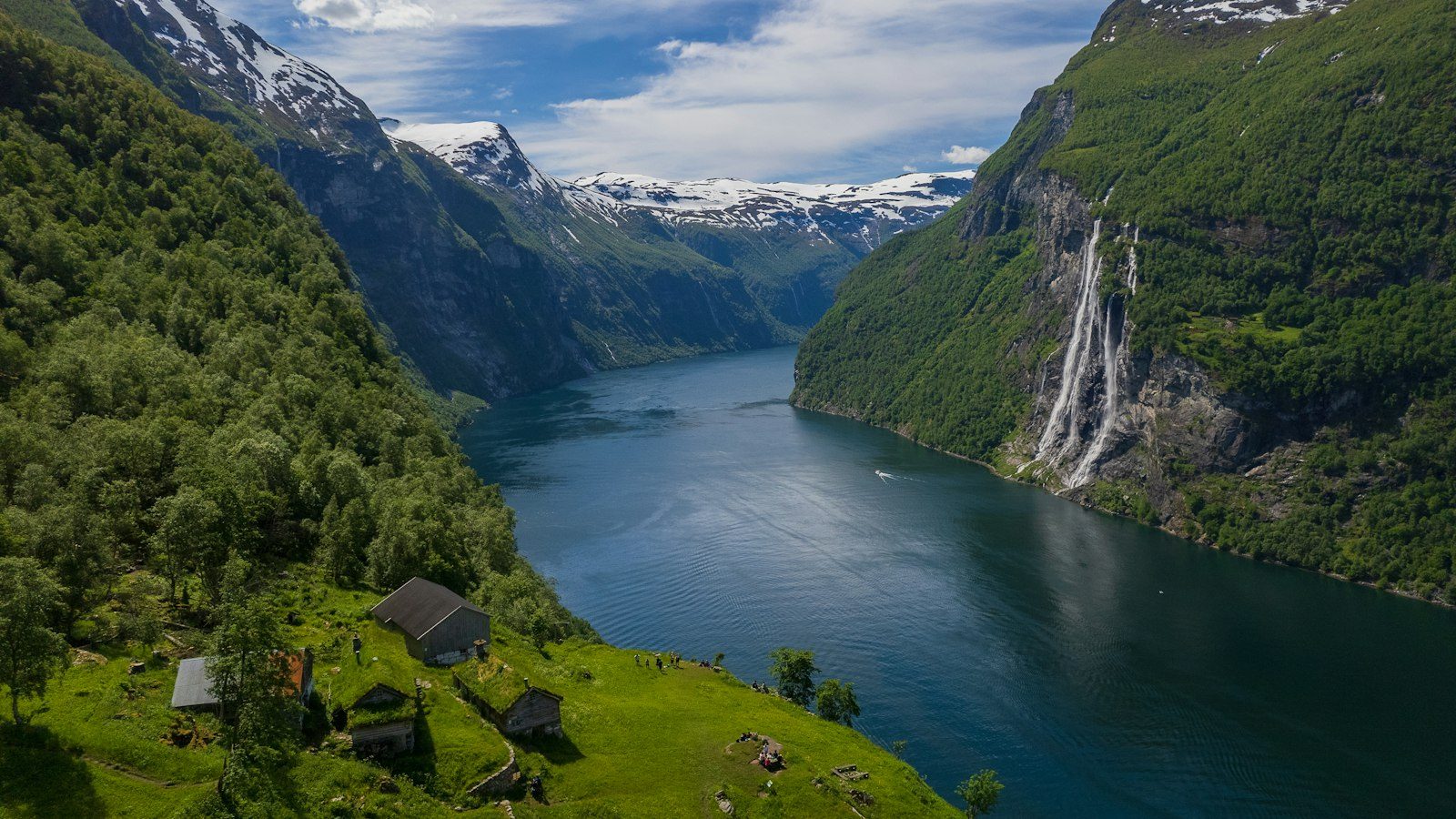
A tiny village at the end of Norway's most famous fjord, boxed in by cliffs and waterfalls. You sail past the Seven Sisters, look down from a viewing platform 1,500m up and hike to old farms on ledges high above the water.
- Best time to visit: June and early September
- Daily budget (budget traveller): $110 to $325 USD
- Ideal trip length: 3 to 5 days
Geiranger is a village of a few hundred people at the inner end of the Geirangerfjord, a narrow arm of water in western Norway on UNESCO's World Heritage list. It is about three to four hours from Ålesund by bus and ferry, and the nearest railway station is at Åndalsnes. Mountains rise straight out of the water, waterfalls such as the Seven Sisters pour down the cliffs, and abandoned farms sit on ledges hundreds of metres above the fjord. Two famous roads climb out of the village. The Eagle Road zigzags up to the north, and to the south road 63 heads towards Dalsnibba, where a toll road runs up to a viewing platform at 1,500m. Most visitors arrive on a cruise ship or a coach tour and leave the same afternoon, and in summer the harbour can be packed. If you stay the night, the village empties in the evening and the light lasts until nearly midnight. You can also reach Storseterfossen or Skageflå before the boats arrive. Norway is expensive, Geiranger more so, and much of it closes in winter. Even so, a campsite cabin, supermarket picnics and free trails make a solo trip here possible without spending a fortune.
Geiranger sits at the inner end of the Geirangerfjord, a 15km arm of the larger Storfjord system in Møre og Romsdal. It is one of two Norwegian fjords on UNESCO's World Heritage list, together with the Nærøyfjord. Only a few hundred people live here all year, but around 900,000 visitors arrive each year, mostly by cruise ship and coach between June and August. In the middle of the day the harbour can feel like an airport. Stay overnight and you get the better version: the fjord still and silent at 7am, a hike to a cliff farm before the ships arrive, and pale light on the mountains at 11pm. It is not cheap. Even a campsite cabin costs more than a hostel bed elsewhere in Europe, but the trails, viewpoints and waterfalls cost nothing.
Getting here is part of the trip. From Ålesund, the nearest airport, a bus takes about 2.5 hours to Hellesylt, and the ferry takes about an hour to sail the length of the fjord to Geiranger. From 1 June to 30 September 2026, a daily summer bus also runs from Ålesund via Åndalsnes and the Trollstigen hairpins, taking about 5 hours. Once you are here, the village is small enough to walk around. Further afield, you rely on summer buses, tours, a hire car or your own legs. Stay in the village if you want the ferry and cafés on your doorstep, at Grande for kayaking and campsites, or at Westerås for the views and quiet evenings.
Timing shapes everything. The high roads to Dalsnibba and Trollstigen usually open in the second half of May and close again in autumn. The ferry, summer buses and boat trips run on their own timetables, and many hotels close from October to April. June brings full waterfalls and endless light. July and August are warmest and busiest, and early September is calmer, with autumn colours on the slopes. Rain is common in every season, so build in a spare day. Geiranger is very safe, almost everyone speaks good English, and cards are taken everywhere. Nights are quiet rather than lively. If you want bars, go to Ålesund. If you want a waterfall to yourself and a waffle with brown cheese afterwards, stay here.
Geiranger itinerary
Arrive by bus and boat
Morning: Take a morning bus from Ålesund to Hellesylt (about 2.5 hours). Buy your ferry ticket separately.
Afternoon: Sail the length of the fjord to Geiranger, past the Seven Sisters. Drop your bag and climb the Storfossen stairs.
Evening: Dinner at Brasserie Posten by the harbour, then walk up to the church for the evening light on the fjord.
Westerås and Storseterfossen
Morning: Taxi, drive or walk up to Westerås farm, then hike for about an hour to Storseterfossen and walk behind the falls.
Afternoon: Back at the farm, climb the short, steep path to Vesteråsfjellet for the view over the fjord. Rest at your cabin or walk down to Grande.
Evening: Dinner at Løshjelen in the old barn at Westerås. Book ahead and arrange your ride down.
Dalsnibba and Flydalsjuvet
Morning: Take the summer bus or the panorama tour up to the Dalsnibba Skywalk while the cloud is high. Bring a warm layer for the top.
Afternoon: Stop at Flydalsjuvet and find the Queen's chair on the lower platform. Then have a picnic lunch by the harbour.
Evening: Hot chocolate at Geiranger Sjokolade and an early night before tomorrow's hike.
Skageflå by boat and boot
Morning: Take the summer boat to the landing below Skageflå and climb the steep path to the farm. Pack water and snacks.
Afternoon: Hike back over the ridge to Homlong and down into Geiranger. Allow 3 to 4 hours in total.
Evening: Rest your legs and have fish soup in the village, then a slow walk along the waterfront.
Kayak and the Eagle Road
Morning: Join a guided kayak trip or hire a kayak at Grande. Paddle along the cliffs before the cruise traffic picks up.
Afternoon: Drive, take a taxi or hike up to Ørnesvingen. If you are walking, wear good shoes for the climb.
Evening: Watch the evening light from the Ørnesvingen platform once the coaches have left, then have dinner back in the village.
Rain day and village life
Morning: Spend a couple of hours at the Norwegian Fjord Centre learning how the cliff farms survived.
Afternoon: Visit the octagonal church and its graveyard, then walk part of the path towards Homlong if the weather clears.
Evening: Pack a supermarket dinner and eat it by the water, or have a farewell meal at one of the hotel restaurants.
Out over Trollstigen
Morning: Have a slow breakfast and a last look at the fjord from the Storfossen stairs. Check the bus time the day before.
Afternoon: Take the early afternoon summer bus over the Eagle Road and Trollstigen to Åndalsnes (about 3 hours 15 minutes).
Evening: Arrive in Åndalsnes for the Rauma Railway towards Dombås and Oslo, or stay a night and carry on the next day.
Best neighbourhoods
- Village centre and harbour: A small cluster of hotels, shops and cafés around the ferry and cruise quay at the head of the fjord. The bus stop, tourist information, the supermarket and the chocolate shop are all here. It is busy from mid-morning to late afternoon on cruise days and very quiet after that.
- Storfossen and the church hill: The slope just above the centre, where the Storfossen waterfall crashes down beside a long staircase. The Norwegian Fjord Centre, several hotels and the white octagonal church are up here. It is a short, steep walk from the harbour and a little calmer than the waterfront.
- Grande: A flat strip of shoreline about 2km north of the centre, at the foot of the Eagle Road. It has campsites, cabins, a hotel and kayak hire. It is the best base if you want to be on the water early. The walk into the village takes about 25 minutes, partly along the road.
- Westerås: A working mountain farm about 4km up a narrow road from Grande, with cabins, a restaurant in an old barn and wide views down the fjord. The trails to Storseterfossen and Vesteråsfjellet start here. There is no bus, so you need a car, a taxi or strong legs.
- Hellesylt: The village at the other end of the fjord, about an hour away by ferry. A waterfall runs right through the middle of it, and there are a few places to stay at lower prices than in Geiranger. It suits you if you arrive by bus from Ålesund and want to sail into Geiranger the next day.
Must-do experiences
- Sail the fjord to Hellesylt: The ferry between Geiranger and Hellesylt takes about an hour. It passes the Seven Sisters, the Suitor waterfall and cliff farms such as Knivsflå. A foot passenger ticket costs around NOK 390-430 (about €34-37) one way. Stand on the open deck, and take an early or late sailing to avoid the cruise groups.
- Go up to the Dalsnibba Skywalk: The Nibbevegen toll road climbs to a viewing platform at 1,500m, billed as Europe's highest fjord view from a road. The toll is NOK 380 per car, and the road usually opens in the second half of May. Without a car, take a summer bus or a panorama tour from the village. They also stop at Flydalsjuvet.
- Climb the Storfossen stairs: A walkway with several hundred steps runs beside the Storfossen waterfall, from the harbour up to the Norwegian Fjord Centre. It is free, loud and full of spray. At the top, the Fjord Centre explains how people farmed and survived on these cliffs. It is worth an hour on a wet day.
- Hike to Skageflå: Skageflå is a farm on a ledge about 250m above the fjord that was farmed until the early 1900s. In summer, a boat can drop you at the landing below it. Climb the steep path, then hike back over the hill to Homlong near Geiranger. Allow 3 to 4 hours and wear proper boots.
- Walk behind Storseterfossen: From Westerås farm, a marked trail climbs through the forest for about an hour to Storseterfossen, a waterfall you can walk behind along a rocky ledge. It is free and one of the best short hikes in the area. Wear shoes with good grip, because the rock behind the falls is always wet.
- Paddle the fjord: In summer you can hire kayaks or join guided paddles from Grande and the village. Even two hours on the water gets you closer to the cliffs and waterfalls than any ferry. Beginners should join a guided trip, and everyone should watch for the wash from ferries and cruise ships.
- See the fjord from Ørnesvingen: The Eagle Road climbs 11 hairpin bends north from the fjord. The viewing platform at Ørnesvingen sits about 620m up and looks straight down the fjord towards the Seven Sisters. It is free. Come in the evening, after the tour buses have gone and the low light falls along the water.
Hidden gems
- The Queen's chair on the lower platform at Flydalsjuvet, a stone seat where you can take the classic fjord photo without queuing at the top viewpoint
- Geiranger church, a white octagonal wooden church from 1842 on the hill above the harbour, with a quiet graveyard and a fine view of the fjord
- Vesteråsfjellet, a short, steep climb above Westerås farm to a rocky lookout over the fjord and the village
- Knivsflå, a cliff farm opposite the Seven Sisters, best seen from a kayak or from one of the small boats that stop at the landing below it
- Herdalssetra, a summer mountain farm near Norddal, about an hour's drive away, where goats are still milked and brown cheese is made the traditional way
Daily budget
- Accommodation: budget €35-110 / night (tent pitch or campsite cabin), mid-range €170-300 (fjord-view hotel room), splurge €300+ (spa hotel room with a view). There is no hostel, so campsites are the budget option. Book June to August months ahead. There is no visitor tax in 2026, but a 3% charge has been approved for 2027 at the earliest.
- Food: budget €30-45 / day (supermarket breakfast and picnic, a waffle, one simple hot meal), mid-range €60-90 (café lunch and a sit-down dinner), splurge €130+ (three courses with wine). Restaurant mains cost roughly NOK 300-450 (€26-39). Many hotel rates include a big breakfast buffet, which can replace lunch. Prices are rough guides.
- Transport: budget €0-10 / day (walking and trails), mid-range €30-70 (ferry or summer bus), splurge €100+ (car hire, fuel, tolls and ferries). The Hellesylt ferry costs about NOK 390-430 one way, the Trollstigen bus from NOK 335 and the Dalsnibba toll NOK 380 per car.
- Activities: budget €0-15 / day (hiking, viewpoints, Storfossen stairs), mid-range €30-80 (Fjord Centre, kayak hire, Dalsnibba bus), splurge €100+ (guided kayak, RIB trip, Skageflå boat and guide). The two-hour panorama bus to Flydalsjuvet and Dalsnibba costs around €81. Most trails and viewpoints are free.
- Drinks & nightlife: budget €10-15 (a beer at a café), mid-range €25-45 (a few drinks with dinner), splurge €70+ (wine and cocktails at a hotel bar). Shops sell beer until 8pm on weekdays and 6pm on Saturdays, and not at all on Sundays. Nightlife means a hotel bar or a terrace by the fjord.
Where to stay
- Campsite cabin in Village centre and Grande (€35-130 / night): The campsites by the harbour and at Grande rent tent pitches and simple cabins. There is no hostel, so this is the cheapest bed in Geiranger, and the shared kitchens make it easy to cook and meet people.
- Fjord-view hotel in Storfossen and the church hill (€170-300 / night): The mid-sized hotels above the harbour have rooms with balconies over the fjord, a few minutes' walk from the ferry. The breakfast buffets are big enough to keep you going until mid-afternoon.
- Farm stay in Westerås (€130-220 / night): Cabins on a working mountain farm, with trails starting at the door and a barn restaurant for dinner. You need your own transport or a taxi, but the evenings are peaceful and the views are some of the best around.
- Splurge in Village centre (€300-550+ / night): Hotel Union Geiranger is a long-running family hotel with a spa, pools and a collection of vintage cars. Many rooms look straight down the fjord, and the harbour is a short walk downhill.
What to eat
- Waffles with brown cheese (brunost): sold in most cafés and at the big viewpoints, and the cheapest warm snack around
- Geiranger Sjokolade: a small chocolate maker on the waterfront with flavours based on local ingredients and a good hot chocolate
- Fish soup: creamy and filling, on many lunch menus in the village, and often better value than a full main course
- Lamb and goat at Westerås: the Løshjelen restaurant in an old barn serves meat from the farm and the surrounding valleys. Book ahead in summer
- Supermarket picnics: bread, cheese, smoked salmon and fruit from the village shop, eaten by the fjord, cost a fraction of a restaurant lunch
- Beer and cider: expensive in bars, cheaper from the shop, which sells it until 8pm on weekdays and 6pm on Saturdays. Wine and spirits are sold only in state Vinmonopolet shops, so bring what you want with you
Day trips
- Ålesund (About 3 to 4 hours by bus and ferry, or about 2.5 to 3 hours by car): A seaside town rebuilt in Art Nouveau style after a fire in 1904, with towers, turrets and a viewpoint at Aksla reached by 418 steps. It is better as an overnight stop at the start or end of your trip than as a day trip. Take the ferry to Hellesylt and the bus on to Ålesund. In summer, the daily bus via Trollstigen also links the two. Check return times carefully, as there are few services.
- Trollstigen and Åndalsnes (About 3 hours 15 minutes by summer bus): The Trollstigen road drops through 11 hairpins below the Stigfossen waterfall, and the bus stops at the viewpoint and at Gudbrandsjuvet gorge. Åndalsnes has the Romsdalen gondola and the start of the Rauma Railway. The Vy and Fjord Tours summer bus runs daily from 1 June to 30 September 2026, from NOK 335. It works best as a one-way trip out of Geiranger. Book before boarding.
- Hellesylt and the outer fjord (About 1 hour by ferry): Sail the whole length of the Geirangerfjord, see the Seven Sisters and the Suitor up close, and walk around Hellesylt, where a waterfall runs through the middle of the village. Take the ferry from the Geiranger quay, around NOK 390-430 one way for foot passengers. Check the last sailing back before you set off, especially outside July and August.
When to visit
- Spring (April - May): 5-14°C in the village, snow on the high roads until late May. Crowds: Low, with the first cruise ships in May. Quiet and cheaper, with dramatic snow on the peaks. Dalsnibba and Trollstigen are often still closed, and some hotels and boats open only in May.
- Early summer (June): 12-20°C, long days with near-endless light, showers likely. Crowds: Moderate, rising towards the end of the month. Arguably the best month. Waterfalls are at full power, the mountain roads and summer buses are running and the evenings are quiet.
- High summer (July - August): 14-22°C, warmest of the year but still often wet. Crowds: Busy, with several cruise ships on some days. Everything is open, from kayaks to boat drop-offs, but rooms cost the most and the harbour gets crowded. Book months ahead and explore early or late in the day.
- Autumn and winter (September - March): September 8-15°C, then around -5 to 3°C in winter, with snow. Crowds: Moderate in early September, very quiet from October. Early September is the locals' pick, with autumn colours and calm trails. From October most services close, the high roads shut and days are short.
Entry rules for your passport
Visa rules for Norway depend on the passport you travel on. Check the official source before you book: European Commission: Schengen visa policy
Getting there
There is no airport in Geiranger. The nearest is Ålesund Vigra, with flights from Oslo, Bergen and some European cities. Take the airport bus into Ålesund, then a bus to Hellesylt, which takes about 2.5 hours. Tickets are sold separately from the ferry, so check that the bus times connect. The ferry from Hellesylt to Geiranger takes about an hour and costs around NOK 390-430 (about €34-37) for a foot passenger. It runs from spring to autumn, with the most sailings from late May to September. From 1 June to 30 September 2026, Vy and Fjord Tours run a daily summer bus from Ålesund at 7am via Åndalsnes and Trollstigen. It takes about 5 hours, fares start at NOK 335, and you must buy your ticket before boarding. Åndalsnes is the end of the Rauma Railway from Dombås, so you can come by train from Oslo and change to the bus. If you drive, road 63 from the north uses the Linge to Eidsdal ferry and the Eagle Road. The southern route over Dalsnibba is closed in winter. Norwegian road tolls and ferries are mostly charged by number plate, so check how your hire company handles AutoPASS.
Border checks: non-EU visitors (other than Swiss, Norwegian, Icelandic, Liechtenstein, Andorran, Monegasque, San Marinese and Vatican citizens, and holders of an EU residence permit or long-stay visa) are registered in the EU's Entry/Exit System (EES) instead of getting a passport stamp. On your first crossing, officers take your photo and/or fingerprints, so allow extra time at passport control. ETIAS, the planned travel authorisation, is not in operation yet, so don't pay any website for one.
Getting around
The village itself is tiny, and you can walk from the harbour to the church, the Fjord Centre and the supermarket in 10 minutes. Expect steep slopes and plenty of steps. Grande is about 25 minutes' walk north, partly along the road. Beyond that, getting around takes planning. A local bus runs up to Dalsnibba twice a day from late June to late August, and sightseeing buses run daily in summer. A two-hour panorama tour to Flydalsjuvet and Dalsnibba costs around €81 booked online. The ferry to Hellesylt runs from spring to autumn, with the most sailings from late May to September. There is no bus to Westerås, and taxis are few, so book through your accommodation. Some shops hire e-bikes in summer, which helps with the climbs. A hire car from Ålesund gives you the most freedom. Roads are narrow, with tight hairpins and large coaches, and parking in the village is paid and fills up fast. If you go north on the Eagle Road, you take the short Eidsdal to Linge ferry, which is paid by number plate or AutoPASS.
Safety
Geiranger is very safe, and crime against visitors is rare. The real risks are the landscape and the weather. Trails such as Skageflå have steep drops and wet, slippery rock, conditions change quickly and fog can roll in within minutes. Check the forecast, tell someone your route, carry a waterproof layer and turn back if it gets wet or windy. Mobile signal is patchy on some trails. The fjord is cold all year, so wear a buoyancy aid when kayaking and keep well clear of the big ships. On the roads, drivers meet hairpins, tunnels and coaches, so use the passing places and go slowly. The high roads to Dalsnibba and Trollstigen close in winter. Tap water is safe to drink. In an emergency, call 112 for police, 113 for an ambulance and 110 for fire. Norway is in the EEA, so EU travellers should carry an EHIC. UK travellers should check what a GHIC or their passport covers, and everyone needs travel insurance with medical and mountain rescue cover.
Solo travel tips
- Stay at least one night: Day visitors see Geiranger at its most crowded. Overnight guests get quiet mornings, long evenings and the trails to themselves.
- Plan around cruise days: Check the cruise calendar before you go. On busy days, do the village sights early or late and spend the middle of the day on a trail or the water.
- Book transport first: The ferry, the Trollstigen bus and the Dalsnibba buses run only in season and only a few times a day. Fix those times, then plan the rest of your stay around them.
- Eat like a hiker: A big hotel breakfast or a supermarket picnic, a waffle in the afternoon and one hot meal keep food costs down. Save restaurant money for one good dinner at Westerås.
- Safety for solo travellers: The main risks are steep, wet trails and sudden changes in the weather. Tell your host your route, carry a waterproof and a charged phone, and turn back if conditions change.
- Meet people on a tour: A guided kayak trip, a boat drop-off for Skageflå or the summer bus are easy ways to meet other travellers. Campsite kitchens are good for a chat in the evening too.
Cultural etiquette
- Greet people with 'hei' and say 'takk' (thank you). English is spoken almost everywhere, but a few words of Norwegian are appreciated.
- Norway's right to roam lets you walk and camp on uncultivated land, but stay well away from houses and farm buildings and close every gate behind you.
- Take all your rubbish with you from trails and viewpoints. Toilets are limited outside the village, so plan ahead.
- Use the passing places on narrow roads and pull over to let faster traffic by. Never stop on a hairpin bend for a photo.
- Take your shoes off when you go into a cabin or someone's home.
- Tipping is not expected. Rounding up or leaving a little for very good service is welcome but not normal.
- Respect quiet hours at campsites and cabins. Norwegians value calm evenings, especially in small places.
Frequently asked questions
How do I get to Geiranger and from the bus or ferry to my room?
From Ålesund, take a bus to Hellesylt (about 2.5 hours), then the ferry through the fjord to Geiranger (about an hour). Bus and ferry tickets are sold separately. From 1 June to 30 September 2026, a daily summer bus also runs from Ålesund via Åndalsnes and Trollstigen. It takes about 5 hours, costs from NOK 335 and has to be booked before you board. Ferries and buses stop at the harbour, and the centre's hotels are a few minutes' walk away. For Grande or Westerås, book a taxi or ask your host about pick-ups.
How many days do I need in Geiranger?
Two nights covers the ferry, the Storfossen stairs, Dalsnibba and one good hike. Three to five nights lets you add Skageflå, Storseterfossen, kayaking and a spare day for bad weather, which you will probably need. A week works if you want to hike most days and leave on the Trollstigen bus at the end.
When is the best time to visit Geiranger?
June and the first half of September are the best months. The roads and ferries are running, the waterfalls are full in June, and the evenings are long and quiet. July and August are warmest but busiest, with several cruise ships some days and the highest room prices. From October to April, many hotels and services close and the high mountain roads are shut, though the village is beautiful under snow.
Do I need a car in Geiranger?
No, but it helps. You can manage without one if you plan around summer buses, the Hellesylt ferry, tours and your own legs. A car makes it easier to reach Westerås, Ørnesvingen and Dalsnibba at quiet times. The Dalsnibba toll is NOK 380 per car. Parking in the village is paid and tight on cruise days, and the roads are narrow, with many hairpin bends.
Can I visit Geiranger in winter?
Yes, but it is a very different trip. Most hotels, cafés and boat services close from autumn to spring. The roads to Dalsnibba and Trollstigen are shut, usually opening again in the second half of May. The road north towards Eidsdal normally stays open. Expect short days, ice on the paths and limited buses. Check what is open before you book anything.
How do I get to Dalsnibba without a car?
A local bus runs from the village twice a day from late June to late August, with a photo stop at Flydalsjuvet and about 20 minutes at the top. Sightseeing buses and a two-hour panorama tour, at around €81, also run in summer. The view depends on the weather, so check the webcam or the sky above the village before you go.
Is Geiranger safe for solo female travellers?
Yes. Norway is one of the safest countries in Europe to travel alone, and Geiranger is a quiet village where people look out for each other. The main risks are on the trails and the roads, not from people. Hike in daylight, share your plans, and stick to busier routes if you are new to mountain walking.
What entry rules apply to Norway in 2026?
Norway is not in the EU, but it is in the Schengen area. Many visitors, including those from the UK, US, Canada and Australia, can stay visa-free for up to 90 days in any 180-day period across Schengen. The Entry/Exit System has been fully running since April 2026 and records non-EU travellers' fingerprints and photos at the border. ETIAS has no confirmed start date and is widely expected in 2027. Stranda municipality, which includes Geiranger, has approval for a 3% visitor tax on accommodation, but it will not start before 2027. Check official sources before you travel.
More about Geiranger
Tours and activities in Geiranger | Geiranger in 2 days | Geiranger in 3 days | Geiranger in 4 days | Geiranger in 5 days | Geiranger in 7 days
Can't decide? Compare Geiranger with...
Joy Plus home | Destinations | Itineraries | Activities | Flights | Budget planner | Calendar | Map | Blog | Lifetime access