Geiranger in 4 days
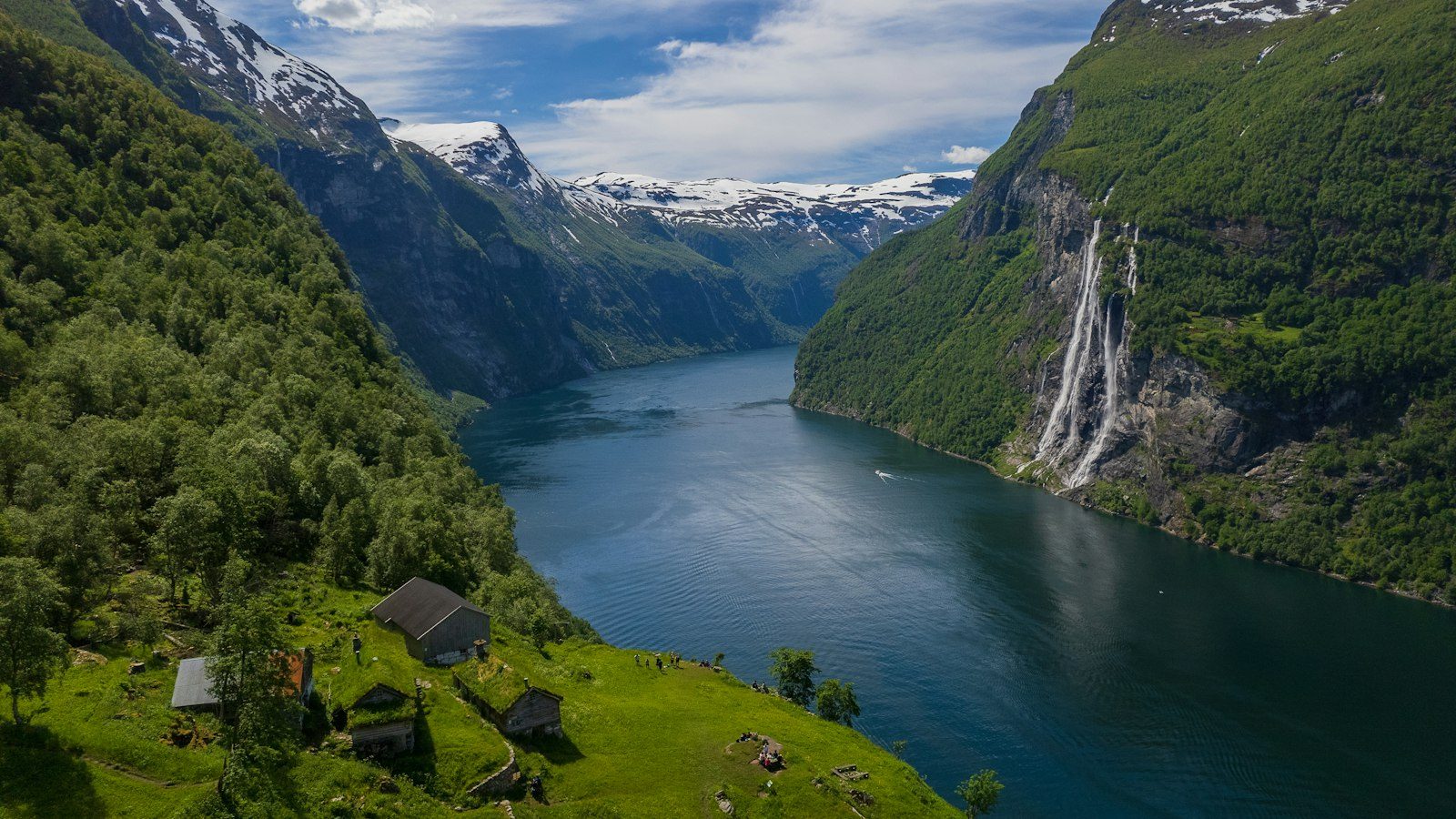
A tiny village at the end of Norway's most famous fjord, boxed in by cliffs and waterfalls. You sail past the Seven Sisters, look down from a viewing platform 1,500m up and hike to old farms on ledges high above the water. Best time to visit: June and early September. Daily budget (budget traveller): $110 to $325 USD.
Arrive by bus and boat
Morning: Take a morning bus from Ålesund to Hellesylt (about 2.5 hours). Buy your ferry ticket separately.
Afternoon: Sail the length of the fjord to Geiranger, past the Seven Sisters. Drop your bag and climb the Storfossen stairs.
Evening: Dinner at Brasserie Posten by the harbour, then walk up to the church for the evening light on the fjord.
Westerås and Storseterfossen
Morning: Taxi, drive or walk up to Westerås farm, then hike for about an hour to Storseterfossen and walk behind the falls.
Afternoon: Back at the farm, climb the short, steep path to Vesteråsfjellet for the view over the fjord. Rest at your cabin or walk down to Grande.
Evening: Dinner at Løshjelen in the old barn at Westerås. Book ahead and arrange your ride down.
Dalsnibba and Flydalsjuvet
Morning: Take the summer bus or the panorama tour up to the Dalsnibba Skywalk while the cloud is high. Bring a warm layer for the top.
Afternoon: Stop at Flydalsjuvet and find the Queen's chair on the lower platform. Then have a picnic lunch by the harbour.
Evening: Hot chocolate at Geiranger Sjokolade and an early night before tomorrow's hike.
Skageflå by boat and boot
Morning: Take the summer boat to the landing below Skageflå and climb the steep path to the farm. Pack water and snacks.
Afternoon: Hike back over the ridge to Homlong and down into Geiranger. Allow 3 to 4 hours in total.
Evening: Rest your legs and have fish soup in the village, then a slow walk along the waterfront.
Heading home: For the airport or station, see Getting there in the full Geiranger guide.
What to eat in Geiranger
- Waffles with brown cheese (brunost): sold in most cafés and at the big viewpoints, and the cheapest warm snack around
- Geiranger Sjokolade: a small chocolate maker on the waterfront with flavours based on local ingredients and a good hot chocolate
- Fish soup: creamy and filling, on many lunch menus in the village, and often better value than a full main course
- Lamb and goat at Westerås: the Løshjelen restaurant in an old barn serves meat from the farm and the surrounding valleys. Book ahead in summer
- Supermarket picnics: bread, cheese, smoked salmon and fruit from the village shop, eaten by the fjord, cost a fraction of a restaurant lunch
- Beer and cider: expensive in bars, cheaper from the shop, which sells it until 8pm on weekdays and 6pm on Saturdays. Wine and spirits are sold only in state Vinmonopolet shops, so bring what you want with you
Hidden gems
- The Queen's chair on the lower platform at Flydalsjuvet, a stone seat where you can take the classic fjord photo without queuing at the top viewpoint
- Geiranger church, a white octagonal wooden church from 1842 on the hill above the harbour, with a quiet graveyard and a fine view of the fjord
- Vesteråsfjellet, a short, steep climb above Westerås farm to a rocky lookout over the fjord and the village
- Knivsflå, a cliff farm opposite the Seven Sisters, best seen from a kayak or from one of the small boats that stop at the landing below it
- Herdalssetra, a summer mountain farm near Norddal, about an hour's drive away, where goats are still milked and brown cheese is made the traditional way
Getting around
The village itself is tiny, and you can walk from the harbour to the church, the Fjord Centre and the supermarket in 10 minutes. Expect steep slopes and plenty of steps. Grande is about 25 minutes' walk north, partly along the road. Beyond that, getting around takes planning. A local bus runs up to Dalsnibba twice a day from late June to late August, and sightseeing buses run daily in summer. A two-hour panorama tour to Flydalsjuvet and Dalsnibba costs around €81 booked online. The ferry to Hellesylt runs from spring to autumn, with the most sailings from late May to September. There is no bus to Westerås, and taxis are few, so book through your accommodation. Some shops hire e-bikes in summer, which helps with the climbs. A hire car from Ålesund gives you the most freedom. Roads are narrow, with tight hairpins and large coaches, and parking in the village is paid and fills up fast. If you go north on the Eagle Road, you take the short Eidsdal to Linge ferry, which is paid by number plate or AutoPASS.
Safety
Geiranger is very safe, and crime against visitors is rare. The real risks are the landscape and the weather. Trails such as Skageflå have steep drops and wet, slippery rock, conditions change quickly and fog can roll in within minutes. Check the forecast, tell someone your route, carry a waterproof layer and turn back if it gets wet or windy. Mobile signal is patchy on some trails. The fjord is cold all year, so wear a buoyancy aid when kayaking and keep well clear of the big ships. On the roads, drivers meet hairpins, tunnels and coaches, so use the passing places and go slowly. The high roads to Dalsnibba and Trollstigen close in winter. Tap water is safe to drink. In an emergency, call 112 for police, 113 for an ambulance and 110 for fire. Norway is in the EEA, so EU travellers should carry an EHIC. UK travellers should check what a GHIC or their passport covers, and everyone needs travel insurance with medical and mountain rescue cover.
Frequently asked questions
What does this 4-day Geiranger itinerary cover?
Day 1: Arrive by bus and boat. Day 2: Westerås and Storseterfossen. Day 3: Dalsnibba and Flydalsjuvet. Day 4: Skageflå by boat and boot.
Is 4 days enough for Geiranger?
Our recommended trip length for Geiranger is 3 to 5 days. This 4-day plan focuses on the highlights and groups sights by area so you spend less time travelling between them.
How much does 4 days in Geiranger cost?
A budget traveller spends about $110 to $325 USD a day in Geiranger, so roughly $440 to $1,300 USD for 4 days, not counting flights.
Where should I stay for 4 days in Geiranger?
Village centre and harbour: A small cluster of hotels, shops and cafés around the ferry and cruise quay at the head of the fjord. Storfossen and the church hill: The slope just above the centre, where the Storfossen waterfall crashes down beside a long staircase.
When is the best time to visit Geiranger?
The best time to visit Geiranger is June and early September.
How do I get around Geiranger?
The village itself is tiny, and you can walk from the harbour to the church, the Fjord Centre and the supermarket in 10 minutes. Expect steep slopes and plenty of steps.
Is Geiranger safe for solo travellers?
Geiranger is very safe, and crime against visitors is rare. The real risks are the landscape and the weather.
Read more about Geiranger
More 4-day guides
- Oslo in 4 days
- Bergen in 4 days
- Tromso in 4 days
- Trondheim in 4 days
- Stavanger in 4 days
- Lofoten Islands in 4 days
- Ålesund in 4 days
- Flåm in 4 days
Geiranger in 2 days | Geiranger in 3 days | Geiranger in 5 days | Geiranger in 7 days | Full Geiranger guide
Joy Plus home | Destinations | Itineraries | Activities | Flights | Budget planner | Calendar | Map | Blog | Lifetime access