Destinations / Europe
Granada, Spain travel guide
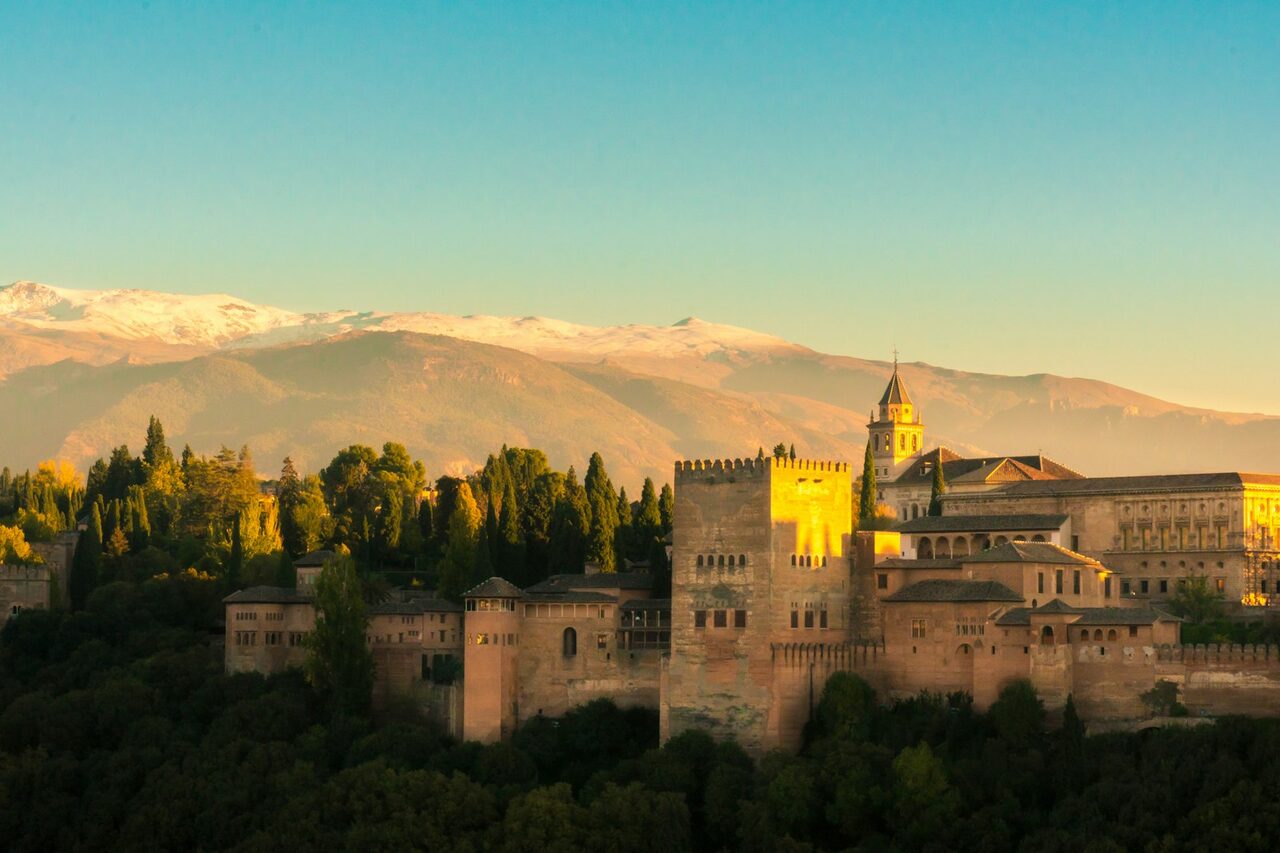
Home of the Alhambra: Moorish palaces, hillside Albaicín lanes, free tapas and flamenco in the caves of Sacromonte.
- Best time to visit: April-June and September-October
- Daily budget (budget traveller): $60 to $100 USD
- Ideal trip length: 2 to 3 days
Granada is Andalucía at its most magical: the Alhambra glowing above the city, the whitewashed Albaicín tumbling down the hillside, and a tapas culture where a drink still comes with free food. Snow-capped Sierra Nevada peaks frame it all. Joy Plus tells you to book the Alhambra slot in advance (it sells out weeks ahead), times the Mirador de San Nicolás for sunset, and routes a free-tapas crawl through the best bars.
Granada runs on a bargain most of Spain gave up years ago: order a drink, and the kitchen sends out food for free. A caña at Bodegas Castañeda or Los Diamantes costs about €2.50 to €3.50, and the tapa that lands next to it gets better and bigger with every round. That is the real city, and the Alhambra is the reason you booked flights. Both are true at once, and the trick is not letting the monument swallow the trip. The Nasrid Palaces are extraordinary, but the evening at Mirador de San Nicolás, the zambra in a Sacromonte cave and the third round of free tapas are what you will remember.
Geographically it is a bowl under the Sierra Nevada, sitting at about 700m, so it is hot and dry in summer and properly cold on winter nights. The centre around the cathedral and Plaza Nueva is flat and walkable. Everything interesting beyond it is uphill: the Albaicín (the Moorish quarter), Sacromonte (the cave neighbourhood) and the Alhambra hill itself. Wear shoes with grip, because the cobbles are polished smooth. This is also a student city, with tens of thousands of university students, which is why the bars are cheap, the Calle Elvira crowd is young and the tapas keep coming. Two days covers the headline sights. Four or five lets you add the Arab baths, Realejo's street art, a cave-house town and a mountain day without rushing.
The one thing you must plan ahead is the Alhambra. Tickets are sold on the official Patronato site (alhambra-patronato.es) and the Nasrid Palaces entry is a strict 30-minute window printed on your ticket, so if you miss it, you miss it. Peak dates sell out weeks ahead, so book as soon as your dates are fixed, and avoid third-party resellers who add a big markup. Bring the same passport or ID you booked with. Everything else in Granada is forgiving: no queues worth fearing, no reservations needed for tapas, and a bus ride to the Alpujarras or Sierra Nevada that makes a good break from the stone and tile.
How many days in Granada?
For Granada, we recommend 2 to 3 days.
| Trip length | What you'll see | Itinerary |
|---|---|---|
| 2 days · Recommended | Centro and first free tapas; The Alhambra, done properly | Granada in 2 days |
| 3 days · Recommended | Adds: Albaicín, Sacromonte and zambra | Granada in 3 days |
| 4 days | Adds: Alpujarras day trip | Granada in 4 days |
| 5 days | Adds: Realejo, gardens and the Arab baths | Granada in 5 days |
| 7 days | Adds: Guadix cave houses or Sierra Nevada; Cartuja | Granada in 7 days |
Granada itinerary
Arrive, Centro and first free tapas
Morning: Land at GRX and take the airport bus into town (about €3-4, roughly 35-40 min to the centre) or the Alsa bus from Málaga. Drop bags, then churros con chocolate at Café Fútbol on Plaza Mariana Pineda.
Afternoon: Granada Cathedral and the Capilla Real (about €10 and €7). Wander the Alcaicería lanes and Calle Calderería Nueva for first tea-house sightings.
Evening: Tapas crawl on Calle Navas: fried fish at Los Diamantes, then Antigua Bodega Castañeda by Plaza Nueva. Early night, tomorrow is the Alhambra.
The Alhambra, done properly
Morning: Take the earliest Nasrid Palaces slot you booked. Walk up Cuesta de Gomérez from Plaza Nueva (about 15 min), or take a red minibus from Plaza Nueva. Arrive 30 min early with your passport.
Afternoon: After the palaces, do the Generalife gardens, then climb the Alcazaba towers for the city view. Allow 4 to 5 hours total. Bring a sandwich and water, prices inside are high.
Evening: Raciones at Los Manueles (Calle Zaragoza 2), then live jazz and flamenco jams at Eshavira (Postigo de la Cuna 2).
Albaicín, Sacromonte and zambra
Morning: Walk the Carrera del Darro to Paseo de los Tristes, peek into El Bañuelo (11th-century baths, about €8.50 on the Andalusian Monuments ticket, free on Sundays), then climb into the Albaicín. Mint tea at a tetería on Calderería Nueva.
Afternoon: Wander the lanes up to Mirador de San Nicolás. Lunch on the terrace at Mirador de Morayma or a menú del día at a local bar, then rest.
Evening: Back at the Mirador 45 min before sunset, then taxi to Sacromonte for an evening zambra show at Cueva La Rocío or Los Tarantos (about €25-40, book ahead).
Alpujarras day trip
Morning: Alsa bus from Granada's bus station to Pampaneira, Bubión and Capileira (about 2h each way, around €7-10, a few departures a day, check the timetable).
Afternoon: Lunch on a terrace in Pampaneira with migas or plato alpujarreño. Walk the lanes, buy jamón from Trevélez and handwoven rugs in Pampaneira's shops.
Evening: Late bus back, easy tapas near your base, early night.
Realejo, gardens and the Arab baths
Morning: Wander Realejo's street art around Campo del Príncipe. Then up to the free Carmen de los Mártires gardens, ponds and peacocks included.
Afternoon: Long lunch of fried fish at Casa Julio, then a slot at Hammam Al Ándalus on Calle Santa Ana (from about €50 for the baths, book ahead, bring a swimsuit).
Evening: Candlelit soak ends around dinnertime. Late tapas on Calle Elvira, and a gig at Boogaclub if you still have energy.
Guadix cave houses or Sierra Nevada
Morning: Bus or train to Guadix (about 1h15 by Alsa bus, around €7). Walk up to the cave quarter and visit the Cueva Museo, the cave interpretation centre on Plaza Padre Poveda (about €2.60, closed Sundays).
Afternoon: Lunch in town (tapas are free here too), then wander the Alcazaba and cave streets. In winter, swap this for a day on the slopes at Sierra Nevada, 45 min by bus, lift passes around €50-60.
Evening: Back in Granada, light dinner. Try Taberna La Tana (Placeta del Agua) for wine and small plates.
Slow morning, Cartuja, depart
Morning: Pionono and coffee at Casa Isla on Calle Reyes Católicos. Taxi or walk to the Cartuja monastery (about €7), Granada's most over-the-top baroque interior.
Afternoon: Last stroll through Plaza Nueva and the Darro. Pick up a bag of piononos for the flight.
Evening: Airport bus from the centre to GRX, or the Alsa bus to Málaga.
Best neighbourhoods
- Albaicín: The old Moorish quarter: white houses, narrow lanes and sunset viewpoints.
- Realejo: The former Jewish quarter, full of street art and lively tapas bars.
- Sacromonte: Hillside cave dwellings and the home of zambra flamenco.
- Centro: Around the cathedral and Alcaicería, the old silk market lanes.
- Sierra Nevada (nearby): Europe's southernmost ski resort, an easy day trip in season.
Must-do experiences
- The Alhambra & Generalife: One of Spain's most visited monuments: Nasrid palaces, fortress and gardens.
- Sunset at Mirador de San Nicolás: The classic view of the Alhambra against the mountains.
- Free-tapas bar crawl: Order drinks and let the kitchen bring the food, bar to bar.
- Flamenco in a Sacromonte cave: Raw zambra flamenco in the gitano caves above the city.
Hidden gems
- The Arab baths (Hammam Al Ándalus) for a candlelit soak.
- Tea houses (teterías) along Calle Calderería Nueva.
- The Carmen de los Mártires gardens, free and often empty.
- A walk along the Carrera del Darro at dusk, the city's prettiest street.
Daily budget
- Accommodation: budget €20-35 / night (hostel dorm), mid-range €90-140 (boutique double), splurge €250+ (Parador de Granada, Hotel Alhambra Palace). Albaicín and Realejo are the best value. Rooms with Alhambra views carry a premium, and Semana Santa and Corpus week prices jump.
- Food: budget €20-30 / day (free tapas + menú del día), mid-range €45-65 (tapas crawl + one sit-down dinner), splurge €100+ (Faralá, Michelin-starred tasting menu). Menú del día runs €11-15. Three rounds at a free-tapa bar can replace dinner for €8-10.
- Transport: budget €3-6 / day (walking + a couple of bus rides), mid-range €10-20 (minibuses, a taxi, one day-trip bus), splurge €60+ (private driver to the Alpujarras). City bus is about €1.60 a ride. Alsa buses to day-trip towns run about €6-10 each way. Don't rent a car.
- Activities: budget €10-20 / day (free viewpoints, Carmen de los Mártires, one church), mid-range €45-70 (Alhambra about €22 + a flamenco show), splurge €150+ (private Alhambra guide, hammam with massage). Mirador de San Nicolás, the Carrera del Darro and Corral del Carbón are free. The Cathedral is about €10 and the Capilla Real about €7.
- Drinks & nightlife: budget €8-12 (three cañas with free tapas), mid-range €20-35 (Calle Elvira crawl + live music), splurge €60+ (hotel terrace cocktails + a late club). Caña €2-3.50, tinto de verano about €3. Most tapas bars stay busy until 1am, clubs like Granada 10 fill after midnight.
Where to stay
- Social hostel in Albaicín edge / Calle Elvira (€20-35 / night): Hostel Oasis Granada has a rooftop, free walking tours and organised dinners, steps from the centre and the Albaicín climb.
- Boutique hotel in Realejo / Albaicín foot (€110-190 / night): Hotel Casa 1800 or Casa Morisca, restored Andalusian houses with patios, quiet, walkable to Plaza Nueva and the Alhambra gate.
- Apartment in Realejo or Albaicín (€65-110 / night): Residential lanes, a small terrace and a local bakery downstairs. Best value for stays of four nights or more.
- Splurge in Alhambra hill (€250-450 / night): Parador de Granada, inside the Alhambra grounds, or Hotel Alhambra Palace with terrace views over the city. Wake up inside the monument.
What to eat
- Free tapas with every drink in the old-school bars
- Plato alpujarreño, the hearty mountain platter
- Piononos, the sweet little cream cakes from nearby Santa Fe
- Local Sierra Nevada-grown ham and cheese
Day trips
- Las Alpujarras (Pampaneira, Bubión, Capileira) (About 2h by bus): Whitewashed Berber-style villages stacked up the south face of the Sierra Nevada. Walk between villages, eat plato alpujarreño and buy jamón from Trevélez. Alsa bus from Granada's Estación de Autobuses, about €7-10 each way. There are a few departures a day, so check the timetable and the last bus back.
- Sierra Nevada (About 45 min by bus): Europe's southernmost ski resort in winter (lift passes around €50-60), and hiking toward Pico Veleta in summer. Snow views from the Alhambra are the teaser. Autocares Tocina bus from bay 3 at the Estación de Autobuses to Pradollano, €5 one way or €9 same-day return. Outside ski season there is only one departure a day, at 9:15. Ski rental is available at the base.
- Guadix (About 1h15 by bus): A town with entire neighbourhoods dug into the hillside. Visit the Cueva Museo cave interpretation centre on Plaza Padre Poveda, then walk the Alcazaba and the cave streets. Alsa bus or train from Granada, about €7-10 each way. Buses are more frequent and take roughly the same time.
When to visit
- Spring (April - June): 16-28°C, sunny, cool evenings, occasional showers in April. Crowds: Busy, especially Semana Santa (21 to 28 Mar in 2027) and around Corpus (27 May in 2027). The best window. Gardens in bloom, snow still on the Sierra Nevada and patios open. Book the Alhambra a month or more ahead.
- Summer (July - August): 32-40°C, bone dry, brutal at midday. Crowds: Moderate in the centre, heavy at the Alhambra. Skip if you can. If you come, take the 8:30am Alhambra entry, siesta indoors and live from 9pm. Cheaper beds, and the Alhambra summer music festival runs June to July.
- Autumn (September - October): 14-30°C, warm days, fresh nights. Crowds: Moderate, easing after mid-October. The locals' favourite. Warm enough for terraces, soft light on the Albaicín, and Alhambra slots are easier to find.
- Winter (November - March): 2-14°C, crisp and clear, frost at night, snow on the sierra. Crowds: Low, except Christmas and New Year. Underrated. Cheapest hotels, a snowy Alhambra backdrop and skiing on the Sierra Nevada. Pack a proper coat, many old houses are cold inside.
Entry rules for your passport
Visa rules for Spain depend on the passport you travel on. Check the official source before you book: European Commission: Schengen visa policy
Getting there
Federico García Lorca Granada-Jaén airport (GRX) is about 15km west of the city. The Alsa airport bus runs to the centre for about €3-4 in roughly 35-40 minutes; a taxi is about €30-35 flat. Many travellers fly into Málaga (AGP) instead, from where Alsa buses reach Granada in about 1h45 to 2h for around €12-15. Trains from Madrid Atocha take roughly 3h30 to 3h50 from about €30 if booked early, and buses from Seville take around 3h. Granada's train station is on Avenida de Andaluces, and the bus station (Alsa, Carretera de Jaén) is about 3km northwest of the centre, connected by city bus 33. Do not rent a car for the old town, streets are narrow and the Albaicín is restricted.
Border checks: non-EU visitors (other than Swiss, Norwegian, Icelandic, Liechtenstein, Andorran, Monegasque, San Marinese and Vatican citizens, and holders of an EU residence permit or long-stay visa) are registered in the EU's Entry/Exit System (EES) instead of getting a passport stamp. On your first crossing, officers take your photo and/or fingerprints, so allow extra time at passport control. ETIAS, the planned travel authorisation, is not in operation yet, so don't pay any website for one.
Getting around
The historic centre is compact and walkable, though the Albaicín and Sacromonte are steep and cobbled, so wear good shoes. Small red minibuses (the C lines) loop up the hills if you don't fancy the climb. There's no need for a car in the city; day trips to Sierra Nevada run by bus.
Safety
Granada is very safe. The main annoyances are persistent rosemary-sprig sellers near viewpoints (politely decline) and pickpockets in busy tapas streets. The Albaicín's maze of lanes is easy to get lost in at night, so keep your phone charged for navigation.
Solo travel tips
- Eat at the bar, drink first: In the old tapas bars you order a drink and the tapa follows. Stand at the bar, say 'una caña' or 'un tinto de verano', and the barman will talk you through what's on. By round three you are in a conversation with someone.
- Book the Alhambra as one ticket: A single ticket is easier to find than groups of four. Check the official site again the evening before if you are sold out, cancellations reappear. Passport details must match the name on the ticket.
- Hostel pick: Oasis Granada or Granada Inn Backpackers: Oasis (Placeta Correo Viejo, Albaicín edge) is the social choice with rooftop evenings and organised tapas outings. Granada Inn is calmer if you want company without pushing it.
- Albaicín by day, taxi by night: The Albaicín and Sacromonte are beautiful and safe, but poorly lit and confusing after midnight. Take a taxi from the Plaza Nueva rank (about €6-10) or use the red minibus before it stops for the night.
- Solo female travellers: Granada is one of Spain's easiest cities for women alone. Standard rules apply: watch your drink in crowded Calle Elvira bars, keep your phone charged for the Albaicín maze, and politely refuse the rosemary-sprig sellers who then ask to read your palm.
- Find your tribe at free tours and Eshavira: The tip-based free walking tours leave from Plaza Nueva, good for meeting people on day one. Eshavira's jazz and flamenco jams are friendly to solo visitors, and the student bars on Calle Elvira are easy to join.
Cultural etiquette
- Ask for a drink, not a menu. In free-tapa bars the tapa is part of the price. Don't ask for it by name, and don't be surprised if you cannot choose it.
- Rosemary sellers will press a sprig into your hand near the cathedral and viewpoints, then ask for coins or offer to read your palm. Keep your hands closed and say 'no, gracias'.
- Dinner starts after 9pm. Showing up at 7pm gets you an empty room and the tourist menu.
- Shops close roughly 2pm to 5pm for siesta. Plan errands and museums around it, then use the heat hours for a long lunch or a hammam slot.
- At flamenco shows, silence during the song, 'olé' only when it feels earned. Ask before photographing, flash is almost always banned.
- Alhambra rules are strict: no tripods, no large bags, no touching the stucco, and the Nasrid Palaces entry is a hard 30-minute window.
- Tipping is small: round up at cafés, leave €1-2 after a sit-down dinner. 10% is generous in Granada.
Frequently asked questions
How far ahead should I book the Alhambra?
Book several weeks ahead, ideally a month or more in high season. The timed Nasrid Palaces entry sells out fastest, so reserve as soon as your dates are set.
How many days do you need in Granada?
Two to three days: one for the Alhambra, one for the Albaicín, tapas and Sacromonte, and an optional third for the Arab baths or a Sierra Nevada day trip.
Are tapas really free in Granada?
Yes, it's one of the last Spanish cities where a free tapa comes with each drink in most traditional bars, often improving with each round.
When is the best time to visit Granada?
April-June and September-October is the sweet spot for weather and crowds. Shoulder season brings lower prices and easier bookings, while peak months mean higher accommodation costs and longer queues at the best known sights, so book early if you travel then.
How much does a trip to Granada cost?
Budget around $60 to $100 USD per person per day, covering a hostel bed or simple room, local transport, two or three meals out and an activity or entry ticket. You can go lower with markets and free walking tours, or far higher with boutique hotels and private guides.
How much does a solo trip to Granada cost?
Budget on roughly $60-$100 USD per day in Granada as a solo traveller. That covers a hostel bed or simple room, local food, getting around and a couple of paid sights. Mid-range comfort with private rooms, sit-down dinners and the odd tour runs closer to double, while shoestring travellers who cook and stick to street food can come in under it.
Is Granada safe for solo female travellers?
Granada is generally a comfortable place to travel solo, including for women, as long as you use normal city sense. Granada is very safe. The main annoyances are persistent rosemary-sprig sellers near viewpoints (politely decline) and pickpockets in busy tapas streets. The Albaicín's maze of lanes is easy to get lost in at night, so keep your phone charged for navigation.
How do you get around Granada?
The historic centre is compact and walkable, though the Albaicín and Sacromonte are steep and cobbled, so wear good shoes. Small red minibuses (the C lines) loop up the hills if you don't fancy the climb. There's no need for a car in the city; day trips to Sierra Nevada run by bus.
More about Granada
- Where to Travel in 2027: 15 Places Worth Planning a Trip Around
- Total Solar Eclipse 2 August 2027: Where to Watch It and How to Plan Now
- Barcelona in 3 Days: Gaudí, Tapas, the Beach and 2026 Prices
Tours and activities in Granada | Granada in 2 days | Granada in 3 days | Granada in 4 days | Granada in 5 days | Granada in 7 days
Can't decide? Compare Granada with...
Joy Plus home | Destinations | Itineraries | Activities | Flights | Budget planner | Calendar | Map | Blog | Lifetime access