Destinations / Asia
Kanchanaburi, Thailand travel guide
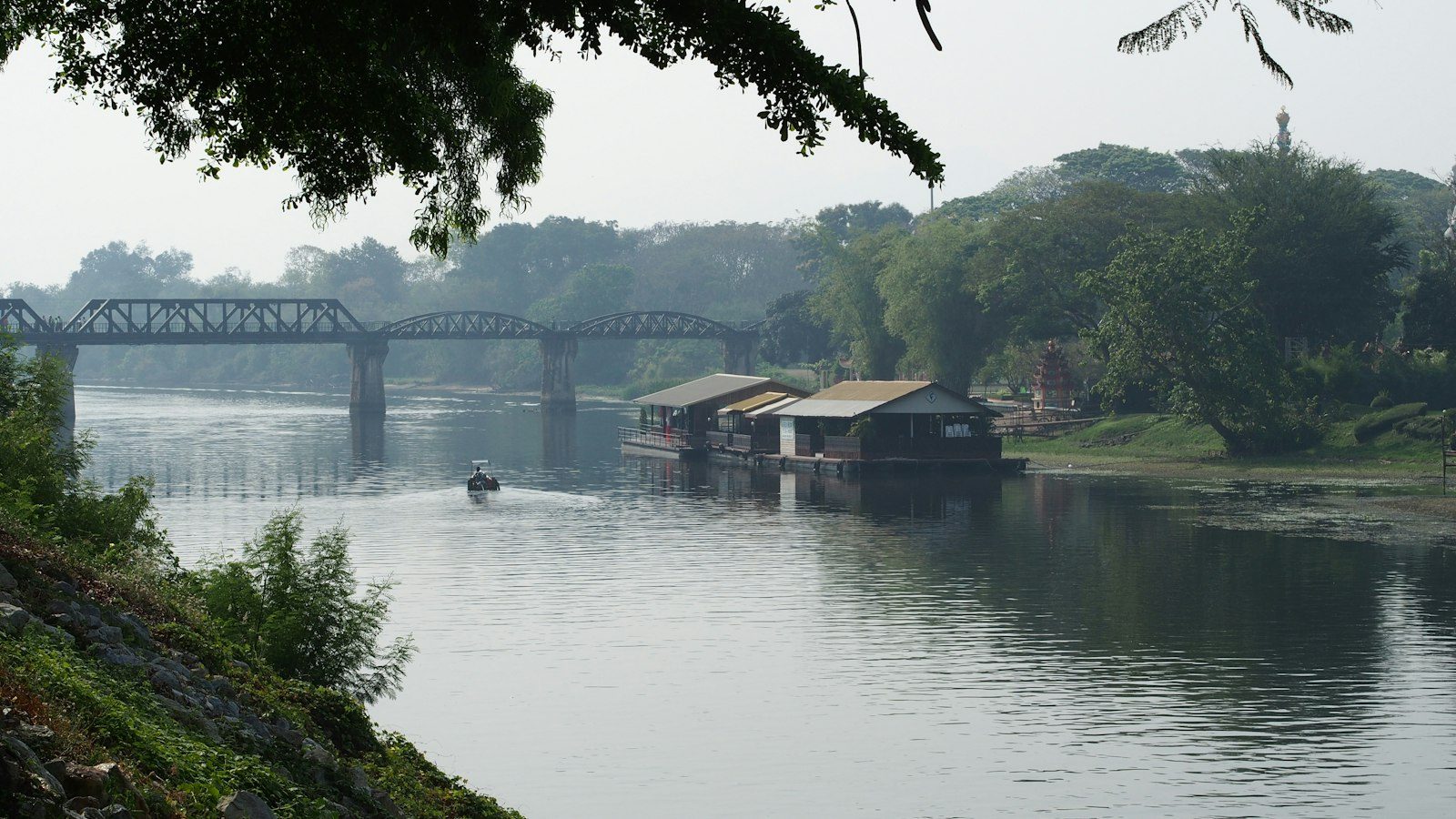
A relaxed river town two to three hours west of Bangkok, best known for the bridge on the Death Railway. You walk the bridge, ride the old railway over wooden viaducts and swim under the seven tiers of Erawan Falls.
- Best time to visit: November to February
- Daily budget (budget traveller): $30 to $110 USD
- Ideal trip length: 3 to 5 days
Kanchanaburi is a provincial town where the Kwai Noi and Kwai Yai rivers meet to form the Mae Klong, about 130km west of Bangkok. Most people know it from one bridge. In 1942 and 1943 the Japanese army forced Allied prisoners of war and tens of thousands of Asian labourers to build a railway from Thailand into Burma, and many thousands died doing it. That history is the main reason to come. The bridge, two war cemeteries, a good museum and the cutting at Hellfire Pass make it one of the most moving places in Southeast Asia. Kanchanaburi is also simply a pleasant place to slow down. Guesthouses and raft rooms line the river, the evenings are cooler than in Bangkok and the hills to the north and west are full of limestone caves, forest and waterfalls. The best known is Erawan, where you can swim in seven tiers of clear green pools. Public transport is cheap but thin, with one train line and hourly local buses, so a little planning goes a long way. A dorm bed, street food, the 100-baht train and a rented bicycle keep a solo budget very low.
Kanchanaburi is the capital of Thailand's largest western province, a low-rise town on the Kwai rivers with the hills of the Burmese border beyond. It became famous because of the Thailand-Burma Railway, built by the Japanese army in 1942 and 1943 with forced labour from Allied prisoners of war and far larger numbers of Asian workers. The bridge, the cemeteries and the cutting at Hellfire Pass are sombre places, and they are well looked after. Most visitors come on a rushed day trip from Bangkok, see the bridge for an hour and leave. Stay a few nights and you get the better version: the cemetery in the quiet of early morning, the train over the viaduct, a swim at Erawan before the crowds and dinner by the river. It is also one of the cheapest easy trips from Bangkok, with dorm beds, street food and bicycles costing very little.
Getting here is simple. Two ordinary trains a day leave Bangkok's Thon Buri station, at 7.45am and 1.55pm, and foreigners pay a flat 100 baht to any station on the line. Buses from the Southern Bus Terminal are faster, taking about two hours for around 110 baht. Once you arrive, rent a bicycle. Base yourself on Maenam Khwae Road for cheap rooms and other travellers, or near the bridge for a quieter stay. For the big sights further out, use the hourly local buses: 8170 for Erawan and 8203 for Sai Yok and Hellfire Pass. Or take the railway north to Nam Tok.
Timing shapes the trip. November to February is the most comfortable time, with dry weather and cooler nights, but it is also when weekends and holidays get busy. March to May is very hot, so plan around early mornings. The rains from June to October turn the hills green and fill the waterfalls, but heavy downpours can close trails and the upper tiers at Erawan. Kanchanaburi is easy-going, English is widely spoken on the traveller strip, and evenings mean river views and night market food rather than clubs. Come for the history, stay for the river.
Kanchanaburi itinerary
Train from Bangkok and the bridge
Morning: Take the 7.45am train from Thon Buri (100 baht). Sit by an open window and watch the rice fields pass. Arrive around 10.30am and check in on Maenam Khwae Road.
Afternoon: Rent a bicycle, have lunch, then rest through the heat. Ride to the bridge in the late afternoon once the tour coaches have left.
Evening: Walk across the bridge at sunset, then eat at the night market or a riverside restaurant.
Cemetery and Railway Centre
Morning: Visit Kanchanaburi War Cemetery early, when it is cool and quiet. Then spend an hour or two in the Thailand-Burma Railway Centre next door (about 160 baht).
Afternoon: Cycle south to the JEATH War Museum by the river and the old city gate. Escape the heat with a coffee in the old town.
Evening: A slow drink on a raft bar on Maenam Khwae Road and an early night before Erawan.
Erawan Falls
Morning: Catch bus 8170 at 8am from the bus station (about 60 baht). Pay 300 baht cash at the gate and walk straight to the seventh tier before the crowds arrive.
Afternoon: Work your way down, swimming in the pools on the lower tiers. Have lunch at the stalls by the entrance and leave before the rangers close the upper tiers.
Evening: Take the bus back (the last one leaves at 4.30pm). Dinner by the river and a well-earned rest.
Death Railway and Hellfire Pass
Morning: Take the early train north from Kanchanaburi around 6am. Cross the Tham Krasae viaduct and get off at Nam Tok around 8am. Walk to Sai Yok Noi waterfall for breakfast.
Afternoon: Take bus 8203 or a taxi to Hellfire Pass, which is free and opens at 9am. Watch the short film, then walk the cutting with the audio guide.
Evening: Bus back to Kanchanaburi in the late afternoon. Something simple at the night market.
Bike the west bank
Morning: Cross the river by bicycle to Chungkai War Cemetery while it is still cool. Carry on to the cave temple at Wat Tham Khao Poon.
Afternoon: Ride back through the fields for lunch, then take a long break out of the sun. Read, swim or nap.
Evening: Take a longtail boat or riverside walk at dusk, then eat pla yisok at a floating restaurant near the bridge.
Sai Yok or a slow river day
Morning: Ride the bus or train back towards Sai Yok National Park to see Sai Yok Yai falling into the river (300 baht), or book a morning kayak on the Kwai.
Afternoon: Lunch by the water and a slow return. If you stayed in town, try a Thai cooking class or a massage.
Evening: Revisit the bridge after dark, when it is lit and quiet. A last drink on a raft.
Slow morning and depart
Morning: Have breakfast by the river and one last cycle along Maenam Khwae Road. Buy snacks for the journey.
Afternoon: Take an afternoon train to Thon Buri or a faster bus to Bangkok's Southern Bus Terminal. Check the train time at the station the day before.
Evening: Arrive in Bangkok, or carry on to your next stop.
Best neighbourhoods
- Maenam Khwae Road: The long road that runs parallel to the river north of the town centre, and the main base for independent travellers. You have guesthouses, raft rooms on the water, cheap restaurants, laundries, bike and scooter hire and a few bars. The bridge is a 15 to 25-minute cycle north and the war cemetery is a short walk inland. Rooms at the back are quieter than those near the bars.
- Bridge over the River Kwai: The area around the bridge about 3km north of the centre, with floating restaurants, souvenir stalls, a small station and several mid-range and boutique hotels. It is busy with coach groups from late morning to mid-afternoon but calm early and late. It suits you if you want to watch the trains cross and do not mind being a ride from the centre.
- Old town and the city gate: The older quarter south of the centre around Pak Phraek Road, with wooden and concrete shophouses, Chinese shrines and the restored city gate. There are a few guesthouses and cafés, and the JEATH War Museum is nearby by the river. It is quiet and local in feel, though there is less nightlife.
- Station and war cemetery: The area around Kanchanaburi railway station, the War Cemetery and the Thailand-Burma Railway Centre, close to the bus station. It is practical rather than pretty, with cheap hotels, food stalls and a market. It works well if you arrive late or plan an early train or bus.
- West bank of the Kwai Yai: The quieter side of the river across the bridges, with riverside resorts, rice fields, Chungkai War Cemetery and the cave temple at Wat Tham Khao Poon. It is lovely by bicycle in the day. At night it is dark and you need your own transport or a taxi to get into town.
Must-do experiences
- Walk across the Bridge over the River Kwai: The steel bridge north of town is free to walk across, and the curved spans are the originals from the war. Go early in the morning or around sunset, when the coach groups have gone. Step into the refuges on the side when a train is due, and listen for the horn.
- Visit the War Cemetery and Railway Centre: Kanchanaburi War Cemetery holds the graves of nearly 7,000 Allied prisoners and is free to enter. Next door, the Thailand-Burma Railway Centre explains how the line was built and who died building it. Entry is about 160 baht ($5), and an hour there makes the rest of the trip make sense.
- Ride the Death Railway to Nam Tok: Ordinary third-class trains run from Kanchanaburi up the line to Nam Tok, passing over the curved wooden viaduct at Tham Krasae beside the river. Foreigners pay a flat 100 baht (about $3) to any station. Sit on the left heading north for the river views, and keep your head inside the window on the viaduct.
- Spend a morning at Hellfire Pass: Prisoners cut this deep gap through rock by hand, often by torchlight at night. The Australian-run Interpretive Centre is free and open daily from 9am to 4pm, and the free audio guide leads you down to the cutting and along the old railbed. Allow at least two hours, and longer if you walk the full trail.
- Swim at Erawan Falls: Erawan National Park, about 65km north of town, has seven tiers of limestone pools full of small nibbling fish. Foreign adults pay 300 baht (about $9) in cash at the gate. Take the 8am local bus, climb straight to the top tier and work your way down, as rangers start closing the upper tiers around 3pm.
- Cycle to Chungkai and the cave temple: Rent a bicycle and cross the river to Chungkai War Cemetery, a smaller and quieter site on the spot of a former prisoner camp. Carry on to Wat Tham Khao Poon, a temple in a limestone cave that was used during the war. It is a flat, easy half-day loop through fields, best done before the heat.
- Eat at the night market: Food stalls set up in the evenings near the bus station and along the riverside with grilled pork, noodle soups, papaya salad and fruit shakes. A full meal costs a dollar or two. It is the easiest place for a solo dinner, and it is where local families eat too.
Hidden gems
- Chungkai War Cemetery in the early morning, when you may be the only visitor among the neat rows of graves by the river
- The wooden viaduct at Tham Krasae on foot, between trains, with the cave shrine below the track and longtail boats on the river
- The JEATH War Museum by Wat Chaichumphon, a rough, old-fashioned museum in a bamboo hut that feels very different from the polished Railway Centre
- Sunset from the riverside along Maenam Khwae Road, with a cold drink on a raft as the light falls on the hills across the water
- Sai Yok Noi waterfall near Nam Tok station, small and local, with families picnicking by the pools at weekends
Daily budget
- Accommodation: budget $6-15 / night (hostel dorm or basic fan room), mid-range $30-60 (riverside hotel or raft room with air-con), splurge $150+ (floating villa or boutique resort). Prices rise at weekends and on Thai holidays, when Bangkok families arrive. Raft rooms on the river are atmospheric but can be noisy near bars.
- Food: budget $6-10 / day (street stalls, noodle shops, night market), mid-range $15-25 (riverside restaurants, a few drinks), splurge $40+ (floating restaurant fish dinners, resort dining). A noodle soup or rice dish costs about 50 to 70 baht. River fish is priced by weight at the floating restaurants, so ask first.
- Transport: budget $2-6 / day (bicycle hire, local buses), mid-range $10-20 (scooter or tuk-tuks, train to Nam Tok), splurge $70-85 (private car and driver for a full day). The train is a flat 100 baht for foreigners. Bus 8170 to Erawan costs about 60 baht each way, and a Nam Tok to Hellfire Pass taxi round trip is about 800 baht.
- Activities: budget $0-9 / day (bridge, cemeteries, Hellfire Pass free, Erawan at 300 baht), mid-range $10-20 (Railway Centre at 160 baht, Sai Yok park fees), splurge $40+ (guided history tours, kayaking, elephant sanctuary). National park fees are cash only at the gate. Choose any elephant experience carefully and avoid riding or shows.
- Drinks & nightlife: budget $2-5 (a large beer from a shop or a fruit shake), mid-range $8-15 (a few drinks at a river bar), splurge $25+ (cocktails at a resort bar). A large local beer costs about 80 to 120 baht in bars. Nightlife means a handful of bars on Maenam Khwae Road and quiet drinks on the river.
Where to stay
- Social hostel in Maenam Khwae Road ($6-15 / night (dorm)): Hostels and simple guesthouses along the road offer cheap dorms and fan rooms, bike hire and tour desks. You are close to the cemetery, the station and the river bars, which makes it easy to meet people.
- Raft room in Riverside, Maenam Khwae Road ($20-50 / night): Rooms built on floating rafts give you the river at your door, with sunsets over the hills. Pick one away from the bar end if you want quiet nights, and check whether it has air-con.
- Boutique hotel in Near the River Kwai Bridge ($70-150 / night): Small hotels such as U Inchantree Kanchanaburi sit by the water within walking distance of the bridge. You can see it early and late without the crowds, and the town is a short ride away.
- Splurge in Sai Yok, on the Kwai Noi ($200-400+ / night): The FloatHouse River Kwai has floating villas on the river in the forest near Sai Yok, reached by boat. It is far from town but close to Hellfire Pass and the waterfalls.
What to eat
- Pla yisok: the local river fish, steamed with lime and chilli or deep-fried with garlic, served at riverside restaurants and floating restaurants near the bridge
- Boat noodles and khao man gai (chicken rice) from street stalls in the centre for breakfast or lunch, usually 50 to 70 baht a bowl
- Night market grills: pork skewers, sticky rice and som tam (papaya salad) eaten at plastic tables for a dollar or two
- Khao soi and other northern-style curries at small family cafés along Maenam Khwae Road, where cooks are used to adjusting the spice
- Fresh fruit and mango sticky rice from market stalls, with a fruit shake to cool down in the afternoon
- A Chang or Singha beer on a raft bar by the river, or iced Thai tea from a 7-Eleven if you are cycling
Day trips
- Erawan National Park (About 65km north-west of town, around 1.5 hours by bus): Seven tiers of limestone falls and turquoise pools in the forest, with swimming on most levels. The climb to the top is about 2km and gets steep near the end. Take bus 8170 from Kanchanaburi bus station, which runs from 8am for about 60 baht. Foreign adults pay 300 baht cash at the gate. The last bus back leaves at 4.30pm.
- Hellfire Pass and Sai Yok (About 80km north-west of town, 1.5 hours by bus): The free Hellfire Pass Interpretive Centre and memorial trail, plus the Sai Yok waterfalls on the same road. It is the most powerful history day in the province. Take bus 8203 towards Sangkhlaburi and get off at Hellfire Pass, or ride the early train to Nam Tok and take a taxi for about 800 baht return. The centre is open daily from 9am to 4pm, with seasonal closures.
- Death Railway to Nam Tok (About 50km by rail, 2 hours each way): The surviving section of the wartime railway, crossing the bridge and the wooden viaduct at Tham Krasae above the Kwai Noi. Sai Yok Noi waterfall is a short walk from Nam Tok station. Board at Kanchanaburi station for a flat 100 baht. Take the early morning train to make a full day of it, and check return times at the station before you set off.
When to visit
- Cool season (November - February): 18-32°C, dry and sunny, cooler mornings. Crowds: Busy at weekends, Christmas, New Year and Thai holidays. The best time. Comfortable for cycling, the train and hiking to Erawan's top tier. Book weekend rooms ahead.
- Hot season (March - May): 33-40°C, very hot and hazy, hottest in April. Crowds: Moderate, very busy around Songkran in mid-April. Fine if you start at dawn and rest at midday. Erawan's pools are a relief, though water levels drop. Hellfire Pass closes for Songkran and for a few weeks in May.
- Early rains (June - August): 27-34°C, humid, with afternoon storms. Crowds: Low, apart from Thai weekends. Green, quiet and cheaper. Showers are usually short, but trails get muddy, so pack light rain gear.
- Late rains (September - October): 26-33°C, the wettest months, heavy rain at times. Crowds: Low. Waterfalls are at their fullest, but the upper tiers at Erawan can close after heavy rain and the river runs fast. Keep plans flexible.
Entry rules for your passport
Visa rules for Thailand depend on the passport you travel on. Check the official source before you book: Thailand's official e-Visa site (Ministry of Foreign Affairs)
Getting there
There is no airport in Kanchanaburi. Fly into Bangkok's Suvarnabhumi or Don Mueang and travel on by train, bus, minivan or car. The ordinary train leaves Thon Buri station, on the west bank of the Chao Phraya, at 7.45am and 1.55pm. It takes about 2 hours 45 minutes and costs a flat 100 baht for foreigners. Tickets are sold at the window on the day, and the trains do not sell out. Buses from the Southern Bus Terminal (Sai Tai Mai) take about two hours for roughly 110 baht and leave often from early morning. Minivans from Sai Tai Mai and Mo Chit cost a little more and drop you at the Kanchanaburi bus station. A private car from a Bangkok hotel costs about 2,500 to 2,800 baht and takes around two hours. From the bus or train station, a tuk-tuk to Maenam Khwae Road costs about 40 to 100 baht. If you arrive by land from Myanmar or elsewhere, note that visa-exempt land entries are now capped at two per calendar year.
Getting around
The town is long and flat, stretched along the river for about 4km, so a bicycle is the best way to get around. Guesthouses on Maenam Khwae Road rent them for about 50 to 100 baht a day, and scooters cost more if you have a licence and insurance that covers you. Tuk-tuks and songthaews (shared pick-ups) run between the bus station, the train station and the bridge for around 40 to 100 baht, so agree the fare before you get in. Ride-hailing apps work in town, but cars can be few. The railway runs north from Kanchanaburi station via the River Kwai Bridge station to Nam Tok, a few times a day, and foreigners pay a flat 100 baht. Local bus 8170 leaves the bus station for Erawan Falls roughly hourly from 8am for about 60 baht, and takes around 1.5 hours. The last bus back leaves the park at 4.30pm. Bus 8203 towards Sangkhlaburi passes Sai Yok and stops outside Hellfire Pass, and runs about hourly. For a full day covering several sights, a private car with a driver is easy to arrange through your guesthouse.
Safety
Kanchanaburi is calm and safe, and crime against visitors is rare. The main risks are heat, water and roads. From March to May temperatures can pass 38°C, so start early, drink plenty and rest in the middle of the day. The rocks at Erawan are slippery and some pools are deep, so wear water shoes and skip the rope swings if you are not a strong swimmer. The river has strong currents, especially in the rainy season, so swim only from rafts with ladders and where locals do. Scooter crashes are the most common way visitors get hurt, and many travel insurance policies will not pay out without a valid licence and a helmet. Mosquitoes carry dengue, so use repellent at dusk. Walk on the bridge only on the side plates when a train is coming. Tap water is not safe to drink, but refill stations and bottled water are everywhere. The tourist police number is 1155, and the ambulance number is 1669. Travel insurance with medical cover is essential.
Solo travel tips
- Stay on Maenam Khwae Road: It has the cheapest beds, the most travellers and easy bike hire. The cemetery and station are close, and the bridge is a short cycle away.
- Beat the tour buses: Coaches from Bangkok reach the bridge and Erawan from late morning. Be at Erawan on the 8am bus and at the bridge early or near sunset and you will have them almost to yourself.
- Watch the last bus times: The last bus back from Erawan leaves at 4.30pm, and buses past Hellfire Pass stop in the late afternoon. Note the times before you go, and carry cash for a taxi as a backup.
- Learn the history first: See the Thailand-Burma Railway Centre before you ride the train or visit Hellfire Pass. The story makes the bridge and the cutting far more meaningful.
- Safety for solo travellers: The main risks are heat, slippery rocks, fast rivers and scooters. Swim where others are swimming, only ride a scooter if you are licensed and insured, and take a tuk-tuk rather than cycling unlit roads at night.
- Meet people on the river: Hostel common areas, raft bars and shared taxis to Hellfire Pass are easy ways to meet other travellers. Ask at your guesthouse if anyone wants to split a car for the day.
Cultural etiquette
- Greet people with 'sawasdee' plus 'ka' (women) or 'krap' (men), and say 'khop khun' to say thank you. A small wai in return is polite.
- Behave quietly at the war cemeteries and Hellfire Pass. These are graves and memorials, so no posing, sitting on headstones or loud music.
- Cover your shoulders and knees at temples, and take your shoes off before entering buildings.
- Never speak disrespectfully about the Thai royal family. It is a serious offence and causes real offence.
- Do not touch people on the head or point your feet at people, monks or Buddha images.
- Women should not touch monks or hand things to them directly. Place the item down instead.
- Keep calm if things go wrong. Raising your voice gets you nowhere in Thailand, and a smile solves more problems.
Frequently asked questions
How do I get to Kanchanaburi from Bangkok?
The cheapest and most memorable way is the ordinary train from Thon Buri station, not Hua Lamphong or Krung Thep Aphiwat. Trains leave at 7.45am and 1.55pm, take about 2 hours 45 minutes and cost a flat 100 baht for foreigners. You buy the ticket at the window on the day. For speed, buses from the Southern Bus Terminal (Sai Tai Mai) take about two hours for roughly 110 baht and leave often. Minivans also run from several Bangkok terminals. From Kanchanaburi bus station, Maenam Khwae Road is a short tuk-tuk ride.
How many days do I need in Kanchanaburi?
One full day covers the bridge, the War Cemetery and the Railway Centre. Three days lets you add Erawan Falls and the train to Nam Tok with Hellfire Pass, which are each more than an hour from town. Five days gives you time to cycle the west bank, see Sai Yok and slow down by the river. A week works if you want lazy afternoons on a raft between trips.
When is the best time to visit Kanchanaburi?
November to February is the best time. Days are warm and dry, nights are cooler and Erawan still has plenty of water. It is also the busiest period, especially at weekends and Thai holidays. March to May is very hot, with April often near 40°C. June to October is the rainy season, with green hills and full waterfalls, but expect heavy showers, muddy trails and occasional closures of the upper tiers at Erawan.
Can I visit Erawan Falls without a tour?
Yes, easily. Take local bus 8170 from Kanchanaburi bus station. The first leaves at 8am, the fare is about 60 baht and the ride takes around 1.5 hours. Entry is 300 baht for foreign adults, cash only. The park opens at 8am with last entry at 3.30pm, and rangers start clearing the upper tiers from about 3pm. The last bus back leaves the park at 4.30pm, so do not miss it.
How do I reach Hellfire Pass by public transport?
Take bus 8203 from Kanchanaburi bus station towards Sangkhlaburi and ask to get off at Hellfire Pass. It takes about 1.5 hours and runs roughly hourly. Or take the early train to Nam Tok and a taxi for the last 20km, where a round trip costs about 800 baht. The centre is free and open daily from 9am to 4pm. It closes on 13 to 15 April, 24 to 27 December and for about three weeks in May, so check before you go.
Is the Death Railway train ride worth it?
Yes, if you treat it as a slow, scenic ride rather than a museum. The best stretch is between Tha Kilen and Nam Tok, including the wooden viaduct at Tham Krasae. Carriages are third class with fans and open windows, and the fare is 100 baht for foreigners whatever the distance. Trains can be crowded with tour groups on the viaduct section, so board at Kanchanaburi station rather than at the bridge if you want a seat.
Is Kanchanaburi safe for solo female travellers?
Yes. It is a relaxed town with a long backpacker history, and solo women travel here all the time. Maenam Khwae Road is busy into the evening. Take normal care with drinks in bars, agree tuk-tuk fares first and avoid cycling or walking unlit roads on the west bank after dark. Dress modestly at temples and cemeteries, and avoid isolated swimming spots.
What entry rules apply to Thailand in 2026?
Since 15 September 2026, passport holders from 60 countries and territories, including the UK, the US, Canada, Australia and all EU states, can enter visa-free for tourism for up to 30 days, down from 60. You can extend once by 30 days at an immigration office for 1,900 baht. Everyone must complete the free Thailand Digital Arrival Card (TDAC) online within the three days before arrival, and airlines may ask for proof of onward travel within 30 days. A proposed tourist entry fee was not being collected in early November 2026. Check official Thai sources before you travel.
More about Kanchanaburi
- Best Time to Visit Southeast Asia: Month by Month and Where to Go
- Solo Travel Southeast Asia Itinerary 2026: 2, 3 and 4 Week Overland Routes
- Solo Travel in Southeast Asia: The 2026 Beginner's Guide to Visas, Money and Safety
- Bangkok on $30 a Day? A Realistic Budget Guide for 2026
Tours and activities in Kanchanaburi | Kanchanaburi in 2 days | Kanchanaburi in 3 days | Kanchanaburi in 4 days | Kanchanaburi in 5 days | Kanchanaburi in 7 days
Joy Plus home | Destinations | Itineraries | Activities | Flights | Budget planner | Calendar | Map | Blog | Lifetime access