Best Time to Visit Southeast Asia: Month by Month and Where to Go
Nov 3, 2026, 14 min read
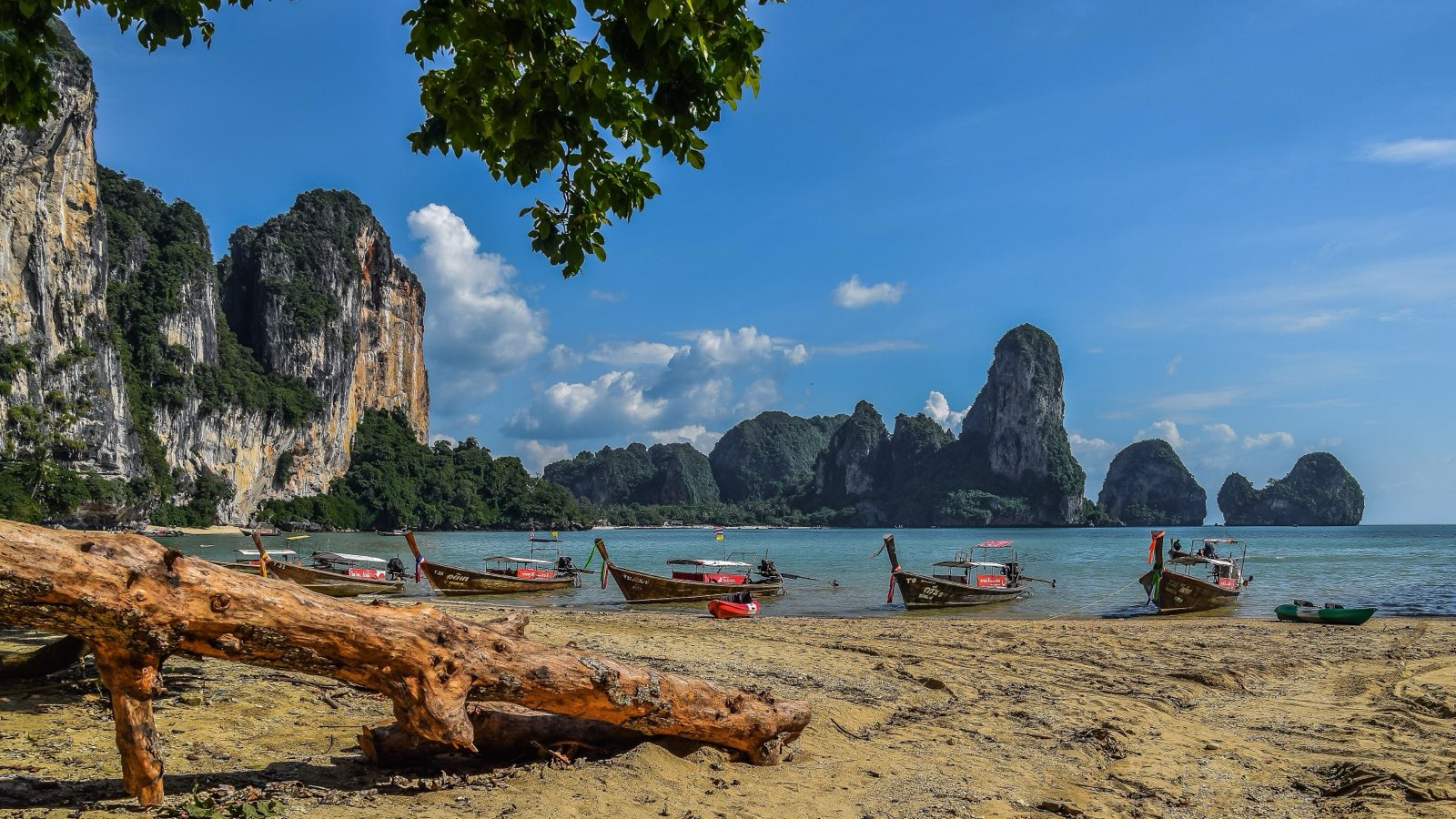
Southeast Asia does not have one dry season: Thailand's two coasts swap, central Vietnam floods in autumn and Bali is driest in the European summer. Here is where to go each month, what to avoid, and the festival dates for late 2026 and 2027.
Ask when to visit Southeast Asia and most people say November to March. That works for Bangkok and Siem Reap. It is wrong for Koh Samui in November, Hoi An in October and Bali in January. The region does not have one season. Two monsoons hit different coasts at different times, latitude shifts the calendar again, and the Philippines and Vietnam add a typhoon season on top.
This guide starts with the main weather patterns, taken from national weather services and climate sources. Then comes a month-by-month list: where to go, what to skip, the festival worth planning around and what crowds and prices look like. Dates are for the next time each month comes round, so November and December 2026, then January to October 2027. For one destination at a time, the Joy Plus best time to visit calendar goes city by city.
Thailand has two coasts, and they swap seasons
The southwest monsoon runs from about mid-May to mid-October and soaks the Andaman side, so Phuket, Krabi and Koh Lanta are at their best from November to April. The Gulf islands, Koh Samui, Koh Phangan and Koh Tao, work the other way round. Rain on the southern east coast peaks in November and can hang on into January, which makes them a better pick from February to September.
Vietnam is three climates in one long country
The north (Hanoi, Sapa, Ha Long Bay) has cool, damp winters and hot, wet summers, and Sapa can drop to around 5°C in January. The centre (Hoi An, Da Nang, Hue) gets most of its rain from September to December, which is also when storms mainly hit central and southern Vietnam. The south (Ho Chi Minh City, the Mekong Delta, Phu Quoc) is dry from December to April and wet from May to November, mostly as afternoon downpours.
Bali and Lombok follow the southern pattern
Indonesia's weather agency, BMKG, had parts of Bali and Nusa Tenggara entering the dry season in April 2026, with the driest stretch from July to September. Rain builds again from October and November and the wet season runs to about March. That makes Bali and Lombok strong choices exactly when most of mainland Southeast Asia is at its wettest.
The Philippines has a typhoon season, not just a rainy one
PAGASA, the national weather service, counts an average of about 20 tropical cyclones a year in its area of responsibility, with 8 or 9 crossing the country, and says nearly 70 percent of typhoons develop between July and October. Its official seasons are rainy from June to November and dry from December to May. Bookmark its tropical cyclone page if you travel in the second half of the year.
Cambodia, Laos and Malaysia's east coast
Cambodia and Laos have a wet season from roughly May to October, usually as heavy downpours that last a few hours rather than all day, with Laos at its wettest in August. Malaysia flips the pattern: on the peninsula's east coast, November, December and January are the wettest months of the northeast monsoon, and most Perhentian Islands resorts close from around November to February or early March. The northwest, including Langkawi and Penang, is driest in January and February.
Burning season haze in northern Thailand and Laos
From about February to April, farm and forest fires fill the valleys around Chiang Mai with smoke. NASA's Earth Observatory says fire activity typically peaks in March and fades by May, and cites an estimate that about 70 percent of Chiang Mai's PM2.5 in April comes from biomass burning. Northern Laos, Luang Prabang included, gets the same smoke from March until the rains. In 2026 readings were unusually clean around 23 March, then a severe spell lasted through much of April, so check live readings rather than trusting a calendar.
January: the classic dry-season month
Thailand's Andaman coast, Bangkok, Cambodia, Laos and southern Vietnam are all dry, and Langkawi enters its driest stretch. Skip Malaysia's east coast islands, Bali if you want beach days, and Sapa unless you pack a proper jacket. The Gulf islands can still catch rain in the first week or two. Sinulog fills Cebu City on Sunday 17 January 2027, and Thaipusam brings thousands of pilgrims to Batu Caves, about 13 km north of Kuala Lumpur, on Friday 22 January 2027. Prices ease a little once the New Year crowds leave, but this is still high season.
February: the best all-round month, with a big holiday
The Gulf islands dry out, Hoi An and Da Nang turn pleasant, and the Philippines is in its cool dry season. Lunar New Year falls on Saturday 6 February 2027. In Vietnam that is Tết: the government has confirmed a seven-day official holiday from Thursday 4 to Wednesday 10 February, many family-run places close and buses and trains sell out, so travel before or after rather than across it. Singapore, Kuala Lumpur and Bangkok's Chinatown celebrate loudly instead. Ramadan is expected to begin around 8 February 2027, and the haze starts building in northern Thailand.
March: islands, Hoi An and a silent day in Bali
This is a great month for the Gulf islands, central Vietnam and the Philippines, where El Nido and Coron are in the hot dry season. Avoid Chiang Mai and Luang Prabang if you have asthma or want mountain views. In Bali, Nyepi falls on Monday 8 March 2027 under Indonesia's official 2027 holiday list. For 24 hours from 6am the island goes silent, the airport closes and visitors stay inside their hotels; the ogoh-ogoh parades run the evening before. Eid al-Fitr is expected on 10 March 2027 in Indonesia, Malaysia and Singapore. With Nyepi and extra leave days, Indonesia gets a ten-day break from Saturday 6 to Monday 15 March, so book Indonesian ferries and flights early.
April: heat, water fights and haze up north
April is the hottest month across much of the mainland, with Laos and Cambodia baking before the rains. Songkran, Thai New Year, is a public holiday from Tuesday 13 to Thursday 15 April 2027, and Bangkok and Chiang Mai turn into city-wide water fights. Khmer New Year is a public holiday from Wednesday 14 to Friday 16 April 2027. Book buses and trains early and expect higher room rates that week. Bali's dry season begins, and the Andaman coast has its last settled weeks before the monsoon. Northern Thailand's air can still be poor: in 2026 the worst spell came in early April.
May: the first shoulder month
The southwest monsoon reaches the Andaman coast around mid-May, so Phuket and Krabi get cheaper and the sea gets rougher, while the Gulf islands stay a good bet. Bali and Lombok are dry and calmer than in July and August. The Philippines is at the end of its hot dry season, so May is the last reliably dry month for island hopping. Vesak, called Visakha Bucha in Thailand, falls on Thursday 20 May 2027 in Thailand, Singapore and Indonesia.
June: pick the right coast
The wet season is under way in Thailand, Cambodia, Laos and southern Vietnam, mostly as afternoon storms. Bali and Lombok are the obvious choice, and Malaysia's east coast islands are open, with June and July the driest months on that side of the peninsula. Central Vietnam is hot and largely dry, which makes Hoi An and Da Nang beach weather. PAGASA declared the start of the Philippine rainy season on 4 June in 2026, so Palawan trips become more of a gamble. There is no big region-wide festival, which helps keep prices down.
July: Bali's high season begins
Expect Bali, the Gili Islands and the Gulf islands to be busy and dearer than in May or June, so book beds early. Central Vietnam remains a good alternative, while northern Vietnam has its heaviest rain from June to August. In the Philippines the typhoon peak begins. Asalha Bucha and the start of Buddhist Lent fall on 18 and 19 July 2027 in Thailand; in 2026, those two days came with a nationwide ban on alcohol sales in shops and ordinary restaurants, with hotels and licensed venues exempt. Angkor in Siem Reap is green and much quieter.
August: same map, three national days
Your dry options are still Bali, Lombok, the Gulf islands, Malaysia's east coast and central Vietnam. Laos reaches its wettest month, and in Vietnam storms usually track towards the north in late summer before shifting to the centre from September, the pattern the national forecasting centre expected again in 2026. Singapore celebrates National Day on Monday 9 August 2027, Indonesia marks Independence Day on Tuesday 17 August, and Malaysia's National Day is Tuesday 31 August. Bali and the Gulf islands stay busy all month.
September: the quiet month
For many travellers this is the best value of the year. Bali is still dry but calmer after August, and the Gulf islands are reliable. Central Vietnam's rainy season starts, so keep Hoi An plans flexible. In Vietnam's far north, September and October bring the rice harvest and November the buckwheat flowers, which makes these three months the best window for the Ha Giang Loop. The Mid-Autumn Festival falls on Wednesday 15 September 2027, when Vietnam celebrates with lanterns and mooncakes. The Philippines is deep in typhoon season, and Cambodia's heaviest rain usually falls in September and October.
October: the hand-over month
The southwest monsoon ends around mid-October, but the Andaman side can stay showery into November, and the Gulf islands turn wet from mid-October. Central Vietnam is at its riskiest: in the 24 hours to 27 October 2025, more than 1,000 mm of rain fell in parts of Hue and Hoi An, and Hoi An's old town flooded. Northern Thailand is green and the haze is months away, so Chiang Mai is a good late-October pick. Deepavali, on Thursday 28 October 2027, is a public holiday in Singapore and most of Malaysia. Phuket's Vegetarian Festival follows the ninth Chinese lunar month and fell in October in both 2025 and 2026; 2027 dates had not been announced by late October 2026, though the lunar calendar points to early October.
November: the mainland opens up
Northern Thailand, Bangkok, Cambodia and Laos are dry and fresh, and Phuket, Krabi and Koh Lanta move into high season. Avoid the Gulf islands (their rain peaks now), central Vietnam, and Malaysia's east coast, where the 2026 northeast monsoon began on 27 October and is expected to last until March 2027. Bali turns wet. Loy Krathong falls on Tuesday 24 November 2026, and Chiang Mai's Yi Peng lantern celebrations fall around the full moon on Tuesday 24 November: rooms sell out, so book early. Phnom Penh has cancelled its Water Festival for 2026, the second year running, though the 23 to 25 November public holiday stays.
December: peak season, peak prices
The Andaman coast, Langkawi, southern Vietnam including Phu Quoc, Cambodia, Laos and northern Thailand are all dry, and the Philippines enters its dry season, though typhoons can still form outside the July to October peak. Skip Malaysia's east coast, central Vietnam and the Gulf islands, where Koh Samui still averages about 263 mm of rain in December. Bali is wet, and even Singapore's December averages about 332 mm of rain over roughly 19 rain days. The fortnight around Christmas and New Year is the busiest of the year on the Thai islands, so book beds and ferries weeks ahead.
Shoulder season is where budget travellers win
May to June and September to October give you the most for your money. Rooms get cheaper on whichever coast is taking the rain, while the other coast is often fine: swap Phuket for Koh Samui from June to September, then switch back to Phuket from November. Our Bangkok budget guide and four-week solo itinerary show how far a daily budget stretches, and the beginner's guide to solo travel in Southeast Asia covers visas, transport and safety.
How to read a rainy season forecast
A rain icon on every day of a phone forecast in the mainland wet season usually means a heavy downpour in the afternoon or evening, then clear skies. Rough Guides describes the Laos monsoon as short downpours that usually stop within a few hours. What should change your plans is different: named tropical storms, monsoon surges and warnings of heavy rain over several days. Those are what cancel ferries and flood towns. Follow the national services: PAGASA in the Philippines, the Thai Meteorological Department, and MetMalaysia for monsoon warnings.
Insurance and flexibility
Buy travel insurance that covers weather disruption before a storm has a name, and in typhoon season leave a spare day before any international flight out of the Philippines or central Vietnam.
Plan it with Joy Plus
Pick your month, tell Joy Plus where you want to go, and it builds a day-by-day itinerary with a map, timed stops and transit between them, plus a budget, a packing list and an offline PDF for when a storm knocks the signal out. Start planning your trip
Banner photo (cropped): Ton Sai Beach, Krabi, Thailand, by Krzysztof Golik, via Wikimedia Commons, licensed under CC BY-SA 4.0.

Frequently asked questions
What is the best month to visit Southeast Asia?
February is the closest thing to a perfect month. Thailand's Andaman coast and Gulf islands, Cambodia, Laos, central and southern Vietnam and the Philippines are all in their dry season at the same time. The main exceptions are Bali and Lombok, which are still in the wet season, Malaysia's east coast islands, where most resorts are closed, and northern Thailand, where burning season haze starts to build.
When is the rainy season in Southeast Asia?
It depends on where you are. Most of the mainland, including Bangkok, Cambodia, Laos and southern Vietnam, is wet from roughly May to October. Thailand's Gulf islands and Malaysia's east coast are wettest from November to January. Central Vietnam's rainy season runs from about September to December. Bali and Lombok are wet from about November to March, and the Philippines' official rainy season is June to November.
Where should I go in Southeast Asia in December?
Go to Thailand's Andaman coast (Phuket, Krabi, Koh Lanta), Langkawi, southern Vietnam and Phu Quoc, Cambodia, Laos or northern Thailand, which is cool and clear. The Philippines also enters its dry season. Avoid Malaysia's east coast islands, central Vietnam and the Gulf islands such as Koh Samui, which are still wet in December. Christmas and New Year are the busiest weeks of the year, so book rooms and ferries well ahead.
Where is best in Southeast Asia in July and August?
Bali, Lombok and the Gili Islands are in their dry season, with the driest weather from July to September. Thailand's Gulf islands, Malaysia's east coast islands such as the Perhentians, and central Vietnam (Hoi An and Da Nang) are also good. These are Bali's busiest months, so book early. Northern Vietnam is hot and wet, and the Philippines is in its typhoon peak.
When is typhoon season in the Philippines and Vietnam?
In the Philippines, PAGASA says nearly 70 percent of typhoons develop between July and October, with about 20 tropical cyclones entering its area each year and 8 or 9 crossing the country. In Vietnam, storms mainly affect central and southern areas from September to December. In late October 2025, record rain flooded Hoi An's old town, so keep central Vietnam plans flexible in autumn.
When is burning season in Chiang Mai?
Roughly February to April. NASA's Earth Observatory says fire activity in northern Thailand typically peaks in March and fades by May, and about 70 percent of Chiang Mai's PM2.5 in April is estimated to come from biomass burning. In 2026 the worst spell came in early April. Northern Laos, including Luang Prabang, is smoky from March until the rains. Check live air quality readings before you book.
When is Tết 2027 in Vietnam?
Tết, the Lunar New Year, falls on Saturday 6 February 2027, the start of the Year of the Goat. In October 2026 the government confirmed a seven-day official holiday from Thursday 4 to Wednesday 10 February 2027. Many family-run shops and restaurants close for several days and long-distance buses and trains fill up, so plan to stay put or travel well before or after.
When is Nyepi 2027 in Bali?
Nyepi, Bali's Day of Silence, falls on Monday 8 March 2027 according to Indonesia's official 2027 national holiday list. It runs for 24 hours from 6am, during which the island's airport closes, nobody is allowed on beaches or streets, and visitors stay inside their hotels. The ogoh-ogoh parades take place the evening before, on Sunday 7 March, and are well worth seeing.