Destinations / Asia
Mui Ne, Vietnam travel guide
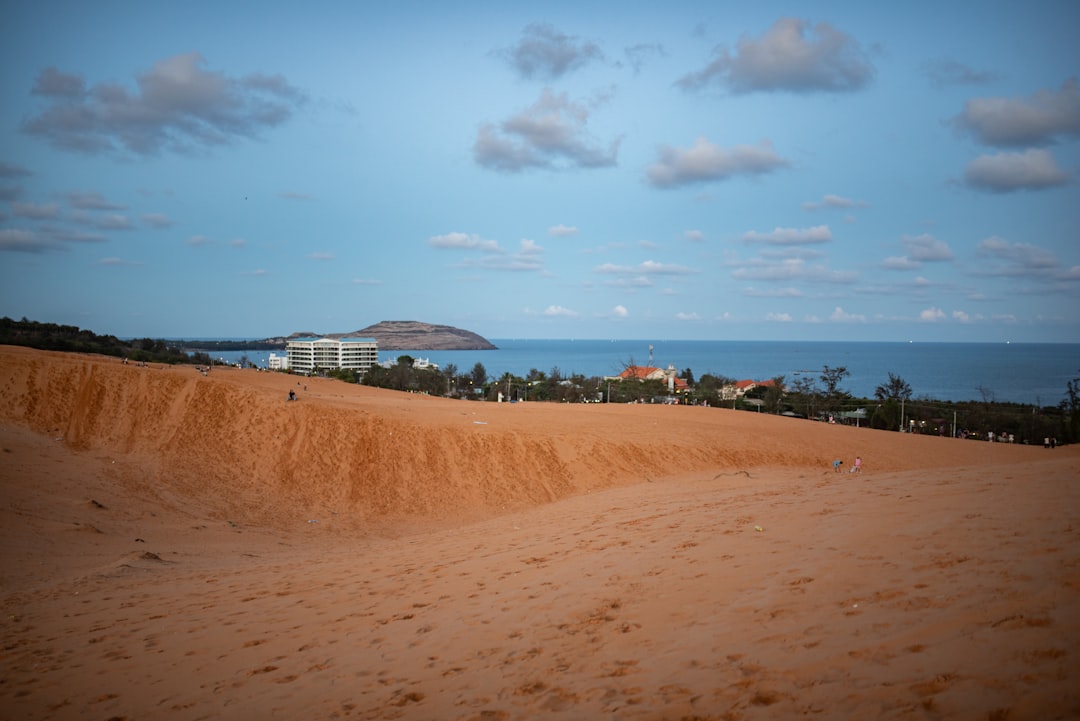
Red and white sand dunes, constant wind and Vietnam's kitesurfing capital.
- Best time to visit: November-April
- Daily budget (budget traveller): $25 to $80 USD
- Ideal trip length: 2 to 3 days
Mui Ne is a fishing village turned resort strip on Vietnam's dry southeast coast, with a stretch of desert behind it that looks nothing like the rest of the country. The same wind that shifts the dunes made it Vietnam's kitesurfing hub, and the strip along Nguyen Dinh Chieu runs on Russian menus, seafood shacks and board rental.
Mui Ne is a ten-kilometre strip of resorts, kite schools and seafood shacks squeezed between the South China Sea and a mini desert. The road is Nguyen Dinh Chieu, a thin ribbon of Highway 706 that runs east from Phan Thiet through Ham Tien and on to the fishing harbour. Everything you will do here is within 30 minutes of it, except the White Dunes, which sit about 25km northeast. This is one of the driest corners of Vietnam. While Hue is soaked, Mui Ne is usually bright, hot and blowing a steady 15 to 25 knots.
That wind is the town's business model. It shifts the red sand dunes behind the strip, fills the sails at Jibe's and the Sailing Club, and explains the Cyrillic menus. Russian travellers and long-stay kiters keep the place alive from November to April. Locals still fish from round basket boats at dawn, make fish sauce in Phan Thiet, and grow the dragon fruit that lights up the fields at night. Mui Ne is not pristine. Parts of the beach have eroded down to sandbags, and the strip is more roadside than village. Come for the dunes, the kiting and the seafood, not for a tropical postcard.
Two days covers the essentials: sunrise at the White Dunes, an afternoon in the Fairy Stream and Red Dunes, and a morning with the coracles. Stay four or five and you can learn to kite, visit the Cham towers in Phan Thiet, and ride up the Ta Cu cable car. It is a cheap place by any standard. A grilled seafood dinner is 150,000 to 300,000 dong, a beer is 25,000, and a scooter is 150,000 a day. The trick is knowing which dunes to see when, which beach stretch still has sand, and which taxi meter is lying.
How many days in Mui Ne?
For Mui Ne, we recommend 2 to 3 days. With more time, add a day trip to Ta Cu mountain and the reclining Buddha or Ke Ga lighthouse and island.
| Trip length | What you'll see | Itinerary |
|---|---|---|
| 2 days · Recommended | Orient, sunset on the strip; White Dunes at dawn, Fairy Stream and Red Dunes at golden hour | Mui Ne in 2 days |
| 3 days · Recommended | Adds: Coracles at dawn, first kite lesson | Mui Ne in 3 days |
| 4 days | Adds: Phan Thiet: Cham towers and fish sauce | Mui Ne in 4 days |
| 5 days | Adds: Ta Cu mountain and the dragon fruit fields | Mui Ne in 5 days |
| 7 days | Adds: Beach day at Suoi Nuoc, last kite session | Mui Ne in 7 days |
Mui Ne itinerary
Arrive, orient, sunset on the strip
Morning: Take a 7am limousine van or sleeper bus from Mien Dong or Pham Ngu Lao (180,000-300,000 VND, about 4 hours). Drop at your Ham Tien hotel and eat banh canh cha ca for a late breakfast.
Afternoon: Rent a scooter at 150,000-200,000 a day and photograph every scratch first. Ride east along Nguyen Dinh Chieu to the fishing village to see the coracle fleet and scout tomorrow's route.
Evening: Sunset beer at the Sailing Club, then grilled scallops with spring onion oil at a beachfront shack. Agree the price per kilo up front. Early night, tomorrow is a 4am start.
White Dunes at dawn, Fairy Stream and Red Dunes at golden hour
Morning: Share a jeep (400,000-650,000 per car) leaving at 4:15am. White Dunes first for sunrise over Bau Trang lake, then the lotus ponds. Hire a 20,000 sand slide mat if you must, skip the quads. Back for banh mi by 8:30.
Afternoon: Sleep through the heat. At 3:30pm ride to the Fairy Stream and wade barefoot up the red canyon. The light is soft and the tour groups have mostly gone.
Evening: Red Dunes at sunset (5:15pm), then lau tha hotpot at a local restaurant. Order the raw fish and herb plate, and pay about 120,000-200,000 each.
Coracles at dawn, first kite lesson
Morning: Be at the fishing harbour by 5:30am for the coracles landing the night catch. Eat a bowl of noodles on the quay, then head to your kite school for your first IKO session, usually 9am to noon.
Afternoon: Rest, then watch the afternoon wind fill at Jibe's or the Sailing Club. If you are not kiting, hire a stand-up paddleboard on the calm morning side and spend an hour on the water.
Evening: Dinner at a Ham Tien seafood place with a view of the kites. Massage at a local spa, 150,000-250,000 VND for an hour.
Phan Thiet: Cham towers and fish sauce
Morning: Ride west to Po Shanu Cham Towers (15,000 VND, 7am opening) on the hill above Phu Hai. These are 9th-century brick shrines with views down to the coast.
Afternoon: Go into Phan Thiet for Van Thuy Tu temple, with its whale skeletons. Then visit a fish sauce workshop, and eat banh canh cha ca for lunch where the locals do.
Evening: Back to Ham Tien for a second kite session or a slow beach hour. Grilled fish with rice paper and herbs for dinner.
Ta Cu mountain and the dragon fruit fields
Morning: Leave at 7am for Ta Cu mountain (about 55km, 1h15 by scooter or taxi). Take the cable car (about 300,000 VND return) up to the 49-metre reclining Buddha.
Afternoon: Walk the hill temples, then head back via a roadside dragon fruit farm in Ham Thuan Nam. Eat the fruit fresh, it is a different thing from the supermarket version.
Evening: Late dinner at the strip, and a night ride past lit-up dragon fruit fields if the season is on. Fields are lit to force the crop, mainly mid-year to autumn.
Beach day at Suoi Nuoc, last kite session
Morning: Ride east to Suoi Nuoc for the widest, cleanest sand. Pay a day-bed fee at a resort (150,000-300,000 VND, usually redeemable against food and drinks).
Afternoon: Do your final kite session once the wind picks up around 1pm. Swim in the shallows between sets.
Evening: Farewell seafood dinner on the beach. Order grilled squid, clams with lemongrass, and a bucket of Saigon beer.
Slow morning, depart
Morning: Last bowl of banh canh, a coffee at a cafe on Nguyen Dinh Chieu, and return the scooter. Photograph it handed back, same as day one.
Afternoon: Take the 12:30 bus or limousine back to Saigon (4 to 5 hours). Or train from Phan Thiet if you want a slower, comfier ride.
Evening: Arrive in Saigon around 5pm. Dinner in District 1 or an early flight home.
Best neighbourhoods
- Ham Tien strip: The main resort road with most hotels, restaurants and kite schools.
- Mui Ne village: The working fishing harbour at the eastern end, with the coracle fleet.
- Suoi Nuoc: Quieter far-eastern beach with wide sand and upmarket resorts.
- Phu Hai: Western end towards Phan Thiet, cheaper stays and local restaurants.
- The dunes: Red dunes just outside town, white dunes 25km northeast by jeep.
Must-do experiences
- White Sand Dunes at sunrise: Ride out at 4.30am for the light over the desert lake and quad tracks.
- Fairy Stream: Wade barefoot up an ankle-deep red canyon between eroded sandstone walls.
- Kitesurfing lesson: Learn where the cross-shore wind blows reliably from November to April.
- Fishing village at dawn: Watch the round coracle boats land the night catch on the harbour beach.
Hidden gems
- Po Shanu Cham towers, 9th-century ruins on a hill above Phan Thiet
- Bau Trang lotus lake beside the white dunes, best before the tour buses
- The dragon fruit farms inland, lit up at night to force the crop
- Ta Cu mountain cable car and the 49-metre reclining Buddha at the top
Daily budget
- Accommodation: budget 150,000-250,000 VND / night (dorm), 350,000-550,000 (fan or air-con room), mid-range 1,200,000-2,200,000 VND (beachfront bungalow), splurge 4,500,000+ VND (Anantara Mui Ne, Pandanus Resort). Check the hotel's current beach photos. Many older resorts on the Ham Tien stretch face seawall and sandbags.
- Food: budget 150,000-250,000 VND / day (banh canh, banh mi, com), mid-range 450,000-800,000 (seafood dinner, cafe breakfasts), splurge 1,500,000+ (lobster and grouper feast, resort dinner). Banh canh cha ca is 35,000-50,000. At seafood shacks, agree the price per kilo and weigh it before cooking.
- Transport: budget 150,000-200,000 VND / day (scooter plus petrol), mid-range 300,000-600,000 (scooter plus a few Grab rides), splurge 1,800,000-2,400,000 (private car from Saigon, or a full day driver). Petrol is around 22,000 a litre. You need an IDP under the 1968 convention or a Vietnamese licence, or your insurance is void.
- Activities: budget 0-150,000 VND / day (Fairy Stream, dune walking, Po Shanu towers 15,000), mid-range 400,000-900,000 (shared jeep tour, sand slide mat, Ta Cu cable car), splurge 3,000,000+ (private jeep and quads, 9,000,000-11,500,000 for a 3-day IKO kite course). Jeeps run 400,000-650,000 each, split among four. Quads cost 300,000-500,000 for 15 minutes and are the most injury-prone item here.
- Drinks & nightlife: budget 50,000-100,000 VND (local bia hoi, 20,000-30,000 a glass), mid-range 200,000-350,000 (beach bar evenings at Sailing Club or Jibe's), splurge 600,000+ (resort cocktails, sunset bottle service). Nightlife is a handful of beach bars, not a scene. Most places quiet down around midnight.
Where to stay
- Social hostel in Ham Tien strip (150,000-550,000 VND / night): Mui Ne Hills Backpackers Village or Mui Ne Backpackers Village, pool, bar, dune-tour sign-ups and a mix of kite students and backpackers.
- Boutique hotel in Ham Tien beachfront (1,200,000-2,200,000 VND / night): Bamboo Village Beach Resort or Coco Beach Resort, garden bungalows steps from the sand, pools and a short ride to the best restaurants. Check beach photos, erosion is uneven.
- Apartment in Phu Hai (500,000-1,000,000 VND / night): Western end towards Phan Thiet, where locals live and eat. A kitchen, a washing machine and cheaper weeks, but you will need a scooter to reach the kite beaches.
- Splurge in Suoi Nuoc and the eastern strip (4,500,000-8,000,000 VND / night): Anantara Mui Ne Resort or Pandanus Resort, wide sand, large pools and a quieter shoreline than the main strip. Best for couples and spa weekends.
What to eat
- Banh canh cha ca, thick noodle soup with fish cake, a Phan Thiet staple
- Grilled scallops with spring onion oil at a beachfront shack
- Lau tha, a Phan Thiet raw fish and herb hotpot assembled at the table
- Dragon fruit straight from the farms that surround the town
Day trips
- Ta Cu mountain and the reclining Buddha (55km, about 1h15 by scooter or taxi): A cable car carries you up to a 49-metre reclining Buddha, one of the largest in Southeast Asia, with sea views over the coastal plain. Go early, the cable car runs roughly 7:30am to 5pm and the heat builds by 11. Scooter or private taxi (about 1,200,000-1,600,000 VND return). Cable car around 300,000 VND return.
- Ke Ga lighthouse and island (60km, about 1h30 by scooter): One of Vietnam's oldest lighthouses, built by the French in 1899, on a rocky headland. A short boat crossing reaches the island. Best on a clear morning when the water is calm. Scooter or taxi along Highway 1, then a short boat from the Ke Ga fishing village for a few hundred thousand dong at most.
- Phan Thiet old town and Po Shanu (10 to 15km, 25 minutes west): Po Shanu Cham towers (9th century), Van Thuy Tu whale temple and a working fish sauce factory. Phan Thiet is also the home of banh canh cha ca. Scooter or Grab (100,000-180,000 VND each way). Po Shanu entry is about 15,000 VND.
When to visit
- Peak wind season (December to February): 24-31°C, dry, sunny, 15-25 knot cross-shore wind. Crowds: Heavy, Russians, long-stay kiters, Tet domestic rush. Best for kiting and dunes. Book ahead for Tet (6 February in 2027), when prices double and shops shut.
- Hot dry shoulder (March to April): 26-34°C, little rain, wind easing, strong sun. Crowds: Moderate, drops after Tet. The sweet spot. Cheaper rooms, still good wind, but start dune tours at 4am to beat the heat.
- Wet season (May to September): 25-33°C, afternoon showers, humid, light wind. Crowds: Low from abroad, busy with Vietnamese families in June to August. Good for budget beach time. Rain is short and far lighter than elsewhere in Vietnam, but kiting is patchy.
- Late rains (October to November): 24-31°C, heaviest showers, wind returning in November. Crowds: Light, picks up from mid-November. Cheap and green. Early November is a smart gamble, wind builds before the crowds arrive.
Entry rules for your passport
Visa rules for Vietnam depend on the passport you travel on. Check the official source before you book: Vietnam National E-Visa system
Getting there
There is no commercial airport in Mui Ne or Phan Thiet, so most people fly into Ho Chi Minh City (SGN, Tan Son Nhat) and go by road. Sleeper buses and limousine vans leave from Mien Dong bus station and the Pham Ngu Lao backpacker area, cost 180,000-300,000 VND and take four to five hours. Open-tour operators like Sinh Tourist and Phuong Trang (Futa) drop at hotels on Nguyen Dinh Chieu. The Saigon to Phan Thiet train (check dsvn.vn) takes about 3.5 to 4 hours and costs 150,000-300,000 VND, but Phan Thiet station is about 12km from Ham Tien, so add a 25-minute Grab or taxi for 150,000-220,000. A private car from Saigon airport costs 1,800,000-2,400,000 VND. From Da Lat, buses take around four hours, and from Nha Trang five to six.
Getting around
The resort strip is 10km long, so a scooter at 150,000-200,000 dong a day is the practical option. Taxis cost 15,000-20,000 dong per kilometre. Dune tours run in shared jeeps for about 400,000 dong. Sleeper buses from Ho Chi Minh City take about four hours and cost around $10, and the Phan Thiet train is a slower, more comfortable alternative.
Safety
Mui Ne is safe, though the main strip has more scams than most of Vietnam: check taxi meters, and photograph any rental scooter before you take it. Coastal erosion has left rough seawall on some beach sections and the currents can be strong. Quad bikes on the dunes cause frequent injuries and are often uninsured.
Solo travel tips
- Share a jeep, don't book a private one: The sunrise dune tour is the easiest way to meet people. Ask your hostel to fill a jeep, or post on the board. Four people split 400,000-650,000 VND, so it costs you about 100,000-160,000.
- Hostel pick: Mui Ne Hills Backpackers Village or Mui Ne Backpackers Village: Both are on the Ham Tien strip, with pool, bar and a steady stream of kite students and dune-tour groups. Dorms are 150,000-250,000 a night. Ask for a bed away from the bar if you want to be up at 4am.
- Photograph the scooter before you ride off: Scooter scams are the most common complaint. Photograph every scratch with the owner in frame, check the brakes, and get a receipt. Don't hand over your passport, a photocopy is enough.
- Solo female travellers: Mui Ne is safe and relaxed. The main risks are scooter accidents and overly persistent taxi drivers. Take Grab rather than street taxis at night, don't swim alone in strong current, and keep your drink in sight at beach bars.
- Take a kite lesson, even if you don't plan to kite: Schools like Jibe's and the Sailing Club start group courses most mornings. You will end up with a dozen new acquaintances by day two, and the beginner course is the best social filter on the strip.
- Eat at the shack, not the menu: Walk to the fish tanks, point at what you want and agree a total before it goes on the grill. Solos can order half portions at most local places. It is cheaper, and you will usually end up chatting with the owner.
Cultural etiquette
- Take your shoes off at temples, homes and some guesthouses. Dress modestly at the Cham towers and Ta Cu temple, with shoulders and knees covered.
- Always ask before photographing fishermen or women on the harbour beach. A small purchase or a few thousand dong for a drink is the usual thank-you.
- Tipping is not expected. Round up at cafes, leave 20,000-50,000 for a dune jeep driver, and 5% at sit-down seafood places if service was good.
- Agree prices before you eat or ride. Seafood by weight, motorbike taxis and tours are all negotiable, and a calm smile beats an argument.
- Keep clear of kite lines, launch zones and landing areas. Walk around the downwind side and never stand under a kite while it is being launched.
- Tet (6 February in 2027) closes many shops and restaurants for three to five days. Book food and transport ahead, and expect higher prices.
- Hand over and receive money and cards with both hands, and don't point your feet at people or Buddha images.
Frequently asked questions
How many days do you need in Mui Ne?
Two days is enough for most people: one sunrise dune tour with the Fairy Stream and fishing village, and one beach or kitesurfing day. Kitesurfers stay a week or more because the wind is reliable. If you are only after the dunes, an overnight stop from Ho Chi Minh City works.
How do you get from Ho Chi Minh City to Mui Ne?
Sleeper buses run four to five hours for $9 to $13 and are the most common option. The train to Phan Thiet takes about four hours and then a 25-minute taxi to the strip, which is more comfortable if less frequent. Private cars cost $70 to $90 for the journey.
When is the best time to visit Mui Ne?
November to April is dry and sunny with the strongest wind, making it peak kitesurfing season. May to October brings afternoon rain, calmer conditions and lower prices. Mui Ne sits in Vietnam's driest region, so even the wet season sees far less rain than the rest of the country.
Are the Mui Ne sand dunes worth it?
Yes, particularly the White Dunes at sunrise, which look genuinely like a desert with a lake in the middle. The Red Dunes are much smaller and closer to town, and are more about the sunset light than the scale. Go at dawn to avoid heat, crowds and the loudest quad bikes.
Is Mui Ne good for kitesurfing beginners?
Very. The wind is steady and cross-shore, the water is warm year-round, and there are around a dozen schools on the strip. A three-day IKO beginner course costs $350 to $450. Peak wind runs November to April, with the strongest and most consistent conditions in December and January.
Is Mui Ne expensive?
No. Guesthouses run $15 to $25, mid-range beach resorts $40 to $90, and seafood meals $5 to $10. A shared jeep dune tour costs about $17 split between four, scooter hire $7 a day and beers $1. Budget $35 to $45 a day comfortably, more if you are taking kite lessons.
Does Mui Ne have good beaches?
Mixed. Coastal erosion has cut into parts of the main strip, leaving sandbags and seawall in front of some older resorts. The eastern end towards Suoi Nuoc has the widest, cleanest sand. Check recent photos of a specific hotel's beach before booking rather than trusting the marketing images.
Do I need a visa for Vietnam?
It depends on your passport. Citizens of about two dozen countries, including Germany, France, Italy, Spain, the UK, Denmark, Finland, Norway, Sweden, Japan and South Korea, can enter visa-free for up to 45 days, under a policy that runs to 2028. Most other visitors, including those from the US, Canada and Australia, need an e-visa, valid for up to 90 days: US$25 for a single entry or US$50 for multiple entries, on the official site, evisa.gov.vn. Check the rules for your nationality before booking.
More about Mui Ne
- Best Time to Visit Southeast Asia: Month by Month and Where to Go
- Ha Giang Loop Solo: The Complete Guide for First-Time Solo Travelers (2026)
- Solo Travel Southeast Asia Itinerary 2026: 2, 3 and 4 Week Overland Routes
- Solo Travel in Southeast Asia: The 2026 Beginner's Guide to Visas, Money and Safety
Tours and activities in Mui Ne | Mui Ne in 2 days | Mui Ne in 3 days | Mui Ne in 4 days | Mui Ne in 5 days | Mui Ne in 7 days
Can't decide? Compare Mui Ne with...
Joy Plus home | Destinations | Itineraries | Activities | Flights | Budget planner | Calendar | Map | Blog | Lifetime access