Destinations / Asia
Pai, Thailand travel guide
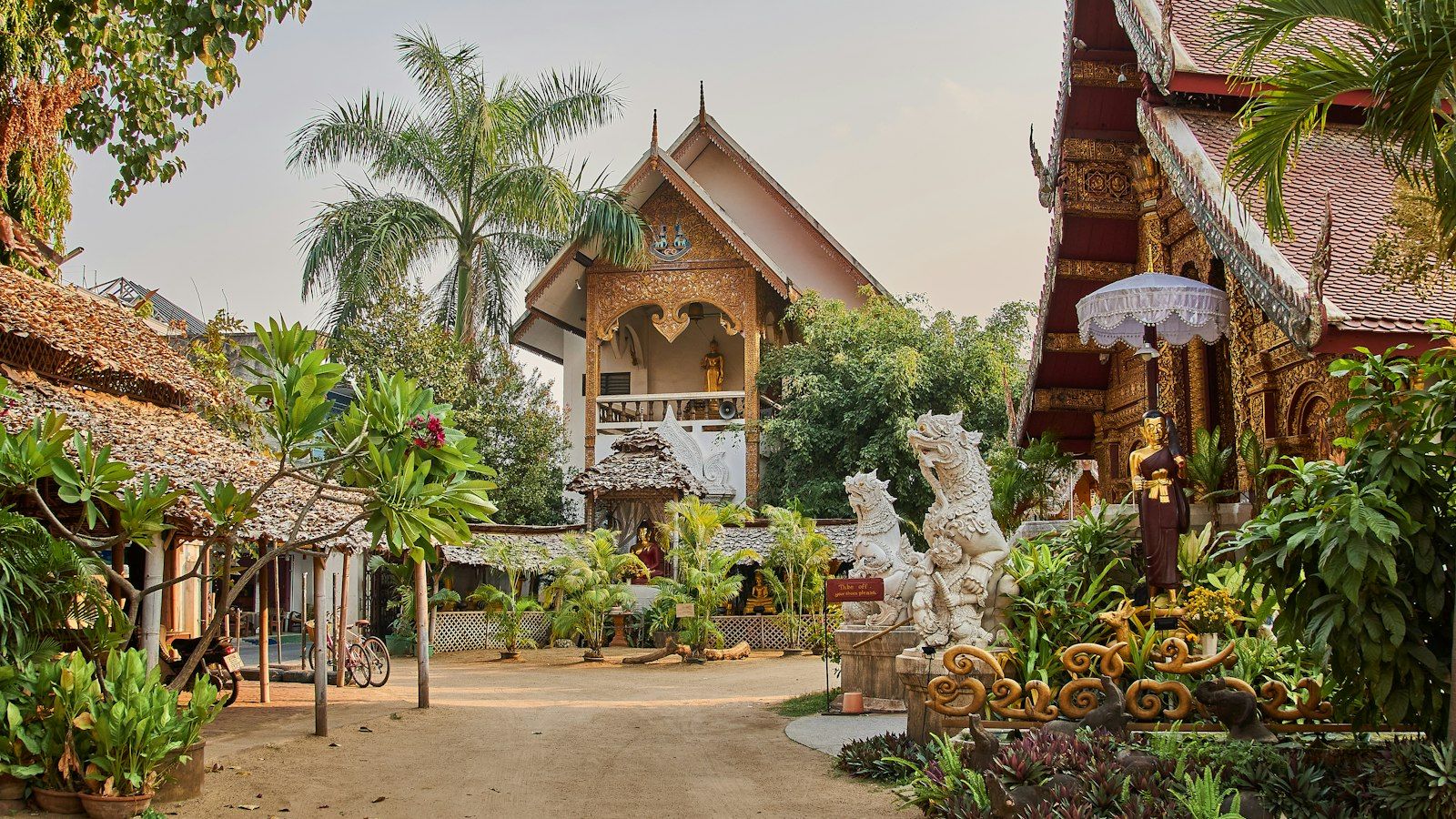
A small mountain town in Mae Hong Son, three hours and 762 curves from Chiang Mai, with waterfalls, hot springs, a sandstone canyon and a nightly street-food market.
- Best time to visit: November to early February
- Daily budget (budget traveller): $25 to $115 USD
- Ideal trip length: 4 to 7 days
Pai sits in a wide green valley in Mae Hong Son province, about 135 kilometres northwest of Chiang Mai along Route 1095, a road famous for its 762 curves. It started as a Shan market town on the old mule-train route and became a backpacker stop in the 1990s. Today it is a mix of both: a few streets of guesthouses, cafés and bars, ringed by rice fields, Lisu and Lahu hill villages, a Yunnanese Chinese settlement and forested ridges. Every evening the centre closes to traffic for the Walking Street night market, where you can eat well for 150 to 200 THB. By day most travellers rent a scooter and ride a loop of free or cheap sights: Pai Canyon at sunset, the Mor Paeng rock slide, the White Buddha above town and the Tha Pai hot springs. Further out, Tham Lod cave near Soppong takes you through a mountain on a bamboo raft. The cool season brings crisp mornings and valley mist. Pai is easy, cheap and very social, so it works well for solo travellers.
Pai is a few streets of guesthouses, cafés and bars in a valley ringed by mountains, close to the Myanmar border in Mae Hong Son province. Shan, Lisu, Lahu, Karen and Yunnanese Chinese communities all live within a short ride of the centre, and the town still has its morning market and temples. Since the 1990s backpackers have added hostels, yoga shalas, vegan cafés and a nightly street-food market. The result is cheap and very social. A dorm bed costs 200 to 450 THB, a bowl of khao soi 60 to 90 THB and Pai Canyon nothing at all. The catch is that everything worth seeing is spread across the valley, so how you get around matters more than where you sleep.
The usual pattern is three to seven days on a scooter, covering the free and cheap sights in short loops. South of town you have the canyon, the Memorial Bridge, the Land Split and the Tha Pai hot springs. To the northwest are Mor Paeng waterfall, the bamboo bridge and Santichon. East across the river is the White Buddha. Do not rent a scooter unless you are an experienced rider with the right licence. Pai has a long record of travellers hurt on its roads. Tour desks and drivers cover the same sights without the risk. For a bigger day out, Tham Lod cave near Soppong takes about an hour on the road to Mae Hong Son, and the Prempracha minivan stops there too.
Season decides the trip. November to January brings blue skies, misty dawns and nights cold enough for a fleece, plus crowds of Thai holidaymakers and higher prices around New Year. From February to April it gets hot, and smoke from seasonal burning can make the air unhealthy. The rains from roughly June to October turn the rice fields green, empty the hostels and make the waterfalls roar, but the gravel roads turn slick. Pai is not a party island, although bars stay busy until around midnight. Come for a slow pace, mountain views, a hot spring in the morning and a market dinner at night.
Pai itinerary
Chiang Mai to Pai, Walking Street
Morning: Take an early Prempracha van from Chiang Mai Arcade (book the 07:30 or 08:30). Sit at the front and take a travel-sickness tablet before the 762 curves.
Afternoon: Check in, then walk the centre and cross a bamboo footbridge over the Pai River. Late lunch of khao soi at Charlie & Lek.
Evening: Walking Street night market from 6pm. Graze on sai oua, skewers and mango sticky rice for 150-200 THB, then have a drink with your hostel crowd.
White Buddha and Mor Paeng
Morning: Rent a scooter if you ride confidently, or book a tour. Climb to the White Buddha at Wat Phra That Mae Yen before 9am. Cover shoulders and knees.
Afternoon: Ride northwest to Mor Paeng Waterfall (free to about 100 THB) for the rock slide, then on to the Boon Ko Ku So bamboo bridge (about 30 THB).
Evening: Back to town before dark. Dinner at Two Sisters Restaurant, then live music near Walking Street.
Yun Lai sunrise and Santichon
Morning: Set off at about 5:45am for Yun Lai Viewpoint (about 20 THB) and watch the mist lift. Have Yunnanese tea and noodles in Santichon village below.
Afternoon: Slow afternoon. Book a Thai cooking class at Charlie & Lek, or brunch and a book at Om Garden Cafe (it closes around 5pm).
Evening: Market dinner, then Edible Jazz or a quiet beer by the river.
Hot springs, Land Split and canyon sunset
Morning: Tha Pai Hot Springs at 8am (roughly 200-300 THB for foreigners, keep your ticket). Soak before the crowds arrive.
Afternoon: Stop at the Land Split for roselle juice and a donation, then the WWII Memorial Bridge. Lunch at Larp Khom Huay Poo on Route 1095.
Evening: Pai Canyon for sunset (free). Arrive by 5pm for a ridge spot, wear grippy shoes and ride back slowly in the dusk.
Tham Lod cave by bamboo raft
Morning: Ride or take the Prempracha van about an hour northwest to Soppong, then on to Tham Lod. Open roughly 8am to 4:30pm.
Afternoon: Hire a guide at the kiosk (roughly 350-700 THB per group of up to three) and do the full route with the raft. Team up with other solo travellers to split the cost.
Evening: Stay at Cave Lodge to see the evening swarm at the cave mouth, or head back to Pai before dark.
Doi Kiew Lom sea of mist
Morning: In the cool season, join a pre-dawn tour or hire a driver to Doi Kiew Lom in Huai Nam Dang National Park (about 300 THB for foreigners). Do not ride the dark mountain road yourself.
Afternoon: Back for a long lunch and a Thai massage in town. Outside mist season, walk the Mae Yen waterfall trail instead and expect wet feet.
Evening: Your last Walking Street. Pick up souvenirs and book tomorrow's van seat if you have not already.
Slow morning, back to Chiang Mai
Morning: Brunch at Om Garden Cafe or one more khao soi. Return your scooter and check it for scratches with the owner.
Afternoon: Midday van back to Chiang Mai Arcade, about three hours. Sunday afternoon seats sell out, so book ahead.
Evening: Dinner in Chiang Mai, or an onward flight or night train.
Best neighbourhoods
- Walking Street and the town centre: The grid of streets around Chaisongkhram and Rangsiyanon roads, with the evening night market, the minivan stop, hostels, scooter shops and most bars within a five-minute walk. Convenient and social, but noisy until late.
- Pai riverside: Bungalows and small resorts along the Pai River, a few minutes' walk east of the centre, some reached by bamboo footbridges. Quieter nights, hammocks and mountain views without needing a scooter for dinner.
- Santichon and Yun Lai: The Yunnanese Chinese village about 4 kilometres west of town, with tea tastings, Yunnan noodle shops and the Yun Lai viewpoint above it. A good sunrise trip, and home to a few quiet guesthouses.
- East side and the White Buddha: The road east across the river towards Wat Phra That Mae Yen and the Mae Yen waterfall trail. Rice fields, small resorts and yoga retreats, ideal if you have a scooter and want calm.
- Tha Pai and the south: The stretch of Route 1095 south of town with Pai Canyon, the WWII Memorial Bridge, the Land Split and the Tha Pai hot springs. Mostly a sightseeing loop rather than a base.
- Soppong (Pang Mapha): A small market town about an hour northwest on the road to Mae Hong Son, and the base for Tham Lod cave and limestone country. Worth a night if you like caves and quiet.
Must-do experiences
- Watch sunset at Pai Canyon: Walk the narrow sandstone ridges of Kong Lan, about 8 kilometres south of town. Entry is free with a donation box. There are no railings, so wear proper shoes and stay off the thinnest edges.
- Eat your way along Walking Street: The centre closes to traffic each evening for a night market of khao soi, northern sausage, grilled skewers, mango sticky rice and roti. Arrive around 6pm before the crowds.
- Slide down Mor Paeng Waterfall: A tiered waterfall about 8 to 10 kilometres northwest of town with natural rock slides and swimming pools. Entry is free to about 100 THB. Weekday mornings are quietest.
- Soak at Tha Pai Hot Springs: Steaming pools in a national park section about 8 kilometres southeast of town. Foreigners pay roughly 200 to 300 THB. Go at 8am when the air is cool and the pools are empty.
- Climb to the White Buddha: Climb the steep staircase at Wat Phra That Mae Yen, east of the river, for the whole valley at your feet. Free, donations welcome. Cover shoulders and knees.
- Raft through Tham Lod cave: Follow a lantern-carrying guide and ride a bamboo raft through a river cave near Soppong, past huge formations and ancient teak coffins. Guides are compulsory and priced per group of up to three.
- Catch sunrise at Yun Lai Viewpoint: Ride up above Santichon village before dawn for the mist lifting off the valley, then have Yunnanese tea and noodles in the village below. Entry is about 20 THB.
Hidden gems
- The Land Split near Tha Pai, a field cracked open by a 2008 earthquake, where the farming family serves roselle juice and snacks for a donation
- Mueang Paeng hot spring, a free, natural warm-water stream in a valley roughly 30 kilometres south of Pai, far quieter than the paid springs
- The Mae Yen waterfall walk east of town, a jungle trail with many river crossings that leaves the scooter crowd behind
- The Boon Ko Ku So bamboo bridge, a long handmade walkway across the rice paddies northwest of town, best in the green or golden months, with a small entry fee of about 30 THB
- Cave Lodge at Soppong, a long-running guesthouse that organises cave treks and wet-season kayak trips through Tham Lod
Daily budget
- Accommodation: budget 200-450 THB / night (dorm), 600-1,200 THB (guesthouse private), mid-range 1,500-3,500 THB (boutique room or riverside bungalow), splurge 4,000-8,000+ THB (Reverie Siam). Prices jump in December and January and around Thai long weekends, so book ahead. Rainy-season rates can be much lower. Weekly deals on bungalows are common, so just ask.
- Food: budget 250-450 THB / day (khao soi, market dinner), mid-range 600-1,000 THB (café brunch, sit-down dinner), splurge 1,500+ THB (dinner at Silhouette, cooking class). Khao soi is about 60-90 THB at Charlie & Lek. You can eat well at Walking Street for 150-200 THB. Western café brunches cost 150-300 THB.
- Transport: budget 150-300 THB / day (scooter rental plus fuel), mid-range 600-1,200 THB (day tour or shared driver), splurge 2,500-4,200 THB (private car to or from Chiang Mai). The Prempracha van from Chiang Mai is around 220-260 THB at the counter and a little more online. Book a few days ahead in high season and for Sunday returns.
- Activities: budget 0-300 THB / day (canyon free, Mor Paeng 0-100 THB, Yun Lai about 20 THB), mid-range 500-1,200 THB (hot springs 200-300 THB, Tham Lod), splurge 2,000+ THB (guided multi-day trek with village homestays). Tham Lod guides cost per group of up to three, roughly 350-700 THB depending on the route, so team up at the kiosk. Foreigners pay about 300 THB to enter Huai Nam Dang National Park. Fees change, so carry cash.
- Drinks & nightlife: budget 60-150 THB (7-Eleven beer and one bar drink), mid-range 300-600 THB (cocktails, live music), splurge 1,000+ THB (a big night out). Bars cluster around Walking Street and wind down around midnight. Alcohol sales are restricted at set hours and on Buddhist holy days. Live jazz at Edible Jazz is a long-running favourite, but check it is on.
Where to stay
- Social hostel in Town centre, near Walking Street (250-600 THB / night (dorm), privates from about 600 THB): Common Grounds Pai has air-conditioned six-bed dorms with lockers, private loft rooms, a co-working area and a busy common space a few minutes from the minivan stop and night market.
- Boutique hotel in Riverside, central Pai (2,500-4,500 THB / night): Hotel Des Artists Rose of Pai puts you on the river and within walking distance of Walking Street, so you do not need a scooter to eat out.
- Apartment in East side or riverside (700-1,500 THB / night, less by the week): Plenty of bungalows and studios with kitchenettes and hammocks rent by the night or week, popular with remote workers. Ask for a weekly rate and check the Wi-Fi speed first.
- Splurge in Pai River, about 1.3 km from the centre (4,000-8,000+ THB / night): Reverie Siam is a colonial-style resort on the river with two pools, garden views and its Silhouette restaurant, close enough for a short ride into town.
What to eat
- Khao soi: northern curry noodle soup with coconut milk, crispy noodles on top, pickled mustard greens and lime, around 60 to 90 THB at Charlie & Lek, Khao Soi Zister's or a Walking Street stall
- Larb: minced pork or chicken with roasted rice powder, herbs and chilli, done the northern way at Larp Khom Huay Poo on Route 1095, a favourite with Pai locals
- Sai oua: grilled northern sausage packed with lemongrass, kaffir lime and chilli, sold by the stick at the night market
- Yunnan noodles and tea: hand-pulled noodles, braised pork and oolong tastings in Santichon village after sunrise at Yun Lai
- Nam prik ong and nam prik noom: northern chilli dips of tomato and pork or roasted green chilli, eaten with sticky rice, pork crackling and raw vegetables
- Mango sticky rice: sweet sticky rice with ripe mango and salted coconut cream, best from the Walking Street carts
Day trips
- Tham Lod and Soppong (About 50 km northwest, roughly an hour by road): A river runs right through a mountain here. Lantern-carrying guides take you through huge chambers, past teak coffins and by bamboo raft along the stream. Huge flocks swirl around the cave mouth at dusk. Ride Route 1095 towards Mae Hong Son, or take the Prempracha van to Pang Mapha and arrange local transport onward. Guides cost roughly 350-700 THB per group of up to three. Stay at Cave Lodge to see the dusk swarm.
- Doi Kiew Lom, Huai Nam Dang National Park (About 30 km southeast towards Chiang Mai, roughly an hour on the curves): A high viewpoint famous for its winter sea of mist and sunrise over layers of mountains. It is at its best on cold, clear mornings from November to February. Join a pre-dawn sunrise tour or hire a driver from Pai. Foreigners pay about 300 THB to enter the national park. Ask whether your ticket also covers the Tha Pai hot springs on the same day.
- Mae Hong Son town (About 110 km west, roughly 3 to 4 hours by road): A sleepy provincial capital with Burmese-style temples beside Jong Kham Lake and Wat Phra That Doi Kong Mu on the hill above. Better as an overnight or the next leg of the Mae Hong Son loop. Prempracha's route continues from Pai through Pang Mapha to Mae Hong Son. Check the timetable and book ahead, and do not try to do it as a same-day return.
When to visit
- Cool season (November - January): 24-29°C by day, 8-15°C at night, dry with morning mist. Crowds: Heavy, peaking with Thai holidaymakers over Christmas and New Year. The classic window. Clear air, sea-of-mist sunrises and comfortable hiking. Book the minivan and beds ahead for December and January, and pack a warm layer.
- Hot and smoky (February - April): 30-37°C, very dry, haze from seasonal burning. Crowds: Moderate, then quiet as the smoke builds. Early February is fine. From March, check the AQI daily and bring an N95 mask. Songkran in mid-April means water fights in the street.
- Early rains (May - July): 27-33°C, humid, afternoon storms. Crowds: Low. Cheap and green, with rice planting in the paddies. Plan mornings outdoors and afternoons in cafés. Smoke clears once the rains start.
- Late rains (August - October): 24-30°C, frequent heavy rain, easing in October. Crowds: Low, picking up in late October. The locals' pick is late October into November, when the fields turn gold and waterfalls are full. Earlier, expect slippery roads, the odd landslide on Route 1095 and Tham Lod rafts that may not run in high water.
Entry rules for your passport
Visa rules for Thailand depend on the passport you travel on. Check the official source before you book: Thailand's official e-Visa site (Ministry of Foreign Affairs)
Getting there
Fly into Chiang Mai International Airport (CNX), which has direct flights from Bangkok in about 70 minutes and regional routes across Asia. Pai's small airstrip has no regular scheduled flights at the time of writing, so check before planning around one. From Chiang Mai, Prempracha Transport runs vans and minibuses from Chiang Mai Arcade (Bus Terminal 2) roughly hourly from 06:30 to 17:30, taking about three hours with one rest stop. Counter fares are around 220 THB for the van and 260 THB for the minibus, and booking sites charge a little more. Aya Service runs a competing van from its own office near the Old City, with hotel pick-ups. No shared van leaves from the airport, so take a taxi or ride app to Arcade first, about 20 minutes. A private car with photo stops costs roughly 2,500 to 4,200 THB. Route 1095 has 762 curves, so take motion-sickness tablets and sit near the front. Riding a scooter from Chiang Mai is only for experienced, licensed riders in dry weather. Prempracha's route continues to Pang Mapha and Mae Hong Son, so you can carry on round the Mae Hong Son loop without backtracking.
Getting around
Pai has no public transport within the valley. Most visitors rent a scooter for about 150 to 250 THB a day from shops on the main streets, including Aya Service. Only ride if you are experienced and hold a licence that covers motorbikes, as police checkpoints fine unlicensed riders and many travel insurers will not cover you. Helmets are compulsory. The town centre is walkable and the riverside bungalows are a short stroll away. For non-riders, songthaews and private drivers wait near the minivan stop, and tour desks sell full-day sightseeing loops of the canyon, waterfall, hot springs and Santichon from roughly 600 THB, so check what is included. Ride apps are patchy in Pai. To reach Soppong, Tham Lod or Mae Hong Son, Prempracha's Chiang Mai to Mae Hong Son route stops in Pai and Pang Mapha.
Safety
Pai is generally safe and relaxed, and violent crime against travellers is rare. The real hazard is the road. Scooter crashes are common on gravel, wet bends and the steep descents to waterfalls, so ride slowly, never after drinking, and avoid riding the mountain roads at night. Pai Canyon has sheer unfenced drops. Thai drug laws are strict: mushroom shakes sold quietly in some bars are illegal, and cannabis rules were tightened in 2025 and keep changing, so steer clear. From February to April, field and forest burning can push air quality to unhealthy levels, so check the AQI and pack an N95 mask. Watch your drink in bars, walk home in a group on unlit roads, and use a hostel locker for your passport. Stray dogs can be territorial after dark. In the rainy season, landslides occasionally block Route 1095.
Solo travel tips
- Pick a hostel that runs events: Common Grounds Pai, K-Bunk on Walking Street and Mad Monkey Pai run family dinners, pub crawls and day trips. Join one on your first night and you will have riding partners for the rest of the week.
- Be honest about the scooter: If you have never ridden, do not learn in Pai. Gravel corners and steep waterfall roads catch out beginners every day. Take a tour or find someone at your hostel who rides well, and always carry your licence and wear a helmet.
- Team up for Tham Lod: Guides are priced per group of up to three, so a solo traveller pays the same as a trio. Wait at the kiosk for others or arrange a group at your hostel the night before.
- Go early, everywhere: Hot springs at 8am, the White Buddha before 9am and Mor Paeng on a weekday morning. By noon the heat and the tour vans arrive. Afternoons are for cafés and hammocks.
- Safety for solo travellers: Pai is low-crime, but keep your passport in a locker, watch your drink, and walk home with others on unlit roads. Avoid mushroom shakes and drug offers completely, as penalties are severe.
- Book the van out early: Minivans back to Chiang Mai fill up in December and January and on Sunday afternoons. Reserve two or three days ahead and pick a morning departure so you are off the curves before dark.
Cultural etiquette
- Dress modestly at temples, with shoulders and knees covered, and take your shoes off before entering any hall. A sarong in your daypack solves most problems.
- Do not wander town in swimwear or shirtless. Pai is relaxed, but it is still a Thai market town, and locals notice.
- Never touch someone's head or point your feet at people or Buddha images. Sit with your feet tucked to the side in temples.
- Speak respectfully about the Thai monarchy. Criticism is a criminal offence and is taken very seriously.
- Ask before photographing people in hill-tribe villages or at the morning market. A smile and a raised camera usually gets an answer.
- A 'sawasdee kha' (women) or 'sawasdee khrap' (men) for hello, and 'khop khun' for thanks, goes a long way. Keep your voice calm and stay polite if something goes wrong.
- Respect quiet hours if you stay near homes or rice fields. Pai's residents have long put up with late-night noise from backpackers.
Frequently asked questions
How do I get from Chiang Mai to Pai?
The easiest way is the Prempracha minivan from Chiang Mai Arcade Bus Terminal 2, which runs roughly hourly from 06:30 to 17:30 and takes about three hours plus a rest stop. Counter fares are around 220 THB for a van and 260 THB for a minibus, and online booking with hotel pick-up costs a little more. Aya Service also runs vans from its office near the Old City. A private car costs roughly 2,500 to 4,200 THB. There are no shared vans from Chiang Mai airport, so take a taxi to Arcade first.
How many days do I need in Pai?
Four days covers the canyon, a waterfall, the hot springs, the White Buddha and a few nights at Walking Street. A week lets you add Tham Lod cave, a sunrise trip to Doi Kiew Lom and some properly slow days. Many travellers plan three days and stay ten.
When is the best time to visit Pai?
November to early February is the cool season, with clear days, chilly nights and morning valley mist. December and January are also peak Thai holiday season, so prices rise and rooms sell out. From February to April it gets hot and smoky from seasonal burning. The rains from roughly June to October turn the valley green and quiet but make roads slippery.
Do I need to ride a scooter in Pai?
No, but it makes things easier. If you have never ridden, Pai's gravel, hills and bends are a bad place to learn. Day tours, songthaews and private drivers cover the main sights, and the town centre and riverside are walkable. If you do ride, carry a licence that covers motorbikes, wear a helmet and check that your insurance covers you.
Can I use cards in Pai?
Hotels, larger restaurants and some cafés take Visa and Mastercard, but Pai is still a cash town. Night-market stalls, scooter shops, waterfalls, hot springs and the Tham Lod guide kiosk want baht. Thai ATMs charge foreign cards around 220 to 250 THB per withdrawal, so take out larger amounts less often.
Is the air quality bad in Pai?
It can be from February to April, when farmers and forest fires burn across northern Thailand and Myanmar. On bad days the valley fills with haze and AQI readings reach unhealthy levels. Check an air-quality app before you book, bring an N95 mask, and plan outdoor activities for the cleaner hours. From November to January the air is usually clear.
Is Pai safe for solo female travellers?
Yes, Pai is popular with solo women and has a friendly, low-key feel. The usual precautions apply: watch your drink in bars, avoid walking alone on dark roads outside the centre late at night, and choose a hostel with female dorms or good reviews from solo women. Scooter safety matters more than crime here.
What entry rules apply to travellers visiting Thailand in 2026?
Thailand changed its rules on 15 September 2026. The 60-day visa exemption was replaced by a 30-day exemption for about 60 countries and territories, with a 15-day category for some others and a shorter visa-on-arrival list. All foreign arrivals must also complete the free Thailand Digital Arrival Card (TDAC) online within three days before arrival. Expect to need a passport valid for six months and proof of onward travel. One 30-day extension is usually possible for 1,900 THB. Rules vary by nationality and can change at short notice, so always confirm on the official Thai government immigration and Ministry of Foreign Affairs websites before you book.
More about Pai
- Best Time to Visit Southeast Asia: Month by Month and Where to Go
- Solo Travel Southeast Asia Itinerary 2026: 2, 3 and 4 Week Overland Routes
- Solo Travel in Southeast Asia: The 2026 Beginner's Guide to Visas, Money and Safety
- Bangkok on $30 a Day? A Realistic Budget Guide for 2026
Tours and activities in Pai | Pai in 2 days | Pai in 3 days | Pai in 4 days | Pai in 5 days | Pai in 7 days
Can't decide? Compare Pai with...
Joy Plus home | Destinations | Itineraries | Activities | Flights | Budget planner | Calendar | Map | Blog | Lifetime access