Destinations / Asia
Quy Nhon, Vietnam travel guide
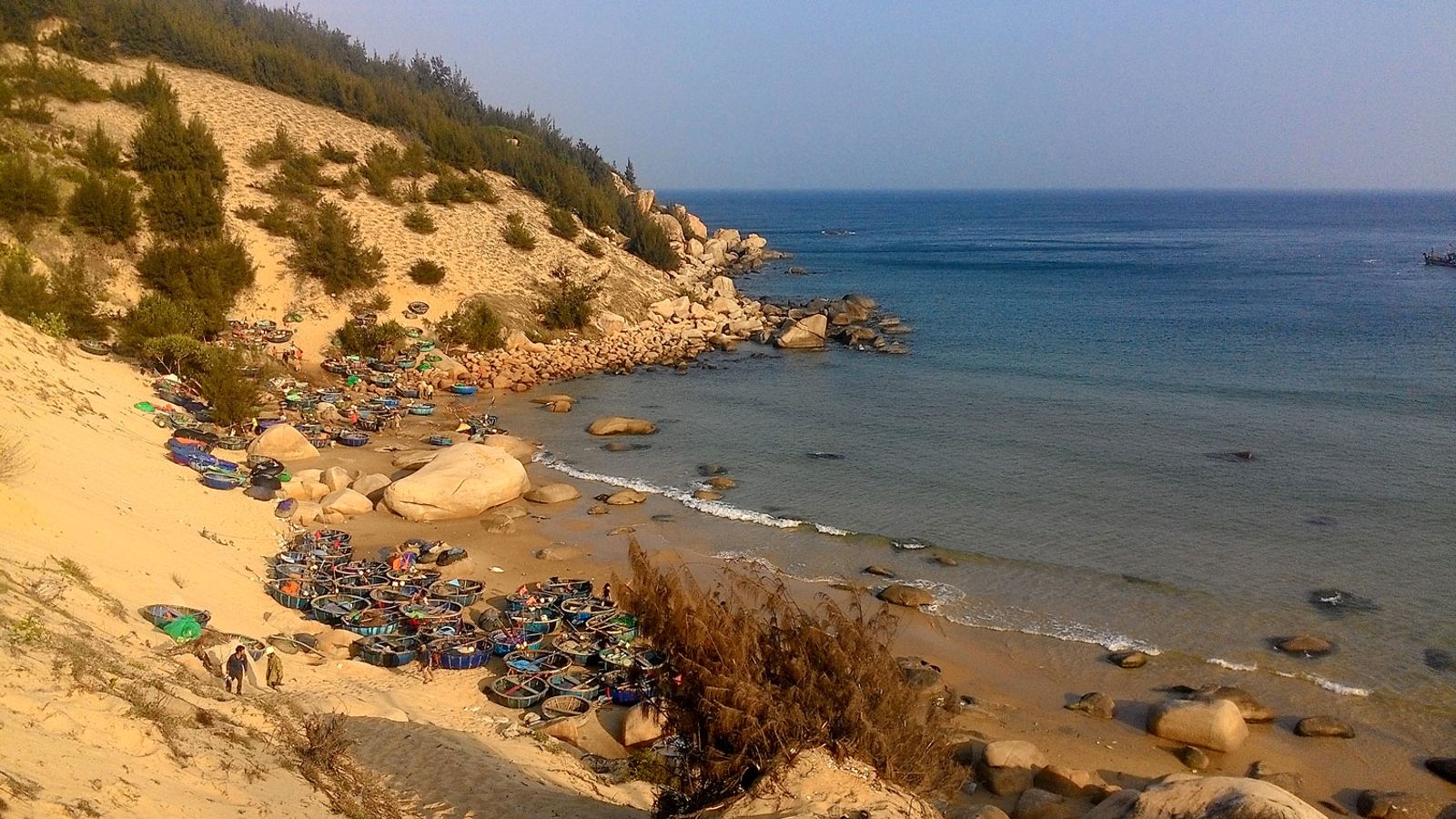
A relaxed port city on Vietnam's south-central coast. You can swim off a long town beach at dawn with the locals, take a boat to the turquoise cove at Ky Co and eat jumping-shrimp pancakes for less than a dollar.
- Best time to visit: March to August
- Daily budget (budget traveller): $30 to $120 USD
- Ideal trip length: 3 to 5 days
Quy Nhon sits on a wide bay roughly halfway between Da Nang and Nha Trang. It is a working port city, not a resort strip, which is a big part of its appeal. Since the 2025 provincial mergers it has been the capital of an enlarged Gia Lai province, though most locals still talk about Binh Dinh. The centre runs along a long sandy beach lined with a seafront promenade, where hundreds of people swim and exercise before 6am. Most visitors come for the coast. Across the Thi Nai bridge on the Phuong Mai peninsula you will find Ky Co, a cove of clear water walled in by cliffs, and Eo Gio, a windy gap in the headland with a clifftop walkway. South of town, the road hugs the shore past Ghenh Rang, the poet Han Mac Tu's tomb and the old leprosy hospital at Quy Hoa, then reaches Bai Xep, a fishing village with a handful of backpacker hostels. The Cham towers at Thap Doi and Banh It are reminders that this was once the heart of the Champa kingdom. Few foreigners visit compared with Hoi An or Nha Trang, English is limited and you will need cash for almost every ticket booth. Still, cheap seafood, dorm beds under $10 and easy Grab rides make it a very good stop for a solo traveller on the coast.
Quy Nhon is a mid-sized port city on Vietnam's south-central coast, around 300km south of Da Nang and 170km north of Nha Trang. It wraps around a sheltered bay with a long sandy beach, and a busy fishing and container port sits on the spit to the east. For centuries this was the core of the Champa kingdom, and its brick towers still stand in the city and the countryside around it. Later it was the home ground of the Tay Son brothers, who swept across Vietnam in the 18th century. Today it is a provincial capital that happens to be on a beautiful stretch of coast, and life here runs at local speed. Most foreign visitors pass straight through on the train. Stop for a few nights and you get turquoise coves, cheap seafood, near-empty Cham ruins and a city beach where the whole town swims before breakfast.
Getting here takes a little planning. Phu Cat Airport has daily flights from Ho Chi Minh City and Hanoi and is about 40 to 60 minutes from town. On the railway, express trains stop at Dieu Tri, west of the city, as the branch line into Quy Nhon itself no longer carries regular passengers. Buses and limousine vans also link the city with Hoi An, Da Nang and Nha Trang. Once you are here, Grab is cheap and reliable, and a rented scooter opens up the peninsula and the coves. Base yourself on the city seafront for convenience, or in Bai Xep for hostels and other travellers.
The seasons matter more here than in many places. From March to August, the sea is calm and clear, the boats to Ky Co run reliably and the sky is mostly blue, although July and August are very hot and busy with Vietnamese holidaymakers. From September the rains build, and October and November can bring floods and storms that cancel boats and close coastal roads. Winter brings cooler, windier days and surf at Bai Xep. English is limited outside hostels and big hotels, so a translation app and small cash notes go a long way. Evenings are about seafood and cold beer on plastic stools rather than clubs. If that sounds right, Quy Nhon rewards a slow few days.
Quy Nhon itinerary
Arrive and hit the seafront
Morning: Fly into Phu Cat or take the train to Dieu Tri, then a Grab into town. Drop your bag and have a bowl of bun cha ca.
Afternoon: Walk the promenade along An Duong Vuong and have a late swim once the heat drops. Get cash out and buy a local SIM if you need one.
Evening: Head to the seafood restaurants on Xuan Dieu street for grilled squid and scallops, then a round of banh xeo tom nhay.
Ky Co and Eo Gio
Morning: Set off early across the Thi Nai bridge to Nhon Ly. Take the boat to Ky Co (roughly $8 to $12 including entry) and swim before the groups arrive.
Afternoon: Have a seafood lunch in Nhon Ly village, rest through the heat, then stop at the Phuong Mai sand dunes for the view.
Evening: Walk the clifftop path at Eo Gio for sunset (25,000 to 50,000 VND), visit Ngoc Hoa Pagoda next door, then ride back to town before dark.
Ghenh Rang, Quy Hoa and the move south
Morning: Join the dawn swim on the city beach, then go to Ghenh Rang, Queen's Beach and Han Mac Tu's tomb before it gets hot.
Afternoon: Walk the shady grounds and busts at the Quy Hoa hospital and swim at the beach below. Then move on to Bai Xep.
Evening: Check into a Bai Xep hostel, watch the basket boats from the rocks and share dinner with the other guests.
Slow day in Bai Xep
Morning: Sunrise on the boulders, when the boats come in. Breakfast in the village and coffee with a sea view.
Afternoon: Read, nap, swim off the rocks in calm weather or walk along Bai Dai beach. In winter, take a surf lesson.
Evening: Sunset from the hill above the village, then grilled fish in Bai Xep.
Cham towers
Morning: Ride or take a Grab to Banh It (about 15,000 to 20,000 VND) while it is still cool, and climb up for the views over the rice fields.
Afternoon: Back into the city for the Twin Towers (about 20,000 VND), Long Khanh Pagoda and a wander through the market.
Evening: Iced coffee on the promenade and a cheap dinner of street food in the centre.
Ganh Da Dia day trip
Morning: Make an early start south along the coast to Ganh Da Dia, about 2 to 2.5 hours by car or scooter. Its basalt columns are best before the midday glare.
Afternoon: Have lunch near the coast, and if time allows stop at the Mui Dien headland or the lagoons on the way back.
Evening: Back in Quy Nhon for a farewell seafood dinner on Xuan Dieu.
Last swim and depart
Morning: One more dawn swim with the locals, then pick up nem chua and banh it la gai to take home.
Afternoon: Take a Grab to Phu Cat Airport (allow an hour) or Dieu Tri station. Check the train times the day before.
Evening: Arrive in Ho Chi Minh City, Hanoi, Da Nang or Nha Trang, or carry on along the coast.
Best neighbourhoods
- City centre and seafront: The strip along An Duong Vuong and Xuan Dieu streets, facing the long town beach. Hotels, cafés, seafood restaurants and the main market are all within walking distance, and Grab rides to the sights are short. It is the most practical base if you do not ride a motorbike, and the beach is busiest at dawn and sunset.
- Ghenh Rang and Quy Hoa: The hilly headland just south of the centre, with Queen's Beach, Han Mac Tu's tomb and the leafy grounds of the Quy Hoa hospital. There are a few hotels and guesthouses on the coast road. It is quieter than the city but still only a short ride from it, and you can walk to the main sights.
- Bai Xep: A small fishing village about 10km south of the centre, where boats are pulled up between granite boulders. It has a cluster of hostels and guesthouses popular with backpackers, remote workers and surfers in winter. The swimming is rocky, but it is the most sociable base for solo travellers. You will need a motorbike or Grab to get anywhere else.
- Bai Dai resort strip: The long, quiet beach next to Bai Xep, home to high-end resorts such as Anantara and AVANI. There is little here apart from the resorts themselves. It suits you if you want a pool, a private beach and a few days of doing nothing, with the hostels and cafés of Bai Xep a short walk away.
- Nhon Ly and the Phuong Mai peninsula: The fishing village across the bay where boats leave for Ky Co, with Eo Gio and the twin Buddha statues of Ngoc Hoa Pagoda just up the road. There are homestays and seafood restaurants on the water, plus the large FLC resort further south. Stay here if you want Eo Gio at sunrise without an early ride.
Must-do experiences
- Take the boat to Ky Co: Ky Co is a pale-sand cove with clear water, set between cliffs on the far side of the Phuong Mai peninsula. Boats and canoes run from Nhon Ly village, or you can ride to the gate and take the shuttle down. Expect roughly 100,000 to 120,000 VND for entry plus 110,000 to 200,000 VND for the transfer. Go early on a weekday, before the domestic tour groups arrive.
- Walk the clifftop path at Eo Gio: A short walkway curls around the rocky headland above a deep blue bay, a few minutes from Nhon Ly. The fee was raised in June 2026 and has been disputed, so expect somewhere between 25,000 and 50,000 VND, in cash. Come for sunrise or late afternoon, and look into Ngoc Hoa Pagoda next door with its huge twin Buddha statue.
- See the Twin Towers in town: Thap Doi is a pair of Cham brick towers from the late 12th or early 13th century, set in a small park about 2 to 3km from the centre. Entry is around 20,000 VND. Look up at the sandstone carvings on the roofs, and go early, as it is the busiest Cham site in the area.
- Climb up to Banh It towers: Four 11th-century Cham towers stand on a hilltop about 15 to 20km north-west of the city, looking out over rice fields and the river. Entry is about 15,000 to 20,000 VND, cash only. A steep path and steps lead up from the car park. It is often almost empty, and late afternoon light is best.
- Visit Ghenh Rang and Han Mac Tu's tomb: Just south of the centre, Queen's Beach is a small cove of smooth, egg-shaped boulders. Above it on the hill is the tomb of Han Mac Tu, a much-loved Vietnamese poet who died of leprosy at Quy Hoa in 1940. Walk up for the view back over the city and the bay.
- Wander the grounds at Quy Hoa: The leprosy hospital founded here in 1929 is still a working hospital and village. Its shady seafront grounds are full of busts of famous scientists and doctors, and there is a quiet beach below. Entry is free. Keep your voice down, and do not photograph patients or residents.
- Join the dawn swim on the city beach: From around 5am the town beach fills with people swimming, jogging, doing tai chi and playing football before the heat. Join them, then have coffee on the promenade as the fishing boats come in. It costs nothing, and it is the best way to see how the city starts its day.
Hidden gems
- Ngoc Hoa Pagoda beside Eo Gio, with its towering twin Buddha statue, which most visitors only see from the car park
- The beach below the Quy Hoa hospital in the early morning, when the only other people around are fishermen and residents
- Long Khanh Pagoda in the city centre, a calm courtyard with a large Buddha statue, minutes from the busy market streets
- The boulders at the end of Bai Xep at sunrise, when the basket boats come back in and the village is at its busiest
- The Phuong Mai sand dunes on the road to Nhon Ly, worth a stop for the view over the bay on the way to Ky Co
Daily budget
- Accommodation: budget $5-10 / night (hostel dorm in the city or Bai Xep), mid-range $25-60 (seafront hotel or Bai Xep private room), splurge $250+ (Anantara or AVANI villa on Bai Dai). Prices rise in June to August and around Tet. Small guesthouses with private rooms start around $10 to $20. Book summer weekends early.
- Food: budget $8-15 / day (bun cha ca, banh xeo, rice plates, market fruit), mid-range $20-35 (café breakfasts and a seafood dinner), splurge $50+ (resort restaurants, lobster and wine). Street dishes cost roughly 25,000 to 50,000 VND. Seafood is priced by weight, so confirm the price before it is cooked.
- Transport: budget $2-8 / day (Grab bike or a scooter at 150,000-200,000 VND), mid-range $10-25 (Grab cars, Ky Co transfers), splurge $40-60 (car and driver for the day). The airport taxi is about $10 to $14. A taxi from Dieu Tri station is around 200,000 VND. Fuel for a scooter costs very little.
- Activities: budget $0-3 / day (beach, Quy Hoa, Twin Towers at about 20,000 VND), mid-range $8-15 (Ky Co entry and boat, Eo Gio, Banh It), splurge $35-60 (snorkelling or fishing boat trips, SUP tours). Ticket booths are almost all cash only. The Eo Gio fee was raised in June 2026 and is still being argued over, so expect 25,000 to 50,000 VND.
- Drinks & nightlife: budget $2-6 (iced coffee and a couple of local beers), mid-range $10-20 (cocktails at a seafront bar), splurge $40+ (resort bars). A coffee costs about 20,000 to 35,000 VND and a local beer about 20,000 to 30,000 VND. Nightlife means seafood joints, beer and rooftop bars rather than clubs.
Where to stay
- Social hostel in Bai Xep ($5-10 / night (dorm)): Hostels such as Big Tree Backpackers and Haven sit right in the fishing village, with sea views, shared meals and scooter rental. It is the main traveller hangout in Quy Nhon and a good base for meeting people.
- Boutique hotel in City seafront ($40-90 / night): Seafront hotels on An Duong Vuong, such as Anya Premier, look straight over the beach and promenade. You are a short walk from Xuan Dieu's seafood strip and a cheap Grab from most sights.
- Apartment in City centre ($20-45 / night): Serviced apartments and mini-hotels around the centre give you a kitchen or more space for longer stays, with the market and cafés nearby. Check whether there is a lift and how far it is to the beach.
- Splurge in Bai Dai ($300-600+ / night): Anantara Quy Nhon Villas has pool villas on a quiet private beach south of town, with a spa and excellent food. Bai Xep's cafés are next door when you want a change.
What to eat
- Banh xeo tom nhay: small crispy pancakes cooked in clay moulds with tiny 'jumping' shrimp, rolled in greens and rice paper and dipped in sauce. Very cheap and best in the evening
- Bun cha ca: rice noodle soup with fried fish cakes and a light, slightly sweet broth, the local breakfast of choice
- Banh hoi chao long: fine woven rice-vermicelli sheets eaten with rice porridge and offal, a Binh Dinh breakfast for the adventurous
- Seafood by weight: grilled squid, scallops with spring onion, clams and fish at the open-air restaurants on Xuan Dieu street. Check the price per kilo before you order
- Nem chua cho huyen and banh it la gai: a tangy fermented pork roll and a dark leaf-wrapped sticky rice cake, both sold in the market to take home
- Ca phe sua da (iced coffee with condensed milk) or a fresh coconut on the promenade, at well under a dollar
Day trips
- Ky Co, Eo Gio and Nhon Ly (About 20 to 25km from the centre, 40 to 50 minutes by road): The headline day out: a cliff-ringed cove with clear water, a windy clifftop walk, a fishing village with seafood lunches and a huge twin Buddha at Ngoc Hoa Pagoda. Ride a scooter or take a Grab across the Thi Nai bridge to Nhon Ly, then a boat to Ky Co. Budget roughly 100,000 to 120,000 VND entry plus 110,000 to 200,000 VND transfer, and cash for Eo Gio. Calm dry-season mornings are best.
- Ganh Da Dia (About 100km south, 2 to 2.5 hours by road): Thousands of hexagonal basalt columns form a rocky shoreline, in what was until 2025 Phu Yen province. You can combine it with lagoons and the Mui Dien headland further south. Hire a car and driver, ride a scooter if you are confident, or book a day tour from Quy Nhon. Start early to avoid the midday heat and glare on the rocks.
- Banh It and the Quang Trung Museum (About 15 to 20km and 45 to 50km north-west): A hilltop of four Cham towers with views over the rice fields, followed by the museum in Tay Son dedicated to the 18th-century Tay Son brothers. It also has displays on Binh Dinh's traditional martial arts. Go by scooter, Grab or a car with driver along Highway 1A and on inland. Banh It costs around 15,000 to 20,000 VND, cash only. Allow most of a day for both.
When to visit
- Dry spring (February - April): 24-31°C, drying out, sea calming from March. Crowds: Low, but very busy around Tet (late January or February). A great time for the Cham towers and comfortable sightseeing. Ky Co boats run more reliably from March. Book ahead and expect closures around Tet.
- Early summer (May - June): 29-34°C, hot and sunny, calm clear sea. Crowds: Moderate, rising in June with school holidays. Arguably the best window. Flat water at Ky Co and Eo Gio, long beach mornings, and weekdays still quiet.
- High summer (July - August): 31-36°C, very hot, occasional storms. Crowds: Busy with domestic tourists, very busy at weekends. Good for swimming and boat trips, but rooms cost more and the coves fill up. Go early, rest at midday and avoid weekends at Ky Co.
- Rainy season and winter (September - January): 22-29°C, heavy rain peaking in October and November, rough seas. Crowds: Quiet. Cheap and peaceful, with surf at Bai Xep in winter. Boats are often cancelled, and storms can disrupt travel. Keep your plans flexible.
Entry rules for your passport
Visa rules for Vietnam depend on the passport you travel on. Check the official source before you book: Vietnam National E-Visa system
Getting there
Phu Cat Airport (UIH) is about 30 to 35km north of the city. Vietnam Airlines and VietJet fly there daily from Ho Chi Minh City in about 1 hour and from Hanoi in about 1.5 hours. Some VietJet flights also come from Hai Phong. From the airport, Grab or a taxi costs around 250,000 to 350,000 VND ($10 to $14) and takes 40 to 60 minutes, and an airport bus is cheaper. By train, express services on the north-south line stop at Dieu Tri station, 10 to 15km west of the centre. Seats from Da Nang take about 5 to 6.5 hours and cost from roughly 290,000 VND, and from Nha Trang about 4 to 5 hours from around 150,000 to 225,000 VND. Take a sleeper on overnight runs. A taxi from Dieu Tri into town costs about 200,000 VND. Buses and limousine vans run from Hoi An (around 5.5 to 7 hours) and from Nha Trang, often with hotel pick-up. Book through your accommodation or an app such as Vexere.
Getting around
Quy Nhon is spread out along the coast, so you will walk the seafront but ride everywhere else. Grab works well for motorbike taxis and cars, and Xanh SM electric taxis also operate. A short Grab bike ride across town costs roughly 15,000 to 30,000 VND, about $1. A car to Bai Xep is usually around 80,000 to 150,000 VND, and to Ky Co or Eo Gio it is more like 250,000 VND or more each way. Many travellers rent a scooter for 150,000 to 200,000 VND a day ($6 to $8) to reach the coves, the peninsula and the Cham towers. You legally need a licence valid in Vietnam, and your insurance may not cover you without one. The coast road south to Bai Xep and the bridge road to Nhon Ly are scenic but busy with trucks in places. Ordinary taxis are fine, but use the meter or check the fare on Grab first. Some local buses run within the city, but for visitors Grab is far simpler. For Ky Co, boats leave from Nhon Ly village and may be cancelled when the sea is rough.
Safety
Quy Nhon is a safe, low-key city, and serious crime against visitors is rare. The main risks are traffic, the sea and the weather. Ride carefully, wear a helmet and expect trucks on the coast road and the Thi Nai bridge. The town beach and some coves have strong currents, especially from September to March, when the north-east monsoon brings big waves. Swim where locals swim and stay out when red flags are up. October and November bring the heaviest rain, along with flooding and the tail end of typhoons, so watch the forecasts. The sun is fierce from April to August. Do not drink the tap water. Bag and phone snatching is uncommon, but keep your phone away from the roadside. The emergency numbers are 113 for police, 114 for fire and 115 for ambulance. Hospitals in town can handle basics, but for serious cases you may be sent to a bigger city, so you need travel insurance that covers medical evacuation.
Solo travel tips
- Split your stay: A couple of nights on the city seafront and a couple in Bai Xep give you both the convenience of town and the social side of the hostels.
- Do Ky Co on a weekday morning: Domestic tour groups arrive late morning and fill the cove at weekends. Be on the first boats from Nhon Ly and you will have clear water and space.
- Carry small cash: Ticket booths, boats, parking and street stalls almost all want cash. Keep a stack of 10,000 to 50,000 VND notes, as change for big notes can be a struggle.
- Watch the weather: Rough seas cancel the Ky Co boats, especially from September to March. Leave a spare day and check with your hostel the night before.
- Safety for solo travellers: The real risks are traffic and the sea. Wear a helmet, avoid riding the coast road after dark and never swim alone when the waves are up.
- Meet people at Bai Xep: The hostels in Bai Xep run shared dinners and group rides to the coves, and they are the easiest place in Quy Nhon to find company for a day out.
Cultural etiquette
- Greet people with 'xin chao' (hello) and say 'cam on' (thank you). A smile and a little Vietnamese go a long way, as English is limited.
- Cover your shoulders and knees in pagodas and Cham temples, take off your shoes where others do and do not point your feet at altars.
- Behave quietly and respectfully at the Quy Hoa hospital, and do not photograph patients or residents.
- Confirm the price per kilo before seafood is cooked, and agree prices up front for boats and motorbike taxis not booked through an app.
- Do not stick your chopsticks upright in a bowl of rice, as it is associated with offerings to the dead.
- Keep calm if there is a misunderstanding. Raising your voice causes a loss of face and rarely helps.
- Take your rubbish with you from the coves and beaches, where bins can be scarce.
Frequently asked questions
How do I get to Quy Nhon and into town?
Fly to Phu Cat Airport, about 30 to 35km north of the city. Vietnam Airlines and VietJet run daily flights from Ho Chi Minh City (about 1 hour) and Hanoi. Grab or a taxi into town costs around 250,000 to 350,000 VND ($10 to $14), and an airport bus is cheaper. By rail, express trains stop at Dieu Tri, 10 to 15km west of the centre, and a taxi from there costs about 200,000 VND. Da Nang is about 5 to 6.5 hours by train, and Nha Trang about 4 to 5 hours.
How many days do I need in Quy Nhon?
Two full days covers Ky Co, Eo Gio, Ghenh Rang and the Twin Towers. Three to five days lets you add Banh It, Quy Hoa and a few slow days in Bai Xep. A week gives you time for a day trip south to the basalt columns at Ganh Da Dia, or a spare day in case bad weather cancels the Ky Co boats.
When is the best time to visit Quy Nhon?
March to August is the dry season, with calm seas and clear water at Ky Co. April to June is the sweet spot. July and August are very hot and busy with Vietnamese families, especially at weekends. September to December is the rainy season, and October and November bring the heaviest rain, floods and storm risk. Winter brings rougher seas, which is good for surfing at Bai Xep but bad for boat trips.
How do I get to Ky Co and Eo Gio on my own?
Both are on the Phuong Mai peninsula, about 20 to 25km from the centre across the Thi Nai bridge. Ride a scooter or take a Grab to Nhon Ly village, then take a boat or canoe to Ky Co. Alternatively, ride to the Ky Co gate and take the shuttle down. Allow roughly 100,000 to 120,000 VND for entry plus 110,000 to 200,000 VND for the transfer. Eo Gio is a few minutes from Nhon Ly. Tours are an option too, but read the small print, as some booking apps only take a deposit and you pay the rest in cash.
Should I stay in the city or in Bai Xep?
Stay in the city if you will rely on Grab, want restaurants on your doorstep or have only a couple of days. Bai Xep is better for meeting other travellers, cheap dorms and a slower pace, but it is about 10km south and you will want a scooter or a regular Grab budget. Many people do two nights in each.
Is the sea safe for swimming?
In the dry season, mostly yes. The city beach is calm in the mornings and busy with local swimmers. From around September to March the north-east monsoon brings bigger waves and rip currents, so swim only where others are, stay close to shore and skip the water when flags or locals warn you off. Bai Xep is rocky underfoot, so water shoes help. Ky Co and Eo Gio are best on calm, dry-season mornings.
Is Quy Nhon safe for solo female travellers?
Yes. It is a calm, family-oriented city, and the seafront is busy and well lit in the evenings. Use Grab rather than unmarked drivers at night, keep your phone away from the roadside and take normal care with drinks in bars. Bai Xep is small and friendly, but the coast road back to town is dark, so avoid riding it late at night.
What are the entry rules for Vietnam in 2026?
Citizens of 24 countries, including the UK, Germany, France, Italy, Spain, the Nordic countries, Japan and South Korea, can stay up to 45 days without a visa. British National (Overseas) passports are not included. Travellers from the US, Canada, Australia, New Zealand and Ireland need an e-visa, which is valid for up to 90 days and costs about $25 for a single entry if you apply on the official government portal. Your passport should be valid for at least six months. Always check the latest rules with official Vietnamese sources and your own government's travel advice before you go.
More about Quy Nhon
- Best Time to Visit Southeast Asia: Month by Month and Where to Go
- Ha Giang Loop Solo: The Complete Guide for First-Time Solo Travelers (2026)
- Solo Travel Southeast Asia Itinerary 2026: 2, 3 and 4 Week Overland Routes
- Solo Travel in Southeast Asia: The 2026 Beginner's Guide to Visas, Money and Safety
Tours and activities in Quy Nhon | Quy Nhon in 2 days | Quy Nhon in 3 days | Quy Nhon in 4 days | Quy Nhon in 5 days | Quy Nhon in 7 days
Can't decide? Compare Quy Nhon with...
Joy Plus home | Destinations | Itineraries | Activities | Flights | Budget planner | Calendar | Map | Blog | Lifetime access