Destinations / Europe
Rotterdam, Netherlands travel guide
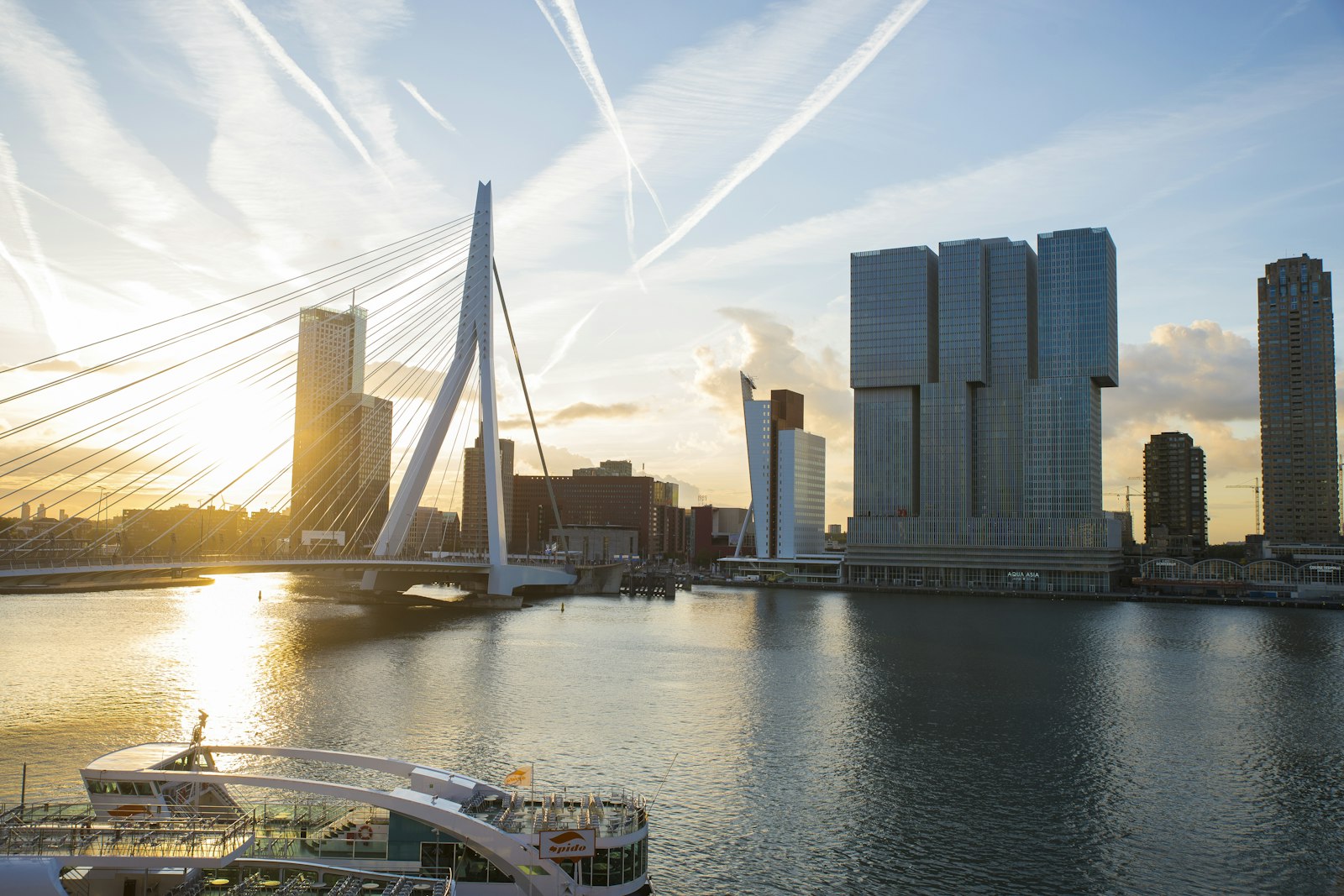
The Netherlands' bold modern city: daring architecture, Europe's biggest port, a buzzing food hall and creative energy.
- Best time to visit: May-September
- Daily budget (budget traveller): $100 to $170 USD
- Ideal trip length: 2 days
Rotterdam is the Netherlands' boldest city, rebuilt after wartime destruction into a showcase of daring modern architecture, from the cube houses to the soaring Markthal food hall and a skyline unlike anywhere else in the country. Home to Europe's largest port and a young, multicultural energy, it's the cool, forward-looking counterpoint to Amsterdam. Joy Plus shapes the architecture, the museums, the food and the harbour into an easy couple of days.
Rotterdam is what happens when a city gets flattened and decides to stop being polite about it. The May 1940 bombing wiped out the medieval core, and instead of rebuilding a postcard, the city went vertical, experimental and a little cheeky. Piet Blom's tilted yellow Cube Houses, the Markthal's rainbow-ceilinged arch, the Erasmus Bridge 'Swan' and the mirrored bowl of the Depot Boijmans Van Beuningen all sit within a short walk or tram hop of each other. It's the Netherlands with the volume turned up, and the least touristy of the big Dutch cities.
It's also a working port town, and that shapes the place. Europe's biggest port runs along the Maas, container cranes loom behind the old ocean-liner pier where Hotel New York sits, and the dockside warehouses of Katendrecht are now food halls, breweries and the Fenix migration museum. The crowd is young, multicultural and unfussy. Locals eat at Surinamese, Turkish and Indonesian counters before they bother with anything Dutch, and Friday night on Witte de Withstraat feels like a block party that forgot to ask permission.
Rotterdam is flat, bike-friendly and compact enough that two days covers the headline sights, though three to four lets you slow down. It also makes a smart base: Delft is 13 minutes away by train, The Hague 25 minutes, Schiphol 30 minutes, and the Kinderdijk windmills a short Waterbus ride from the Erasmus Bridge. Come between May and September for terrace weather, or in winter when the museums and the Markthal do the heavy lifting and hotels drop their prices by a third.
How many days in Rotterdam?
For Rotterdam, we recommend 2 days.
| Trip length | What you'll see | Itinerary |
|---|---|---|
| 2 days · Recommended | Centrum and the Markthal; Kop van Zuid and the harbour | Rotterdam in 2 days |
| 3 days | Adds: Museumpark and Euromast | Rotterdam in 3 days |
| 4 days | Adds: Delft day trip | Rotterdam in 4 days |
| 5 days | Adds: Delfshaven and Nieuwe Binnenweg | Rotterdam in 5 days |
| 7 days | Adds: Kinderdijk windmills or The Hague; Market, maritime | Rotterdam in 7 days |
Rotterdam itinerary
Arrive, Centrum and the Markthal
Morning: Arrive at Rotterdam Centraal, the sharp-roofed station that opened in 2014. Drop bags, then walk to the Hofbogen arches for coffee.
Afternoon: Lunch at the Markthal (opens 10:00, noon on Sundays). Look up at the 'Horn of Plenty' ceiling, then visit the Kijk-Kubus show cube (€3.50, daily 10 to 18, until 19 in July and August) and the Laurenskerk.
Evening: Dinner at Bazar on Witte de Withstraat (mains around €15-22), then a pint at Witte Aap. Early bed, tomorrow is a big harbour day.
Kop van Zuid and the harbour
Morning: Walk over the Erasmus Bridge at 9:00 while it's quiet. Book the 75 minute Spido harbour cruise from Willemsplein (around €20).
Afternoon: Water Taxi or walk to Katendrecht for lunch at Kaapse Fenix (also known as Fenix Food Factory), then the Fenix migration museum in the converted warehouse.
Evening: Sunset drinks on the Hotel New York terrace, then a pint at Kaapse Brouwers in Katendrecht.
Museumpark and Euromast
Morning: Book an 11:00 slot at the Depot Boijmans Van Beuningen (about €20, closed Mondays). Walk the mirrored building and the rooftop.
Afternoon: Kunsthal or Het Nieuwe Instituut (architecture), then walk to the Euromast for the view over the port (€13.50 online for the 112 metre platforms, or €19 online with the Euroscoop ride to 185 metres).
Evening: Live music at Rotown on Nieuwe Binnenweg, or jazz at Dizzy. Late snack: a kapsalon.
Delft day trip
Morning: Train from Rotterdam Centraal to Delft (13 min, about €4). Walk the Markt and climb the Nieuwe Kerk tower (about €8).
Afternoon: Royal Delft factory tour and the Vermeer Centrum. Lunch beside a canal.
Evening: Back in Rotterdam. Apple pie at Dudok on the Meent, then a drink nearby.
Delfshaven and Nieuwe Binnenweg
Morning: Metro to Delfshaven. Walk the canal past the Pelgrimvaderskerk and the De Distilleerketel windmill, a working grain mill. Stadsbrouwerij De Pelgrim is nearby on Aelbrechtskolk and opens Wednesday to Sunday from noon.
Afternoon: Wander Nieuwe Binnenweg for vintage shops and coffee spots. Lunch at a Turkish or Surinamese counter.
Evening: Dinner on Witte de Withstraat, then drinks at Biergarten Rotterdam.
Kinderdijk windmills or The Hague
Morning: Waterbus from the Erasmus Bridge to Kinderdijk, about 35 to 45 minutes. Walk the polder paths past the 19 UNESCO windmills.
Afternoon: Visit a mill interior (adult tickets around €18-21), then bike or walk back to the dock. Alternative: train to The Hague for the Mauritshuis and Scheveningen beach via tram 9 from Den Haag Centraal.
Evening: Back in Rotterdam. Dinner at the Markthal or a Katendrecht restaurant.
Market, maritime and depart
Morning: If it's Tuesday or Saturday, hit the Binnenrotte market for fresh haring and stroopwafels. Otherwise coffee in the Markthal.
Afternoon: Maritime Museum Rotterdam at Leuvehaven (about €19, closed Mondays outside school holidays) or a last stroll along the Maas. Pick up cheese and stroopwafels to take home.
Evening: Train to Schiphol (about 30 min) or bus 33 to Rotterdam The Hague Airport.
Best neighbourhoods
- Centrum & Blaak: The architectural heart with the cube houses, the Markthal, the Old Harbour and modern towers.
- Kop van Zuid: The redeveloped southern docklands with the Erasmus Bridge, the Hotel New York and Fenix food hall.
- Witte de Withstraat: The buzzing cultural and nightlife street of galleries, bars and restaurants.
- Delfshaven: A rare surviving historic quarter of canals, gabled houses and a windmill, away from the modern core.
Must-do experiences
- Cube houses & Markthal: See the tilted yellow cube houses and step inside the spectacular arched Markthal food hall.
- Erasmus Bridge & harbour: Walk the iconic 'Swan' bridge and take a Spido harbour tour through Europe's biggest port.
- Depot Boijmans Van Beuningen: Visit the mirrored, bowl-shaped public art storage building with rooftop views.
- Historic Delfshaven: Escape to the canals, windmill and old houses of the city's surviving historic quarter.
Hidden gems
- The view from the Euromast observation tower over the port and skyline.
- The Fenix food hall and migration museum in a converted dockside warehouse.
- Sunset drinks at the historic Hotel New York on the old ocean-liner pier.
- Street art and design studios exploring the up-and-coming Katendrecht.
Daily budget
- Accommodation: budget €35-60 / night (hostel dorm), mid-range €130-190 (boutique double), splurge €250+ (Hotel New York, Kop van Zuid). Rotterdam is cheaper than Amsterdam by about a third. Prices jump on festival and marathon weekends, so book early.
- Food: budget €25-35 / day (Markthal stalls, haring, kapsalon), mid-range €55-80 (one sit-down dinner), splurge €150+ (FG Restaurant, Michelin-starred tasting menu). Stalls in the Markthal run €10-15, a haring is €4-6, a kapsalon about €10-13. Kitchens close early, often by 21:30.
- Transport: budget €10 / day (RET 24h ticket or tap-in fares), mid-range €15-25 (RET plus a bike hire and a Water Taxi), splurge €40+ (taxis plus a Delft or Hague day trip). Tap in and out with a contactless bank card (OVpay), no OV-chipkaart needed. Bikes cost about €12-18 a day to rent.
- Activities: budget €10-20 / day (free bridges and halls, one museum), mid-range €40-60 (Depot, Euromast, Spido cruise), splurge €100+ (private harbour boat, multiple museums, tasting menu). Depot Boijmans is about €20, Kunsthal €20, Euromast €13.50 online (€19 with the Euroscoop to the top), Spido harbour tour around €20. A Museumkaart (about €80) pays off at four or more museums.
- Drinks & nightlife: budget €10-15 (two beers or a borrel), mid-range €30-45 (bar crawl on Witte de Withstraat), splurge €80+ (rooftop cocktails and a club night at Maassilo). A beer is €4.50-6.50, cocktails €12-15. A plate of bitterballen is €8-10 and the classic bar snack.
Where to stay
- Social hostel in Blaak / Cube Houses (€35-65 / night): Stayokay Rotterdam sits in the Cube House complex on Overblaak, with a lively common room, mixed dorms and a short walk to the Markthal and Centraal.
- Boutique hotel in Witte de Withstraat (€110-180 / night): Hotel Bazar sits on the city's cultural nightlife street, with bold design, a restaurant downstairs and bars and galleries on the doorstep.
- Apartment in Delfshaven or Katendrecht (€100-170 / night): Real residential streets, canal or dockside views and quiet nights. Best value for a 4+ night stay, with Katendrecht's restaurants and Delfshaven's windmill nearby.
- Splurge in Kop van Zuid (€220-380 / night): Hotel New York in the old Holland America Line headquarters, with river views, a famous terrace and the Erasmus Bridge a short walk away.
What to eat
- Global street food and stalls inside the Markthal
- Kapsalon, a Rotterdam-invented dish of fries, meat, cheese and salad
- Dutch bitterballen with a local craft beer
- Fresh herring (haring) from a street stall
Day trips
- Delft (13 min by train): Vermeer's canal-lined hometown with the Nieuwe Kerk tower, Royal Delft blue pottery and a lively Markt. Go early to beat tour groups. Train from Rotterdam Centraal, about €4 each way by contactless tap, every 10 minutes.
- The Hague and Scheveningen (25 min by train): The political capital with the Mauritshuis (Girl with a Pearl Earring, about €20) and the wide beach at Scheveningen. Train or metro line E from Rotterdam Centraal to Den Haag Centraal, about €5-6. Tram 9 from Den Haag Centraal to Scheveningen.
- Kinderdijk (35 to 45 min by Waterbus): 19 UNESCO windmills in the polders. Walk or cycle the dikes, then visit a mill interior (adult tickets around €18-21). Waterbus from the Erasmus Bridge (Willemsplein) to Kinderdijk, around €5-8 each way. Check timetables as services drop in winter.
When to visit
- Spring (April - June): 8-19°C, bright but windy, quick showers. Crowds: Building, still easy. The sweet spot. Terraces open, long evenings, hotel prices still sane. The Rotterdam Marathon fills beds in mid April, so book ahead then.
- Summer (July - August): 17-24°C, occasional heatwave, long light until 22:00. Crowds: Busy on the waterfront, hotels peak. Best for harbour life, North Sea Jazz in July and the Summer Carnival in late July. Book rooms early, and note the hotel weekend rates around events.
- Autumn (September - October): 10-18°C, mixed, wet spells. Crowds: Moderate, easing by October. Locals' favourite for good reason. World Port Days in early September, golden light on the Maas, cheaper beds, and museums without queues.
- Winter (November - March): 2-9°C, grey, rain and a hard wind off the river. Crowds: Low. Cheapest rooms and a cosy food-hall-and-museum rhythm. The International Film Festival Rotterdam lights up late January to early February.
Entry rules for your passport
Visa rules for the Netherlands depend on the passport you travel on. Check the official source before you book: European Commission: Schengen visa policy
Getting there
Rotterdam The Hague Airport (RTM) is 6km north of the centre. Bus 33 runs to Rotterdam Centraal in about 20 to 25 minutes for a few euros by contactless card, and a taxi takes about 15 minutes for €25-30. Most travellers fly into Amsterdam Schiphol (AMS) and take a direct Intercity Direct train to Rotterdam Centraal in about 30 minutes, around €15-20. Eurostar runs direct from London St Pancras in about 3 hours with no change, and Brussels to Rotterdam is about 1h20. Rotterdam Centraal is the hub: Delft, The Hague, Utrecht and Amsterdam all leave from here. Avoid car hire unless you're going far, since city parking is expensive and the bike and tram network is better.
Border checks: non-EU visitors (other than Swiss, Norwegian, Icelandic, Liechtenstein, Andorran, Monegasque, San Marinese and Vatican citizens, and holders of an EU residence permit or long-stay visa) are registered in the EU's Entry/Exit System (EES) instead of getting a passport stamp. On your first crossing, officers take your photo and/or fingerprints, so allow extra time at passport control. ETIAS, the planned travel authorisation, is not in operation yet, so don't pay any website for one.
Getting around
Rotterdam is flat, walkable and superbly cycle-friendly, with bike rental everywhere. A modern metro, tram and bus network (RET) covers the city efficiently, and water taxis and ferries cross the Maas. The airport links to the centre by bus in about 20 minutes, while trains reach Amsterdam, The Hague and Delft in minutes, making it a great base.
Safety
Rotterdam is generally safe and comfortable for solo travellers including women. Violent crime is rare; the main cautions are pickpocketing around the central station and busy areas, watching for fast-moving cyclists and trams, and some areas around the station and the south that feel quieter at night. Use normal city sense and you'll be fine.
Solo travel tips
- Eat at the long tables: The Markthal, Kaapse Fenix and most Katendrecht spots have shared tables and counter seating. Grab a stool, order a few small plates and you'll fall into conversation with locals within minutes.
- Respect the red bike lane: Cyclists are fast and the red asphalt is theirs, not yours. Look both ways before crossing, and never stand on it taking photos. Locals will not hesitate to ring the bell.
- Hostel pick: Stayokay Rotterdam: In the Cube House complex on Overblaak, with a central location, a common room and mixed dorms. A solid social base with a Markthal-adjacent address.
- Watch the trams and the station area at night: Pickpocketing is the main risk around Centraal and busy shopping streets. The area south of the station and parts of the south feel quieter late, so use trams or a taxi after midnight.
- Solo female travellers: Rotterdam is comfortable for women alone. Standard rules apply: supervised drinks, well-lit streets after dark, and a ride-hail or taxi for late returns from Katendrecht or the Maassilo area.
- Find your tribe at Fenix and Witte de With: Weekend afternoons at Kaapse Fenix and Friday nights on Witte de Withstraat are the easiest places to land a conversation. Brewery tours at Kaapse Brouwers or De Pelgrim are also friendly for solos.
Cultural etiquette
- Stay off the red bike lanes. Cyclists have right of way and will ring and swerve, so look before you step.
- Tipping is modest: round up or leave 5-10% for good service. 20% is not expected.
- Dutch directness is not rudeness. People say what they mean, so keep questions and answers straightforward.
- Dinner starts early, around 18:00 to 20:00, and many kitchens close by 21:30. Late diners go hungry.
- Card is king, but many places take only debit (Maestro/V Pay) or contactless. Carry a debit card or Apple/Google Pay, and a little cash for markets.
- Splitting the bill is normal. Say 'apart betalen' and everyone pays for their own.
- Don't say 'Holland' for the whole country. Rotterdam is in South Holland, but the Netherlands is the country.
Frequently asked questions
How many days do you need in Rotterdam?
Two days cover the architecture, the Markthal, a museum or two and a harbour tour, with time for the food scene. A third day suits historic Delfshaven, more art, or a day trip to Delft, The Hague or the Kinderdijk windmills nearby.
Is Rotterdam safe for solo travellers?
Yes, Rotterdam is generally safe and welcoming for solo travellers including women. The main cautions are pickpockets around the central station and busy areas, and watching out for fast cyclists and trams, so use normal city sense, especially near the station at night.
When is the best time to visit Rotterdam?
May to September brings warm weather and lively waterfront and café terraces, with festivals like the summer carnival and the North Sea Jazz Festival. Spring and early autumn are pleasant and quieter, while winter is cool and grey but the museums and food halls shine.
Is Rotterdam worth visiting?
Yes. Rotterdam is the Netherlands' boldest, most modern city, with daring architecture like the cube houses and Markthal, world-class museums, Europe's biggest port, a great food and nightlife scene and a young, creative energy. It's a refreshing contrast to Amsterdam.
How do I get from Rotterdam Airport to the city?
Bus line 33 links Rotterdam The Hague Airport to the central station in about 20 minutes and is cheap and frequent. Taxis and ride-hailing take around 15 minutes. From Amsterdam Schiphol, a direct train reaches Rotterdam in about 30 minutes.
Is Rotterdam better than Amsterdam?
They're very different. Amsterdam has historic canals and classic charm but heavy crowds, while Rotterdam offers bold modern architecture, a cooler creative edge, a great food scene and fewer tourists. Many travellers enjoy combining the two, as they're just 30 to 40 minutes apart by train.
Can you do day trips from Rotterdam?
Yes. The charming canal city of Delft, the political capital The Hague with its beach at Scheveningen, the UNESCO Kinderdijk windmills and Amsterdam are all within about 30 to 45 minutes by train or bus, making Rotterdam an excellent base for exploring the region.
More about Rotterdam
Tours and activities in Rotterdam | Rotterdam in 2 days | Rotterdam in 3 days | Rotterdam in 4 days | Rotterdam in 5 days | Rotterdam in 7 days
Can't decide? Compare Rotterdam with...
Joy Plus home | Destinations | Itineraries | Activities | Flights | Budget planner | Calendar | Map | Blog | Lifetime access