Destinations / Europe
St. Moritz, Switzerland travel guide
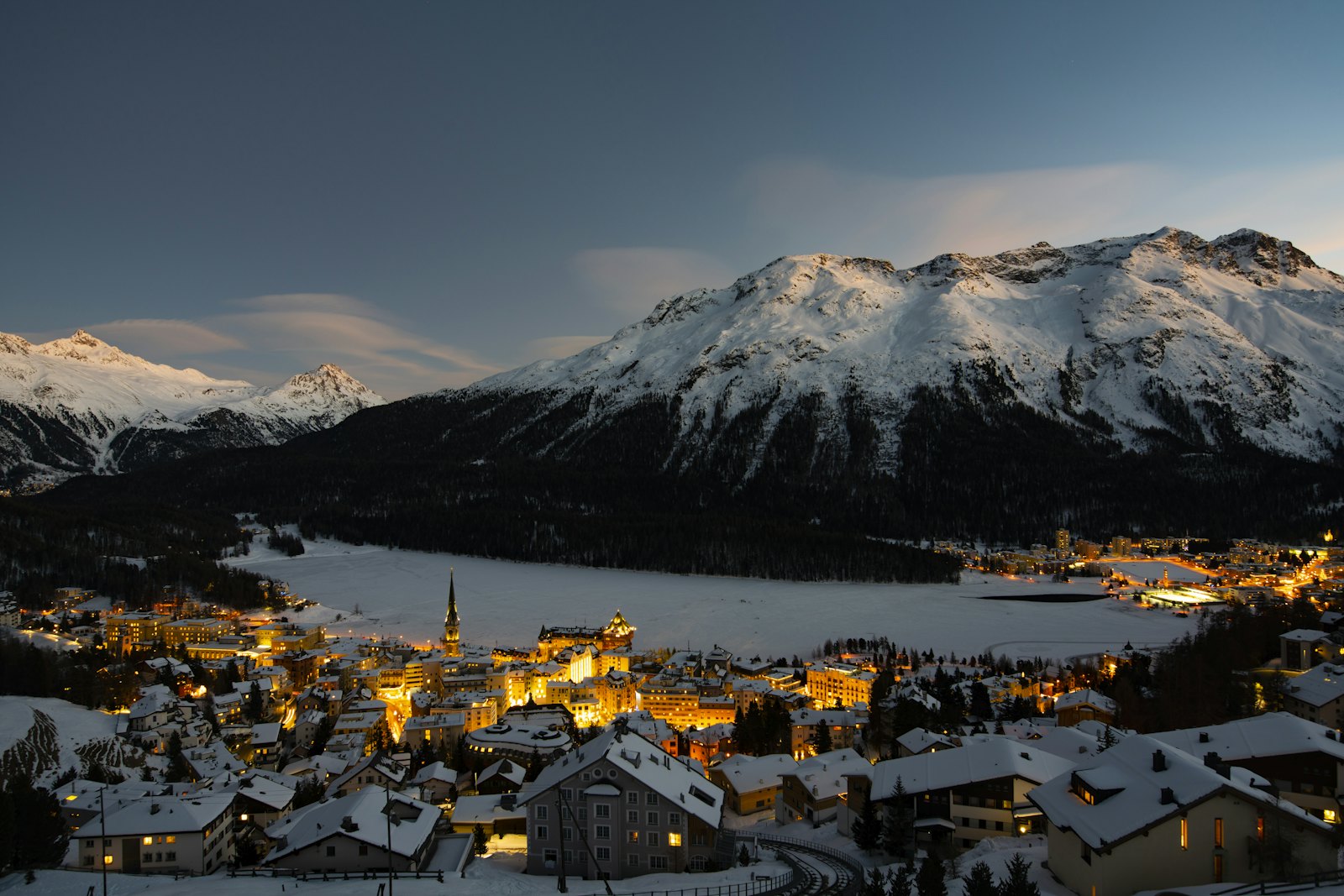
A high Alpine resort town above a lake, where you can ride old red trains over glacier passes, take a funicular up to sunset views and walk to quiet mountain lakes, with the sun out on most days.
- Best time to visit: Late June to September, or December to March for snow
- Daily budget (budget traveller): CHF 150 to CHF 500
- Ideal trip length: 4 to 7 days
St. Moritz sits at about 1,800m in the Upper Engadine, a wide, high valley in the Swiss canton of Graubünden. It is a small town of around 5,000 people, split between St. Moritz Dorf on the hillside and St. Moritz Bad down by the lake. It has hosted two Winter Olympics, and people often say winter tourism started here in the 1860s. The name has a reputation for fur coats, polo on snow and five-star hotels. That side is real, but you can easily ignore it. The valley around the town has a chain of lakes, larch forests, glaciers and some of the most famous mountain railways in Europe. The Albula and Bernina lines are UNESCO-listed, and the Bernina Express runs from here over the pass to Tirano in Italy. In summer, many hotels give free cable car rides from your second night, so a solo trip can cost far less than you would expect. Winter brings 350km of pistes, frozen lakes and cross-country trails across the valley floor. It is expensive, of course. But a youth hostel bed, supermarket picnics and a good regional pass make it workable on a budget. It is safe, very well organised and easy to get around without a car.
St. Moritz is two places at once. One is the famous resort, with Badrutt's Palace, the Kulm Hotel, designer shops on Via Serlas and private jets at Samedan. The other is an ordinary high mountain town at about 1,800m, with a lake you can walk round in an hour, a youth hostel by the forest and a valley of larch woods, glaciers and blue lakes that costs nothing to look at. Most solo travellers come for the second version. The Upper Engadine is wide, sunny and well connected. Trains and buses link a string of villages from Maloja to Pontresina, and in summer many hotels throw in free cable car rides from your second night. Winter is the classic season, with 350km of pistes, cross-country trails across the frozen valley and events on the lake. Summer is quieter and better value, and arguably the more beautiful time to come.
The logistics are simple. Trains from Zurich take about three hours with a change at Chur, and the last stretch over the Albula line is one of the best rides in the country. Base yourself in St. Moritz Bad if you want lower prices and quick access to the trails. Choose Dorf for the station, the funicular and evenings out, or Pontresina for glacier walks and quiet. Use the Bernina line at least once, either on the panoramic Express or on a regular train. Plan your big mountain days for the clearest forecast, and keep museums, the lake loop and the Segantini Museum for cloudy days. In summer, check that your hotel takes part in the Mountain Railways Included offer before you book, because it can save you well over CHF 100.
The seasons shape everything here. Winter runs from roughly late November to early April, with the ski season, the frozen lakes, White Turf in February and the Engadin Skimarathon in March. Lifts and hotels reopen for summer around mid-June and run until October, when the larches turn gold. In between, especially in May and November, much of the town closes. St. Moritz is very safe, and German, Italian and Romansh are all spoken, with English common in hotels and shops. It is not a party town outside the winter peak, so expect early nights and early starts. That suits the place, because the best light is in the morning.
St. Moritz itinerary
Arrive by train and walk the lake
Morning: This plan assumes summer, with lifts running. Take a mid-morning train from Zurich, changing at Chur. Sit on the right after Chur for the Albula viaducts and tunnels near Filisur and Bergün.
Afternoon: Drop bags in St. Moritz Bad, buy picnic supplies at a supermarket and walk the roughly 4km loop round Lake St. Moritz, about an hour at an easy pace.
Evening: Fondue at the youth hostel's fondue parlour, or a simple dinner in Bad. Early night, because the altitude tires you out on day one.
Dorf, Segantini and Lej da Staz
Morning: Walk up to Dorf. See the Leaning Tower, browse Via Serlas and have coffee and Nusstorte at Hanselmann. Check whether the Engadiner Museum is open.
Afternoon: The Segantini Museum on Via Somplaz opens Tuesday to Sunday from 11am to 5pm in season (CHF 15). Allow an hour, then rest in the lakeside park.
Evening: Walk through the forest to Lej da Staz, about 45 minutes, for the evening light on the water. Walk back or carry on to Pontresina and take the train.
Corviglia and Piz Nair
Morning: Ride the funicular from Dorf to Corviglia, then the cable car up Piz Nair to just over 3,000m. Bring a warm layer even in August.
Afternoon: Walk down signposted trails past high lakes towards Corviglia and Marguns, then take the gondola down to Celerina. Picnic on the way.
Evening: Wander Celerina's old painted houses, then take the bus or train back. Dinner in Dorf, or self-cater to save money.
Bernina Express to Tirano
Morning: Take a morning Bernina Express to Tirano (about 2 hours 15 minutes), with a reserved seat. Sit on the right going south for Lago Bianco and the Palü Glacier.
Afternoon: Lunch in Tirano: pizzoccheri, coffee and a stroll to the basilica. Euros are needed here.
Evening: Return on a regular Bernina line train, with no reservation needed and opening windows for photos. Get off at Alp Grüm for the view if time allows.
Val Roseg and Muottas Muragl
Morning: Train to Pontresina and walk the car-free Val Roseg, roughly 7km on a gentle track, or ride a horse carriage from near the station.
Afternoon: Lunch at the hotel at the head of the valley, looking at the Roseg Glacier, then walk or ride back to Pontresina.
Evening: Train to Punt Muragl and take the funicular up Muottas Muragl. Walk part of the Philosophers' Path and stay for sunset. Check the last funicular down.
Sils Maria and Val Fex
Morning: Bus to Sils Maria. Visit the Nietzsche-Haus, then walk or take the horse carriage up Val Fex, a quiet side valley with farms and glacier views.
Afternoon: Walk the lakeshore from Sils towards Silvaplana, with swimming spots for the brave and kitesurfers on windy days.
Evening: Bus back for a last proper dinner. Try capuns or pizokel at a traditional restaurant in town.
Morteratsch Glacier and depart
Morning: Early train to Morteratsch and walk the glacier trail, about 45 minutes each way, past markers showing how far the ice has retreated.
Afternoon: Collect bags, buy a Nusstorte for the journey and take an afternoon train back towards Chur and Zurich.
Evening: Arrive in Zurich in the evening, or stay a night near the airport for an early flight.
Best neighbourhoods
- St. Moritz Dorf: The upper village on the hillside above the lake. It has the funicular to Corviglia, the Leaning Tower, Hanselmann café, the big hotels and the designer shops on Via Serlas. The station is just below. It is the most convenient base, but also the priciest.
- St. Moritz Bad: The lower, flatter part of town at the southwest end of the lake. It is mostly apartment blocks and mid-range hotels, with supermarkets, the Signal cable car and the youth hostel at the edge of the forest. It feels less glamorous, but it is easier on the budget and close to the cross-country trails.
- Celerina: A quieter village one stop down the line, linked to St. Moritz by a gondola and a flat walk. The Olympia Bob Run finishes here. It has old Engadine houses with painted walls and slightly cheaper holiday flats.
- Pontresina: About 10 minutes by train towards the Bernina Pass. It is a calmer, more hiker-focused village, at the mouth of Val Roseg and close to the Morteratsch Glacier and Diavolezza. It is a good base if you care more about walking than nightlife.
- Sils Maria and Silvaplana: Lakeside villages about 15 to 20 minutes southwest by bus. Silvaplana is the kitesurf and windsurf spot. Sils is small and very quiet, with the Nietzsche-Haus, Val Fex and the best lake walks in the valley. Come here for peace, not for evenings out.
Must-do experiences
- Walk round Lake St. Moritz: The flat loop is roughly 4km and takes about an hour. It links Dorf, Bad and the station, with forest on the far shore. In winter the lake freezes and hosts horse races and polo, but only walk on the ice once the town has officially opened it.
- Ride the Bernina Express to Tirano: The panoramic train climbs past glaciers and Lago Bianco, over the Bernina Pass and down the spiral viaduct at Brusio into Italy. It takes about two hours and fifteen minutes. Book the compulsory seat reservation ahead, or take a regular train on the same line for no supplement.
- Watch the sunset from Muottas Muragl: A red funicular climbs from Punt Muragl, between Celerina and Pontresina, to a terrace looking straight down the lake chain. There is an easy high trail along the ridge. Go on a clear evening and check the last train down.
- Go up to Piz Nair: Take the funicular from Dorf to Corviglia, then the cable car to just over 3,000m. You get a 360-degree view of the Engadine peaks. In summer, walk down on signposted trails instead of riding all the way back.
- See the Segantini Museum: A domed stone building on Via Somplaz, home to the largest collection of works by Giovanni Segantini, the Alpine painter who spent his last years here. The triptych Life, Nature, Death fills the top room. Allow about an hour.
- Walk to a glacier: The Morteratsch Glacier trail starts at Morteratsch station and follows markers showing where the ice reached in past years. Or walk or take a horse carriage into car-free Val Roseg from Pontresina, with lunch at the hotel at the end of the valley.
- Ski, skate or watch White Turf: In winter, the Upper Engadine has Corviglia, Corvatsch and Diavolezza for downhill skiing, plus long, flat cross-country trails. Even if you do not ski, the White Turf horse races on the frozen lake on Sundays in February are worth a look.
Hidden gems
- Lej da Staz, a small forest lake about 45 minutes' walk from town, with a little beach, cold swimming in summer and a trail on to Pontresina
- The Mili Weber House in St. Moritz Bad, the home of a local painter filled with her fairy-tale murals. Visits are by guided tour, so book ahead
- The Philosophers' Path at Muottas Muragl, a short, easy trail with quotes and benches facing one of the best views in the valley
- The regular Bernina line trains, which use the same track as the Express with opening windows and no seat supplement, and in high summer have run open-air carriages
- Soglio in Val Bregaglia, a stone village on a terrace above chestnut woods, about 90 minutes away by PostAuto via Maloja and much warmer and greener than the Engadine
Daily budget
- Accommodation: budget CHF 50-90 / night (dorm bed at the youth hostel), mid-range CHF 200-400 (three- or four-star hotel, single room), splurge CHF 900+ (Badrutt's Palace, Kulm, Suvretta House). Single rooms are scarce and expensive, so book early for winter peaks and August. In summer, choose a hotel in the Mountain Railways Included offer. Many hotels close in May and November.
- Food: budget CHF 35-55 / day (supermarket breakfast and picnic, one cheap hot meal), mid-range CHF 80-130 (café lunch, restaurant dinner), splurge CHF 200+ (hotel restaurants, gourmet menus). Supermarkets such as Coop are your friend. Mountain hut mains run roughly CHF 25-40, and a coffee and cake at Hanselmann is about CHF 12-18. Prices are rough guides, so check.
- Transport: budget CHF 0-10 / day (included in hotel offer or ski pass, plus walking), mid-range CHF 20-60 (regional train trips, bike hire), splurge CHF 100+ (taxis, Glacier Express). Zurich to St. Moritz costs roughly CHF 60-100 one way in second class, and less with Saver fares or a Half Fare Card. The Bernina Express is CHF 33 to Tirano plus a CHF 32 seat reservation.
- Activities: budget CHF 0-20 / day (lake loop, trails, free summer lifts), mid-range CHF 50-110 (ski pass, museum, single lift tickets), splurge CHF 300+ (bob run guest ride, private ski guide). Ski passes use dynamic pricing. Upper Engadine day passes have been about CHF 94-108 for 2026/27, and Corviglia-only passes are cheaper. The Segantini Museum costs CHF 15.
- Drinks & nightlife: budget CHF 5-15 (supermarket beer, hostel bar), mid-range CHF 30-60 (a few drinks in a Dorf bar), splurge CHF 100+ (hotel bars, winter clubs). Bar beers cost roughly CHF 7-10, and cocktails in big hotels much more. Nightlife peaks in winter, and summer evenings are quiet. The Waldhaus am See in Bad is known for its huge whisky list.
Where to stay
- Social hostel in St. Moritz Bad (CHF 50-90 / night (dorm bed)): The St. Moritz Youth Hostel at Via Surpunt 60 is a large modern hostel at the forest edge, with dorms and private rooms, a fireplace lounge, a games room and a fondue parlour. Trails and cross-country routes start almost at the door.
- Boutique hotel in St. Moritz Dorf (CHF 250-450 / night): The Art Boutique Hotel Monopol sits on the main street in Dorf, a short walk from the station and the Corviglia funicular, with art-filled rooms and a spa. It is handy for evenings out without a taxi.
- Apartment in St. Moritz Bad or Celerina (CHF 150-300 / night): Holiday flats are common in Bad and Celerina. A small studio with a kitchen cuts food costs a lot and gives you space to dry kit. Check whether the summer lift offer applies, because some holiday homes take part.
- Splurge in St. Moritz Dorf (CHF 900-2,500+ / night): Badrutt's Palace and the Kulm Hotel are the grand old names above the lake, with famous bars, lake-view rooms and service to match. Suvretta House, just outside town, is quieter and closer to the slopes.
What to eat
- Capuns: chard leaves wrapped round a spätzle-style dough with dried meat, served in a creamy broth, the classic Graubünden dish
- Pizokel: short buckwheat or wheat noodles fried with cabbage, potatoes and cheese, hearty food after a long walk
- Engadiner Nusstorte: a dense shortcrust tart filled with caramelised walnuts. Hanselmann in Dorf has sold it for generations, and it keeps well as trail food
- Bündnerfleisch and salsiz: air-dried beef and small dried sausages, often served on a cold platter with bread, so ideal for a cheap picnic
- Bündner Gerstensuppe: a thick barley soup with vegetables and smoked meat, cheap and filling at mountain huts
- Fondue at the St. Moritz Youth Hostel, which runs its own fondue parlour, an easy way to share a table with other travellers
Day trips
- Bernina Express to Tirano (About 2 hours 15 minutes by train each way): The line climbs past Lago Bianco and glacier views at Alp Grüm, then drops into Italy via the spiral viaduct at Brusio. Tirano is a relaxed small town for lunch and a stroll. Bernina Express from St. Moritz, CHF 33 one way in second class plus a CHF 32 seat reservation in 2026, rising slightly from 13 December 2026. Regular RhB trains run on the same line with no reservation. Swiss Travel Pass holders pay only the reservation.
- Sils Maria and Val Fex (About 20 minutes by bus southwest): A quiet village between two lakes, with the Nietzsche-Haus and a car-free side valley full of farms and meadows. It is perfect for a long, gentle day of walking. Take the regional bus from St. Moritz towards Maloja and get off at Sils/Segl Maria. Horse carriages run up Val Fex in season, or you can walk it. Combine it with the lakeshore path to Silvaplana.
- Val Roseg and Morteratsch Glacier (10-20 minutes by train to Pontresina or Morteratsch): Two of the best glacier walks in the Alps, both easy. Val Roseg is a long, car-free valley ending at a hotel with glacier views. The Morteratsch trail follows the glacier's retreat with dated markers. Train to Pontresina for Val Roseg, then walk or ride a horse carriage. Morteratsch has its own station on the Bernina line, two stops further on. The Diavolezza cable car is one stop beyond that if you want to go higher.
When to visit
- Winter ski season (December - March): -15 to 2°C, dry cold, frequent sun, snow cover from December. Crowds: Very busy at Christmas, New Year and February half-terms. Classic St. Moritz. Frozen lakes, White Turf, the Skimarathon and long sunny ski days. Book early for holidays and look for Sleep + Ski deals to cut pass costs.
- Spring and off-season (April - mid June): -2 to 15°C, melting snow, mixed weather. Crowds: Very quiet, with many places closed in May. Spring skiing runs into April on higher slopes, then the town goes quiet. Good for cheap rooms if you only want valley walks, but check what is open.
- Summer (Late June - August): 8-22°C, warm days, cool nights, afternoon storms possible. Crowds: Moderate, busiest in July and August. The best time for hiking, trains and lakes, with all lifts running and the free mountain railway offer at many hotels. Pack layers, because it is cold above 2,500m.
- Autumn (September - November): 0-16°C, crisp and clear, first snow possible in October. Crowds: Quiet in September and October, very quiet in November. The locals' pick. The larches turn gold in October, trails are empty and the light is sharp. Lifts close around late October, and November is mostly shut.
Entry rules for your passport
Visa rules for Switzerland depend on the passport you travel on. Check the official source before you book: European Commission: Schengen visa policy
Getting there
The nearest big international airport is Zurich. From there, trains run roughly every hour to St. Moritz with a change in Chur, taking about three to three and a half hours. Second-class fares are roughly CHF 60-100 one way, with cheaper Saver fares if you book ahead and half price with a Half Fare Card. The Swiss Travel Pass covers the journey. Coming from Italy, take a regional train from Milan to Tirano in about two and a half hours, then the Bernina line to St. Moritz. The Bernina Express needs a CHF 32 seat reservation on this stretch, but regular trains need none. The Glacier Express links St. Moritz with Zermatt in about eight hours, and its seat reservation is CHF 54 on top of a ticket or pass. Engadin Airport at Samedan, about 10 minutes away, mainly handles private flights. Driving in from Zurich takes around two and a half hours via the Julier Pass, but you will not need a car once you are here. Switzerland is in the Schengen Area, so carry your passport and check the current entry rules for your nationality.
Border checks: non-EU visitors (other than Swiss, Norwegian, Icelandic, Liechtenstein, Andorran, Monegasque, San Marinese and Vatican citizens, and holders of an EU residence permit or long-stay visa) are registered in the EU's Entry/Exit System (EES) instead of getting a passport stamp. On your first crossing, officers take your photo and/or fingerprints, so allow extra time at passport control. ETIAS, the planned travel authorisation, is not in operation yet, so don't pay any website for one.
Getting around
St. Moritz is easy without a car. The town is compact, but there is a steep climb between the station, the lake and Dorf, so use the lifts and escalators where you find them. Engadin Bus runs local lines between Dorf, Bad and Champfèr, and regional buses go to Celerina, Pontresina, Silvaplana, Sils and Maloja. Rhaetian Railway (RhB) trains link St. Moritz with Celerina, Samedan, Pontresina, Punt Muragl and the Bernina line. Single fares on local buses cost a few francs, but you rarely need to buy them. In summer, participating hotels give free use of Upper Engadine mountain railways from your second night, and many include buses and trains too. The 2026 offer ran from 1 May to 31 October. In winter, the Engadin ski pass includes public transport in the Upper Engadine. Swiss Travel Pass and Half Fare Card holders get free or half-price trains and buses, but most cable cars are not covered by the pass. Bikes and e-bikes are easy to hire in summer, and the valley floor is flat. Taxis are expensive, so keep them for late nights or heavy luggage.
Safety
St. Moritz is very safe, and crime against visitors is rare. The real risks are the mountains and the altitude. At around 1,800m, and over 3,000m on Piz Nair or Diavolezza, you may feel breathless or get headaches on the first day, so drink water and take it slowly. The sun is strong all year, especially on snow, so wear sunglasses and high-factor sunscreen. Mountain weather turns quickly, even in July. Carry a warm layer and a waterproof, check the forecast and the last lift down, and tell someone your route if you hike alone. In winter, only walk on frozen lakes once they are officially opened, and never ski off-piste without avalanche gear and local knowledge. Pavements in Dorf get icy, so shoes with good grip help. The general emergency number is 112, the ambulance is 144 and Rega air rescue is 1414. Swiss healthcare is excellent but costly, so take travel insurance that covers mountain sports and rescue.
Solo travel tips
- Base yourself in Bad on a budget: St. Moritz Bad has the youth hostel, supermarkets and flat access to the lake and trails. Dorf is a 15-minute walk or a short bus ride when you want cafés and bars.
- Book a hotel in the summer lift offer: From your second night, participating hotels give free mountain railway rides, often with buses and trains too. For a solo traveller doing two or three big lifts, that can cover the cost of an extra night.
- Use the hostel to meet people: The youth hostel's fondue parlour, games room and fireside lounge are the most social spaces in town. Hiking groups and skiers swap tips there over breakfast.
- Keep big views for clear days: Check the forecast and webcams each morning. Move Piz Nair, Muottas Muragl and the Bernina Express to the clearest days, and use cloudy ones for museums and the lake loop.
- Safety for solo travellers: Town is very safe. The risks are mountain weather, altitude and ice. Carry layers and water, check last lift times, tell someone your route and save Rega's number, 1414.
- Eat your main meal at lunch: Lunch menus and mountain hut plates are cheaper than dinner, and solo diners are normal at lunchtime. Picnic in the evening from the supermarket, with salsiz, cheese and bread.
Cultural etiquette
- Greet people when you walk into a shop or pass them on a trail. 'Grüezi' in German or 'Allegra' in Romansh both work, and 'grazcha' is thank you in Romansh.
- Be on time. Trains, buses and tour guides leave on the minute, and dinner reservations are taken seriously.
- Keep noise down at night and on Sundays. Many residents live in apartment blocks, and quiet hours are respected.
- Stay on marked trails, close gates behind you and give cows plenty of space, especially if they have calves.
- Recycle properly. Bottles, cans and PET plastic have their own bins, and carrying your rubbish down from the mountains is expected.
- Dress casually by day, but smart-casual in hotel bars and better restaurants, especially in winter.
- Ask before photographing people, especially at events and in hotel lobbies, and keep drones away from crowds and airfields.
Frequently asked questions
How do I get to St. Moritz?
Most people come by train from Zurich, changing at Chur. It takes about three to three and a half hours, and there are trains roughly every hour. From Italy, take a regional train from Milan to Tirano (about two and a half hours), then the Bernina line over the pass to St. Moritz. The Glacier Express connects St. Moritz with Zermatt in about eight hours. The station is by the lake, just below Dorf.
How many days do I need in St. Moritz?
Four or five days covers the lake, one big lift, the Bernina Express and a glacier walk. A week lets you add Sils, Val Fex and a spare day for bad weather, which matters, because views are the point of most trips here. In summer, staying at least two nights at a participating hotel also gets you the free mountain railway offer.
When is the best time to visit St. Moritz?
Late June to September is best for hiking, lakes and trains, with long days and lifts running. December to March is the ski season, with frozen lakes and events such as White Turf in February. May and November are quiet months, when many hotels, restaurants and cable cars close, so check before booking.
Can I do St. Moritz on a budget?
Yes, more than its image suggests. Stay at the youth hostel in St. Moritz Bad, picnic from supermarkets, eat your hot meal at lunch and use the free summer mountain railway offer. In winter, look for a hotel with Sleep + Ski, which has been about CHF 55 a day for 2026/27 at many participating hotels. Expect around CHF 150-220 a day even when travelling carefully.
Is the Bernina Express worth it, or should I take a normal train?
The Express has panoramic windows and a compulsory seat reservation of CHF 32 between St. Moritz and Tirano, on top of a ticket of about CHF 33 one way in second class (about CHF 35 from 13 December 2026). Regular trains use the same track and need no reservation, and their windows open, which is better for photos. A good option is the Express one way and a regular train back.
Do I need to ski to enjoy St. Moritz in winter?
No. There are winter walking trails, sledging runs, ice skating, frozen lake walks and scenic rides up Muottas Muragl. Cross-country skiing on the flat valley floor is easy to learn in a lesson or two. Spectator events such as White Turf and snow polo are free or cheap to watch from the edges.
Is St. Moritz safe for solo female travellers?
Yes, it is one of the safest places in Europe to travel alone. Streets are calm at night, public transport is reliable and people are helpful. The main precautions are about the mountains: check the weather, carry layers, know the last lift times and tell your hostel or hotel where you are hiking.
What entry rules apply to Switzerland in 2026?
Switzerland is in the Schengen Area, so the usual Schengen rules apply, including the 90 days in 180 limit for most visa-free visitors. The EU Entry/Exit System now records non-EU travellers at external Schengen borders, and the ETIAS travel authorisation has been scheduled to start around late 2026. Rules vary by nationality and change at short notice, so check the Swiss State Secretariat for Migration website and your own government's advice before you go.
More about St. Moritz
Tours and activities in St. Moritz | St. Moritz in 3 days | St. Moritz in 5 days | St. Moritz in 7 days
Joy Plus home | Destinations | Itineraries | Activities | Flights | Budget planner | Calendar | Map | Blog | Lifetime access