Destinations / South America
Tayrona, Colombia travel guide
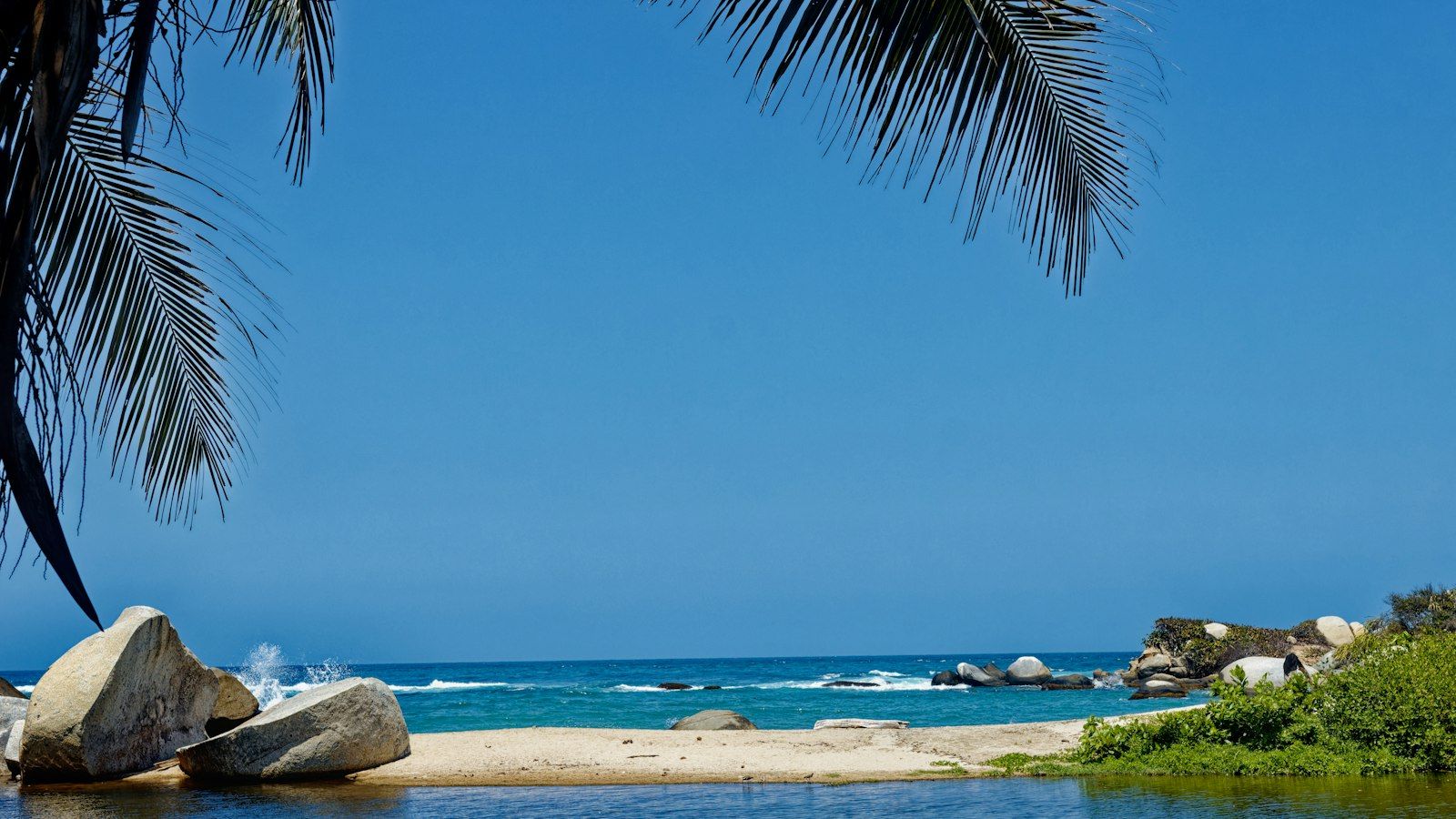
Jungle trails, boulder-framed Caribbean coves and the foothills of the world's highest coastal mountains, all an hour's bus ride from Santa Marta.
- Best time to visit: December to April, avoiding the park's scheduled closures
- Daily budget (budget traveller): $40 to $150 USD
- Ideal trip length: 5 to 7 days
Tayrona National Park covers the stretch of Caribbean coast where the Sierra Nevada de Santa Marta drops straight into the sea. That leaves jungle, giant granite boulders and a chain of coves you can only reach on foot or by boat. Most visitors use Santa Marta as their base. It has an airport, a walkable colonial centre and a market where the buses to the park leave. The park itself is simple and set up for walkers. You take a local bus to the El Zaino gate, hike two hours through forest to Cabo San Juan del Guía, and spend the night in a hammock above the beach. Around it are the cool mountain village of Minca, the river and beach town of Palomino and the jungle hostels of Los Naranjos. Further into the Sierra is the multi-day trek to Ciudad Perdida. The park belongs spiritually to the Kogui, Arhuaco, Wiwa and Kankuamo peoples. It closes three times a year, and in 2026 it also shut at short notice, so your timing matters. Plan it well and it's one of the most rewarding solo trips in Colombia.
Tayrona National Park covers about 19,300 hectares of land and sea where the Sierra Nevada de Santa Marta meets the Caribbean. It's not a resort coast. There's no road along the beaches, no ATMs and no hotels on the sand, apart from a few basic camps and eco-lodges. You get in by local bus to a gate on the main road, then on foot or by boat. That keeps it cheap and fairly wild, and it suits solo travellers well. Everyone is walking the same trail, sleeping in the same rows of hammocks and queuing for the same fried fish, so it's easy to meet people. Your base is Santa Marta, a hot, scruffy and friendly port with a good colonial centre, a market where every bus leaves, and set lunches for under 25,000 COP.
The classic route is Santa Marta, then Minca, then Los Naranjos, then the park, then Palomino. Spend two nights in the city and a day in the cool foothills at Minca. Then move to a jungle hostel near the El Zaino gate, so you can be in line when it opens and leave your big bag behind. Walk in to Cabo San Juan, sleep in a hammock, and walk out the next morning. From there, catch the bus east to Palomino for river tubing. Entry is the main cost. In 2026 a non-resident foreigner paid 81,000 COP in low season or 96,500 COP in high season, plus daily insurance. Bring cash for everything inside the park.
Timing matters more here than almost anywhere else in Colombia. The park closes for two weeks in early February, two weeks in early June and from late October to early November. In 2026 it also shut for public-order reasons in February, and two gates stayed closed for weeks after the June reopening. December to April is dry, breezy and the best time for hiking, though mid-December to mid-January is crowded with Colombian families. September to November brings the heaviest rain and the cheapest rooms. Whenever you go, treat the sea with respect. Many of Tayrona's most beautiful beaches are also its most dangerous, and only a handful are safe for swimming.
Tayrona itinerary
Land in Santa Marta, old town and malecón
Morning: Land at SMR. Take a booth taxi (roughly 40,000-60,000 COP, confirm first) to a hostel or apartment in the Centro Histórico. Drop your bags.
Afternoon: Set lunch near the market, then walk past the whitewashed cathedral and Parque Bolívar. Withdraw cash for the week of buses and park fees.
Evening: Sunset on the malecón, then dinner and a beer around Parque de los Novios. Fill in the next days' plans at the hostel bar.
Museo del Oro, Bolívar's hacienda, Taganga
Morning: Free entry to the Museo del Oro Tairona in the Casa de la Aduana, for Tayrona goldwork and the Sierra's Indigenous cultures. Then take a taxi to the Quinta de San Pedro Alejandrino (fee roughly 30,000-40,000 COP, check).
Afternoon: Taxi or bus over the hill to Taganga. Swim at the village beach or take a boat to Playa Grande, agreeing the fare first.
Evening: Fried fish on the Taganga seafront, then a taxi or app ride back to Santa Marta after dark.
Day trip to Minca
Morning: Cootrasminca colectivo from the Mercado Público on Carrera 9 (about 10,000 COP, around 45 minutes, leaves when full). Walk or take a moto-taxi up to the Pozo Azul or Marinka waterfalls.
Afternoon: Do a coffee farm tour or a birdwatching walk, then have lunch in the village.
Evening: Watch the sunset from Casa Loma's deck if you're staying the night, or catch a colectivo back before the last runs around 5-6pm. Pack a light overnight bag for the park.
Move to Los Naranjos
Morning: Check the official Parques Nacionales channels to make sure El Zaino is open. Then take a Palomino-bound bus from the market (about an hour, roughly 10,000-12,000 COP) and ask to get off at your hostel.
Afternoon: Check in at The Journey Hostel or another hostel near the gate. Walk down to Playa Los Naranjos and swim in the Río Piedras, not the sea.
Evening: Join a group dinner at the hostel, buy snacks and water for tomorrow and get an early night. Leave your main bag in the hostel's storage.
Tayrona: Cañaveral to Cabo San Juan
Morning: Be at El Zaino for opening (7am in high season, 8am in low season). Pay the entry fee and insurance in cash. Take the internal van to Cañaveral and hike through the forest to Arrecifes. Don't swim at Arrecifes.
Afternoon: Continue to La Piscina for a calm swim, then on to Cabo San Juan del Guía (about 2 hours of walking in total). Claim a hammock (40,000-60,000 COP) and lock your valuables.
Evening: Watch the sunset from the thatched lookout on the rock and eat dinner at the camp restaurant. Bring a head torch, because the lights go off early.
Sunrise in the park, bus to Palomino
Morning: Swim at dawn before the day-trippers arrive. Ask rangers whether the Pueblito path is open. If it isn't, walk slowly back to Cañaveral, buying chocolate bread on the way.
Afternoon: Take the van to El Zaino, collect your bag in Los Naranjos and flag a bus east to Palomino (about 45-60 minutes).
Evening: Check into a beach or river hostel. Watch the sunset on the sand, but stay out of the rough sea.
Río Palomino tubing, back to Santa Marta
Morning: Rent an inner tube in town, walk upstream through the forest for about 45 minutes and float back down to the river mouth. Go early, before the afternoon rain.
Afternoon: Bus back to Santa Marta (about 2 hours, around 12,000 COP). Check into your last night's bed near the centre or the airport.
Evening: Farewell pescado frito and a limonada de coco. Complete the departure Check-MIG form if your airline asks for it.
Best neighbourhoods
- Centro Histórico (Santa Marta): The walkable colonial core of Colombia's oldest surviving city, with the cathedral, the Museo del Oro Tairona, Parque de los Novios restaurants and the malecón. It's also a short walk to the Mercado Público, where buses leave for Tayrona, Minca and Palomino.
- Los Naranjos and El Zaino: A strip of jungle hostels and eco-lodges on the Troncal del Caribe, a few minutes from the park's main gate. Stay here to be first in line at opening and to leave your big bag behind while you hike.
- Taganga: A former fishing village over the headland from Santa Marta, about 15 minutes by taxi, with dive shops, cheap seafood and boats to Playa Grande and the western Tayrona beaches. It's livelier than the old town and rougher around the edges.
- Minca: A small village about 45 minutes up into the Sierra Nevada foothills from Santa Marta, with coffee farms, waterfalls, birdwatching and noticeably cooler nights. It's a good place to recover after the coast's heat.
- Palomino: A laid-back beach and river town about two hours east of Santa Marta, where the Río Palomino meets the Caribbean. Backpackers come for the river tubing and the hammock hostels. The sea is rough, so swim in the river.
Must-do experiences
- Hike from Cañaveral to Cabo San Juan del Guía: Walk roughly two hours through coastal forest and over boulder-strewn beaches from the end of the El Zaino road to Tayrona's postcard cove, where a thatched lookout sits on a rock between two sheltered bays.
- Sleep in a hammock at Cabo San Juan: Stay the night inside the park so you have the beaches to yourself at sunrise, before the day-trippers arrive. Hammocks and rented tents are basic, cash-only and first come, first served.
- Swim at La Piscina: A natural pool on the trail between Arrecifes and Cabo San Juan, protected by a reef of rocks. It's one of the calm swimming spots on a coast where many beaches have dangerous currents.
- Snorkel at Playa Cristal: Enter through the Palangana gate, take the road to Neguanje, then a short boat ride to this clear, sheltered bay on the western side of the park. Coral and reef fish start a few metres from the sand.
- Chase waterfalls in Minca: Take the colectivo up from Santa Marta's market and walk to the Pozo Azul or Marinka waterfalls. Then stay for a coffee farm tour or the sunset over the valley.
- See the gold at the Museo del Oro Tairona: The Banco de la República's museum is in the colonial Casa de la Aduana on Parque Bolívar. It's a short, air-conditioned introduction to the Tayrona goldwork and the cultures of the Sierra Nevada.
- Float down the Río Palomino: Rent an inner tube in Palomino, walk upstream through the forest and drift back down to where the river meets the sea. It's a lazy half-day and a favourite with solo backpackers.
- Trek to Ciudad Perdida: If you have four or five extra days, do the guided jungle trek with river crossings to Teyuna, a terraced city in the Sierra Nevada that is older than Machu Picchu.
Hidden gems
- Pueblito (Chairama), a pre-Hispanic Tayrona village reached by a steep stone path from Cabo San Juan or the Calabazo gate. Trail access changed several times in 2026, so ask rangers whether it is open on the day
- Bahía Concha, the park's westernmost sector about 15 minutes from Santa Marta, which has its own cheaper fee and calm water for an easy beach afternoon without the long hike
- The Quinta de San Pedro Alejandrino on the edge of Santa Marta, the shady hacienda where Simón Bolívar died in 1830, with gardens and a contemporary art museum
- Sunset from the hillside deck at Casa Loma in Minca, where locals and travellers gather for the view over the valley towards Santa Marta and the sea
- Playa Los Naranjos at the mouth of the Río Piedras, just east of the El Zaino gate. Swim in the river rather than the sea, which has strong currents
Daily budget
- Accommodation: budget 45,000-90,000 COP / night (hostel dorm, or a hammock at Cabo San Juan for 40,000-60,000 COP), mid-range 180,000-400,000 COP (private room or eco-lodge near El Zaino), splurge 700,000+ COP (Senda Koguiwa or a boutique lodge near the park). Hammocks and tents inside the park are paid in cash on arrival and go on a first-come basis in busy periods. Book Los Naranjos and Palomino hostels well ahead for Christmas, Easter and July.
- Food: budget 45,000-80,000 COP / day (set lunches, street arepas, market fruit), mid-range 100,000-180,000 COP (sit-down dinners in Santa Marta, seafood lunches), splurge 250,000+ COP (Parque de los Novios restaurants, cocktails with dinner). A Santa Marta set lunch is around 15,000-25,000 COP. Food inside the park costs roughly double, about 40,000-60,000 COP for fried fish, so carry snacks and refill water where you can.
- Transport: budget 10,000-30,000 COP / day (local buses and colectivos), mid-range 50,000-120,000 COP (taxis and ride-hailing in the city, one boat ride), splurge 250,000+ COP (private drivers between Santa Marta, Minca and the park). Santa Marta to El Zaino is roughly 10,000-12,000 COP, the internal van to Cañaveral about 5,000-7,000 COP, Minca about 10,000 COP and Palomino around 12,000 COP. Fares change often, so carry small notes.
- Activities: budget 0-100,000 COP / day (free museums, beaches, waterfall walks), mid-range 100,000-200,000 COP (Tayrona entry and insurance, tubing, a coffee tour), splurge 1,860,000+ COP (4-day Ciudad Perdida trek). Tayrona costs 81,000 COP in low season and 96,500 COP in high season for non-resident foreigners in 2026, plus about 7,000 COP of insurance per day. Bahía Concha is 43,500 COP. The Museo del Oro Tairona is free.
- Drinks & nightlife: budget 10,000-25,000 COP (shop beers, a fresh juice), mid-range 50,000-120,000 COP (bar beers and cocktails around Parque de los Novios), splurge 200,000+ COP (rooftop bars, bottle of rum with friends). A shop beer is a few thousand pesos, while bars charge roughly 8,000-12,000 COP. Alcohol and glass are not allowed into the park, and rangers can check bags. Santa Marta's nightlife centres on Parque de los Novios and the streets around it.
Where to stay
- Social hostel in Los Naranjos, near El Zaino (45,000-90,000 COP / night (dorm)): The Journey Hostel is about a kilometre from the park's main gate, with a jungle setting, a restaurant you pay for on a wristband tab, and staff who explain the bus and park logistics. The Valley Tayrona near El Zaino is a pool-and-jungle alternative.
- Boutique hotel in Los Naranjos (300,000-600,000 COP / night): Casa Xue Tayrona (Alma Hotels) is calm and comfortable, with a spa and a good breakfast. It's a short ride from El Zaino, so you can do the park early and come back to proper sheets.
- Apartment in Centro Histórico, Santa Marta (150,000-300,000 COP / night): Self-catering apartments around the old town and the marina put you within walking distance of the market buses, the Museo del Oro and the restaurants around Parque de los Novios. Cooking here saves money for park days.
- Splurge in Los Naranjos, Tayrona edge (700,000-1,500,000+ COP / night): Senda Koguiwa offers design-led cabins in the forest near the park entrance, with a pool and full service, for a few quiet nights between hikes. Check current rates and minimum stays.
What to eat
- Pescado frito: a whole fried fish served with arroz con coco (coconut rice), crisp patacones and a simple salad. It's the classic Caribbean beach lunch
- Cayeye: a Magdalena breakfast of mashed green banana with salty costeño cheese and hogao tomato sauce, filling enough for a day on the trail
- Arepa de huevo: a deep-fried corn arepa with an egg cooked inside, sold from street carts and beach kiosks all along the coast
- Trail bread: warm chocolate or cheese rolls sold by small bakeries inside the park, a welcome snack between Arrecifes and Cabo San Juan
- Limonada de coco: a creamy blend of lime, coconut milk and ice, the best answer to the coast's 32°C afternoons
- Sancocho de pescado: a hearty fish and plantain soup with yuca, served with rice. Look for it on the cheap set lunch menus in Santa Marta
Day trips
- Ciudad Perdida (Teyuna) (About 2-3 hours by 4x4 from Santa Marta to El Mamey, then 4-5 days on foot): A guided jungle trek with river crossings and around 1,200 stone steps to a terraced city in the Sierra Nevada, with nights in camp bunks or hammocks and Indigenous guides sharing the story of the site. You can only go with an authorised operator such as Wiwa Tour, Magic Tour Colombia, Expotur or Turcol. In 2026 shared treks cost about 1,860,000 COP for 4 days and 2,150,000 COP for 5 days, including transport, food, camps and entry. The site has its own annual closures, so confirm dates when booking.
- Minca (About 14 km and 45 minutes uphill from Santa Marta): A mountain village with waterfalls, coffee and cacao farms, birdwatching and cooler air. Easy as a day trip, better with a night for the sunset. Cootrasminca colectivos leave from the Mercado Público area on Carrera 9 between Calles 11 and 12, for about 10,000 COP. They run when full from about 7am to 6pm. A taxi costs roughly 90,000 COP per car.
- Palomino (About 2 hours east of Santa Marta, 45-60 minutes past El Zaino): A beach and river town for tubing on the Río Palomino, slow hammock days and a backpacker social scene. The sea is rough, so swim in the river. Take any Palomino-bound bus from Santa Marta's market or flag one down on the Troncal del Caribe outside the park, for around 12,000 COP. Get off at the main road in town.
When to visit
- Dry season (December - March): 28-32°C, strong breezes, very little rain, clear skies. Crowds: Very heavy from mid-December to mid-January, quieter in late February and March. The best hiking weather and the clearest views of the Sierra. Remember the park is closed from 1 to 15 February, and book hostels early for Christmas and New Year.
- First rains (April - May): 28-33°C, humid, afternoon showers start. Crowds: Spikes at Easter week, otherwise moderate. Still a good time if you start hiking early and finish before the afternoon storms. Easter week counts as high season for park fees.
- Mid-year dry spell (June - August): 28-32°C, a shorter dry spell with occasional storms. Crowds: Heavy in late June and July during Colombian school holidays. The park is closed from 1 to 15 June, then June and July are high season. August is calmer and often dry, a good off-peak option.
- Wet season (September - November): 26-31°C, the heaviest rain, muddy trails, swollen rivers. Crowds: Low. The cheapest rooms and low-season fees, but the park closes from around 19 October to 2 November, and the October school-break week counts as high season. The trails are slippery and flooding can close sectors, so stay flexible.
Entry rules for your passport
Visa rules for Colombia depend on the passport you travel on. Check the official source before you book: Migración Colombia
Getting there
Santa Marta's Simón Bolívar International Airport (SMR) is about 20 to 30 minutes south of the Centro Histórico. Most international travellers connect through Bogotá or Medellín, with frequent domestic flights on Avianca, LATAM and budget carriers. Some seasonal international routes also fly in, so check what's operating. From Cartagena, door-to-door shuttles such as MarSol and coaches via Barranquilla take roughly four to six hours depending on traffic. From the airport, booth taxis to the centre cost roughly 40,000 to 60,000 COP, so confirm the fare before you get in. For the park, Palomino-bound buses leave from around the Mercado Público on Carrera 9. El Zaino is about 32 km and an hour away. Boats from Taganga, Santa Marta and El Rodadero also reach some park beaches when the sea allows. There is no online general admission, so you buy the ticket at the gate on the day. Most visitors don't need a visa for up to 90 days, but fill in Colombia's free Check-MIG form before your flight and check the official government sites for current rules.
Getting around
Santa Marta is the hub. Local buses heading towards Palomino leave from around the Mercado Público on Carrera 9, between Calles 11 and 12, every 15 to 30 minutes. They stop at the Calabazo, Palangana and El Zaino gates and in Los Naranjos. El Zaino is about 32 km and an hour from Santa Marta, and a ticket is roughly 10,000 to 12,000 COP. From El Zaino, an internal van covers the 4 km paved road to the Cañaveral trailhead for about 5,000 to 7,000 COP, or you can walk it in 45 minutes. Shared colectivos run by Cootrasminca go to Minca from the same market area for about 10,000 COP, taking about 45 minutes and leaving when full between roughly 7am and 6pm. Palomino is about two hours by bus for around 12,000 COP. Boats from Taganga, Santa Marta and El Rodadero serve Bahía Concha, Neguanje, Cinto and Cabo San Juan, but the crossing can be rough. Inside Santa Marta, taxis and ride-hailing apps are cheap. Agree the fare before you get into a street taxi.
Safety
The biggest risk in Tayrona is the sea. Arrecifes and several other beaches have strong rip currents and a long record of drownings. Only swim where it is marked as allowed, such as Cabo San Juan, La Piscina, Playa Cristal, Neguanje and Bahía Concha. In February 2026 the park closed for about two weeks because of public-order risks, and in June and July two land gates stayed shut. Check the official Parques Nacionales channels the day before you go, and don't put the park on the last day of your trip. Petty theft happens at the hammock camps, so use the lockers, sleep with your valuables and bring a small padlock. In Santa Marta and Taganga, use registered taxis or apps at night, and keep your phone out of sight on the malecón. Never leave a drink unattended or accept one from strangers or new dating-app matches, because drugging-and-robbery cases are reported across Colombia. The heat and humidity are intense, so start hikes early, carry at least two litres of water and use repellent, as dengue is present on the coast.
Solo travel tips
- Stay near the gate, not in the city, the night before: Hostels in Los Naranjos and El Zaino put you at the ticket office for opening, before the tour vans from Santa Marta arrive. Most of them store luggage, so you can hike with a daypack and a hammock-night kit.
- Check whether the park is open the day before: Scheduled closures are announced well ahead, but in 2026 the park also shut at short notice and kept gates closed after reopening. Check the Parques Nacionales website and social channels the day before, and keep a spare day in your plan.
- Carry all the cash you'll need: Entry, insurance, hammocks, food, the van and boats are mostly paid in cash, and there are no ATMs inside. Budget around 250,000 COP for a one-night visit and carry small notes.
- Pack for the trail, not the beach: The hike to Cabo San Juan is humid, rocky and muddy in places. Wear trail shoes, carry two litres of water and a head torch, and leave glass and alcohol behind, because rangers can check bags.
- Safety for solo travellers: The trails are busy and friendly by day, but don't walk them after dark. Respect the swimming rules, because the currents at Arrecifes kill people. Lock up your valuables at the hammock camps, and in Santa Marta use apps or registered taxis at night and never accept drinks from strangers.
- Find hiking partners easily: Hostel group dinners in Los Naranjos, the waterfall walks in Minca and the tubing in Palomino all bring solo travellers together. The Ciudad Perdida trek is in groups, which is the easiest way to spend four days with ready-made company.
Cultural etiquette
- Tayrona is sacred land for the Kogui, Arhuaco, Wiwa and Kankuamo peoples. Stay on marked paths, don't climb on stone terraces at Pueblito, and accept that closures exist for ceremonial reasons.
- Ask before you photograph Indigenous people, and accept a no with a smile. Buy mochila bags and crafts directly from the makers when you can.
- Greet people before asking anything. A 'buenos días' or a costeño 'buenas' opens doors, and '¿qué más?' is a friendly 'how's it going?'.
- Coast time is relaxed, so buses leave when full and restaurants take their time. Patience gets you further than pushing.
- Carry your rubbish out of the park, avoid single-use plastic, and never feed monkeys or touch wildlife on the trail.
- Cover up a little when you leave the beach. Swimwear is fine on the sand but not in shops, churches or the Santa Marta cathedral.
- Agree prices for boats, moto-taxis and tours before you set off, and check whether any 10% service charge has already been added to restaurant bills.
Frequently asked questions
How do I get from Santa Marta airport to my accommodation?
Simón Bolívar International Airport (SMR) is on the coast south of the city, roughly 20 to 30 minutes from the Centro Histórico. Taxis are the easiest option and work on set zone fares, roughly 40,000 to 60,000 COP to the centre. Check the price at the taxi booth before you get in. Local buses pass outside the terminal and cost a couple of thousand pesos, but they are cramped with luggage. To go straight to Los Naranjos or El Zaino, a taxi takes about an hour and a half and costs much more, so most solo travellers spend the first night in Santa Marta.
How many days do I need for Tayrona?
Plan at least two days for the park itself, with one night in a hammock at Cabo San Juan or Arrecifes. Five to seven days lets you add Santa Marta, Minca and Palomino without rushing. If you want to trek to Ciudad Perdida, add four or five more days.
When is Tayrona closed?
The park closes three times a year for the 'Respira Tayrona' rest periods agreed with the Indigenous peoples of the Sierra Nevada. In 2026 the dates were 1 to 15 February, 1 to 15 June and 19 October to 2 November. Expect a similar pattern in 2027, but confirm the dates on parquesnacionales.gov.co. In 2026 the park also closed at short notice for security reasons and kept some gates shut after flooding, so check again the day before your visit.
How much does it cost to enter Tayrona, and can I book online?
In 2026, non-resident foreigners paid 81,000 COP in low season and 96,500 COP in high season, plus compulsory accident insurance of roughly 7,000 COP per day. The Bahía Concha sector has a separate, lower fee of 43,500 COP for foreigners. High season covers December and January, June and July, Easter week, long weekends and the October school break. There is no advance online booking for general entry. You buy the ticket at the gate on the day, so bring cash and your passport. Fees are set each January, so check the 2027 rates.
Where can I swim safely in Tayrona?
The beaches authorised for swimming include Cabo San Juan del Guía, La Piscina, Playa Cristal, Neguanje, Gayraca, Cinto and Bahía Concha. Arrecifes and the long beaches near Cañaveral look inviting but have dangerous currents, so don't swim there, whatever other people are doing. Always follow the flags and the rangers' instructions.
Can I use my card, and are there ATMs near the park?
Cards work in most Santa Marta restaurants, hotels and supermarkets. Inside the park, though, the hammocks, food, bread sellers and boats are mostly cash-only, and there are no ATMs on the trail. Withdraw enough pesos in Santa Marta before you leave, and carry small notes for buses and the internal van.
Is Tayrona safe for solo female travellers?
Yes. Plenty of women hike Tayrona and stay in the hammock camps alone, and the trail between Cañaveral and Cabo San Juan is busy during the day. Use the same caution as anywhere in Colombia. Don't walk the trails after dark, keep valuables locked up at camp, use registered taxis or apps in Santa Marta at night, and don't accept drinks from strangers. Social hostels in Los Naranjos make it easy to find hiking companions.
What entry rules apply to travellers visiting Colombia in 2026?
Citizens of the UK, EU, US, Canada and many other countries can usually visit Colombia without a visa for up to 90 days. You will typically need a passport in good condition, proof of onward or return travel, and the free online Check-MIG pre-registration with Migración Colombia, which airlines often ask to see at check-in. Yellow fever vaccination is recommended for parts of the coast and the Sierra Nevada. Rules can change, so always confirm on the official Migración Colombia and Cancillería websites and check your own government's travel advice before you book.
More about Tayrona
Tours and activities in Tayrona | Tayrona in 2 days | Tayrona in 3 days | Tayrona in 4 days | Tayrona in 5 days | Tayrona in 7 days
Joy Plus home | Destinations | Itineraries | Activities | Flights | Budget planner | Calendar | Map | Blog | Lifetime access