Tayrona in 4 days
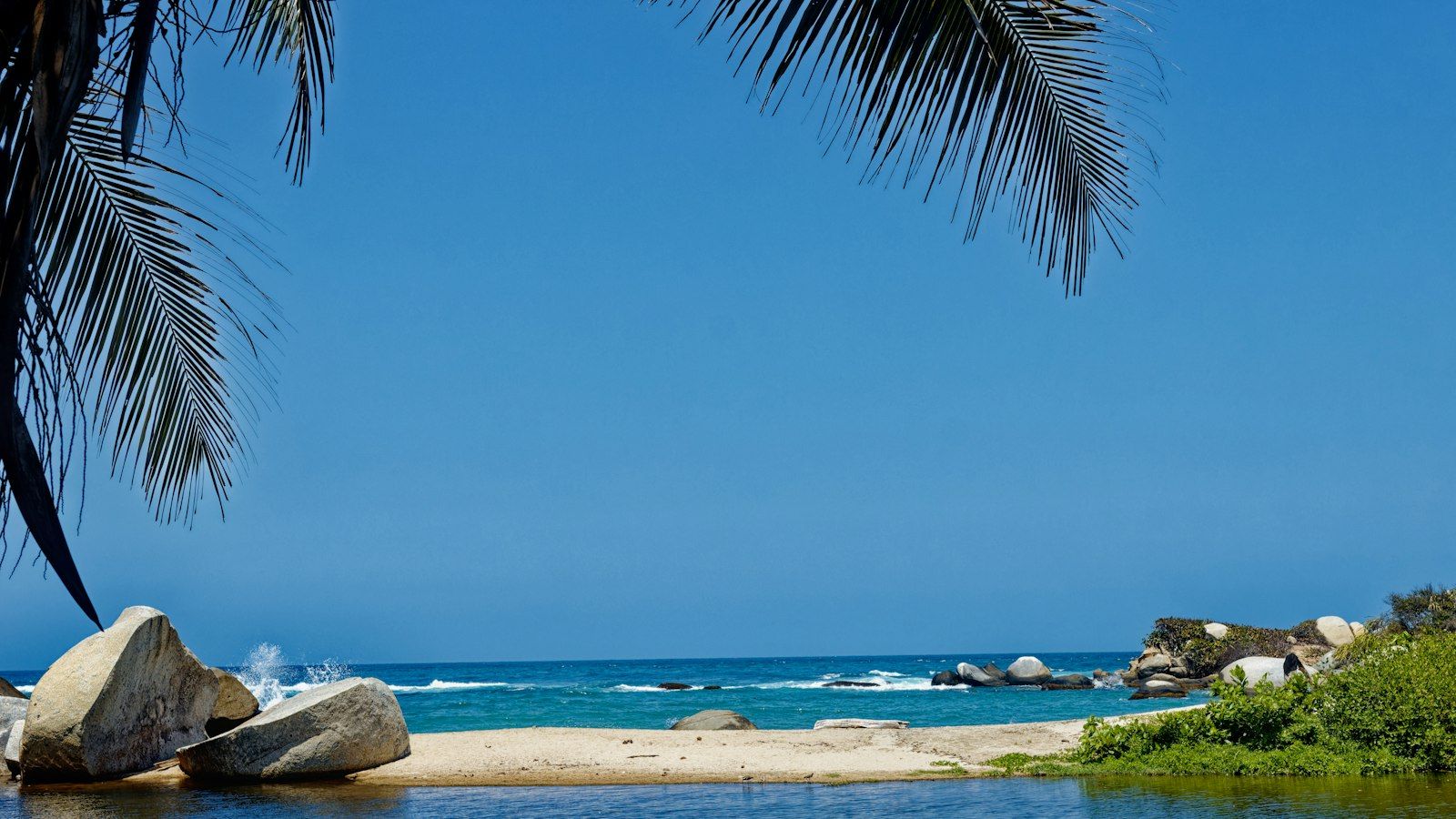
Jungle trails, boulder-framed Caribbean coves and the foothills of the world's highest coastal mountains, all an hour's bus ride from Santa Marta. Best time to visit: December to April, avoiding the park's scheduled closures. Daily budget (budget traveller): $40 to $150 USD.
Land in Santa Marta, old town and malecón
Morning: Land at SMR. Take a booth taxi (roughly 40,000-60,000 COP, confirm first) to a hostel or apartment in the Centro Histórico. Drop your bags.
Afternoon: Set lunch near the market, then walk past the whitewashed cathedral and Parque Bolívar. Withdraw cash for the week of buses and park fees.
Evening: Sunset on the malecón, then dinner and a beer around Parque de los Novios. Fill in the next days' plans at the hostel bar.
Museo del Oro, Bolívar's hacienda, Taganga
Morning: Free entry to the Museo del Oro Tairona in the Casa de la Aduana, for Tayrona goldwork and the Sierra's Indigenous cultures. Then take a taxi to the Quinta de San Pedro Alejandrino (fee roughly 30,000-40,000 COP, check).
Afternoon: Taxi or bus over the hill to Taganga. Swim at the village beach or take a boat to Playa Grande, agreeing the fare first.
Evening: Fried fish on the Taganga seafront, then a taxi or app ride back to Santa Marta after dark.
Day trip to Minca
Morning: Cootrasminca colectivo from the Mercado Público on Carrera 9 (about 10,000 COP, around 45 minutes, leaves when full). Walk or take a moto-taxi up to the Pozo Azul or Marinka waterfalls.
Afternoon: Do a coffee farm tour or a birdwatching walk, then have lunch in the village.
Evening: Watch the sunset from Casa Loma's deck if you're staying the night, or catch a colectivo back before the last runs around 5-6pm. Pack a light overnight bag for the park.
Move to Los Naranjos
Morning: Check the official Parques Nacionales channels to make sure El Zaino is open. Then take a Palomino-bound bus from the market (about an hour, roughly 10,000-12,000 COP) and ask to get off at your hostel.
Afternoon: Check in at The Journey Hostel or another hostel near the gate. Walk down to Playa Los Naranjos and swim in the Río Piedras, not the sea.
Evening: Join a group dinner at the hostel, buy snacks and water for tomorrow and get an early night. Leave your main bag in the hostel's storage.
Heading home: Check into your last night's bed near the centre or the airport. Complete the departure Check-MIG form if your airline asks for it.
What to eat in Tayrona
- Pescado frito: a whole fried fish served with arroz con coco (coconut rice), crisp patacones and a simple salad. It's the classic Caribbean beach lunch
- Cayeye: a Magdalena breakfast of mashed green banana with salty costeño cheese and hogao tomato sauce, filling enough for a day on the trail
- Arepa de huevo: a deep-fried corn arepa with an egg cooked inside, sold from street carts and beach kiosks all along the coast
- Trail bread: warm chocolate or cheese rolls sold by small bakeries inside the park, a welcome snack between Arrecifes and Cabo San Juan
- Limonada de coco: a creamy blend of lime, coconut milk and ice, the best answer to the coast's 32°C afternoons
- Sancocho de pescado: a hearty fish and plantain soup with yuca, served with rice. Look for it on the cheap set lunch menus in Santa Marta
Hidden gems
- Pueblito (Chairama), a pre-Hispanic Tayrona village reached by a steep stone path from Cabo San Juan or the Calabazo gate. Trail access changed several times in 2026, so ask rangers whether it is open on the day
- Bahía Concha, the park's westernmost sector about 15 minutes from Santa Marta, which has its own cheaper fee and calm water for an easy beach afternoon without the long hike
- The Quinta de San Pedro Alejandrino on the edge of Santa Marta, the shady hacienda where Simón Bolívar died in 1830, with gardens and a contemporary art museum
- Sunset from the hillside deck at Casa Loma in Minca, where locals and travellers gather for the view over the valley towards Santa Marta and the sea
- Playa Los Naranjos at the mouth of the Río Piedras, just east of the El Zaino gate. Swim in the river rather than the sea, which has strong currents
Getting around
Santa Marta is the hub. Local buses heading towards Palomino leave from around the Mercado Público on Carrera 9, between Calles 11 and 12, every 15 to 30 minutes. They stop at the Calabazo, Palangana and El Zaino gates and in Los Naranjos. El Zaino is about 32 km and an hour from Santa Marta, and a ticket is roughly 10,000 to 12,000 COP. From El Zaino, an internal van covers the 4 km paved road to the Cañaveral trailhead for about 5,000 to 7,000 COP, or you can walk it in 45 minutes. Shared colectivos run by Cootrasminca go to Minca from the same market area for about 10,000 COP, taking about 45 minutes and leaving when full between roughly 7am and 6pm. Palomino is about two hours by bus for around 12,000 COP. Boats from Taganga, Santa Marta and El Rodadero serve Bahía Concha, Neguanje, Cinto and Cabo San Juan, but the crossing can be rough. Inside Santa Marta, taxis and ride-hailing apps are cheap. Agree the fare before you get into a street taxi.
Safety
The biggest risk in Tayrona is the sea. Arrecifes and several other beaches have strong rip currents and a long record of drownings. Only swim where it is marked as allowed, such as Cabo San Juan, La Piscina, Playa Cristal, Neguanje and Bahía Concha. In February 2026 the park closed for about two weeks because of public-order risks, and in June and July two land gates stayed shut. Check the official Parques Nacionales channels the day before you go, and don't put the park on the last day of your trip. Petty theft happens at the hammock camps, so use the lockers, sleep with your valuables and bring a small padlock. In Santa Marta and Taganga, use registered taxis or apps at night, and keep your phone out of sight on the malecón. Never leave a drink unattended or accept one from strangers or new dating-app matches, because drugging-and-robbery cases are reported across Colombia. The heat and humidity are intense, so start hikes early, carry at least two litres of water and use repellent, as dengue is present on the coast.
Frequently asked questions
What does this 4-day Tayrona itinerary cover?
Day 1: Land in Santa Marta, old town and malecón. Day 2: Museo del Oro, Bolívar's hacienda, Taganga. Day 3: Day trip to Minca. Day 4: Move to Los Naranjos.
Is 4 days enough for Tayrona?
Our recommended trip length for Tayrona is 5 to 7 days. This 4-day plan focuses on the highlights and groups sights by area so you spend less time travelling between them.
How much does 4 days in Tayrona cost?
A budget traveller spends about $40 to $150 USD a day in Tayrona, so roughly $160 to $600 USD for 4 days, not counting flights.
Where should I stay for 4 days in Tayrona?
Centro Histórico (Santa Marta): The walkable colonial core of Colombia's oldest surviving city, with the cathedral, the Museo del Oro Tairona, Parque de los Novios restaurants and the malecón. Los Naranjos and El Zaino: A strip of jungle hostels and eco-lodges on the Troncal del Caribe, a few minutes from the park's main gate.
When is the best time to visit Tayrona?
The best time to visit Tayrona is December to April, avoiding the park's scheduled closures.
How do I get around Tayrona?
Santa Marta is the hub. Local buses heading towards Palomino leave from around the Mercado Público on Carrera 9, between Calles 11 and 12, every 15 to 30 minutes.
Is Tayrona safe for solo travellers?
The biggest risk in Tayrona is the sea. Arrecifes and several other beaches have strong rip currents and a long record of drownings.
Read more about Tayrona
More 4-day guides
- San Andrés in 4 days
- Barichara in 4 days
- Minca in 4 days
- Medellín in 4 days
- Cartagena in 4 days
- Bogotá in 4 days
- Salento in 4 days
- Cali in 4 days
Tayrona in 2 days | Tayrona in 3 days | Tayrona in 5 days | Tayrona in 7 days | Full Tayrona guide
Joy Plus home | Destinations | Itineraries | Activities | Flights | Budget planner | Calendar | Map | Blog | Lifetime access