Destinations / Asia
Tbilisi, Georgia travel guide
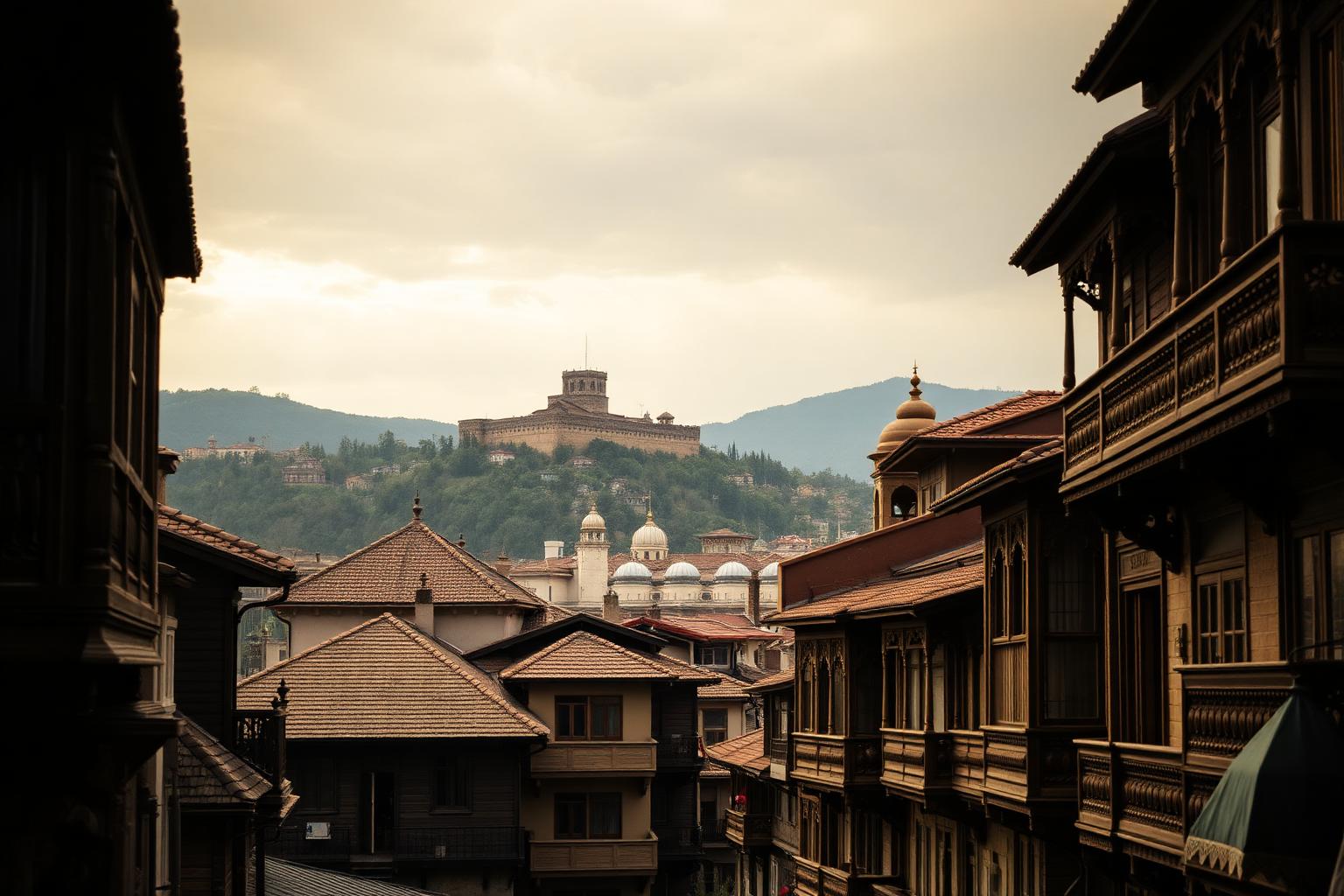
Crossroads of Europe and Asia: sulphur baths, natural wine, and Old World charm at backpacker prices.
- Best time to visit: May-June and September-October
- Daily budget (budget traveller): $40 to $70 USD
- Ideal trip length: 3 to 4 days
Tbilisi is the discovery a lot of travellers wish they'd kept to themselves. Carved wooden balconies lean over cobbled lanes, sulphur baths steam at the foot of the old town, and Georgia invented wine 8,000 years ago, so the natural-wine scene is the real deal. It's also gloriously cheap. Joy Plus walks the old town's hills, times the baths and the funicular, and gets you out to the cave cities and wine country.
Tbilisi is a city that looks like it shouldn't work, and then does. Wooden balconies hang off crumbling brick, a sulphur-bath dome sits next to a mosque and a synagogue, and a 20-metre aluminium woman holding a wine bowl and a sword watches over all of it from the hill. Georgia has been making qvevri (clay-vessel) wine for about 8,000 years, so the natural-wine bars here are the original, not a trend. The city is also absurdly cheap. A khinkali dinner with wine is GEL 35-50 (about $13-18), a metro ride is GEL 1, and a private sulphur-bath room costs less than a Lisbon cocktail.
The layout is simple once you see it. The Old Town and the baths sit on the left bank of the Mtkvari river, under Narikala fortress. Sololaki, the faded Art Nouveau quarter, climbs the slope behind Freedom Square. Rustaveli Avenue is the main spine, running from Freedom Square past the Opera and the National Museum. Vera, a leafy residential district with the best cafés, is just west of it. Marjanishvili, across the river, is the scrappier, cheaper, bohemian side. The Old Town is steep, so pack shoes with grip. The metro has two lines, costs GEL 1 a ride, and gets you to the bus stations. Bolt (the ride-hailing app) covers everything else for GEL 6-12 a trip.
Give it 4 to 7 days: 3 in town, then Mtskheta, Kakheti wine country or the Kazbegi mountains. Go in May-June or September-October, when it's warm but not 38°C. Be realistic about the rough edges: broken pavements, wild drivers, stray dogs (vaccinated and ear-tagged, mostly sleepy), and daily anti-government protests outside parliament since late 2024, with tear gas and water cannon used, while parts of Rustaveli Avenue are closed for renovation works. In return you get a city that treats guests like family. If someone invites you to a supra (the feast with the endless toasts), say yes.
How many days in Tbilisi?
For Tbilisi, we recommend 3 to 4 days. With more time, add a day trip to Kazbegi.
| Trip length | What you'll see | Itinerary |
|---|---|---|
| 2 days | Old Town and Narikala sunset; Sulphur baths, Sololaki and the Dry Bridge | Tbilisi in 2 days |
| 3 days · Recommended | Adds: Rustaveli, Vera and Mtatsminda | Tbilisi in 3 days |
| 4 days · Recommended | Adds: Mtskheta day trip | Tbilisi in 4 days |
| 5 days | Adds: Kakheti wine country | Tbilisi in 5 days |
| 7 days | Adds: Dezerter Bazaar, Chronicle of Georgia, Fabrika; Rike Park | Tbilisi in 7 days |
Tbilisi itinerary
Arrive, Old Town and Narikala sunset
Morning: Land at TBS. Take bus 337 to Station Square (GEL 1), then the red metro line to Freedom Square. Drop bags and have a coffee and a warm shoti loaf from a bakery on Leselidze Street.
Afternoon: Walk Sioni Cathedral, Anchiskhati Basilica and the leaning Gabriadze clock tower. Cross the Bridge of Peace to Rike Park and take the cable car to Narikala (about GEL 3).
Evening: Watch the sunset from the walls, then walk down past Kartlis Deda and the Botanical Garden path. Dinner at Shavi Lomi, then a first glass of qvevri wine at Vino Underground.
Sulphur baths, Sololaki and the Dry Bridge
Morning: Book a private room at Gulo's Thermal Spa or Orbeliani Baths for 10am, when it's quiet. Add the kisi scrub (about GEL 30-40) and take off any silver jewellery first.
Afternoon: Lunch in the Writers' House courtyard at Café Littera. Walk Sololaki's Art Nouveau doors and hidden courtyards, then browse the Dry Bridge Market for Soviet medals and old cameras.
Evening: Dinner at Barbarestan, which cooks from a 19th-century Georgian cookbook (book ahead), or the vine-covered courtyard at Ezo.
Rustaveli, Vera and Mtatsminda
Morning: Georgian National Museum on Rustaveli Avenue at opening, for the Treasury gold and the Soviet Occupation exhibit. Coffee at Prospero's Books & Caliban's Coffeehouse.
Afternoon: Walk into Vera for café time on Kostava Street. Take the funicular from Chonkadze Street up to Mtatsminda Park and visit the Pantheon.
Evening: Sunset on the Mtatsminda terraces. Dinner at Café Stamba in the old Soviet printing house, then a drink in the courtyard.
Mtskheta day trip
Morning: Metro to Didube, then a marshrutka (minibus) to Mtskheta (GEL 2, 30 min). Svetitskhoveli Cathedral first, before groups arrive.
Afternoon: Taxi up to Jvari Monastery (about GEL 10-15), where the Mtkvari and Aragvi rivers meet below. Lunch in town with khinkali and mtsvadi.
Evening: Back by marshrutka. Eat at Machakhela (khachapuri) in Vera, then natural wine in Marjanishvili.
Kakheti wine country
Morning: Join a small group tour (GEL 120-200) or take a marshrutka from Samgori bus station to Sighnaghi (about GEL 15, 2 hours). Walk the walls and stop at Bodbe Monastery.
Afternoon: Qvevri tasting at Pheasant's Tears in Sighnaghi (about GEL 40-60). Lunch with a view over the Alazani valley.
Evening: Back around 8pm. Simple dinner near your hotel and an early night.
Dezerter Bazaar, Chronicle of Georgia, Fabrika
Morning: Dezerter Bazaar by Station Square. Taste cheeses, buy churchkhela (nut candles) and spices. Go before noon.
Afternoon: Bolt (about GEL 15-20) to the Chronicle of Georgia monoliths above the Tbilisi Sea. It's free and the views are huge.
Evening: Fabrika courtyard for a drink, then a late dinner at Azarpesha. If it's a weekend and you're up for it, try Bassiani or KHIDI.
Slow morning, Rike Park, depart
Morning: Last shoti bread and coffee, then a stroll along Erekle II Street for souvenirs: wine, tkemali sauce, Svan salt.
Afternoon: One last Adjaruli khachapuri. Walk across the Bridge of Peace for the skyline.
Evening: Metro to Station Square, then bus 337 to TBS. Leave 3 hours before your flight, since many depart at night.
Best neighbourhoods
- Old Town (Kala): Cobbled, balconied, wrapped beneath Narikala fortress and the baths.
- Abanotubani: The sulphur bath district, with its brick domes and warm springs.
- Sololaki: Faded grand mansions, hidden courtyards and Art Nouveau doors.
- Vera: Leafy, residential, the best café and brunch streets.
- Marjanishvili: Up-and-coming, bohemian, natural-wine bars and galleries.
Must-do experiences
- Soak in a sulphur bath: Book a private room at Abanotubani, the city's warm-spring ritual.
- Narikala fortress: Ride the cable car up for the old-town panorama, walk down through the lanes. Restoration work is under way, so parts of the fortress may be fenced off.
- Natural-wine bar crawl: Georgia's qvevri wines are unlike anything else, start in Vera or Marjanishvili.
- Day trip to Mtskheta: The ancient capital and its UNESCO churches, 30 minutes away.
Hidden gems
- The Chronicle of Georgia, towering monoliths on a hill above the city.
- Fabrika, a Soviet sewing factory turned hostel and courtyard hangout.
- A supra (feast) with endless toasts if a local invites you, say yes.
- Dezerter Bazaar for cheese, churchkhela and spices.
Daily budget
- Accommodation: budget GEL 45-85 / night (hostel dorm), mid-range GEL 220-420 (boutique double or Vera apartment), splurge GEL 750+ (Stamba Hotel, Biltmore). Sololaki and Vera give the best mid-range value. Book the first weekend of October (Tbilisoba) at least a month ahead.
- Food: budget GEL 35-60 / day (bakeries, khinkali, khachapuri), mid-range GEL 90-150 (one sit-down dinner with wine), splurge GEL 250+ (Barbarestan, Azarpesha, wine pairing). Khinkali are GEL 1.5-2.5 each and 6 is a meal. Adjaruli khachapuri is GEL 16-28, so split one and add a salad. Shoti bread from a tone oven is about GEL 1.
- Transport: budget GEL 3-8 / day (metro and bus at GEL 1), mid-range GEL 15-35 (metro plus Bolt hops), splurge GEL 350-500 (private driver for Kakheti or Kazbegi). A Metromoney card costs about GEL 2 and transfers within 90 minutes are free. Use Bolt, not street taxis.
- Activities: budget GEL 10-25 (Narikala free, cable car, tip-based walking tour), mid-range GEL 70-140 (private bath room, National Museum, Mtskheta), splurge GEL 300+ (private wine day in Kakheti, bath with massage). Churches, Narikala and the Dry Bridge Market are free. Private sulphur rooms run roughly GEL 80-200 an hour depending on the bathhouse.
- Drinks & nightlife: budget GEL 15-30 (Natakhtari beer, house wine, chacha), mid-range GEL 55-100 (natural-wine flight, cocktails), splurge GEL 150+ (Bassiani or KHIDI night, bottle of qvevri amber). Beer is GEL 8-12, a glass of natural wine GEL 10-18, a chacha shot GEL 5-10. Bassiani and KHIDI have strict door policies, so go in a small group, dress dark and keep it low-key.
Where to stay
- Social hostel in Marjanishvili (GEL 45-85 / night): Fabrika Hostel & Suites, a Soviet sewing factory turned courtyard with bars, mixed dorms, privates and plenty of solo travellers. A short Bolt to the Old Town.
- Boutique hotel in Sololaki / Old Town (GEL 250-450 / night): Sololaki Hills or a carved-balcony guesthouse in the Old Town. Quiet courtyards, walkable to the baths and Freedom Square, and breakfast with local honey.
- Apartment in Vera (GEL 130-260 / night): A flat in a leafy residential street with café life downstairs and a short walk to Rustaveli. Best for stays of 5 nights or more.
- Splurge in Vera (Kostava Street) (GEL 750-1,300 / night): Stamba Hotel, in the old Soviet printing house, with a design-led lobby, courtyard bars and Café Stamba downstairs. The city's showpiece stay.
What to eat
- Khinkali (soup dumplings), twist off the doughy top knot
- Khachapuri Adjaruli, the boat-shaped cheese-and-egg bread
- Mtsvadi (grilled pork skewers) with tkemali plum sauce
- Qvevri natural wine, amber and unfiltered
Day trips
- Mtskheta and Jvari (20km, 30 min): The ancient capital, with UNESCO-listed Svetitskhoveli Cathedral and Jvari Monastery on its hilltop above two rivers. Add Uplistsikhe (cave city) and Gori with a driver for a full day. Metro to Didube, then a marshrutka to Mtskheta for about GEL 2. Taxi to Jvari is GEL 10-15. A private driver for the Mtskheta, Gori and Uplistsikhe loop is about GEL 250-300.
- Kakheti (Sighnaghi and wine country) (110km, 2 hours): Georgia's wine heartland. Walled Sighnaghi, Bodbe Monastery and qvevri tastings at Pheasant's Tears, with the Alazani valley and Caucasus peaks in view. Marshrutka from Samgori bus station to Sighnaghi, about GEL 15. Small-group tours are GEL 120-200, and a private driver for 2-4 people is GEL 350-500.
- Kazbegi (Stepantsminda) (150km, 3 hours): The Military Highway to Gergeti Trinity Church (2,170m) under Mount Kazbek, with Ananuri fortress and the Gudauri viewpoint on the way. A long day, better as an overnight. Marshrutka from Didube station, about GEL 20-25 each way, leaves when full. Shared tours run GEL 100-160. A 4x4 up to Gergeti is roughly GEL 60-100 return per vehicle.
When to visit
- Spring (April - June): 15-27°C, green hills, short heavy showers in May. Crowds: Building, manageable. Joint best window. Mtatsminda is green, terraces are open, and the baths feel great after a cool morning. May has the New Wine Festival and Independence Day (26 May).
- Summer (July - August): 30-38°C, dry and sticky, hot at night too. Crowds: Heavy, plus lots of regional tourists. Hard going for walking the Old Town. Do sights at 8am, hide at midday, and escape to Kazbegi, where it is 10-15°C cooler. Skip the baths at noon.
- Autumn (September - October): 18-28°C, golden light, warm evenings. Crowds: Moderate to high, peaks in early October. The best window. Rtveli (the grape harvest) runs in Kakheti, and Tbilisoba, the city festival, fills the streets in early October. Book beds early for that weekend.
- Winter (November - March): 0-10°C, damp, occasional snow, grey spells. Crowds: Low, except around New Year. Cheapest beds and the best bath weather. Gudauri ski resort is about 2 hours away. Mountain day trips can be cancelled when the Military Highway closes for snow.
Entry rules for your passport
Visa rules for Georgia depend on the passport you travel on. Check the official source before you book: Georgia Ministry of Foreign Affairs
Getting there
Tbilisi International (TBS) is about 17km southeast of the centre. Bus 337 runs to Station Square, where you can pick up the metro, for GEL 1 plus about GEL 2 for the Metromoney card. A Bolt to Sololaki or Old Town is GEL 20-30 and the fixed price removes any haggling. Many flights land between 3am and 6am, so a pre-booked hotel pick-up or Bolt is easier than waiting for buses. Kutaisi (KUT) is Wizz Air's Georgian base: shared buses to Tbilisi take about 4 hours (GEL 25-35) and a Stadler train links Tbilisi to Batumi in about 5 hours. Most Western passports enter visa-free for up to a year, but since 1 January 2026 every visitor must hold health and accident insurance covering the whole stay, with cover of at least GEL 30,000, and you may be asked to show it at check-in or on arrival.
Getting around
The old town is walkable but steep; the metro is dirt-cheap for longer hops and Bolt taxis cost a few dollars across town. For day trips to Mtskheta, the cave city of Uplistsikhe, or Kakheti wine country, hire a Bolt or join a small-group tour, distances are short.
Safety
Tbilisi is very safe with low crime, and Georgians are famously hospitable. Solo women travel comfortably here. Watch your footing on uneven old-town cobbles and steep lanes, use Bolt rather than unmetered street taxis, and carry some cash as smaller venues are card-shy. Anti-government protests have been held daily outside parliament on Rustaveli Avenue since late 2024, and police have used tear gas and water cannon, so stay away from them. The avenue itself has been under renovation since 23 July 2026, with some sections reopened to traffic and the work due to finish at the end of November.
Solo travel tips
- Say yes to the table: A supra is led by a tamada (toastmaster) with toast after toast. If a local waves you over, go. Sip rather than chug unless you're ready, and don't leave before the toasts to absent friends and the dead.
- Hostel pick: Fabrika or Envoy: Fabrika's courtyard is the social heart of the city, with mixed dorms, co-working, bars and a steady stream of solos. Envoy Hostel is calmer and more intimate. Both help with marshrutka timings.
- Use Bolt, skip street taxis: Open Bolt before you wave a hand. Fares across the centre are GEL 6-12 and the price is fixed. Street taxis have no meters and quote tourist prices.
- Solo female travellers: Tbilisi is one of the region's easiest cities for women alone. Sit at the bar, expect chatty locals, and use Bolt after midnight. Stray dogs wear yellow ear tags, are vaccinated and are mostly sleepy.
- Learn three words: Gamarjoba (hello), madloba (thank you) and gaumarjos (cheers). The Georgian script is unreadable at first, but menus in the centre are in English. Young people speak English, older ones often Russian.
- Free tours and wine bars: Free walking tours leave from Freedom Square, tip GEL 20-30, and are the quickest way to meet people. In the evening, sit at the bar of a natural-wine place and ask the owner for a flight.
Cultural etiquette
- Say gamarjoba (hello) and madloba (thank you). Don't assume Russian is welcome, since Russia occupies about a fifth of Georgia's territory, and avoid jokes about it.
- At a supra, don't drink before the first toast. Traditionally glasses are raised rather than clinked, and you sip wine slowly and match the pace.
- Cover shoulders and knees in churches. Women should cover their hair, and men remove hats. Scarves are usually loaned at the door.
- Restaurants often add a 10% service charge, so check the bill. If it's not included, leave 10%. Round up taxis.
- In the sulphur baths, remove silver jewellery (it tarnishes). Private rooms mean nudity is normal, and towels and slippers are provided.
- A clean plate gets refilled. Leave a small bite when you're full, and don't refuse a host's first offer outright.
- Ask before photographing people, particularly older women at bazaars. Protests outside parliament have involved tear gas and water cannon, so keep well away.
Frequently asked questions
How many days do you need in Tbilisi?
Three to four days for the old town, the baths and the wine bars, plus day trips to Mtskheta and into Kakheti wine country.
Is Tbilisi good for solo travellers?
Yes. It's safe, very affordable, walkable, and the hostel and wine-bar scene makes it easy to meet people. It's one of the best-value city breaks in the region.
Is Georgia cheap to travel?
Very. A khinkali-and-wine dinner runs a few dollars, Bolt rides cross town for under $3, and comfortable guesthouses start around $25-35 a night.
When is the best time to visit Tbilisi?
May-June and September-October is the sweet spot for weather and crowds. Shoulder season brings lower prices and easier bookings, while peak months mean higher accommodation costs and longer queues at the best known sights, so book early if you travel then.
How much does a trip to Tbilisi cost?
Budget around $40 to $70 USD per person per day, covering a hostel bed or simple room, local transport, two or three meals out and an activity or entry ticket. You can go lower with markets and free walking tours, or far higher with boutique hotels and private guides.
Is Tbilisi safe for solo female travellers?
Tbilisi is generally a comfortable place to travel solo, including for women, as long as you use normal city sense. Tbilisi is very safe with low crime, and Georgians are famously hospitable. Solo women travel comfortably here. Watch your footing on uneven old-town cobbles and steep lanes, use Bolt rather than unmetered street taxis, and carry some cash as smaller venues are card-shy. Anti-government protests have been held daily outside parliament on Rustaveli Avenue since late 2024, and police have used tear gas and water cannon, so stay away from them. The avenue itself has been under renovation since 23 July 2026, with some sections reopened to traffic and the work due to finish at the end of November.
How do you get around Tbilisi?
The old town is walkable but steep; the metro is dirt-cheap for longer hops and Bolt taxis cost a few dollars across town. For day trips to Mtskheta, the cave city of Uplistsikhe, or Kakheti wine country, hire a Bolt or join a small-group tour, distances are short.
Do I need travel insurance to enter Georgia?
Yes. Since 1 January 2026 every tourist must hold health and accident insurance for the whole stay, with cover of at least 30,000 GEL (roughly US$11,000). The policy can come from any insurer but must be in English or Georgian, and you can be asked to show it at the border. Most standard travel insurance qualifies: carry the certificate on your phone or on paper.
More about Tbilisi
Tours and activities in Tbilisi | Tbilisi in 2 days | Tbilisi in 3 days | Tbilisi in 4 days | Tbilisi in 5 days | Tbilisi in 7 days
Can't decide? Compare Tbilisi with...
Joy Plus home | Destinations | Itineraries | Activities | Flights | Budget planner | Calendar | Map | Blog | Lifetime access