Beppu in 4 days
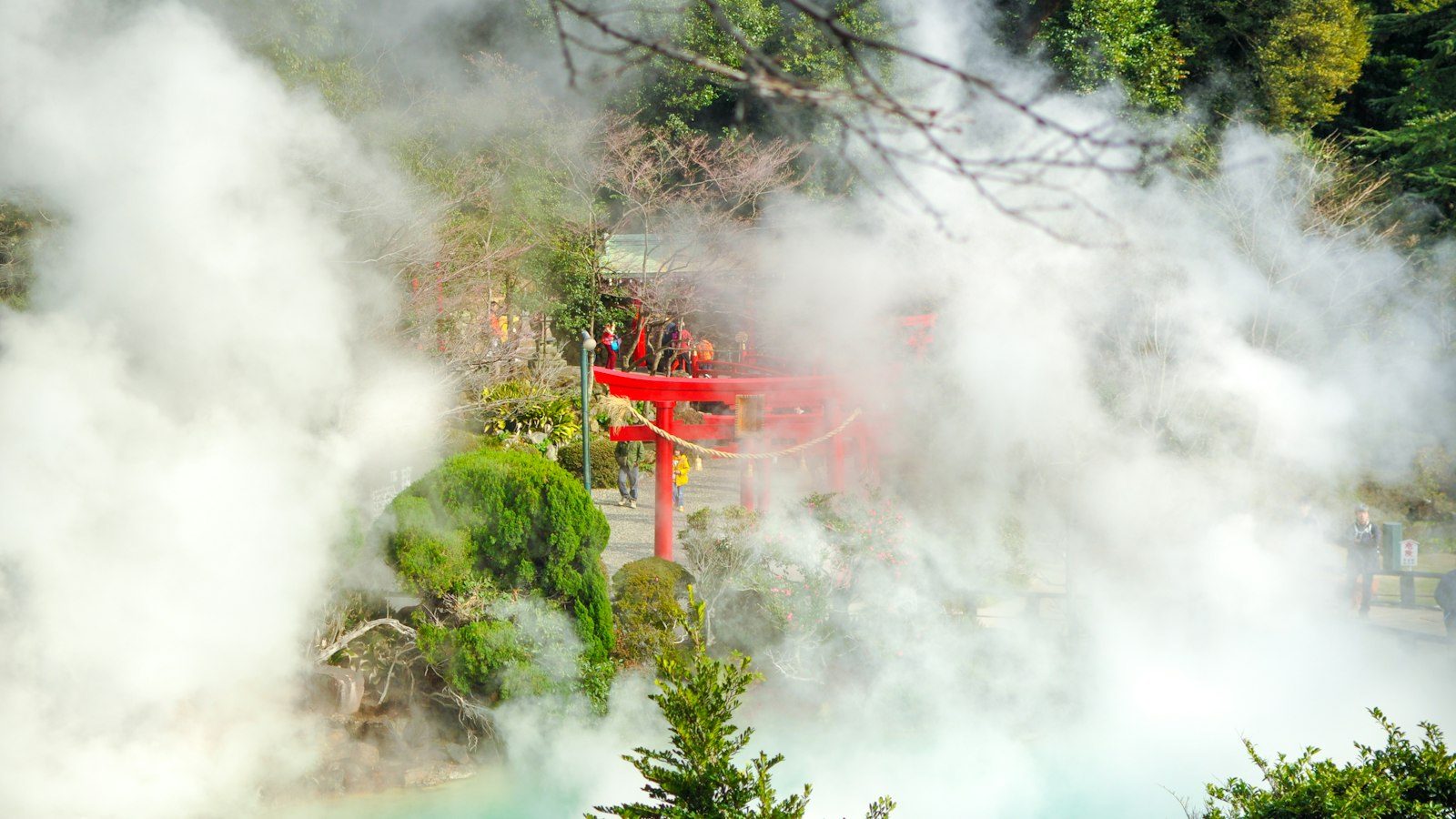
Japan's great hot spring city sits on a hillside on the Kyushu coast, with steam rising from drains, gardens and rooftops. You soak in old public bathhouses for a few hundred yen, get buried in hot sand and eat eggs cooked in volcanic steam. Best time to visit: October to November and March to May. Daily budget (budget traveller): $55 to $200 USD.
Arrive and first soak
Morning: Take the Airliner bus from Oita Airport (about 50 minutes) or the Sonic train from Fukuoka. Drop your bag near the station and walk down to the Kitahama seafront.
Afternoon: Have a ¥300 soak at Takegawara Onsen and look at the old wooden building. Wander the covered arcades around Yayoi Tengu.
Evening: Eat toriten at Toyoken or an izakaya near the station, then have an early night.
The Hells and a steam-cooked lunch
Morning: Take an early bus to Kannawa and buy the combined ticket at Umi Jigoku when it opens at 8am. Walk round the five Kannawa Hells before the tour groups arrive.
Afternoon: Cook lunch at Jigoku Mushi Kobo Kannawa, then take the bus to Chinoike and Tatsumaki. Wait for the geyser, which erupts roughly every 30 to 40 minutes.
Evening: Soak at Hyotan Onsen, then take the bus back down to the centre.
Sand bath and Myoban
Morning: Get to Takegawara for 8am to secure a sand bath slot (¥1,500). Rinse off in the old bath afterwards.
Afternoon: Take the bus up to Myoban. See the yunohana huts at Yunosato, soak in the milky sulphur water and try the pudding at Okamotoya.
Evening: Stop at Kannawa Mushiyu for a herb steam if you have energy left, then have cold reimen for dinner.
Mt Tsurumi and local baths
Morning: Take Kamenoi bus 36 from the station's west exit to the Beppu Ropeway (about ¥1,800 return) and walk around the summit.
Afternoon: Back in town, buy an Onsendo stamp book and visit two or three small neighbourhood bathhouses.
Evening: Have seki-aji sashimi and a highball at an izakaya near Kitahama.
Heading home: Collect your bag and catch the Airliner bus to Oita Airport or the Sonic to Fukuoka.
What to eat in Beppu
- Jigoku-mushi: eggs, sweet potatoes, vegetables and seafood steamed over the hot spring vents. Cook them yourself at Jigoku Mushi Kobo Kannawa or buy them ready-made at the Hells
- Toriten: Oita's chicken tempura, dipped in vinegar, soy and mustard. Toyoken, which claims to have invented it, is the classic place to try it
- Beppu reimen: cold, chewy buckwheat noodles in a beef and fish broth with kimchi, brought to Beppu by people returning from Manchuria
- Dango-jiru: thick, flat wheat noodles in miso soup with vegetables, a filling Oita staple that costs well under ¥1,000 at simple diners
- Seki-aji and seki-saba: horse mackerel and mackerel from the strait off Saganoseki, best as sashimi with a squeeze of the local kabosu citrus
- Steamed custard pudding from Okamotoya in Myoban, and bread rolls from the long-running Tomonaga Panya bakery near the station
Hidden gems
- Kannawa Mushiyu, a small herb steam room near the main Kannawa bus stop, where you lie on sweet flag leaves spread over a stone floor heated by the spring
- Hoyoland in Myoban, an old-fashioned mud bath in the hills, with outdoor pools and a very local feel
- Shibaseki Onsen, a cheap city-run bathhouse by a river near the Chinoike and Tatsumaki Hells, with far fewer visitors than the baths in Kannawa
- The Showa-era shopping arcades around Yayoi Tengu and Takegawara, with old coffee shops, bathhouse lanes and tiny bars
- The lanes of Kannawa early in the morning, before the tour buses arrive, when steam pours from walls and drains and the town seems to breathe
Getting around
The centre around the station and Kitahama is flat and easy to walk, but the main sights are up the hill to the west, so you will use buses. Kamenoi Bus runs most routes. A single ride from the station to Kannawa costs around ¥350-400 and takes about 20 minutes. The My Beppu Free pass costs ¥1,100 for one day or ¥1,700 for two in the Mini version. The Wide version, at ¥1,800 for a day, adds Yufuin. A pass is worth it on a Hells day with a few extra trips, and you can buy it as a digital ticket or at the station. The five Kannawa Hells are a short walk from each other, and Chinoike and Tatsumaki are about 10 minutes away by bus. Buses to Myoban and the ropeway run roughly once an hour, so check times for the trip back. The pass does not cover Oita Kotsu buses or JR trains. Taxis wait at the station and cost around ¥1,500-1,800 to Kannawa. JR local trains link Beppu with Oita, Usuki and Kitsuki.
Safety
Beppu is very safe, and crime against visitors is rare. The real risks come from heat and water. The Hells are close to boiling point, so stay behind the barriers, and watch out for steam vents in the lanes of Kannawa. Many baths are very hot, and people do faint after long soaks, especially after drinking. Drink water, get out slowly and avoid alcohol before you bathe. Sand baths are intense, so tell the attendant if you feel unwell. Summers are hot and humid, the rainy season runs from June into July, and typhoons can arrive from August to October and stop trains and ferries. Kyushu also has earthquakes, so check your hotel's evacuation route and install the Safety tips app from the Japan Tourism Agency. Tap water is safe to drink. Call 110 for the police and 119 for fire or an ambulance. You need travel insurance with medical cover, as healthcare is good but expensive for visitors.
Frequently asked questions
What does this 4-day Beppu itinerary cover?
Day 1: Arrive and first soak. Day 2: The Hells and a steam-cooked lunch. Day 3: Sand bath and Myoban. Day 4: Mt Tsurumi and local baths.
Is 4 days enough for Beppu?
Our recommended trip length for Beppu is 3 to 5 days. This 4-day plan focuses on the highlights and groups sights by area so you spend less time travelling between them.
How much does 4 days in Beppu cost?
A budget traveller spends about $55 to $200 USD a day in Beppu, so roughly $220 to $800 USD for 4 days, not counting flights.
Where should I stay for 4 days in Beppu?
Station and Kitahama: The flat downtown between JR Beppu Station and the sea. Kannawa: The steamiest district, about 20 minutes up the hill by bus.
When is the best time to visit Beppu?
The best time to visit Beppu is October to November and March to May.
How do I get around Beppu?
The centre around the station and Kitahama is flat and easy to walk, but the main sights are up the hill to the west, so you will use buses. Kamenoi Bus runs most routes.
Is Beppu safe for solo travellers?
Beppu is very safe, and crime against visitors is rare. The real risks come from heat and water.
Read more about Beppu
- Tokyo for First-Time Visitors: 5-Day Guide With Hidden Gems
- Japanese Culture and Etiquette: A Situation-by-Situation Guide
- Cultural Etiquette in Japan: Quick Do's and Don'ts for First-Timers
More 4-day guides
- Ishigaki in 4 days
- Naoshima in 4 days
- Yakushima in 4 days
- Tokyo in 4 days
- Kyoto in 4 days
- Osaka in 4 days
- Sapporo in 4 days
- Hiroshima in 4 days
Beppu in 2 days | Beppu in 3 days | Beppu in 5 days | Beppu in 7 days | Full Beppu guide
Joy Plus home | Destinations | Itineraries | Activities | Flights | Budget planner | Calendar | Map | Blog | Lifetime access