Naoshima in 5 days
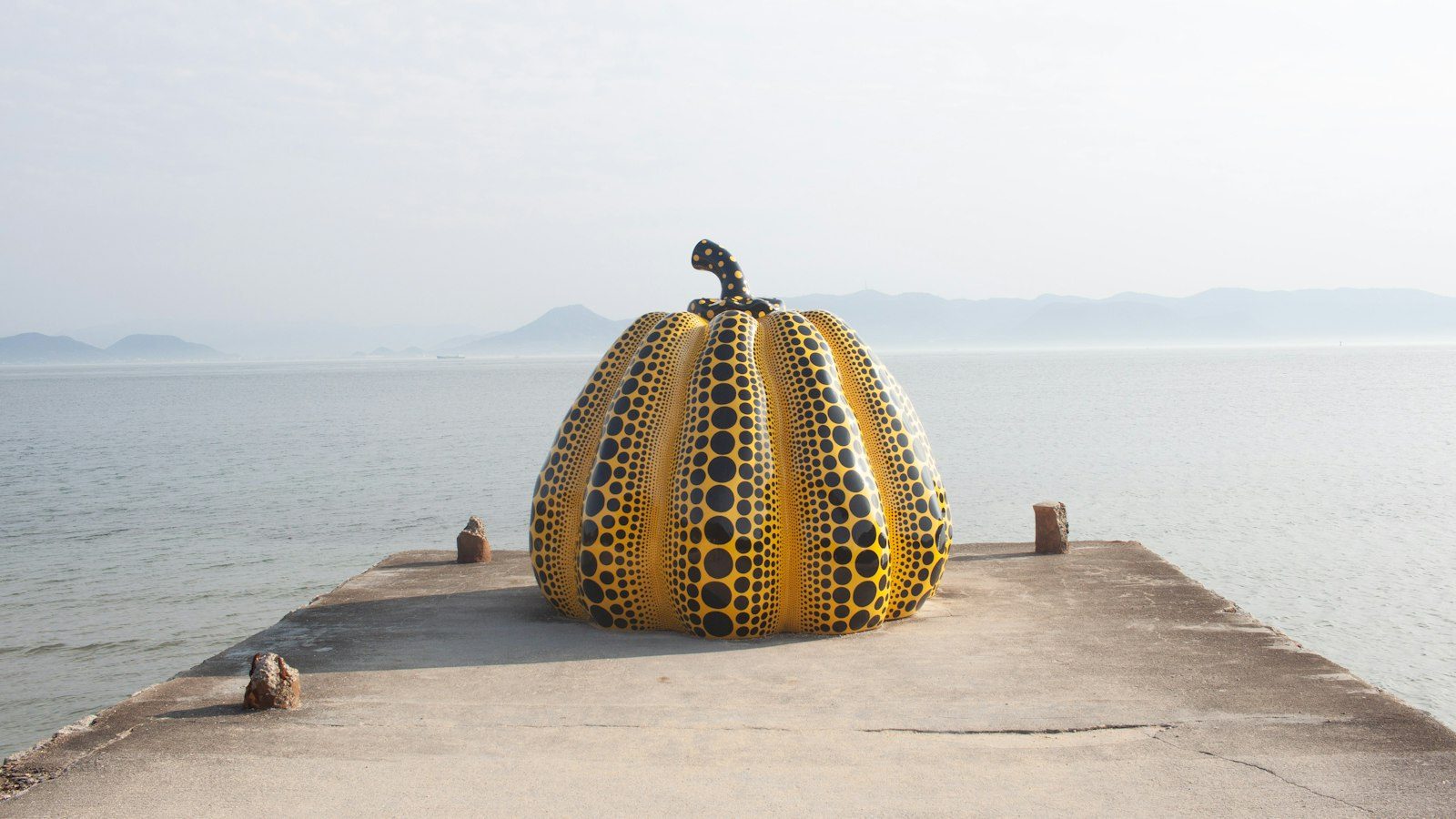
A small, hilly island in the Seto Inland Sea that has become one of the world's great places to see contemporary art. You cycle between Tadao Ando museums, see Monet lit only by daylight underground and finish the day with a soak in a bathhouse that is itself an artwork. Best time to visit: Late March to May and October to November. Daily budget (budget traveller): $80 to $250 USD.
Arrive and find your feet
Morning: Take the shinkansen to Okayama, then the JR Uno Line to Uno. Catch the ferry to Miyanoura (¥370, 20 minutes) and leave your bag at your guesthouse or in a port locker.
Afternoon: Rent an e-bike opposite the port. See the Red Pumpkin and the Naoshima Pavilion, then ride the coast road to get your bearings.
Evening: Soak in the I Love Yu bathhouse (about ¥660), then have an early dinner in Miyanoura before the kitchens close.
Chichu and the south coast
Morning: Arrive at your timed Chichu slot (about ¥2,500 online) at opening, when the Monet room and Turrell's Open Sky are quietest.
Afternoon: Walk down to the Lee Ufan Museum, then on to Benesse House Museum and the Valley Gallery. Stop at the Yellow Pumpkin on the way.
Evening: Watch the sunset over the beach sculptures below Benesse House, then ride back carefully with a light.
Honmura village
Morning: Start at your booked Minamidera slot, then walk the other Art House Project houses and climb to Go'o Shrine.
Afternoon: Have a set lunch in an old house, then visit the Naoshima New Museum of Art (¥1,500 online) and the ANDO MUSEUM.
Evening: Wander Honmura's lanes as the day trippers leave, then take the bus back to Miyanoura.
Teshima
Morning: Take a boat to Teshima and rent an e-bike at Ieura port. Check that the Teshima Art Museum is open and book your slot ahead.
Afternoon: Visit the Teshima Art Museum, where water beads across a concrete shell, then ride to Christian Boltanski's heartbeat archive by the beach.
Evening: Catch the last suitable boat back to Naoshima, and plan your return time before you leave in the morning.
Takamatsu and udon
Morning: Take the ferry to Takamatsu (¥680, about an hour). Have breakfast udon at a self-service shop.
Afternoon: Walk Ritsurin Garden, one of Japan's finest strolling gardens, then look around the covered shopping arcades.
Evening: Take the ferry back to Naoshima for a quiet evening, or stay over in Takamatsu if you are moving on to Shikoku.
Heading home: For the airport or station, see Getting there in the full Naoshima guide.
What to eat in Naoshima
- Set lunch in an old Honmura house: brown rice, miso soup and seasonal vegetable dishes at places such as Aisunao, around ¥1,000-1,500
- Seto Inland Sea fish: sea bream (tai), octopus and small fried fish, on teishoku set meals at port-side restaurants
- Sanuki udon in Takamatsu: Kagawa's thick, chewy noodles, served cold or in hot broth at self-service shops for a few hundred yen a bowl
- Shodoshima olives and olive oil: the neighbouring island is famous for them, and you will find them in snacks, ice cream and gifts
- Okayama fruit in season: white peaches in summer and Muscat grapes in late summer and autumn, sold at Okayama Station and in Uno
- A café break with a sea view: the café at the Naoshima New Museum of Art or a Miyanoura kissaten, with shaved ice in summer
Hidden gems
- The Naoshima Pavilion by Sou Fujimoto, a white steel-mesh 'island' at Miyanoura port that you can step inside for free
- The glass steps of Go'o Shrine in Honmura, part of the Art House Project, with a view over the village roofs to the sea
- Niki de Saint Phalle's bright sculptures on the beach below Benesse House, best at sunset when the day trippers have left
- Naoshima Hall in Honmura, a community hall by Hiroshi Sambuichi designed around wind and water, with an unusual roof you can see from the lane
- The north of the island seen from the ferry, where the Mitsubishi smelter that built Naoshima's economy still works beside the art island
Getting around
Naoshima is about 8 square kilometres. The main spots, Miyanoura, Honmura and the south coast museums, are 2 to 4km apart, with real hills between them. Most people rent an electric bicycle near Miyanoura port, which costs about ¥1,500 a day and around ¥1,000 at some shops from December to February. Regular geared bikes are about ¥500, but they are hard work on the climb to Chichu. The yellow town bus runs between Miyanoura, Honmura and the Tsutsujiso stop for ¥100 a ride, usually every 30 to 60 minutes. From Tsutsujiso, a free shuttle links Benesse House, Lee Ufan and Chichu. Buses fill up at busy times, so allow extra time before a Chichu slot. Walking from Miyanoura to Benesse House takes around 45 minutes, mostly uphill. There are a few taxis, but book them through your accommodation. Small passenger boats link Honmura with Uno, and some Takamatsu to Teshima boats stop there too. You do not need a car, and private cars are restricted in the museum area anyway.
Safety
Naoshima is extremely safe, and crime against visitors is almost unheard of. The real risks are practical. In July and August it is very hot and humid, so carry water and do not cycle uphill at midday. Roads are narrow, traffic drives on the left and the downhill stretches on the south coast are steep, so ride carefully. The rainy season runs from June into July, and typhoons can arrive from August to October and cancel ferries, sometimes for a day or more. If a storm is forecast, keep your travel flexible. The last ferries leave in the evening, and missing them means an expensive water taxi or an unplanned night. Tap water is safe to drink. Call 110 for police and 119 for an ambulance or fire. JNTO's Japan Visitor Hotline (050-3816-2787) helps in English around the clock. Japan has no public health cover for visitors, so bring travel insurance with medical cover.
Frequently asked questions
What does this 5-day Naoshima itinerary cover?
Day 1: Arrive and find your feet. Day 2: Chichu and the south coast. Day 3: Honmura village. Day 4: Teshima. Day 5: Takamatsu and udon.
Is 5 days enough for Naoshima?
Our recommended trip length for Naoshima is 2 to 4 days. This 5-day plan focuses on the highlights and groups sights by area so you spend less time travelling between them.
How much does 5 days in Naoshima cost?
A budget traveller spends about $80 to $250 USD a day in Naoshima, so roughly $400 to $1,250 USD for 5 days, not counting flights.
Where should I stay for 5 days in Naoshima?
Miyanoura: The main port on the west coast, where the big ferries from Uno and Takamatsu arrive. Honmura: The old village on the east coast, with narrow lanes, wooden houses, a small shrine on the hill and the Art House Project sites.
When is the best time to visit Naoshima?
The best time to visit Naoshima is Late March to May and October to November.
How do I get around Naoshima?
Naoshima is about 8 square kilometres. The main spots, Miyanoura, Honmura and the south coast museums, are 2 to 4km apart, with real hills between them.
Is Naoshima safe for solo travellers?
Naoshima is extremely safe, and crime against visitors is almost unheard of. The real risks are practical.
Read more about Naoshima
- Tokyo for First-Time Visitors: 5-Day Guide With Hidden Gems
- Japanese Culture and Etiquette: A Situation-by-Situation Guide
- Cultural Etiquette in Japan: Quick Do's and Don'ts for First-Timers
More 5-day guides
- Yakushima in 5 days
- Tokyo in 5 days
- Kyoto in 5 days
- Osaka in 5 days
- Sapporo in 5 days
- Hiroshima in 5 days
- Nara in 5 days
- Kanazawa in 5 days
Naoshima in 2 days | Naoshima in 3 days | Naoshima in 4 days | Naoshima in 7 days | Full Naoshima guide
Joy Plus home | Destinations | Itineraries | Activities | Flights | Budget planner | Calendar | Map | Blog | Lifetime access