Okavango Delta in 3 days
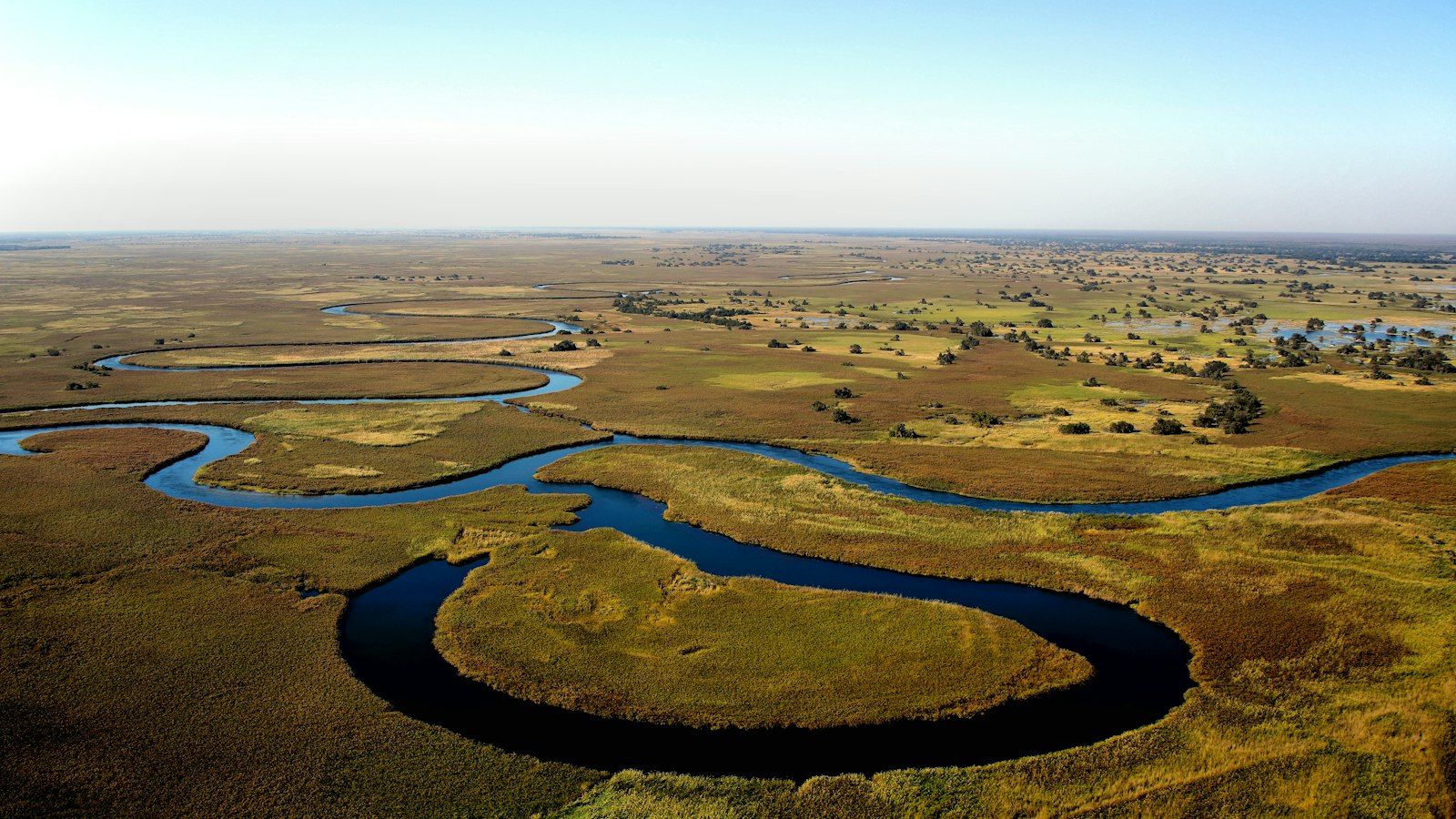
A vast inland delta of papyrus channels, palm islands and floodplains, where you glide past hippos in a dugout mokoro and elephants wade across the reeds. Best time to visit: May to October. Daily budget (budget traveller): $95 to $330 USD.
Land in Maun, settle on the Thamalakane
Morning: Fly into Maun (MUB) from Johannesburg, Cape Town or Gaborone. Take a taxi or pre-booked camp pickup about 15 to 20 minutes out to Matlapaneng.
Afternoon: Check in at Old Bridge Backpackers or Audi Camp. Withdraw pula at an airport or town ATM first, because you need cash for park gates and polers.
Evening: Sundowner at the riverside bar, then dinner at your camp. Use the evening to book your mokoro and scenic flight dates.
Maun town and a doors-off flight
Morning: Breakfast and fresh juice at Hilary's in the town centre. Walk to the Nhabe Museum for local history and art, then buy supplies at a supermarket.
Afternoon: Take a late-afternoon 45-minute doors-off helicopter flight with Helicopter Horizons (about 335 US dollars per person, minimum two, so ask to join a shared group). Bring your passport.
Evening: Craft beer and dinner at the Okavango Craft Brewery on Sir Seretse Khama Road, then a taxi back to camp.
Mokoro day trip
Morning: Early pickup by 4x4 to a mokoro station on the delta's edge. Meet your poler, then glide through reed channels past reed frogs, water lilies and hippo pools.
Afternoon: Guided walk on an island looking for elephant, zebra and lechwe, then a packed lunch in the shade. Most trips are back in Maun between 3:30 and 4:30pm.
Evening: Shower off the dust, then tip your poler. Pasta or curry at Marc's Eatery and an early night.
Heading home: Coffee and cake at the Dusty Donkey, a short walk from the terminal, then check in for your flight. Connect onwards via Johannesburg, Cape Town or Gaborone, or stay an extra night if your flight is tight.
What to eat in Okavango Delta
- Seswaa: Botswana's national dish of beef or goat slow-boiled with salt until it falls apart, then pounded and served with pap or sorghum porridge
- Bogobe and morogo: stiff sorghum or maize porridge with wild spinach cooked down with onion and tomato, the everyday plate in local eateries
- Magwinya: deep-fried dough balls (fat cakes) sold hot from roadside stalls in the morning, perfect with a cup of sweet tea before a mokoro trip
- Phane: dried mopane worms, fried crisp with chilli and onion. They are a seasonal protein snack and a rite of passage for visitors
- Grilled bream from the Panhandle: fresh river fish grilled whole and eaten with chakalaka relish at fishing camps around Shakawe
- Café lunches in Maun: daily-changing home cooking at Hilary's in the town centre, or coffee and cake at the Dusty Donkey Café a short walk from the airport
Hidden gems
- The Nhabe Museum in Maun, a small museum in a historic building with exhibits on Ngamiland's history, peoples and wildlife, and work by local artists
- The walking trails of the Maun Educational Park along the Thamalakane, where zebra and giraffe graze within sight of town and you can walk instead of sitting in a vehicle
- Guma Lagoon in the Panhandle, a quiet camp on a papyrus-fringed lagoon for fishing, birding and mokoro trips far from the Maun crowds
- Boat trips from Drotsky's Cabins near Shakawe, where the Okavango runs deep and wide and serious birders come looking for Pel's fishing owl
- Mokoro trips from Seronga on the eastern Panhandle, run by community polers and starting in water that rarely sees a tourist
Getting around
Maun is the hub for everything. In town, white combis (minibuses) run fixed routes for a few pula, and taxis can be flagged down or ordered through the Yango app. Agree the fare before you get in. A taxi between the centre and the Matlapaneng camps costs more after dark, so ask your camp to call a regular driver. The delta itself has no public transport. You reach it by tour vehicle, mokoro, motorboat or light aircraft. Moremi's South Gate is about 92km from Maun, with deep sand beyond the tar. Self-driving needs a properly equipped 4x4, recovery experience and pre-booked campsites. Fly-in camps are reached by small planes from Maun Airport, which usually set a 20kg soft-bag limit. Long-distance buses run from Gaborone to Maun in about nine to ten hours. From Kasane, change at Nata. Botswana drives on the left. Avoid driving after dark, when cattle, donkeys and elephants wander onto unlit roads.
Safety
Botswana is one of Africa's safest countries for solo travellers, and violent crime against visitors is rare. In Maun, normal care with bags, phones and parked cars is enough. The real risks are wild animals. Camps along the Thamalakane and in the delta are unfenced, so never walk around after dark without a torch or escort, keep tent zips closed, and never swim in rivers or lagoons, which hold hippos and crocodiles. On mokoro trips and walks, follow your guide's instructions exactly and never run from an animal. The northern Okavango is a malaria area, with the highest risk in the rainy months, so speak to a travel clinic about prophylaxis and use DEET repellent from dusk. Summer heat can top 40°C in October, while winter nights in the bush can drop close to freezing. Drink plenty of water, and do not photograph military or government buildings.
Frequently asked questions
What does this 3-day Okavango Delta itinerary cover?
Day 1: Land in Maun, settle on the Thamalakane. Day 2: Maun town and a doors-off flight. Day 3: Mokoro day trip.
Is 3 days enough for Okavango Delta?
Our recommended trip length for Okavango Delta is 6 to 9 days. This 3-day plan focuses on the highlights and groups sights by area so you spend less time travelling between them.
How much does 3 days in Okavango Delta cost?
A budget traveller spends about $95 to $330 USD a day in Okavango Delta, so roughly $285 to $990 USD for 3 days, not counting flights.
Where should I stay for 3 days in Okavango Delta?
Maun town centre: The delta's dusty service town, with the airport, banks, supermarkets, the Nhabe Museum and the cafés where safari guides and pilots eat lunch. Matlapaneng: The riverside strip about 10 to 12km north-east of the centre, on the road towards Moremi.
When is the best time to visit Okavango Delta?
The best time to visit Okavango Delta is May to October.
How do I get around Okavango Delta?
Maun is the hub for everything. In town, white combis (minibuses) run fixed routes for a few pula, and taxis can be flagged down or ordered through the Yango app.
Is Okavango Delta safe for solo travellers?
Botswana is one of Africa's safest countries for solo travellers, and violent crime against visitors is rare. In Maun, normal care with bags, phones and parked cars is enough.
More 3-day guides
- Bwindi in 3 days
- Franschhoek in 3 days
- Hermanus in 3 days
- Stellenbosch in 3 days
- Swakopmund in 3 days
- Diani Beach in 3 days
- Djerba in 3 days
- Etosha National Park in 3 days
Okavango Delta in 2 days | Okavango Delta in 4 days | Okavango Delta in 5 days | Okavango Delta in 7 days | Full Okavango Delta guide
Joy Plus home | Destinations | Itineraries | Activities | Flights | Budget planner | Calendar | Map | Blog | Lifetime access