Destinations / Asia
Kamakura, Japan travel guide
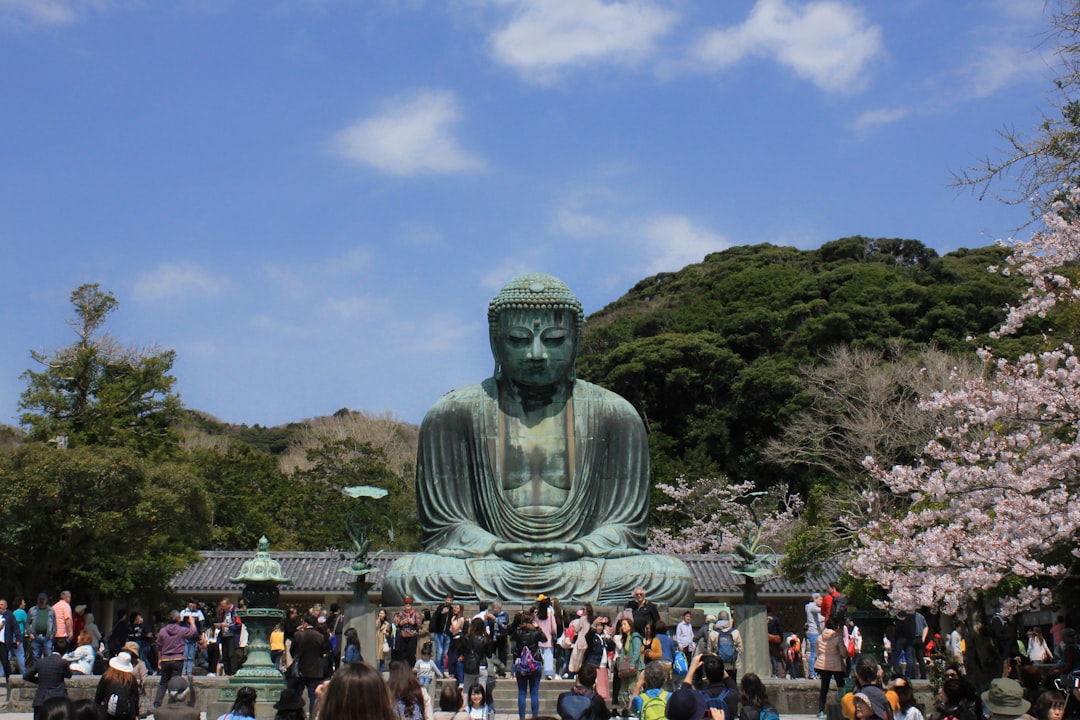
Japan's samurai capital, now a seaside temple town an hour from Tokyo.
- Best time to visit: April-May, October-November
- Daily budget (budget traveller): $60 to $180 USD
- Ideal trip length: 1 to 2 days
Kamakura ran Japan for 150 years as the seat of the first shogunate, and the evidence is still standing: a 13-metre bronze Buddha open to the sky since a tsunami took its hall in 1498, Zen monasteries in wooded valleys, and hiking trails that cut between them. It is also a surf town, which makes the mix strange and rather good.
Kamakura is a small town with an outsized job in Japanese history. From 1185 to 1333 it was the seat of the first shogunate, and it was chosen for geography: hills on three sides, sea on the fourth, and only a handful of narrow cuts through the ridges. Those old mountain passes are now the hiking trails, and the temples sit in the valleys between them. Kotoku-in's 13-metre bronze Amida Buddha, cast in 1252, has sat open to the sky since a tsunami took its hall in 1498. A few minutes' walk behind it, locals are in wetsuits carrying boards to the water.
The mistake most visitors make is treating it as a checklist. Day-trippers pile out of the JR Yokosuka line at Kamakura Station, shuffle down Komachi-dori, tick the Great Buddha and leave by 5pm. Meanwhile the best of the town is elsewhere. Engakuji's gate at 8am before the tour groups arrive, the 90-minute Daibutsu ridge trail, the moss at Sugimotodera, the bamboo at Hokokuji in the quiet hour, a Fuji silhouette over Yuigahama in winter. This guide builds the days around the trails and the early hours, so you walk between temples instead of queuing for buses.
Kamakura works as a day trip, and it works far better as a night or two. After 5pm the temples shut, the crowds drain back to Tokyo and the town goes quiet. Shops close early, so eat by 7pm. Pair it with Enoshima by Enoden tram, a day in Yokohama or a surf lesson, and a week here feels strangely right. Avoid June weekends (hydrangea season), the Golden Week holidays and New Year's first three days, when Tsurugaoka Hachimangu fills with over a million people.
How many days in Kamakura?
For Kamakura, we recommend 1 to 2 days. With more time, add a day trip to Hakone or Hayama and Zushi coast.
| Trip length | What you'll see | Itinerary |
|---|---|---|
| 2 days · Recommended | Komachi-dori and Tsurugaoka Hachimangu; East Kamakura: moss, bamboo and a teahouse garden | Kamakura in 2 days |
| 3 days | Adds: Zen monasteries and the Daibutsu hiking trail | Kamakura in 3 days |
| 4 days | Adds: Enoden to Enoshima | Kamakura in 4 days |
| 5 days | Adds: Day trip to Yokohama | Kamakura in 5 days |
| 7 days | Adds: Zeniarai Benten, Genjiyama and Shichirigahama; Meigetsuin, souvenirs | Kamakura in 7 days |
Kamakura itinerary
Arrive, Komachi-dori and Tsurugaoka Hachimangu
Morning: JR Yokosuka line from Tokyo Station (55 min, ¥1,040) to Kamakura. Drop bags at the station lockers or your hotel. Hotcakes at Iwata Coffee, a short walk into the east side of town.
Afternoon: Walk Komachi-dori, but eat standing by the stall, not while strolling. Then follow Dankazura, the raised cherry-lined path, to Tsurugaoka Hachimangu (free, open from 6am). Climb the 61 stone steps for the view back down to the sea.
Evening: Buy hato sabure butter biscuits at Toshimaya as a gift. Dinner by 7pm at an izakaya near the station, grilled fish and shirasu. Early night.
East Kamakura: moss, bamboo and a teahouse garden
Morning: Bus from the east exit to Sugimotodera (¥300, open from 9am), the oldest temple in town, with a moss-covered stone stairway. Walk ten minutes to Hokokuji for the bamboo grove (garden around ¥300, matcha ¥600). Arrive at opening for the quiet hour.
Afternoon: Walk on to Jomyoji and sit in its teahouse garden for tea. Lunch at a soba shop on the walk back toward Kamakura Station.
Evening: Kamakura Beer at an izakaya, then early to bed. Tomorrow starts at 8am.
Zen monasteries and the Daibutsu hiking trail
Morning: JR one stop to Kita-Kamakura (¥150). Engakuji opens at 8am (¥500), so be at the gate on time. Skip Kenchoji today. Walk to Jochiji at the trailhead.
Afternoon: Hike the Daibutsu trail (3km, about 90 minutes) through the forest past Kuzuharaoka Shrine to the Great Buddha (¥300, plus ¥50 to go inside). Hasedera is next, for sea views from the hillside (¥400). Light lunch of temple vegetables.
Evening: Sunset at Yuigahama beach, with Enoshima silhouetted and Mount Fuji visible on clear winter evenings. Dinner at Kua 'Aina on Komachi-dori if you want a burger, or something local in Hase.
Enoden to Enoshima
Morning: Day pass (¥800) and the Enoden from Kamakura Station, 25 minutes along the coast. Ride past Kamakurakokomae's famous road crossing, where fans photograph the Slam Dunk scene. Get off at Enoshima.
Afternoon: Walk over the bridge to the island. Shirasu-don at Tobiccho, then Enoshima Shrine, the Escar escalators (¥400), the Iwaya sea caves (about ¥500) and the lookout. Beware of kites (tobi) that snatch food from your hand.
Evening: Stay for sunset at Chigogafuchi on the island's west side. Enoden back to Kamakura. Dinner near your hotel.
Day trip to Yokohama
Morning: JR Yokosuka line to Yokohama (25 min). Walk to Minato Mirai and the Red Brick Warehouse. Cup Noodles Museum (about ¥500) is a surprisingly good hour.
Afternoon: Lunch in Chinatown, the biggest in Japan. Walk Yamashita Park and the waterfront. Optional: Sankeien Garden for a calm hour.
Evening: JR back to Kamakura. Soak in a sento or hotel bath, early night.
Zeniarai Benten, Genjiyama and Shichirigahama
Morning: Walk from Kamakura Station into the hills to Zeniarai Benten (8am to 4:30pm, donation), where you wash coins in the cave spring for luck. Then the short trail to Genjiyama and its viewpoint.
Afternoon: Enoden to Shichirigahama (a few stops from Kamakura). Hotcakes with a view at Bills, expect a queue on weekends. Walk the beach to Inamuragasaki and watch the surfers.
Evening: Optionally book a surf lesson at Zaimokuza or Yuigahama (around ¥8,000 for two hours). Dinner at a seafood izakaya, back by 9pm.
Meigetsuin, souvenirs and depart
Morning: Early train to Kita-Kamakura. Walk to Meigetsuin (9am opening, ¥500) and its round window garden. In June come on a weekday to see the hydrangeas blue.
Afternoon: Return to Komachi-dori for last purchases: hato sabure, purple sweet potato soft serve, a shop for craft ceramics. A final shirasu-don lunch.
Evening: JR Yokosuka line back to Tokyo or Haneda via Yokohama. Allow 90 minutes to the airport.
Best neighbourhoods
- Komachi-dori: The pedestrian shopping street from the station, packed with street food and craft shops.
- Hase: Great Buddha and Hasedera temple, the busiest corner and closest to the beach.
- Kita-Kamakura: Quieter northern valley with Engakuji and Kenchoji, the great Zen monasteries.
- Yuigahama: The main beach, surf schools and beach shacks that pop up each summer.
- Enoshima: Connected island with shrines, caves and Mount Fuji views on clear evenings.
Must-do experiences
- Kotoku-in Great Buddha: Stand under the 1252 bronze Amida and pay 50 yen to step inside it.
- Hokokuji bamboo grove: Drink matcha at the teahouse surrounded by 2,000 stalks of moso bamboo.
- Daibutsu hiking trail: Walk the 3km wooded ridge from Kita-Kamakura down to the Great Buddha.
- Enoden line to Enoshima: Ride the old tram as it squeezes between houses and runs beside the sea.
Hidden gems
- Zeniarai Benten shrine, where you wash your money in the cave spring for luck
- Sugimotodera, the oldest temple in Kamakura, mossy and almost always empty
- Jomyoji's teahouse garden, a dry landscape you can sit with alone
- Meigetsuin in June, when the hydrangeas turn the whole compound blue
Daily budget
- Accommodation: budget ¥4,500 to ¥6,500 / night (hostel dorm or guesthouse), mid-range ¥16,000 to ¥26,000 (boutique or business hotel double), splurge ¥35,000+ (Kamakura Prince Hotel at Shichirigahama, ocean-view room). Weekend rates jump 30 to 50 percent. Business hotels in Ofuna or Fujisawa run ¥7,000 to ¥9,000 and are 7 to 30 minutes from Kamakura by train.
- Food: budget ¥2,500 to ¥3,500 / day (konbini onigiri, ramen, one teishoku), mid-range ¥6,000 to ¥9,000 (Iwata Coffee hotcakes, shirasu-don at Tobiccho, one proper dinner), splurge ¥12,000+ (kaiseki dinner, or a set lunch at Hachinoki Shinkan in Kita-Kamakura then a seaside dinner). Lunch set menus (teishoku) at ¥1,200 to ¥2,000 are the hack. Many restaurants stop taking orders around 8pm.
- Transport: budget ¥2,880 (Tokyo return on JR ¥2,080 plus Enoden day pass ¥800), mid-range ¥3,500 to ¥5,000 (Odakyu Freepass or Romancecar plus Enoden), splurge ¥8,000 to ¥15,000 (Romancecar both ways, taxis between temples). Suica and Pasmo work on JR and the Enoden. If staying in town, rent a bike at ¥1,600 a day instead of using weekend buses.
- Activities: budget ¥1,000 to ¥1,500 / day (Great Buddha ¥300, Hasedera ¥400, one more temple), mid-range ¥2,500 to ¥4,000 (four temples, Enoshima Escar and caves, a goshuin stamp), splurge ¥12,000+ (two-hour surf lesson around ¥8,000, private English guide). Temples charge ¥200 to ¥500 and take cash only. Carry a coin purse of ¥100 and ¥500 coins.
- Drinks & nightlife: budget ¥1,000 (konbini chu-hi and a vending machine beer on the beach), mid-range ¥3,000 to ¥5,000 (izakaya dinner with local Kamakura Beer, ¥800 to ¥900 a pint), splurge ¥8,000+ (hotel bar with a Fuji-and-sea view). Kamakura sleeps early. Beach shacks only run July and August. Check last trains to Tokyo, around midnight, before you settle in.
Where to stay
- Social hostel in Hase / Yuigahama (¥4,500 to ¥6,500 / night): Kamakura Guest House, an old Japanese house with tatami rooms, minutes from Hase station and the Great Buddha. Small and friendly, with shared kitchen.
- Boutique hotel in Kamakura Station / Komachi-dori (¥16,000 to ¥26,000 / night): Hotel Metropolitan Kamakura, a short walk from the east exit, with quiet rooms and easy trains to Tokyo. Best for early starts to temples.
- Apartment in Hase or Gokurakuji (¥14,000 to ¥24,000 / night): Small machiya-style rentals on residential streets by the Enoden, near the Great Buddha but away from the weekend crowds. Best for stays of four nights or more.
- Splurge in Shichirigahama (¥35,000 to ¥60,000 / night): Kamakura Prince Hotel, a sea-facing resort on the coast with Enoshima and Mount Fuji views, quiet at night and about 15 minutes on the Enoden from Kamakura Station.
What to eat
- Shirasu-don, tiny whitebait from Sagami Bay served raw or boiled over rice
- Kamakura vegetables in a shojin ryori temple lunch
- Purple sweet potato soft serve on Komachi-dori
- Fresh grilled squid on a stick on the Enoshima approach
Day trips
- Yokohama (25 min by train): Japan's second city, with Chinatown, the Red Brick Warehouse, Minato Mirai waterfront and the Cup Noodles Museum. Easy and flat, a good rainy-day swap. JR Yokosuka line direct from Kamakura to Yokohama Station, about ¥340, every 10 to 15 minutes.
- Hakone (About 2 hours by train): Mountain onsen town with ropeway views, Lake Ashi and, on clear days, Mount Fuji. A long but rewarding day, better with an overnight. JR Yokosuka to Ofuna, then Tokaido line to Odawara (about 1 hour, ¥1,000), then the Hakone Tozan line. The Hakone Free Pass from Odawara is about ¥6,000 for two days.
- Hayama and Zushi coast (10 to 25 min by train and bus): The quieter side of the Shonan coast. Calm beaches, seaside cafés, and sunset over Fuji. Locals' escape from Kamakura's crowds. JR Yokosuka line to Zushi (10 min, ¥190), then a bus to Hayama, about 20 minutes.
When to visit
- Spring (March to May): 10 to 22°C, mostly clear, breezy on the coast. Crowds: Heavy in early April and Golden Week, manageable otherwise. The best window overall. Cherry blossom lines Dankazura in late March and early April, trails are dry, and the sea is cold but the light is great. Avoid the Golden Week stretch from late April to early May.
- Summer (June to September): June rainy season at 20 to 27°C, then 28 to 35°C and very humid, typhoon risk late August to September. Crowds: June weekends are the busiest of the year, July and August bring beach crowds. Come for the hydrangeas at Meigetsuin and Hasedera on a June weekday, or for the beach scene at Yuigahama. Start trails at 8am, carry electrolytes, and skip hiking on hot afternoons.
- Autumn (October to November): 14 to 24°C, dry, crisp evenings. Crowds: Moderate, peaking on late November weekends for maple colour. The locals' pick. Trails are comfortable, Kenchoji and Engakuji turn red from mid November, and the light on the Great Buddha is gentle. Book weekend rooms early.
- Winter (December to February): 3 to 12°C, dry, the clearest air of the year. Crowds: Low, except for the first three days of January. Underrated. Mount Fuji shows from Yuigahama and Enoshima on clear evenings, hotels are cheaper, and temples are nearly empty. Most close by 4pm to 4:30pm, so plan earlier.
Entry rules for your passport
Visa rules for Japan depend on the passport you travel on. Check the official source before you book: Japan Ministry of Foreign Affairs
Getting there
From Tokyo Station, the JR Yokosuka line goes direct to Kamakura in 55 minutes for about ¥1,040 each way since the 14 March 2026 fare rise. From Shinagawa it is a similar ride, and from Shinjuku the Shonan-Shinjuku line takes about an hour. From Haneda, take the Keikyu line to Yokohama, then JR Yokosuka to Kamakura, about 75 minutes and ¥800. From Narita, the Narita Express runs to Ofuna in around 1h50, then one short hop on the Yokosuka line to Kamakura. Hack: the Odakyu Enoshima-Kamakura Freepass from Shinjuku (about ¥1,640) covers the Odakyu line to Fujisawa and unlimited Enoden rides, so you can start in Enoshima and work back to Kamakura. Avoid arriving at Kamakura Station on weekend midday, when the exits clog.
Getting around
The JR Yokosuka line reaches Kamakura from Tokyo Station in 55 minutes for about 1,040 yen since the March 2026 fare rise. Within town the Enoden tram links Kamakura, Hase and Enoshima; a one-day Enoden pass costs 800 yen. Central temples are walkable, and rental bikes near the station at 1,600 yen a day beat the crowded buses on weekends.
Safety
Kamakura is extremely safe, with the main risks being heat exhaustion on summer hikes and slippery trail sections after rain. Trails close after heavy storms. The Enoden and Komachi-dori are jammed on weekends and during hydrangea season, so go midweek. Rip currents at Yuigahama are real, so swim near lifeguard towers.
Solo travel tips
- Eat at the counter, and order a teishoku: Set lunches are made for one person. Sit at the counter, point at the plastic food in the window, and you get rice, soup, pickles and a main for ¥1,200 to ¥2,000. Solo diners are normal and no one will rush you.
- Do the Daibutsu trail early: Start from Jochiji by 9am and you will share the path with hikers, not crowds. It is well signed and safe, but finish before 3pm in winter, since it gets dark by 5pm, and skip it after heavy rain when the mud is slick.
- Guard your food from the kites: Black kites (tobi) swoop for snacks around Komachi-dori, Hase and Enoshima. They will take it from your hand. Eat inside or with your back to a wall.
- Hostel pick: Kamakura Guest House: A converted old house with tatami rooms near Yuigahama and Hase, small and friendly, with dorms from about ¥4,500. Better for slow travellers than for party seekers, and a good place to find a hiking partner.
- Solo female travellers: Kamakura is one of Japan's safest day-out towns. Trails are used by locals of all ages, though avoid empty ones after dark. Bring cash for temples, and use the station coin lockers rather than carrying bags.
- Find your tribe at a zazen session or surf lesson: Kenchoji and Engakuji run public zazen sessions at set times, check their websites for the current schedule. Surf lessons at Zaimokuza and Yuigahama are full of solo travellers and cost around ¥8,000 with wetsuit.
Cultural etiquette
- At shrines like Tsurugaoka Hachimangu, bow once, clap twice, bow again. At Buddhist temples, press your palms together silently and do not clap.
- Wash your hands at the chozuya water basin before entering major halls, and take your shoes off when you see a step up and a shoe rack.
- Don't eat while walking on Komachi-dori. Stand by the stall, finish, then move on. Signs are posted.
- Goshuin stamp books cost ¥300 to ¥500 per stamp and are written by hand. Hand yours over open, wait quietly, take it with two hands.
- Photos are banned inside many temple halls, signs are in English, and tripods are banned almost everywhere.
- Carry your trash out with you. There are very few bins at the temples and along the trails.
- On the Enoden, take off your backpack, keep calls for outside, and don't board in wet swimwear. Commuters use the same trams.
Frequently asked questions
Is Kamakura worth a day trip from Tokyo?
Yes, it is arguably the best day trip from Tokyo. It is 55 minutes each way by train, and one full day covers the Great Buddha, Hasedera, a Zen monastery and the coast. Staying overnight is better still, since the temples empty completely after the last day-trippers leave around 5pm.
How do you get from Tokyo to Kamakura?
Take the JR Yokosuka line direct from Tokyo Station or Shinagawa, 55 minutes and about 1,040 yen, covered by the Japan Rail Pass. From Shinjuku the Shonan-Shinjuku line takes an hour. Odakyu also sells an Enoshima-Kamakura Freepass from Shinjuku for around 1,640 yen.
How many temples should you visit in Kamakura?
Three or four is plenty in a day. Kotoku-in for the Great Buddha, Hasedera for the views and sea, Hokokuji for the bamboo, and either Engakuji or Kenchoji in Kita-Kamakura for the Zen halls. Trying to fit in more turns the day into a march.
When is the best time to visit Kamakura?
Late March to early April for cherry blossom on Dankazura, June for the hydrangeas at Meigetsuin and Hasedera, and November for maple colour. Summer is hot and humid but brings the beach scene. June weekends are the single busiest period of the year, so go on a weekday.
Can you walk between Kamakura's temples?
Yes, and it is the best way to see the town. The Daibutsu trail runs about 3km from Kita-Kamakura through the forest to the Great Buddha, taking around 90 minutes. The Ten-en trail on the eastern side is longer at 4km and much quieter. Wear proper shoes, as both get muddy.
How much does Kamakura cost for a day?
Budget around $50 to $70 including transport. Temple entries run 200-500 yen each, the Great Buddha 300 yen, lunch 1,000-2,000 yen and the return train roughly 2,080 yen. An Enoden day pass at 800 yen pays for itself if you make three or more hops.
Is Enoshima worth adding to a Kamakura trip?
If you have a full day and clear weather, yes. It is 25 minutes on the Enoden from Kamakura, and the island has shrines, sea caves, an observation tower and Mount Fuji on the horizon at sunset. On a hazy or rainy day, skip it and spend the time on Kita-Kamakura's Zen temples instead.
More about Kamakura
- Where to Travel in 2027: 15 Places Worth Planning a Trip Around
- Tokyo for First-Time Visitors: 5-Day Guide With Hidden Gems
- Japanese Culture and Etiquette: A Situation-by-Situation Guide
- Cultural Etiquette in Japan: Quick Do's and Don'ts for First-Timers
Tours and activities in Kamakura | Kamakura in 2 days | Kamakura in 3 days | Kamakura in 4 days | Kamakura in 5 days | Kamakura in 7 days
Joy Plus home | Destinations | Itineraries | Activities | Flights | Budget planner | Calendar | Map | Blog | Lifetime access